Nov 14, 2025
Document AI: The Next Evolution of Intelligent Document ProcessingPersona
Industry
Use cases
Work Order OCR
[ Work Order OCR ]

Use LlamaParse to turn messy work orders into clean, validated fields your systems can trust.
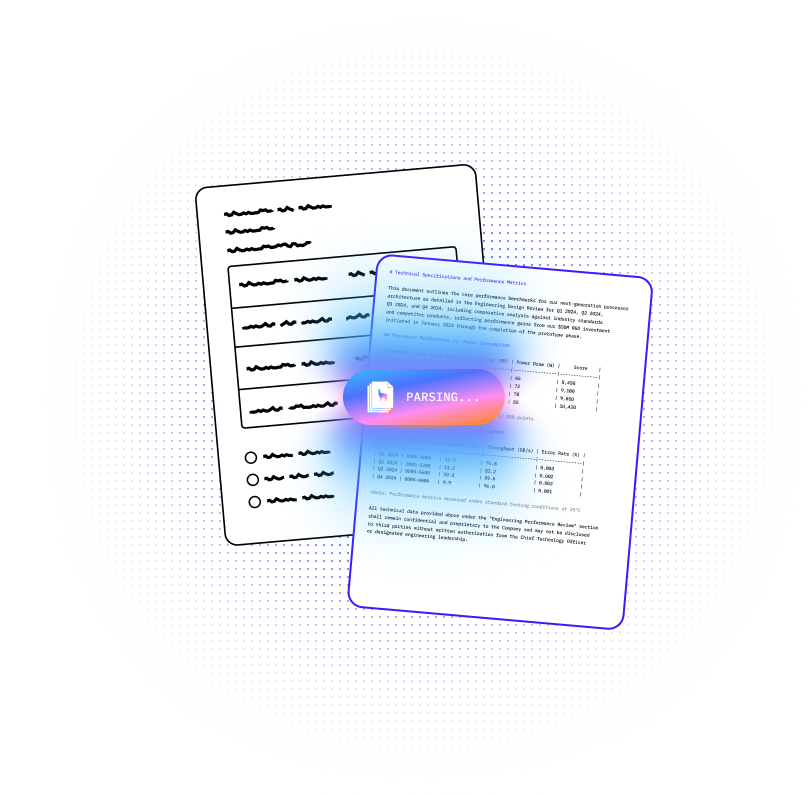


LlamaParse turns messy work orders, scans, and photos into clean, structured JSON or tables so dispatch, billing, and analytics run automatically. Its agentic document parsing understands layouts, validates key fields with confidence metadata, and keeps accuracy high even when forms change.
Best-in-Class Accuracy

Turn technician work orders, photos, and handwritten notes into clean, layout-preserved JSON so you can auto-create labor lines, parts used, asset IDs, and completion timestamps in your CMMS. LlamaParse handles messy multi-column forms and tables without brittle template rules, reducing rework and speeding up billing and tenant reporting.

Parse maintenance work orders and inspection sheets into structured events that feed reliability KPIs, spare-parts consumption, and downtime tracking—without losing table structure or reading order. Use natural-language parsing instructions to extract only critical fields (e.g., failure code, root cause, corrective action) and push them directly into EAM/ERP systems.

Ingest scanned service tickets and crew work packets and automatically reconcile job status, materials, and meter/asset references, even when documents include diagrams or photos alongside text. LlamaParse’s agentic processing and correction loops reduce exceptions from poor scans, enabling faster closeouts and more accurate regulatory reporting.

Ship work-order ingestion fast by converting PDFs and mobile uploads into Markdown/JSON with granular metadata (page, coordinates, confidence) that supports human review only when needed. LlamaParse’s tier-based routing keeps costs predictable as volume grows, so you can move from prototype to production without rewriting your parsing pipeline.
The Solution
01
LlamaParse understands real work order layouts—headers, line items, notes, and footer totals—so extracted text stays in the right reading order. This prevents the classic “scrambled fields” problem when you’re turning work orders into structured records for dispatch, billing, or audit trails.
02
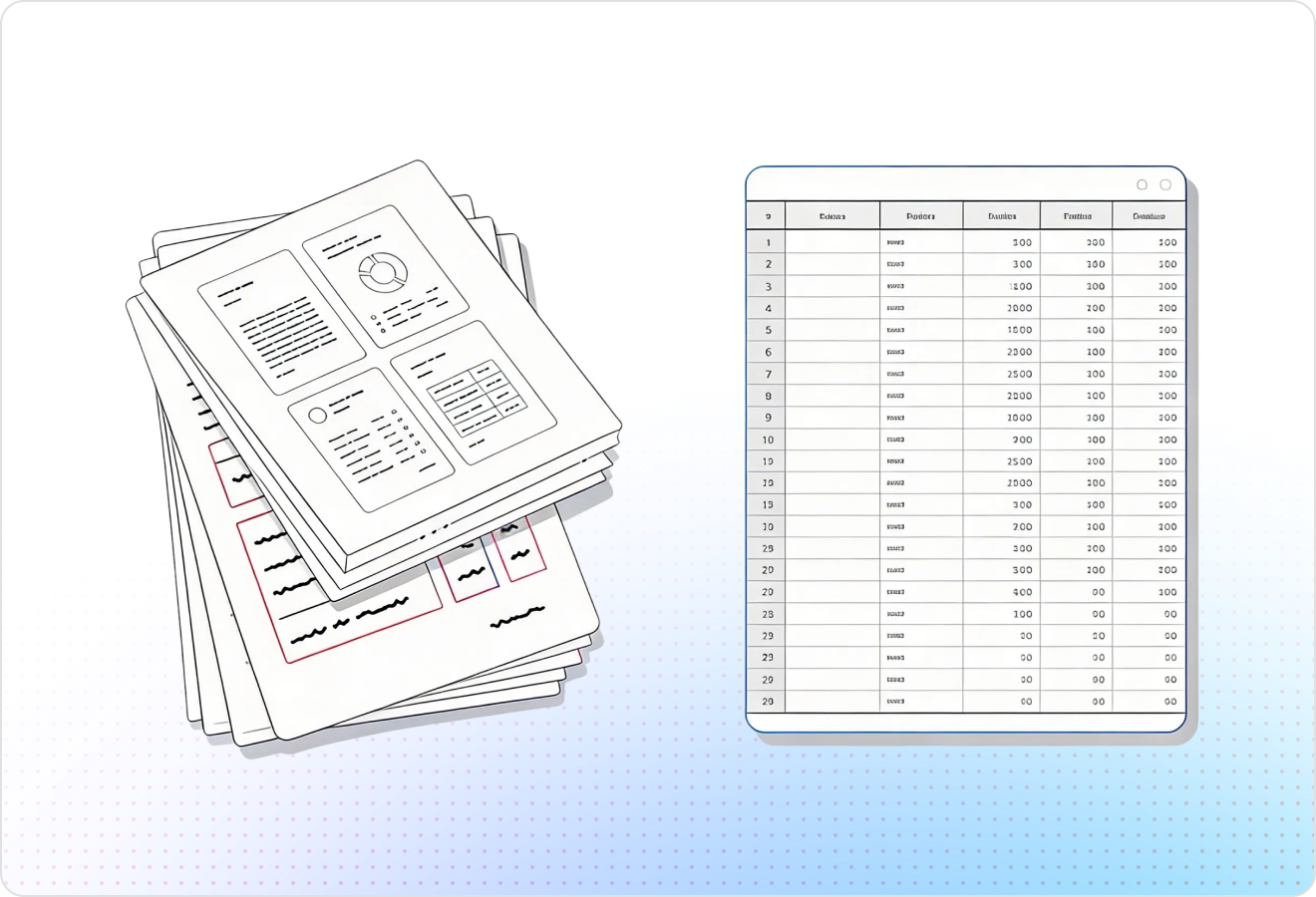
LlamaParse extracts tables and repeated rows cleanly, even when columns shift across templates or scans. That makes it practical to capture parts, quantities, labor hours, rates, and subtotals without writing brittle post-processing to reconstruct the grid.
03
You can give natural-language parsing instructions to pull the exact fields your workflow needs (e.g., work order number, asset ID, technician, site address, job codes). This keeps output consistent across vendors and regions, which reduces downstream mapping and exception handling.
04
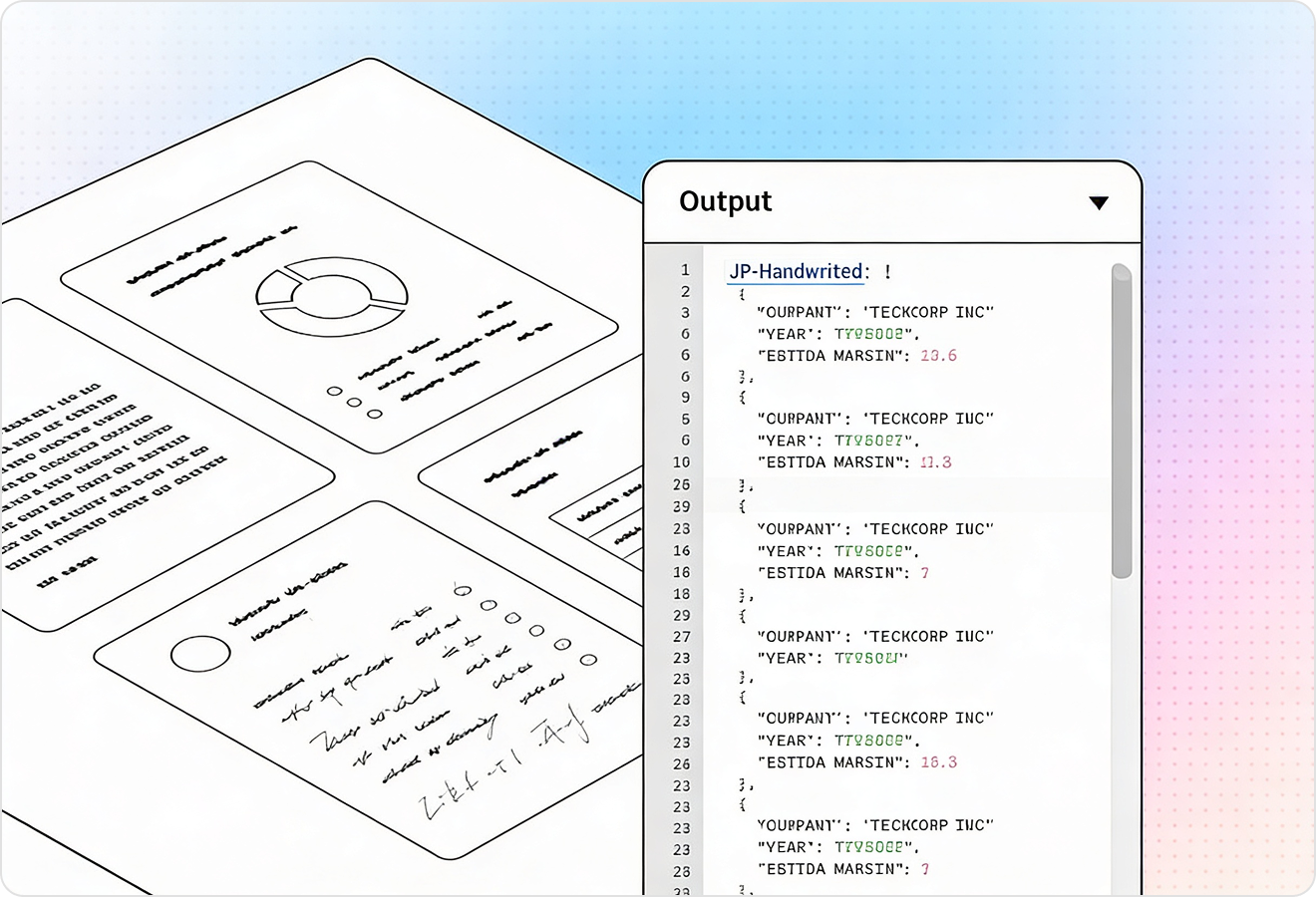
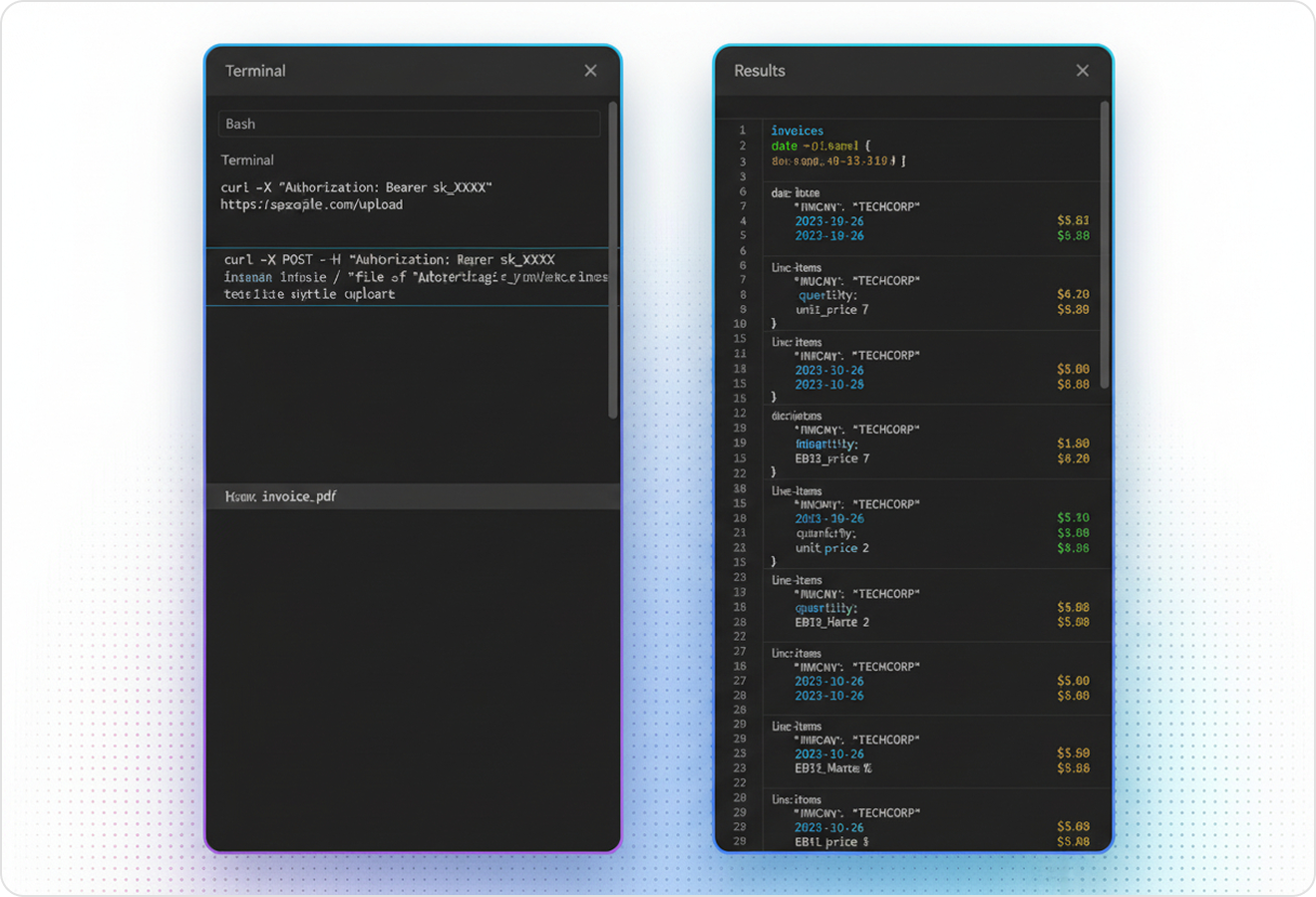
LlamaParse can return structured JSON plus granular metadata like page coordinates and source references for each extracted value. For work orders, this enables fast validation (and human review when needed) by linking every field back to where it came from on the document.
Technical OCR documentation
Explore our developer guides to easily connect your document pipelines to LlamaParse.
Explore the documentation
Our AI catches the typos that tired eyes miss.

Export to Excel, JSON, XML, or directly via API.

SOC2 Type II compliant with end-to-end encryption.

Train the tool on your specific forms in minutes, not days.

Average processing time of <3 seconds per page.
LlamaParse’s support of a wide variety of filetypes and its accuracy of parsing made it the best tool we tested in our evaluations. The LlamaIndex team was very responsive and we were off to the races within a day.
Common FAQs
01
Work Order OCR uses layout-aware field capture to understand headers, line items, notes, and totals in the right reading order. That means values stay attached to the right labels, even on multi-section forms. You get clean, structured records for dispatch, billing, and audits without manual rework.
02
It reliably pulls repeated rows and tables—even when columns shift across templates or when scans aren’t perfectly aligned. This makes it practical to capture parts, quantities, labor, rates, and subtotals without brittle grid reconstruction. The result is fewer exceptions and faster downstream processing.
03
Yes—schema-guided extraction lets you specify the fields you care about using simple natural-language instructions. Pull items like work order number, asset ID, technician, site address, and job codes consistently across vendors and regions. This reduces mapping work and keeps integrations stable as templates change.
04
Do I get structured output, or just raw text?
You can receive structured JSON output designed for automation, not copy-paste. Each field can include citations like page coordinates and source references, so it’s easy to validate results quickly. This is ideal for audit trails and human-in-the-loop review when needed.
05
How does it handle different work order templates from multiple vendors or locations?
Because it reads the document layout and follows your extraction schema, it stays consistent across varied formats, vendors, and regional versions. You don’t need to maintain a separate parser for every template. That means fewer breakages when forms change and faster rollout across teams.
06
What does review and exception handling look like when something is unclear on the document?
When a value needs verification, citations link each extracted field back to the exact spot on the page for quick confirmation. Reviewers can resolve issues in seconds instead of hunting through the entire work order. This keeps throughput high while maintaining confidence in the data.