Nov 14, 2025
Document AI: The Next Evolution of Intelligent Document ProcessingPersona
Industry
Use cases
Pay Stub Verification
[ Pay Stub Verification ]

Use LlamaParse to extract pay data with citations and confidence scores, reducing reviews and rework.
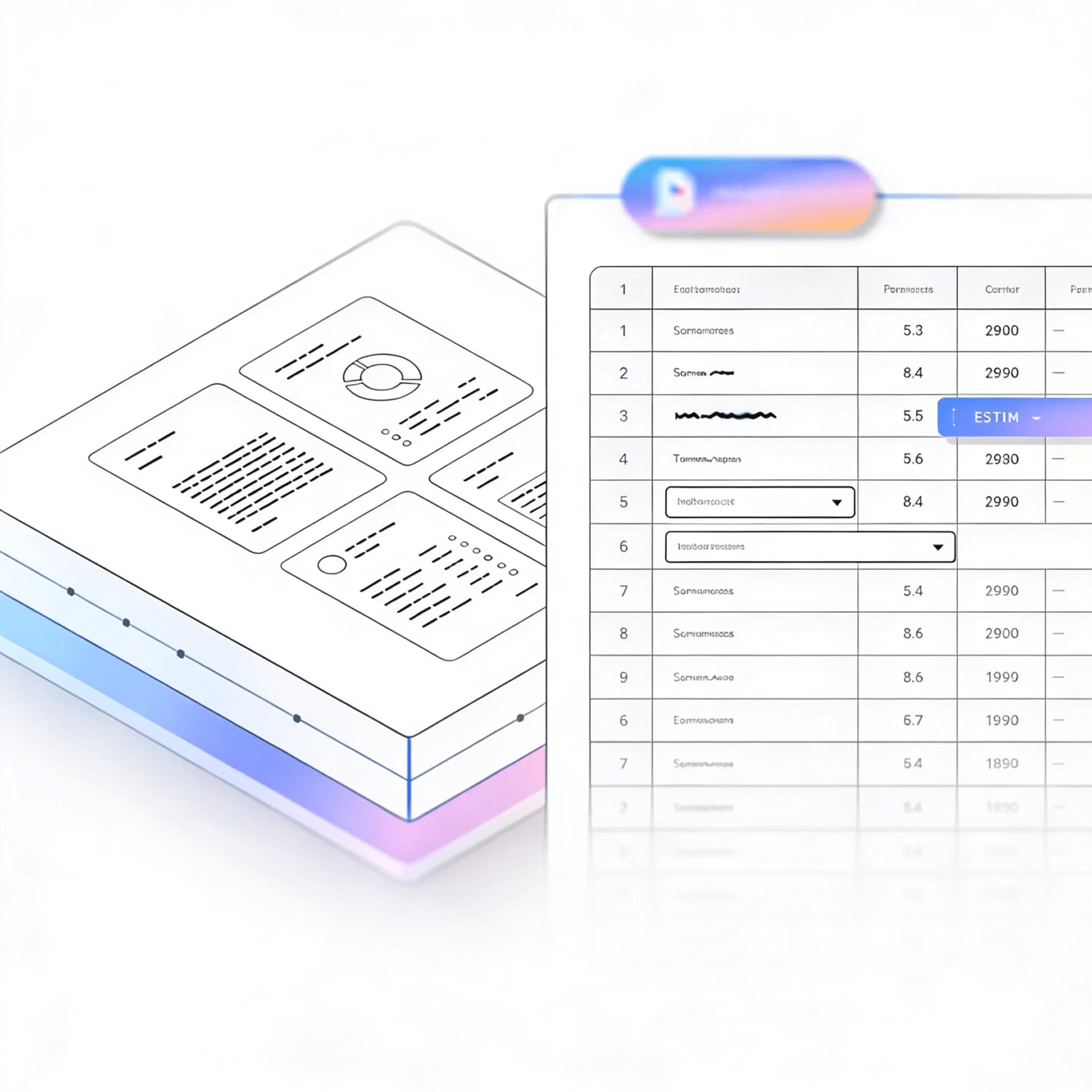


LlamaParse turns messy pay stubs into clean, structured fields you can verify fast, with line-level citations back to the source document. Use confidence scores and layout-aware parsing to catch edits, missing deductions, and inconsistent totals before they hit underwriting or compliance.
Best-in-Class Accuracy

Automate pay stub verification during onboarding by using LlamaParse to extract earnings, pay period dates, and deductions into clean JSON with citations, so analysts can approve more applications without manual document review. Layout-aware parsing prevents multi-column stubs and deduction tables from getting scrambled, reducing false declines and speeding up time-to-funding.

Standardize income verification for high-volume leasing by converting uploaded pay stubs into structured fields (net pay, YTD, employer, overtime) and flagging missing or inconsistent sections for follow-up. LlamaParse’s natural-language parsing instructions let you enforce a consistent output schema across hundreds of pay stub templates, cutting screening turnaround time from days to minutes.

Streamline eligibility and enrollment audits by extracting contribution amounts, pre-tax deductions, and employer details from pay stubs while preserving traceability back to page coordinates for compliance. Auto-correction loops reduce downstream exceptions caused by misread figures on low-quality scans, improving straight-through processing for claims and benefits changes.

Verify candidate employment details at scale by parsing pay stubs into normalized records that reconcile pay rates, hours, and pay frequency across different employers and payroll systems. Tier-based agentic processing routes simple stubs through low-cost parsing while upgrading only complex layouts, keeping background-check costs predictable without sacrificing accuracy.
The Solution
01
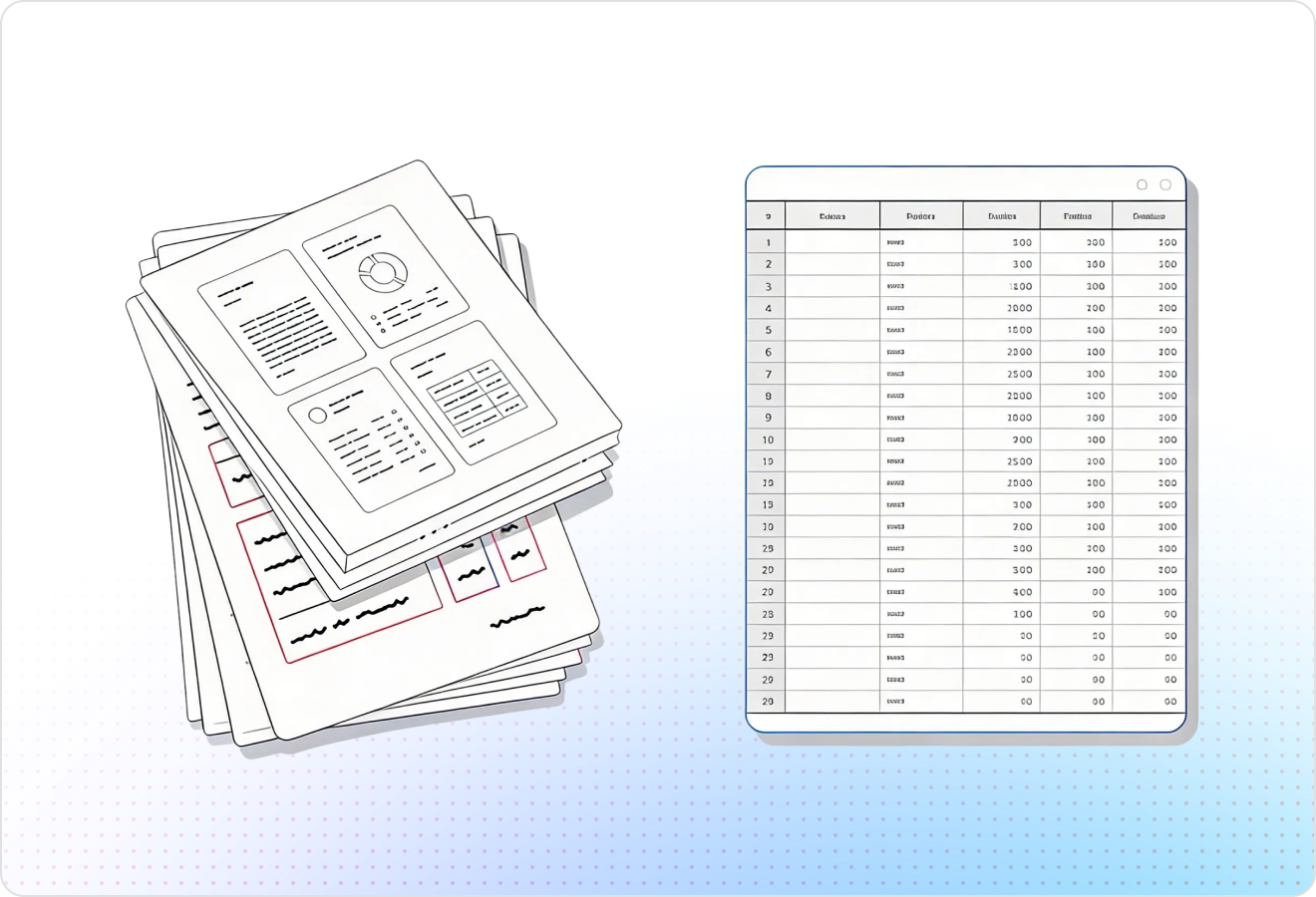
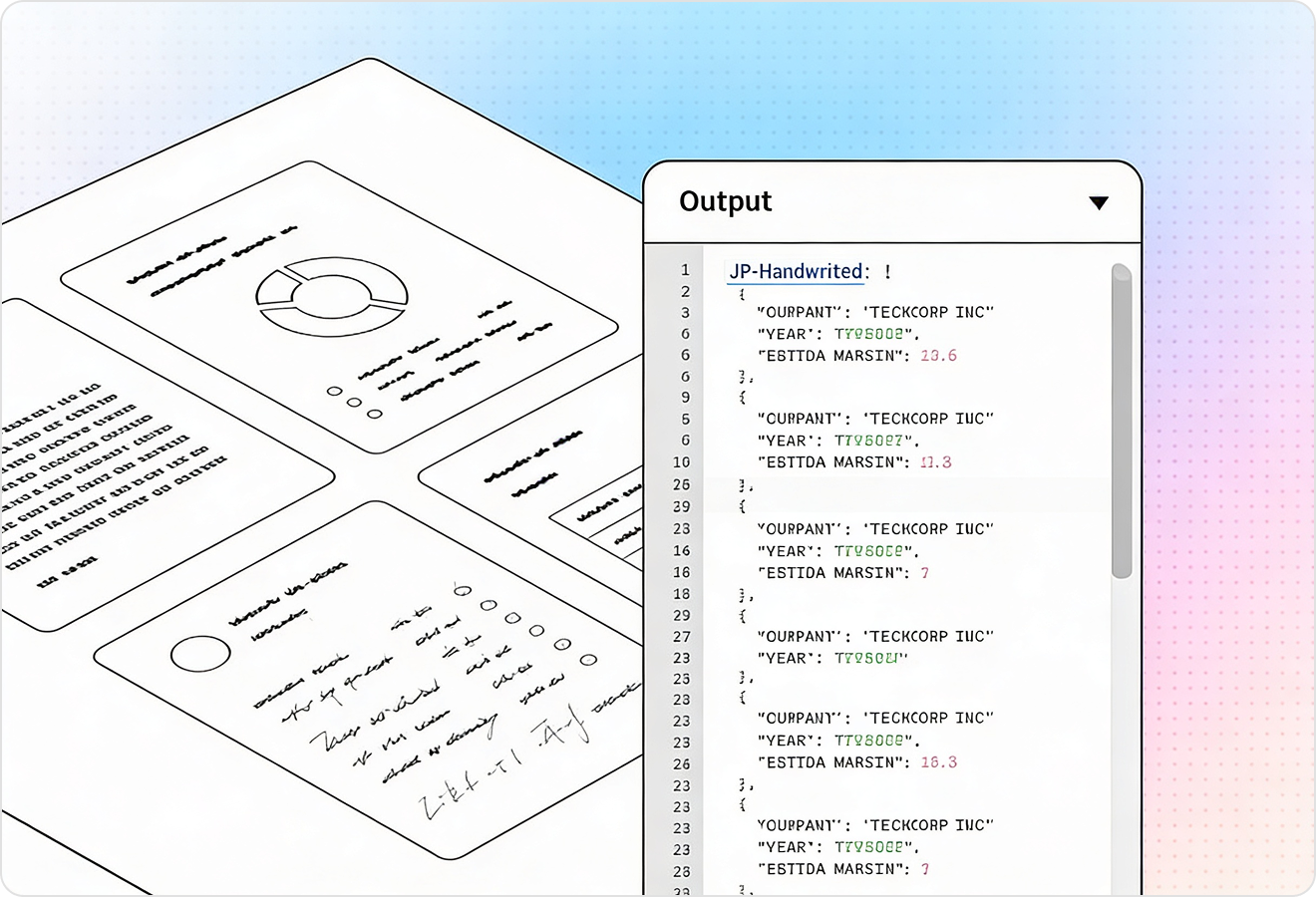
LlamaParse detects pay-stub structure (headers, earnings, deductions, taxes, and totals) and preserves reading order across multi-column templates. That makes verification reliable even when employers use different layouts, so you can consistently locate and compare the same fields.
02
LlamaParse accurately extracts line-item tables for earnings and deductions without scrambling rows, columns, or amounts. This lets you validate calculations like gross-to-net, tax withholdings, and benefit deductions with fewer manual fixes.
03
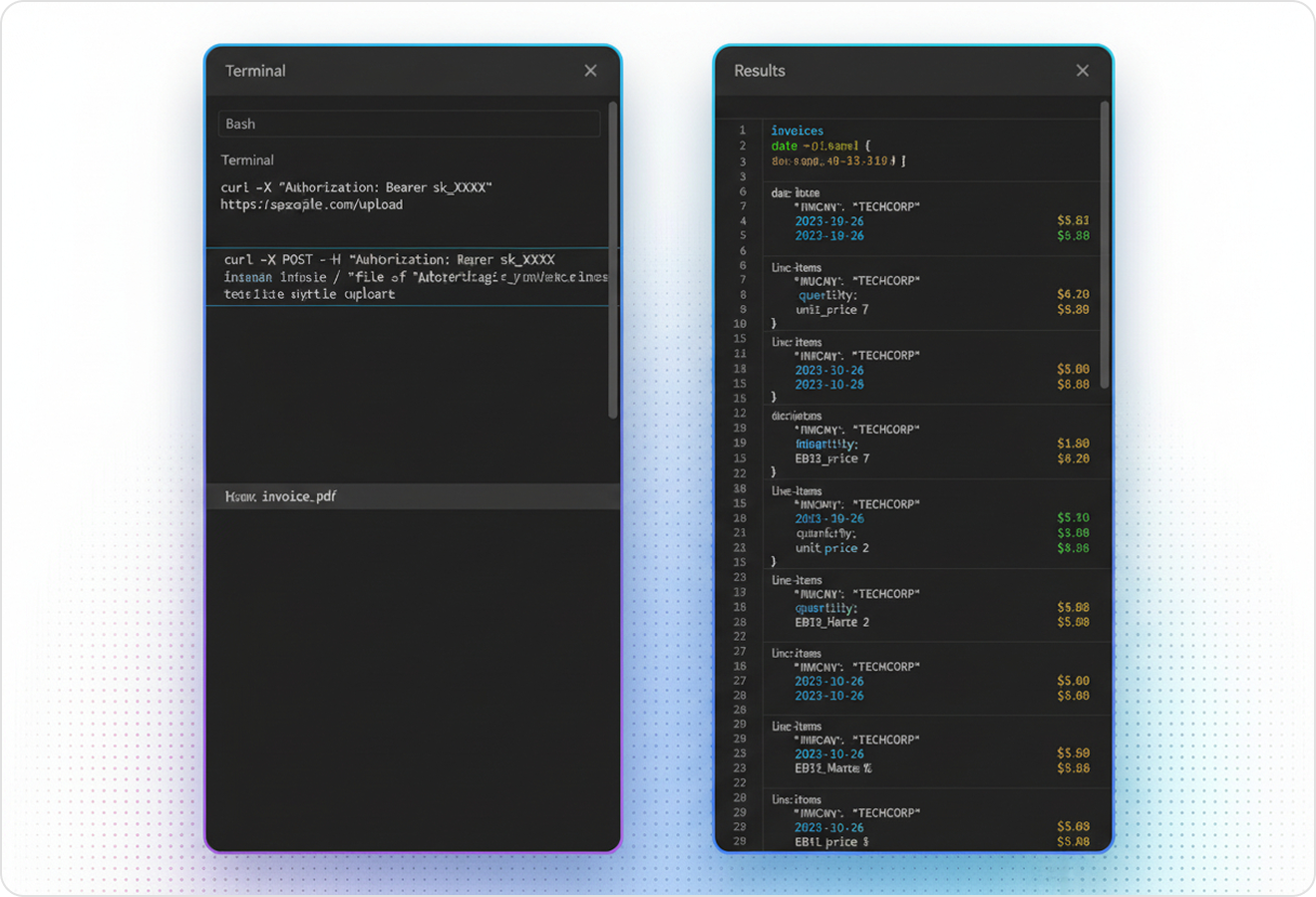
LlamaParse can return structured JSON with page-level and element-level metadata, including coordinates and document context for each value. For pay stub verification, you can store normalized fields (pay period, employer, net pay) and still trace every number back to its exact source location for audit and review.
04
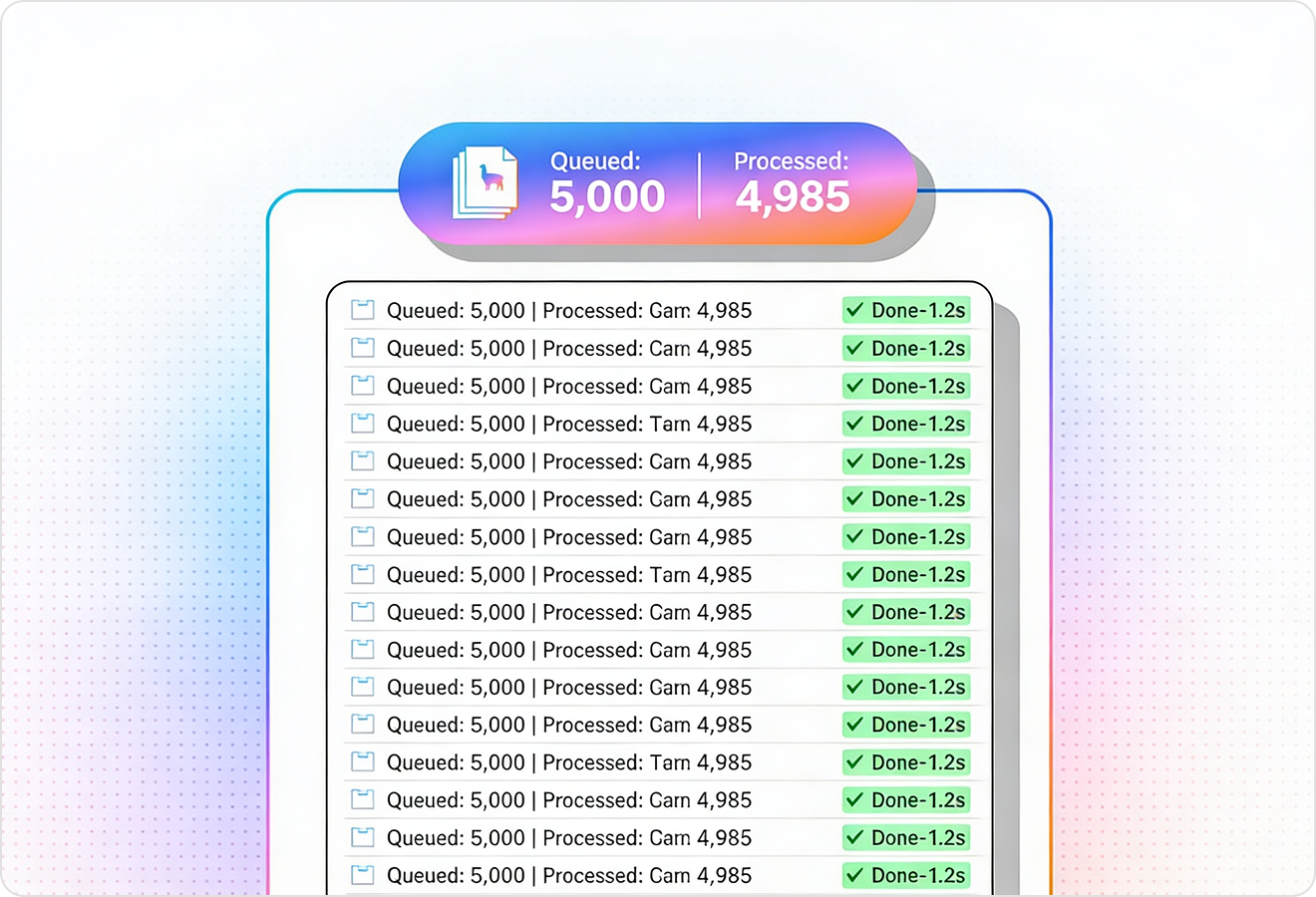
LlamaParse uses validation and self-correction steps to catch common extraction errors from scans, low contrast, and noisy payroll PDFs. That improves straight-through verification by reducing mismatched totals, missing decimals, and misread identifiers before the data hits your rules engine.
Technical OCR documentation
Explore our developer guides to easily connect your document pipelines to LlamaParse.
Explore the documentation
Our AI catches the typos that tired eyes miss.

Export to Excel, JSON, XML, or directly via API.

SOC2 Type II compliant with end-to-end encryption.

Train the tool on your specific forms in minutes, not days.

Average processing time of <3 seconds per page.
LlamaParse’s support of a wide variety of filetypes and its accuracy of parsing made it the best tool we tested in our evaluations. The LlamaIndex team was very responsive and we were off to the races within a day.
Common FAQs
01
Yes—our layout-aware parsing detects headers, earnings, deductions, taxes, and totals while preserving reading order in multi-column stubs. That means you can reliably find the same fields even when formats vary by payroll provider or employer, reducing manual review.
02
Table extraction is designed to keep line items aligned so rows, columns, and amounts don’t get scrambled. This makes it easier to verify gross-to-net math, tax withholdings, and benefit deductions with fewer downstream corrections.
03
Absolutely—outputs can include structured JSON plus page-level and element-level metadata like coordinates and surrounding context. You can store normalized fields (e.g., pay period, employer, net pay) and still prove exactly where each number came from.
04
What happens with low-quality scans, faint text, or noisy payroll PDFs?
Built-in validation and auto-correction loops catch common issues like missing decimals, misread identifiers, and mismatched totals. That improves straight-through verification rates and reduces time spent reconciling exceptions.
05
How does this reduce false declines or unnecessary manual reviews in pay stub verification?
By preserving structure and validating totals, the extraction is more consistent and less error-prone than basic OCR. You get cleaner, more reliable fields for your rules engine, which helps prevent avoidable mismatches that trigger extra review.
06
What does the output look like, and is it easy to integrate with our existing verification workflow?
You receive structured JSON that maps cleanly to the fields your verification process needs, like employer name, pay period, gross pay, deductions, and net pay. Because each value can include traceability metadata, integrations can automate decisions while keeping human-friendly evidence ready when needed.