Nov 14, 2025
Document AI: The Next Evolution of Intelligent Document ProcessingPersona
Industry
Use cases
Delivery Note OCR
[ Delivery Note OCR ]

Turn delivery notes into clean JSON with LlamaParse, with layout-aware accuracy and built-in validation.
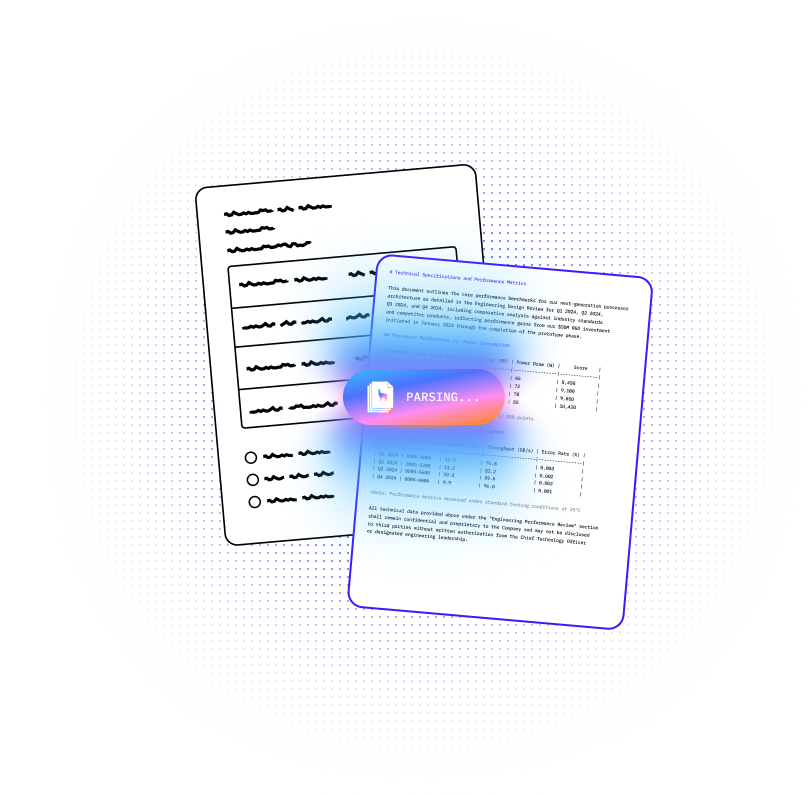
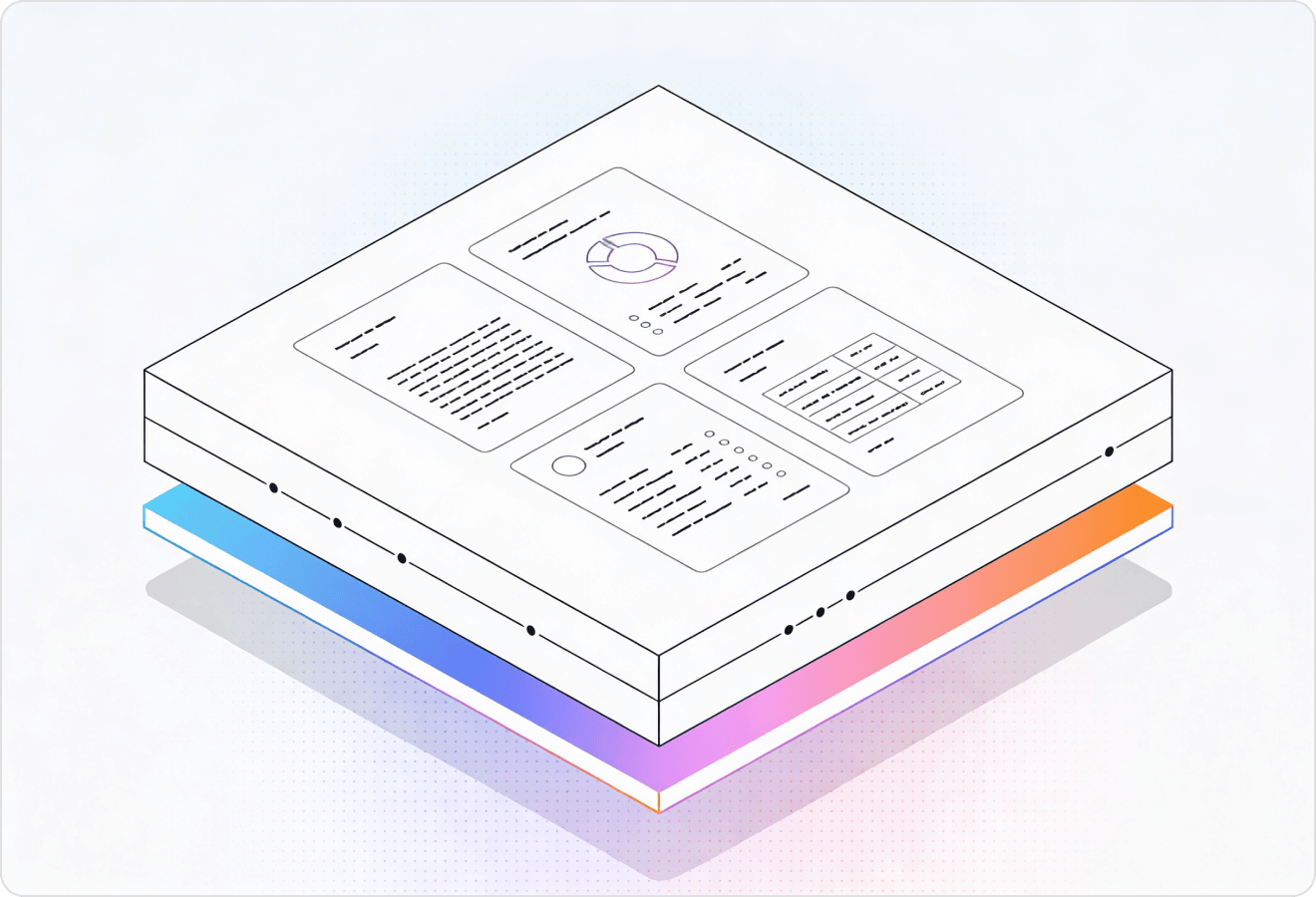

LlamaParse turns messy delivery notes into clean, structured fields like supplier, items, quantities, and PO numbers without brittle templates or manual rekeying. It uses layout-aware, agentic parsing with verification loops, so you get consistent JSON or Markdown outputs you can trust downstream.
Best-in-Class Accuracy

Use LlamaParse in JSON mode to turn messy delivery notes into line-item structured data with citations, so your app can auto-match deliveries to POs and invoices without building brittle template rules. Natural-language parsing instructions let you ship new supplier formats fast and keep exception rates low as you scale.

Parse multi-page delivery notes with layout-aware table extraction to capture SKUs, lot/batch numbers, quantities, and partial shipments exactly as printed—even when tables span columns or pages. Feed verified outputs into ERP receiving to reduce GRN errors, prevent inventory drift, and speed up dock-to-stock.

Ingest carrier PODs and delivery notes at scale and extract stop-level details, pallet counts, damages, and accessorials with auto-correction loops that catch inconsistent totals before they hit billing. Granular metadata makes it easy to route low-confidence pages to human review while keeping the rest straight-through.

Convert supplier delivery notes into job-cost-ready records by extracting material lists, quantities, and delivery dates into clean Markdown/JSON that maps directly to project codes. This eliminates manual ticket entry, improves cost-to-complete accuracy, and speeds up dispute resolution when deliveries don’t match site logs.
The Solution
01
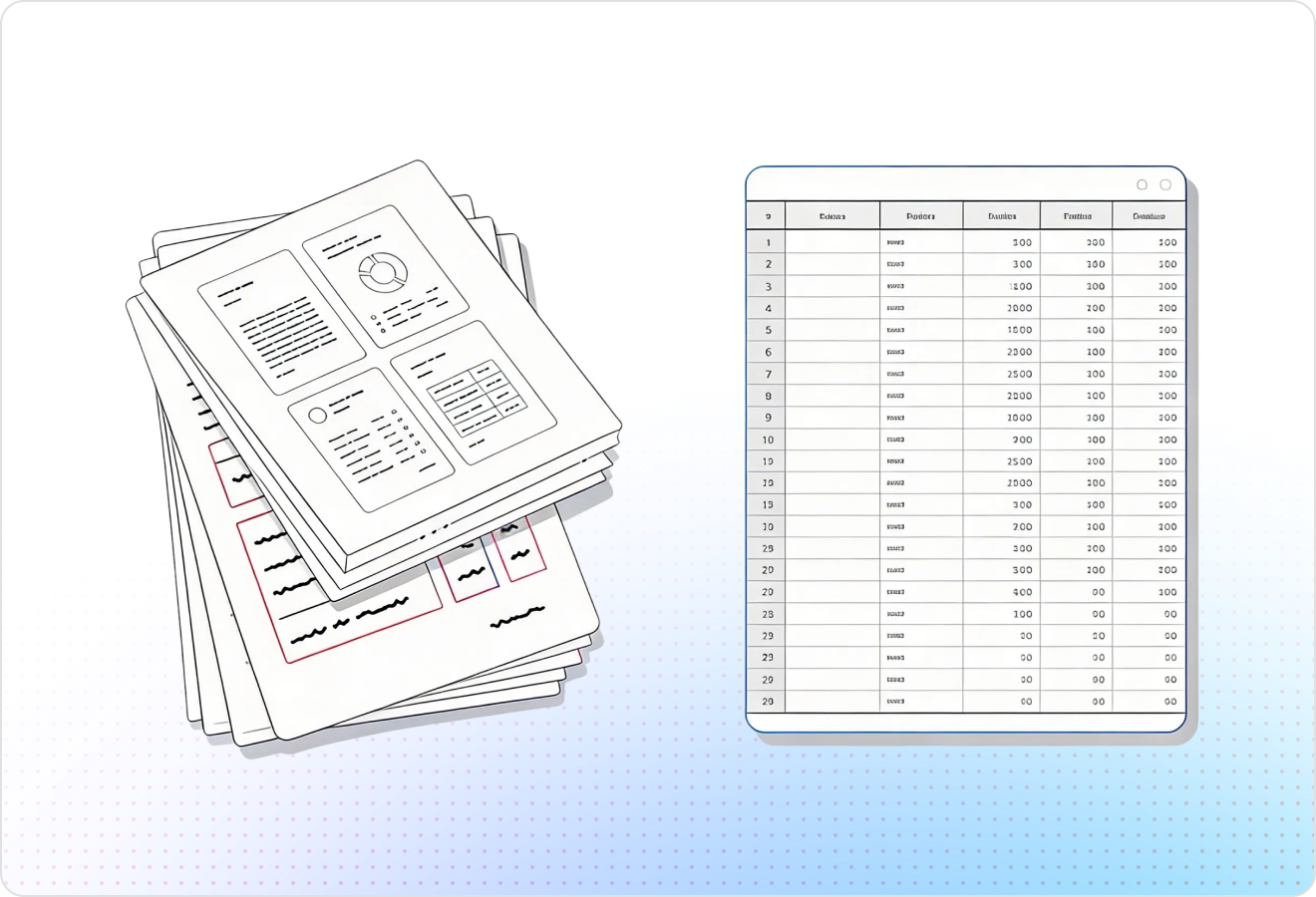
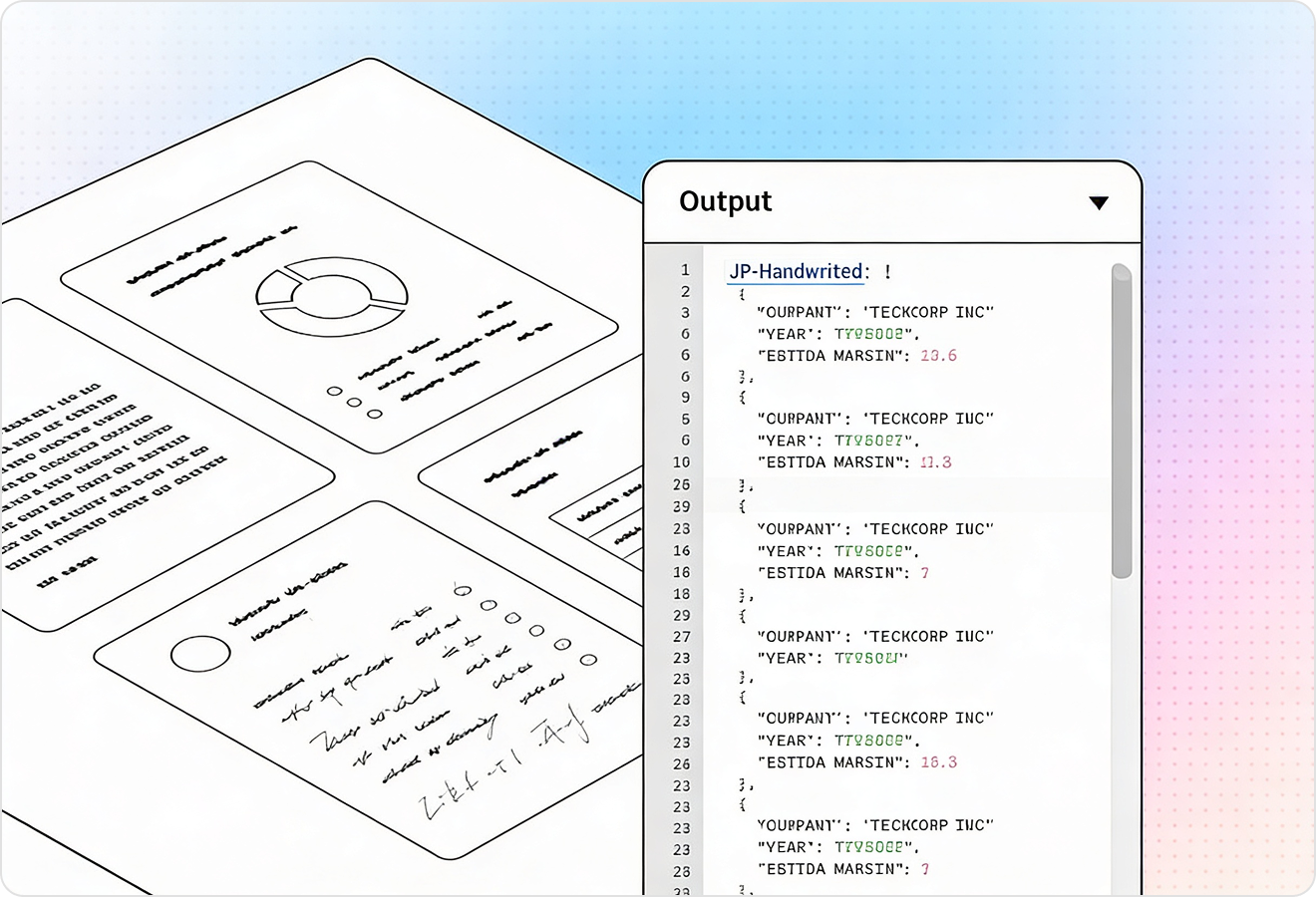
LlamaParse detects document structure so delivery note headers, ship-to blocks, and line items don’t get scrambled across columns or sections. That means you can reliably extract SKU, quantity, UOM, and descriptions even when vendors change templates or include stamps and handwritten notes.
02
LlamaParse pulls tables with correct rows, columns, and reading order, then reconstructs them into clean Markdown that preserves the original intent. For delivery notes, this keeps item grids, totals, and backorder notes intact so downstream systems can reconcile received goods without manual cleanup.
03
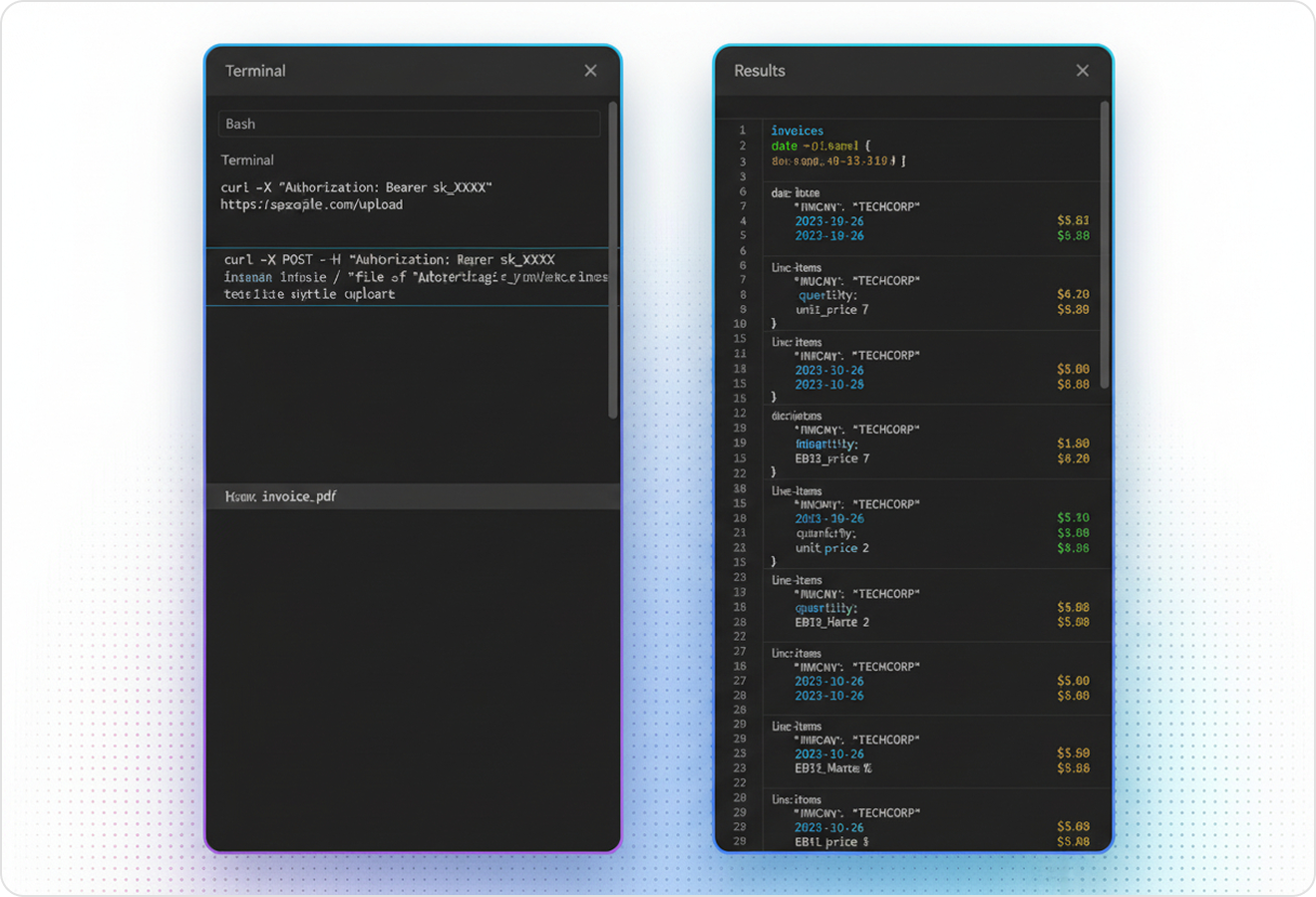
LlamaParse can return structured JSON along with granular metadata like page numbers and element coordinates for each extracted field. In delivery note workflows, this makes it easy to validate questionable quantities or part numbers by linking every value back to the exact spot on the scan.
04
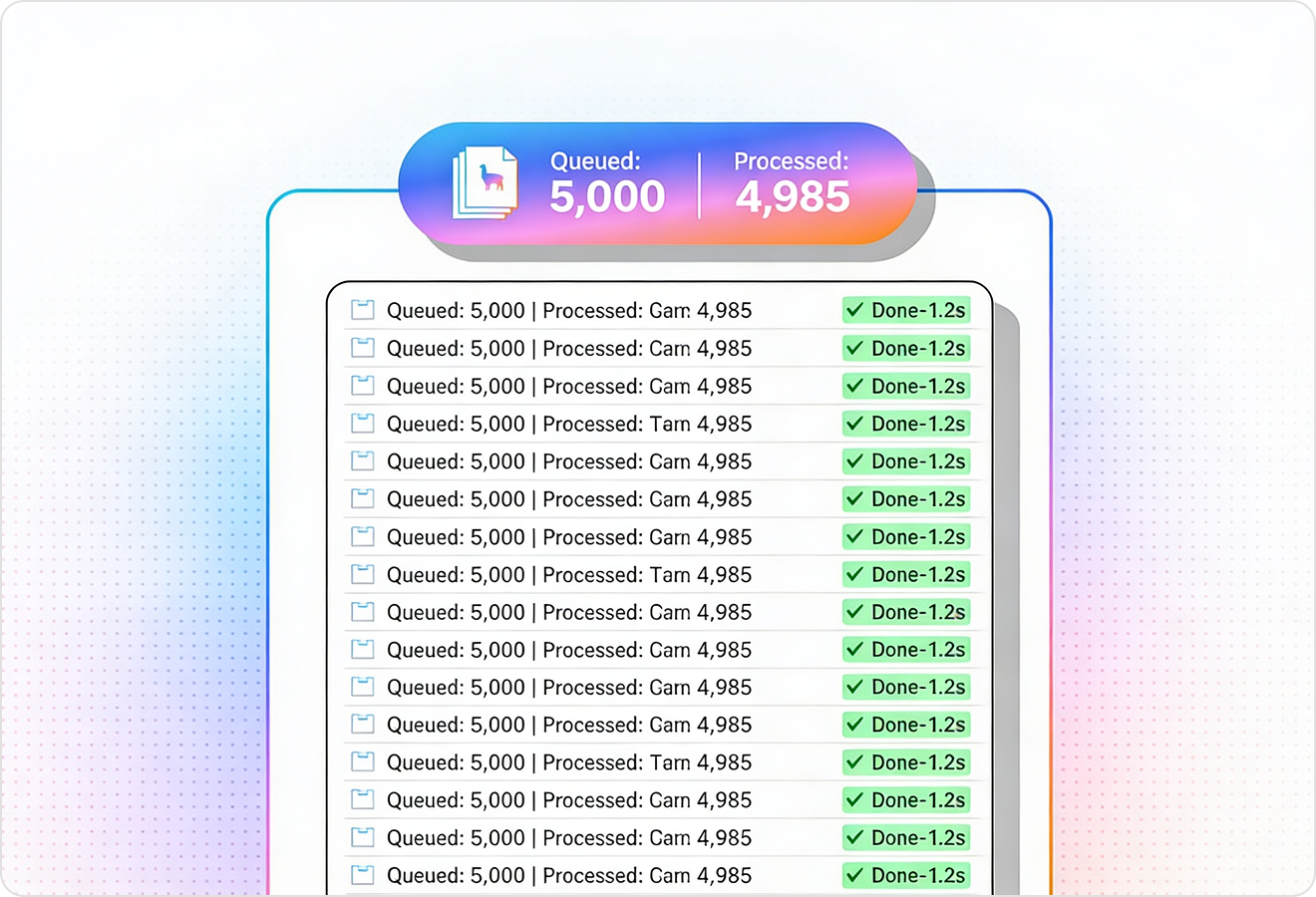
LlamaParse uses iterative validation to catch and correct common extraction errors like swapped digits, broken table rows, or missed line items. For delivery notes, this increases straight-through processing so ERP posting and three-way matching aren’t blocked by preventable parsing mistakes.
Technical OCR documentation
Explore our developer guides to easily connect your document pipelines to LlamaParse.
Explore the documentation
Our AI catches the typos that tired eyes miss.

Export to Excel, JSON, XML, or directly via API.

SOC2 Type II compliant with end-to-end encryption.

Train the tool on your specific forms in minutes, not days.

Average processing time of <3 seconds per page.
LlamaParse’s support of a wide variety of filetypes and its accuracy of parsing made it the best tool we tested in our evaluations. The LlamaIndex team was very responsive and we were off to the races within a day.
Common FAQs
01
Yes—layout-aware parsing detects headers, ship-to sections, and item tables so fields don’t get mixed across columns. You can reliably extract SKU, quantity, UOM, and descriptions even when templates change or the scan includes stamps or handwritten notes.
02
The table extractor preserves row/column structure and reading order, then reconstructs tables into clean Markdown. This keeps item grids, totals, and notes intact so downstream reconciliation doesn’t require manual cleanup.
03
Absolutely—you can export structured JSON that’s ready to map into your existing posting, receiving, or three-way matching workflows. This reduces custom parsing logic and speeds up integration across vendors.
04
How can my team verify questionable values like quantities or part numbers?
Every extracted field can include traceability metadata such as page numbers and element coordinates. That makes spot-checking fast because reviewers can jump straight to the exact location on the original scan.
05
What prevents common OCR errors like swapped digits or missed line items from blocking processing?
Auto validation correction loops iteratively detect and fix issues like broken table rows, digit swaps, and missing items. The result is higher straight-through processing so exceptions are the edge case, not the norm.
06
What happens when the document quality is poor—faint prints, stamps, or handwritten annotations?
The parser is designed to stay resilient by using document structure to keep fields anchored, even when the scan is noisy. If something is ambiguous, traceability lets you quickly validate it rather than re-keying the entire delivery note.