Nov 14, 2025
Document AI: The Next Evolution of Intelligent Document ProcessingPersona
Industry
Use cases
Form Processing Automation
[ Form Processing Automation ]

Use LlamaParse to extract every field reliably, so your forms flow straight into downstream systems.
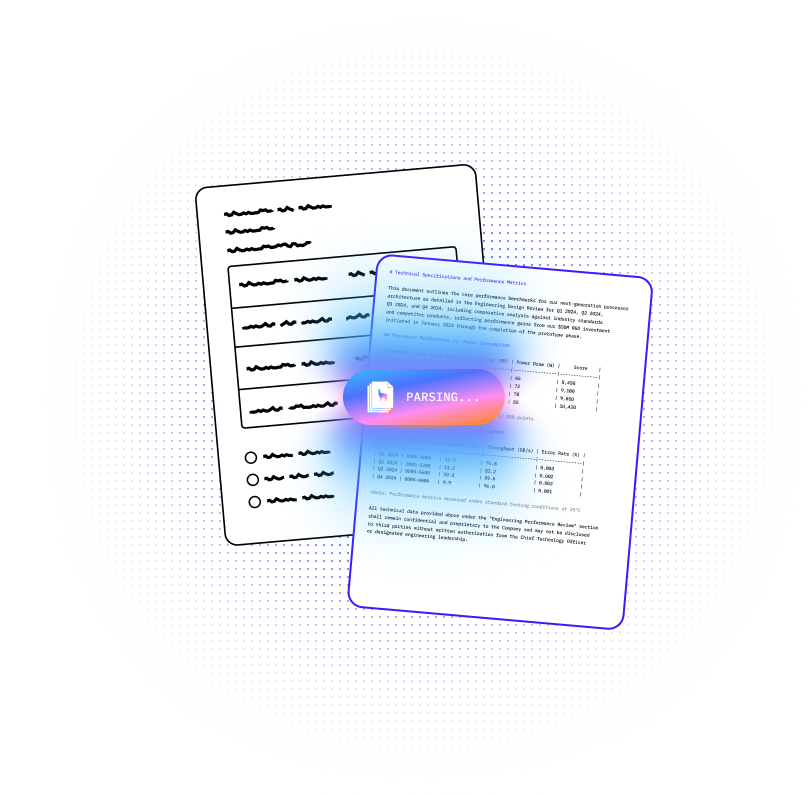


LlamaParse turns messy, multi-page forms into structured, AI-ready data by understanding fields, tables, checkboxes, and layout across varying templates. Agentic parsing adds validation loops, confidence metadata, and clean JSON or Markdown outputs so your workflows run straight through with fewer manual reviews.
Best-in-Class Accuracy

Automate intake for onboarding, vendor setup, and expense workflows by turning messy PDFs into clean JSON without building brittle regex pipelines. Use natural-language parsing instructions plus auto-correction loops to keep straight-through processing high as form templates change week to week.

Convert referrals, prior auth packets, and patient intake forms into structured fields with page-level traceability for audit and compliance review. LlamaParse preserves reading order across multi-page packets and extracts tables reliably, reducing manual rekeying and claim delays.

Extract loss run tables, adjuster notes, and supporting photos/charts into decision-ready data that speeds triage and underwriting review. Tier-based agentic processing routes only the complex pages to heavier models, improving accuracy on messy scans while keeping per-claim processing costs predictable.

Digitize bills of lading, proof-of-delivery, and commercial invoices with layout-aware table extraction so SKUs, quantities, and accessorials don’t get scrambled. Output consistent Markdown/JSON to reconcile shipments automatically and reduce chargebacks from mismatched documentation.
The Solution
01
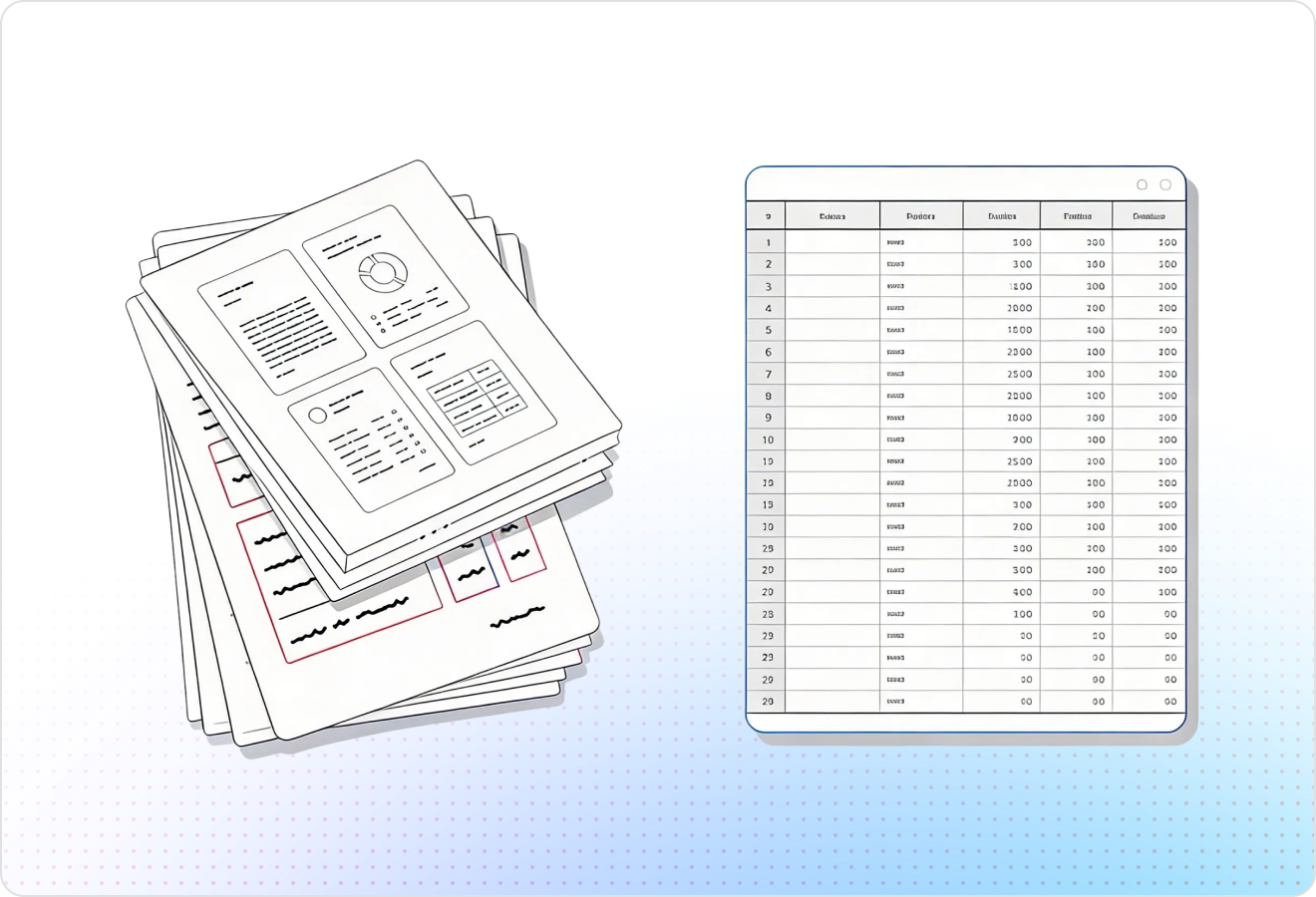
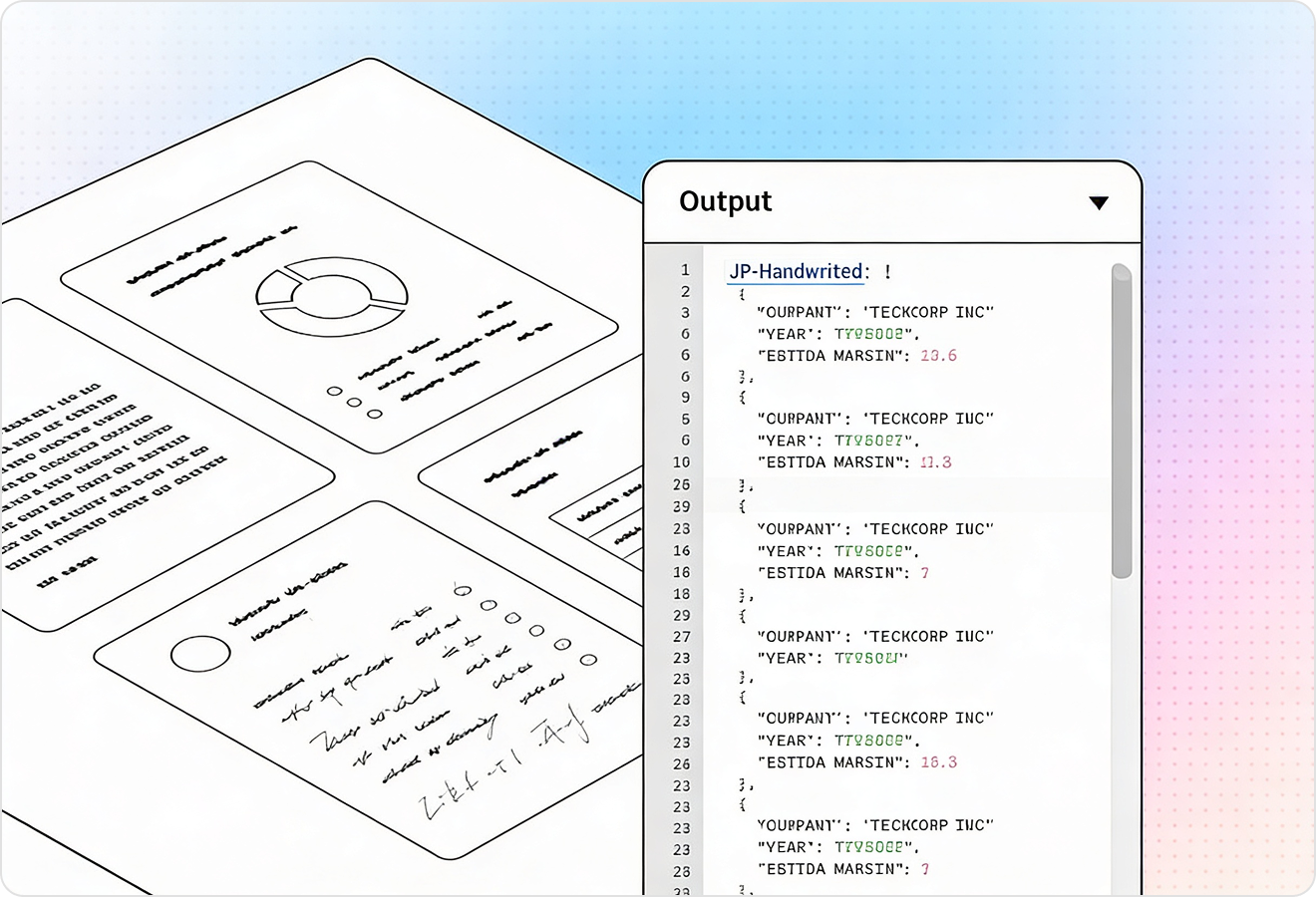
LlamaParse understands page structure to reliably extract key-value fields, sections, and multi-column layouts without scrambling reading order. That means form submissions turn into consistent records even when templates change or users scan at odd angles.
02
LlamaParse accurately pulls tables, line items, and grid-based fields while preserving row/column relationships and headers. For form processing automation, this keeps repeating fields (like dependents, invoices, or itemized claims) structured and ready for downstream systems.
03
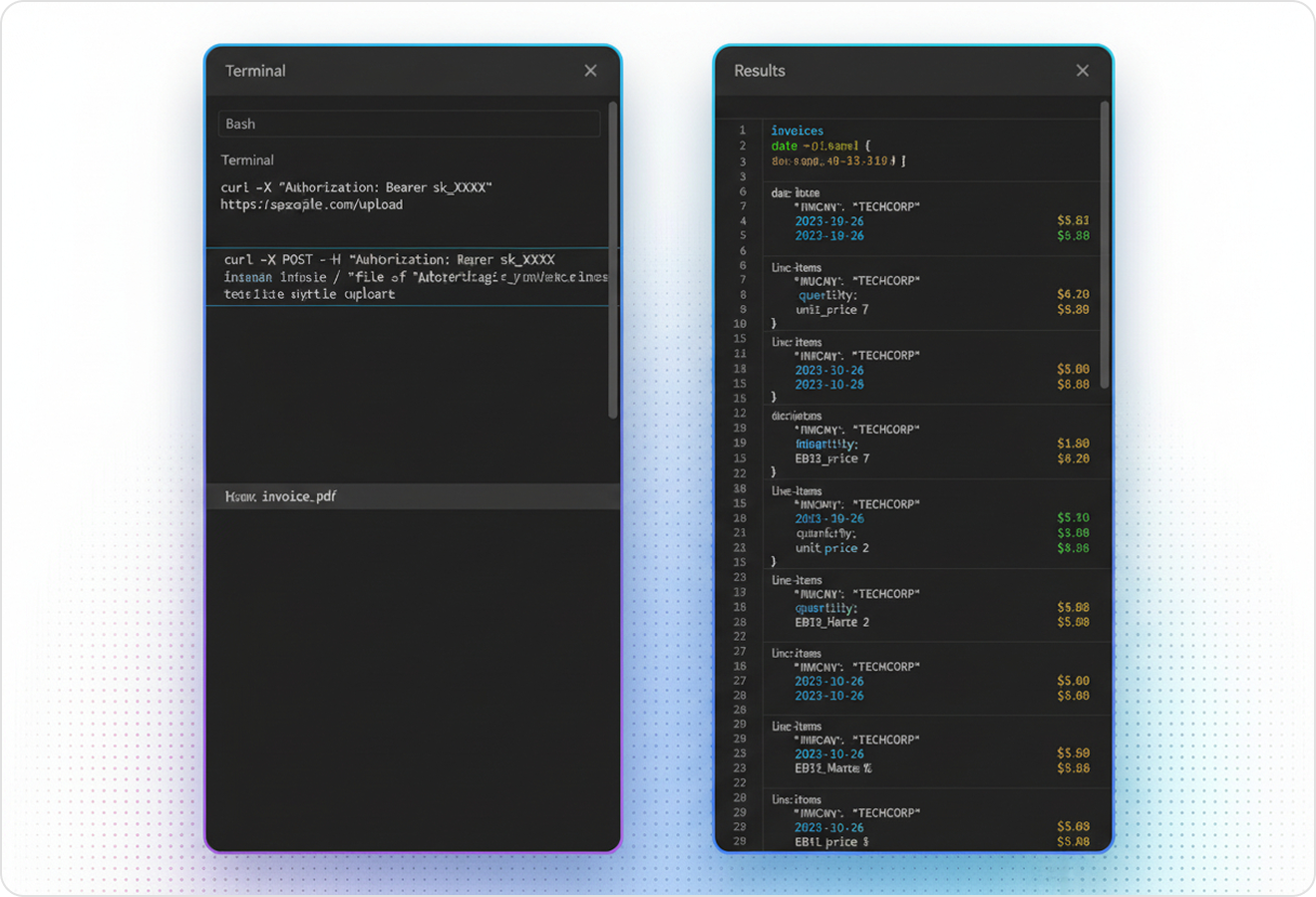
LlamaParse can return structured JSON shaped to your target schema, making it straightforward to map extracted fields into your database or workflow engine. This reduces post-processing code and eliminates brittle regex pipelines when forms evolve.
04
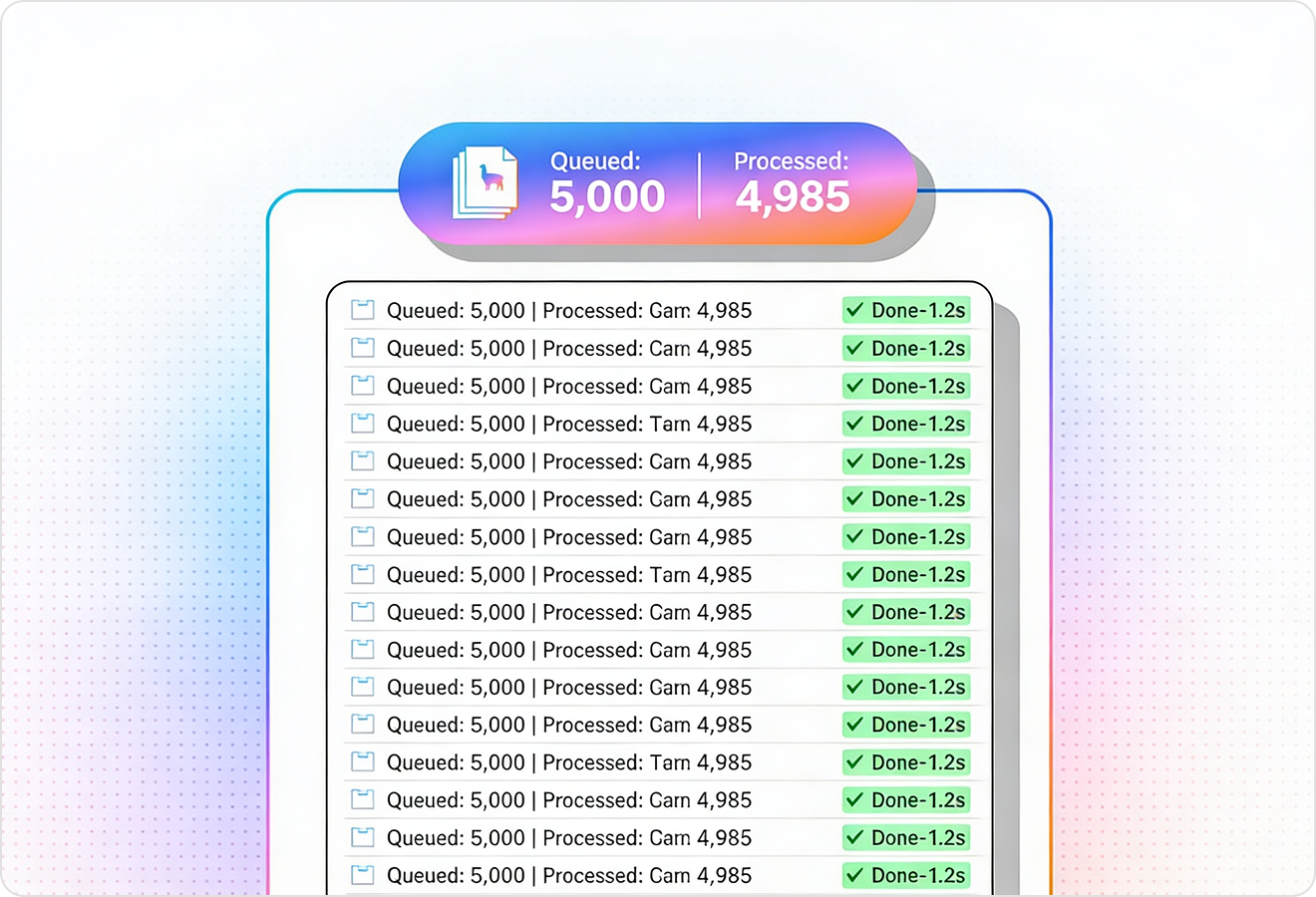
LlamaParse attaches traceable metadata like page references and element coordinates, plus confidence signals you can use for review routing. In automated form workflows, you can auto-approve high-confidence fields and send exceptions to humans with precise citations.
Technical OCR documentation
Explore our developer guides to easily connect your document pipelines to LlamaParse.
Explore the documentation
Our AI catches the typos that tired eyes miss.

Export to Excel, JSON, XML, or directly via API.

SOC2 Type II compliant with end-to-end encryption.

Train the tool on your specific forms in minutes, not days.

Average processing time of <3 seconds per page.
LlamaParse’s support of a wide variety of filetypes and its accuracy of parsing made it the best tool we tested in our evaluations. The LlamaIndex team was very responsive and we were off to the races within a day.
Common FAQs
01
Yes. Layout-aware capture understands page structure (sections, key-value pairs, and multi-column formats) so it keeps reading order intact even when templates shift or scans come in at odd angles. You get consistent, reliable records without constant re-training or manual template fixes.
02
It extracts tables and grid-based fields while preserving headers and row/column relationships, so repeating data stays usable downstream. Checkboxes and structured line items come through as clean, structured fields you can validate and post directly into your systems.
03
You can request schema-guided JSON output shaped to your target format, which makes field mapping straightforward. This minimizes post-processing code and helps you avoid brittle parsing pipelines when forms evolve.
04
How can we trust the results enough to automate approvals without increasing risk?
Each extraction includes confidence signals plus verifiable metadata like page references and element coordinates. That lets you auto-approve high-confidence fields and route only exceptions to human review—with precise citations for fast verification.
05
What happens when the model is unsure or a field is missing—do we get silent failures?
No—uncertain fields can be flagged using confidence thresholds, and you’ll see exactly where the data came from (or why it couldn’t be confidently extracted). This makes exception handling predictable and keeps your automation trustworthy at scale.
06
How quickly can we go live without spending weeks building and maintaining templates?
Because extraction is layout-aware and can output schema-ready JSON, most teams can integrate quickly and reduce the need for hand-built templates. As your forms change, the system stays resilient—so maintenance effort stays low and time-to-value stays high.