Nov 14, 2025
Document AI: The Next Evolution of Intelligent Document ProcessingPersona
Industry
Use cases
Check OCR
[ Check OCR ]

Use LlamaParse to capture layout, tables, and charts with confidence scores you can verify.
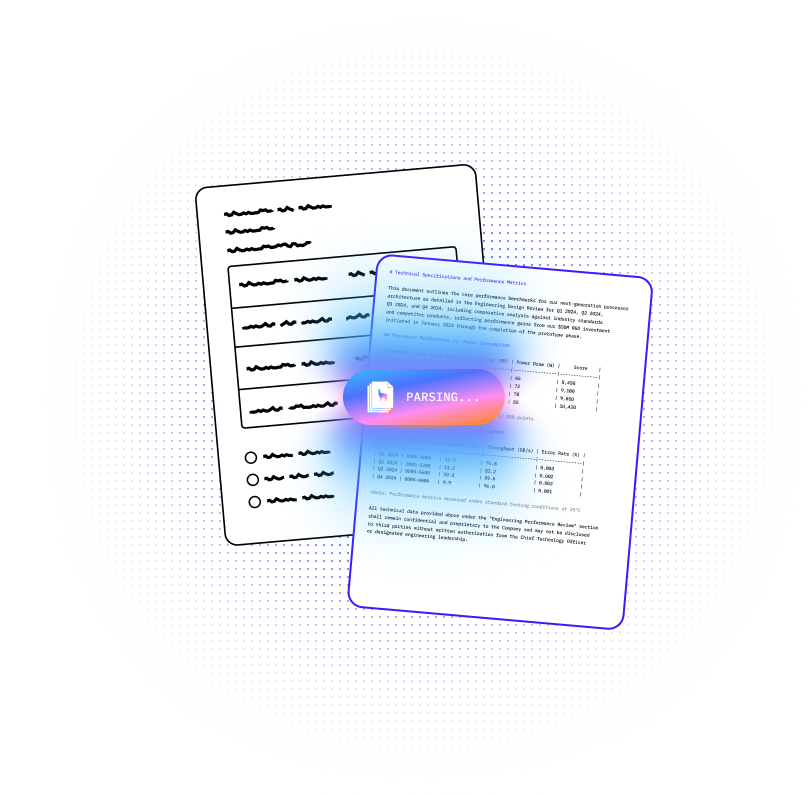
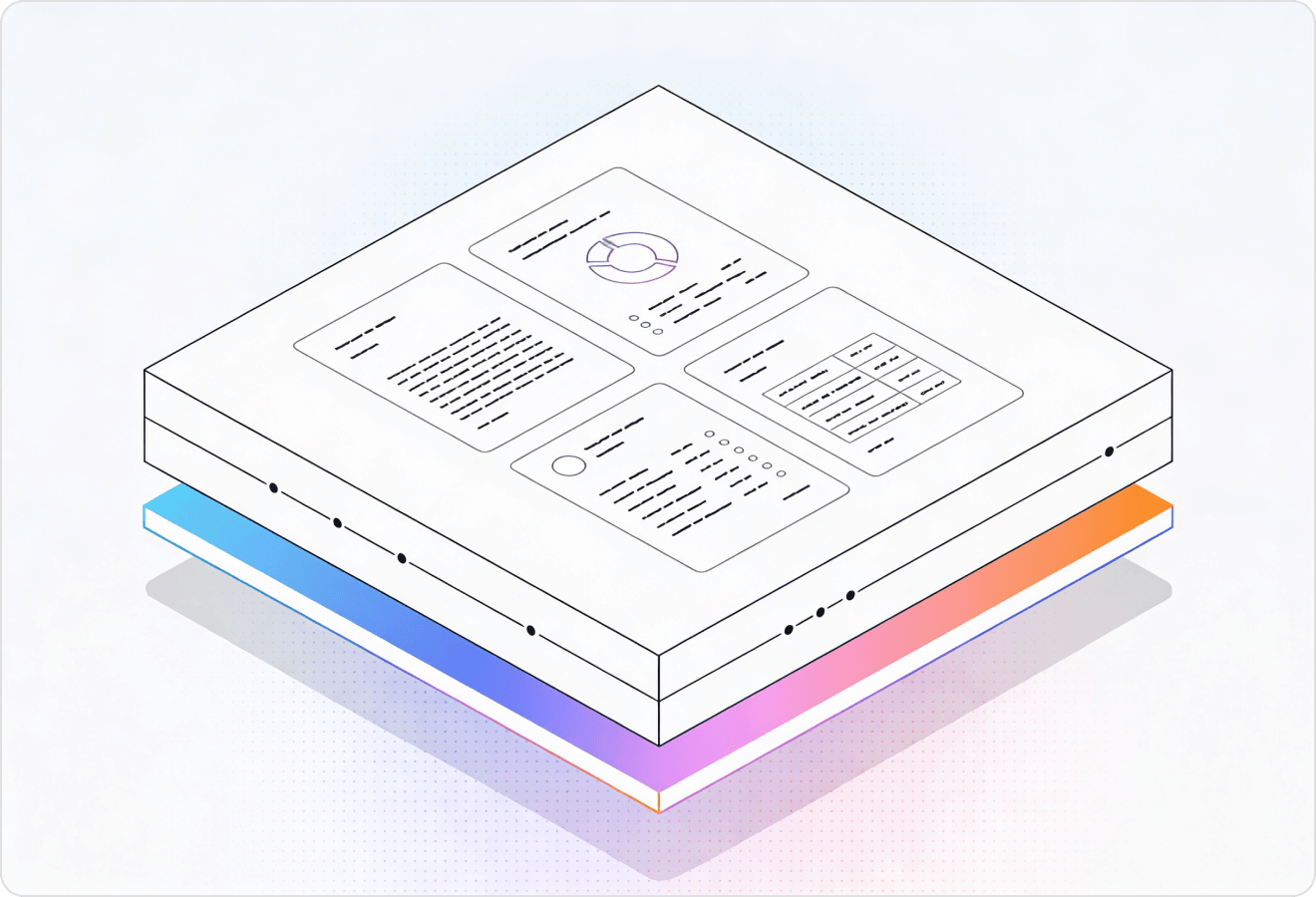
LlamaParse turns messy check scans and remittance PDFs into clean, structured JSON and Markdown, preserving tables, fields, and page layout. Agentic parsing validates outputs with citations and confidence scores, so you can reconcile faster, catch exceptions earlier, and reduce manual review.
Best-in-Class Accuracy

Use LlamaParse to turn investor PDFs, customer contracts, and inbound docs into clean JSON in hours, not weeks, without building brittle extraction code. Natural-language parsing instructions let lean teams standardize outputs and automate routing into CRM, billing, and analytics from day one.

Parse KYC packets, loan applications, and multi-table statements with layout-aware extraction so key fields don’t get scrambled across columns and footers. Granular metadata and confidence scores enable fast exception review and audit-ready traceability without slowing straight-through processing.

Convert referrals, lab reports, and scanned intake forms into structured records while preserving reading order and section boundaries for safe clinical review. Multimodal parsing captures tables and embedded charts so care teams and ops can automate prior auth and reduce manual re-keying.

Extract line-item tables from purchase orders, packing slips, and invoices into consistent Markdown/JSON that matches ERP schemas, even when suppliers change layouts. Tier-based agentic processing routes simple pages cheaply and escalates only messy scans, keeping per-document costs predictable at scale.
The Solution
01
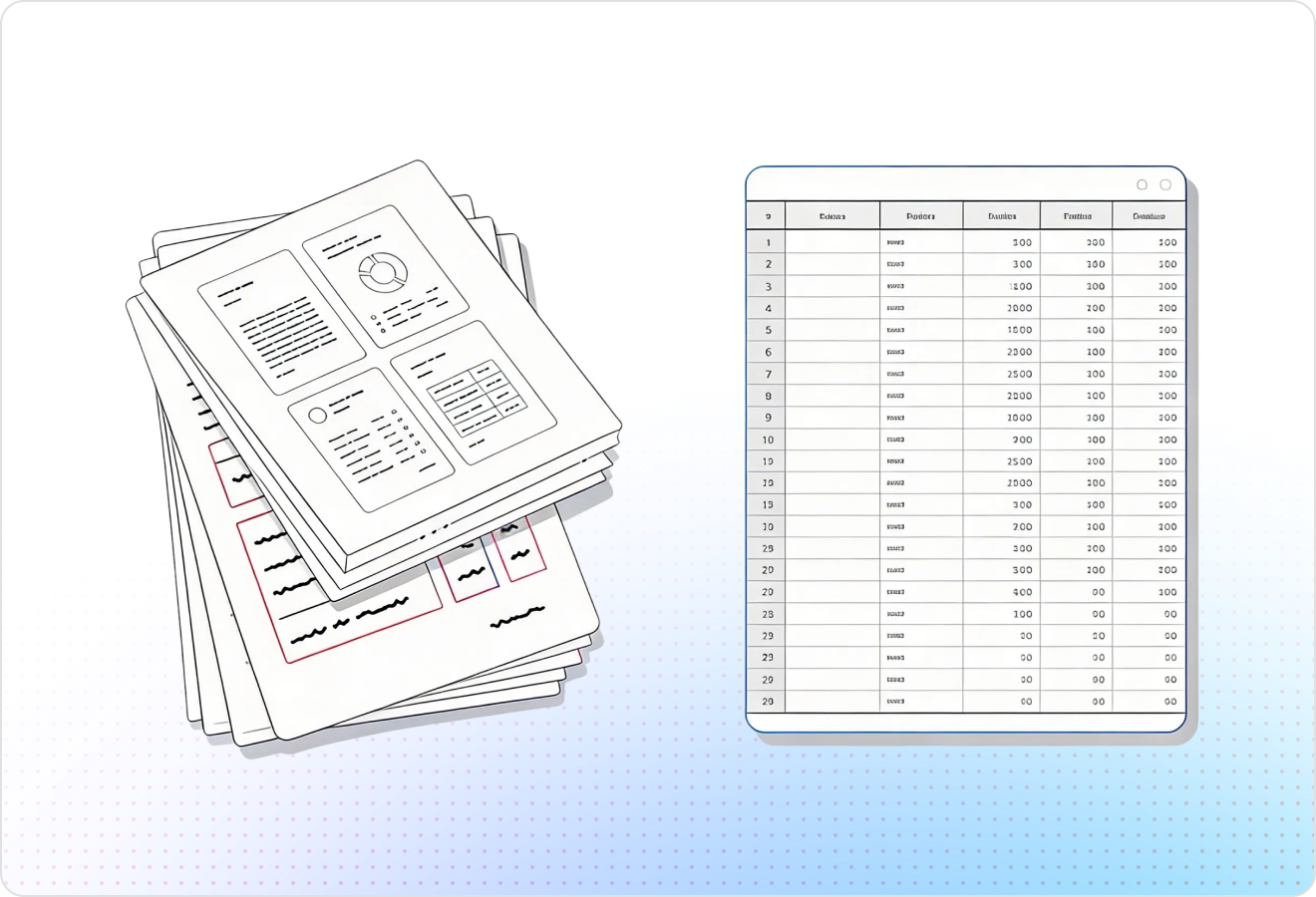
LlamaParse uses layout-aware vision to preserve reading order across multi-column pages, headers/footers, and mixed sections. When you’re checking extraction quality, this prevents the classic “scrambled OCR” problem that makes downstream validation unreliable.
02
LlamaParse detects tables and rebuilds them as real structure (rows/columns) instead of flattened text. This makes it straightforward to check whether totals, line items, and column alignment were captured correctly—without writing brittle post-processing.
03
LlamaParse runs iterative validation and self-correction to catch common extraction errors, formatting inconsistencies, and missed elements. For OCR checks, this boosts straight-through accuracy so you review fewer false positives and spend less time manually spot-fixing output.
04
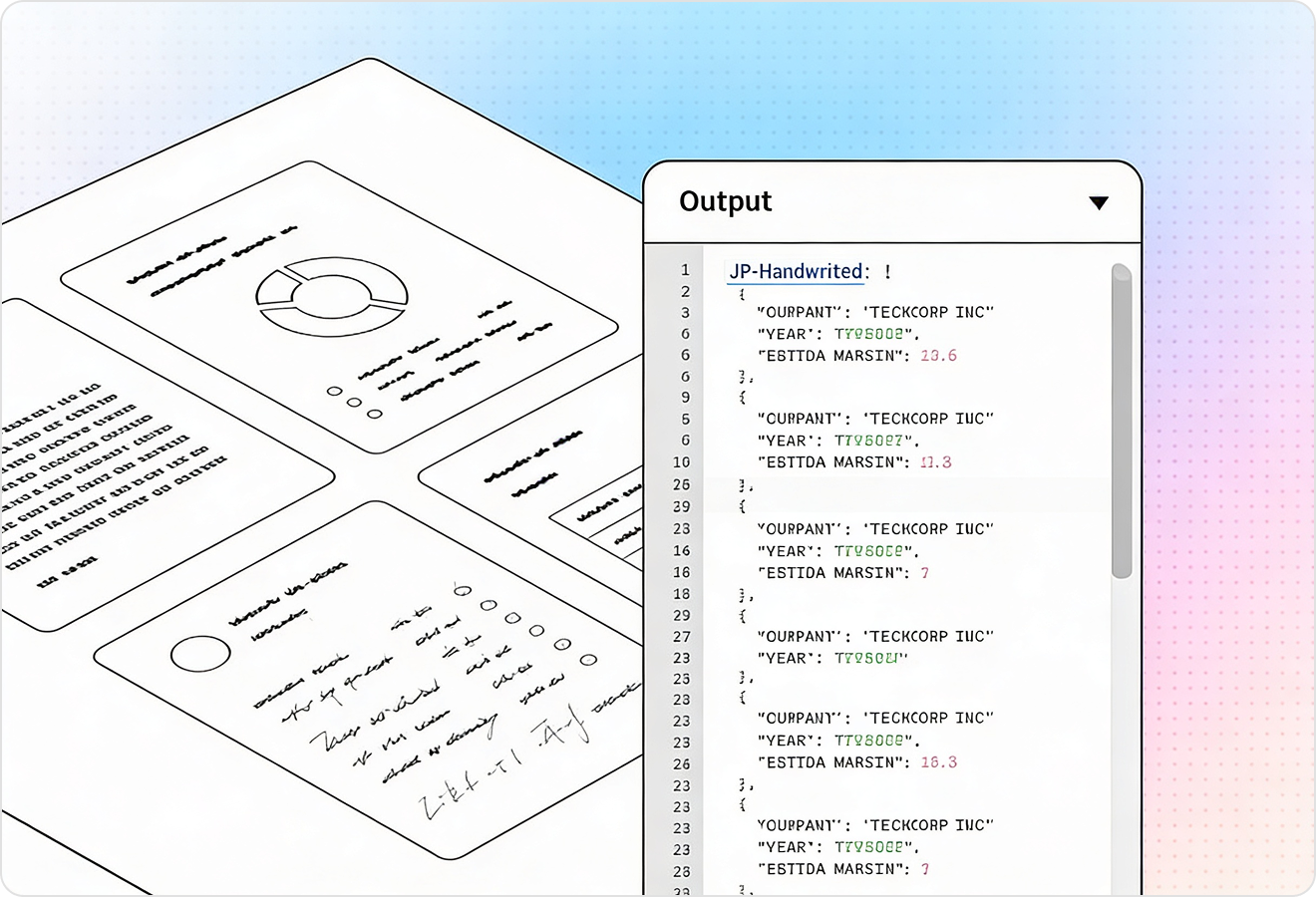
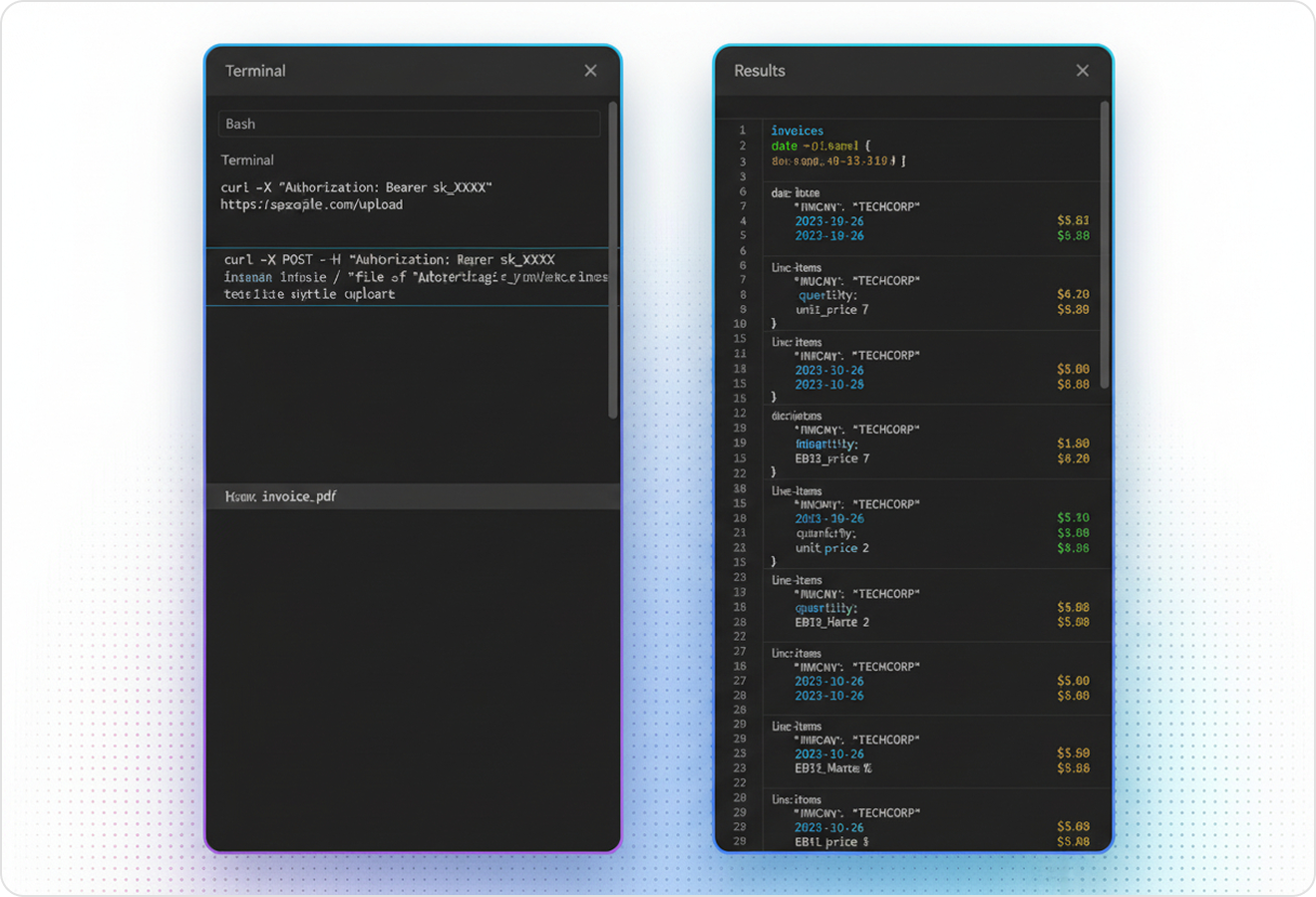
LlamaParse can output structured JSON with granular metadata like page numbers, element types, and spatial coordinates for each extracted block. That traceability makes it easy to audit what was captured where, build QA rules, and route low-confidence regions for human review.
Technical OCR documentation
Explore our developer guides to easily connect your document pipelines to LlamaParse.
Explore the documentation
Our AI catches the typos that tired eyes miss.

Export to Excel, JSON, XML, or directly via API.

SOC2 Type II compliant with end-to-end encryption.

Train the tool on your specific forms in minutes, not days.

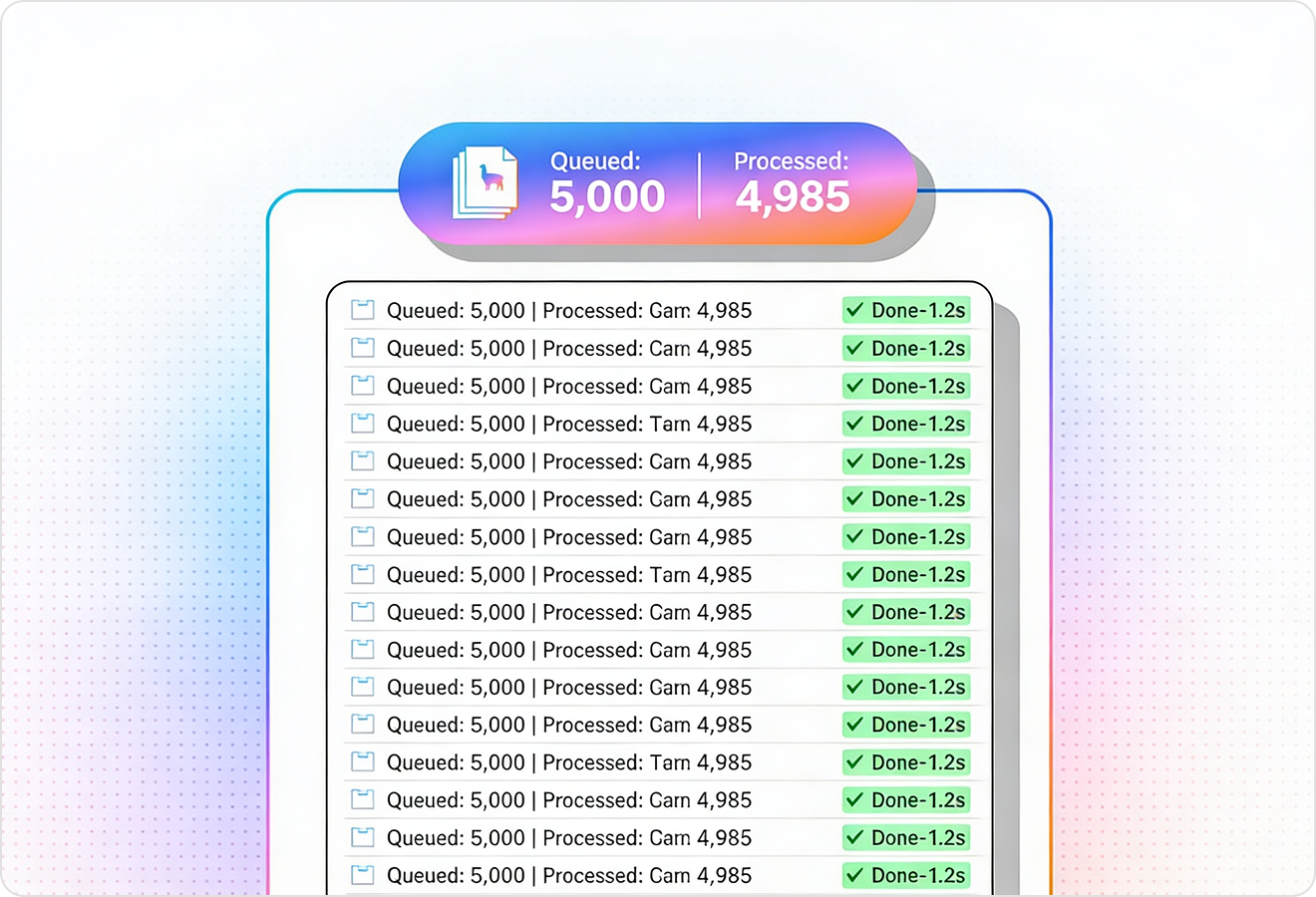
Average processing time of <3 seconds per page.
LlamaParse’s support of a wide variety of filetypes and its accuracy of parsing made it the best tool we tested in our evaluations. The LlamaIndex team was very responsive and we were off to the races within a day.
Common FAQs
01
Check OCR uses layout-aware text ordering to preserve the original reading flow across columns, headers/footers, and mixed sections. That means your validation compares the right words in the right order, so you can trust QA results instead of chasing layout-induced errors.
02
Yes—tables are reconstructed into true rows and columns rather than flattened text. This makes it easy to validate column alignment, totals, and missing cells with clear structure, reducing time spent on brittle post-processing.
03
Auto-correction validation loops iteratively detect common extraction mistakes and self-correct where possible. You’ll review fewer false positives and spend less time spot-fixing minor issues before data moves downstream.
04
How do I audit exactly where a questionable value came from in the document?
You get traceable JSON with page numbers, element types, and spatial coordinates for each extracted block. That metadata makes it straightforward to pinpoint the source on the page and build audit-friendly QA workflows.
05
Can I route only low-confidence or high-risk regions for human review?
Yes—granular metadata and structured output let you flag specific pages, fields, or coordinates for review instead of rechecking entire documents. This targeted approach speeds up verification while keeping quality standards high.
06
How quickly can we integrate Check OCR into our existing pipeline?
Because output is delivered as structured JSON, it fits cleanly into most ETL, validation, or document processing pipelines. Teams typically start by validating a few document types, then expand coverage as QA rules and review routing mature.