Nov 14, 2025
Document AI: The Next Evolution of Intelligent Document ProcessingPersona
Industry
Use cases
Utility Bill OCR
[ Utility Bill OCR ]

Use LlamaParse to turn messy utility bills into structured JSON with confidence scores in minutes.
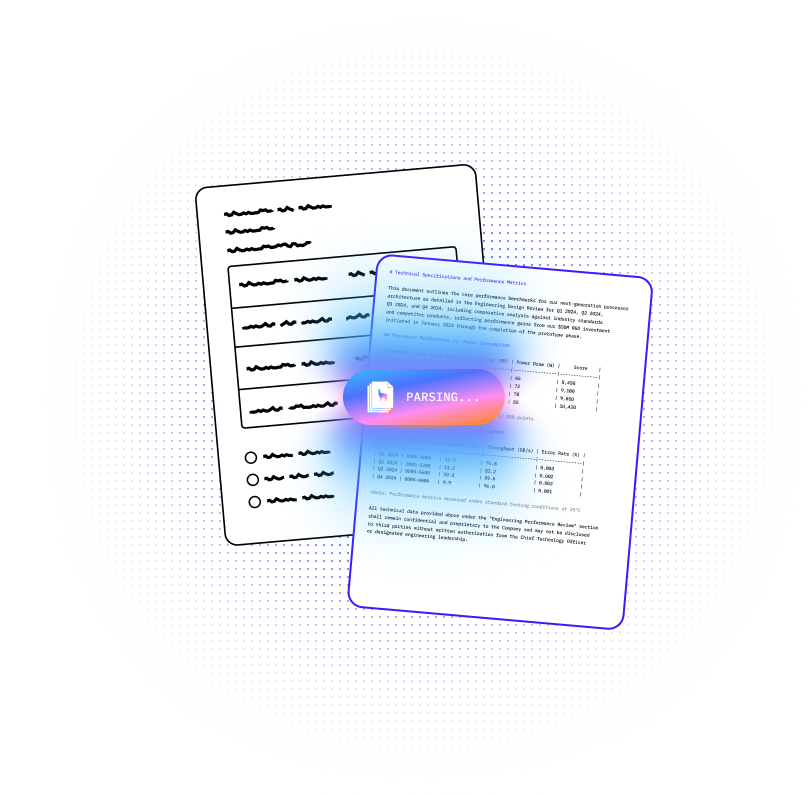
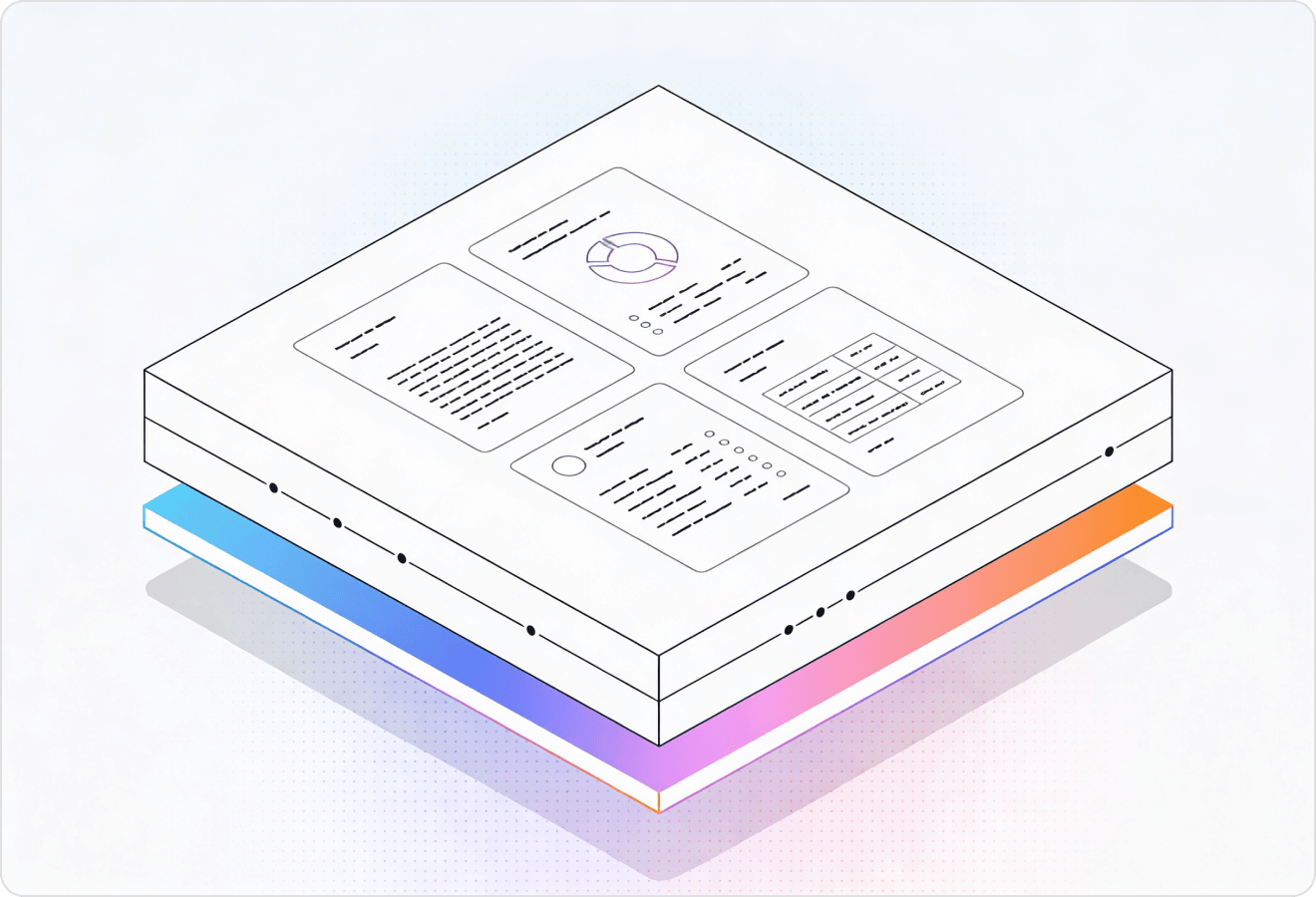

LlamaParse turns messy utility bills into clean, structured outputs you can trust, capturing line items, meter reads, and charges across varied layouts. Agentic document parsing uses layout-aware vision and validation loops to reduce corrections, so your team ships reliable JSON fast at scale.
Best-in-Class Accuracy

Parse utility bills across thousands of units into clean, layout-aware line items (service address, billing period, meter reads, taxes, and tiered rates) even when formats change by municipality or provider. Feed verified JSON with citations into your AP and tenant billing workflows to reduce rebills, disputes, and month-end close delays.

Ingest customer-submitted PDFs and scans to extract tariff details, usage tables, and demand charges for faster switching, credit checks, and accurate quote-to-bill reconciliation. LlamaParse handles complex tables and multi-column statements without brittle templates, so operations teams stop chasing exceptions from noisy “text-only” extraction.

Automate income and occupancy verification by extracting service address, payment history, delinquency flags, and usage anomalies from utility bills as part of underwriting and KYC. Return structured outputs with confidence scores and page-level traceability to streamline audits and reduce manual review time on edge-case documents.

Turn messy utility statements into normalized, schema-ready JSON for spend analytics and emissions reporting, without writing per-provider parsers or regex cleanup pipelines. Use natural-language parsing instructions to standardize categories and units on the fly, letting small teams ship production-grade ingestion in days, not quarters.
The Solution
01
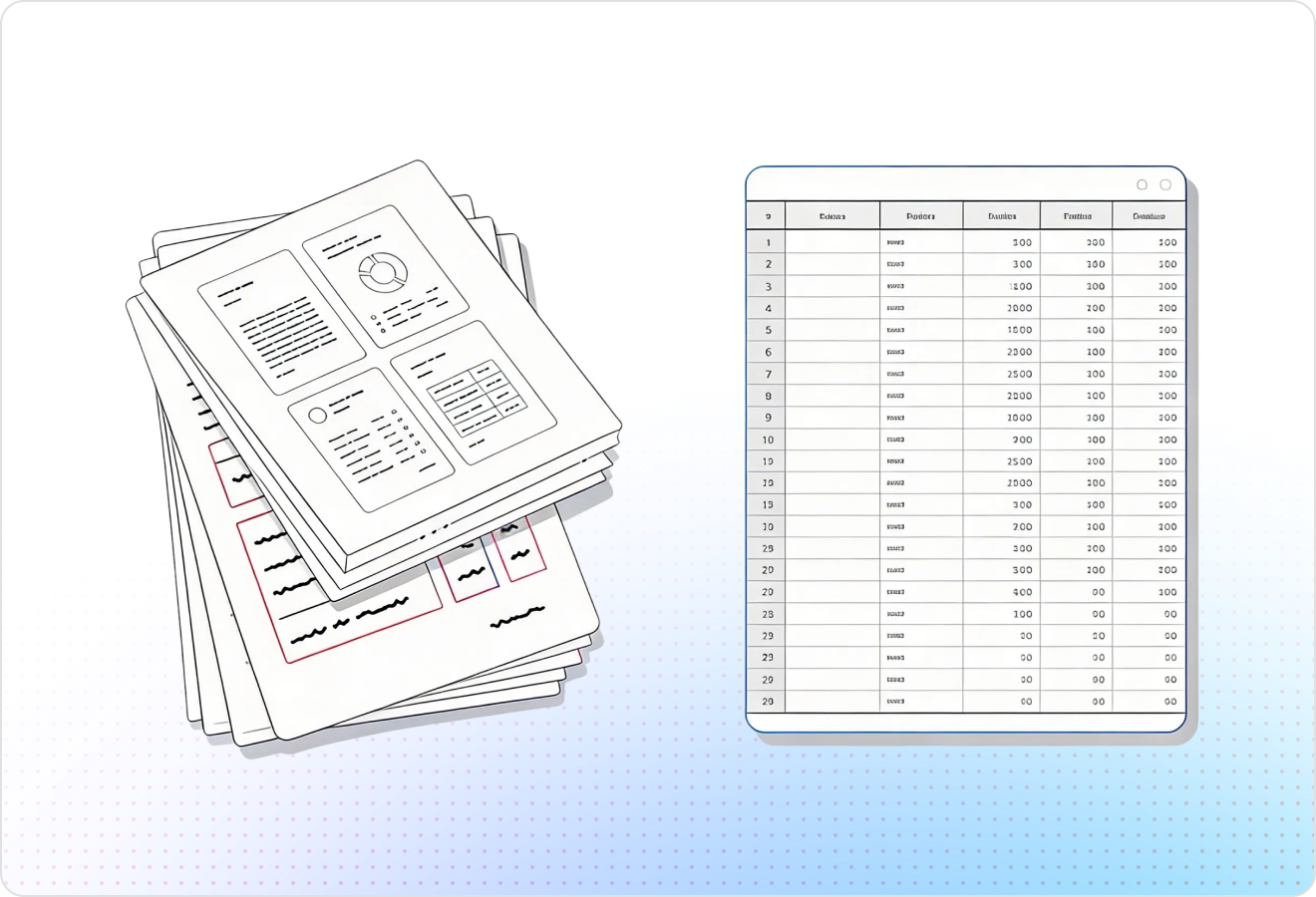
LlamaParse uses layout-aware vision to preserve reading order across headers, account sections, and multi-column rate details common in utility bills. This prevents scrambled text and makes it straightforward to pull fields like account number, service address, billing period, and total due.
02
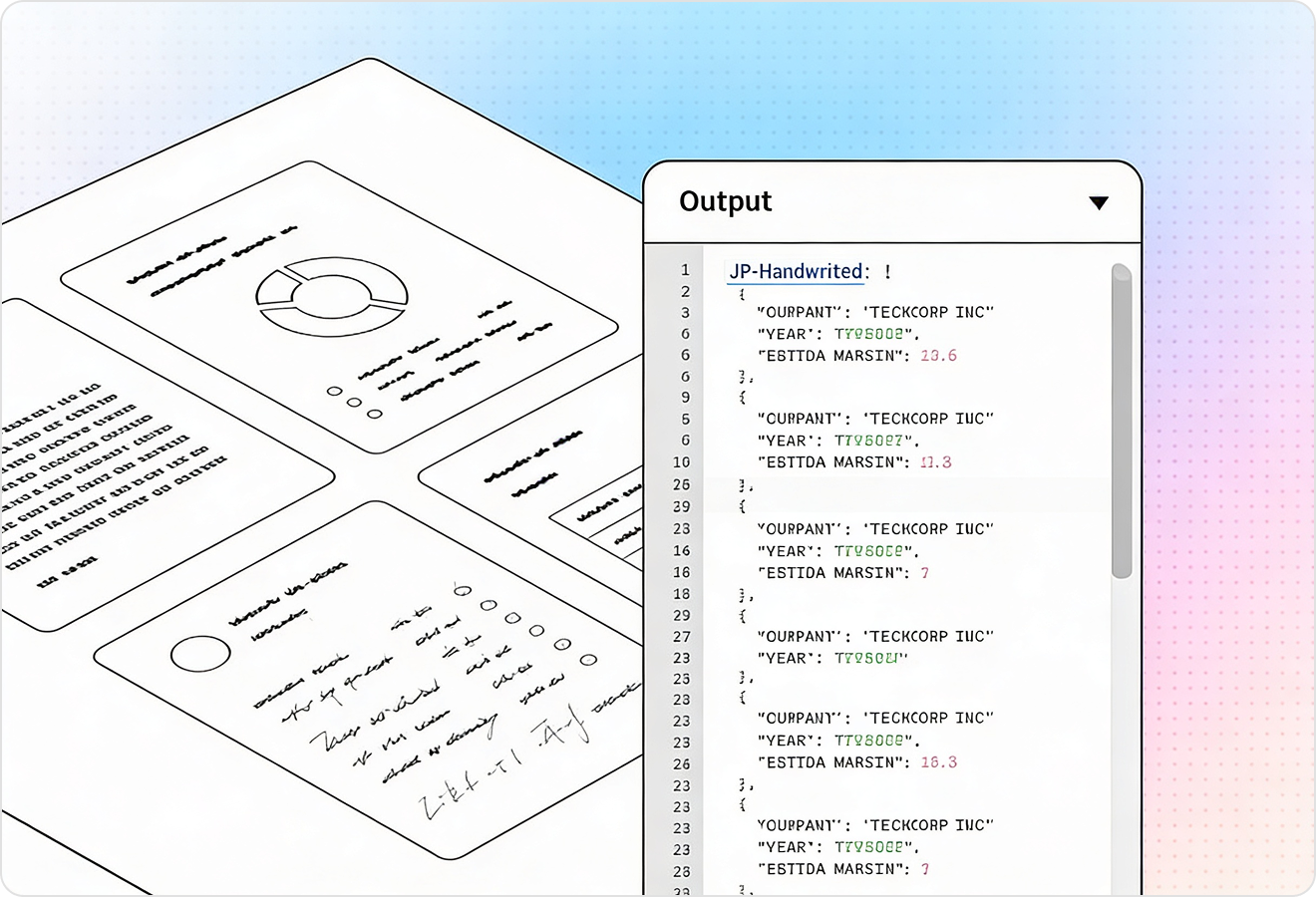
Utility bills often hide the important numbers inside tables (usage by tier, taxes, fees, prior balance, payments) and LlamaParse extracts these structures cleanly instead of flattening them into unreadable text. You get reliable line items you can reconcile, audit, and load into downstream systems without hand-written table heuristics.
03
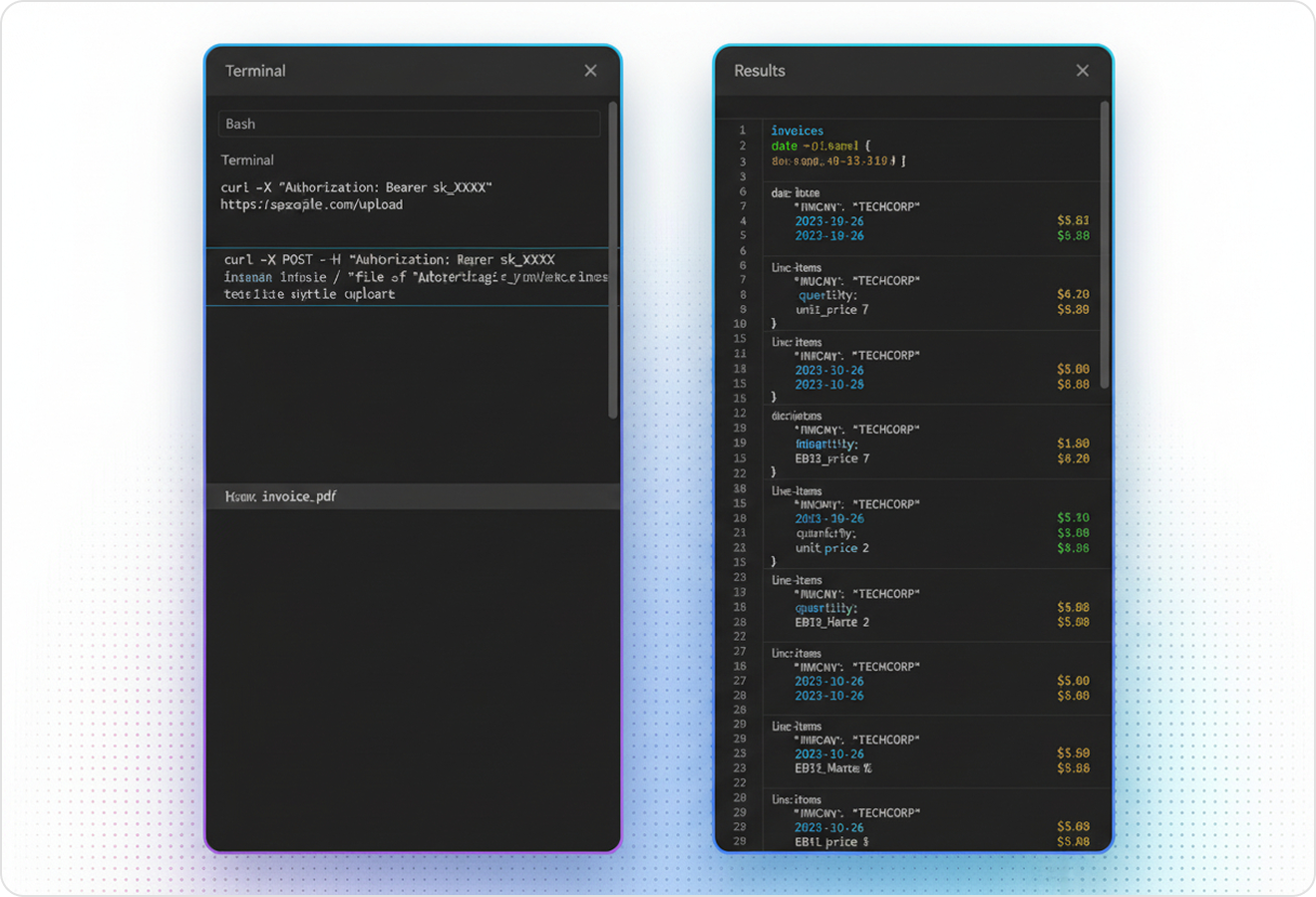
LlamaParse can output structured JSON with granular metadata like page number and spatial coordinates for each extracted element. For utility bill processing, that means you can trace every extracted amount back to the exact spot on the bill for reviews, dispute handling, and compliance workflows.
04
LlamaParse runs automatic validation and self-correction loops to reduce extraction errors on low-quality scans, skewed photos, and noisy PDFs. This improves straight-through processing when capturing critical values like meter reads, kWh/therms usage, due dates, and totals that must be correct.
Technical OCR documentation
Explore our developer guides to easily connect your document pipelines to LlamaParse.
Explore the documentation
Our AI catches the typos that tired eyes miss.

Export to Excel, JSON, XML, or directly via API.

SOC2 Type II compliant with end-to-end encryption.

Train the tool on your specific forms in minutes, not days.

Average processing time of <3 seconds per page.
LlamaParse’s support of a wide variety of filetypes and its accuracy of parsing made it the best tool we tested in our evaluations. The LlamaIndex team was very responsive and we were off to the races within a day.
Common FAQs
01
No—layout-aware parsing preserves the bill’s reading order across headers, sidebars, and multi-column sections, so text doesn’t get jumbled. That makes it easy to reliably capture fields like account number, service address, billing period, due date, and total due. It reduces manual cleanup and speeds up downstream automation.
02
Yes—table and line-item extraction keeps rows and columns intact instead of flattening them into unreadable text. You get structured line items (tiers, surcharges, taxes, prior balance, payments) that are ready to reconcile, audit, or load into your billing and analytics systems. This removes the need for fragile, custom table rules.
03
You can output clean, structured JSON designed for programmatic use. It’s well-suited for mapping into your data model for AP automation, energy reporting, customer onboarding, or bill validation. This helps your team move from “document” to “data” with minimal post-processing.
04
Can we verify where each extracted value came from for audits or dispute handling?
Yes—each extracted field can include metadata like page number and spatial coordinates, so you can trace values back to the exact spot on the bill. This makes reviews faster and provides an audit trail for compliance and dispute workflows. It also builds confidence when automating high-stakes fields like totals and meter reads.
05
How does it handle low-quality scans, skewed photos, or noisy PDFs?
Automatic validation and self-correction loops help reduce errors caused by poor image quality and messy inputs. This improves straight-through processing for critical values like kWh/therms usage, meter reads, due dates, and totals. The result is fewer exceptions and less time spent re-checking documents.
06
How quickly can we get started and see results on our utility bill formats?
Most teams can start by running a sample set of bills and reviewing the extracted JSON and line items within hours, not weeks. Because the parser is designed for complex utility layouts, you spend less time tweaking rules and more time validating outcomes. If you share representative bill samples, you can confirm accuracy early and scale confidently.