Nov 14, 2025
Document AI: The Next Evolution of Intelligent Document ProcessingPersona
Industry
Use cases
Document Processing Databricks
[ Document Processing Databricks ]

Use LlamaParse to turn messy PDFs into reliable, structured data your Databricks pipelines can trust.
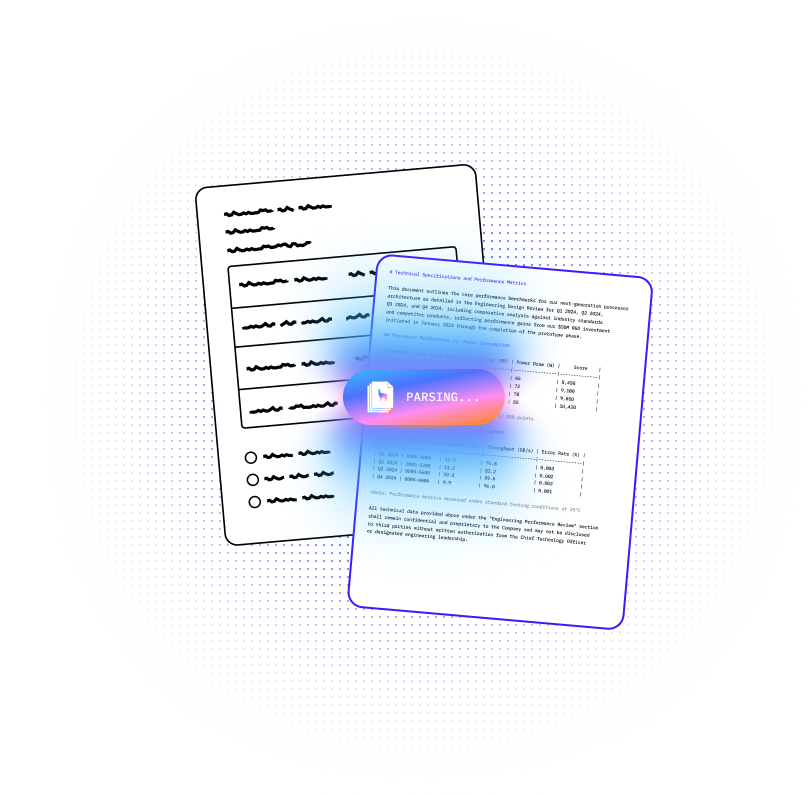


Use LlamaParse to turn PDFs, scans, and messy reports into clean tables and structured outputs that land directly in Databricks. Agentic parsing stays layout-aware, validates extractions with citations and confidence, and cuts rework when document formats inevitably change.
Best-in-Class Accuracy

Turn messy investor decks, contracts, and customer PDFs into clean, queryable JSON/Markdown directly in Databricks so your team can ship document-powered features without building brittle parsing code. LlamaParse handles layout, tables, and edge-case scans with validation loops, so your MVP doesn’t collapse the first time users upload “weird” documents.

Ingest loan packages, claims, and statements into Databricks with layout-aware table extraction that preserves line items, footnotes, and multi-column reading order for downstream risk and fraud models. Use JSON mode with page-level metadata and citations to support audit-ready workflows and reduce manual exception handling when documents don’t match templates.

Parse invoices, packing lists, and certificates of analysis into structured outputs in Databricks, keeping complex tables intact so matching, reconciliation, and QA checks can run automatically. Multimodal parsing captures charts, specs, and annotated diagrams so teams can detect supplier deviations and quality issues without human re-keying.

Extract clauses, obligations, and key dates from contracts and board materials into Databricks while preserving document structure in Markdown for reliable section-level search and review. Natural-language parsing instructions let teams standardize outputs across varied document formats, reducing time spent on custom rules for every new template.
The Solution
01
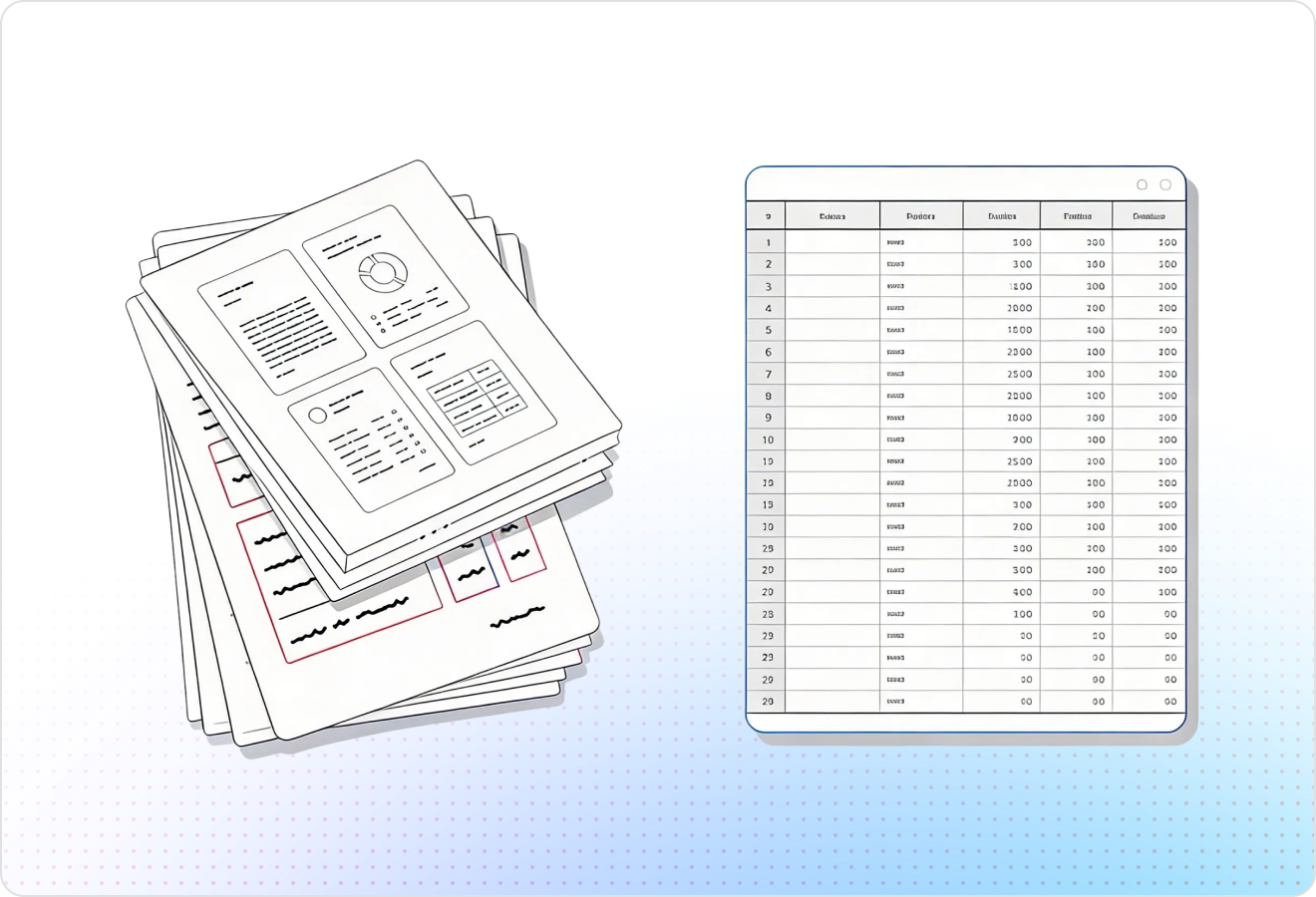
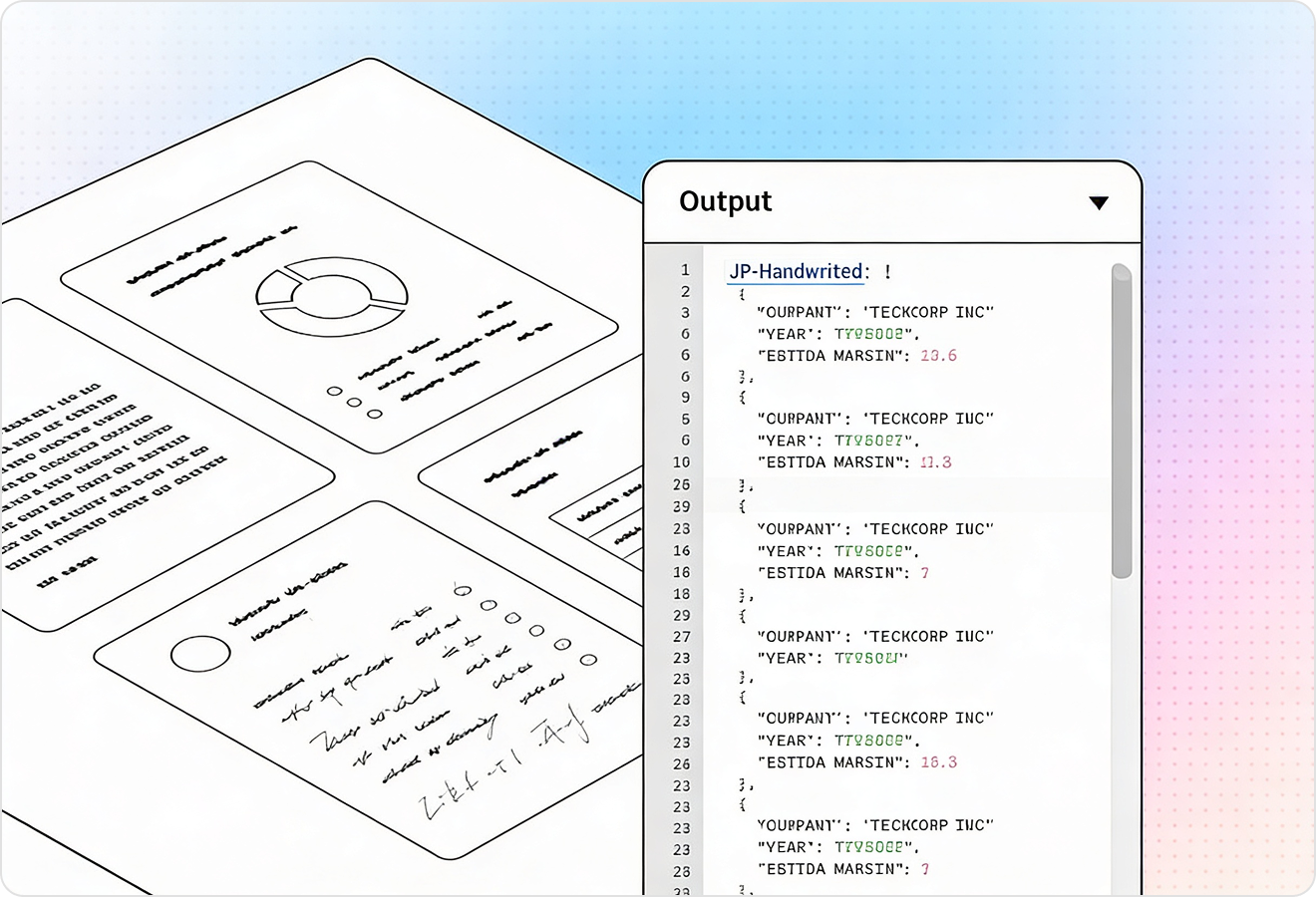
LlamaParse preserves reading order and structure across multi-column PDFs, headers/footers, and dense tables. That means Databricks pipelines ingest clean, analysis-ready tables instead of spending cycles untangling scrambled text and misaligned rows.
02
Emit structured JSON (or Markdown/HTML) that maps naturally into Spark DataFrames and Delta Lake schemas in Databricks. You get consistent fields for downstream ETL, quality checks, and governance without writing brittle parsing glue.
03
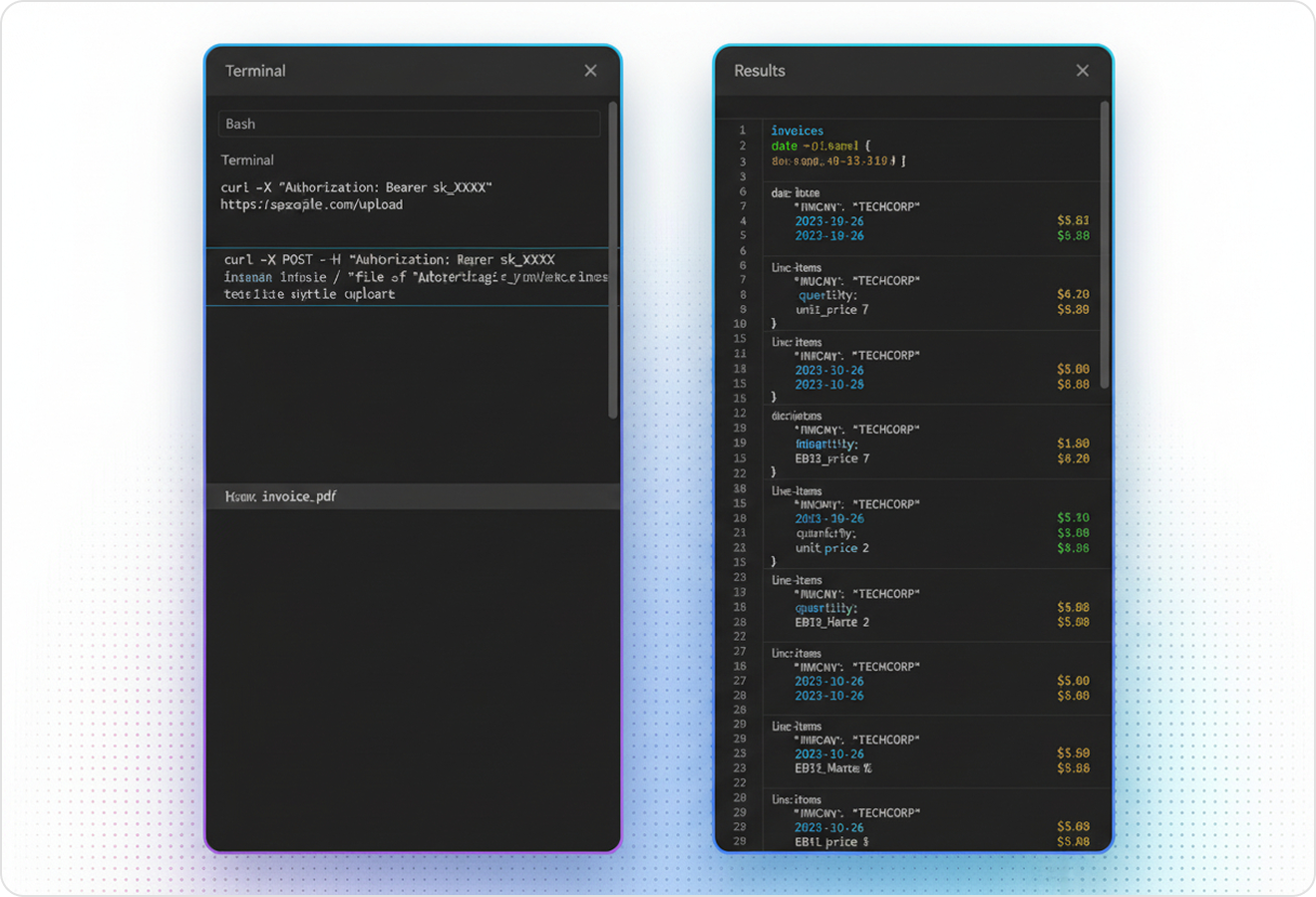
Each extracted element can include page references, coordinates, and confidence signals for traceability. In Databricks, this supports auditable pipelines and targeted human review workflows when a batch falls below your quality threshold.
04
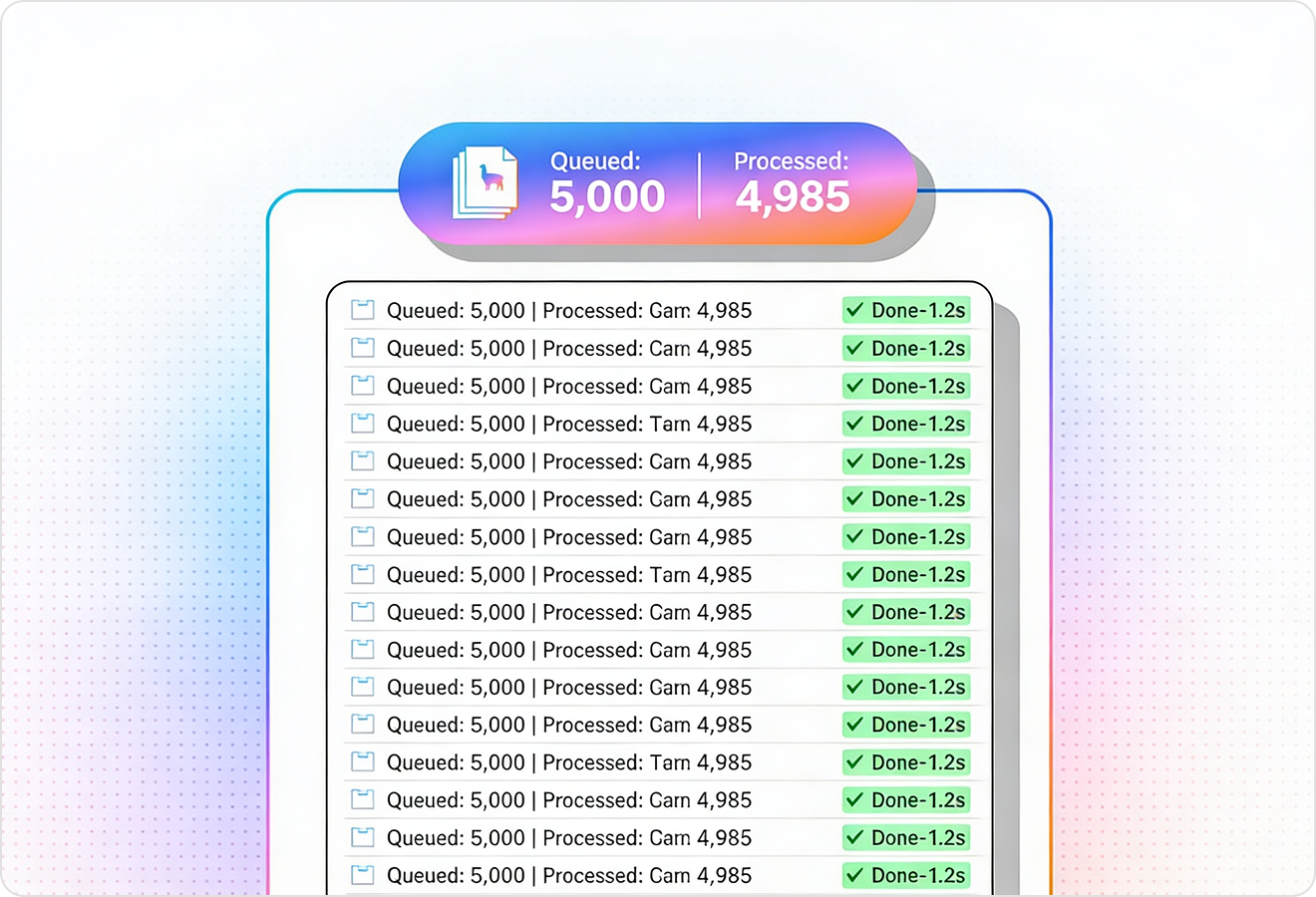
LlamaParse routes simple pages through faster, cheaper parsing and reserves heavier vision reasoning for complex scans, tables, and mixed-content pages. For Databricks document processing at scale, you keep accuracy high while controlling cost and latency across large ingestion jobs.
Technical OCR documentation
Explore our developer guides to easily connect your document pipelines to LlamaParse.
Explore the documentation
Our AI catches the typos that tired eyes miss.

Export to Excel, JSON, XML, or directly via API.

SOC2 Type II compliant with end-to-end encryption.

Train the tool on your specific forms in minutes, not days.

Average processing time of <3 seconds per page.
LlamaParse’s support of a wide variety of filetypes and its accuracy of parsing made it the best tool we tested in our evaluations. The LlamaIndex team was very responsive and we were off to the races within a day.
Common FAQs
01
Yes—layout-aware extraction preserves reading order across multi-column layouts, headers/footers, and complex tables. That means your Databricks jobs receive analysis-ready rows and columns instead of scrambled text that requires manual cleanup.
02
You can emit structured JSON (and optionally Markdown/HTML) that maps cleanly into DataFrames and Delta tables. Consistent fields make ETL, validation checks, and governance easier—without maintaining brittle parsing code.
03
Each extracted element can include page references, coordinates, and confidence signals. This enables auditable pipelines in Databricks and makes it straightforward to pinpoint exactly where a value came from during reviews.
04
How do you handle quality control when a batch contains low-quality scans or mixed content?
Confidence signals and parsing metadata let you set thresholds and route only the uncertain pages to human review. You can keep the rest of the batch fully automated while maintaining clear, defensible QA criteria.
05
What does scaling cost look like for large Databricks ingestion jobs?
Tiered agentic processing automatically uses faster, lower-cost parsing for simple pages and applies heavier vision reasoning only when needed. This helps control spend and latency while keeping accuracy high across large volumes.
06
How much engineering effort is required to replace our current PDF parsing approach?
Most teams integrate by swapping the parsing step and writing the JSON output directly into their existing DataFrames/Delta pipeline. Because the output is structured and consistent, you spend less time on edge-case fixes and ongoing maintenance.