Nov 14, 2025
Document AI: The Next Evolution of Intelligent Document ProcessingPersona
Industry
Use cases
Payslip OCR
[ Payslip OCR ]

Use LlamaParse to turn payslips into structured JSON with citations, so your payroll exports stay correct.
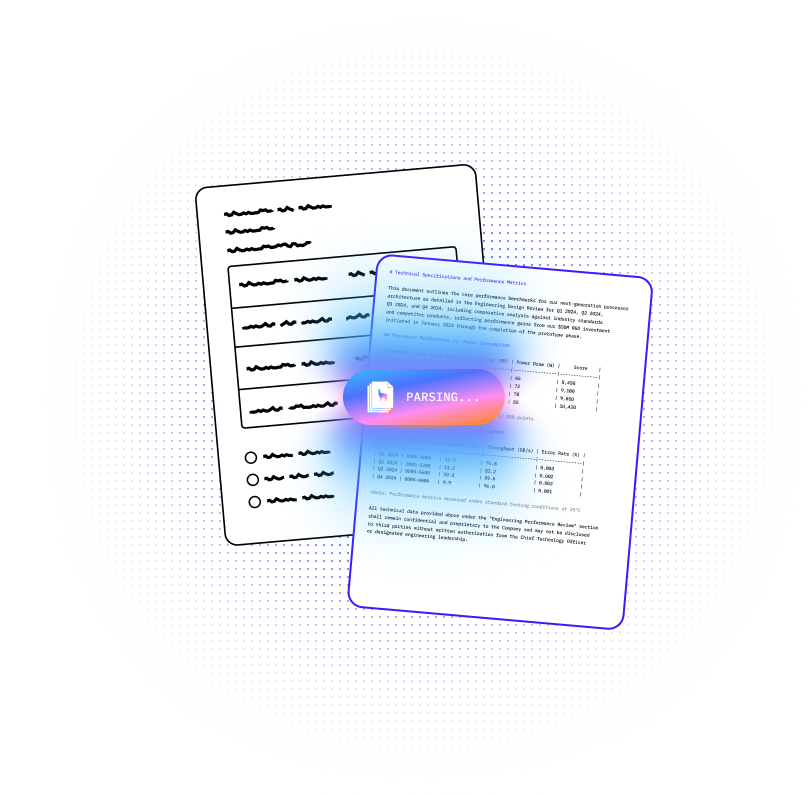


LlamaParse turns messy payslips into clean, consistent JSON by understanding layout, earnings, deductions, and totals, not just raw text. Agentic validation loops and confidence metadata catch edge cases like multi-page statements and unusual formats, so payroll workflows run with less review.
Best-in-Class Accuracy

Automate income verification by parsing payslips into structured JSON—gross/net pay, deductions, employer details, and pay period—with layout-aware extraction that doesn’t break across templates. Use citations and confidence scores to speed up exception handling, reduce fraud risk, and increase straight-through approvals without building brittle parsing rules.

Extract earnings history and employment status from payslips to validate loss-of-income, disability, and workers’ comp claims, even when documents include multi-column tables and inconsistent formatting. Standardize outputs in Markdown/JSON to feed claim decisioning workflows and minimize back-and-forth requests that delay settlement.

Normalize payslips from multiple countries and payroll systems to reconcile contractor pay, verify rate compliance, and resolve disputes faster using table-accurate parsing rather than manual spreadsheet cleanup. Apply natural-language parsing instructions to output exactly the fields your payroll ops team needs, so onboarding and audits don’t become a document-chasing exercise.

Ship payslip ingestion in days by using LlamaParse as the document layer—turn messy PDFs into AI-ready Markdown/JSON without maintaining a fragile OCR-and-regex pipeline. Control costs with tier-based routing so simple digital payslips run cheap while complex scans automatically escalate for higher accuracy as you scale.
The Solution
01
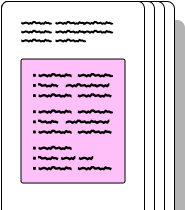
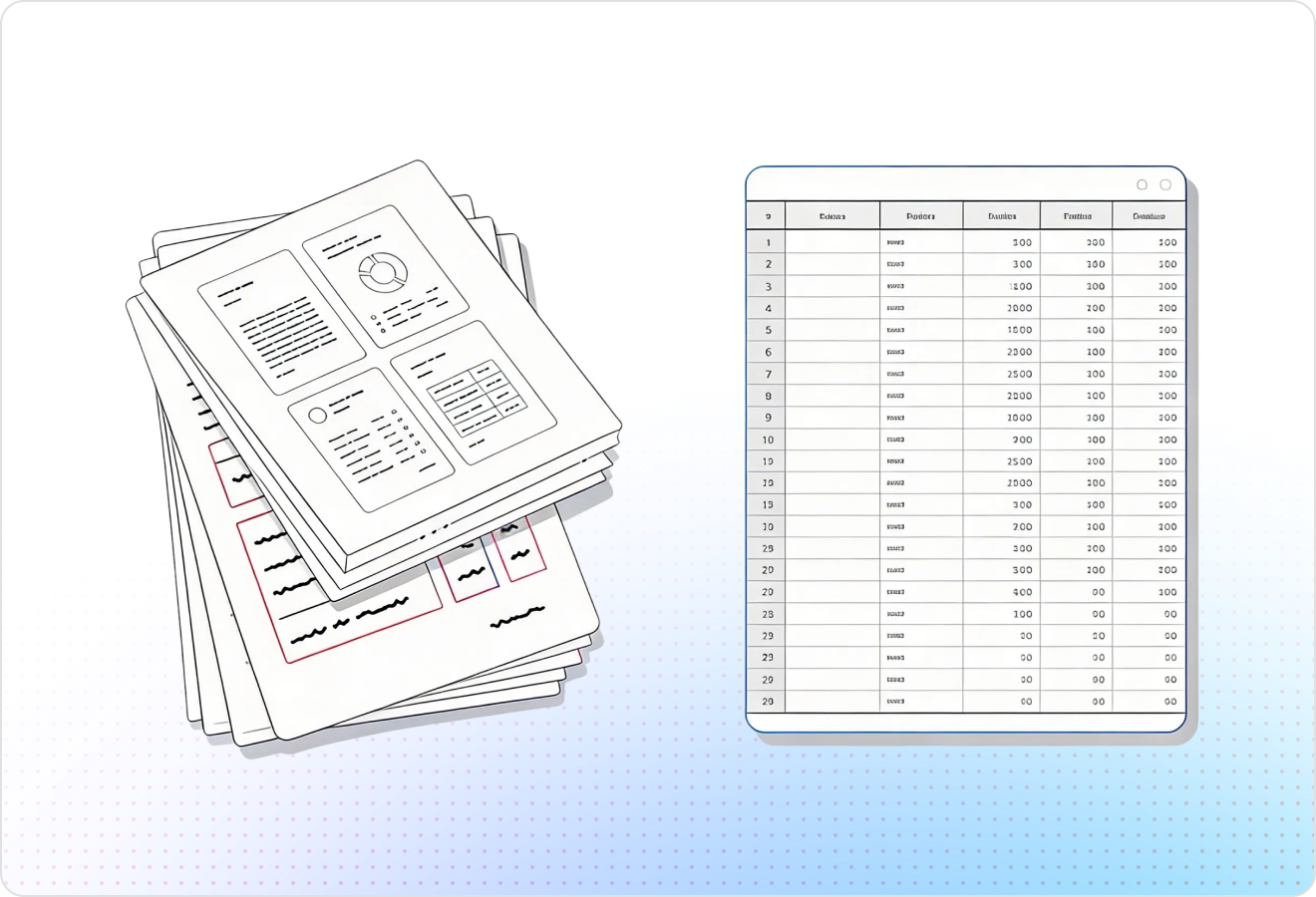
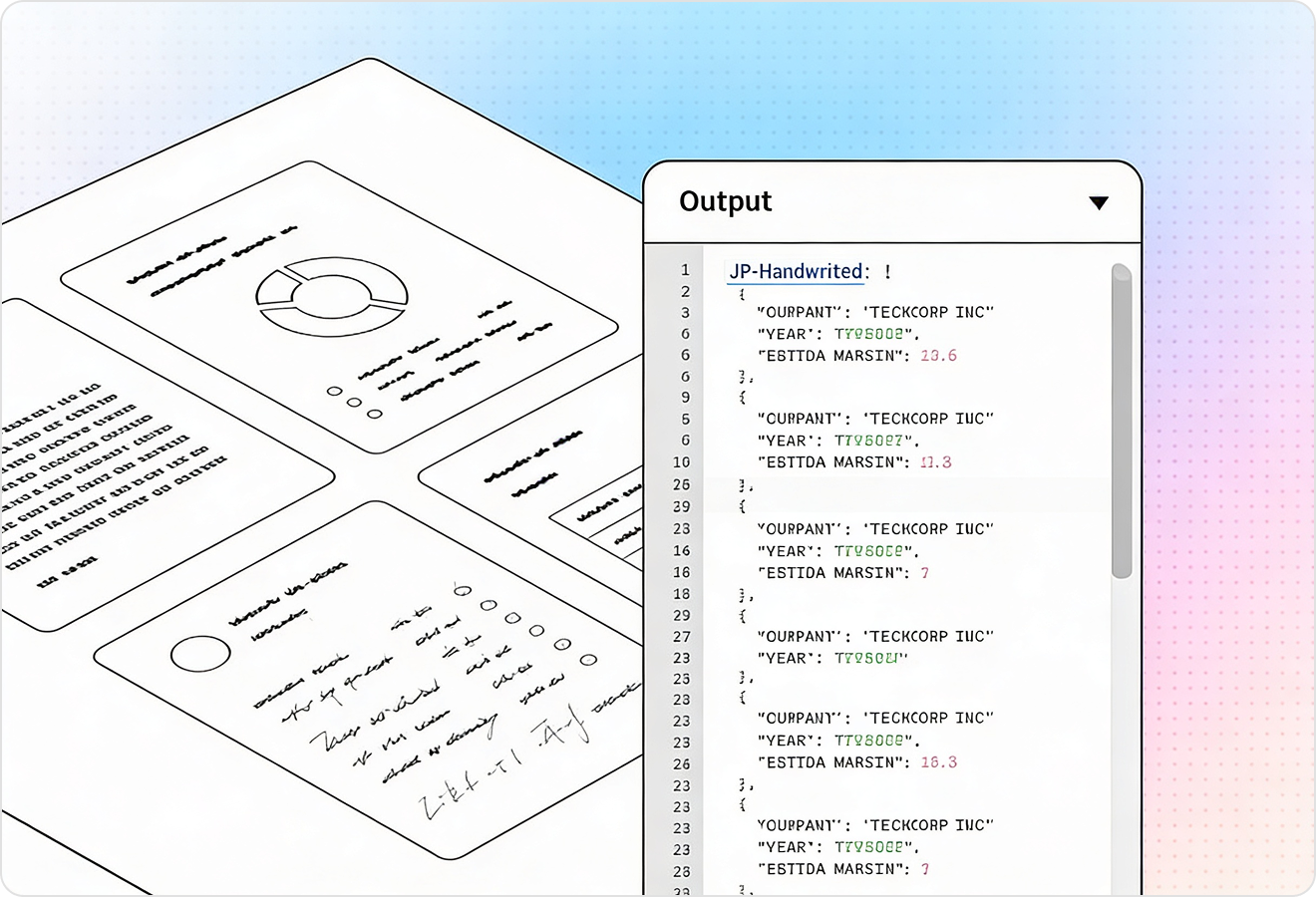
LlamaParse understands real payslip layouts—multi-column sections, headers/footers, and dense line items—so values don’t get scrambled during extraction. This keeps earnings, deductions, and YTD totals aligned with the right labels for clean downstream mapping.
02
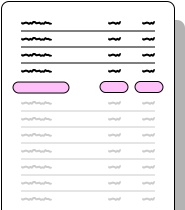
Payslips often embed critical details in tables (rate, hours, taxable wages, deductions), and LlamaParse extracts these with structure intact. You get consistent rows and columns instead of flattened text, which makes payroll reconciliation and audits far less painful.
03
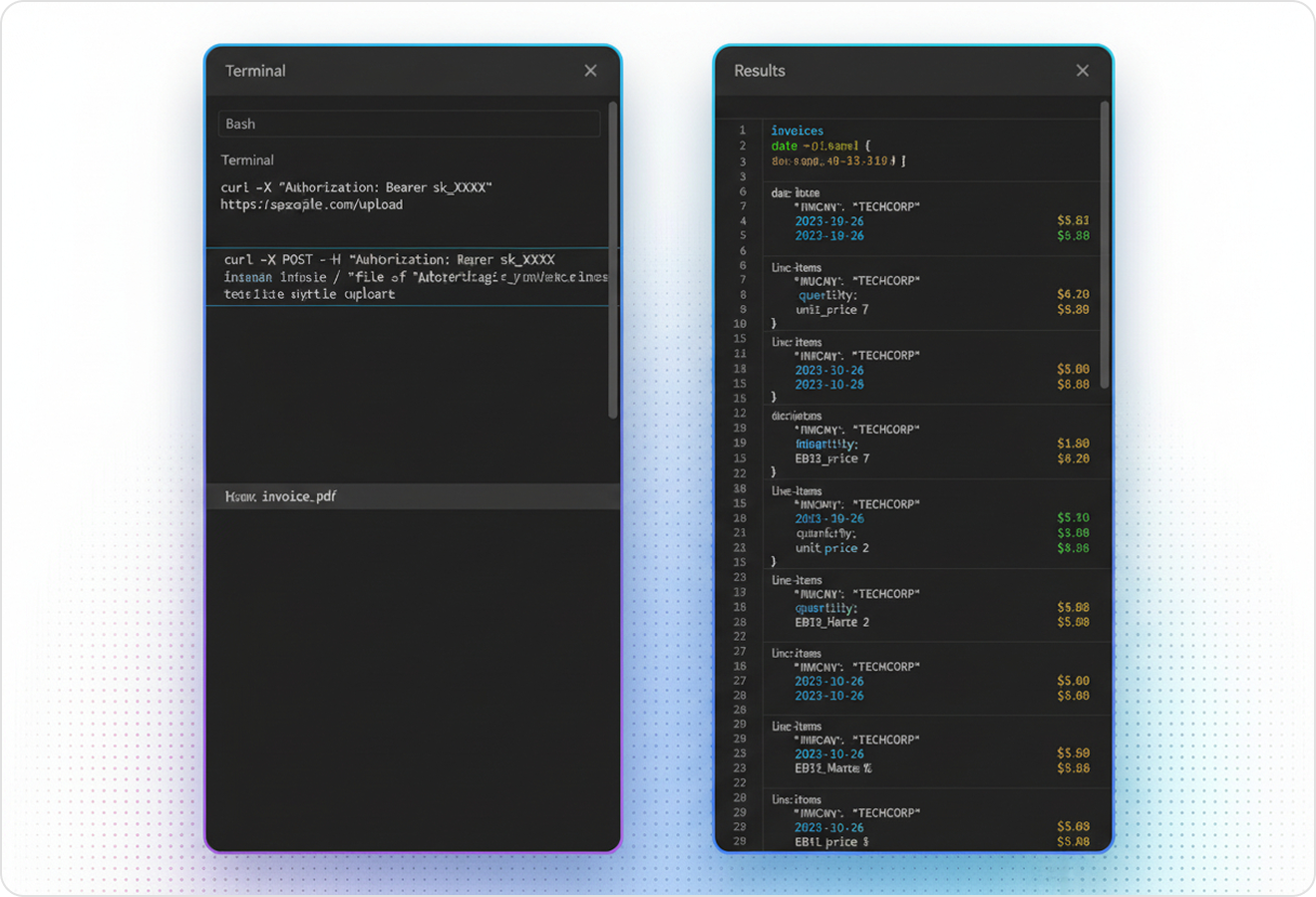
LlamaParse can return structured JSON plus granular metadata like page references and element coordinates for each extracted field. That traceability lets you verify net pay, tax withholdings, and employee identifiers quickly in human-in-the-loop reviews.
04
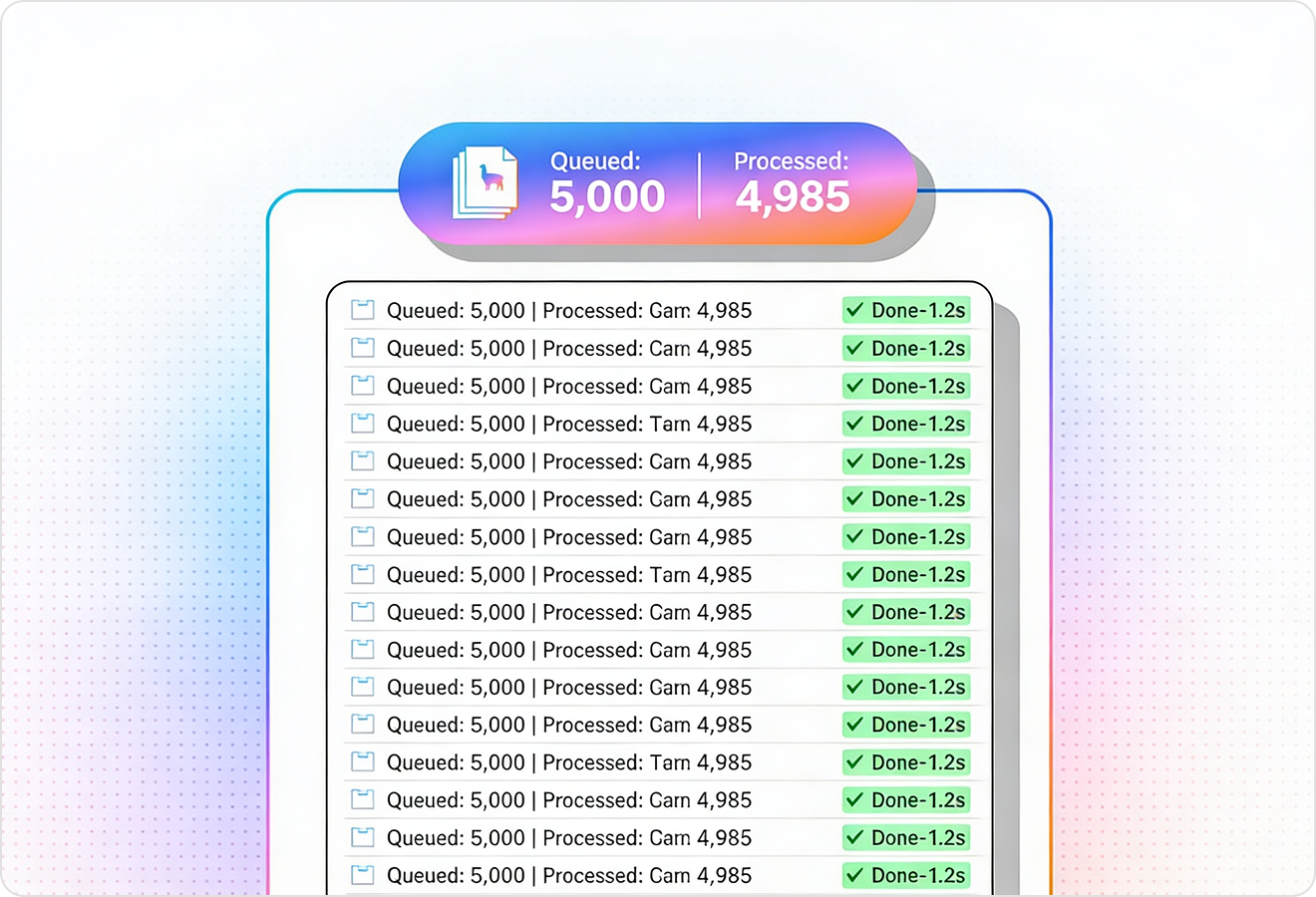
LlamaParse runs self-checks to catch common extraction errors like misplaced decimal points, swapped labels, or missing totals in low-quality scans. For payslips, this improves straight-through processing by reducing exceptions before the data hits payroll or KYC workflows.
Technical OCR documentation
Explore our developer guides to easily connect your document pipelines to LlamaParse.
Explore the documentation
Our AI catches the typos that tired eyes miss.

Export to Excel, JSON, XML, or directly via API.

SOC2 Type II compliant with end-to-end encryption.

Train the tool on your specific forms in minutes, not days.

Average processing time of <3 seconds per page.
LlamaParse’s support of a wide variety of filetypes and its accuracy of parsing made it the best tool we tested in our evaluations. The LlamaIndex team was very responsive and we were off to the races within a day.
Common FAQs
01
No—our layout-aware parsing preserves sections like headers/footers, multi-column blocks, and dense line items so values stay attached to the right labels. That means earnings, deductions, and YTD totals come through cleanly for reliable downstream mapping.
02
Payslip tables are extracted with rows and columns intact rather than flattened into messy text. You get consistent, structured line items for reconciliation, audits, and payroll checks without manual reformatting.
03
Yes—output can be returned as structured JSON with citations such as page references and element coordinates for each field. This makes it easy to verify net pay, tax withholdings, and identifiers during reviews and supports compliant, auditable workflows.
04
What happens with low-quality scans or common OCR mistakes like wrong decimals or swapped labels?
Auto-correction validation loops run self-checks to catch issues like misplaced decimal points, missing totals, and misassigned labels before the data is finalized. This reduces exceptions and improves straight-through processing, especially in KYC and payroll pipelines.
05
Can we trust the extracted totals—like gross pay, deductions, and net pay—to reconcile correctly?
The parser keeps related fields aligned and performs validation to flag inconsistencies between line items and totals. When something doesn’t add up, you can quickly confirm the source using citations, saving time while maintaining accuracy.
06
How quickly can we integrate Payslip OCR into our existing payroll or HR systems?
You receive predictable JSON output designed for straightforward mapping into your existing data model and workflows. With structured tables and traceable fields, most teams can move from pilot to production quickly with fewer edge-case surprises.