Nov 14, 2025
Document AI: The Next Evolution of Intelligent Document ProcessingPersona
Industry
Use cases
Phytosanitary Certificate OCR
[ Phytosanitary Certificate OCR ]

Use LlamaParse to reliably capture fields and tables from phytosanitary certificates into clean JSON.
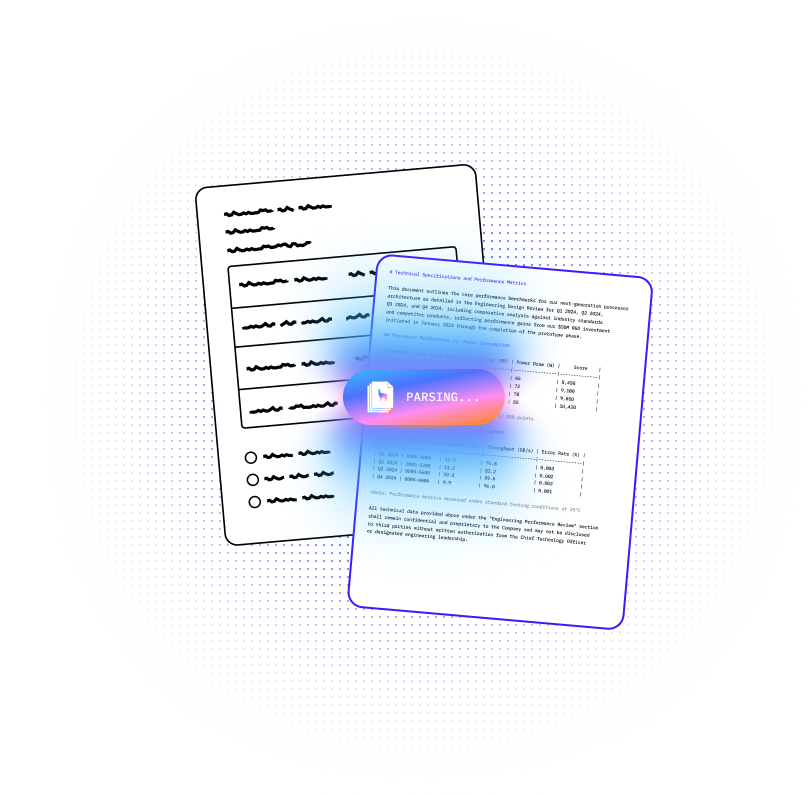

LlamaParse turns messy phytosanitary certificates into clean, structured fields like exporter, origin, commodity, treatment, and certification details you can trust. Its agentic document parsing understands stamps, tables, and shifting layouts, then returns JSON with citations and confidence for faster clearance.
Best-in-Class Accuracy

Turn phytosanitary certificates into structured JSON that populates SKU, lot, origin, treatment, and inspection fields directly in your ERP—without manual rekeying or brittle template rules. LlamaParse’s layout-aware extraction preserves complex tables and stamps so shipments clear faster and fewer containers get held for document mismatches.

Normalize phytosanitary docs from hundreds of exporters into a consistent payload for customs filings, even when scans are skewed, multi-page, or formatted differently by country. With citations, confidence scores, and validation loops, teams can triage only the exceptions and push more entries straight-through under tight cutoff times.

Extract and verify treatment details (e.g., heat treatment, fumigation), species, and consignment identifiers from certificates that often mix tables, seals, and handwritten notes. LlamaParse outputs traceable fields with page-level evidence so compliance teams can prove due diligence during audits and reduce rejected loads.

Ship a production-grade phytosanitary certificate ingestion workflow quickly using natural-language parsing instructions and schema-controlled JSON outputs that plug into your product database and customer onboarding. Auto routing and cost-optimized tiers keep unit economics predictable while you scale from pilot volumes to large importer backlogs.
The Solution
01
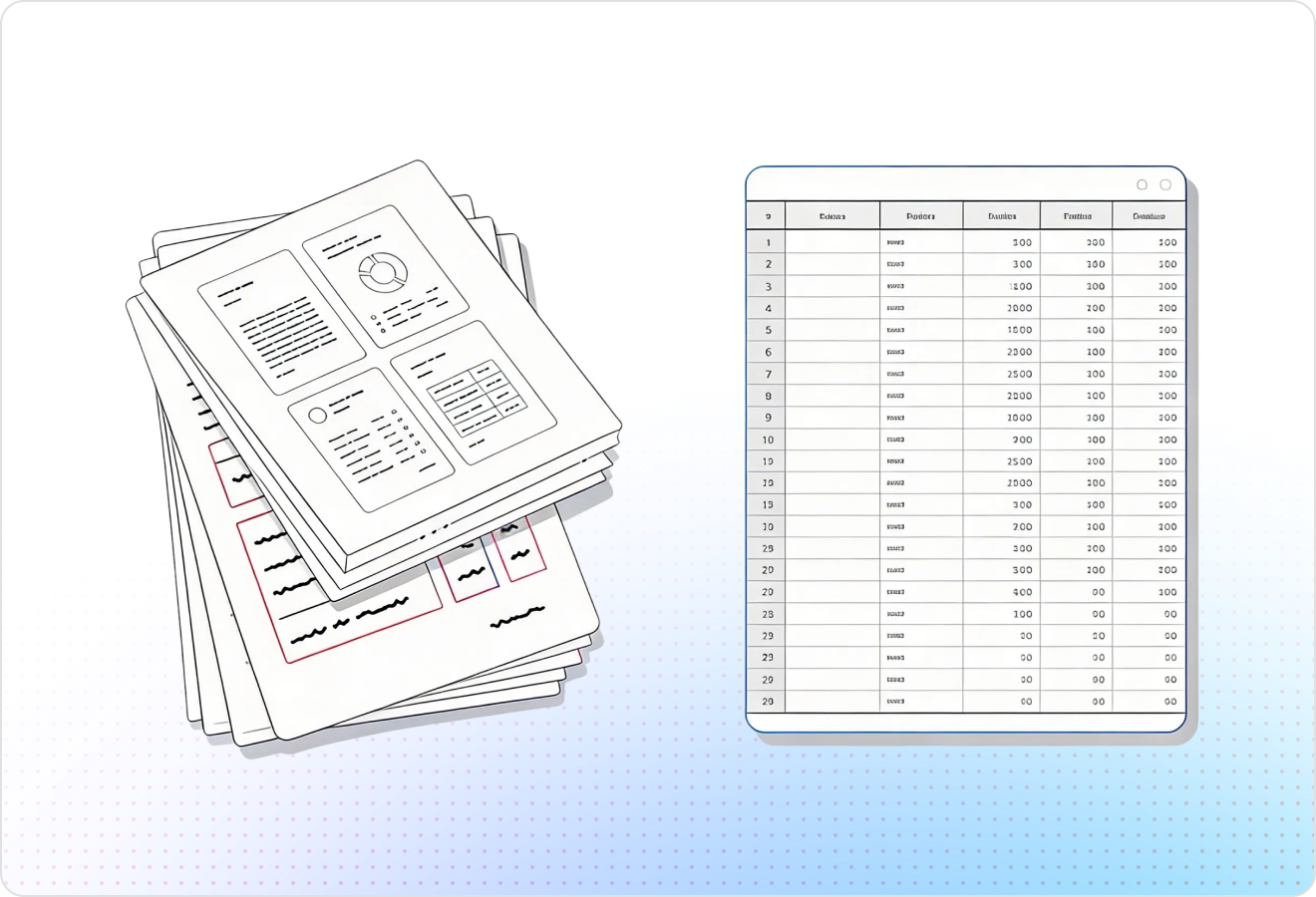
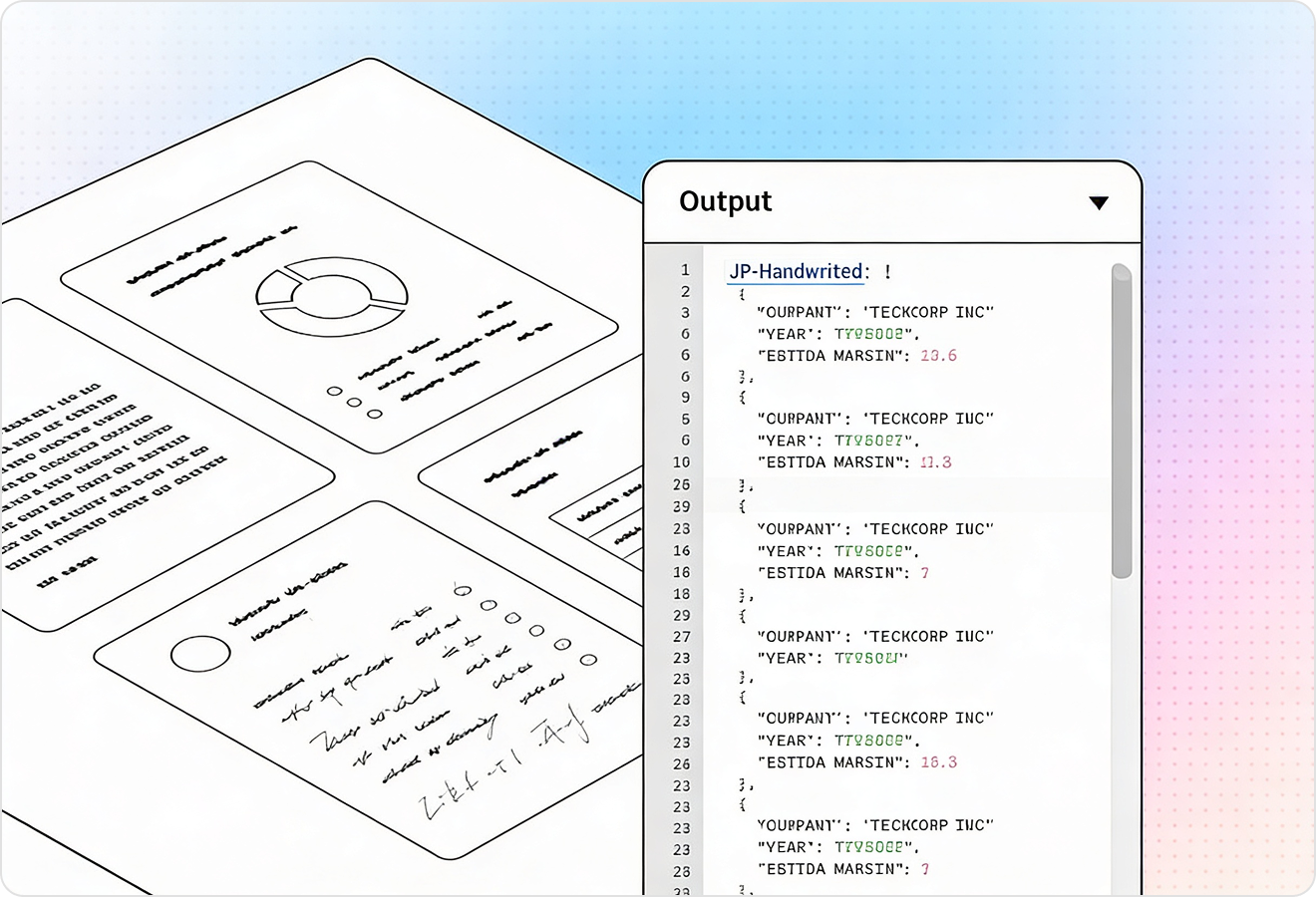
LlamaParse reads the certificate like a person would—detecting sections, headers, stamps, and multi-column blocks so text doesn’t get scrambled. This helps you reliably extract key phytosanitary fields like exporter/importer, commodity, origin, and treatment details even when the template varies by country.
02
LlamaParse reconstructs tables into clean, structured outputs instead of flattened text. That’s critical for phytosanitary certificates where products, quantities, packaging, botanical names, and lot references often live in dense tabular layouts.
03
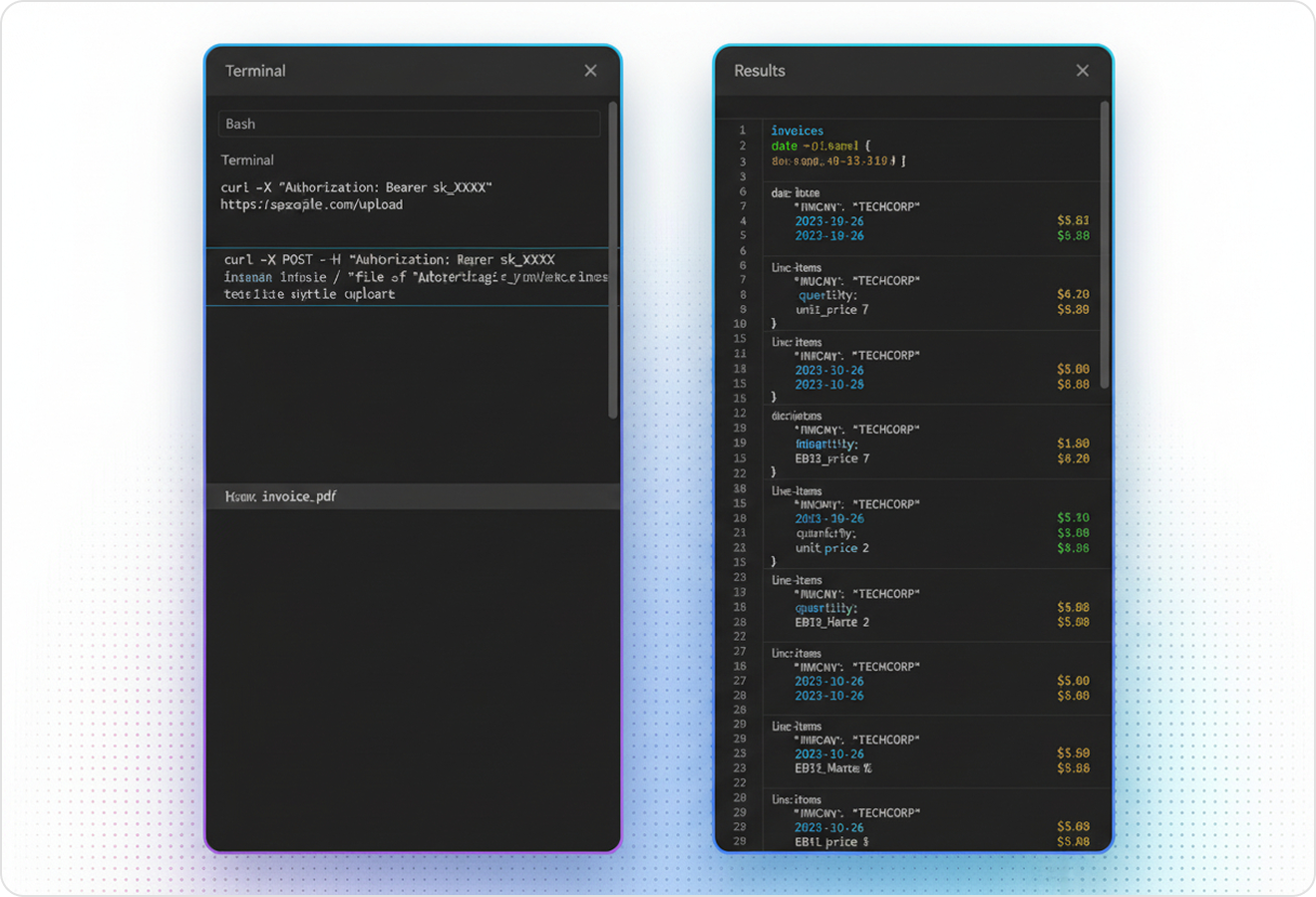
LlamaParse can return a schema-friendly JSON representation and attach traceable metadata like page numbers and coordinates for each extracted value. For compliance workflows, this makes it easy to validate extractions, store them in your system of record, and show exactly where each data point came from during audits.
04
LlamaParse runs multiple validation passes to catch common scan issues like missing characters, broken reading order, or misread identifiers. This improves straight-through processing for phytosanitary certificates where small errors in certificate numbers, dates, or treatment codes can block customs clearance.
Technical OCR documentation
Explore our developer guides to easily connect your document pipelines to LlamaParse.
Explore the documentation
Our AI catches the typos that tired eyes miss.

Export to Excel, JSON, XML, or directly via API.

SOC2 Type II compliant with end-to-end encryption.

Train the tool on your specific forms in minutes, not days.

Average processing time of <3 seconds per page.
LlamaParse’s support of a wide variety of filetypes and its accuracy of parsing made it the best tool we tested in our evaluations. The LlamaIndex team was very responsive and we were off to the races within a day.
Common FAQs
01
Yes. Layout-aware field capture detects sections, headers, stamps, and multi-column blocks so key fields like exporter/importer, origin, commodity, and treatment details stay correctly associated even when formats vary. This reduces manual mapping work and improves consistency across global certificate types.
02
It reconstructs tables into structured outputs instead of flattening them into a single text stream. That means line items like product descriptions, quantities, packaging, botanical names, and lot references remain properly separated and ready to import into your system.
03
You can output schema-friendly JSON, making it straightforward to map fields into your ERP, TMS, or compliance platform. Each extracted value can include metadata like page numbers and coordinates, so you can validate quickly and keep an audit-ready trail.
04
What if the scan is low-quality and characters or IDs are misread?
Validation and auto-correction loops run multiple passes to catch common OCR issues like missing characters, broken reading order, and misread identifiers. This helps prevent small errors in certificate numbers, dates, or treatment codes from triggering clearance delays or rework.
05
How do we verify extractions during audits or internal compliance reviews?
Every extracted field can be traced back to where it appeared on the document via coordinates and page references. That makes spot-checking fast and gives auditors clear evidence of data lineage without digging through PDFs manually.
06
How quickly can we start, and what do you need from us to set it up?
Most teams can start with a small set of sample certificates and a target JSON schema for the fields you care about. Once you confirm the outputs match your workflow, you can scale to more origins and document variations with minimal ongoing tuning.