Nov 14, 2025
Document AI: The Next Evolution of Intelligent Document ProcessingPersona
Industry
Use cases
Scanned Document Automation Software
[ Scanned Document Automation Software ]

Use LlamaParse to turn scanned forms into clean, verified JSON your workflows can trust.
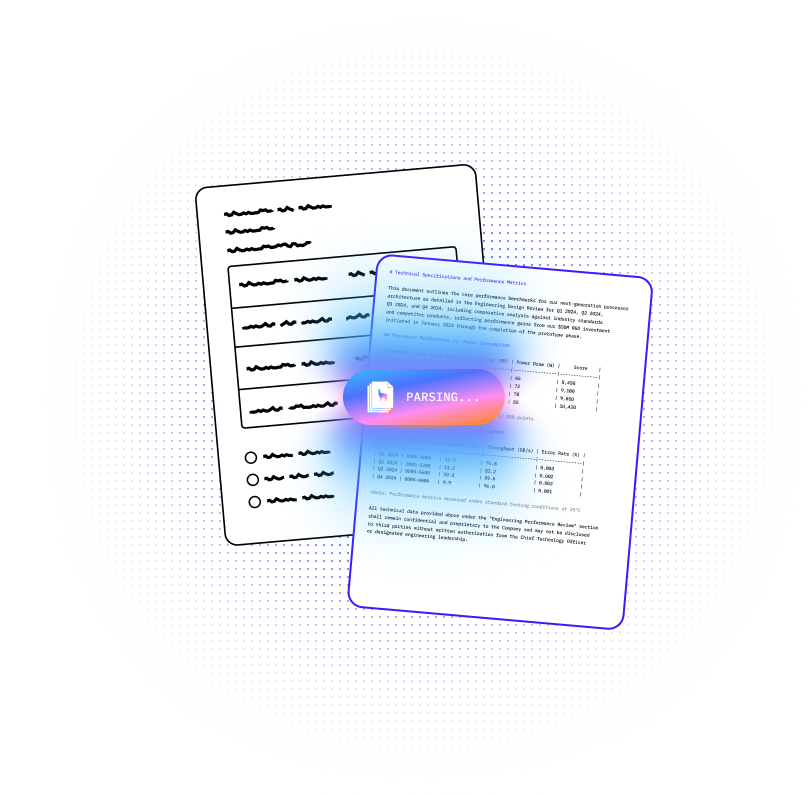


LlamaParse converts scanned PDFs and images into clean, structured data your apps and agents can actually use, without brittle templates. It understands layout, tables, and embedded visuals, then validates results with confidence signals so teams automate faster with fewer exceptions.
Best-in-Class Accuracy

Turn investor decks, customer contracts, and inbound PDFs into clean JSON with natural-language parsing instructions, so teams can ship onboarding and back-office automations without building brittle cleanup code. Auto Mode routes simple pages to cheaper tiers and escalates only the messy scans, keeping API spend predictable while you iterate fast.

Parse scanned referrals, intake packets, and lab reports with layout-aware structure so tables, multi-column sections, and headers don’t get scrambled into unusable text. Granular metadata with page-level traceability supports fast human review and reduces rework when documentation is incomplete or inconsistent.

Extract structured fields from FNOL forms, adjuster notes, and loss run reports—even when they include embedded photos, charts, and handwritten annotations—so claims can move forward without manual keying. Auto-correction loops catch inconsistencies before they hit downstream systems, improving straight-through processing on high-volume claim batches.

Convert scanned drawings, bid packages, and pay applications into Markdown and structured outputs that preserve reading order, section hierarchy, and critical tables for SOV and change orders. Multimodal parsing translates schedules, diagrams, and measurement callouts into machine-readable data, enabling faster project audits and fewer disputes.
The Solution
01
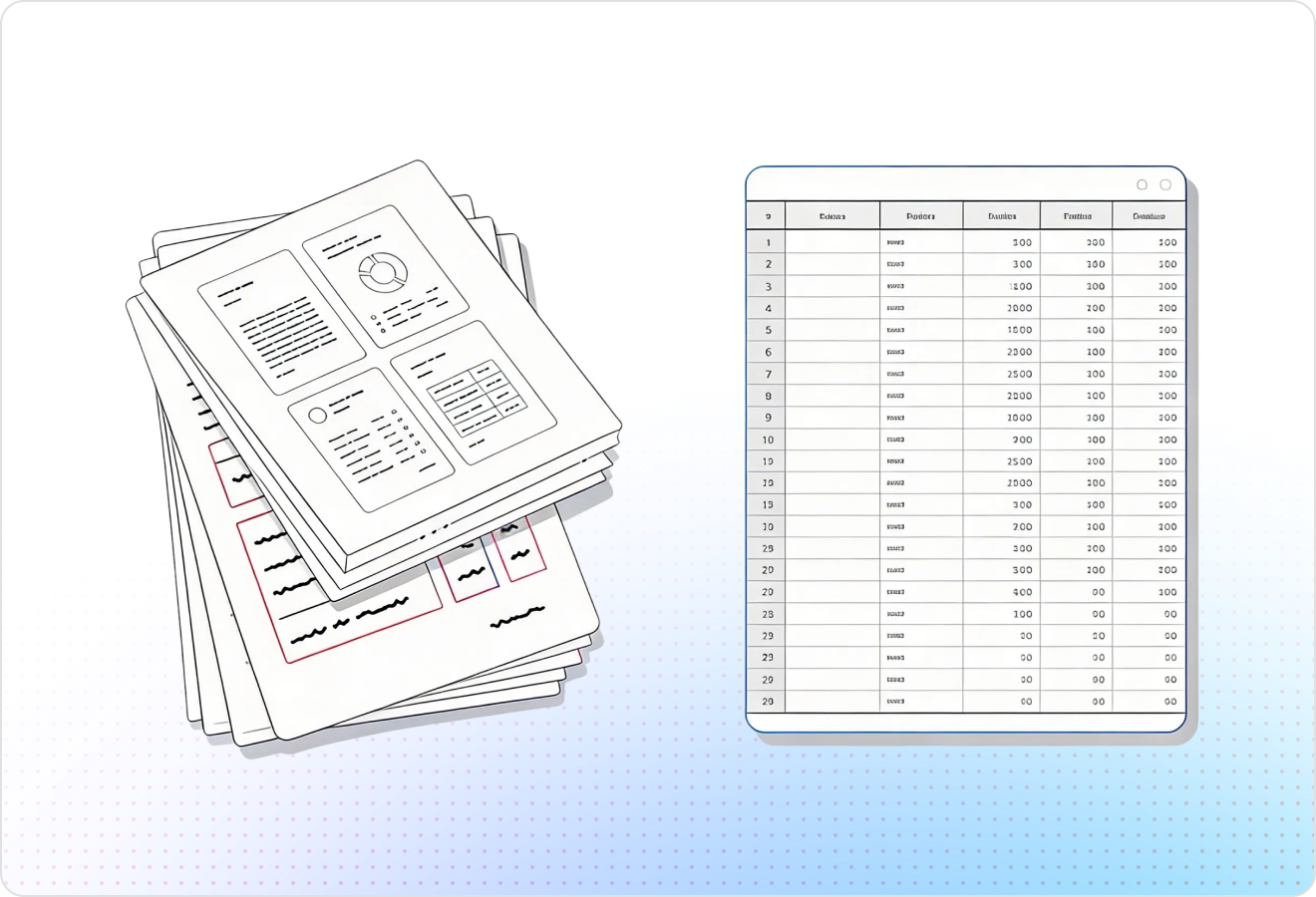
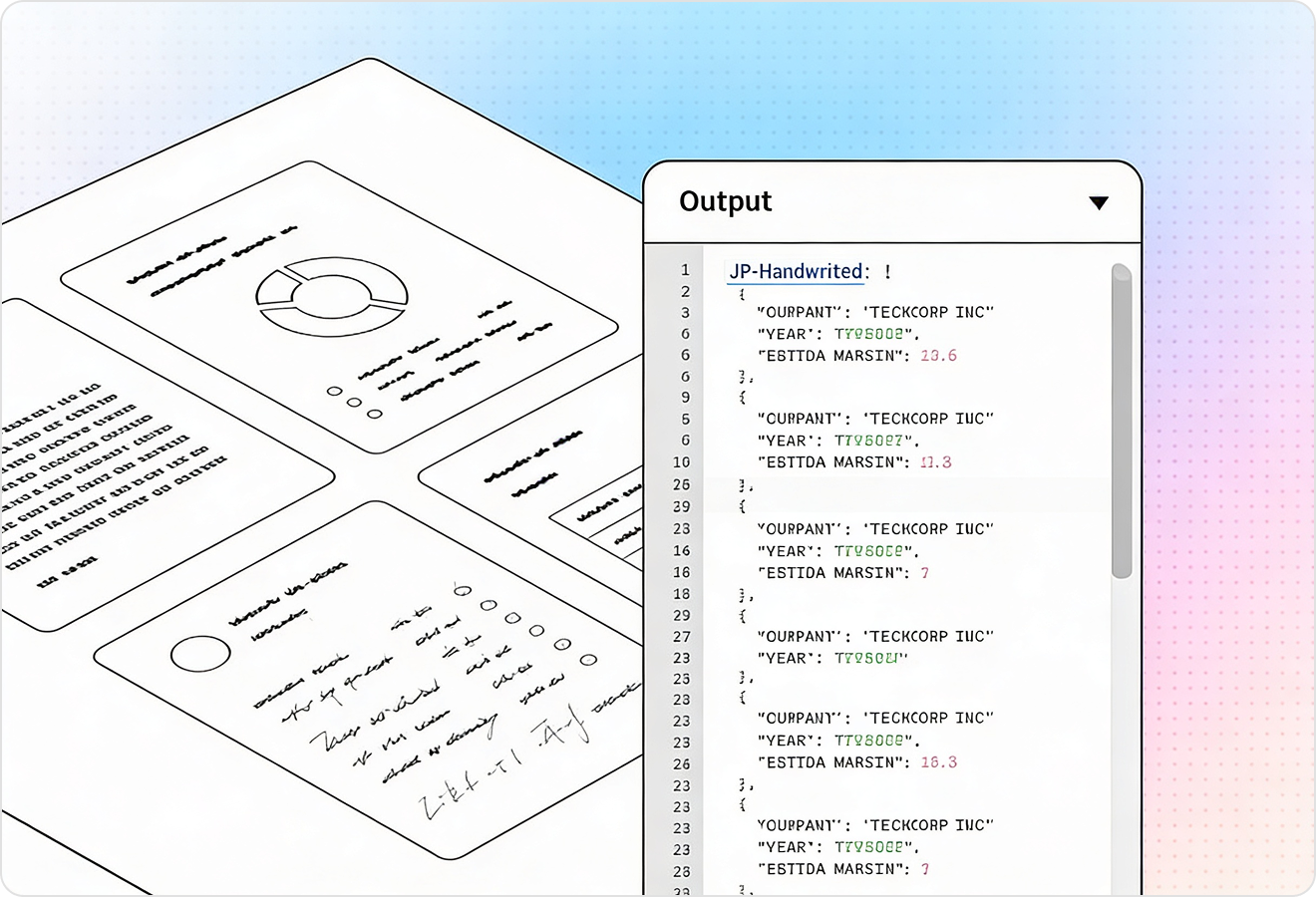
LlamaParse uses layout-aware vision to reconstruct reading order from scanned pages, including multi-column text, headers/footers, and mixed blocks. That means your automation pipeline gets coherent sections instead of scrambled OCR text, reducing downstream rules and manual cleanup.
02
LlamaParse detects and rebuilds tables from scans so rows, columns, and merged cells stay intact. This is critical for automating invoices, statements, and forms where a single shifted column can break extraction and validation.
03
LlamaParse runs self-checks and correction loops to catch common scan issues like missing fields, hallucinated values, and inconsistent formatting. You get higher straight-through processing on messy scans without writing custom post-processing scripts for every document type.
04
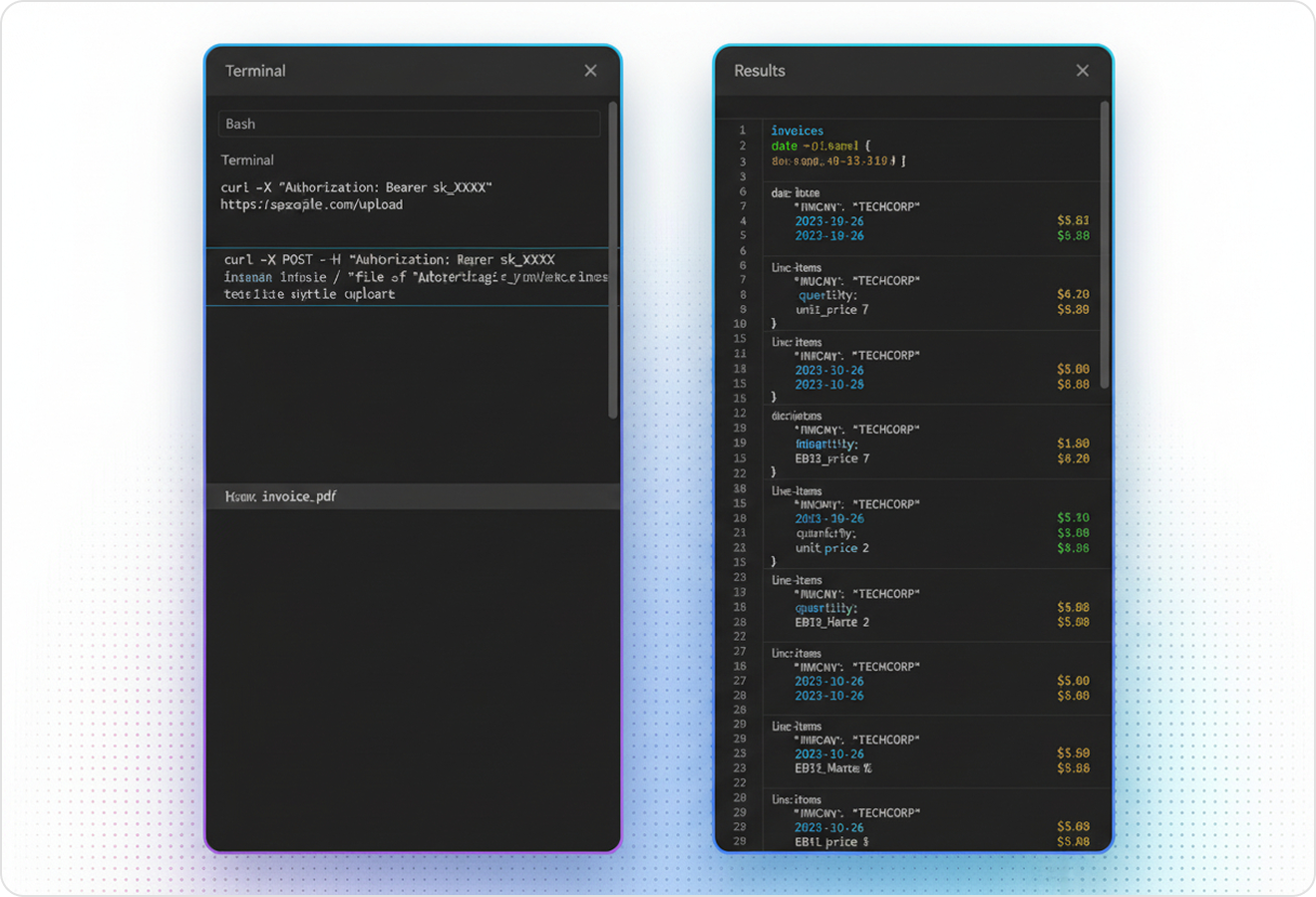
LlamaParse outputs clean JSON with granular metadata like page numbers, element types, and bounding boxes for key fields. For scanned document automation, this makes it straightforward to map extracted values into your systems and route low-confidence cases to human review with traceability.
Technical OCR documentation
Explore our developer guides to easily connect your document pipelines to LlamaParse.
Explore the documentation
Our AI catches the typos that tired eyes miss.

Export to Excel, JSON, XML, or directly via API.

SOC2 Type II compliant with end-to-end encryption.

Train the tool on your specific forms in minutes, not days.

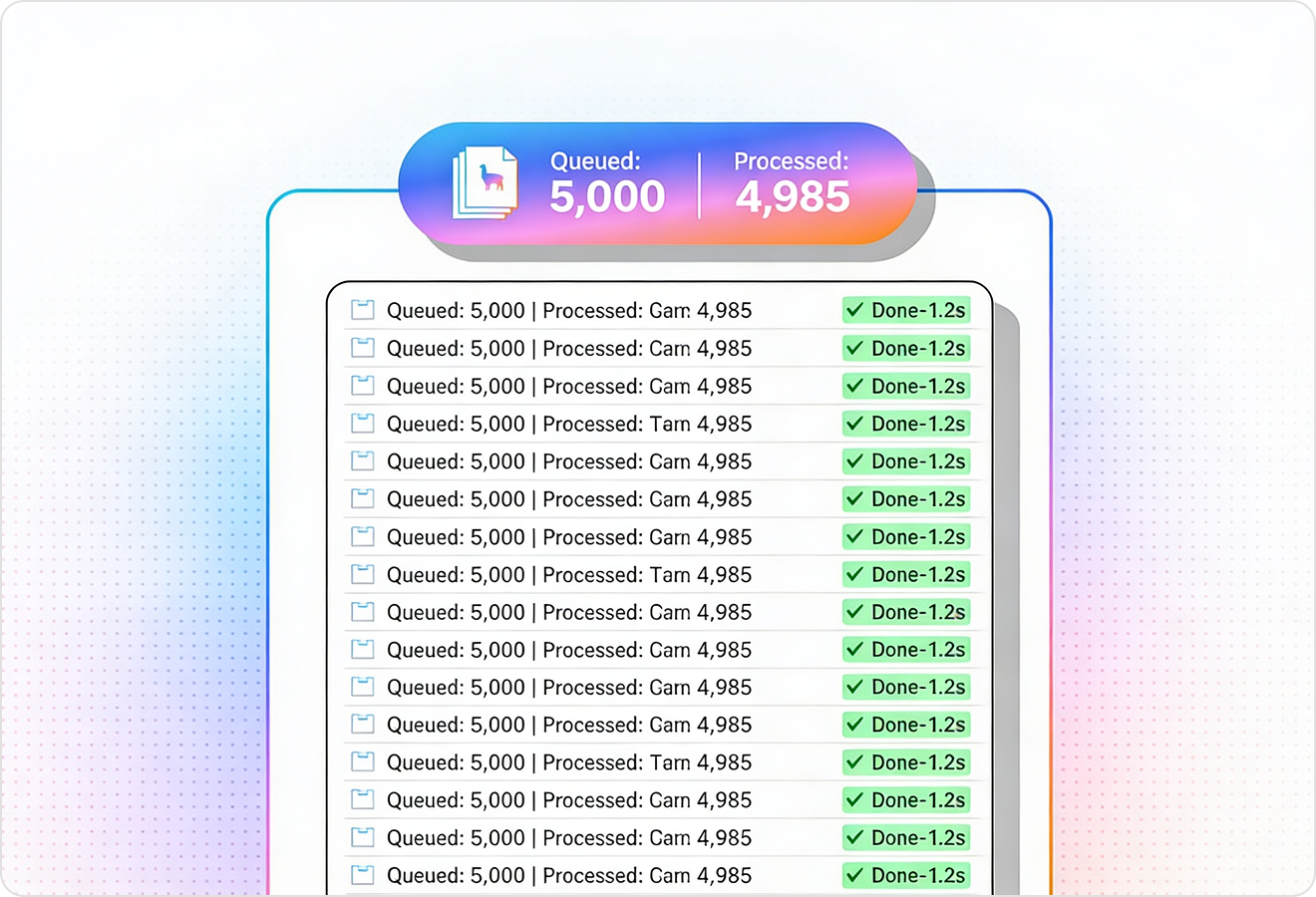
Average processing time of <3 seconds per page.
LlamaParse’s support of a wide variety of filetypes and its accuracy of parsing made it the best tool we tested in our evaluations. The LlamaIndex team was very responsive and we were off to the races within a day.
Common FAQs
01
Yes—layout-aware parsing reconstructs the true reading order across columns, headers/footers, and mixed content blocks. That means you get coherent sections instead of scrambled OCR, reducing manual cleanup and brittle downstream rules.
02
Tables are detected and rebuilt with rows, columns, and merged cells preserved so values stay aligned. This helps prevent common automation failures like shifted columns that break validation or push work back to humans.
03
Auto validation and correction loops flag missing fields, inconsistent formats, and suspicious values before they hit your systems. You get higher straight-through processing without writing custom post-processing scripts for every document type.
04
Do I get structured output I can reliably map into my systems?
You’ll receive clean JSON designed for automation, plus rich metadata to make mapping predictable. This makes it easy to feed extracted values into ERPs/CRMs, trigger workflows, and keep integrations stable as documents vary.
05
Can I trace each extracted value back to the exact spot in the scan?
Yes—metadata like page numbers, element types, and bounding boxes provides auditability and quick verification. It’s ideal for compliance, exception handling, and routing low-confidence fields to human review with clear context.
06
How do I handle exceptions without slowing down the entire pipeline?
Use confidence signals and metadata to automatically route only the uncertain cases to reviewers while the rest processes straight through. This keeps throughput high and creates a feedback loop to continuously reduce exceptions over time.