Nov 14, 2025
Document AI: The Next Evolution of Intelligent Document ProcessingPersona
Industry
Use cases
Google Drive OCR Image To Text
[ Google Drive OCR Image To Text ]

Use LlamaParse to pull clean, layout-aware text from Drive images and messy scans fast.
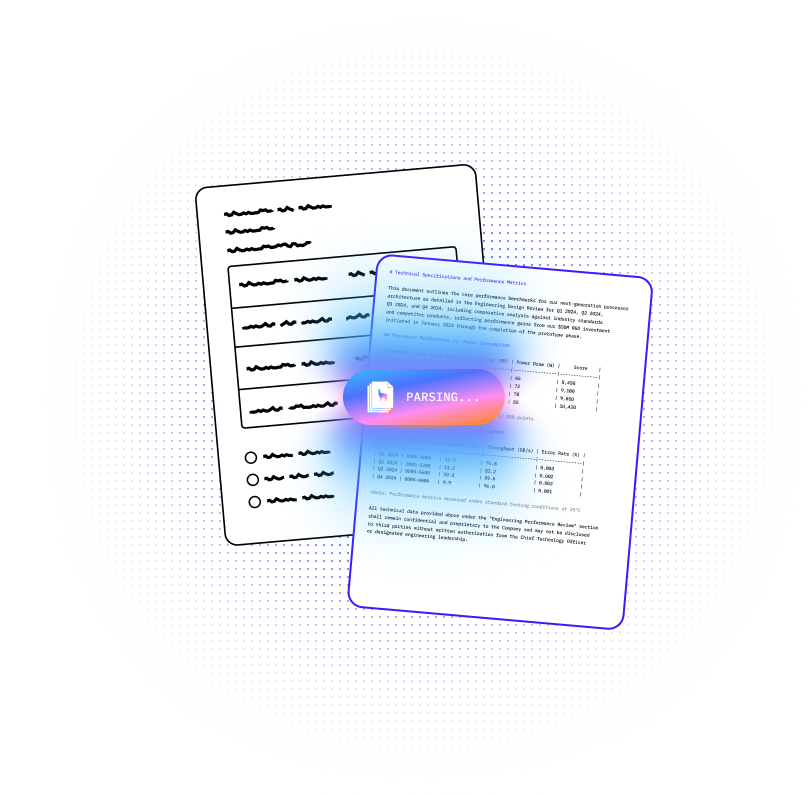
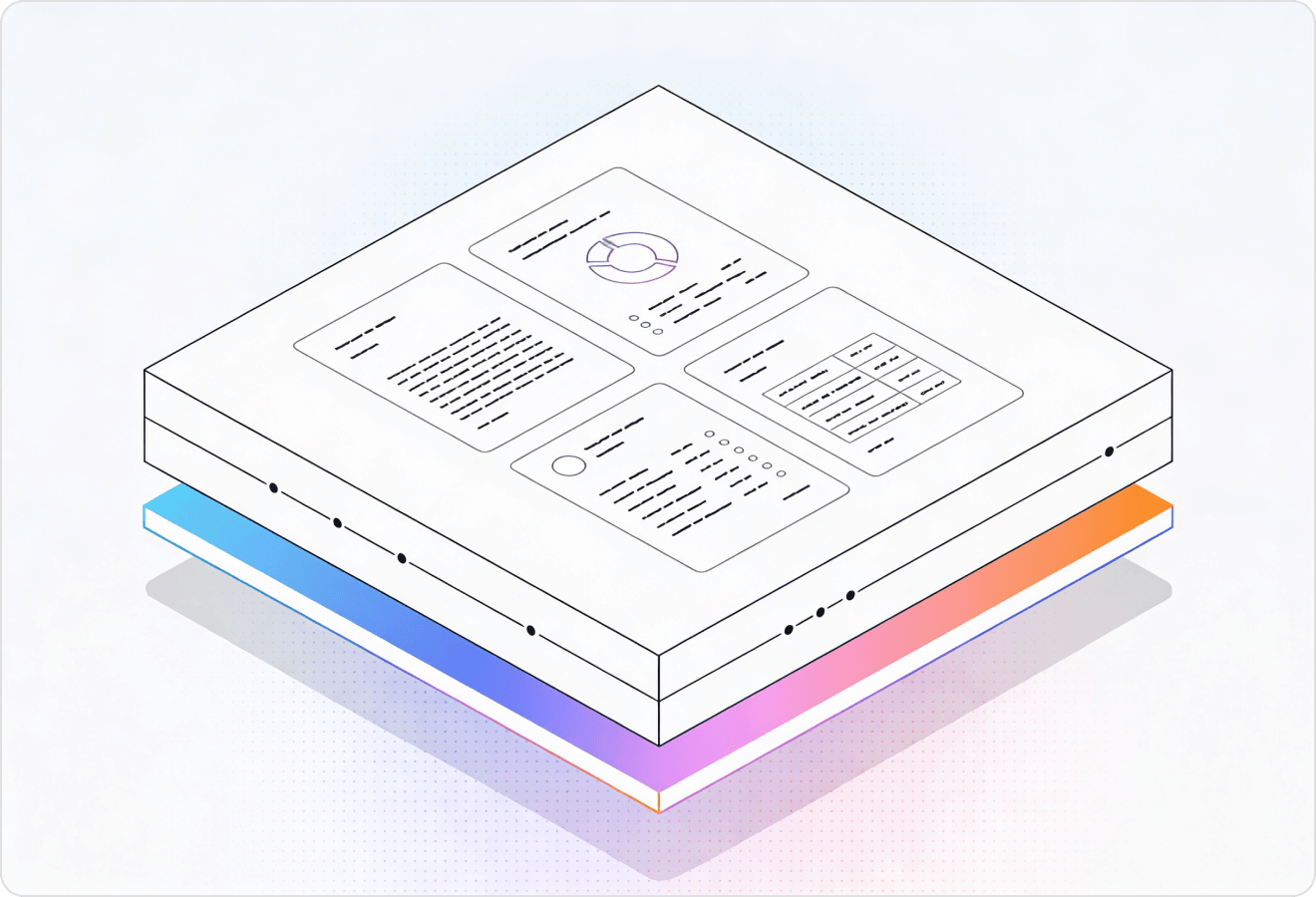
Connect your Google Drive images and let LlamaParse turn screenshots, scans, and photos into clean, structured text you can actually use. Agentic document parsing understands layout, tables, and charts, then validates results and outputs Markdown, JSON, or HTML with confidence metadata.
Best-in-Class Accuracy

Turn Google Drive folders of pitch decks, contracts, invoices, and screenshots into clean Markdown/JSON so your product can ship search, extraction, and onboarding flows without building a brittle OCR pipeline. Use natural-language parsing instructions and tier-based processing to keep costs predictable while accuracy stays high on messy, real-world docs.

Extract clause text, defined terms, signatures, and exhibit tables from scanned agreements while preserving reading order and section structure for reliable review and reuse. Granular metadata with page-level traceability enables defensible citations and faster QA when producing evidence or drafting from prior documents.

Parse bank statements, invoices, and reconciliations with layout-aware table extraction so line items don’t get scrambled across columns and multi-page tables stay intact. Output structured JSON with confidence signals to automate posting to ERPs, flag exceptions, and reduce manual data entry during month-end close.

Convert site photos, handwritten work orders, equipment logs, and as-built markups stored in Drive into searchable, standardized records that crews can actually use. Multimodal parsing captures tables, diagrams, and measurements so you can automate change-order summaries, compliance documentation, and job-cost auditing.
The Solution
01
LlamaParse understands page layout so multi-column scans, headers/footers, and mixed blocks don’t get stitched into unreadable text. For Google Drive image-to-text workflows, this means you get clean reading order from receipts, letters, and scanned pages without hand-tuning rules per template.
02
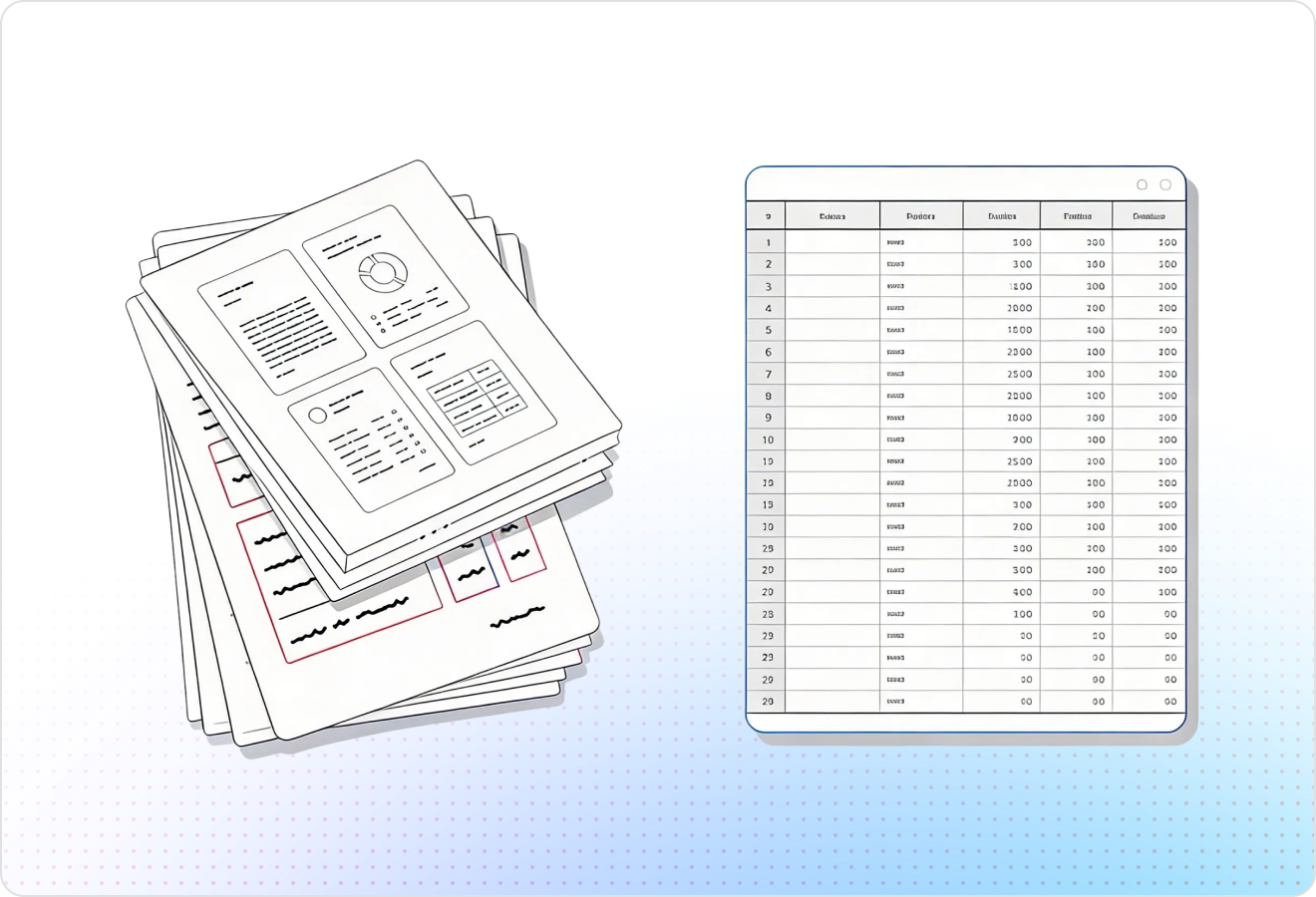
LlamaParse detects tables and form-like regions and reconstructs them as structured output instead of flattened lines. When you’re converting Drive-hosted images to text, you can reliably pull rows, totals, and key-value fields into Markdown or JSON for downstream search and automation.
03
LlamaParse runs validation and self-correction steps to catch common recognition errors and inconsistencies before returning results. This boosts straight-through accuracy on noisy Google Drive scans like blurry screenshots or crooked phone photos, reducing manual review.
04
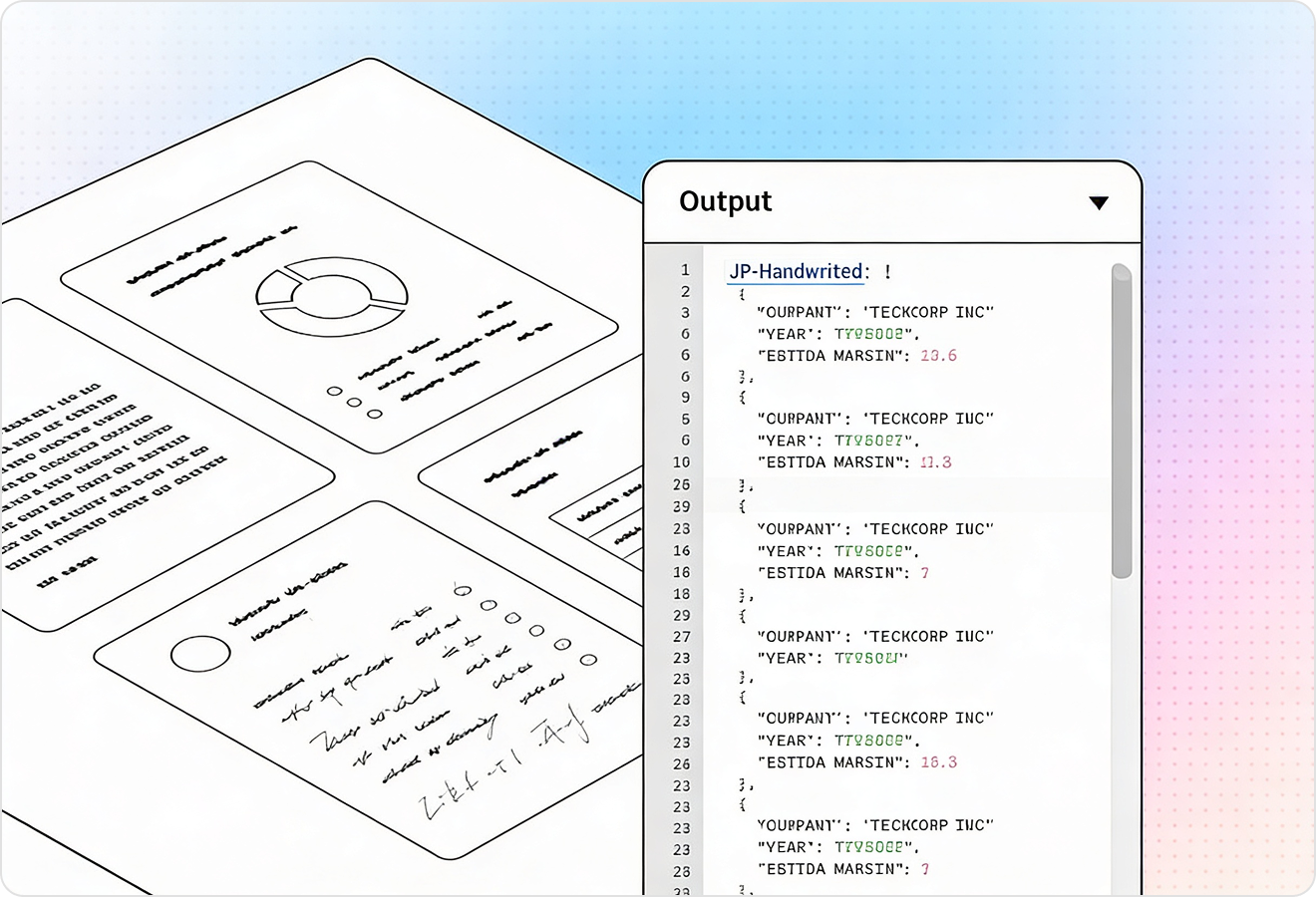
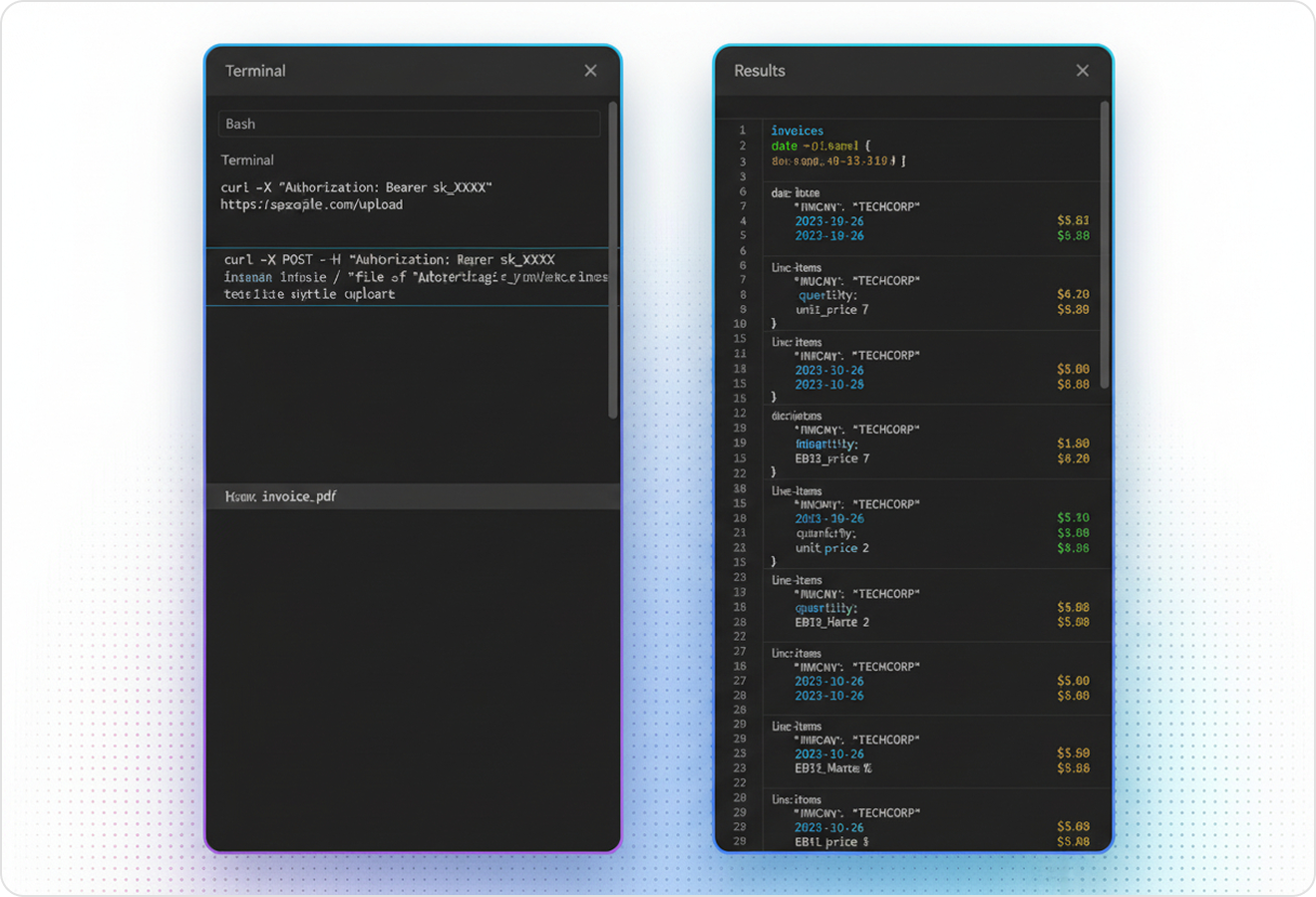
LlamaParse can return structured JSON with rich metadata like page numbers and spatial coordinates for each extracted element. For Drive image-to-text, that makes outputs verifiable and easy to wire into apps that need highlights, citations, or human-in-the-loop confirmation.
Technical OCR documentation
Explore our developer guides to easily connect your document pipelines to LlamaParse.
Explore the documentation
Our AI catches the typos that tired eyes miss.

Export to Excel, JSON, XML, or directly via API.

SOC2 Type II compliant with end-to-end encryption.

Train the tool on your specific forms in minutes, not days.

Average processing time of <3 seconds per page.
LlamaParse’s support of a wide variety of filetypes and its accuracy of parsing made it the best tool we tested in our evaluations. The LlamaIndex team was very responsive and we were off to the races within a day.
Common FAQs
01
Yes. Layout-aware extraction preserves headings, columns, and mixed content blocks so text doesn’t get jumbled into an unreadable stream. That means cleaner output from receipts, letters, and scanned pages without building custom rules for each template.
02
It detects tables and form-like regions and reconstructs them as structured output instead of broken lines. You can reliably capture rows, totals, and key-value fields and export them as Markdown or JSON for search, reporting, or automation.
03
Auto-correction loops validate results and fix common OCR inconsistencies before returning the final text. This improves straight-through accuracy on imperfect images and reduces the time you spend manually reviewing and editing.
04
Do I get JSON output with page numbers and coordinates for verification or highlighting?
Yes. The JSON output includes rich metadata such as page numbers and spatial coordinates for each extracted element. That makes it easy to add citations, highlight the exact source region, or route uncertain fields to human review.
05
How does this help me build reliable Google Drive image-to-text workflows at scale?
Structured, layout-correct output means fewer downstream breaks when you process varied documents from Drive. With tables, forms, and metadata preserved, you can plug results into indexing, RPA, or internal apps with far less custom post-processing.
06
Will I need to create separate OCR templates for different document types like receipts vs. invoices?
Typically no. Layout-aware parsing and table/form reconstruction adapt to different page structures without per-template tuning. You can start converting Drive-hosted images immediately and only add custom handling if you have highly specialized edge cases.