Nov 14, 2025
Document AI: The Next Evolution of Intelligent Document ProcessingPersona
Industry
Use cases
Document Understanding API
[ Document Understanding API ]

Use LlamaParse to reliably extract tables, fields, and layout into clean JSON your apps trust.
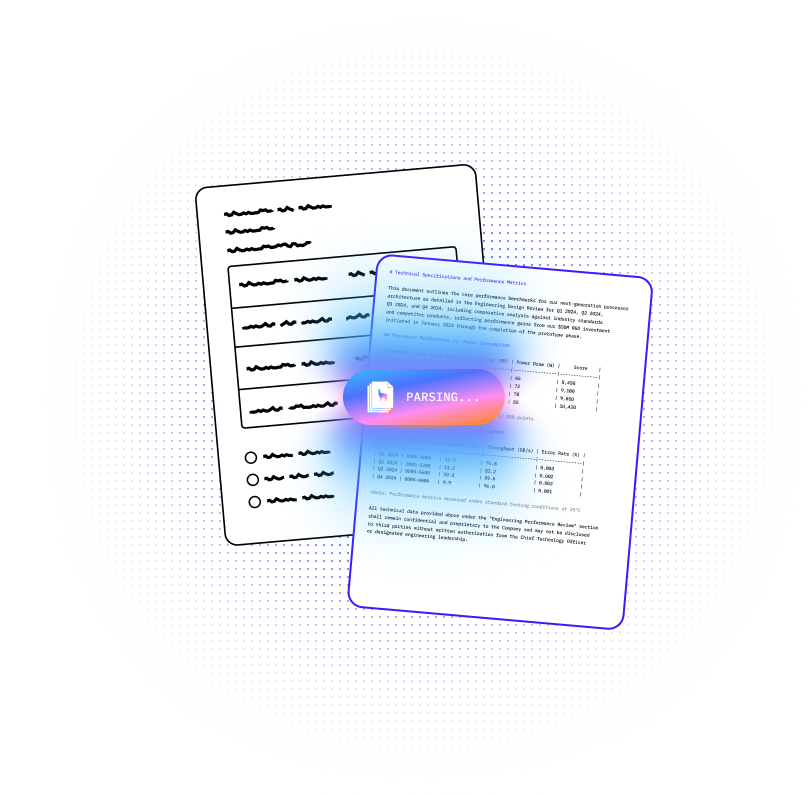
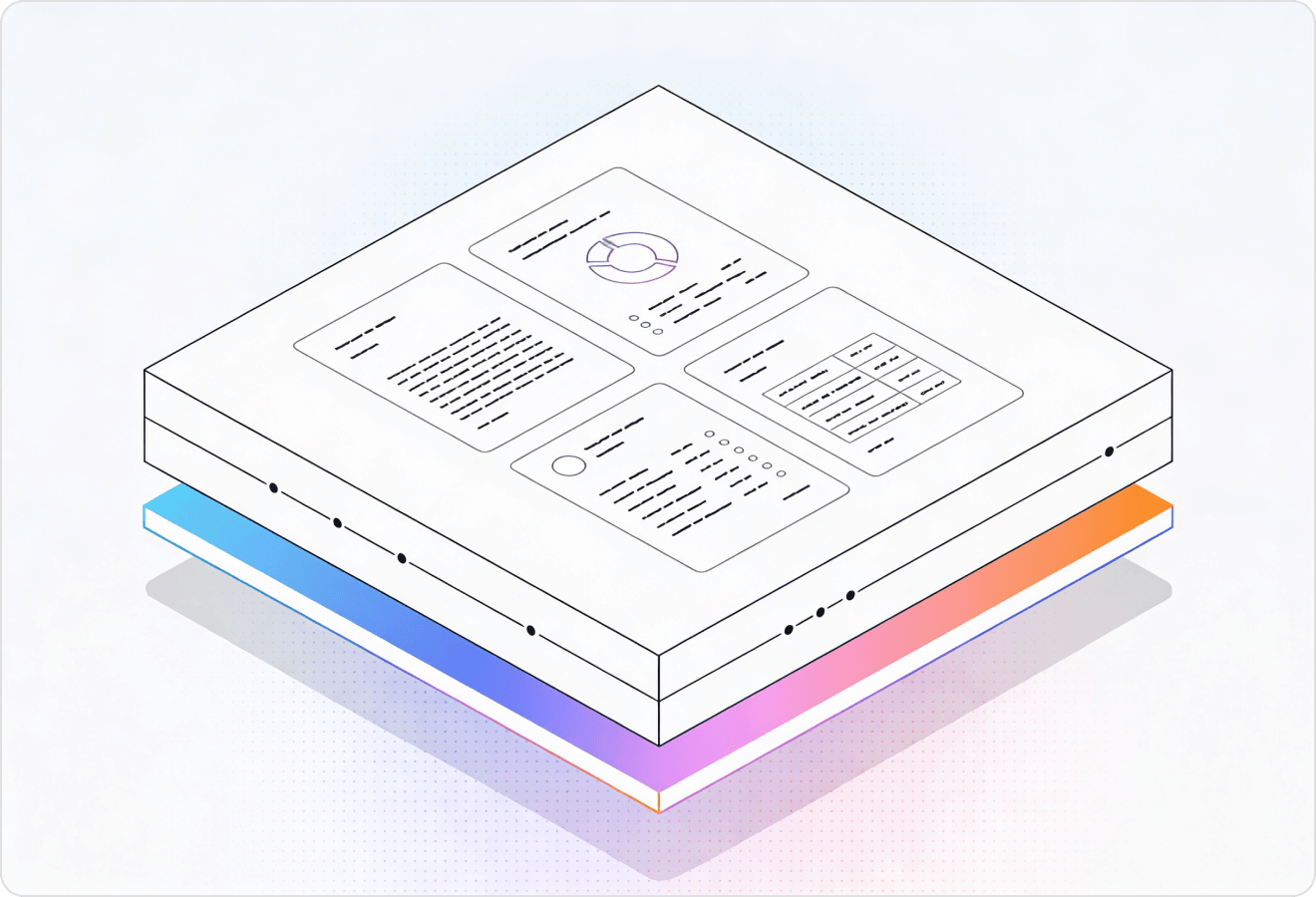

LlamaParse turns messy PDFs, scans, and slide decks into clean JSON, Markdown, or HTML your Document Understanding API can trust. It uses layout-aware vision and agentic validation loops to reduce extraction errors, add citations, and keep pipelines stable as templates change.
Best-in-Class Accuracy

Turn messy customer PDFs (invoices, contracts, onboarding forms) into clean JSON/Markdown in days, so small teams can ship document automation without building brittle parsing code. Use natural-language parsing instructions and auto-correction loops to keep extraction stable as formats change, reducing ops fire drills and manual review.

Parse statements, policy packets, claims, and KYC files with layout-aware table extraction so line items, schedules, and multi-column disclosures don’t get scrambled. Return verifiable outputs with granular metadata (page citations and coordinates) to speed audits, exception handling, and downstream decisioning.

Extract structured data from referrals, lab reports, and prior-auth packets—including scanned faxes and embedded tables—so intake teams stop re-keying and chasing missing fields. Convert documents into AI-ready outputs that can be validated and routed, accelerating reimbursement workflows and reducing denials caused by documentation errors.

Interpret complex technical documents like spec sheets, QA reports, and maintenance manuals by converting tables, diagrams, and math into usable Markdown, Mermaid, and LaTeX. Use tier-based agentic processing to reserve heavier models for the densest pages, keeping large batch ingestion predictable in both cost and throughput.
The Solution
01
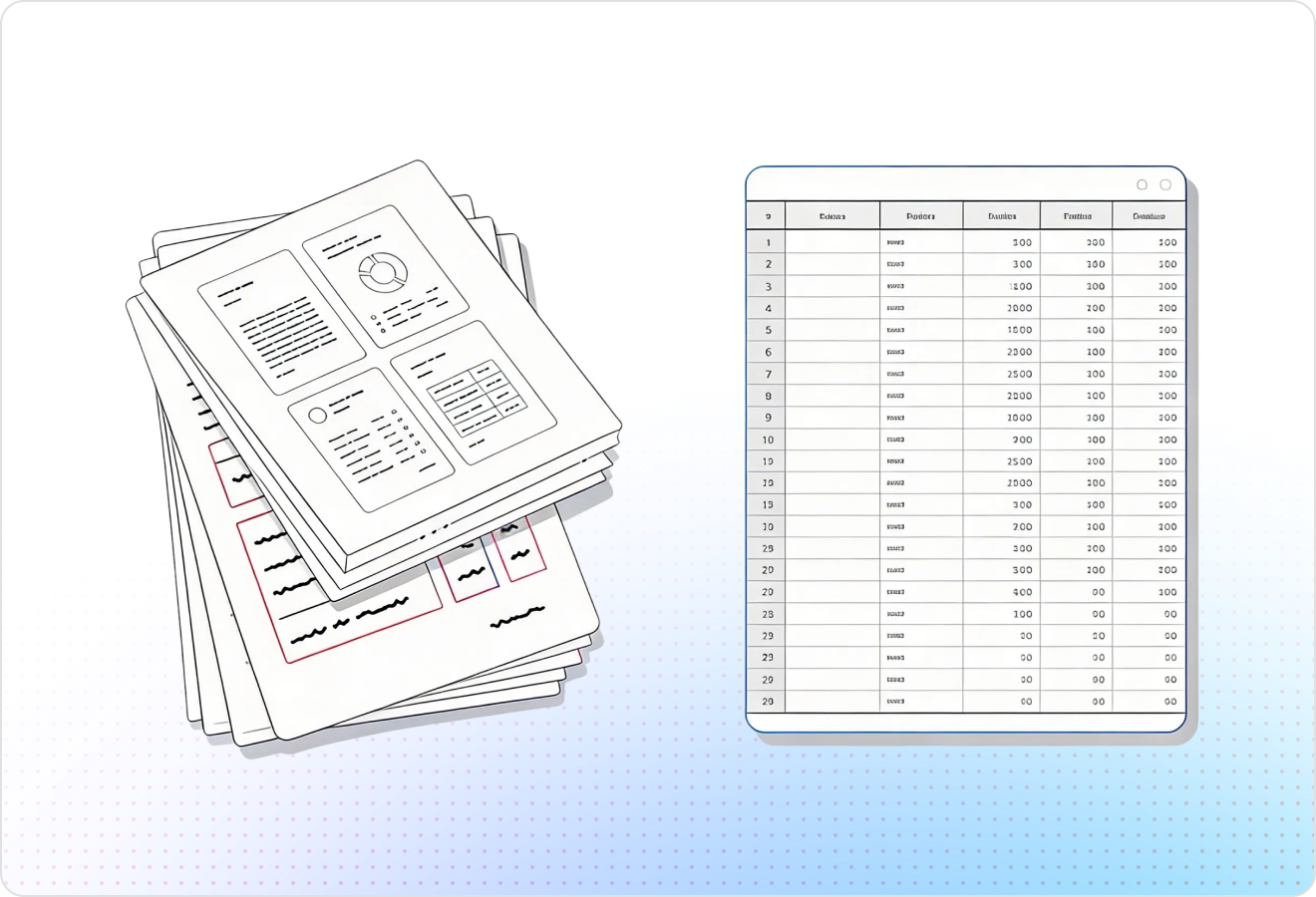
LlamaParse analyzes visual layout to preserve reading order across multi-column text, headers/footers, and nested sections. Your Document Understanding API returns coherent, sectioned content instead of scrambled text that forces downstream heuristics.
02
Extracts complex tables (merged cells, multi-line rows, spanning headers) into clean, structured representations. This makes it practical to expose tables through an API as machine-consumable data, not screenshots or broken CSV guesses.
03
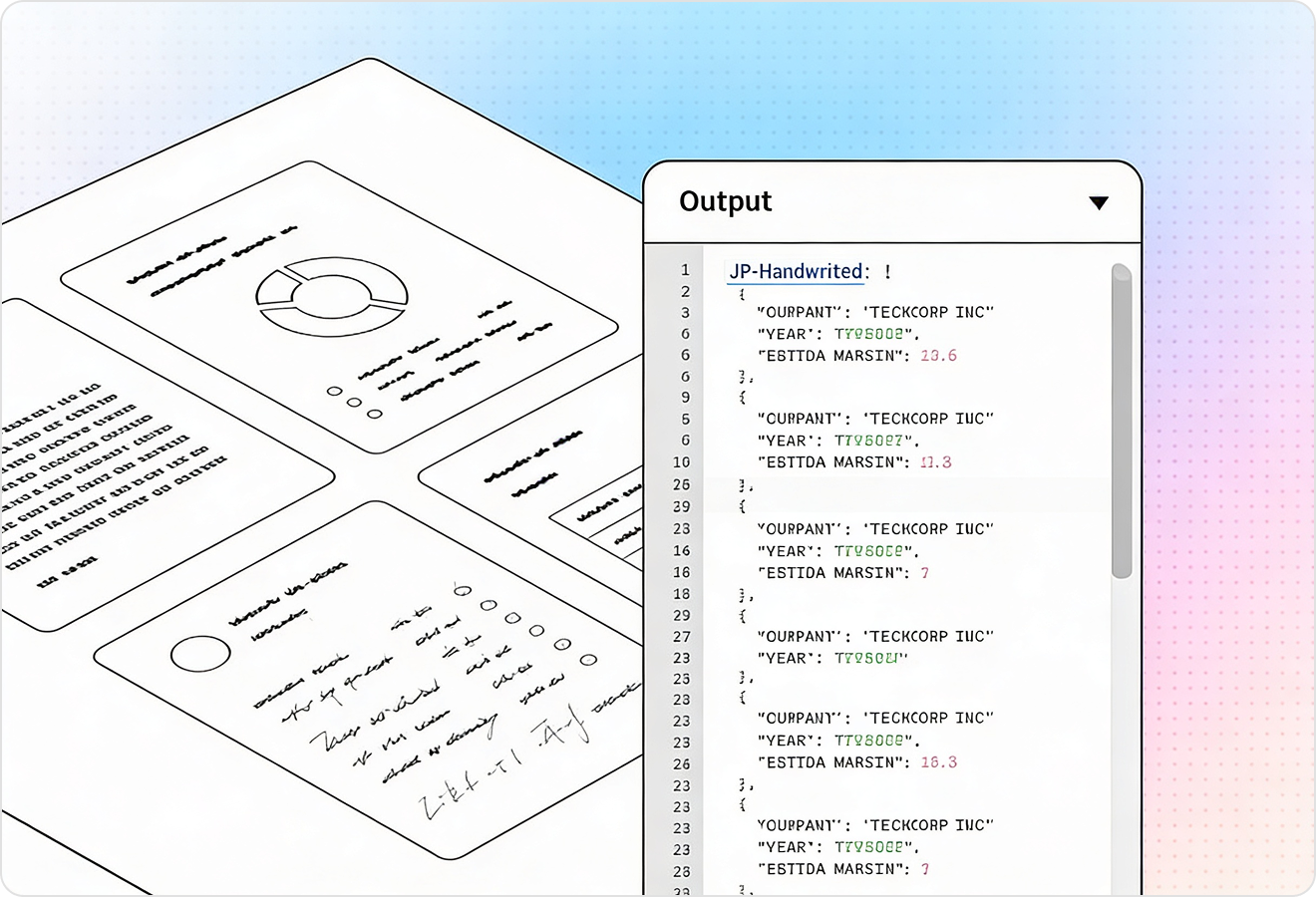
Parses charts, images, and math by converting visual elements into useful textual forms like Markdown tables or LaTeX, with supporting context. That means your API can answer “what does this figure show?” without dropping non-text content on the floor.
04
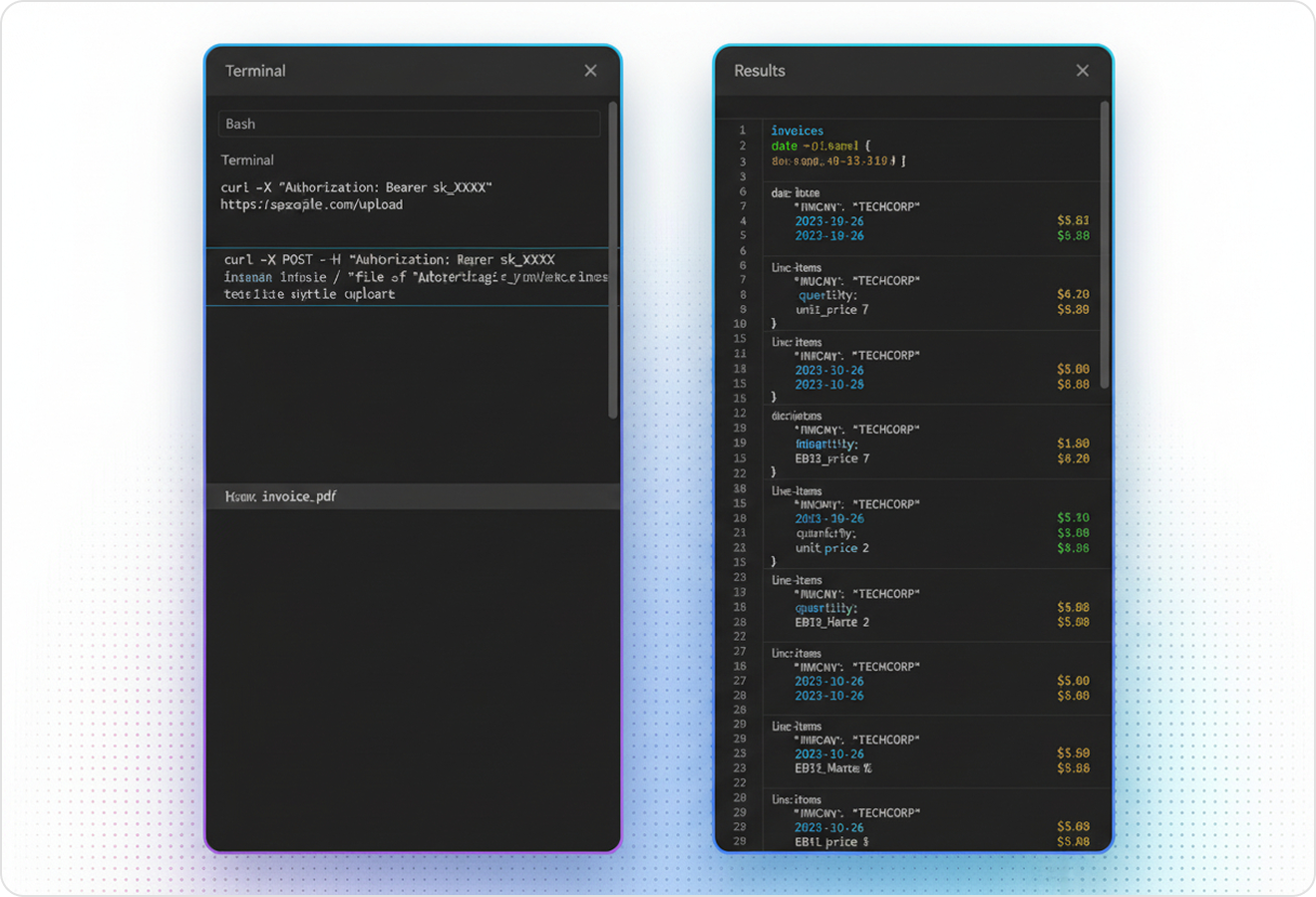
Returns structured JSON with per-element metadata like page numbers, node types, and coordinates for traceability. This lets your Document Understanding API provide citations, debugging hooks, and precise downstream routing for human review or automation.
Technical OCR documentation
Explore our developer guides to easily connect your document pipelines to LlamaParse.
Explore the documentation
Our AI catches the typos that tired eyes miss.

Export to Excel, JSON, XML, or directly via API.

SOC2 Type II compliant with end-to-end encryption.

Train the tool on your specific forms in minutes, not days.

Average processing time of <3 seconds per page.
LlamaParse’s support of a wide variety of filetypes and its accuracy of parsing made it the best tool we tested in our evaluations. The LlamaIndex team was very responsive and we were off to the races within a day.
Common FAQs
01
Yes—it's layout-aware, so it follows the visual structure of the page to keep paragraphs, columns, headers/footers, and nested sections in the right order. You get coherent, sectioned content instead of scrambled text that requires brittle post-processing.
02
The API is designed for complex tables, including merged cells, spanning headers, and irregular row structures. It outputs clean, structured table data you can use directly in downstream systems—without manual cleanup or guessy CSV conversions.
03
Yes—multimodal outputs convert visual elements into useful text formats such as Markdown tables or LaTeX, with supporting context. That means your application can reason over figures and formulas instead of silently ignoring them.
04
Do you provide structured JSON outputs, or will I need to parse plain text?
You can request JSON Mode, which returns a structured representation of the document rather than a flat text blob. This makes it easy to route content by type (paragraphs, tables, figures) and integrate reliably into pipelines and agents.
05
Can I trace results back to the original document for citations and audits?
Yes—each element can include metadata like page numbers, node types, and coordinates. This gives you the hooks needed for citations, QA workflows, and fast debugging when a user asks, “Where did this answer come from?”
06
How does this reduce the amount of human review and downstream heuristics we need?
By preserving layout, extracting tables accurately, and translating visual content into usable text, the API minimizes the common failure modes that trigger manual intervention. Teams typically spend less time writing custom parsing rules and more time shipping reliable document-driven features.