Nov 14, 2025
Document AI: The Next Evolution of Intelligent Document ProcessingPersona
Industry
Use cases
Expense Receipt OCR
[ Expense Receipt OCR ]

Use LlamaParse to capture every receipt detail accurately, so your team pays back employees faster.
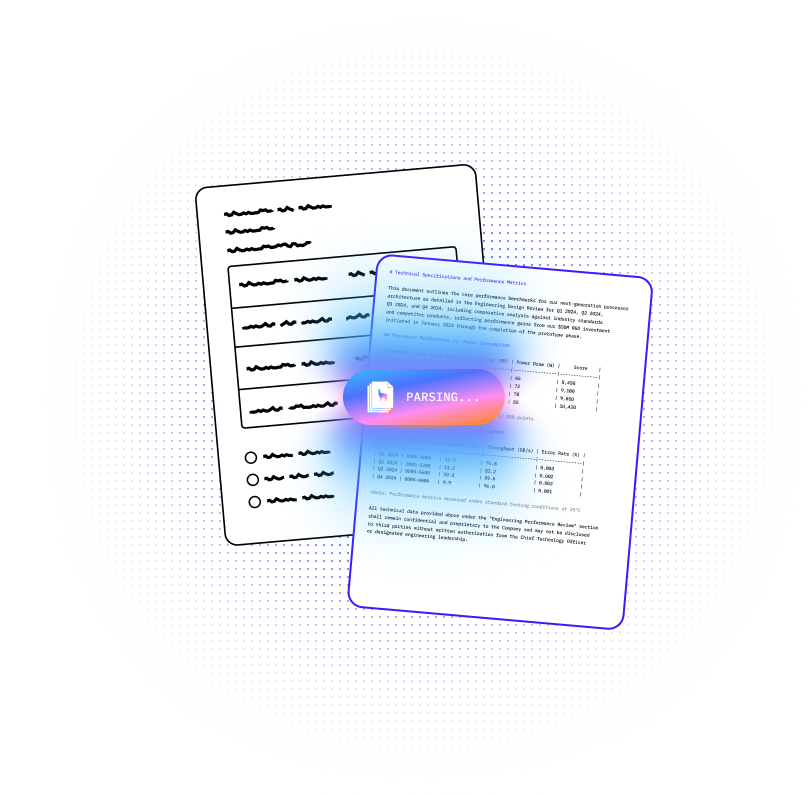
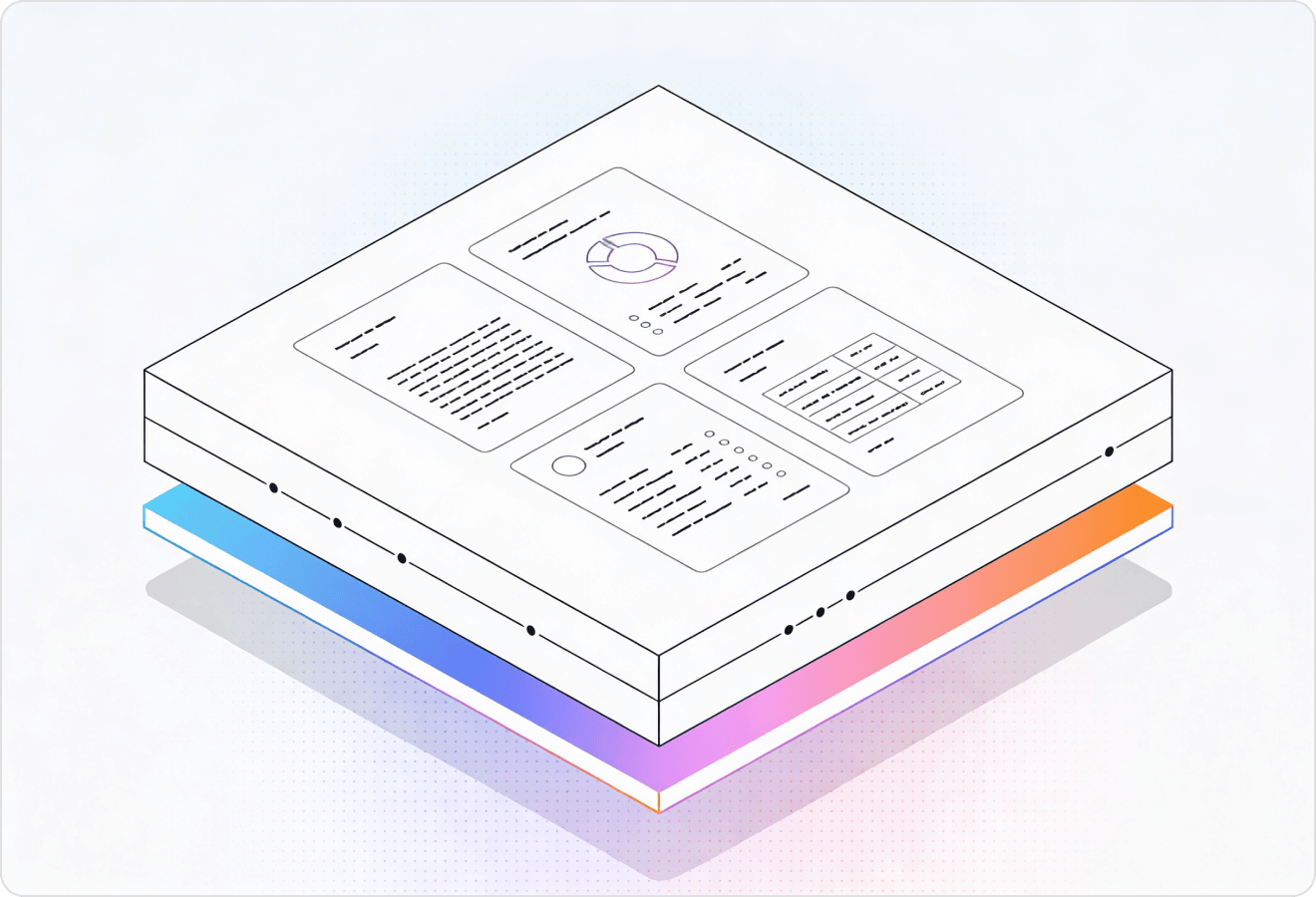

LlamaParse turns messy receipt photos and PDFs into reliably structured fields like merchant, date, totals, taxes, and line items for downstream systems. Agentic document parsing understands layouts and runs validation loops with confidence metadata, so you spend less time fixing edge cases.
Best-in-Class Accuracy

Automate expense intake by turning emailed receipts and app screenshots into clean JSON that posts directly into your ERP, eliminating the week-end reconciliation scramble. LlamaParse handles multi-column and messy mobile scans with layout-aware parsing, so you don’t burn engineering time maintaining brittle receipt rules as vendors and formats change.

Capture fuel, materials, and subcontractor receipts from job sites and map each line item to the right project and cost code for accurate job costing. LlamaParse preserves tables and reading order from crumpled, low-light photos and returns traceable fields with metadata for fast audit checks without slowing crews down.

Ingest client receipt batches and standardize merchant, tax, currency, and category fields into a consistent schema that flows into bookkeeping and tax prep workflows. With validation loops and confidence signals, LlamaParse reduces rework and supports exception-based review instead of manual data entry across every client.

Normalize hotel folios and travel receipts into itemized spend (room rate, taxes, fees, meals) so finance teams can enforce policy and recover overcharges quickly. LlamaParse extracts complex tables and embedded totals from varied international formats, enabling near real-time reimbursement and cleaner supplier analytics.
The Solution
01
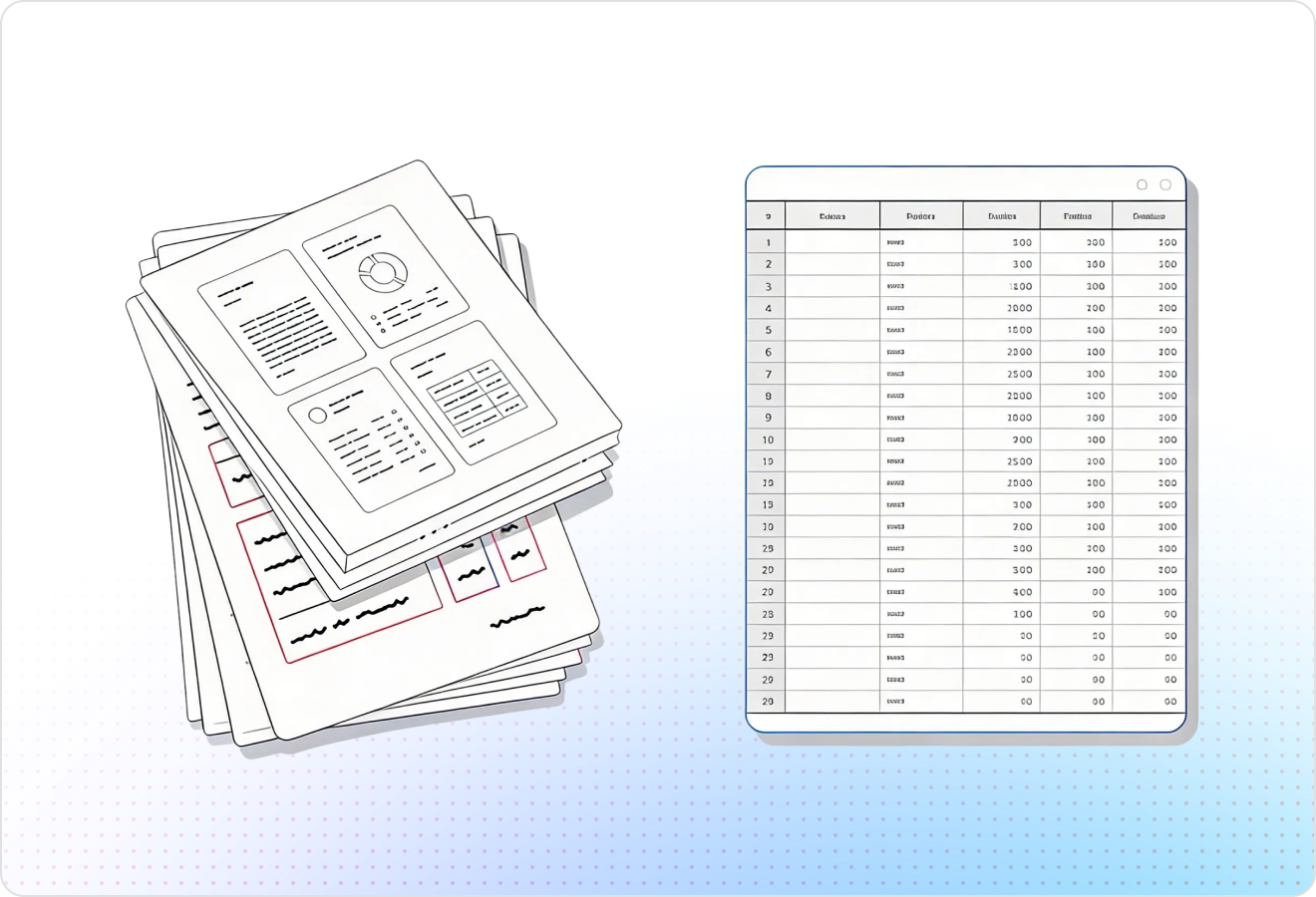
LlamaParse uses layout-aware computer vision to preserve reading order across messy receipt scans, folded paper, and odd printer formatting. That means line items, subtotals, taxes, and totals don’t get scrambled—so your expense workflow stops breaking on real-world receipts.
02
It detects and reconstructs itemized purchases as structured tables instead of a flat blob of text. You can reliably capture quantity, unit price, category cues, and per-item amounts for audit-ready expense reports and downstream analytics.
03
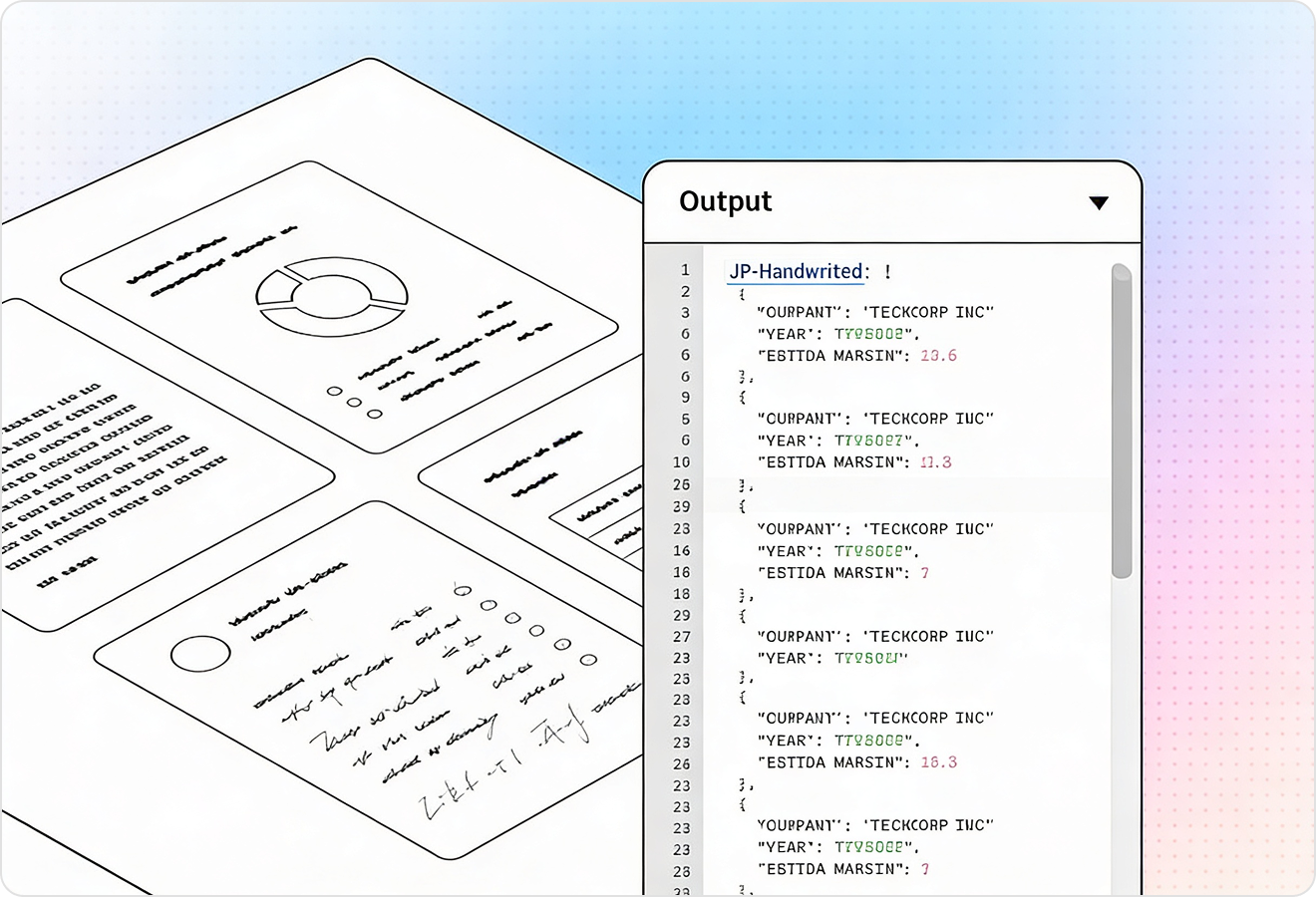
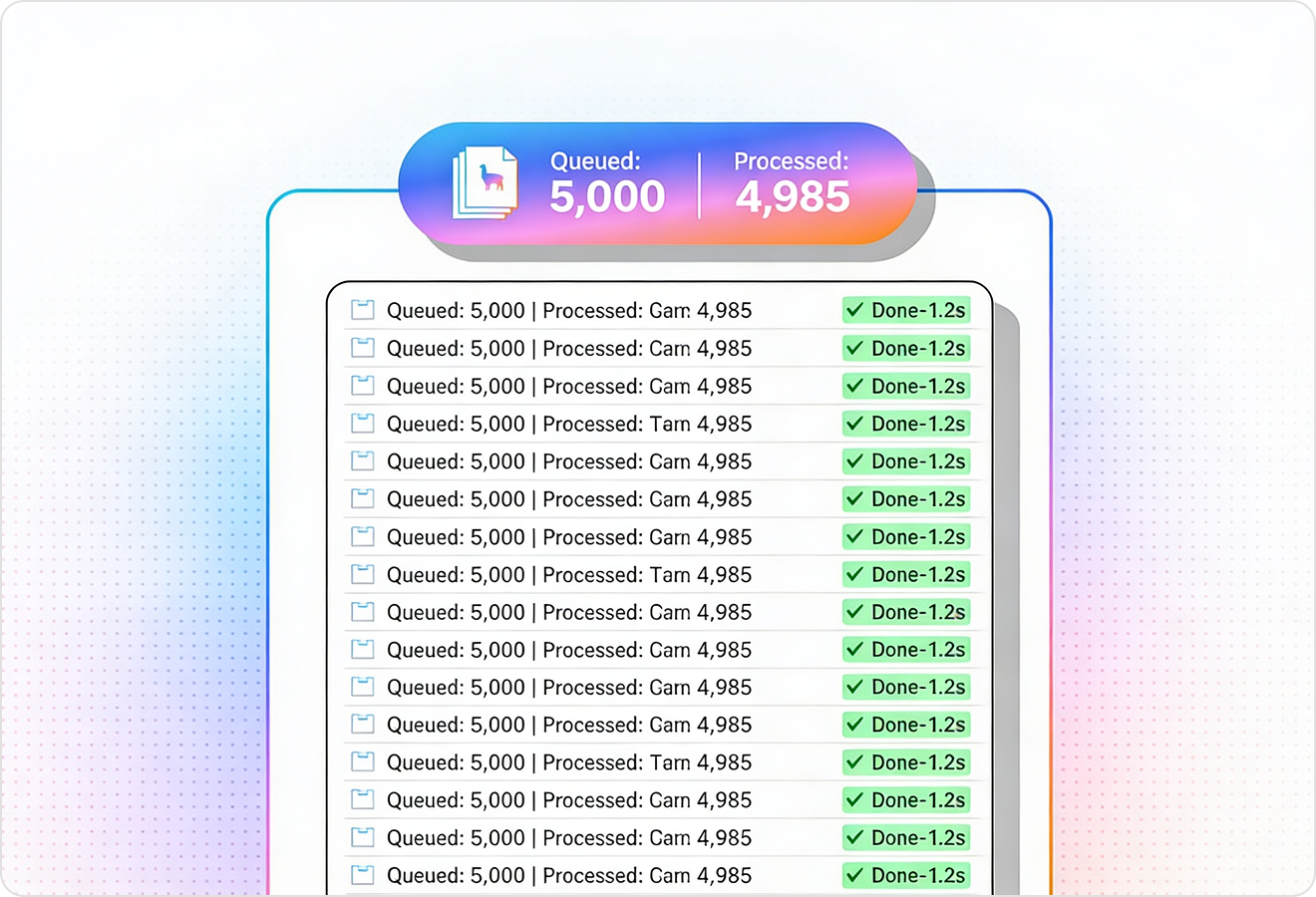
LlamaParse runs self-correction and validation steps to catch common extraction failures like misread decimals, missing currency symbols, or hallucinated totals. This reduces manual review and boosts straight-through processing for high-volume receipt ingestion.
04
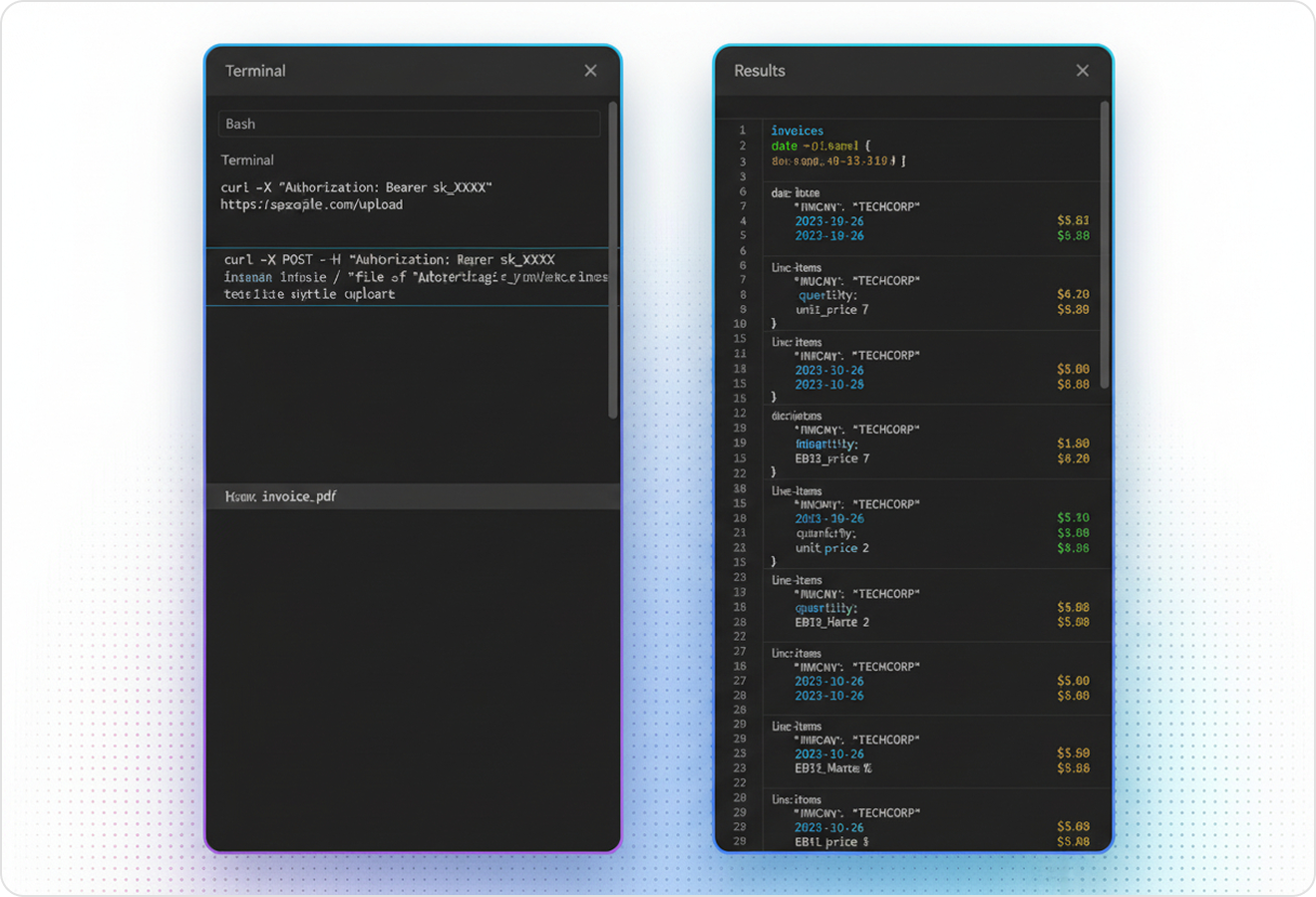
You can return receipts in clean JSON shaped for your expense system, with fields like merchant, date, tax, tip, and total. Each value can include traceable metadata (page location and confidence) so finance teams can verify exceptions without re-reading the whole receipt.
Technical OCR documentation
Explore our developer guides to easily connect your document pipelines to LlamaParse.
Explore the documentation
Our AI catches the typos that tired eyes miss.

Export to Excel, JSON, XML, or directly via API.

SOC2 Type II compliant with end-to-end encryption.

Train the tool on your specific forms in minutes, not days.

Average processing time of <3 seconds per page.
LlamaParse’s support of a wide variety of filetypes and its accuracy of parsing made it the best tool we tested in our evaluations. The LlamaIndex team was very responsive and we were off to the races within a day.
Common FAQs
01
Our layout-aware receipt parsing preserves the original reading order, even on messy scans and nonstandard printer formats. That means line items, taxes, and totals don’t get scrambled, reducing downstream errors in your expense workflow.
02
Yes—line-item table extraction reconstructs purchases as structured tables, not a flat blob of text. You can reliably capture quantity, unit price, and per-item amounts for audit-ready reporting and better spend analytics.
03
Auto-correction and validation loops catch frequent extraction failures such as misread decimals, missing currency markers, and inconsistent totals. This reduces manual review and increases straight-through processing for high-volume receipt ingestion.
04
Do you provide JSON output that fits my expense system, and can my team verify the results?
You can return clean JSON with fields like merchant, date, subtotal, tax, tip, and total. Each value can include citations (location + confidence), so finance teams can quickly verify exceptions without re-reading the entire receipt.
05
How does this help finance teams during audits or policy enforcement?
Structured line items and traceable citations make it easy to justify totals, taxes, and specific purchases during audits. Because the data is organized and verifiable, reviewers spend less time chasing receipts and more time enforcing policy consistently.
06
How quickly can we integrate receipt OCR into our current workflow?
Integration is straightforward because the output is normalized JSON designed to drop into expense and accounting pipelines. Most teams start by mapping a few key fields (merchant, date, total) and then expand to full line-item capture as needed.