Nov 14, 2025
Document AI: The Next Evolution of Intelligent Document ProcessingPersona
Industry
Use cases
Document Intelligence
[ Document Intelligence ]

Use LlamaParse to pull clean tables and key fields from messy scans, fast and reliably.
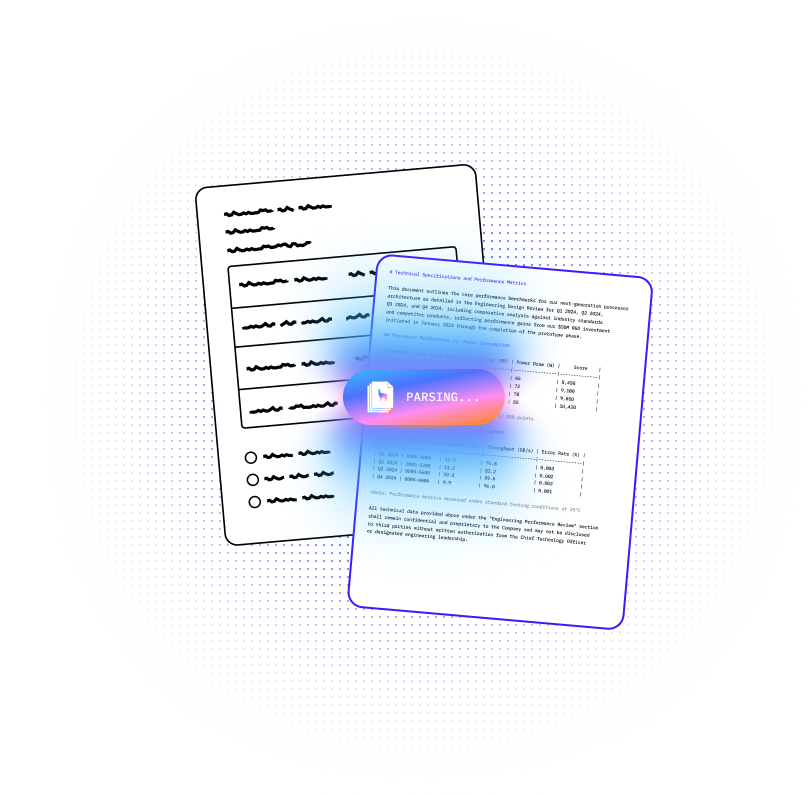
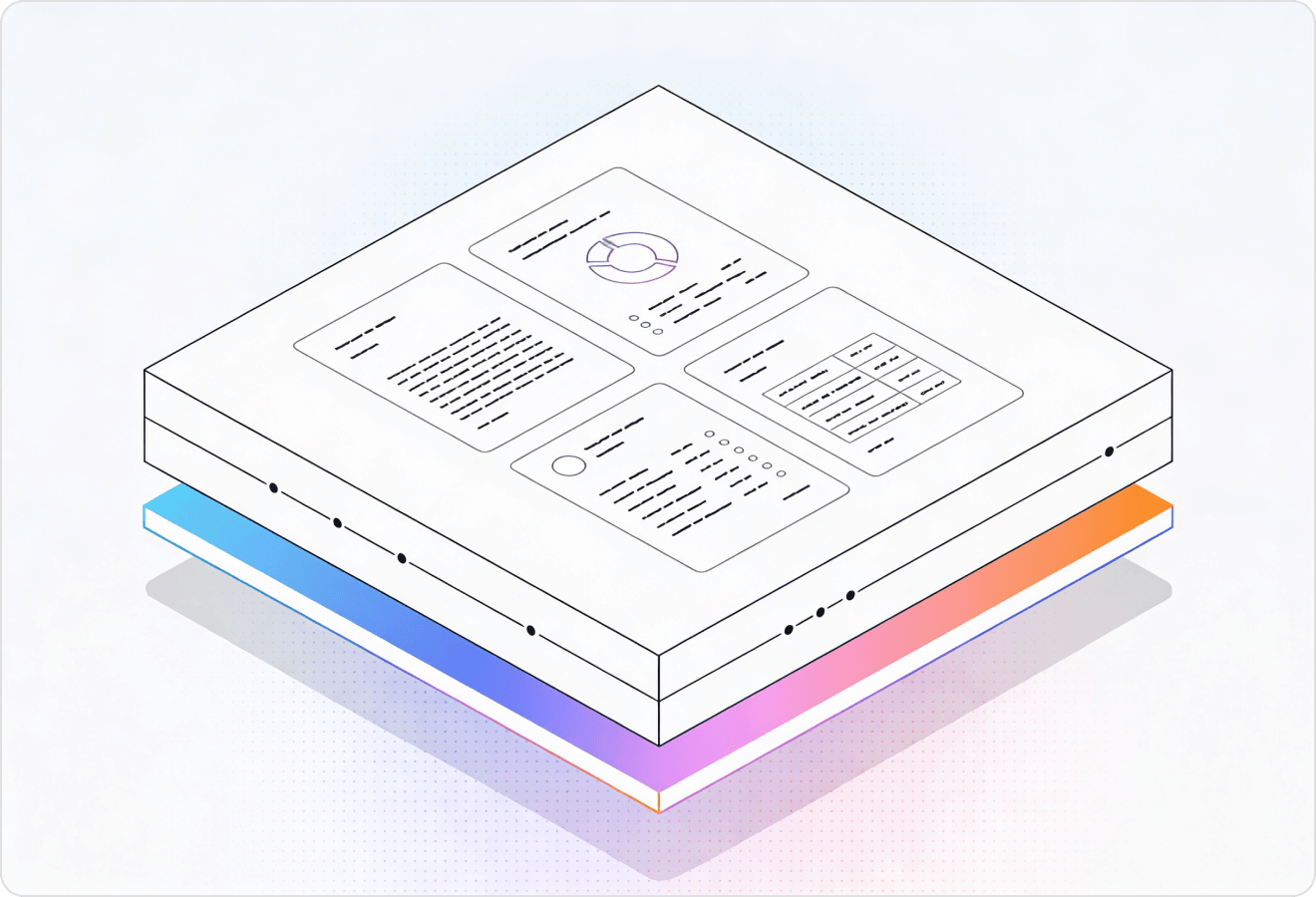

LlamaParse (LlamaIndex) converts PDFs, scans, and complex forms into clean, structured Markdown, JSON, or HTML so your systems can actually use them. Layout-aware vision plus agentic validation loops capture tables, charts, and footnotes with citations and confidence, reducing rework and exceptions.
Best-in-Class Accuracy

LlamaParse powers high-fidelity workflows by transforming complex reports, multi-page agreements, and dense filings into AI-ready structured markdown. By preserving nested table integrity and providing precise page-level citations, it enables document agents to synthesize deep insights, verify data points, and highlight critical obligations at scale. LlamaParse eliminates the manual friction of inconsistent formats, accelerating research and audit cycles while ensuring every output is backed by verifiable data lineage and production-grade precision.

LlamaParse provides the layout-aware parsing necessary to bridge the gap between messy medical documentation and production-grade AI. It normalizes data from clinical attachments, EOBs, and investigator brochures, preserving the structural integrity of tables and checkboxes that break legacy OCR. Teams use these high-fidelity outputs to accelerate clinical research and claim appeals, cutting down on denials and manual review times with a fully auditable data trail.

LlamaParse transforms claims files, policy endorsements, and damage assessments into structured, queryable intelligence for automated adjudication and underwriting risk analysis. It eliminates the manual bottlenecks adjusters face when navigating non-standardized layouts or scanned medical attachments. By preserving the precise relationship between tables and text, LlamaParse ensures that every coverage decision is backed by direct page-level provenance, allowing teams to move from slow manual review to precision-automated processing.

LlamaParse structures purchase orders, invoices, packing slips, and supplier spec sheets (often with complex line-item tables) into clean data that matches ERP fields reliably. This enables automated 3-way matching and faster discrepancy resolution when vendors change templates or send low-quality scans.
The Solution
01
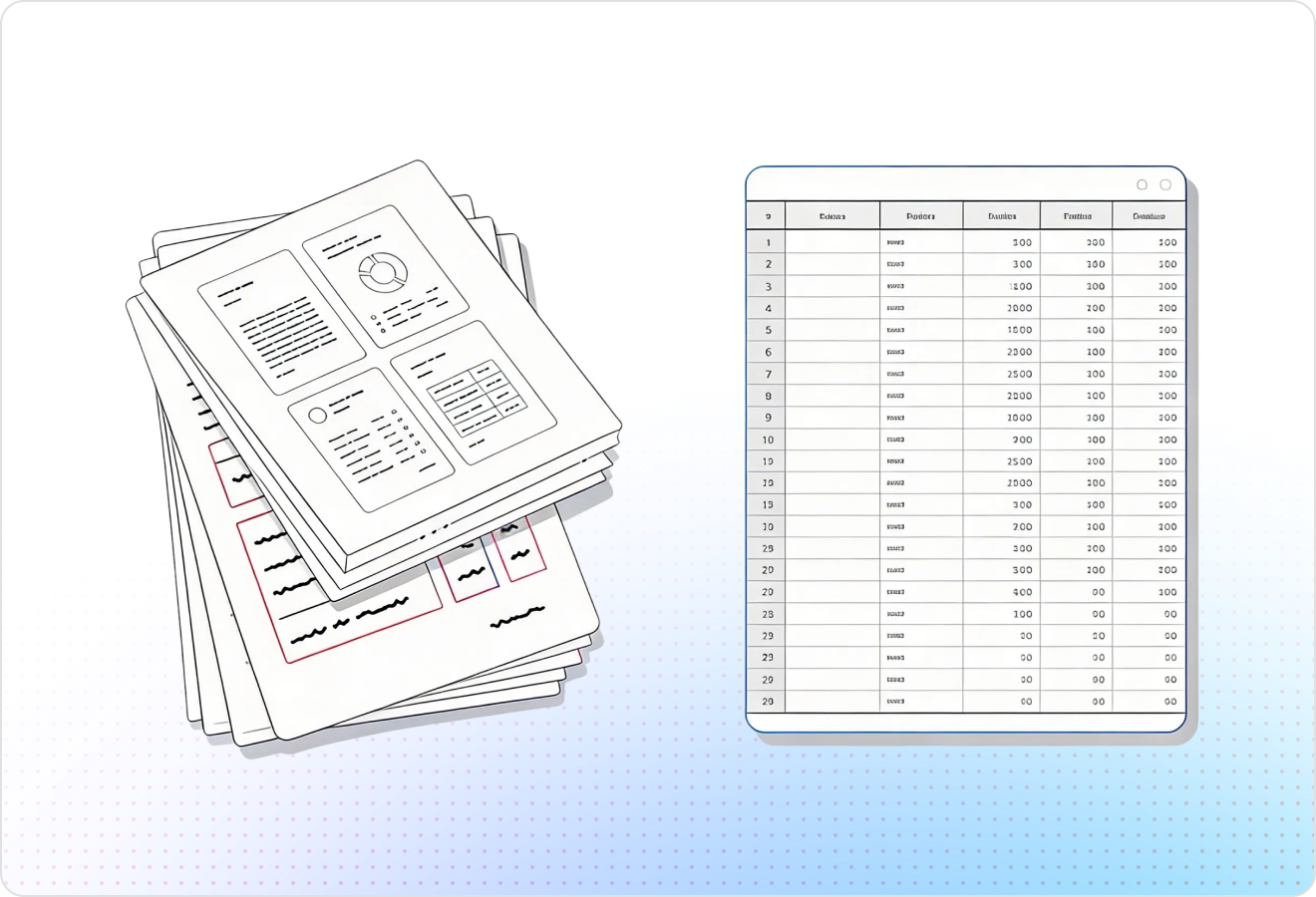
LlamaParse detects and preserves page structure, headers, paragraphs, columns, footnotes, and sections, instead of flattening everything into a text blob. For document intelligence, that structure is what lets you reliably map facts to the right context and avoid mixing fields across similar-looking blocks.
02
LlamaParse pulls tables and key-value fields into clean, machine-readable representations rather than lossy text. This makes document intelligence practical for things like financial statements, invoices, and intake forms where relationships between cells and labels matter.
03
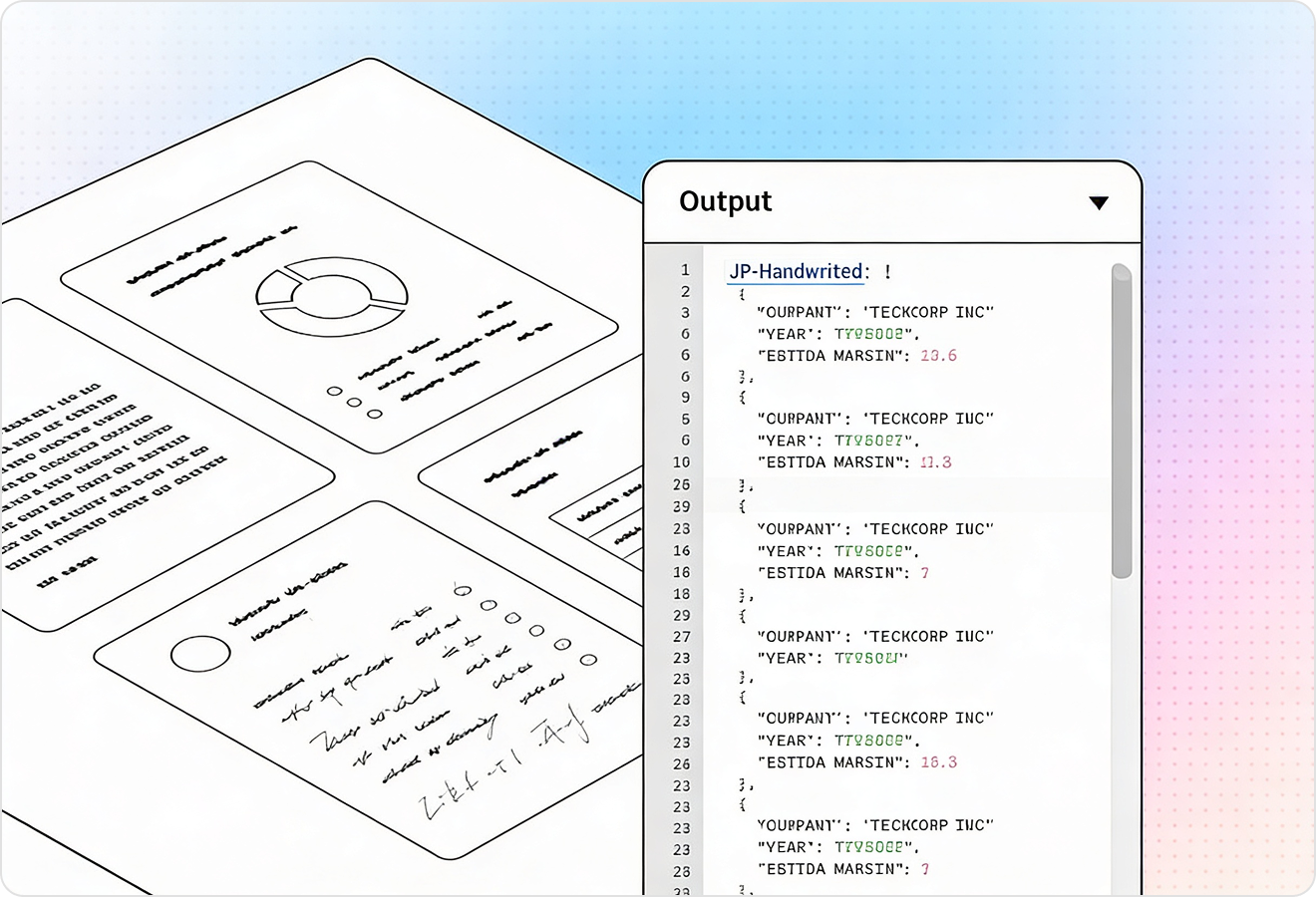
LlamaParse can interpret embedded charts, images, and mixed visual elements by routing work to vision-capable models when needed. That means document intelligence isn’t limited to visible text, you can extract meaning from figures, diagrams, and annotated screenshots that legacy approaches often ignore.
04
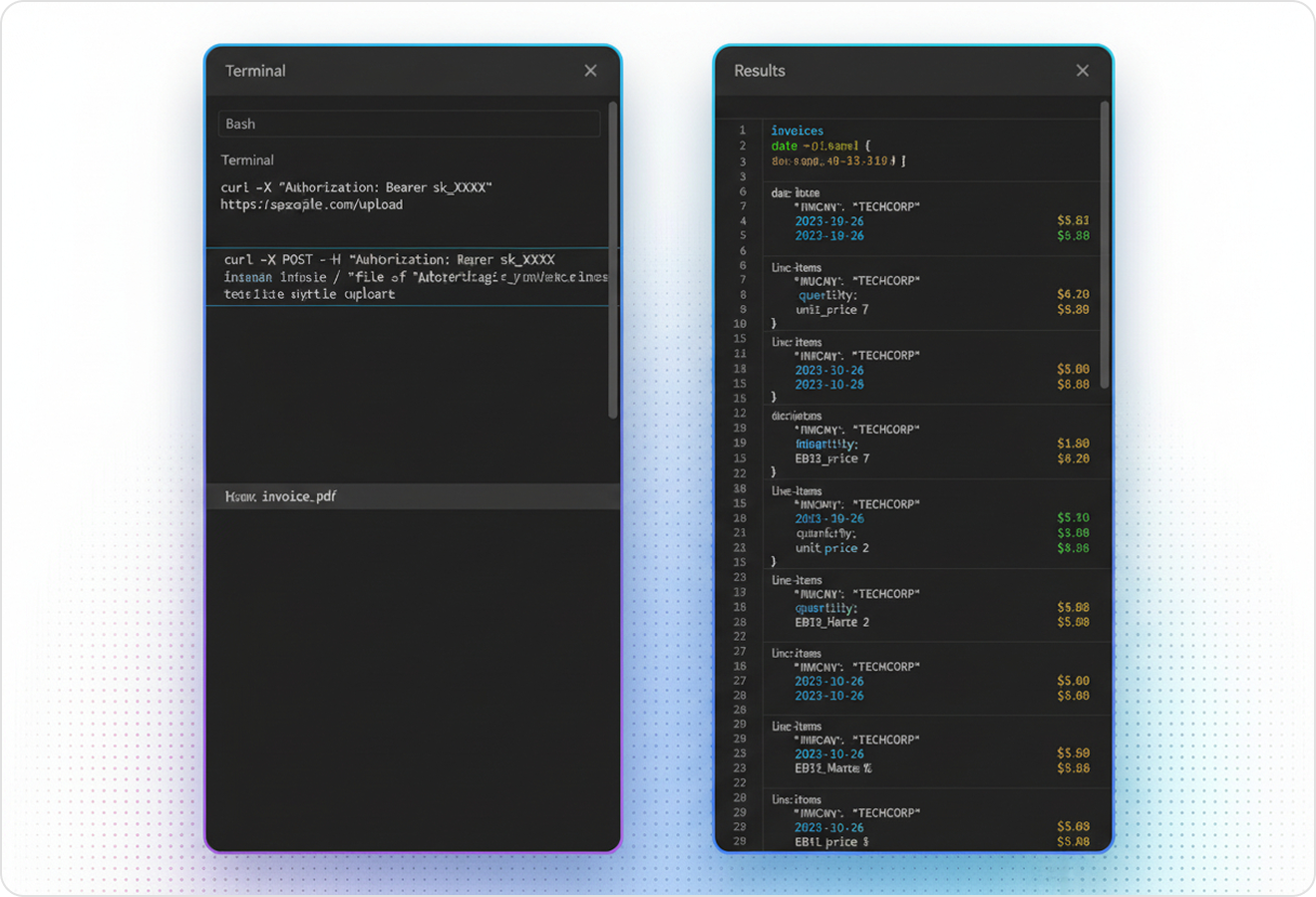
LlamaParse returns structured outputs with provenance metadata like citations and confidence signals, so you can trace each extracted value back to the source. For document intelligence, this is how you enable human-in-the-loop review, auditing, and safe automation in regulated workflows.
Technical OCR documentation
Explore our developer guides to easily connect your document pipelines to LlamaParse.
Explore the documentation
Our AI catches the typos that tired eyes miss.

Export to Excel, JSON, XML, or directly via API.

SOC2 Type II compliant with end-to-end encryption.

Train the tool on your specific forms in minutes, not days.

Average processing time of <3 seconds per page.
LlamaParse’s support of a wide variety of filetypes and its accuracy of parsing made it the best tool we tested in our evaluations. The LlamaIndex team was very responsive and we were off to the races within a day.
Common FAQs
01
Instead of flattening everything into a text blob, it preserves the document’s layout, sections, headers, columns, and footnotes, so extracted data stays in the right context. This reduces field mix-ups in complex reports and makes downstream automation far more reliable.
02
Yes, tables are captured as structured, machine-readable data and form fields are extracted as key-value pairs, so relationships between labels, rows, and cells are preserved. That means you can validate totals, map line items, and feed clean data into your systems with less manual cleanup.
03
When a document includes visuals such as charts, diagrams, or annotated screenshots, the system can route them to vision-capable models to interpret what’s shown. You’re not limited to visible text, so insights locked in figures and graphics don’t get missed.
04
How can we trust the extracted values in regulated or audited workflows?
Outputs include citations and provenance metadata so each extracted value can be traced back to the exact source location in the document. This supports human review, auditing, and safer automation by making verification straightforward.
05
How quickly can we integrate it into our document intelligence pipeline?
You can start by parsing a small set of representative documents and validating results using the included citations for spot checks. From there, it’s easy to scale to more document types because the structured outputs are built to plug into common ETL, search, and LLM workflows.