Nov 14, 2025
Document AI: The Next Evolution of Intelligent Document ProcessingPersona
Industry
Use cases
Text Parsing
[ Text Parsing ]

Use LlamaParse to reliably extract tables, fields, and structure into verified JSON or Markdown.
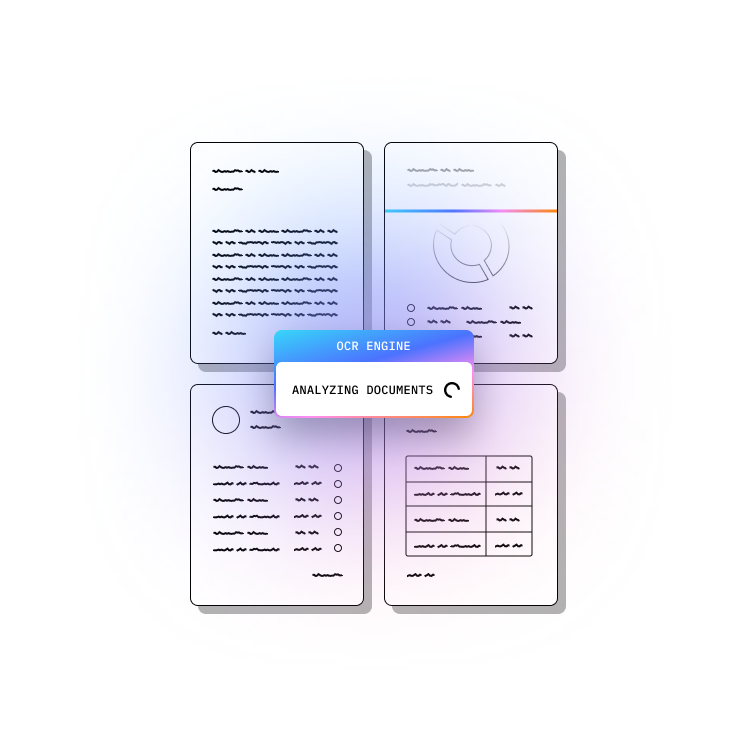
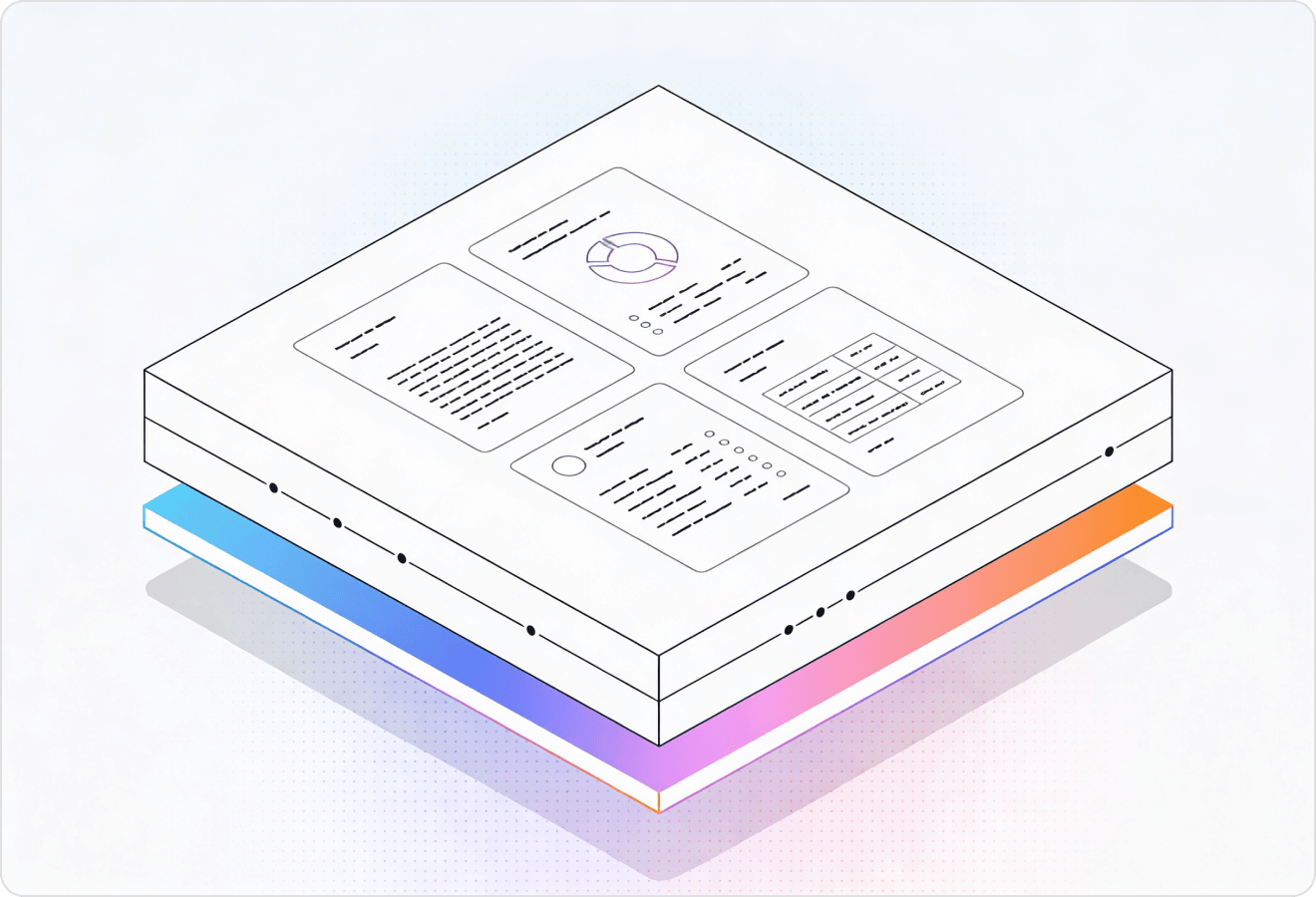

LlamaParse turns messy PDFs, scans, and slide decks into clean, structured Markdown and JSON you can actually ship into downstream systems. It uses layout-aware vision and agentic validation loops to reduce extraction errors, preserve tables, and keep outputs verifiable at scale.
Best-in-Class Accuracy

Use LlamaParse to turn messy customer PDFs, onboarding docs, and support attachments into clean Markdown/JSON so teams can ship document-driven features without building brittle parsing code. Natural-language parsing instructions and Auto Mode help you iterate fast while keeping extraction costs predictable as volume spikes.

Parse bank statements, pay stubs, tax forms, and multi-column loan packages with layout-aware table extraction so underwriting data doesn’t get scrambled or dropped. JSON mode with page-level metadata enables auditable decisions and exception queues by linking every extracted field back to its source location.

Convert referrals, lab reports, prior auth packets, and EOBs into structured outputs while preserving sections, codes, and tables that traditional OCR often misreads. Auto correction loops reduce rework from missing fields and inconsistent formats, accelerating intake and claims workflows.

Extract quantities, line items, and change order details from dense estimates, invoices, and subcontractor pay apps—even when tables span pages or include handwritten markups. Multimodal parsing translates diagrams, charts, and specs into usable text so teams can search, compare, and validate project documentation faster.
The Solution
01
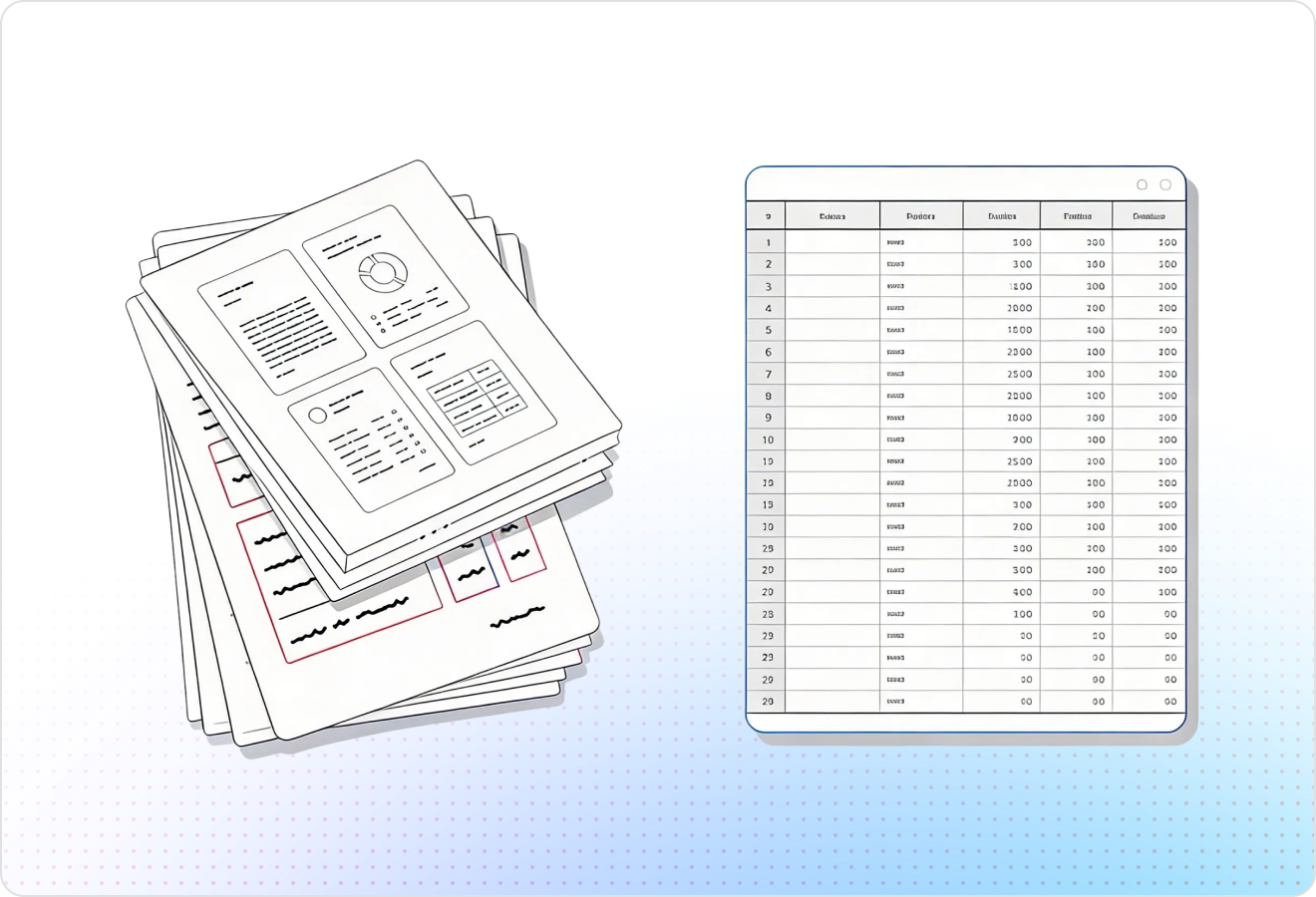
LlamaParse understands page structure (columns, headers, footers, and sections) and reconstructs text in the right reading order. For text parsing software, this prevents scrambled output and reduces the amount of brittle cleanup logic you’d otherwise maintain.
02
LlamaParse detects and extracts complex tables—including nested cells and multi-line headers—without losing alignment. That means your text parsing pipeline can produce consistent, LLM-friendly Markdown instead of noisy, flattened text.
03
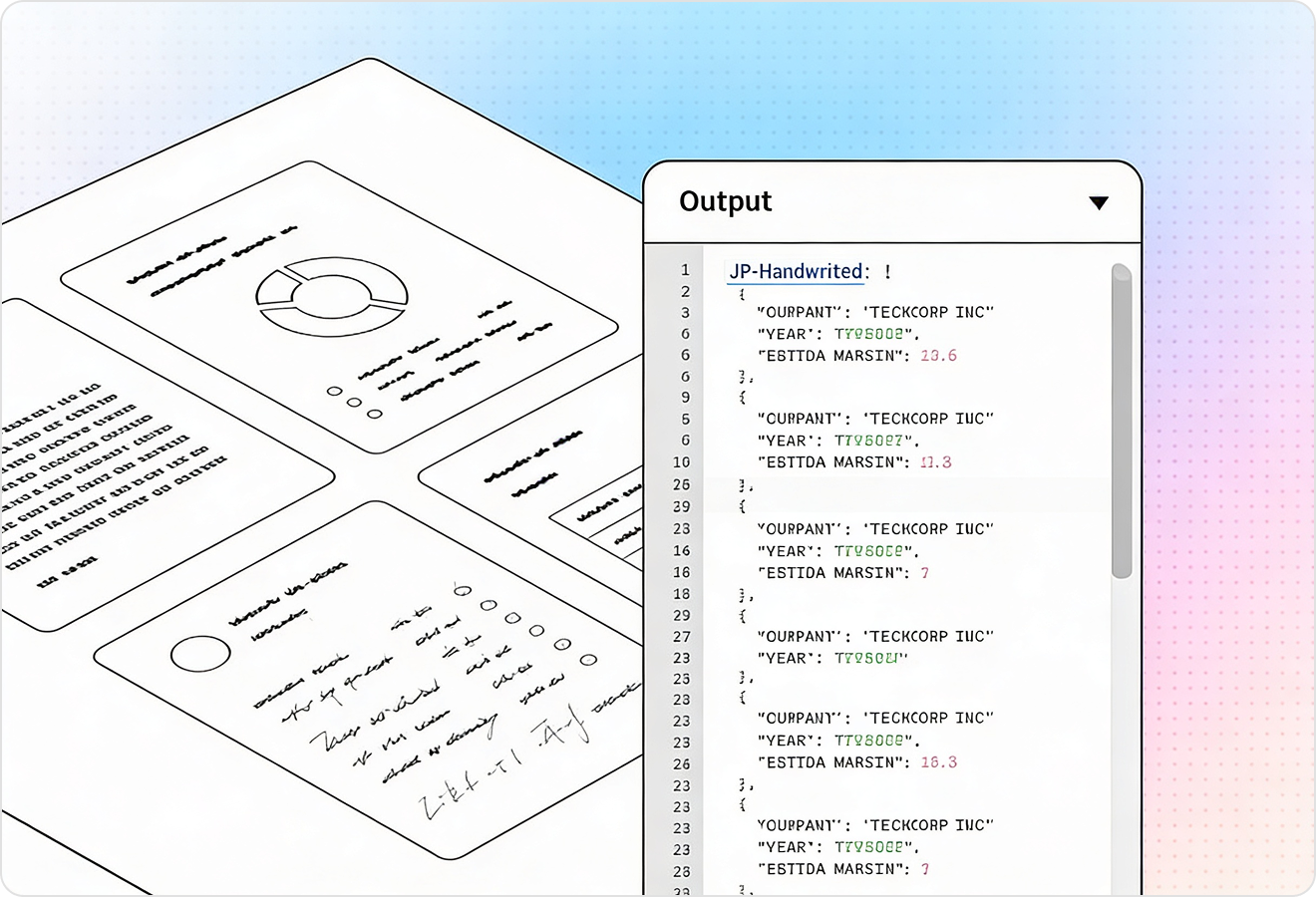
LlamaParse can interpret charts, images, and math-heavy content so the parsed result includes the information users actually care about, not just raw text. This is critical for text parsing software that needs full-document understanding across reports, invoices, and technical PDFs.
04
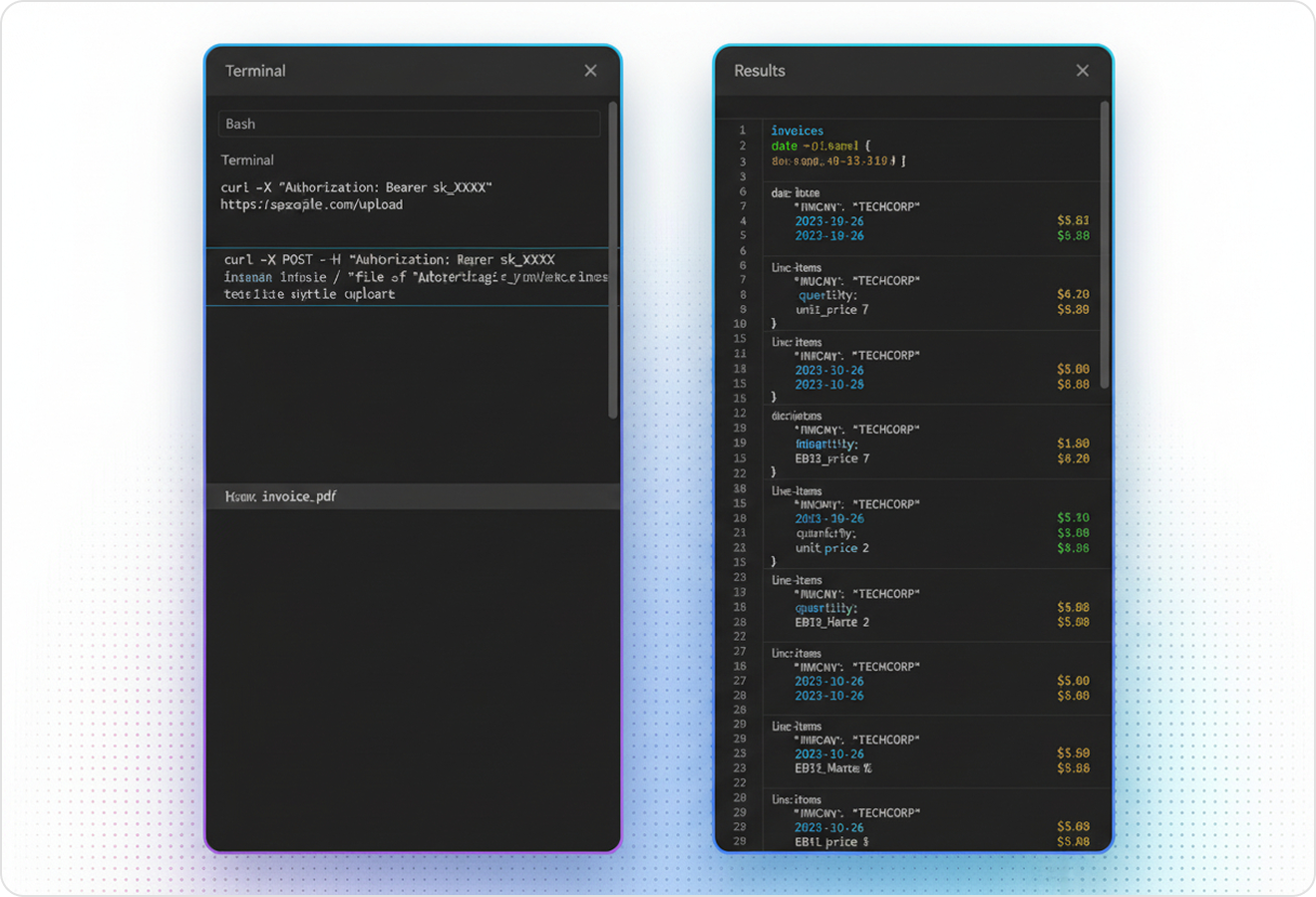
LlamaParse can output structured JSON with rich metadata like page numbers, element types, and spatial coordinates. This gives text parsing software deterministic outputs for downstream systems, plus traceability for debugging, QA, and human review when needed.
Technical OCR documentation
Explore our developer guides to easily connect your document pipelines to LlamaParse.

Our AI catches the typos that tired eyes miss.

Export to Excel, JSON, XML, or directly via API.

SOC2 Type II compliant with end-to-end encryption.

Train the tool on your specific forms in minutes, not days.

Average processing time of <3 seconds per page.
LlamaParse’s support of a wide variety of filetypes and its accuracy of parsing made it the best tool we tested in our evaluations. The LlamaIndex team was very responsive and we were off to the races within a day.
Common FAQs
01
Our layout-aware reconstruction detects columns, headings, footers, and sections, then rebuilds content in the correct reading order. That means fewer broken sentences and far less post-processing code to maintain. You get cleaner outputs you can trust across messy real-world documents.
02
Yes—tables are detected and exported as aligned, LLM-friendly Markdown, even with nested cells and multi-line headers. This keeps rows and columns intact so downstream analytics and automation don’t break. It’s a major upgrade from flattened text that requires manual fixes.
03
We interpret multimodal elements so your parsed results include the information users actually need, not just the surrounding text. This is especially useful for reports, invoices, and technical PDFs where key details may live in visuals or formulas. You’ll spend less time cross-checking the original document to fill gaps.
04
Do you provide structured output I can feed into pipelines and databases, not just plain text?
You can output structured JSON with rich metadata such as page numbers, element types, and spatial coordinates. This makes downstream processing deterministic and easier to validate than free-form text. It also simplifies integration with search, RAG, workflow automation, and QA tools.
05
How do we debug parsing issues and verify where each extracted field came from?
Every extracted element can include traceability metadata so you can pinpoint the source page and location. This makes it easier to audit results, tune extraction rules, and handle edge cases without guesswork. It’s built for teams that need reliability at scale.
06
Will this reduce the amount of custom cleanup logic we have to maintain over time?
Yes—because layout, tables, and multimodal content are handled up front, you avoid brittle regex-heavy cleanup and document-specific hacks. That lowers ongoing maintenance costs and reduces breakage when input formats change. Your team can ship faster with a parsing layer that stays consistent.