Nov 14, 2025
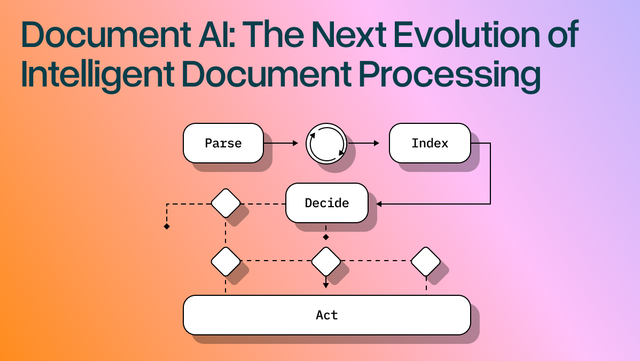
Document AI: The Next Evolution of Intelligent Document ProcessingPersona
Industry
Use cases
Legal AI Document Processing
[ Legal AI Document Processing ]

Use LlamaParse to turn messy legal filings into structured, verifiable data with citations and confidence scores.
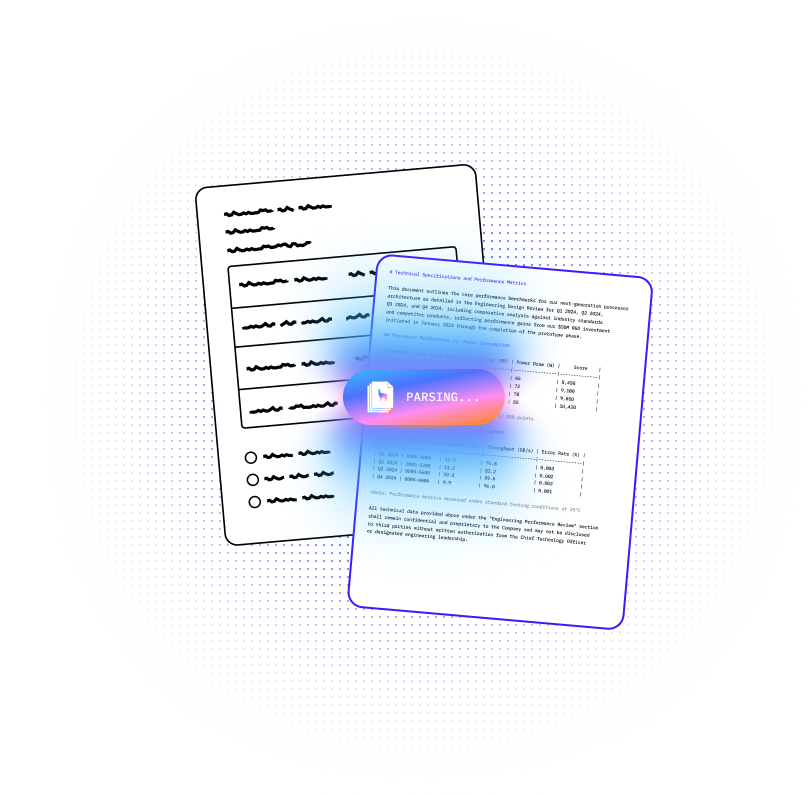

LlamaParse turns contracts, pleadings, and exhibits into clean, structured JSON or Markdown by understanding layout, tables, and scanned pages. Agentic document parsing adds validation loops, citations, and confidence signals so your legal AI workflows extract clauses faster and audit results confidently.
Best-in-Class Accuracy

Use LlamaParse to turn vendor contracts, MSAs, and DPAs into clean Markdown/JSON with layout-aware clause and table extraction, so obligation tracking and renewal risk don’t get trapped in PDFs. Natural-language parsing instructions let legal ops standardize outputs for CLM, while granular metadata provides page-level traceability for faster internal review.

Parse claim packets, police reports, medical bills, and demand letters into structured case timelines, including accurate extraction of line-item tables and embedded images that traditional OCR scrambles. Auto correction loops and confidence-scored metadata reduce rework and enable quicker coverage decisions and litigation readiness at scale.

Extract rent rolls, CAM reconciliations, lease abstracts, and amendment history from messy multi-column PDFs into consistent JSON that feeds underwriting models and lease administration systems. Multimodal parsing captures scanned exhibits and tables accurately, preventing missed escalations, caps, and critical dates that create revenue leakage.

Ship legal document automation without building a brittle parsing pipeline by using LlamaParse APIs to reliably convert user-uploaded PDFs into AI-ready Markdown/JSON for intake, review, and agent workflows. Tier-based agentic processing keeps unit economics predictable by automatically reserving heavier vision reasoning for the handful of pages that actually need it.
The Solution
01
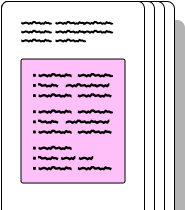
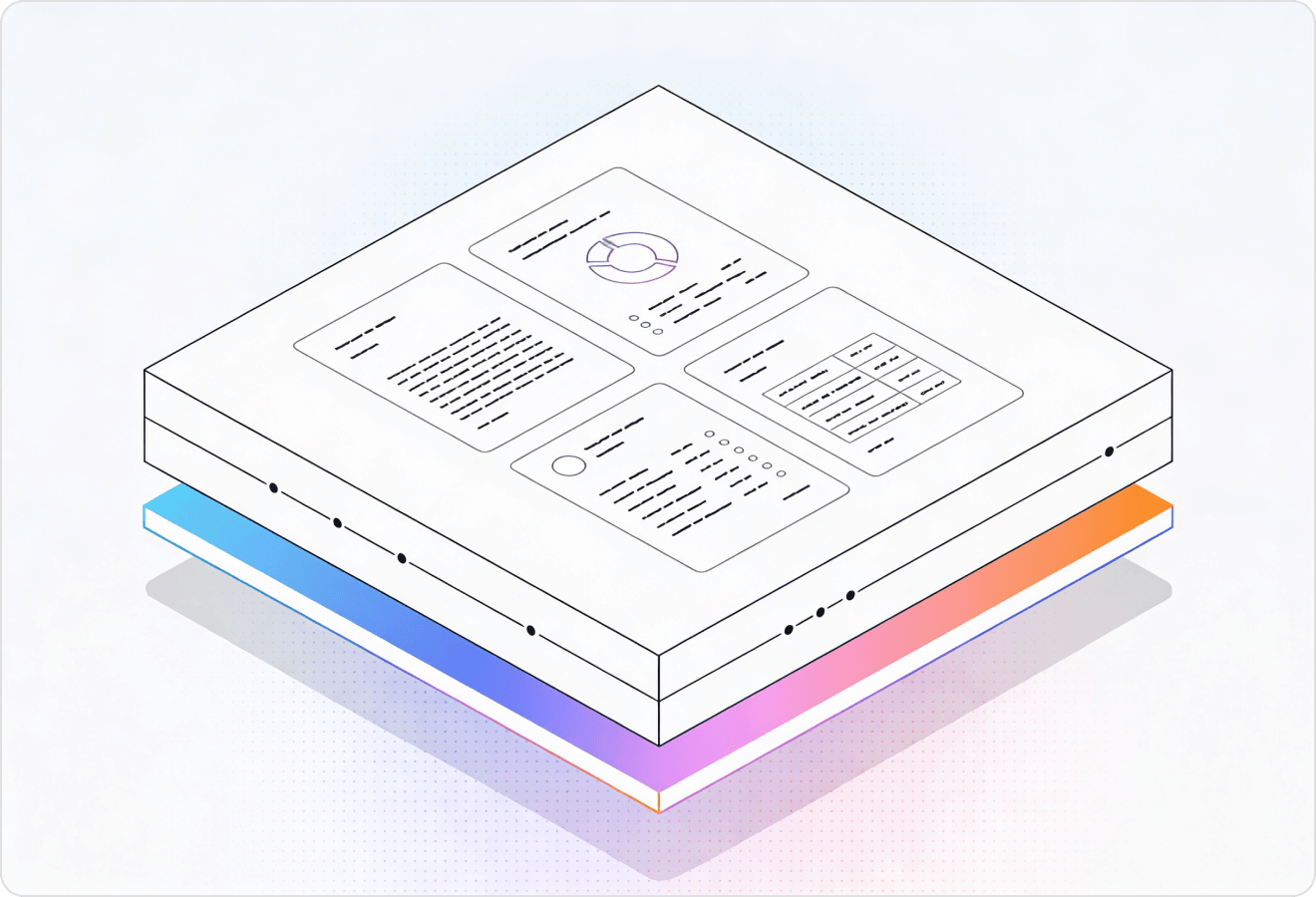
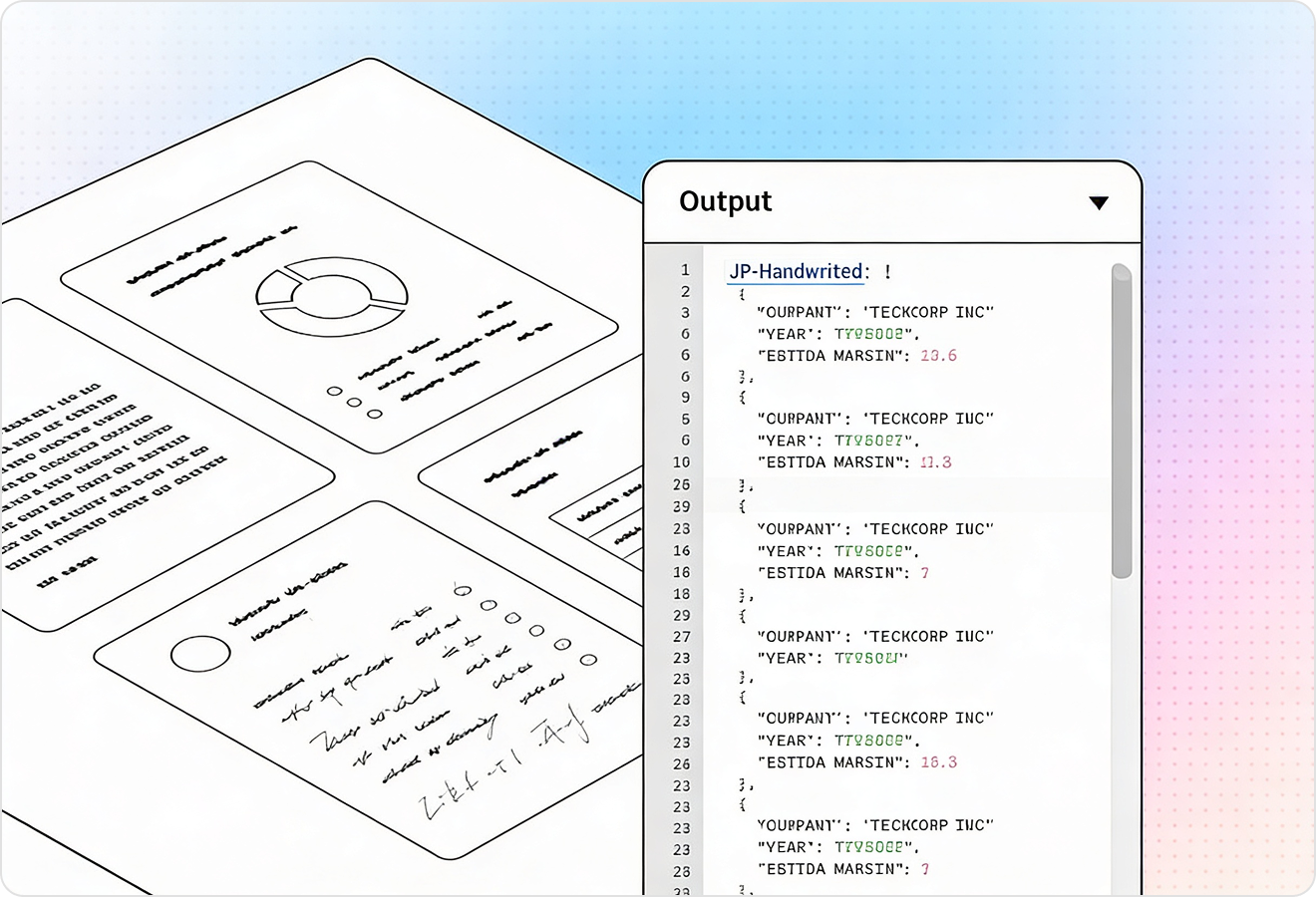
LlamaParse preserves reading order across multi-column filings, headers/footers, and dense legal formatting so clauses don’t get scrambled. That means you can trust downstream tasks like contract review, issue spotting, and citation checks on the exact language attorneys care about.
02
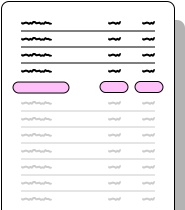
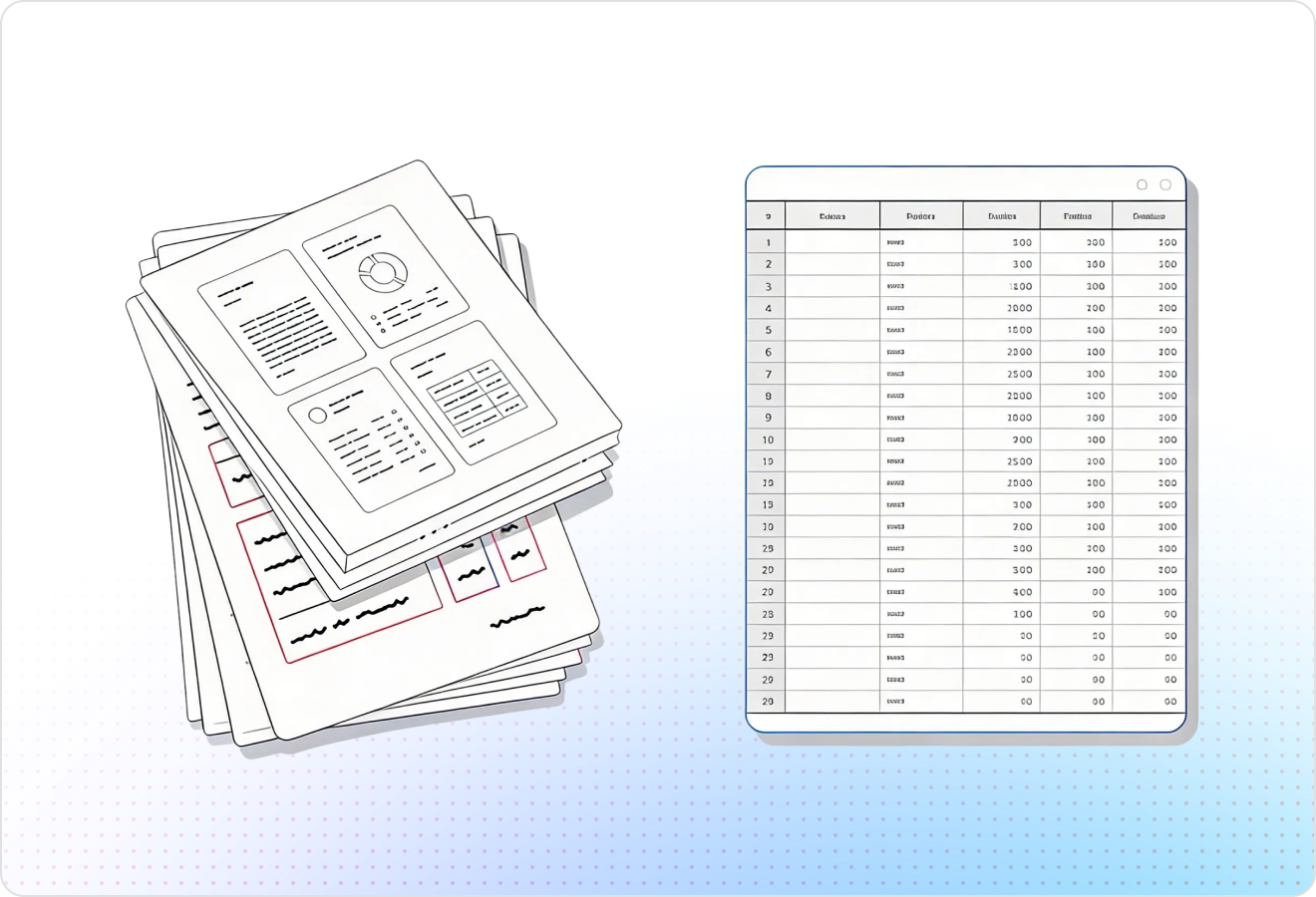
LlamaParse accurately reconstructs complex tables and exhibits into clean Markdown or structured outputs instead of flattened text. For legal AI, this makes it practical to parse schedules, pricing tables, cap tables, and compliance matrices without brittle post-processing.
03
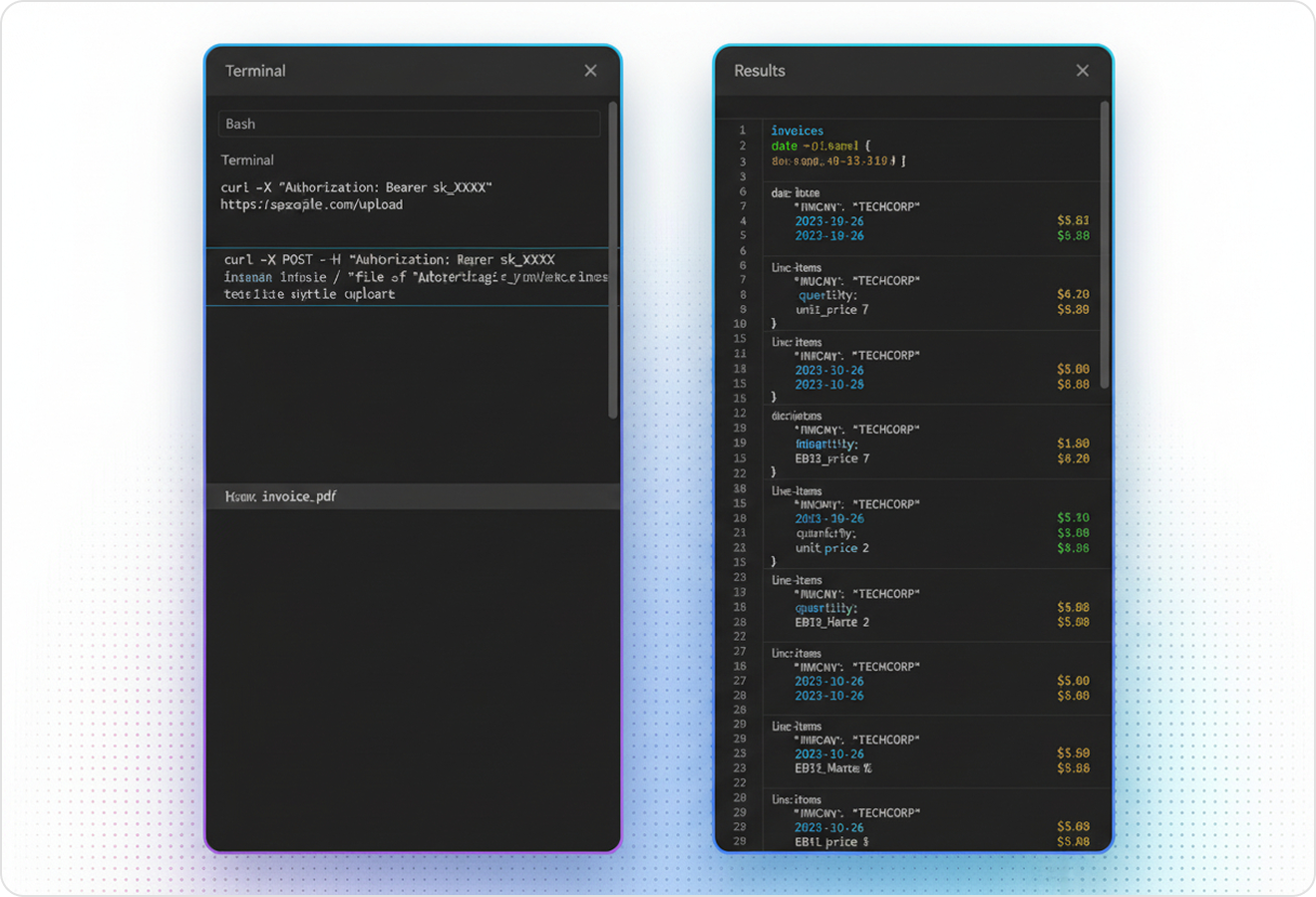
JSON mode returns structured fields with granular metadata like page numbers, element types, and coordinates for traceability. This supports defensible legal workflows where every extracted obligation, party name, or date can be linked back to the source for review.
04
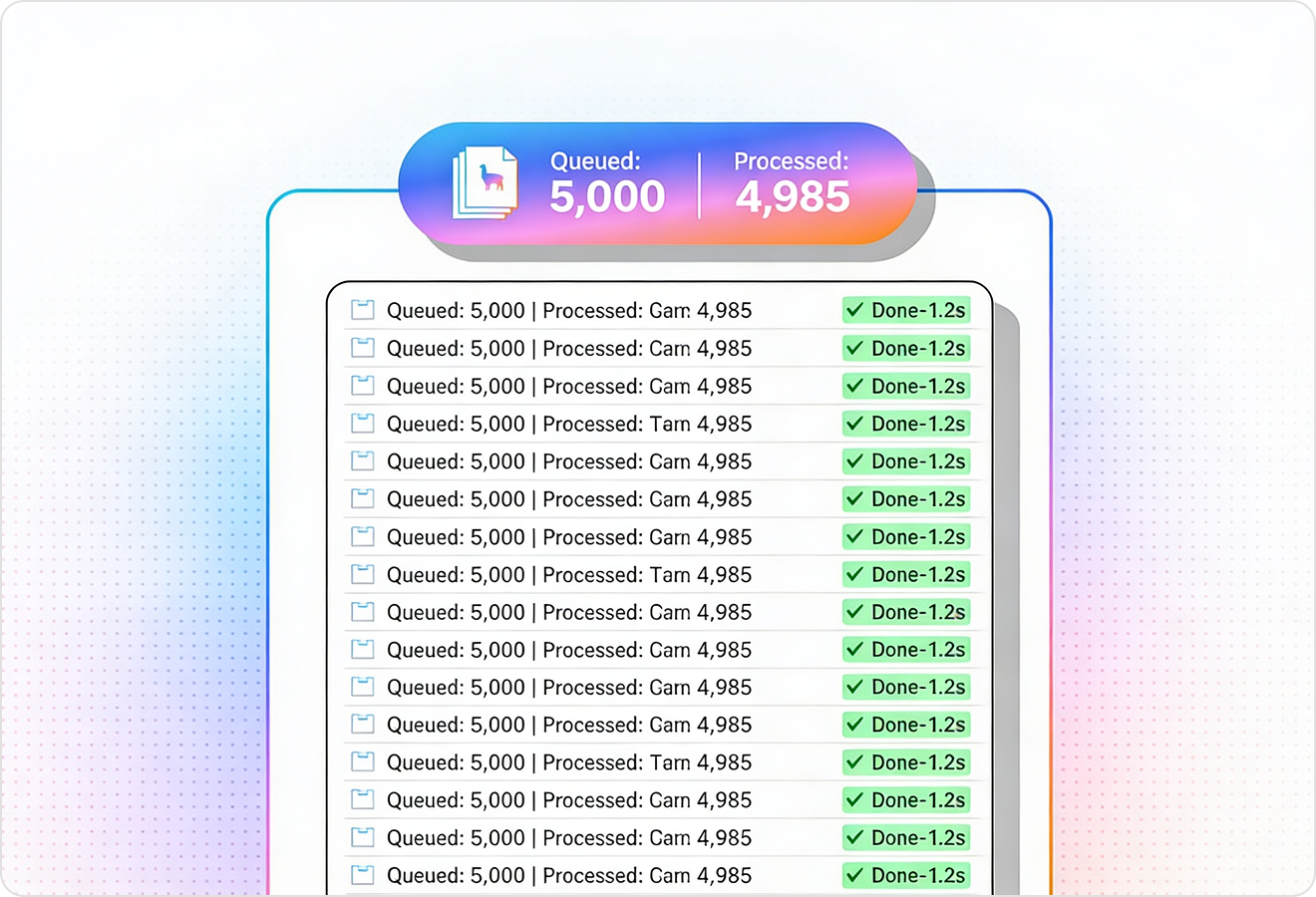
LlamaParse runs validation and self-correction steps during parsing to reduce omissions and formatting errors on messy scans. In legal document processing, that lowers manual QA time and improves straight-through processing for high-volume intake like discovery, NDAs, and court filings.
Technical OCR documentation
Explore our developer guides to easily connect your document pipelines to LlamaParse.
Explore the documentation
Our AI catches the typos that tired eyes miss.

Export to Excel, JSON, XML, or directly via API.

SOC2 Type II compliant with end-to-end encryption.

Train the tool on your specific forms in minutes, not days.

Average processing time of <3 seconds per page.
LlamaParse’s support of a wide variety of filetypes and its accuracy of parsing made it the best tool we tested in our evaluations. The LlamaIndex team was very responsive and we were off to the races within a day.
Common FAQs
01
No—our layout-aware parsing preserves true reading order across columns, headers/footers, and dense legal formatting. That means the clause language stays intact for reliable contract review, issue spotting, and citation checks.
02
We reconstruct complex tables and exhibits into clean Markdown or structured outputs instead of flattening them into unusable text. This makes it practical to extract schedules, pricing tables, cap tables, and compliance matrices without brittle post-processing.
03
Yes—JSON mode includes granular metadata such as page numbers, element types, and coordinates, so outputs are verifiable. Reviewers can quickly jump from an extracted obligation, party name, or date back to the exact source location.
04
How reliable is it on messy scans, redlines, or low-quality PDFs?
Our agentic accuracy loops run validation and self-correction during parsing to reduce omissions and formatting errors. This lowers manual QA time and improves straight-through processing for high-volume intake like discovery sets, NDAs, and court filings.
05
What output formats can we use in our legal AI pipeline?
You can choose clean Markdown for readable downstream review or structured JSON for automation and model inputs. The structured option is designed for consistent field extraction while keeping citations for auditability.
06
How quickly can we evaluate it on our own document set without a long implementation?
You can start by running a small batch of representative documents and comparing extracted fields against your current process. Because outputs are structured and traceable, it’s easy to validate accuracy with your team and expand once you’re confident.