Nov 14, 2025
Document AI: The Next Evolution of Intelligent Document ProcessingPersona
Industry
Use cases
Chart Extraction API
[ Chart Extraction API ]

Use LlamaParse to turn chart images into reliable JSON with confidence signals for validation.
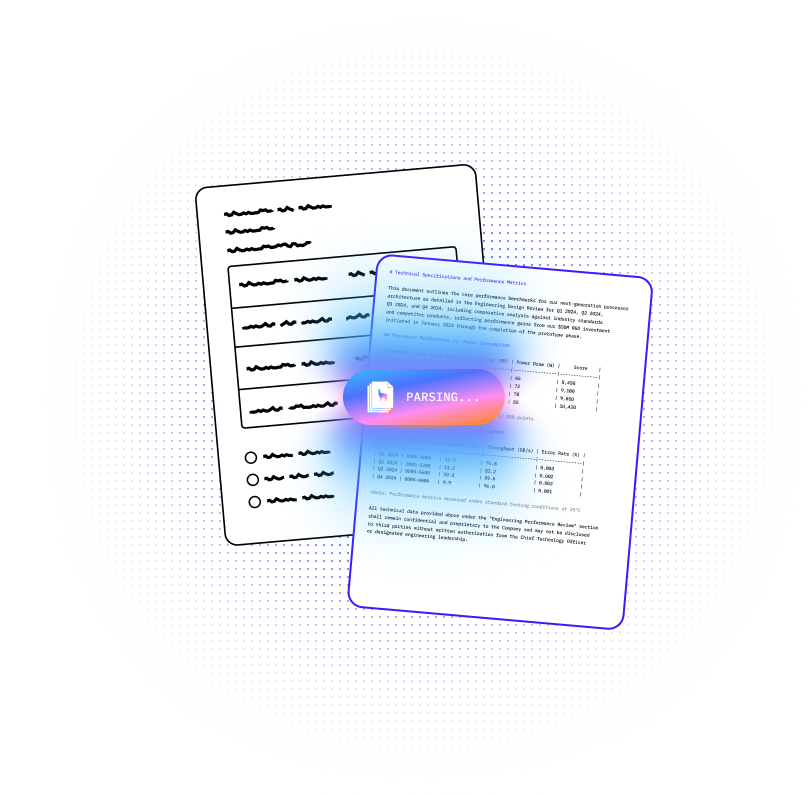
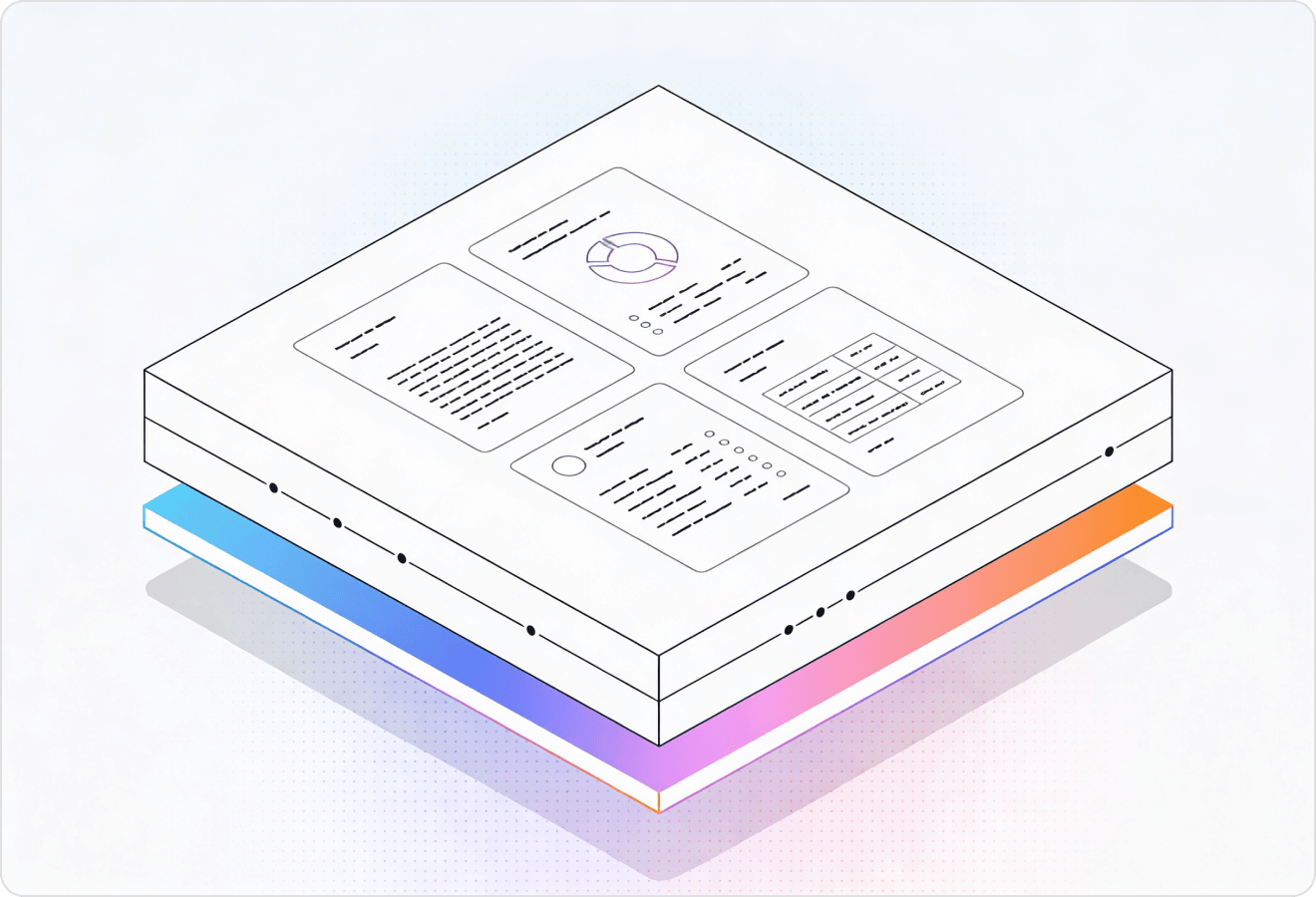
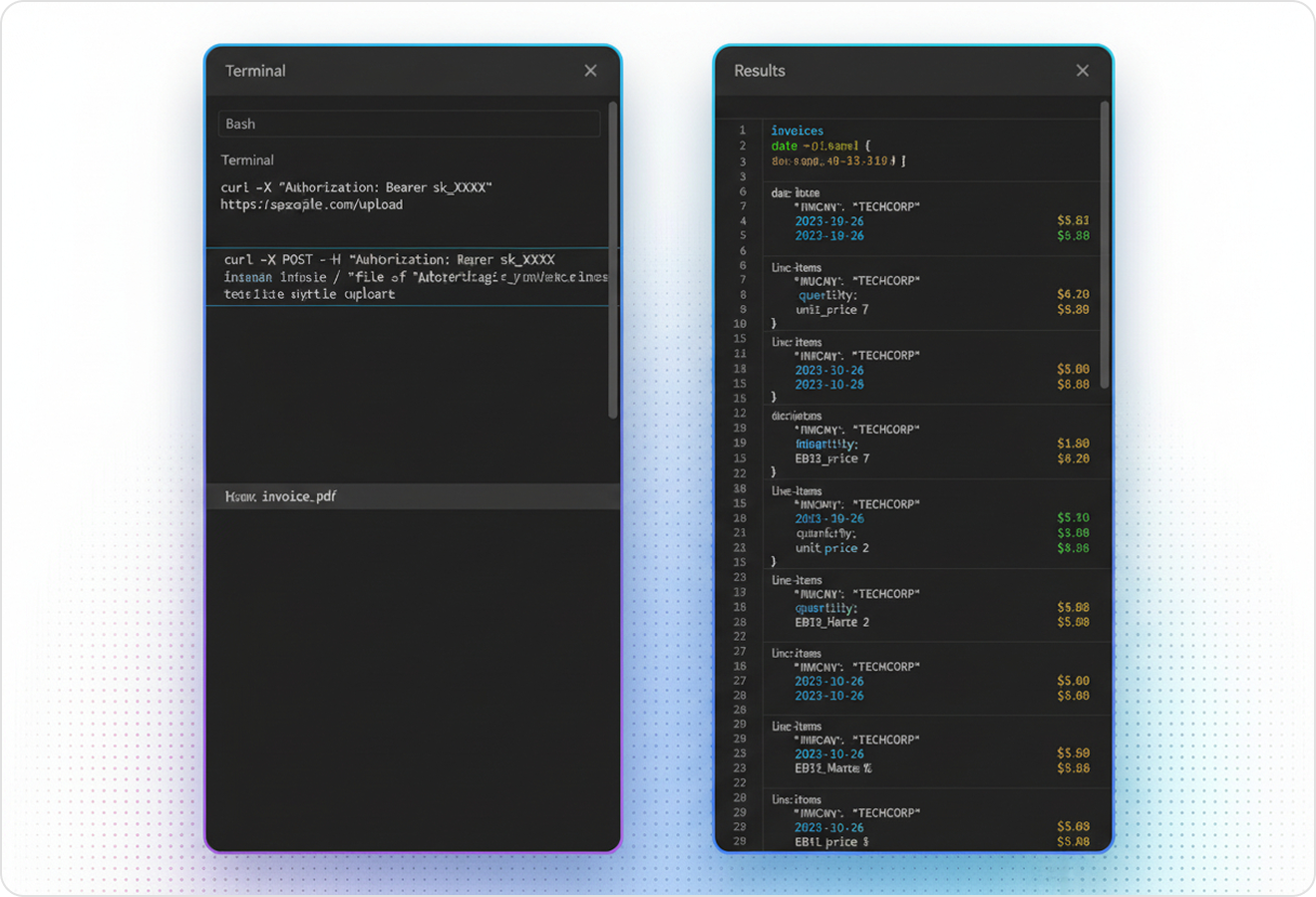
LlamaParse understands chart layout and visual cues to extract the numbers, labels, and series relationships your downstream systems actually need. Send PDFs or images to the Chart Extraction API and get clean JSON with confidence and citations, reducing manual QA and rework.
Best-in-Class Accuracy

Turn investor decks, market reports, and competitor PDFs into structured chart data so teams can refresh KPIs and pricing models without manual re-keying. LlamaParse converts graphs into Markdown tables/JSON with traceable metadata, so analysts can ship dashboards and alerts that stay correct as layouts change.

Extract time-series and allocation charts from earnings decks, annual reports, and research PDFs into clean tables that feed screening models and portfolio analytics. LlamaParse preserves reading order and provides citations/confidence scores, reducing audit risk when analysts need to prove exactly where a number came from.

Convert figures from clinical study PDFs—dose-response curves, adverse event charts, and endpoint tables—into machine-readable datasets for meta-analysis and report automation. LlamaParse handles multimodal visuals and complex tables without brittle post-processing, accelerating evidence synthesis while keeping outputs consistent across study formats.

Digitize progress reports and bid submittals by extracting cost curves, schedule charts, and multi-column tables into structured JSON that updates project controls systems automatically. LlamaParse’s layout-aware parsing prevents scrambled sections and makes change tracking reliable when vendors submit inconsistent document templates.
The Solution
01
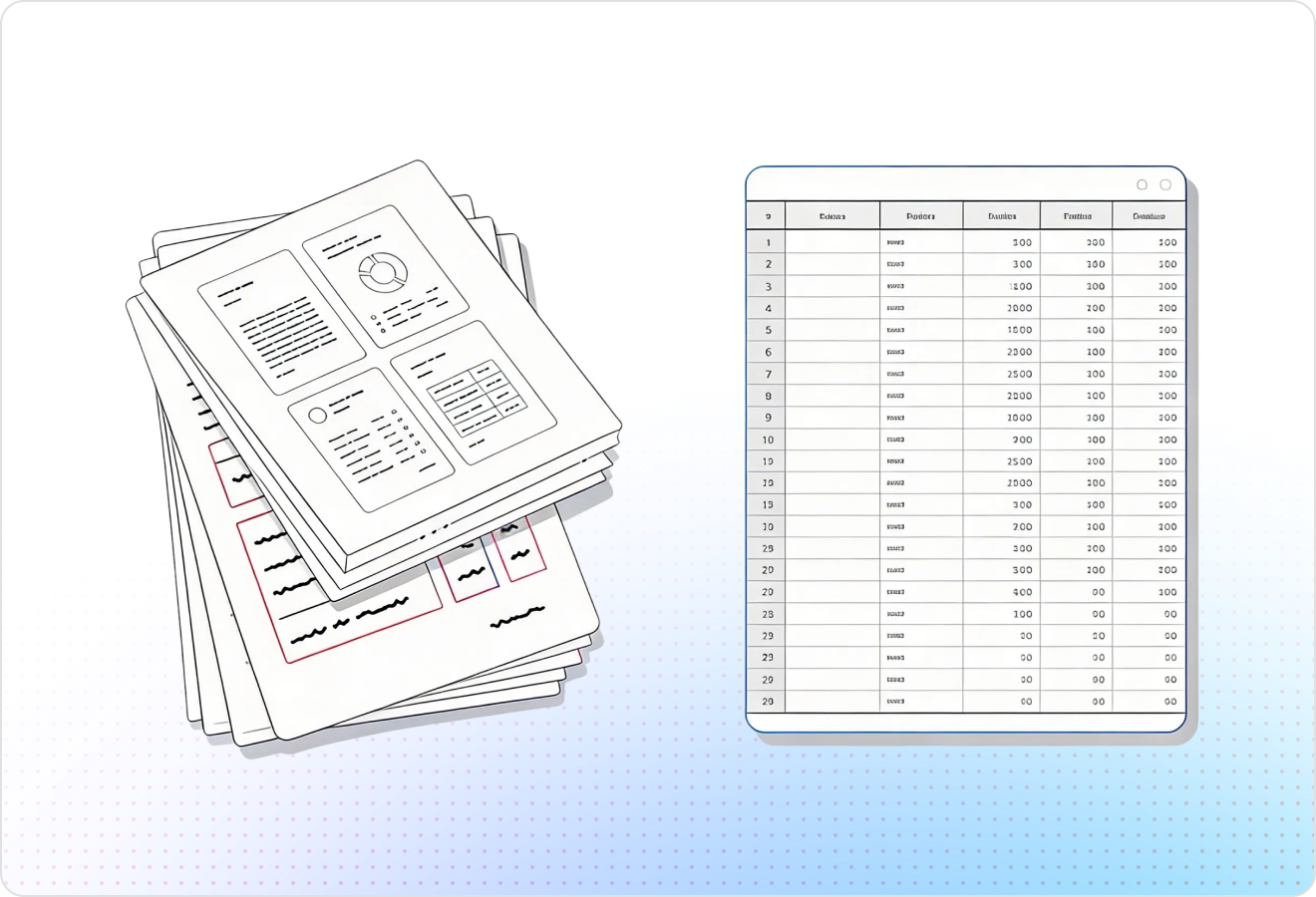
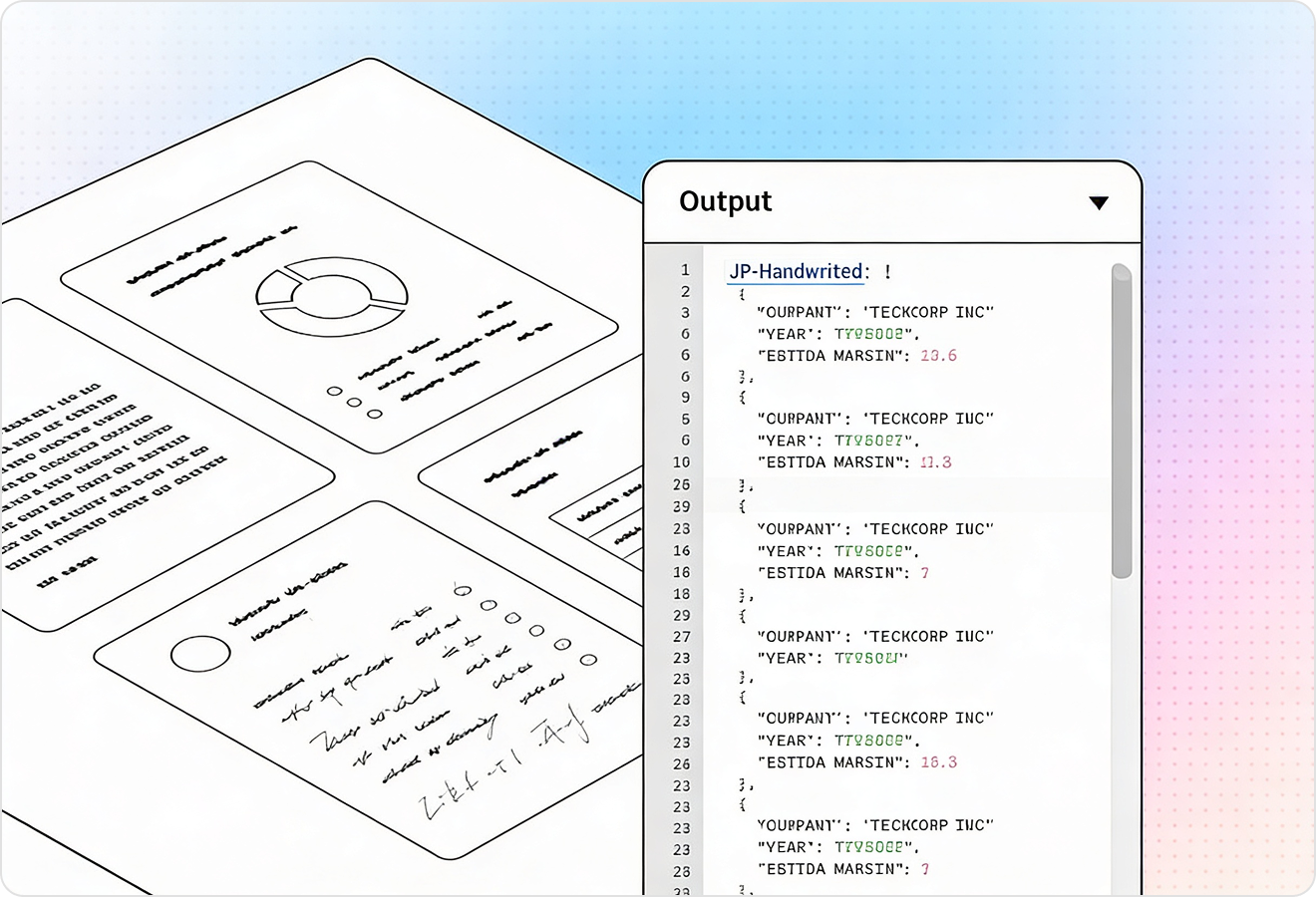
LlamaParse interprets embedded charts and figures with vision-capable parsing, not just text scraping. Your Chart Extraction API can return chart titles, axes, legends, and data series in a machine-readable form instead of a screenshot plus guesses.
02
LlamaParse detects page structure and separates charts from nearby tables, captions, footnotes, and multi-column text. This prevents mixed or scrambled output so your API can reliably map extracted values back to the correct chart and context.
03
LlamaParse can output structured JSON and attach granular metadata like page numbers, element types, and bounding boxes for extracted regions. That makes it straightforward to build an API that supports traceability, highlighting, and downstream QA for each extracted chart datapoint.
04
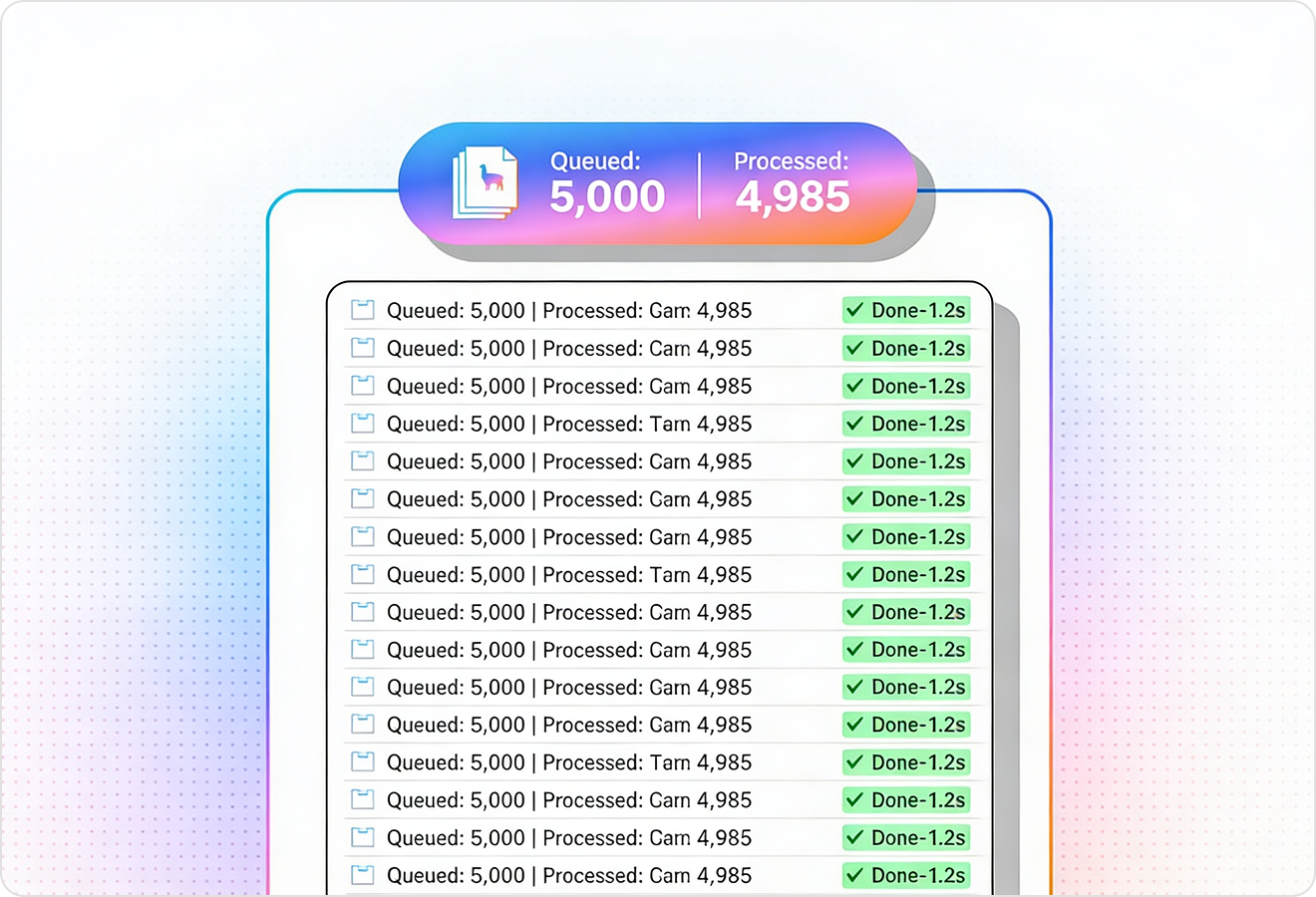
LlamaParse runs validation loops to catch common extraction errors and inconsistencies before returning results. For chart extraction, this improves straight-through accuracy on messy scans and reduces the amount of custom post-processing you need to make API outputs trustworthy.
Technical OCR documentation
Explore our developer guides to easily connect your document pipelines to LlamaParse.
Explore the documentation
Our AI catches the typos that tired eyes miss.

Export to Excel, JSON, XML, or directly via API.

SOC2 Type II compliant with end-to-end encryption.

Train the tool on your specific forms in minutes, not days.

Average processing time of <3 seconds per page.
LlamaParse’s support of a wide variety of filetypes and its accuracy of parsing made it the best tool we tested in our evaluations. The LlamaIndex team was very responsive and we were off to the races within a day.
Common FAQs
01
You get machine-readable output—not a screenshot—with chart title, axes labels, legend entries, and the underlying data series when available. This makes it easy to feed results into analytics, QA pipelines, or downstream models without manual cleanup.
02
The API uses layout-aware segmentation to separate charts from surrounding elements like tables, captions, footnotes, and column text. That reduces “scrambled” extractions and helps ensure values are mapped back to the correct chart and context.
03
Yes—results are returned as structured JSON, and can include granular metadata such as page number, element type, and bounding boxes. This gives you traceability for audits, enables highlighting in your UI, and supports reliable downstream validation.
04
How accurate is extraction on messy scans or low-quality documents?
The API includes validation and self-correction loops designed to catch common inconsistencies before results are returned. This improves straight-through accuracy on noisy inputs and reduces the amount of custom post-processing you need to trust the output.
05
Can I verify where each extracted datapoint came from in the source file?
Yes—bounding boxes and page-level references let you trace extracted elements back to the exact region in the document. That makes it straightforward to build reviewer workflows, spot-check results, and maintain compliance-grade provenance.
06
How quickly can we integrate this into our product or data pipeline?
The API is designed to drop into existing workflows with predictable, structured responses that work well with ETL and ML pipelines. Most teams start by sending PDFs or images and immediately receive normalized JSON they can store, review, and automate against.