Nov 14, 2025
Document AI: The Next Evolution of Intelligent Document ProcessingPersona
Industry
Use cases
Air Waybill OCR
[ Air Waybill OCR ]

Use LlamaParse to turn air waybills into clean, structured fields with fewer manual checks.
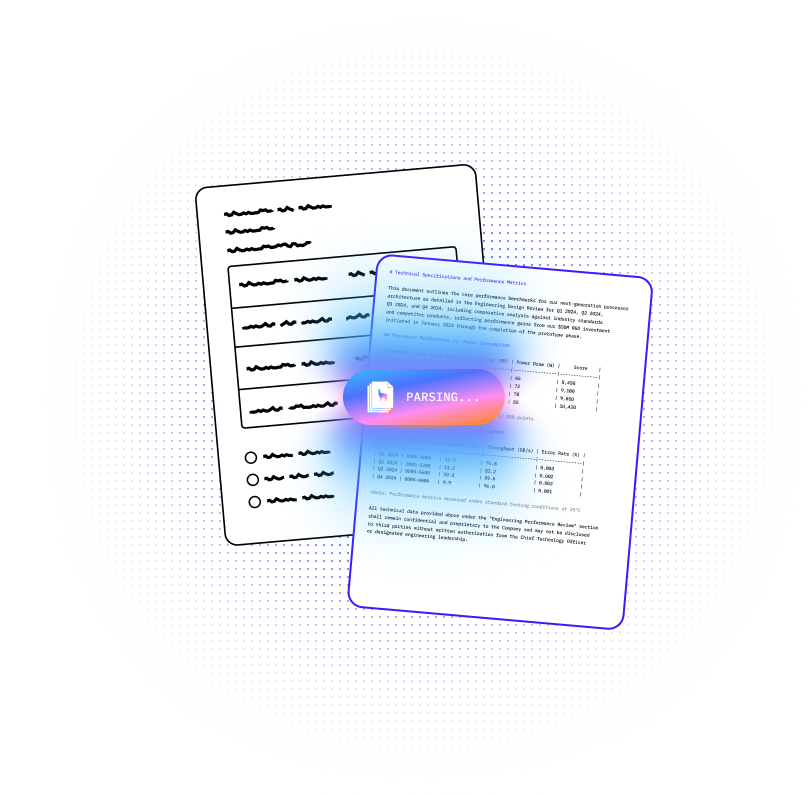


LlamaParse turns messy air waybills into consistent, schema-ready JSON, so downstream customs, billing, and tracking workflows stop breaking on layout quirks. Agentic document parsing understands tables, stamps, and handwritten notes, then adds confidence signals so your team can validate exceptions fast.
Best-in-Class Accuracy

Use LlamaParse to turn air waybills into structured JSON with line-level fields (shipper/consignee, routing, charges, Incoterms, weights) even when tables and multi-column layouts vary by carrier. This eliminates re-keying for customs entry and exception handling by attaching page citations and confidence scores for fast audit-ready verification.

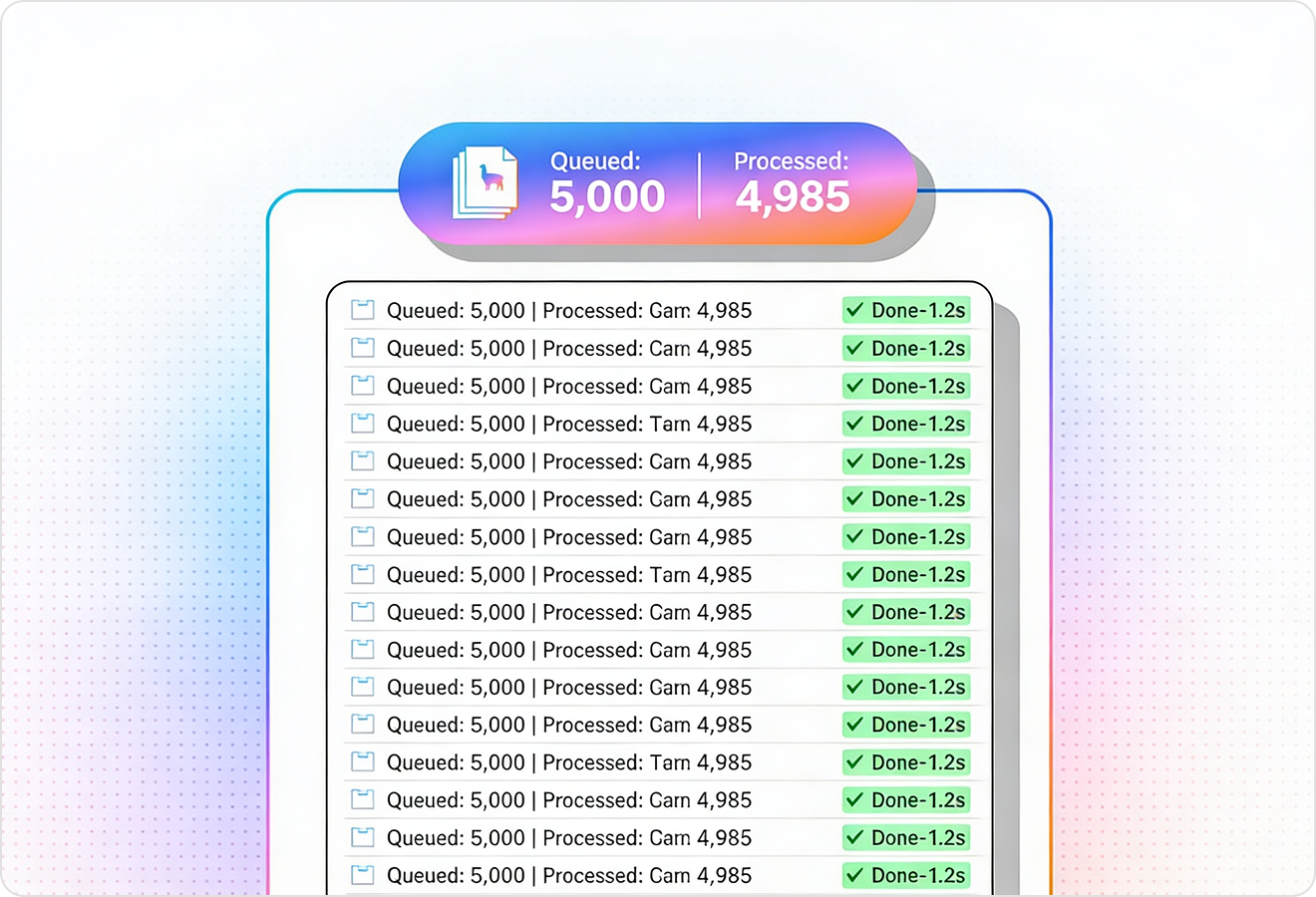
Automatically ingest batches of AWBs from 3PLs and carriers, extracting tracking numbers, service levels, carton counts, and chargeable weight into your OMS/WMS without brittle template rules. Tier-based processing keeps costs predictable by routing clean PDFs through faster modes while upgrading only low-quality scans that typically break legacy text extraction.

Parse AWBs and associated attachments into clean Markdown/JSON to reconcile manifests, spot rating discrepancies, and trigger billing workflows without manual document review. Layout-aware table extraction preserves charge lines and special handling codes so revenue accounting can match documents to flights and contracts with fewer disputes.

Ship an AWB intake feature in days by using natural-language parsing instructions to define the exact schema your product needs, rather than building and maintaining carrier-by-carrier templates. Verifiable metadata (coordinates, page refs) lets you build reliable human-in-the-loop review and customer-facing “show your work” audit trails as you scale.
The Solution
01
LlamaParse understands Air Waybill layouts (blocks, multi-column sections, and boxed fields) so text stays in the right reading order instead of getting scrambled. This makes it reliable to extract shipper/consignee details, routing, service level, and terms even when carriers use different templates.
02
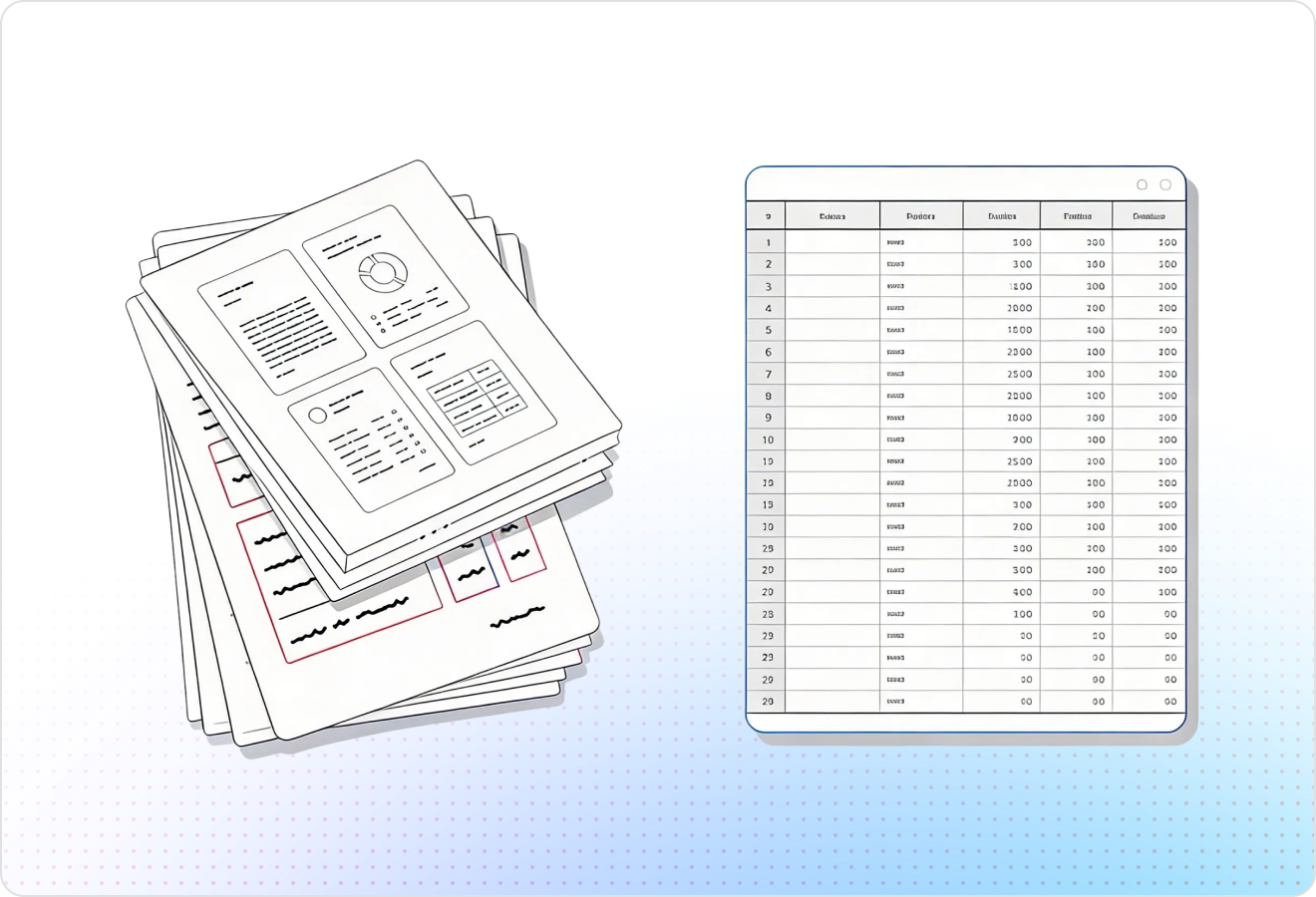
It accurately reconstructs tabular regions like charges, rates, and handling codes into clean, machine-usable structures. For Air Waybills, this means you can pull weight/volume, piece counts, declared value, and fee breakdowns without brittle post-processing.
03
LlamaParse runs self-correction and validation steps to catch common scan errors and inconsistent values before returning results. On Air Waybills, this reduces downstream exceptions by verifying critical fields like AWB number formats, airport codes, dates, and totals.
04
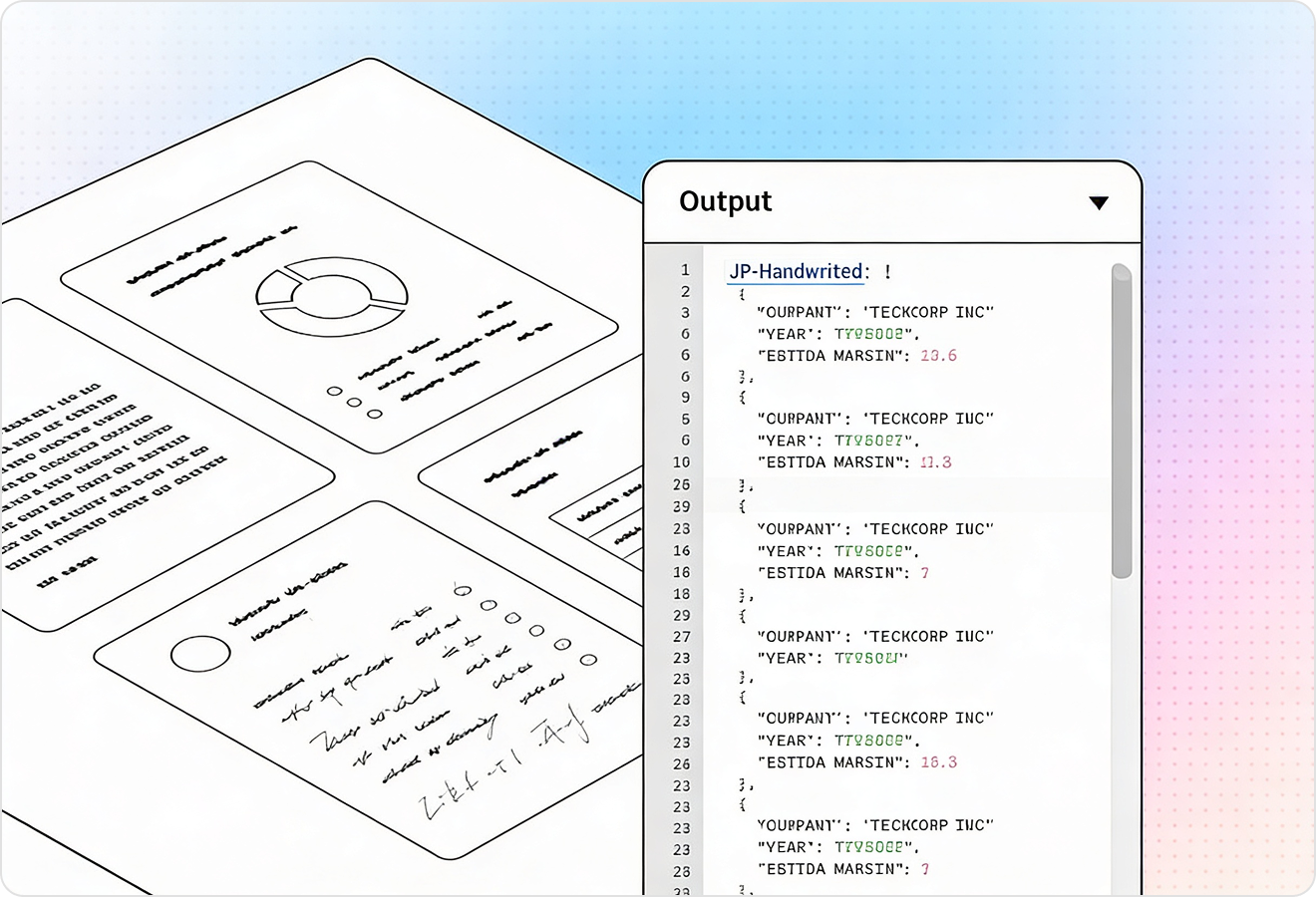
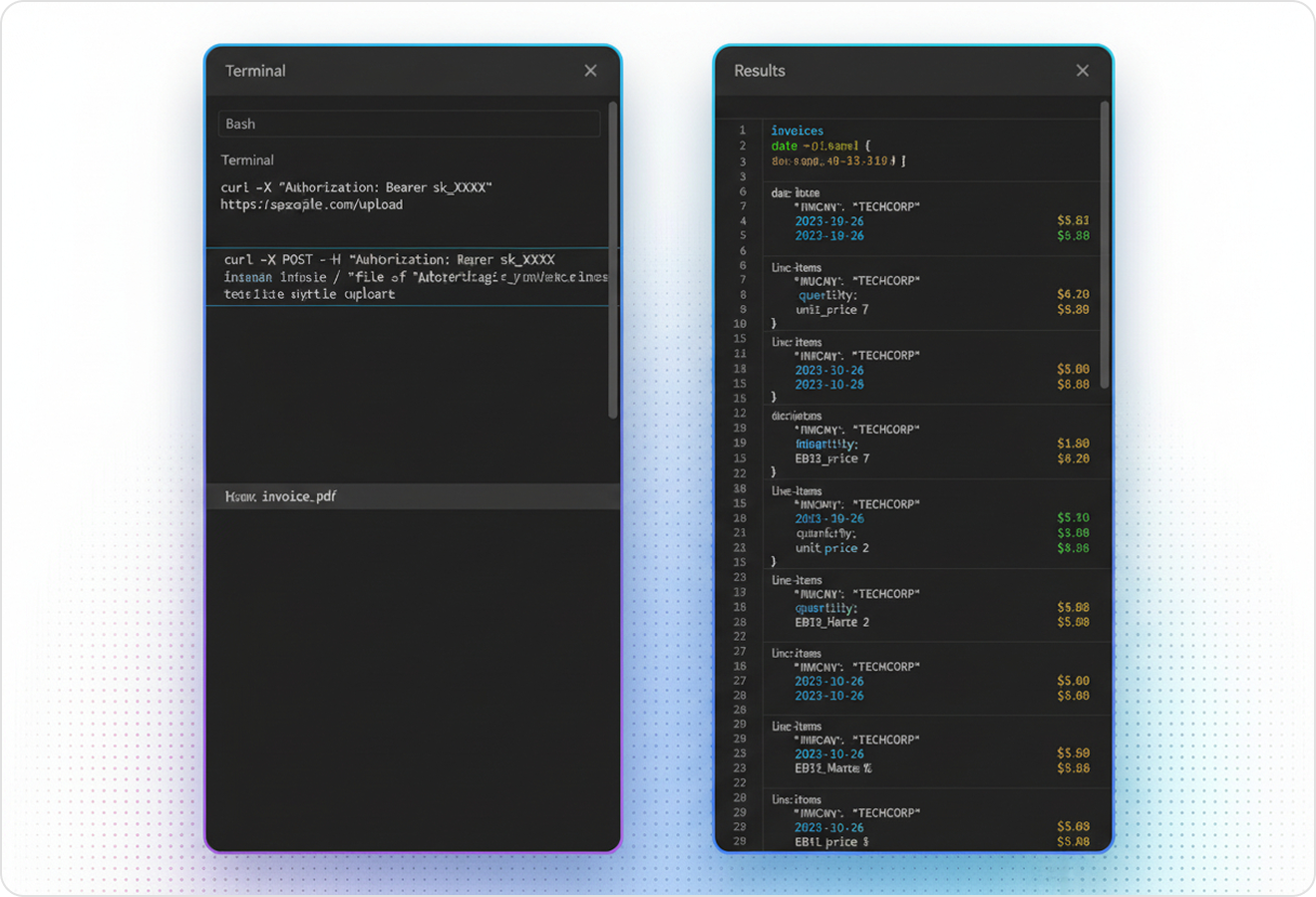
LlamaParse can emit structured JSON with granular metadata like page references and coordinates for each extracted element. That traceability is ideal for Air Waybill automation, letting you audit exactly where each field came from and route low-confidence fields to human review.
Technical OCR documentation
Explore our developer guides to easily connect your document pipelines to LlamaParse.
Explore the documentation
Our AI catches the typos that tired eyes miss.

Export to Excel, JSON, XML, or directly via API.

SOC2 Type II compliant with end-to-end encryption.

Train the tool on your specific forms in minutes, not days.

Average processing time of <3 seconds per page.
LlamaParse’s support of a wide variety of filetypes and its accuracy of parsing made it the best tool we tested in our evaluations. The LlamaIndex team was very responsive and we were off to the races within a day.
Common FAQs
01
Yes. Layout-aware field capture preserves reading order across blocks, multi-column sections, and boxed fields, so shipper/consignee, routing, service level, and terms stay mapped correctly even when layouts vary. This reduces template-by-template rules and helps you onboard new carriers faster.
02
Agentic validation loops catch common scan issues and inconsistencies before results are returned, reducing downstream exceptions. You also get confidence signals and traceability so low-confidence fields can be reviewed quickly instead of reprocessing entire documents.
03
Yes. Table and line-item extraction reconstructs tabular regions into clean, machine-usable structures rather than flattened text. That makes it straightforward to capture weight/volume, piece counts, declared value, handling codes, and fee breakdowns without brittle post-processing.
04
Does it validate critical fields like the AWB number, airport codes, and totals?
It does. The system runs self-correction and validation checks for common formats and consistency—such as AWB number patterns, IATA airport codes, dates, and charge totals—so errors are caught early. This helps prevent rejected bookings, billing mismatches, and manual rework.
05
What does the output look like, and can we audit where each value came from?
You receive structured JSON designed for automation, with field-level metadata such as page references and coordinates. That traceability makes audits easy and enables workflow routing—for example, sending only specific low-confidence fields to human review.
06
How quickly can we integrate this into our TMS, freight forwarding, or customs workflows?
Integration is straightforward because the output is consistent JSON that maps cleanly to your existing data models. With field traceability and validation built in, you can automate posting to your systems while keeping an audit trail for compliance and exception handling.