Nov 14, 2025
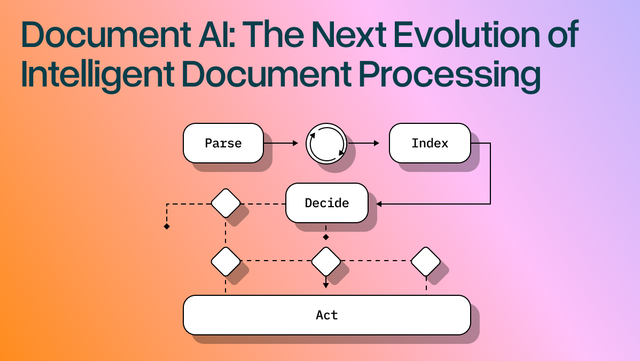
Document AI: The Next Evolution of Intelligent Document ProcessingPersona
Industry
Use cases
Motor Insurance Claim OCR
[ Motor Insurance Claim OCR ]

Use LlamaParse to turn messy claim forms into structured JSON you can trust, automatically.
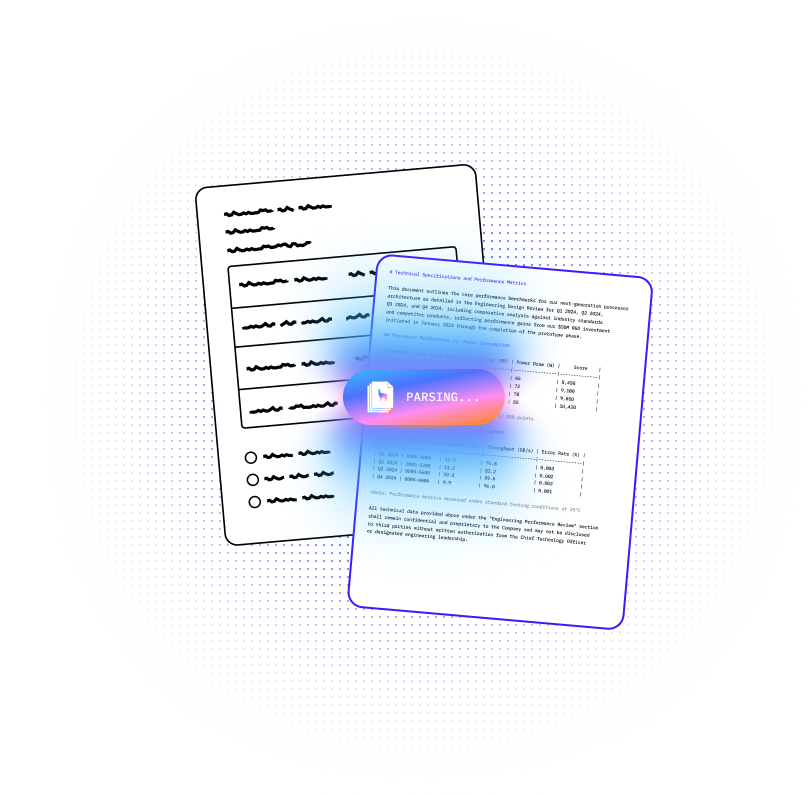


LlamaParse turns messy motor claim packets into clean, structured fields in minutes, so adjusters and ops teams stop rekeying data. Agentic document parsing understands layouts, tables, and photos, then returns verifiable JSON with confidence signals to speed straight-through decisions.
Best-in-Class Accuracy

Use LlamaParse inside LlamaCloud to turn FNOL packets, repair estimates, police reports, and medical bills into audit-ready JSON with citations and confidence scores for fast adjuster review. Layout-aware parsing preserves tables and line items so you can automate coverage checks, fraud flags, and payment decisions without brittle template rules when forms change.

Parse insurer approvals, supplements, parts invoices, and estimate PDFs into structured data that matches labor lines, tax, and parts codes—even when the document is a messy scan or multi-column printout. This reduces rekeying and disputes by reconciling what was authorized vs what was billed, and pushes clean totals directly into shop management and accounting systems.

Ingest accident packs and claim attachments across locations and vendors, extracting vehicle IDs, driver statements, timeline details, and damage photos into a standardized claim record with traceable source links. Multimodal parsing captures chart-like estimate summaries and embedded images so risk teams can triage severity, route to the right insurer, and shorten vehicle downtime.

Ship a claim intake and automation product faster by using natural-language parsing instructions to map any insurer’s packet into your schema, without writing fragile regex or training custom extractors. Tier-based processing keeps unit economics predictable by reserving agentic parsing for the hardest pages while returning consistent Markdown/JSON outputs your workflow engine can act on immediately.
The Solution
01
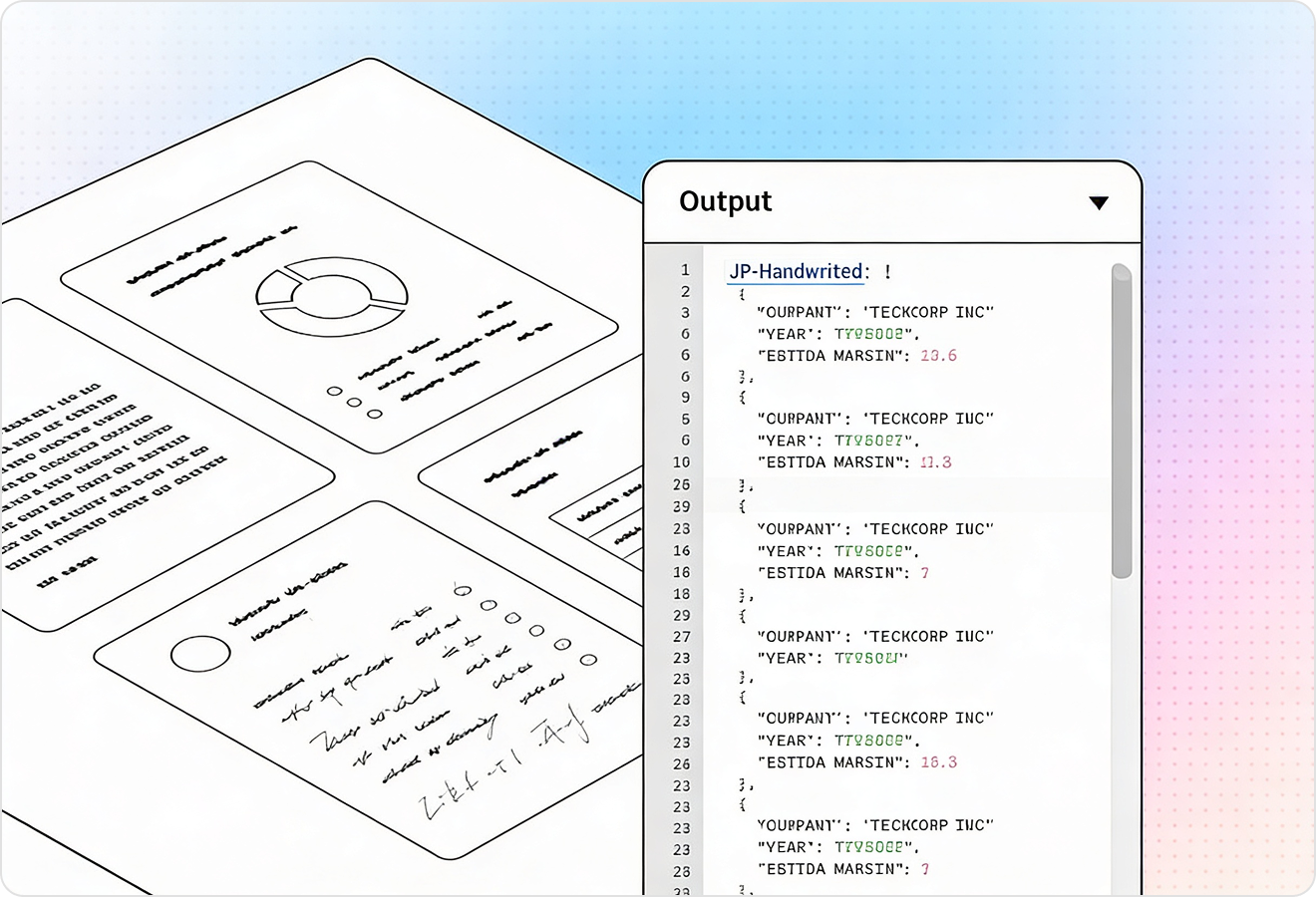
LlamaParse understands page layout and reading order across multi-page claim packets, including multi-column text, headers/footers, and mixed form + narrative sections. That means adjuster notes, claim numbers, policy details, and loss descriptions don’t get scrambled—so downstream extraction stays reliable.
02
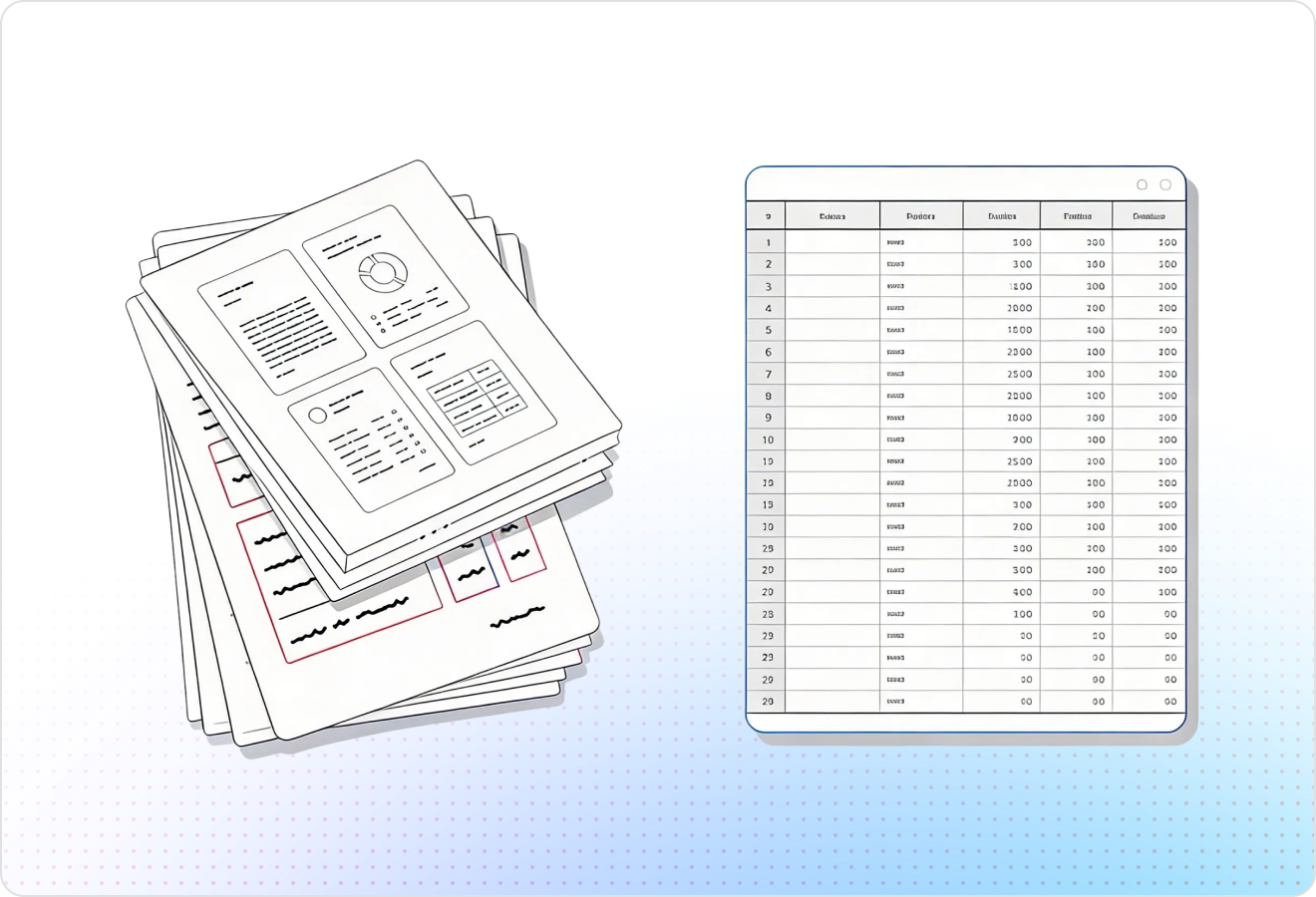
It accurately captures complex tables like repair estimates, parts/labor line items, and invoice breakdowns without collapsing rows or losing column meaning. For motor insurance claims, this makes it straightforward to compute totals, compare estimate vs. invoice, and flag inconsistencies automatically.
03
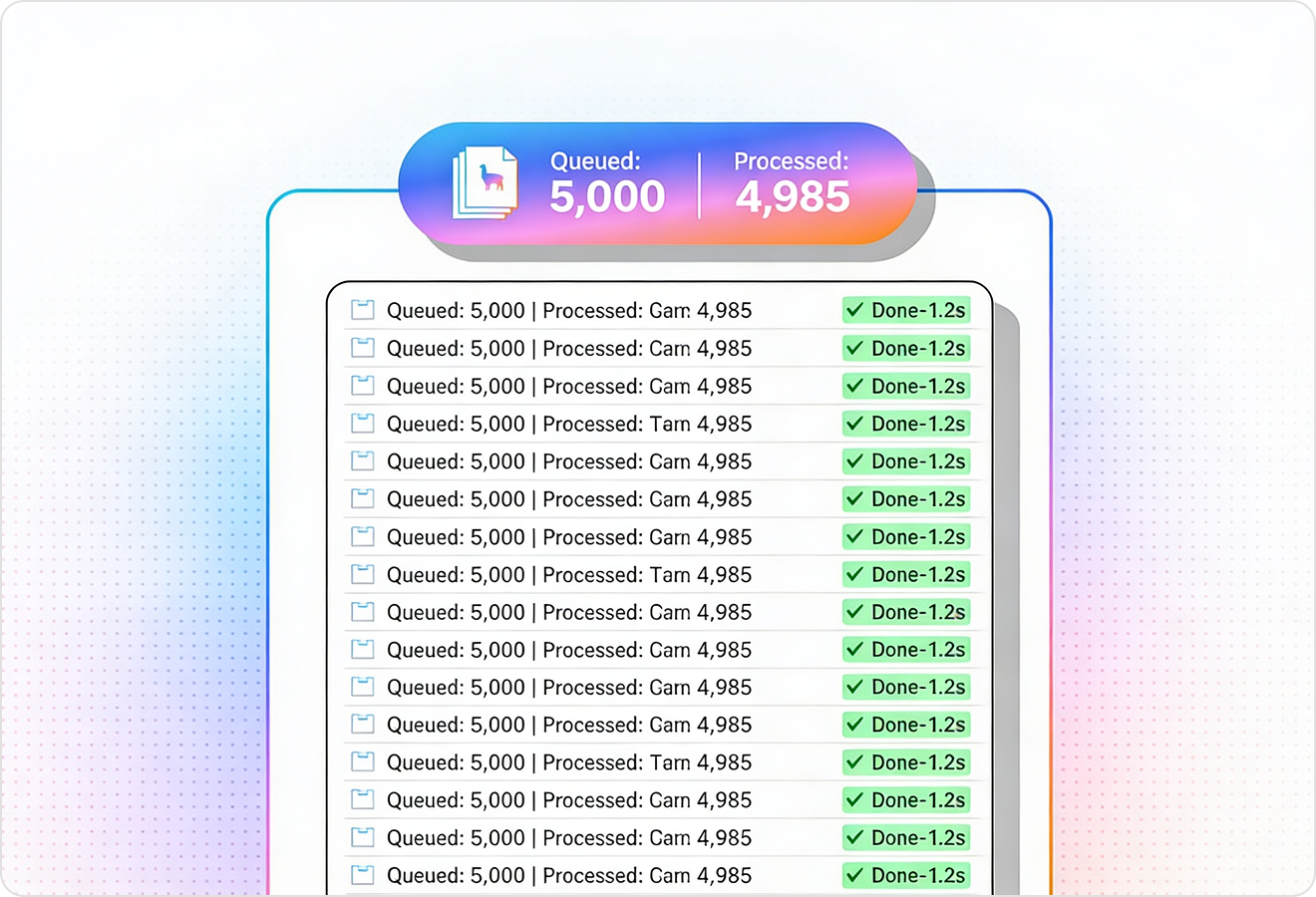
LlamaParse runs validation and self-correction steps to catch common scan issues like misread VINs, swapped digits, or missing fields in low-quality photos. This reduces manual rework and increases straight-through processing for high-volume claim intake.
04
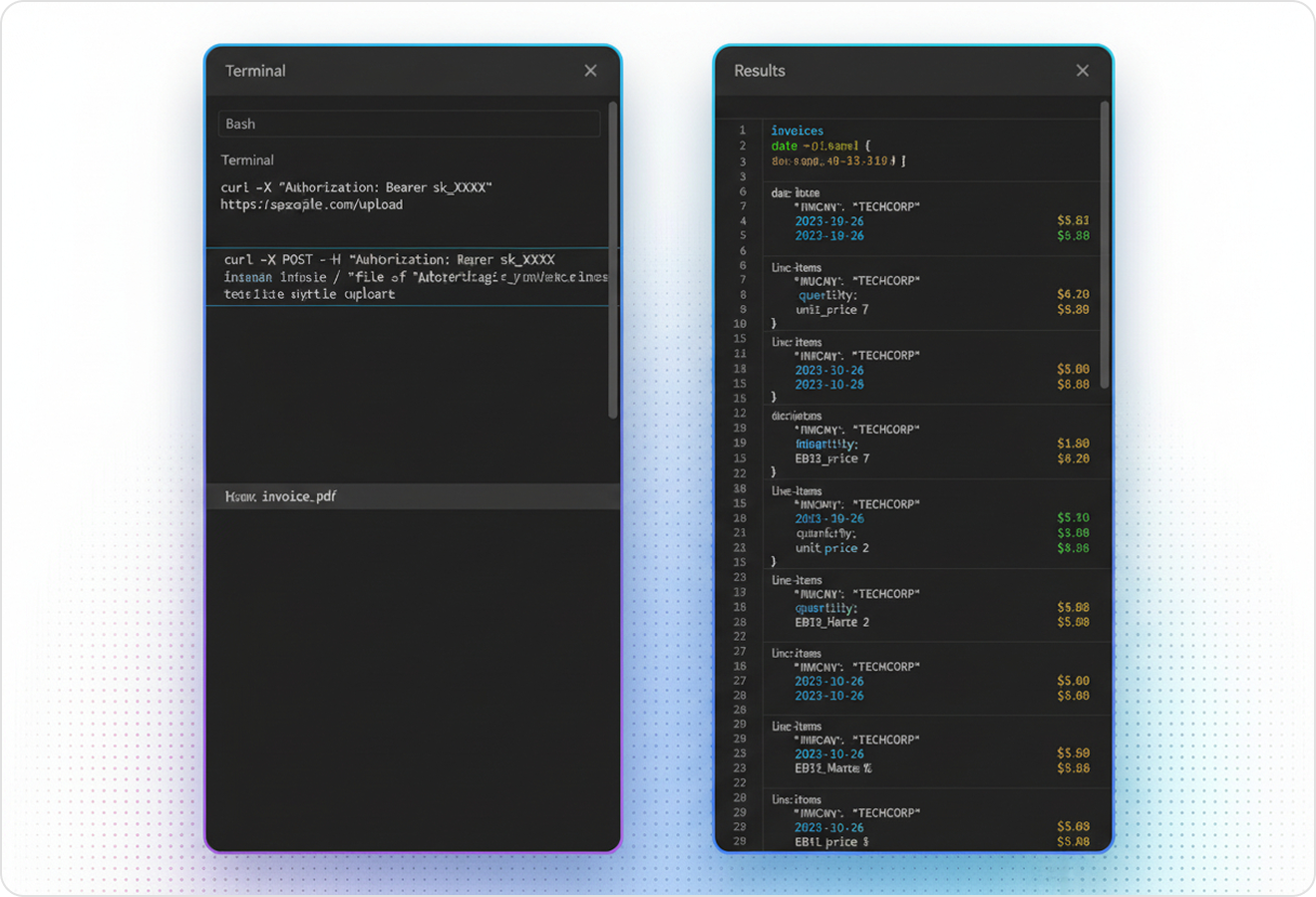
JSON Mode returns structured outputs with granular metadata like page numbers, element types, and source coordinates for each extracted field. In motor insurance claims, you can trace every VIN, plate number, date, and amount back to the exact spot in the document for audits and human review.
Technical OCR documentation
Explore our developer guides to easily connect your document pipelines to LlamaParse.
Explore the documentation
Our AI catches the typos that tired eyes miss.

Export to Excel, JSON, XML, or directly via API.

SOC2 Type II compliant with end-to-end encryption.

Train the tool on your specific forms in minutes, not days.

Average processing time of <3 seconds per page.
LlamaParse’s support of a wide variety of filetypes and its accuracy of parsing made it the best tool we tested in our evaluations. The LlamaIndex team was very responsive and we were off to the races within a day.
Common FAQs
01
Yes—layout-aware parsing preserves reading order across multi-page packets, including multi-column text, headers/footers, and form + narrative sections. That means claim numbers, adjuster notes, policy details, and loss descriptions stay associated with the right context, reducing downstream extraction errors.
02
It captures tables and line items (parts, labor, taxes, fees) while keeping row/column structure intact. This makes it easy to compute totals, compare estimate vs. invoice, and automatically flag mismatches or unusual charges for review.
03
Agentic auto-correction loops validate key identifiers and common problem fields to catch issues like swapped digits, misreads, or missing values. You’ll see fewer exceptions and less manual rework, improving straight-through processing for high-volume intake.
04
Can we trace every extracted field back to the source document for audits and adjuster review?
Yes—structured JSON outputs include citations such as page numbers and source coordinates for each extracted value. This gives your team fast, defensible verification of VINs, dates, and amounts without hunting through the packet.
05
How does this handle claim packets that mix adjuster notes, police reports, estimates, and supporting invoices?
The parser is designed for mixed document types within a single packet, separating narrative sections from forms and tables without scrambling content. That consistency helps you build reliable workflows for triage, coverage checks, and settlement validation.
06
What does the output look like, and how easy is it to plug into our claims system or data pipeline?
You receive structured JSON that’s ready for downstream automation, with clear field values and supporting metadata for each extraction. Teams typically integrate it into FNOL/claims intake, QA rules, and analytics with minimal transformation because the structure is predictable and review-friendly.