Nov 14, 2025
Document AI: The Next Evolution of Intelligent Document ProcessingPersona
Industry
Use cases
PDF OCR Python
[ PDF OCR Python ]

Use LlamaParse to turn messy PDFs into clean JSON or Markdown your apps can trust.
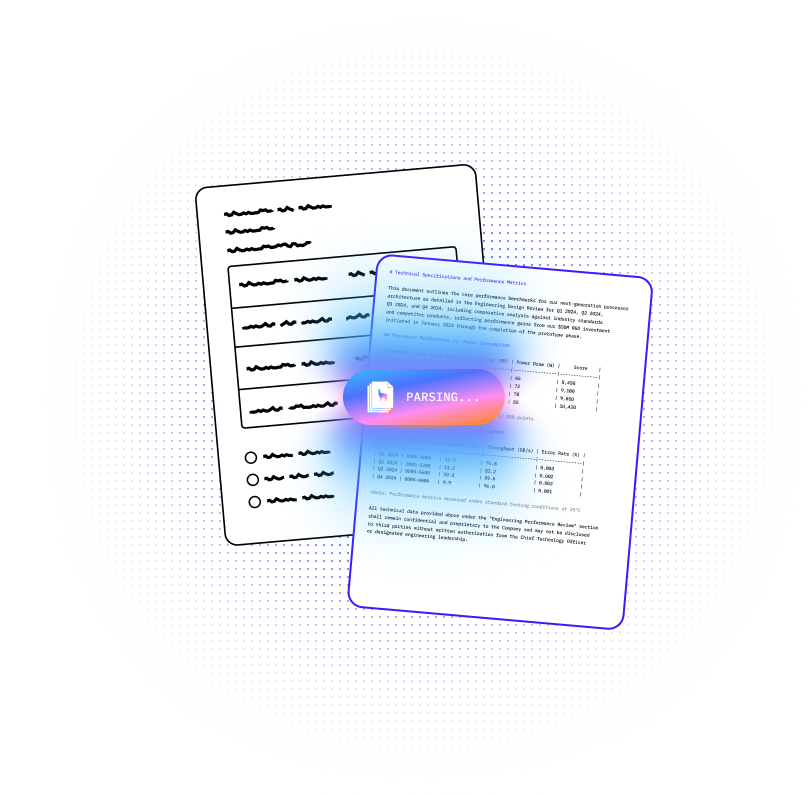
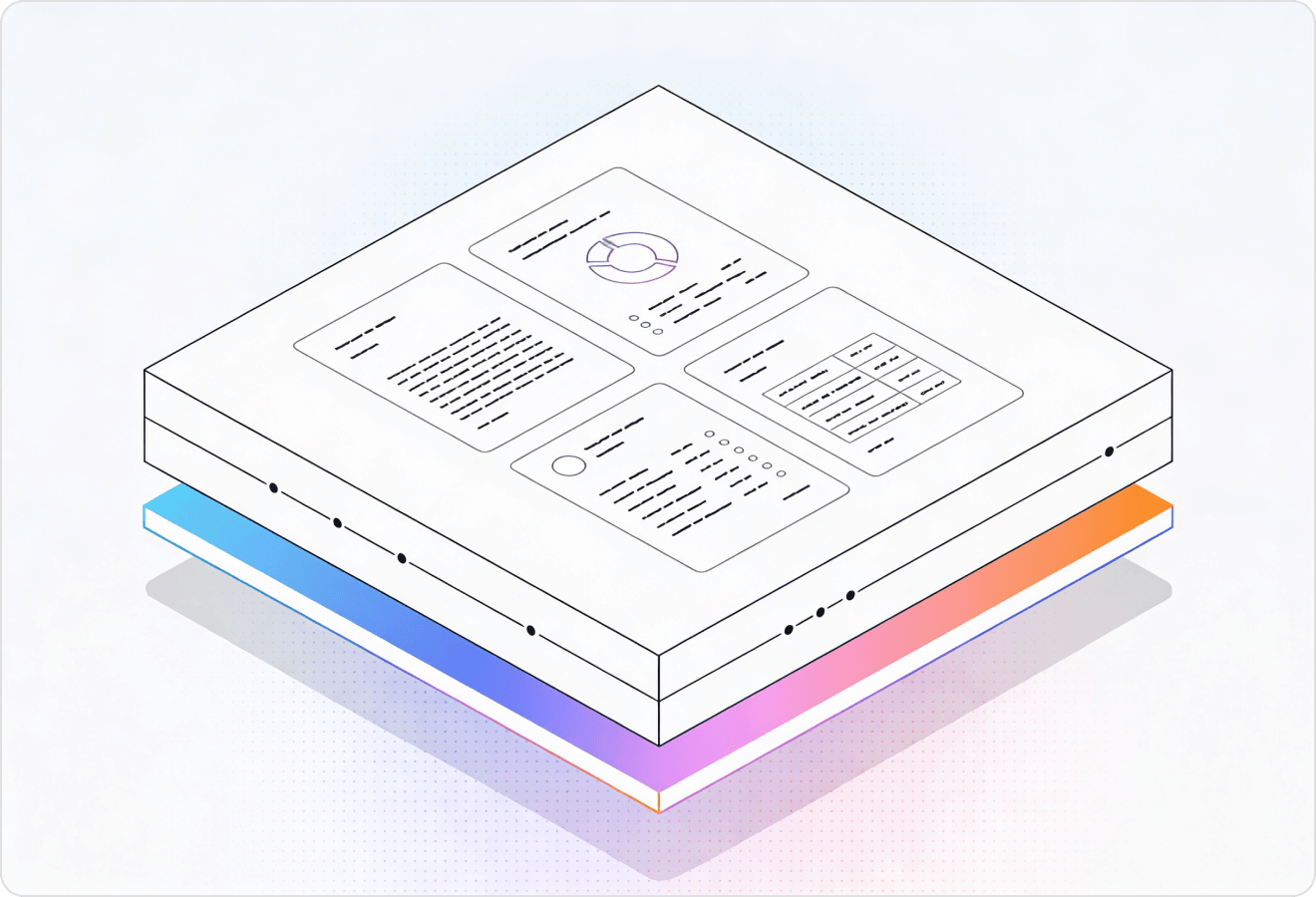
Use LlamaParse from LlamaCloud in your Python pipeline to turn messy PDFs into clean, structured JSON or Markdown you can trust. Agentic document parsing understands layout, tables, and charts, then adds citations and confidence scores so you can validate results fast.
Best-in-Class Accuracy

Turn borrower PDFs like bank statements, pay stubs, and tax forms into clean JSON with layout-aware table extraction, so income and liabilities don’t get scrambled or missed. Route simple pages through cheaper tiers and automatically escalate messy scans for higher accuracy, reducing manual review time and speeding up underwriting decisions.

Parse EOBs, claims attachments, and prior authorization packets into structured fields with citations and confidence scores, so billing teams can verify exceptions without hunting through PDFs. Natural-language parsing instructions let you extract only the codes, dates, and amounts you care about while filtering boilerplate, cutting denials and rework.

Convert subcontractor invoices, pay apps, and SOVs into reliable Markdown/JSON while preserving multi-column layouts and complex tables that break brittle OCR scripts. Extract line items with page coordinates to reconcile against budgets and change orders faster, improving cost tracking and reducing payment disputes.

Ship a PDF-to-structured-data pipeline in Python without maintaining fragile parsing code—LlamaParse reconstructs documents into AI-ready Markdown/JSON and handles tricky layouts out of the box. Auto correction loops and cost optimizer mode keep accuracy high while controlling spend, so you can iterate from prototype to production without rewriting ingestion.
The Solution
01
LlamaParse understands PDF layout (columns, headers/footers, sections) so extracted text comes back in the right reading order instead of a scrambled OCR dump. In Python pipelines, this means fewer brittle cleanup rules and more reliable downstream extraction and search.
02
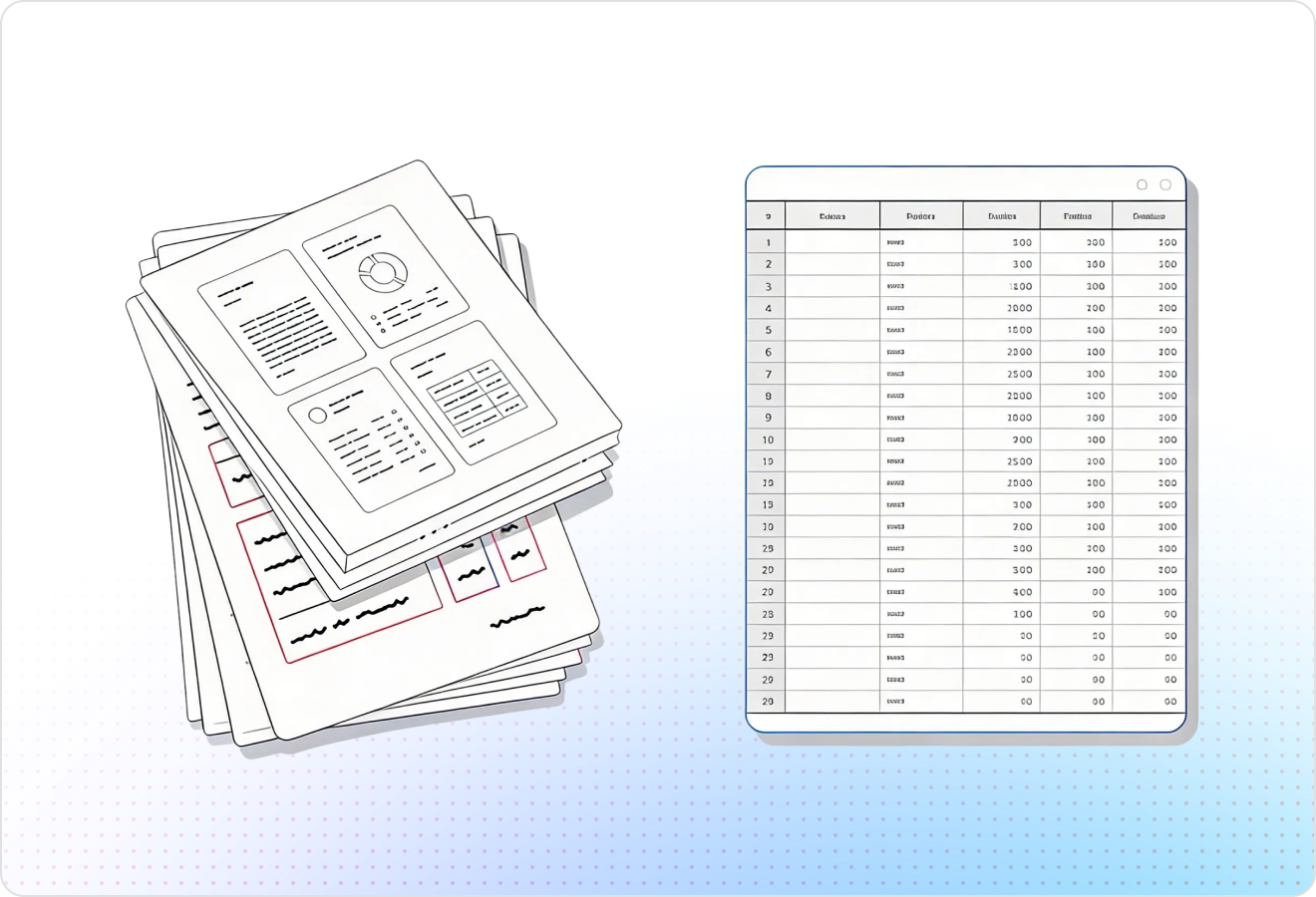
LlamaParse detects and reconstructs tables from PDFs, including complex grids and nested headers, without you hand-tuning heuristics per template. You can ingest invoices, reports, and statements in Python and get consistent table outputs ready for analytics or database loads.
03
LlamaParse can interpret visual PDF elements like charts, diagrams, and equations and convert them into usable text representations (e.g., Markdown tables or LaTeX). For Python-based PDF processing, this captures meaning that text-only OCR misses, especially in technical and scientific documents.
04
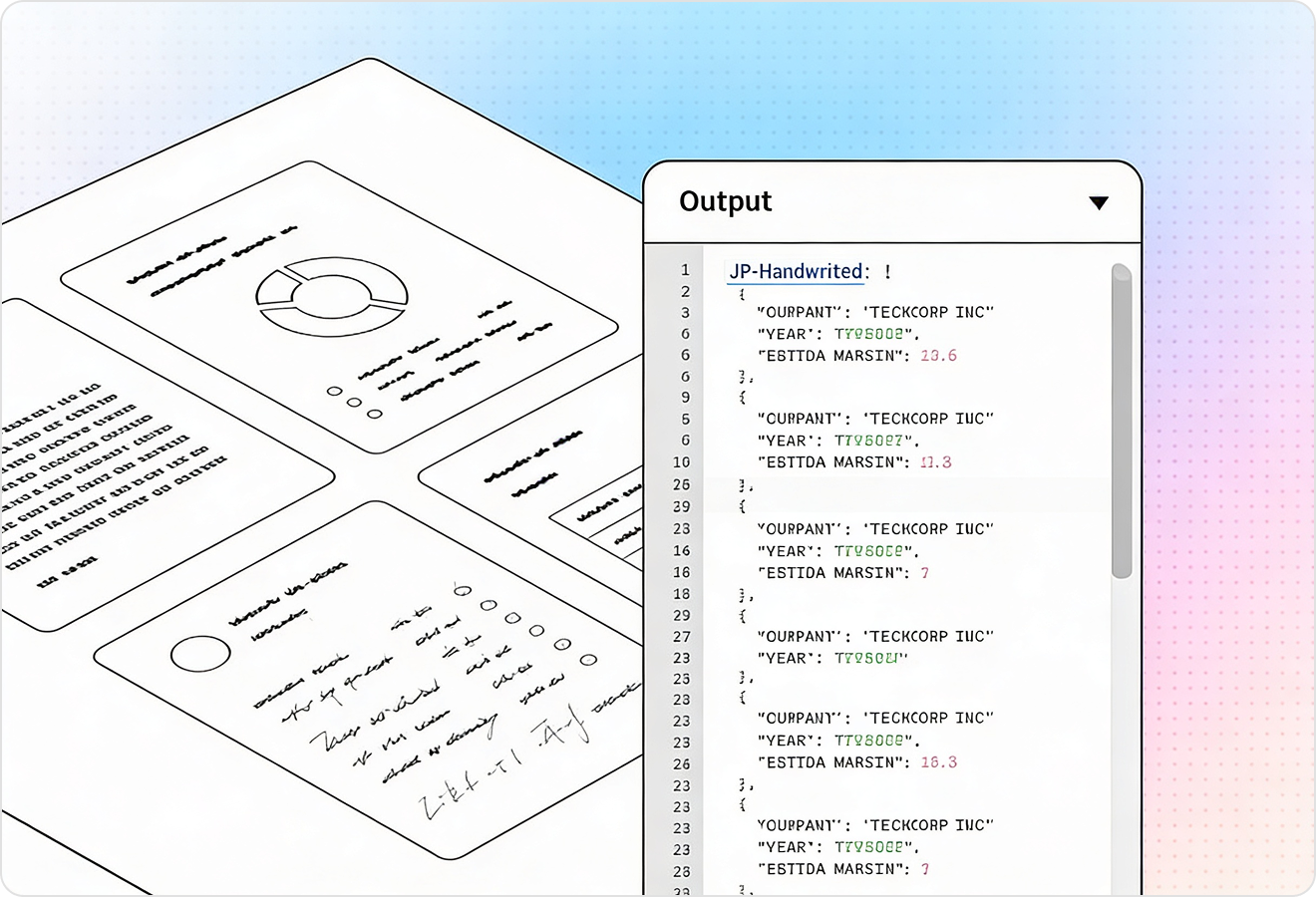
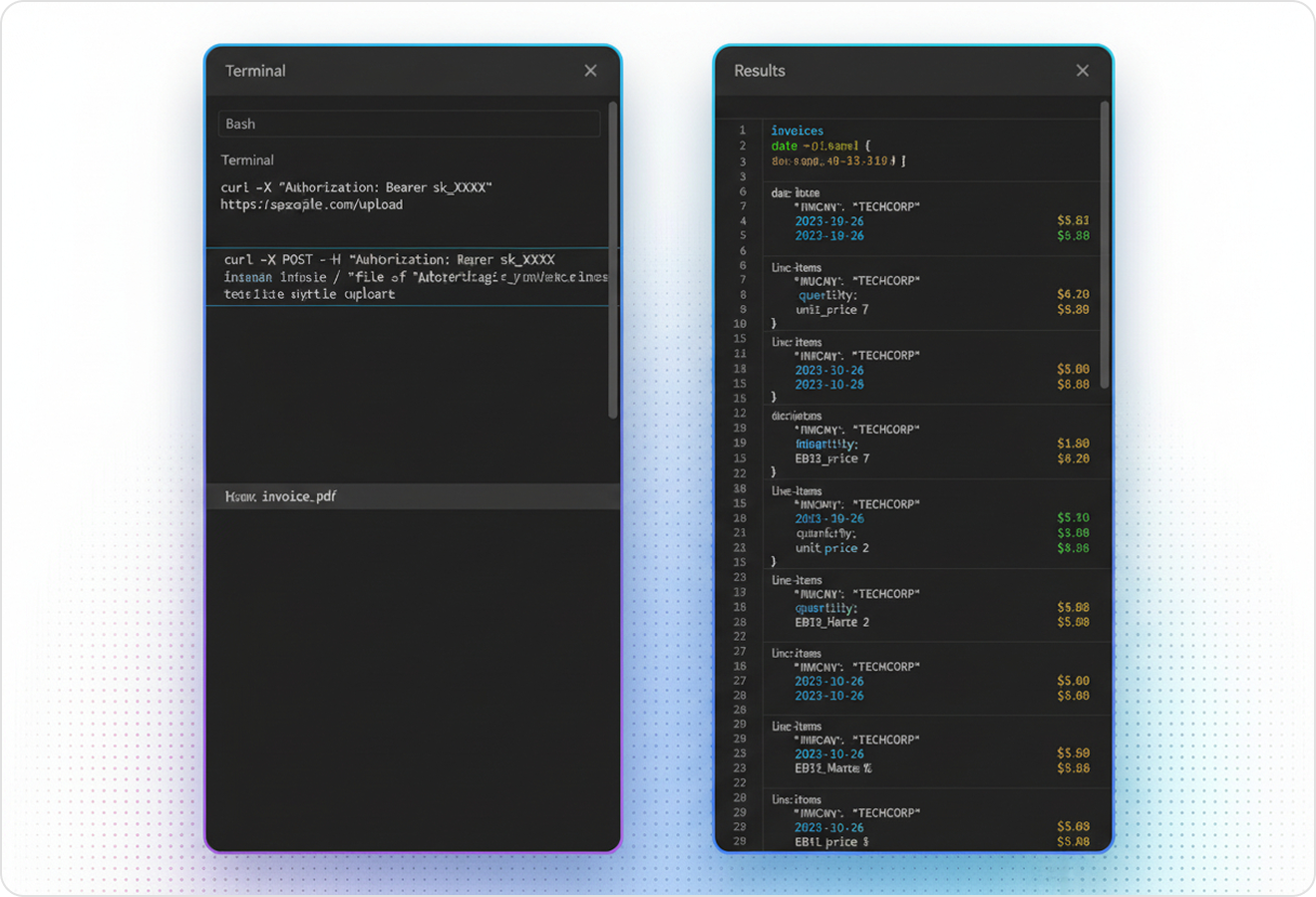
LlamaParse returns clean JSON along with granular metadata like page numbers, element types, and coordinates for traceability. In Python, that makes it straightforward to validate extractions, link fields back to source pages, and build deterministic post-processing without guesswork.
Technical OCR documentation
Explore our developer guides to easily connect your document pipelines to LlamaParse.
Explore the documentation
Our AI catches the typos that tired eyes miss.

Export to Excel, JSON, XML, or directly via API.

SOC2 Type II compliant with end-to-end encryption.

Train the tool on your specific forms in minutes, not days.

Average processing time of <3 seconds per page.
LlamaParse’s support of a wide variety of filetypes and its accuracy of parsing made it the best tool we tested in our evaluations. The LlamaIndex team was very responsive and we were off to the races within a day.
Common FAQs
01
Traditional OCR often returns text in a scrambled order because it ignores layout like columns, headers, and footers. LlamaParse is layout-aware, so your extracted text follows the true reading order—reducing cleanup code and improving accuracy for search and downstream extraction.
02
Yes—LlamaParse detects and reconstructs tables, including complex grids and multi-row headers, without you hand-tuning heuristics for each PDF style. You get consistent outputs that are easier to validate and load into pandas, databases, or analytics pipelines.
03
LlamaParse can interpret visual elements like charts and equations and convert them into usable text formats such as Markdown tables or LaTeX. This helps you capture meaning from technical PDFs where “just OCR the text layer” isn’t enough.
04
What does the output look like in Python—do I get structured JSON or just plain text?
You receive clean, structured JSON with rich metadata such as page numbers, element types, and coordinates. That makes it straightforward to trace any extracted field back to the source, build deterministic post-processing, and automate QA checks.
05
How reliable is it across messy real-world PDFs like scanned documents, multi-column layouts, and mixed content?
It’s built for real PDFs, combining layout understanding with robust parsing so multi-column pages, repeated headers/footers, and mixed text-plus-visual sections come out coherent. The result is fewer edge-case failures and less time spent debugging brittle parsing rules.
06
How quickly can I integrate it into an existing Python pipeline?
You can plug it into your workflow as a parsing step that returns predictable JSON you can immediately feed into extraction, indexing, or ETL jobs. Most teams replace multiple fragile parsing scripts with a single consistent output, speeding up iteration and reducing maintenance.