Nov 14, 2025
Document AI: The Next Evolution of Intelligent Document ProcessingPersona
Industry
Use cases
Box Document Extraction
[ Box Document Extraction ]

Use LlamaParse to turn Box files into reliable structured JSON with validation and confidence scores.
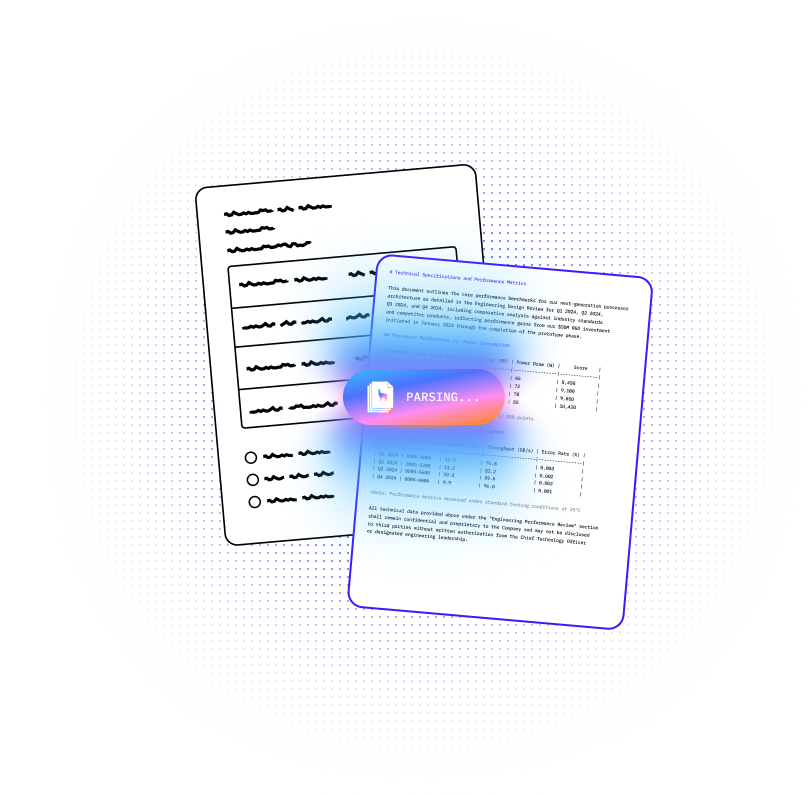


LlamaParse turns the PDFs, scans, and spreadsheets sitting in Box into clean, structured data you can reliably push into downstream systems. Agentic document parsing stays layout-aware across tables, charts, and mixed formats, and returns verifiable outputs like JSON with metadata for review.
Best-in-Class Accuracy

Turn customer PDFs, screenshots, and vendor docs into clean JSON with LlamaParse, so your product can ship reliable “import” and onboarding flows without brittle regex or manual data cleanup. Use natural-language parsing instructions to normalize wildly different document formats into a single schema, reducing support tickets and accelerating time-to-integrations.

Extract structured fields from ACORD forms, loss runs, medical bills, and adjuster reports—even when tables, multi-column layouts, and scanned attachments are messy—so claims can move through straight-through processing faster. LlamaParse’s metadata and validation loops keep every extracted value traceable to page coordinates for audit-ready review and quicker dispute resolution.

Automatically parse bills of lading, commercial invoices, packing lists, and proof-of-delivery documents into consistent outputs that feed TMS/ERP systems without rekeying. Layout-aware table extraction preserves line items, SKUs, and quantities correctly, preventing costly receiving errors and chargebacks caused by scrambled OCR.

Convert scanned contracts, exhibits, and court filings into AI-ready Markdown/JSON while preserving section structure, defined terms, and clause boundaries for faster review and playbook enforcement. Multimodal parsing captures embedded tables, charts, and signature blocks so teams can build reliable clause extraction and obligation tracking across large matter volumes.
The Solution
01
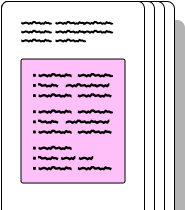
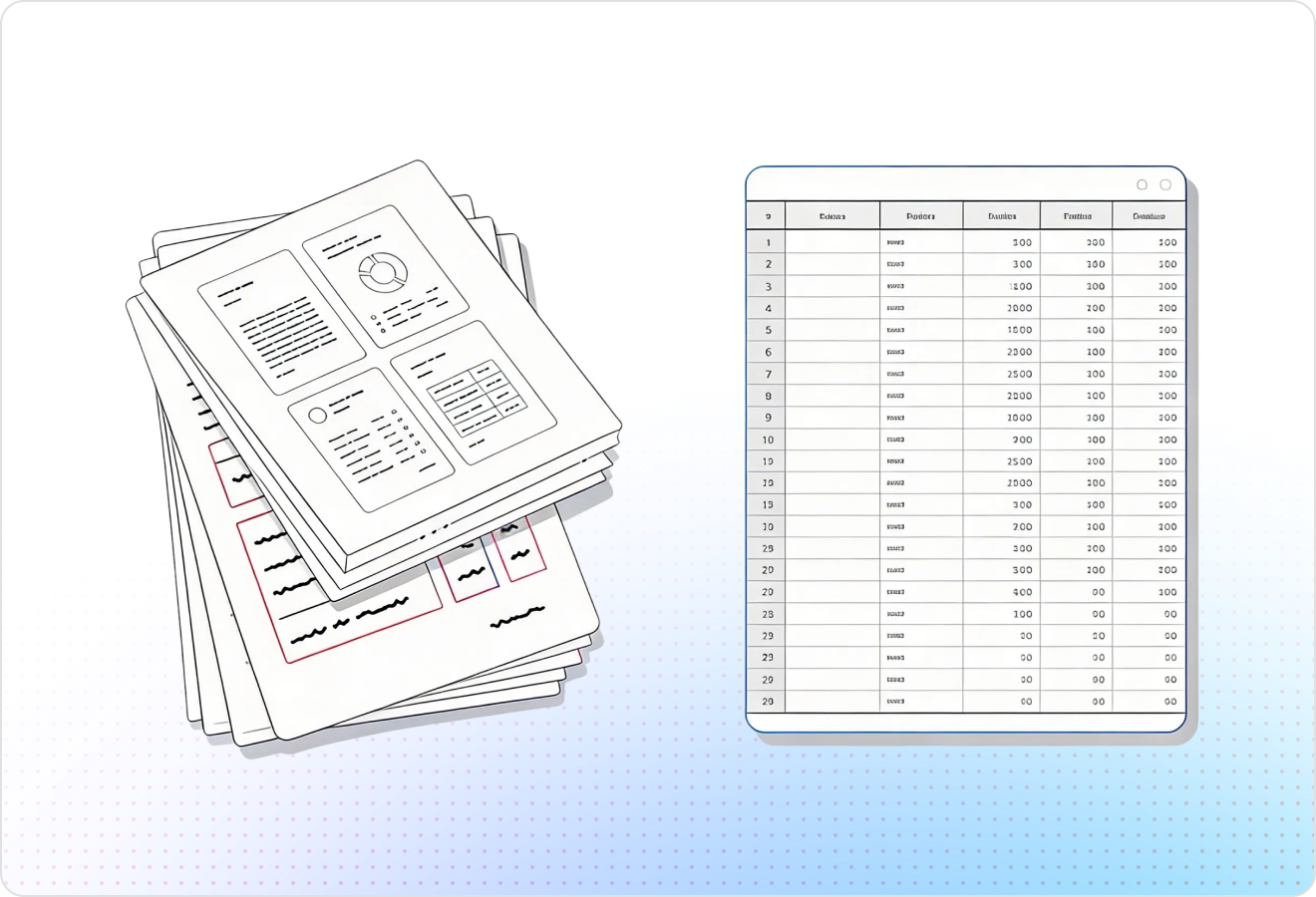
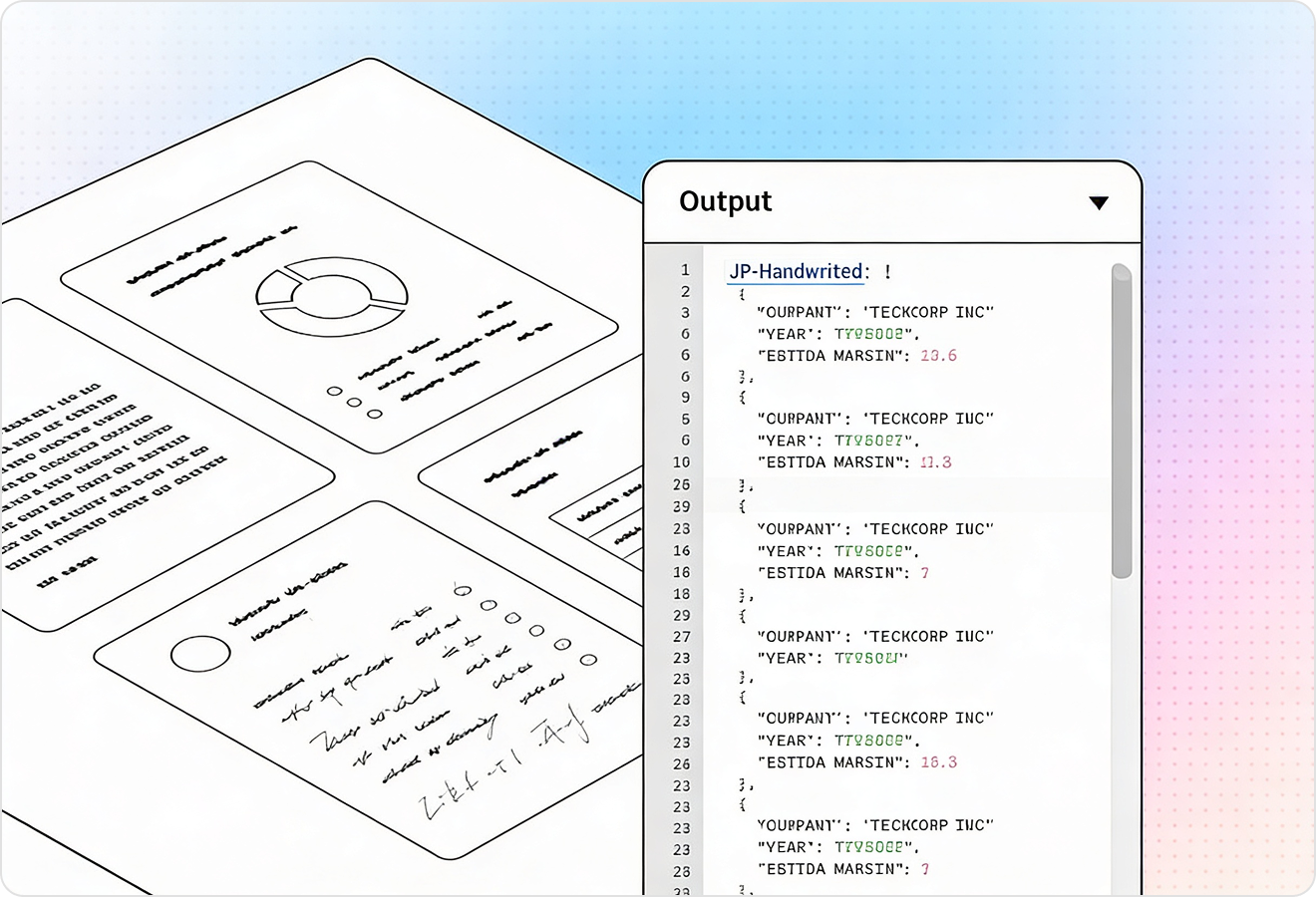
LlamaParse uses layout-aware computer vision to segment pages into distinct regions, so boxed content is captured as its own unit instead of getting blended into surrounding text. That makes it reliable to extract callouts, address blocks, check sections, and stamped notes even when templates or page geometry change.
02
In JSON mode, every extracted element can include page coordinates and node-level metadata, giving you precise traceability back to the exact box it came from. This is ideal for box document extraction pipelines that need to highlight, verify, or re-crop the original region for audits and human review.
03
LlamaParse reconstructs a clean reading order across multi-column pages, headers/footers, and nested boxes so the content inside each box stays coherent. You avoid the classic failure mode where boxed fields get interleaved with nearby paragraphs, which breaks downstream extraction and indexing.
04
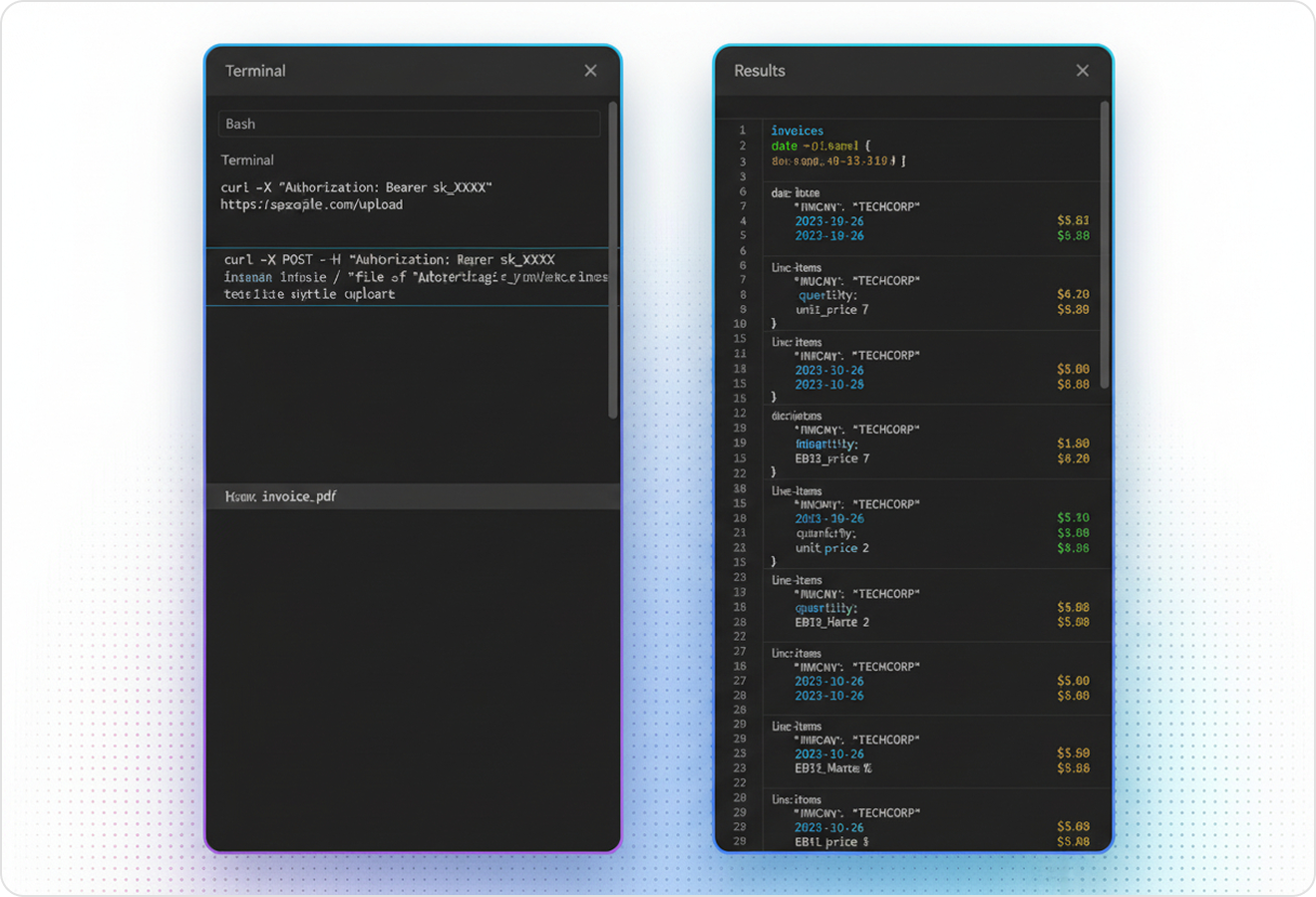
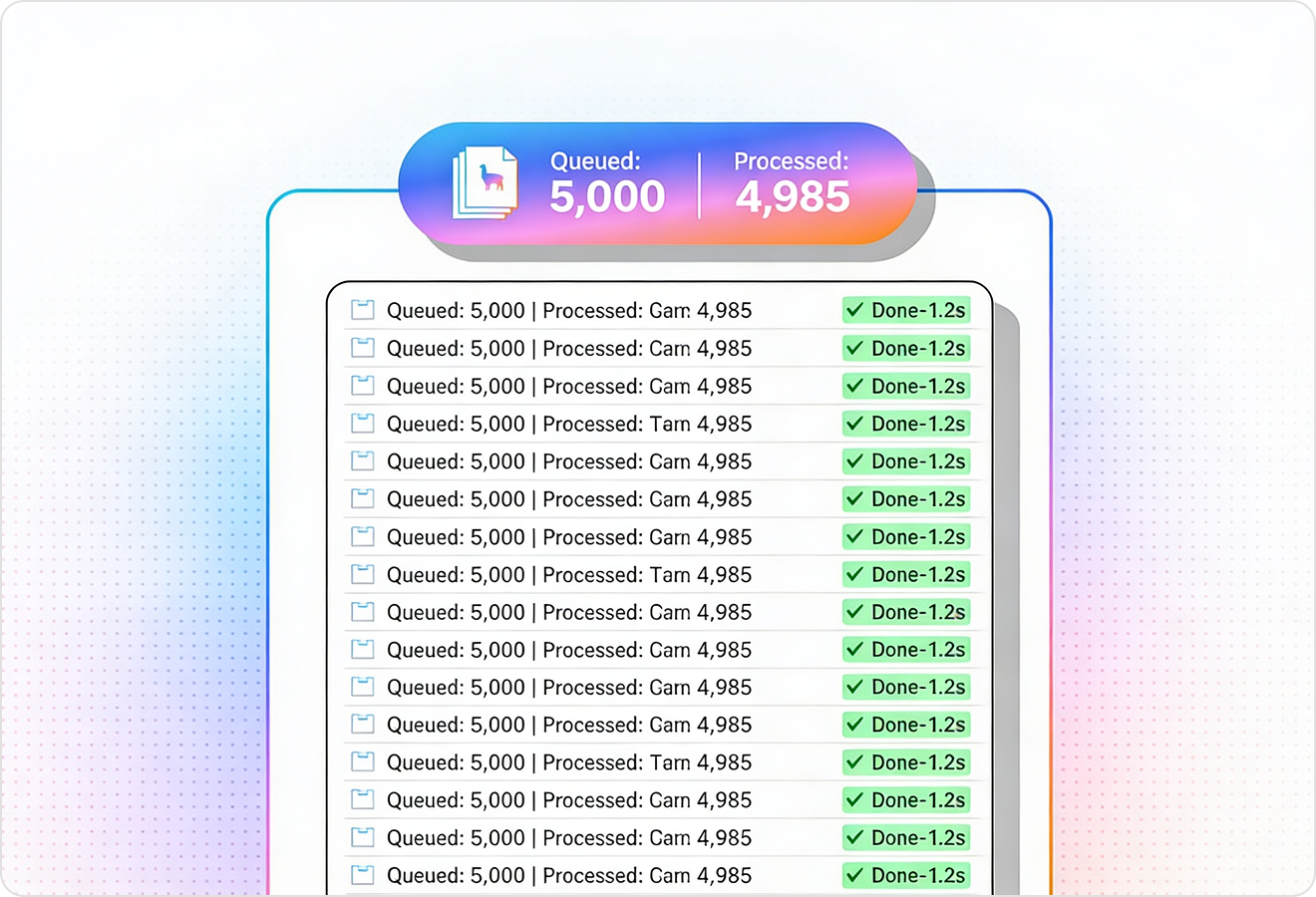
LlamaParse runs validation loops that detect inconsistencies and common extraction errors, then self-corrects before returning the final output. For boxed fields (totals, dates, IDs, line items), this reduces silent mistakes and improves straight-through processing on messy scans and photocopies.
Technical OCR documentation
Explore our developer guides to easily connect your document pipelines to LlamaParse.
Explore the documentation
Our AI catches the typos that tired eyes miss.

Export to Excel, JSON, XML, or directly via API.

SOC2 Type II compliant with end-to-end encryption.

Train the tool on your specific forms in minutes, not days.

Average processing time of <3 seconds per page.
LlamaParse’s support of a wide variety of filetypes and its accuracy of parsing made it the best tool we tested in our evaluations. The LlamaIndex team was very responsive and we were off to the races within a day.
Common FAQs
01
LlamaParse uses layout-aware box detection to segment each page into distinct regions, so boxed content is captured as its own unit. That prevents callouts, address blocks, and check sections from getting blended into surrounding text—even when the template or page geometry changes.
02
Yes. It reconstructs reading order across columns, headers/footers, and nested boxes so the text inside each box stays coherent. This avoids the common issue where boxed fields get interleaved with adjacent content and break downstream extraction.
03
In JSON mode, each extracted element can include page coordinates and node-level metadata for precise traceability. That makes it easy to highlight the source region, support audits, and route only specific boxes to human review when needed.
04
How does it handle messy scans, photocopies, stamps, and handwritten notes in boxes?
LlamaParse is designed to keep boxed regions intact even in noisy documents, including stamped notes and irregular callouts. It also runs validation and auto-correction loops to reduce silent errors that often appear in real-world scans.
05
What safeguards are there to reduce mistakes on critical boxed fields like totals, dates, and IDs?
Validation loops flag inconsistencies and common extraction failures, then self-correct before returning the final output. This improves accuracy on high-value fields and increases straight-through processing so your team spends less time on rework.
06
How quickly can we integrate it into an existing box document extraction pipeline?
You can start with JSON output to get structured content plus bounding-box metadata that fits most downstream workflows. Teams typically integrate it as a preprocessing step to improve extraction quality immediately, then iterate on field mapping and review rules as needed.