Nov 14, 2025
Document AI: The Next Evolution of Intelligent Document ProcessingPersona
Industry
Use cases
Background Check Report OCR
[ Background Check Report OCR ]

Use LlamaParse to turn background check PDFs into structured fields you can verify quickly.
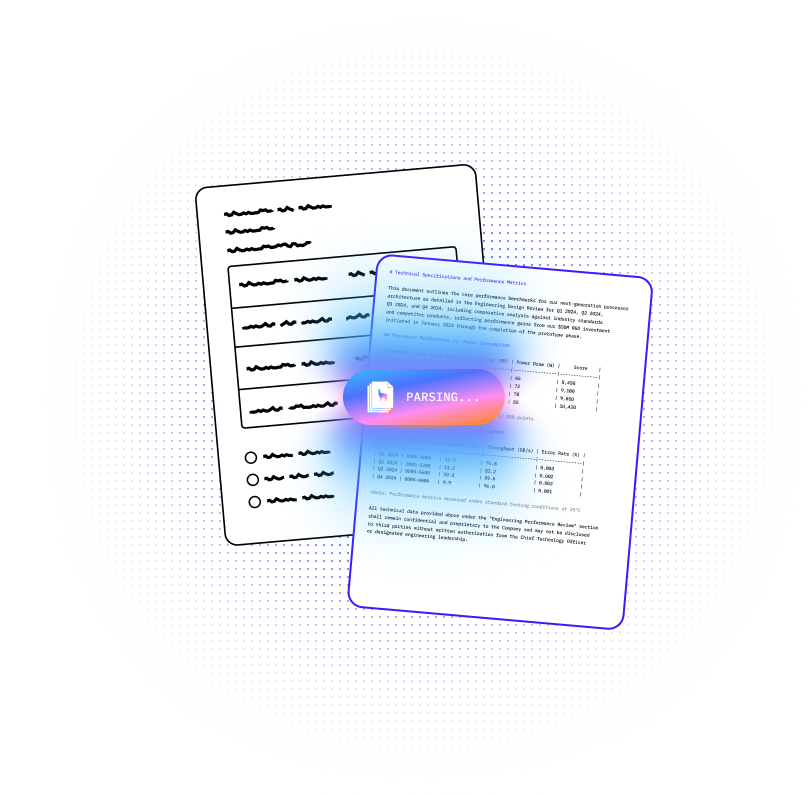
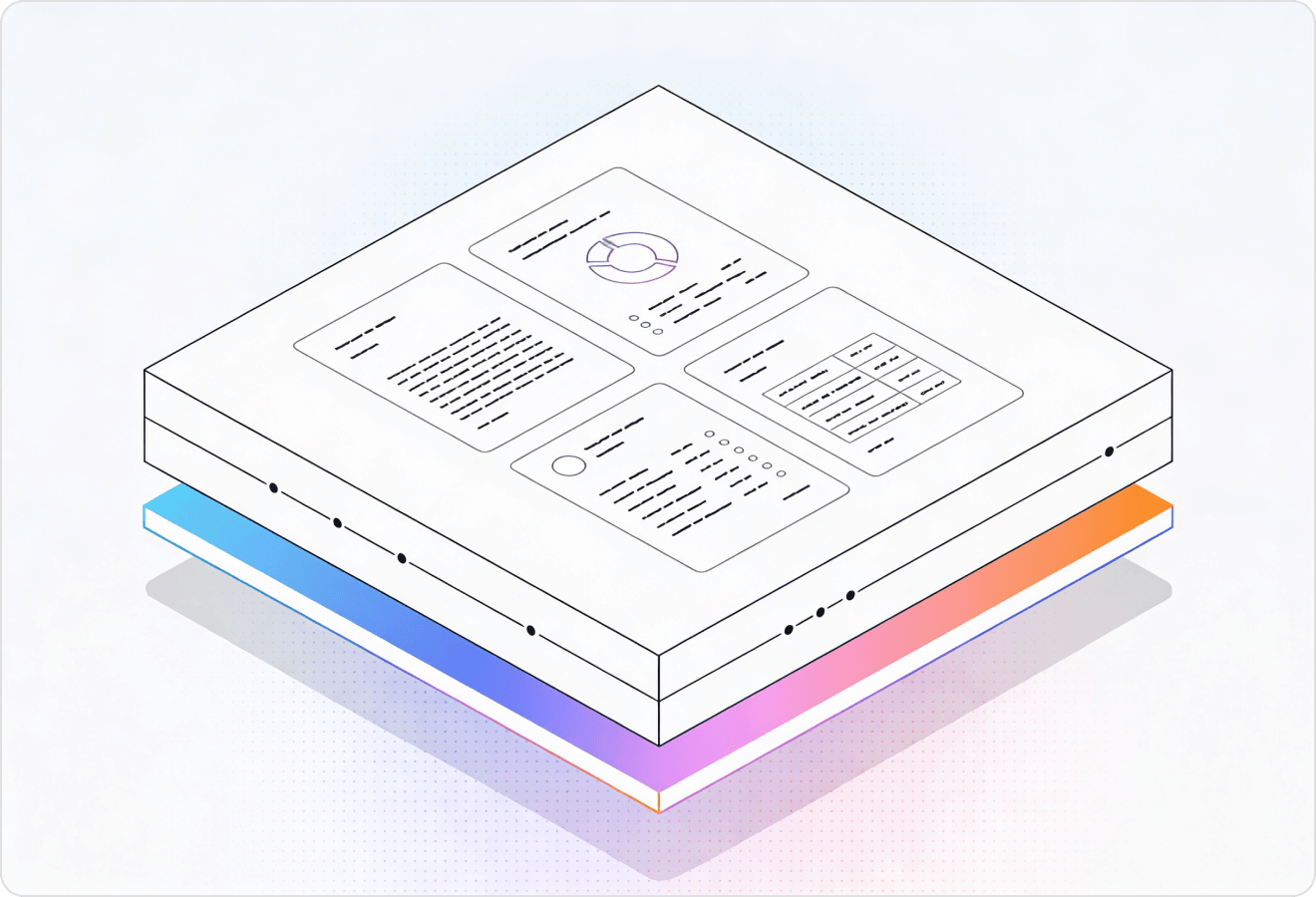
LlamaParse turns messy background check PDFs and scans into clean, structured records you can actually use for screening decisions and downstream systems. It understands layout, tables, and attachments, then returns verifiable JSON or Markdown with metadata to speed review and reduce rework.
Best-in-Class Accuracy

Use LlamaParse in LlamaCloud to turn background check PDFs into clean JSON—case numbers, offense types, jurisdictions, disposition dates—without brittle, layout-dependent scripts that break when a vendor changes formatting. Layout-aware structure and auto-correction loops reduce manual QA so recruiters can clear candidates faster while keeping an auditable trail with confidence scores and page citations.

Parse background check reports at onboarding to automatically populate risk and compliance fields in KYC/AML workflows, even when reports include multi-column summaries, tables, and scanned stamps. Tier-based agentic processing routes only the messy pages to heavier vision models to keep per-application costs predictable while maintaining high straight-through processing.

Convert tenant screening and background check packets into structured outputs that flag evictions, aliases, and address history directly inside leasing workflows, instead of relying on staff to read long PDFs. Natural-language parsing instructions let teams extract only decision-critical sections and normalize them into a consistent schema for fair-housing reporting and repeatable approvals.

Ship background check report ingestion as a product feature fast: LlamaParse outputs AI-ready Markdown/JSON with granular metadata so you can build review queues, citations, and human-in-the-loop verification without custom parsers. The APIs and flexible credit-based pricing let you prototype on real documents, then scale ingestion volume as customers and screening vendors diversify.
The Solution
01
LlamaParse uses layout-aware computer vision to preserve reading order across multi-column sections, headers/footers, and dense blocks common in background check reports. This prevents scrambled narratives and keeps sections like identity details, screening summaries, and disclosures correctly separated for reliable downstream review.
02
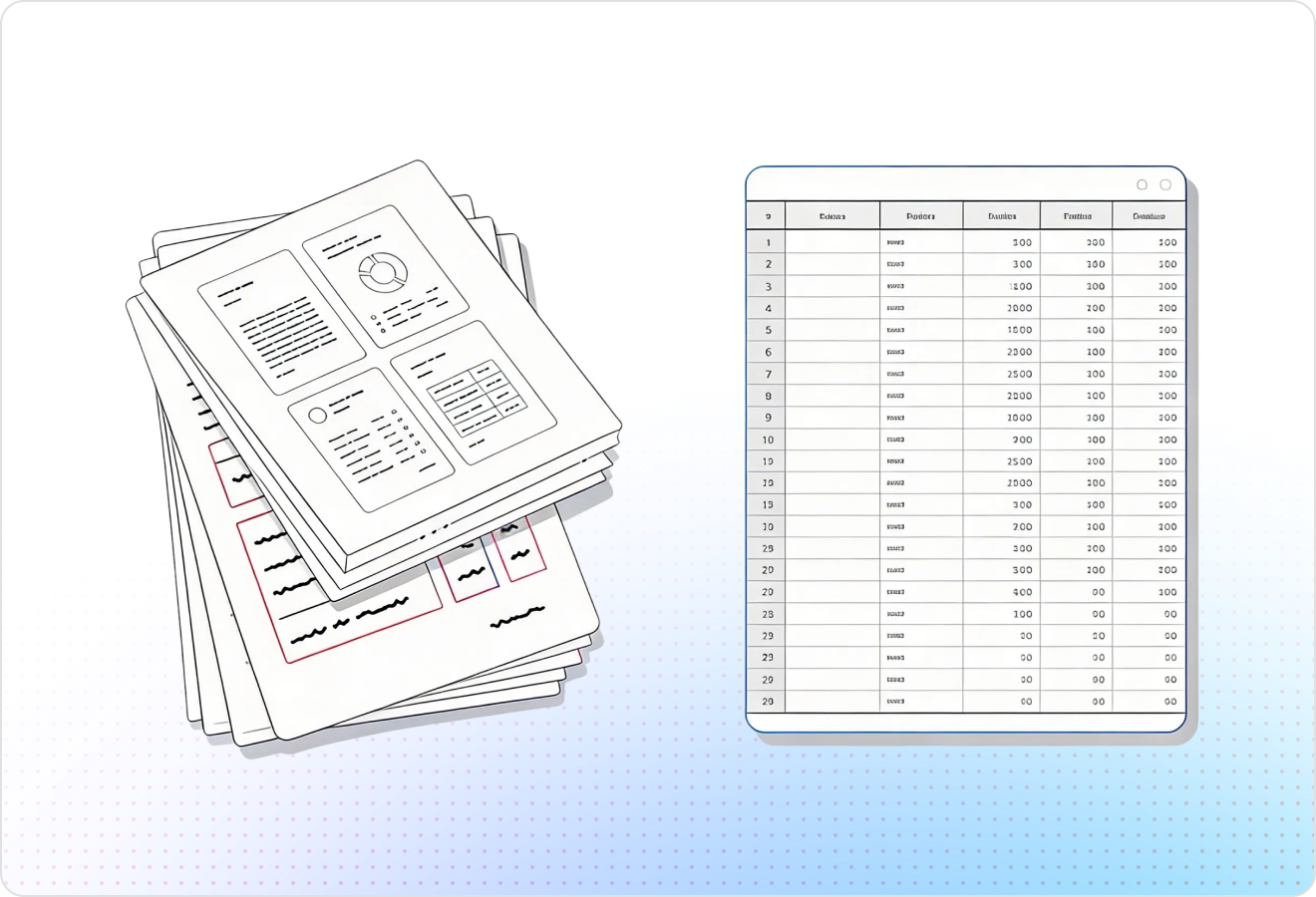
LlamaParse accurately captures structured content from tables and form-like grids, including charge summaries, case timelines, and address/employment history blocks. You get clean, consistent outputs without writing brittle post-processing to reconstruct rows, columns, and key-value pairs.
03
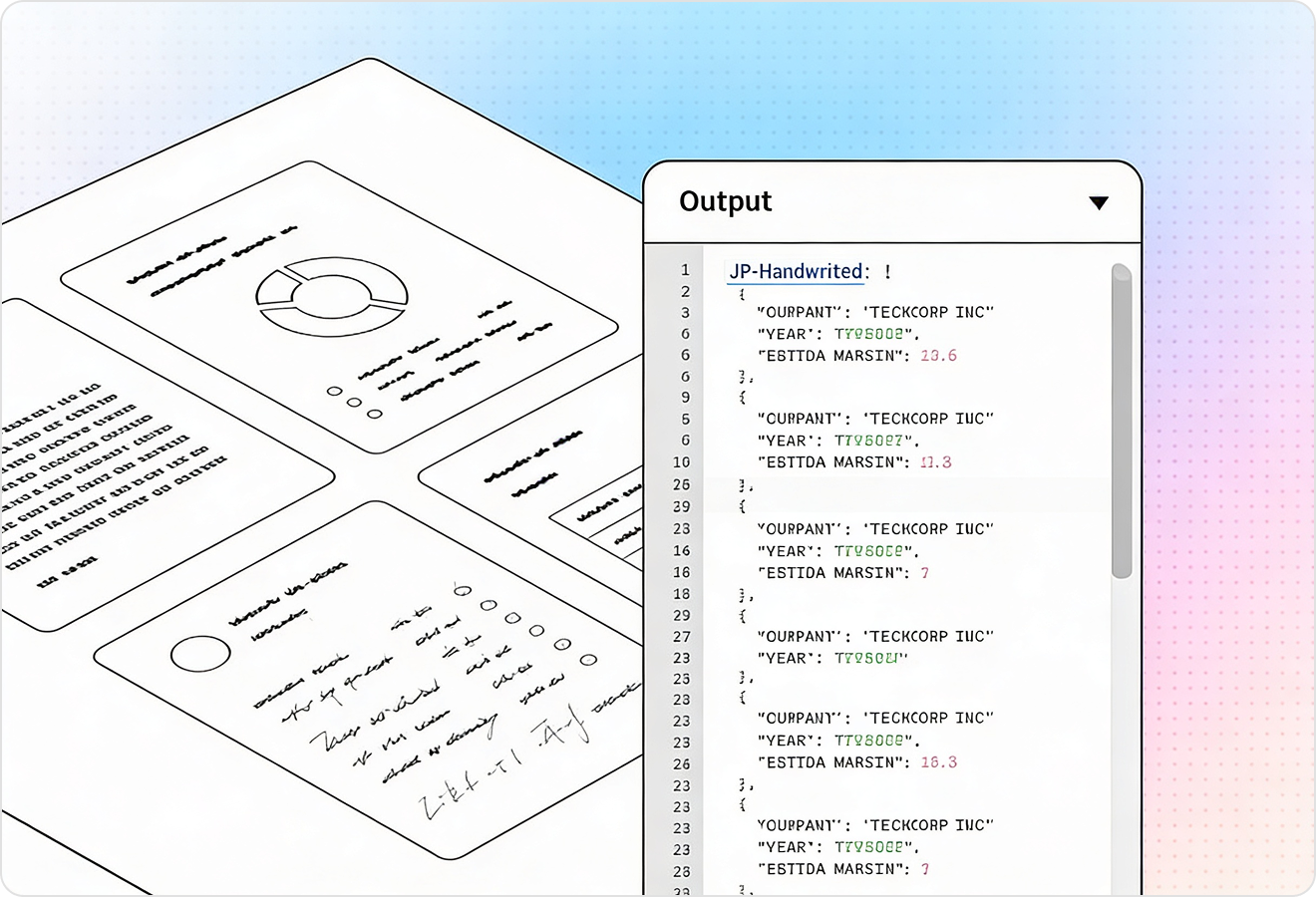
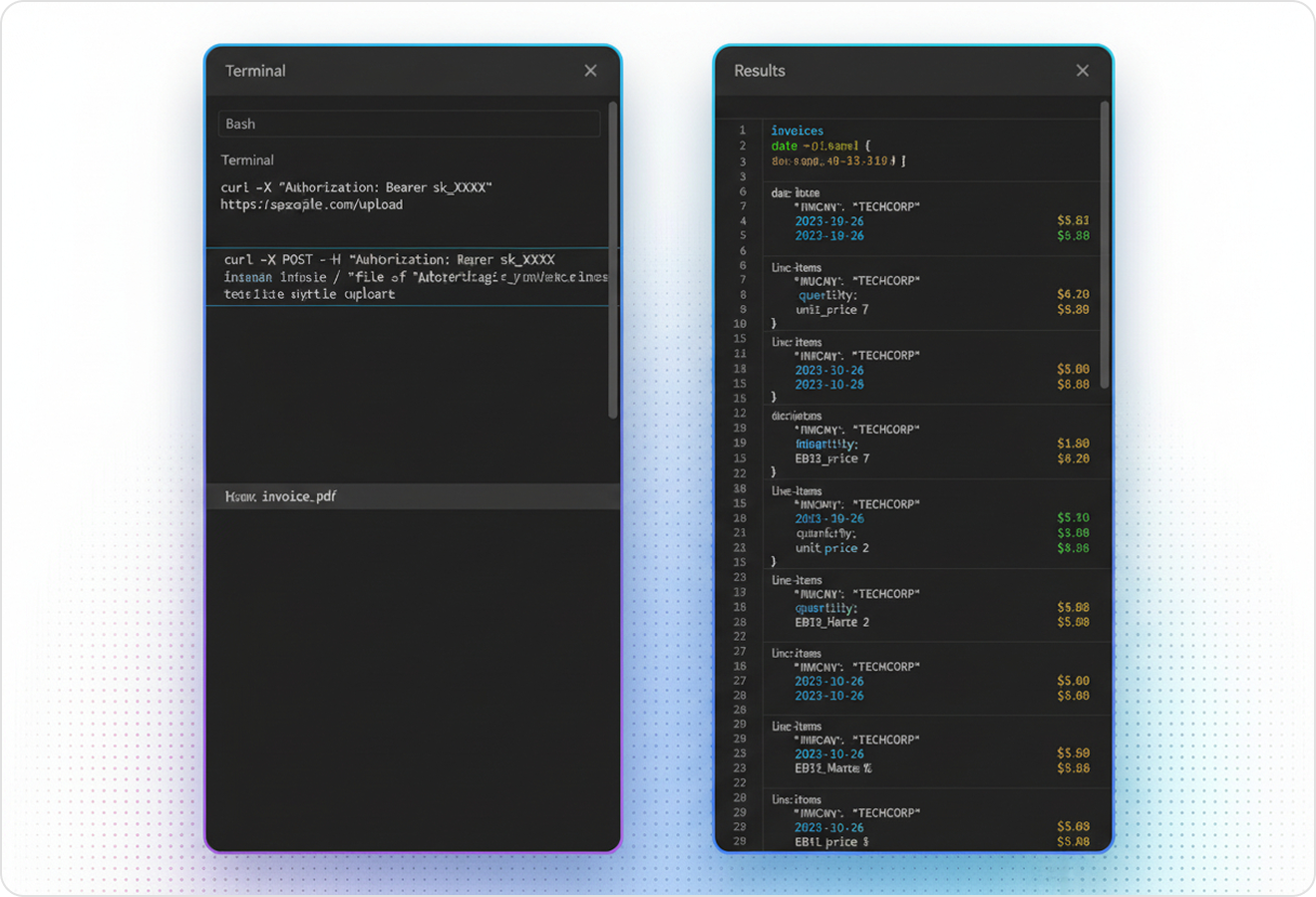
LlamaParse can return structured JSON along with granular metadata like page numbers and element coordinates for each extracted field. That traceability makes it easier to audit background check results, spot source-of-truth issues, and route low-confidence fields to human review.
04
LlamaParse runs self-correction and validation loops to reduce common parsing errors on scans, photocopies, and low-quality PDFs found in screening packets. This improves straight-through processing for critical entities like names, dates of birth, case numbers, and jurisdiction details—without constant manual cleanup.
Technical OCR documentation
Explore our developer guides to easily connect your document pipelines to LlamaParse.
Explore the documentation
Our AI catches the typos that tired eyes miss.

Export to Excel, JSON, XML, or directly via API.

SOC2 Type II compliant with end-to-end encryption.

Train the tool on your specific forms in minutes, not days.

Average processing time of <3 seconds per page.
LlamaParse’s support of a wide variety of filetypes and its accuracy of parsing made it the best tool we tested in our evaluations. The LlamaIndex team was very responsive and we were off to the races within a day.
Common FAQs
01
No—layout-aware parsing preserves the original reading order across multi-column pages, headers/footers, and dense narrative blocks. That keeps identity details, screening summaries, and disclosures separated correctly so reviewers and downstream systems can trust the output.
02
Yes—tables and form fields are captured as structured data, not flattened text. You get consistent rows, columns, and key-value pairs without brittle custom scripts to reconstruct the information.
03
You can receive verifiable JSON with metadata such as page numbers and element coordinates for each extracted field. This makes audits faster, supports compliance reviews, and helps your team quickly confirm the source-of-truth when something looks off.
04
What happens with low-quality scans, photocopies, or messy screening packets that usually cause OCR errors?
Automatic validation and self-correction loops reduce common scan-related mistakes before the data reaches your workflow. That improves straight-through processing for critical fields like names, dates of birth, case numbers, and jurisdictions, with fewer exceptions to manually fix.
05
Can we route uncertain fields to human review without slowing down the entire report?
Yes—granular metadata and confidence-aware outputs make it easy to flag only the fields that need attention. Your team can review the exact page location of the extracted text, resolve edge cases quickly, and keep the rest of the report automated.
06
How quickly can we integrate this into our background screening workflow and start getting structured outputs?
You can start with structured JSON outputs right away and expand to deeper field-level extraction as needed. Because the parser handles layout, tables, and validation out of the box, most teams see value quickly without months of custom post-processing.