Nov 14, 2025
Document AI: The Next Evolution of Intelligent Document ProcessingPersona
Industry
Use cases
Meter Reading OCR Deep Learning
[ Meter Reading OCR Deep Learning ]

Use LlamaParse to turn meter photos into verified, structured readings your billing systems can trust.
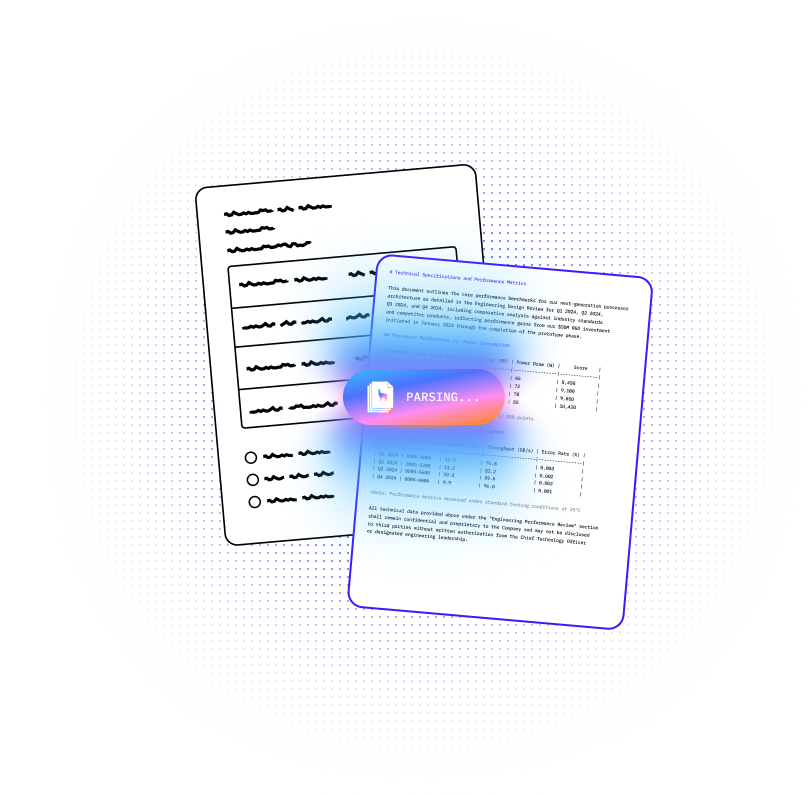
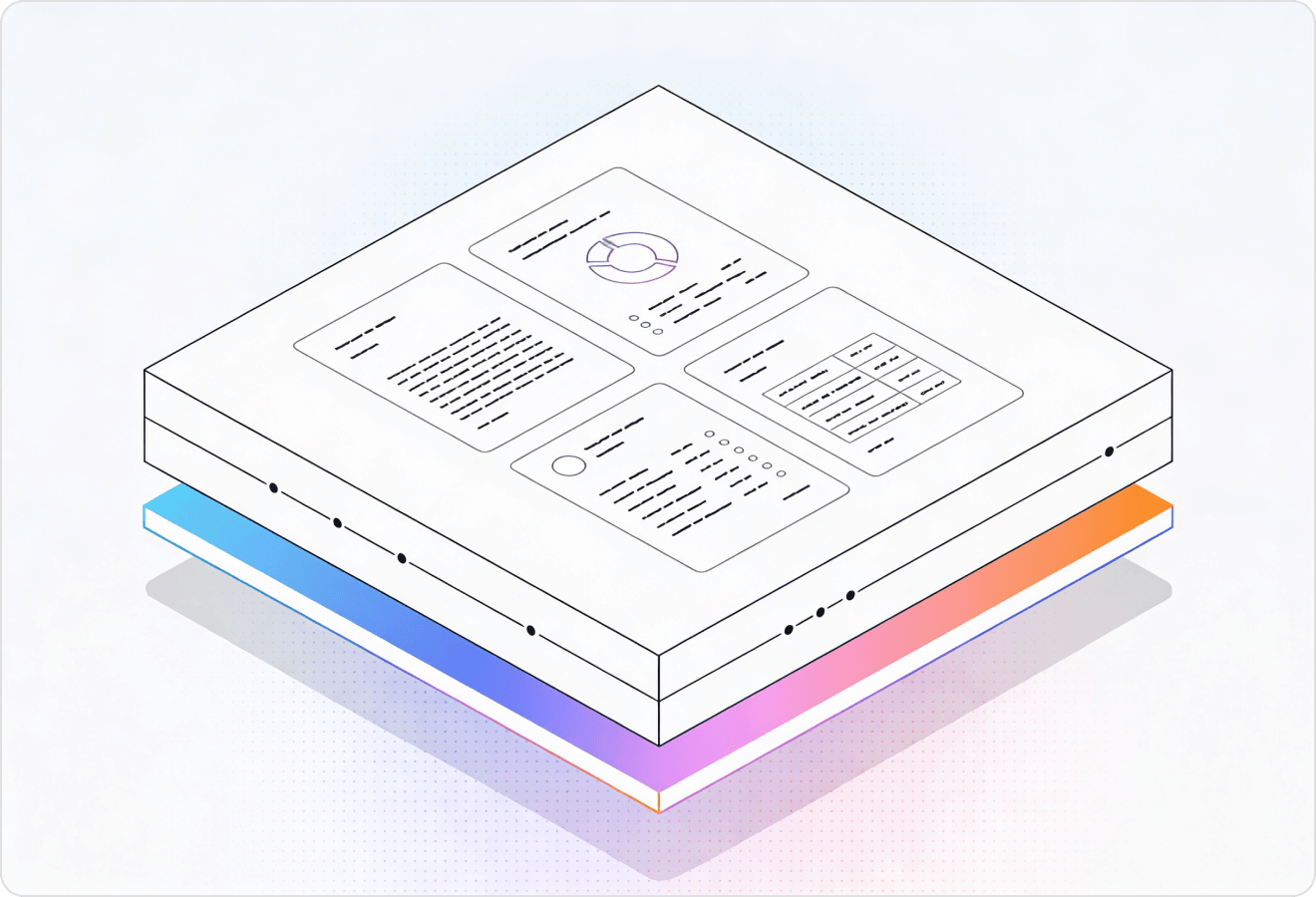

LlamaParse turns photos, scans, and PDFs of meter dials and registers into clean, structured JSON or tables your models can trust. Agentic document parsing uses layout-aware vision and validation loops to reduce misreads and rework, so you ship higher straight-through processing.
Best-in-Class Accuracy

Parse field photos of electric, gas, and water meters into validated JSON—capturing the reading, meter ID, and timestamp even when glare, skew, or mixed analog/digital layouts break legacy OCR. LlamaParse’s correction loops and metadata citations reduce re-reads and billing disputes by making every extracted value traceable to the exact image region.

Automate monthly submetering by extracting unit-level readings from technician reports and meter-room photo logs, preserving tables and reading order across multi-property portfolios. With natural-language parsing instructions, teams can standardize outputs for chargebacks and tenant statements without writing brittle post-processing code.

Convert gauge and meter snapshots from shop floors into structured maintenance logs, including context like equipment tag numbers and panel locations pulled from complex layouts and labels. Tier-based agentic processing routes only the hard images to higher-accuracy vision models, keeping ingestion costs predictable at scale.

Ship meter-reading automation fast by using LlamaParse as the ingestion layer for user-uploaded photos and PDFs, outputting clean Markdown/JSON that’s ready for downstream workflows and dashboards. The API-first approach and auto-routing let small teams achieve production-grade accuracy without building custom training pipelines or manual QA queues.
The Solution
01
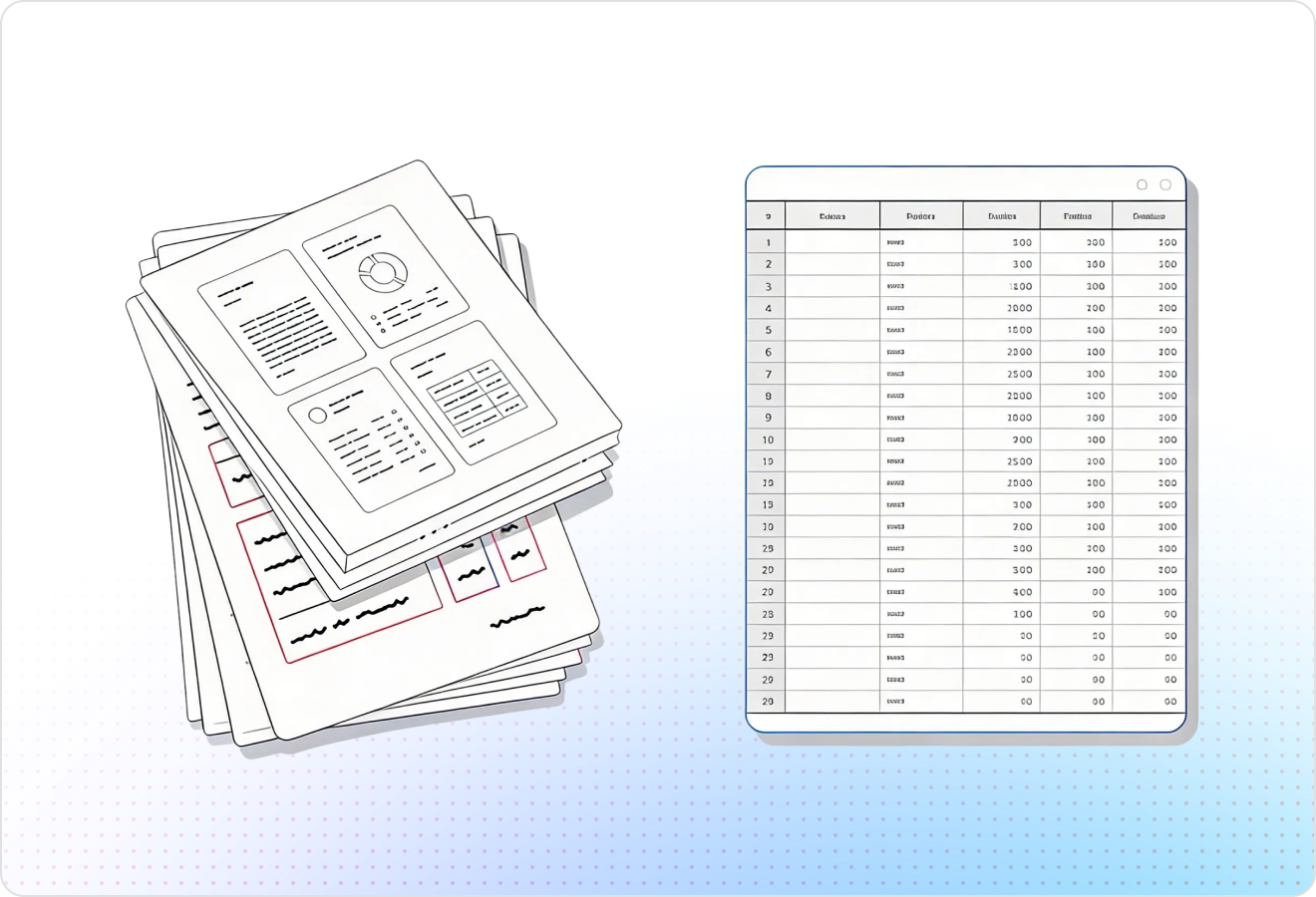
LlamaParse uses layout-aware computer vision to preserve reading order and isolate key regions like meter ID, register value, units, and timestamps even when forms vary by utility. This reduces brittle template rules and improves deep-learning training data quality by keeping labels aligned with the right values.
02
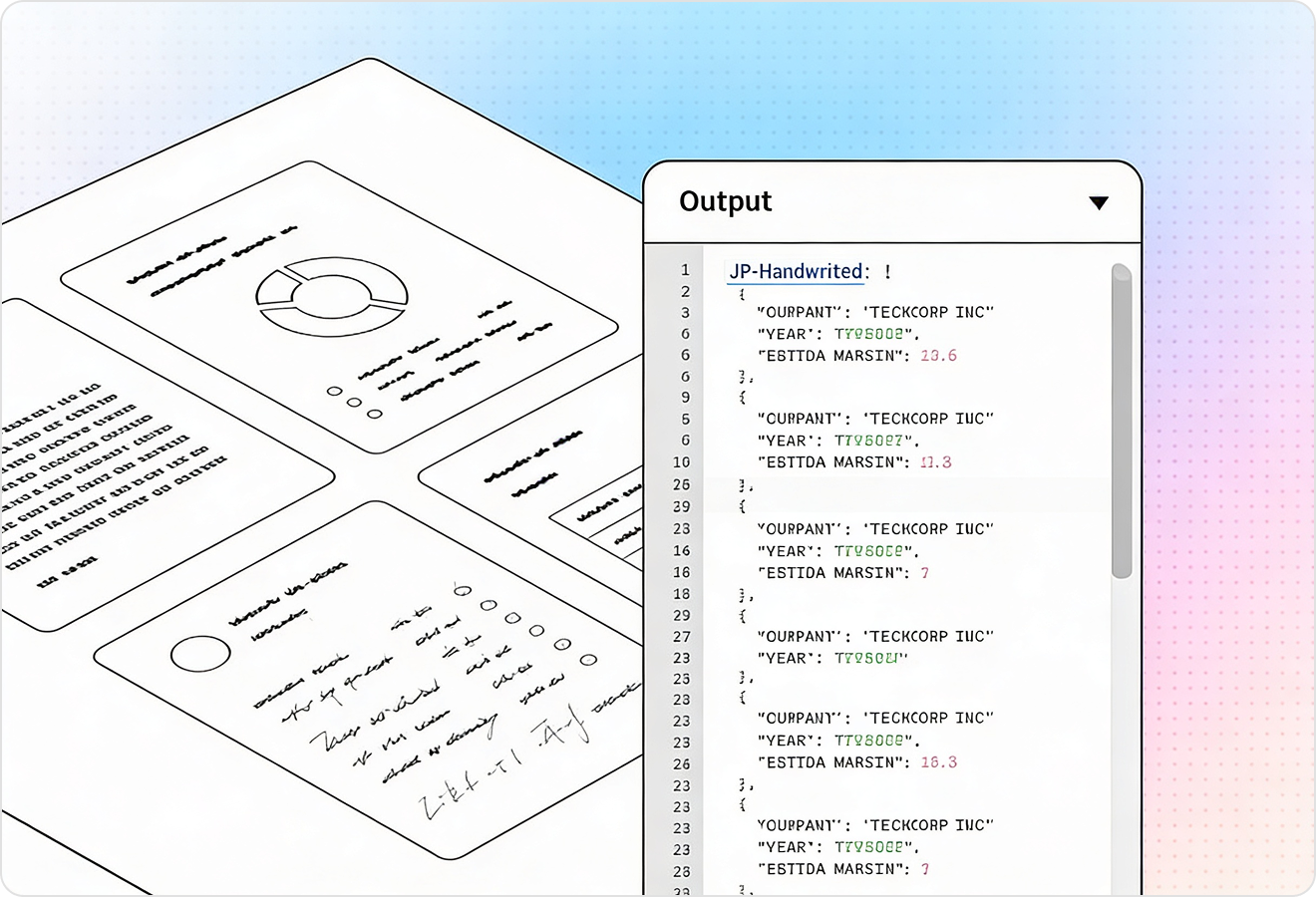
LlamaParse can interpret visual meter readouts embedded in photos or scanned reports, not just plain text on the page. That’s critical for meter reading workflows where digits appear on LCDs, dials, or low-contrast images and would otherwise get dropped or misread by traditional approaches.
03
LlamaParse runs self-checks and correction loops to catch common extraction errors like swapped digits, missing decimals, or impossible value formats. For meter reading, this increases straight-through processing and reduces the number of exceptions that need manual review.
04
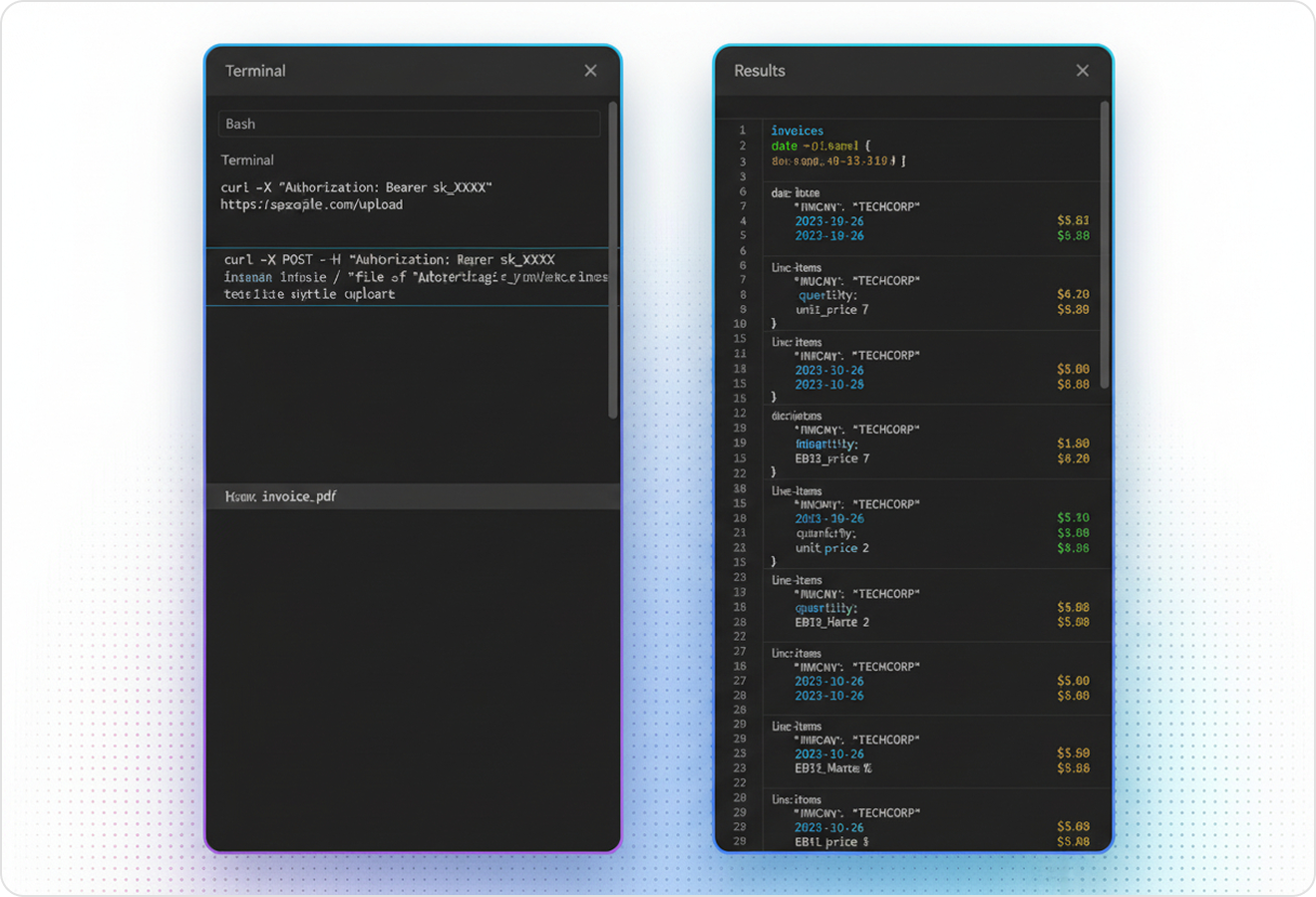
LlamaParse outputs structured JSON and attaches page-level traceability like coordinates, page numbers, and element types to each extracted field. This makes meter reading pipelines auditable and lets you build human-in-the-loop review tools that verify the exact source region for every predicted reading.
Technical OCR documentation
Explore our developer guides to easily connect your document pipelines to LlamaParse.
Explore the documentation
Our AI catches the typos that tired eyes miss.

Export to Excel, JSON, XML, or directly via API.

SOC2 Type II compliant with end-to-end encryption.

Train the tool on your specific forms in minutes, not days.

Average processing time of <3 seconds per page.
LlamaParse’s support of a wide variety of filetypes and its accuracy of parsing made it the best tool we tested in our evaluations. The LlamaIndex team was very responsive and we were off to the races within a day.
Common FAQs
01
Layout-aware computer vision preserves reading order and isolates key regions like meter ID, register value, units, and timestamps—even when the document layout changes. That means fewer brittle templates to maintain and cleaner training data because labels stay aligned to the correct values.
02
Yes—multimodal digit understanding is designed to interpret visual readouts embedded in images, not just text that’s already “OCR-friendly.” This is especially valuable for field photos and scanned reports where digits are faint, angled, or partially obscured.
03
Auto-correction validation loops run self-checks to catch extraction errors such as digit transpositions, decimal issues, and invalid value patterns. This boosts straight-through processing and reduces the number of reads that need manual review.
04
What does the output look like, and can I use it directly in my pipeline?
You get structured JSON designed for downstream automation, so it’s easy to feed into ETL, billing, or analytics workflows. Each field also includes metadata like coordinates, page number, and element type to keep results traceable and reviewable.
05
How do we audit results and build a human-in-the-loop review process?
Every extracted field includes the source region metadata, so reviewers can see exactly where a meter value came from on the page or photo. That makes exceptions faster to resolve and helps you continuously improve model performance with high-quality feedback.
06
Will this reduce the effort of creating and maintaining templates for different document types?
Yes—because the extraction is driven by layout understanding rather than rigid positional rules, it adapts better to new form designs and scan quality changes. Teams typically spend less time updating templates and more time improving accuracy and coverage as volume grows.