Nov 14, 2025
Document AI: The Next Evolution of Intelligent Document ProcessingPersona
Industry
Use cases
Bank Guarantee OCR
[ Bank Guarantee OCR ]

Use LlamaParse to capture fields accurately, validate results, and speed approvals with confidence scores.
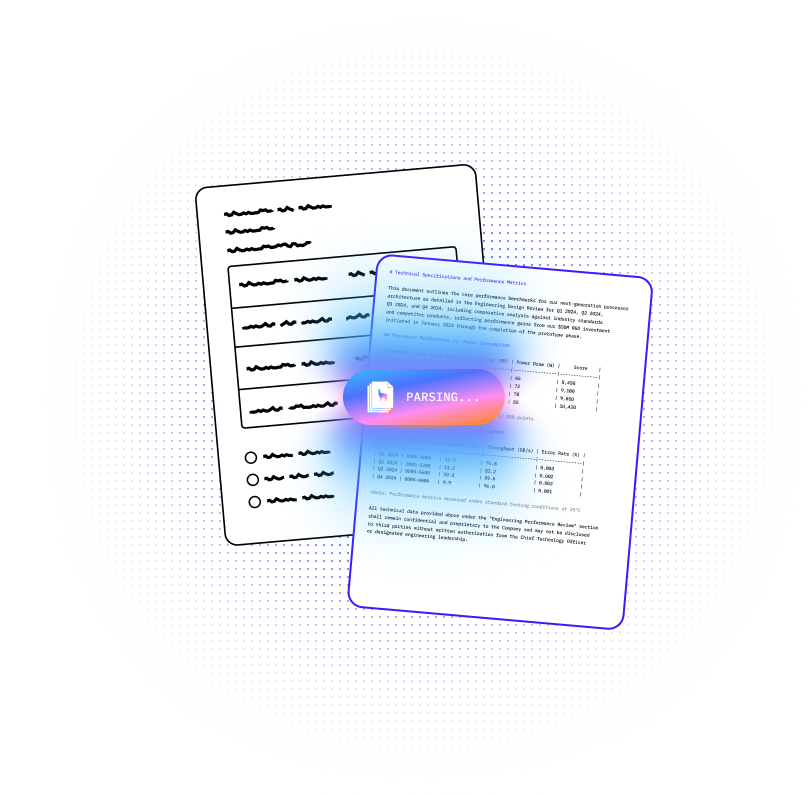
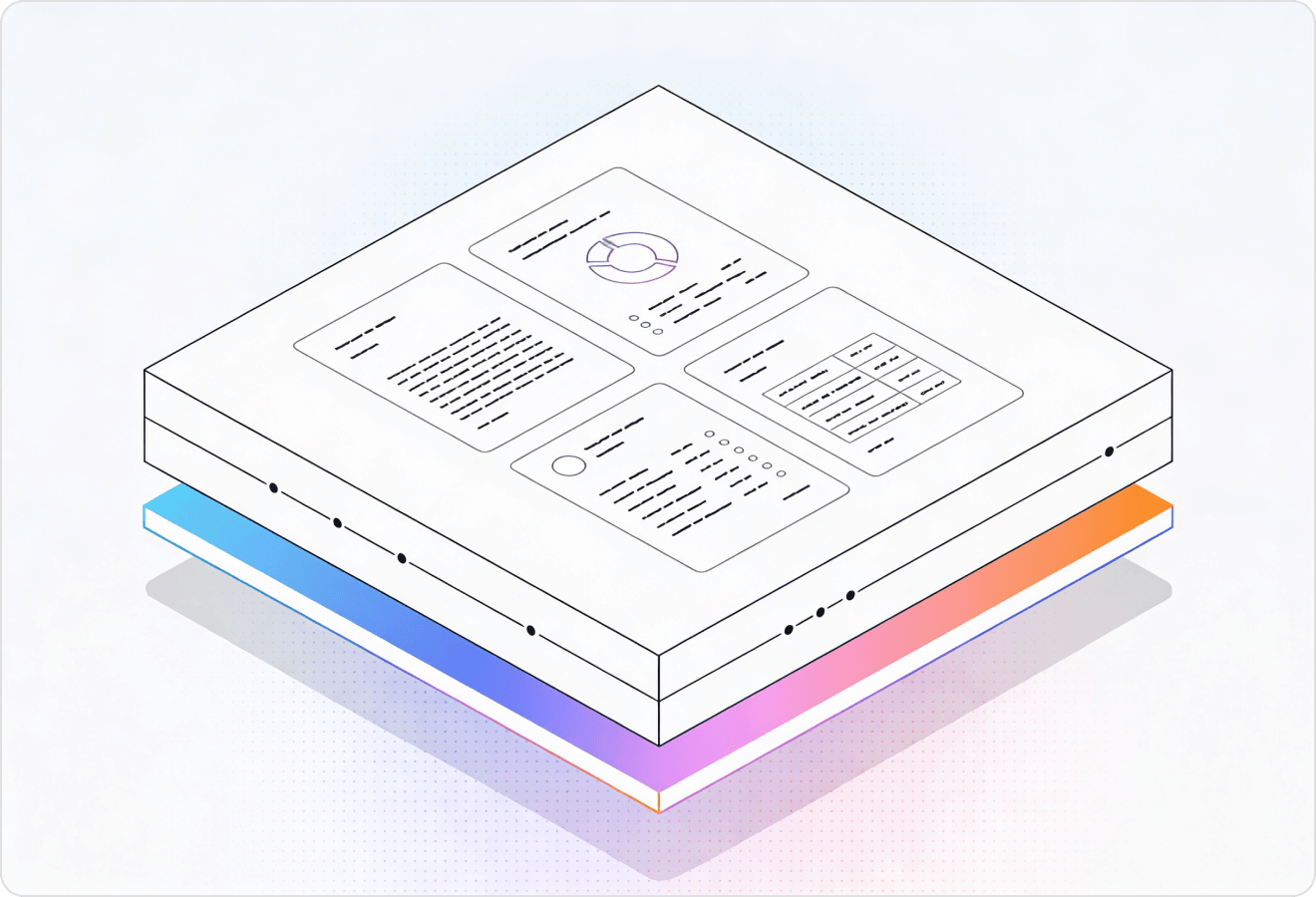

LlamaParse turns scanned and messy bank guarantees into clean, structured outputs you can trust, capturing amounts, beneficiaries, dates, and clauses accurately. Agentic parsing understands layout and validates fields with citations and confidence scores, so your ops team can review exceptions instead of rekeying.
Best-in-Class Accuracy

Parse bank guarantees into structured JSON (amount, expiry, beneficiary, governing law, claim conditions) with citations so ops teams can clear exceptions without chasing the PDF. Layout-aware extraction preserves clause order and tables, reducing false positives that stall issuance, amendments, and drawdown reviews.

Automatically ingest bid and performance guarantees from contractors and validate required wording, dates, and call conditions against project templates before mobilization. Multimodal parsing captures stamped scans and annex tables cleanly, cutting rework and preventing non-compliant guarantees from slipping into vendor onboarding.

Extract obligee/principal details, limits, cancellation terms, and endorsements from guarantee packs to pre-fill underwriting systems and speed up issuance. Auto-correction loops and granular metadata reduce manual QA on messy scans, improving straight-through processing for renewals and mid-term changes.

Use LlamaParse to turn uploaded bank guarantees into clean Markdown/JSON that powers instant eligibility checks, risk scoring, and automated customer workflows without building brittle parsing code. Tier-based processing and credit pricing let you ship a production-grade ingestion pipeline fast, then scale costs predictably as volume grows.
The Solution
01
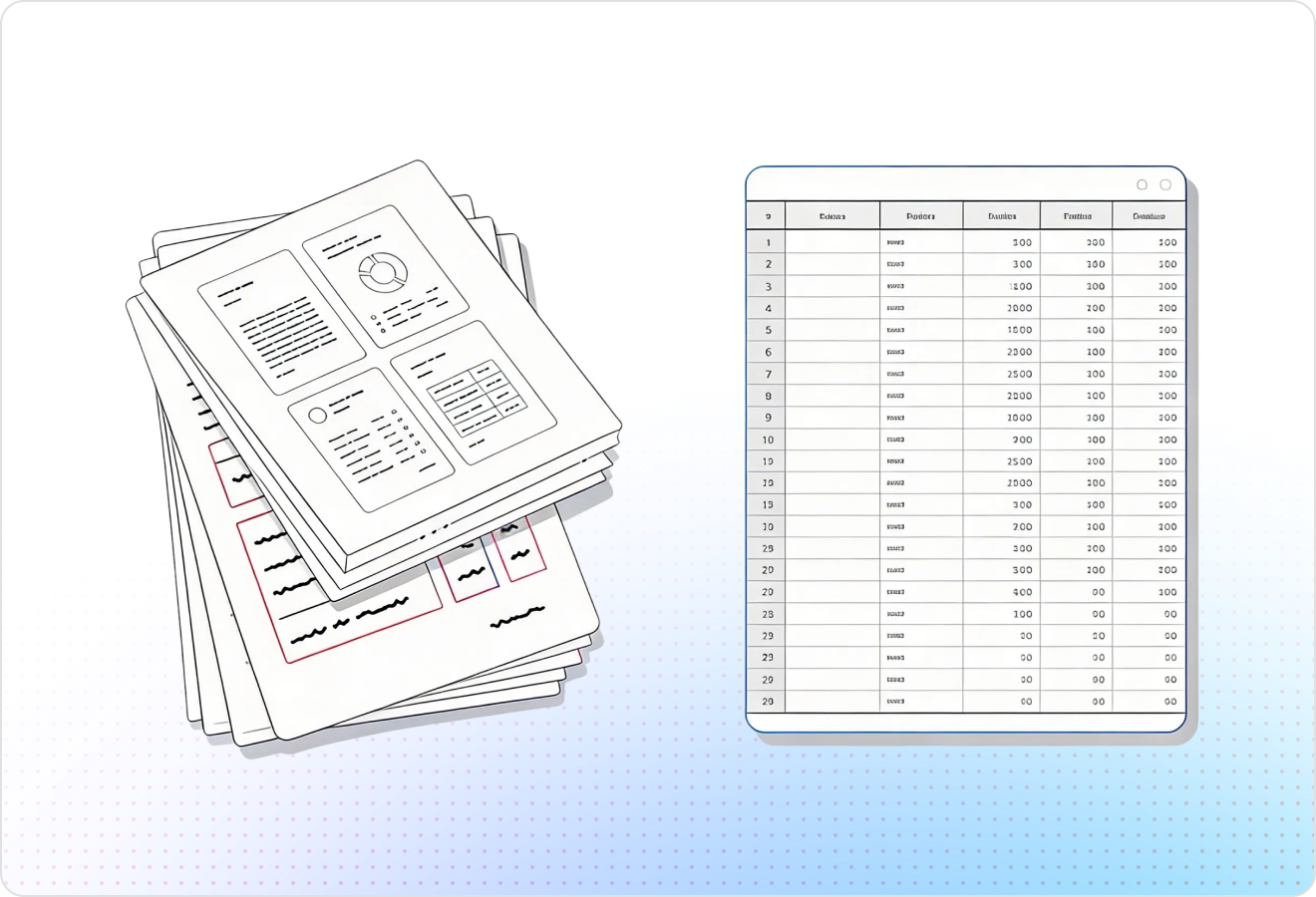
LlamaParse reads bank guarantee layouts the way a human would, preserving sections like applicant/beneficiary details, guarantee amount, validity, and claim conditions in the right order. This prevents scrambled outputs from multi-column PDFs, stamps, and header/footer noise that typically break downstream extraction.
02
Bank guarantees often embed critical terms in tables (amount breakdowns, currencies, dates, and reference numbers), and LlamaParse extracts those tables without losing row/column relationships. You get clean structured tables that are safe to validate, reconcile, and load into compliance or trade finance systems.
03
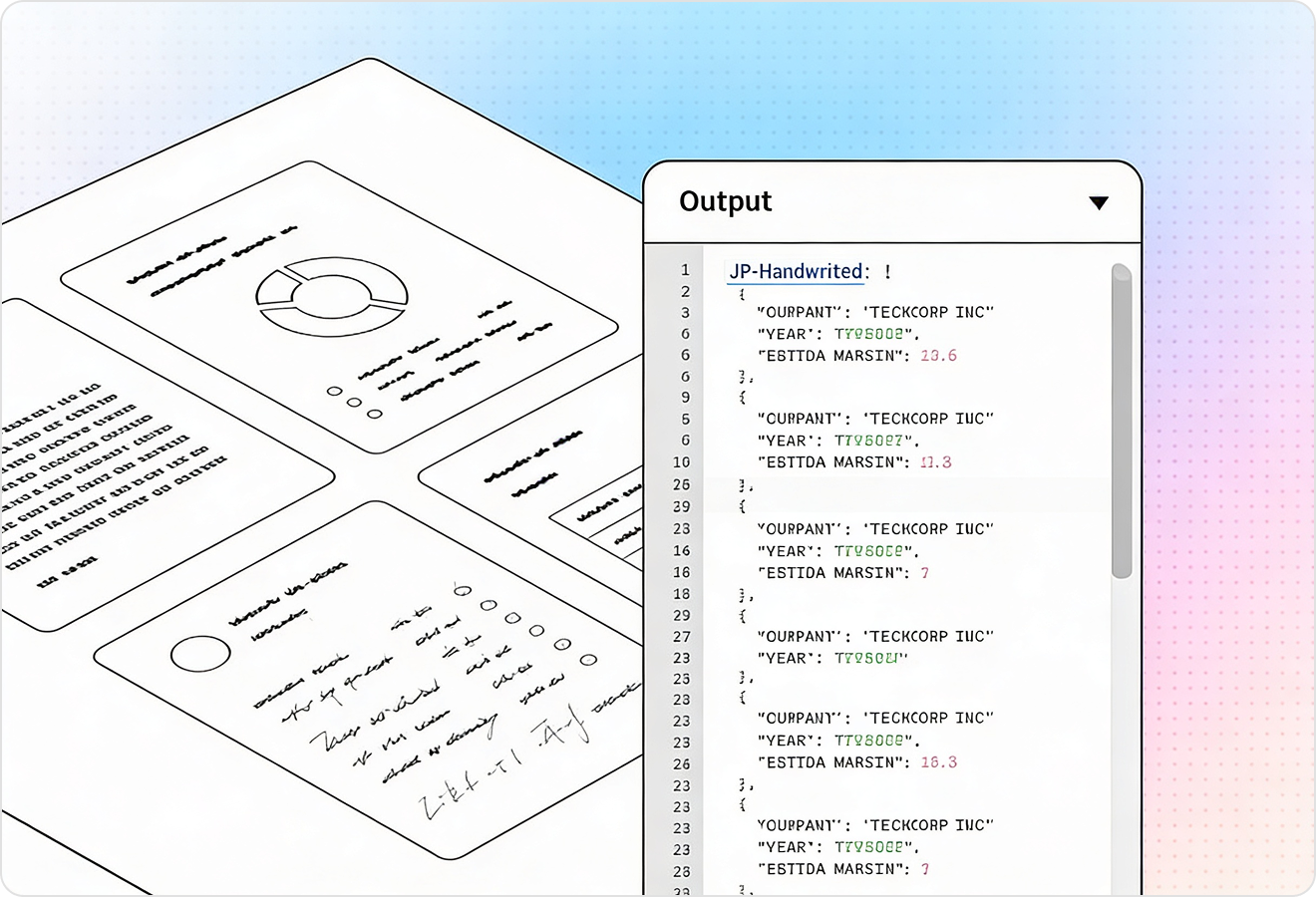
LlamaParse can return bank guarantee content as structured JSON, making it straightforward to map fields into your schema (e.g., guarantee_number, issuing_bank, expiry_date, governing_law). Each extracted element can include page-level metadata for auditability, so reviewers can quickly trace values back to the source document.
04
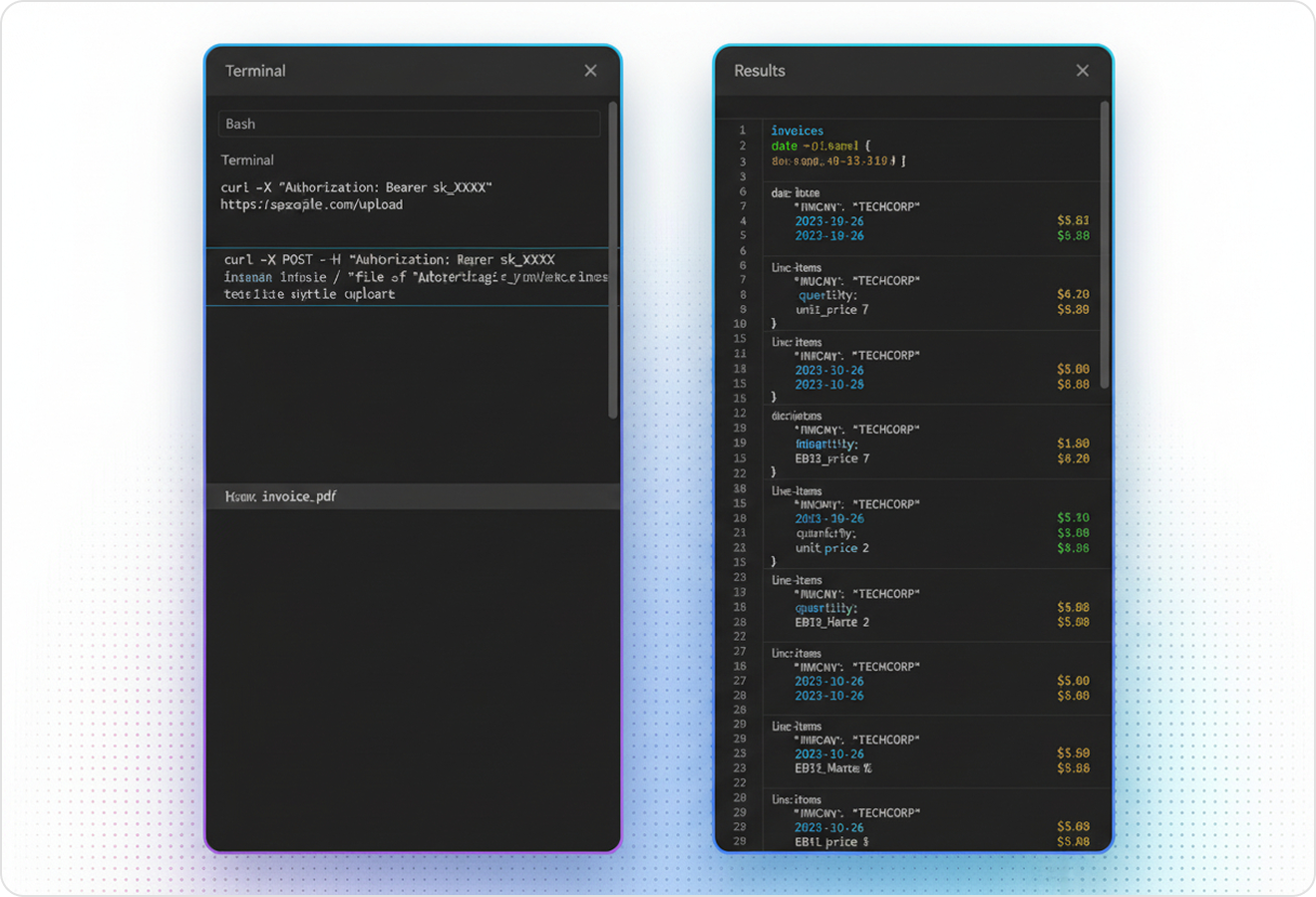
LlamaParse uses agentic validation steps to catch common parsing errors in guarantees, like misread account numbers, swapped dates, or inconsistent currency formatting. This reduces manual review by auto-correcting issues before the output is returned, improving straight-through processing for high-volume guarantee intake.
Technical OCR documentation
Explore our developer guides to easily connect your document pipelines to LlamaParse.
Explore the documentation
Our AI catches the typos that tired eyes miss.

Export to Excel, JSON, XML, or directly via API.

SOC2 Type II compliant with end-to-end encryption.

Train the tool on your specific forms in minutes, not days.

Average processing time of <3 seconds per page.
LlamaParse’s support of a wide variety of filetypes and its accuracy of parsing made it the best tool we tested in our evaluations. The LlamaIndex team was very responsive and we were off to the races within a day.
Common FAQs
01
Yes. Our layout-aware extraction reads the document in the same logical order a reviewer would—preserving applicant/beneficiary sections, amounts, validity, and claim conditions—so content doesn’t get scrambled by columns, stamps, or noisy headers/footers. That means cleaner downstream mapping and fewer exceptions to triage.
02
Bank guarantees often hide key terms in tables, so we parse tables as true structured data while keeping row/column relationships intact. You can validate and reconcile table outputs confidently, then load them directly into compliance, ERP, or trade finance workflows without manual reformatting.
03
Yes—JSON mode returns structured fields you can map to your model (e.g., guarantee_number, issuing_bank, expiry_date, governing_law) instead of dealing with messy text blocks. This makes integrations faster and reduces engineering time spent on brittle post-processing rules.
04
Is there traceability for audits—can reviewers see where each extracted value came from?
Every extracted element can include page-level metadata so auditors and reviewers can quickly trace values back to the source document. This speeds up internal approvals and helps you meet compliance expectations without adding extra manual steps.
05
What happens when OCR makes common mistakes like swapped dates, misread account numbers, or inconsistent currency formats?
We run validation and correction loops designed for bank guarantee pitfalls, catching issues like date inversions, digit errors, and inconsistent currency formatting before results are returned. That reduces manual review workload and improves straight-through processing for high-volume intake.
06
How quickly can we implement this into an existing guarantee intake or compliance workflow?
Most teams integrate quickly by consuming our structured JSON and mapping it to their existing fields and checks. Because the output is layout-aware, table-safe, and traceable, you spend less time building custom parsing logic and more time automating approvals and controls.