Nov 14, 2025
Document AI: The Next Evolution of Intelligent Document ProcessingPersona
Industry
Use cases
Patient Consent Form OCR
[ Patient Consent Form OCR ]

Use LlamaParse to capture every field accurately, with layout-aware checks that reduce manual review.
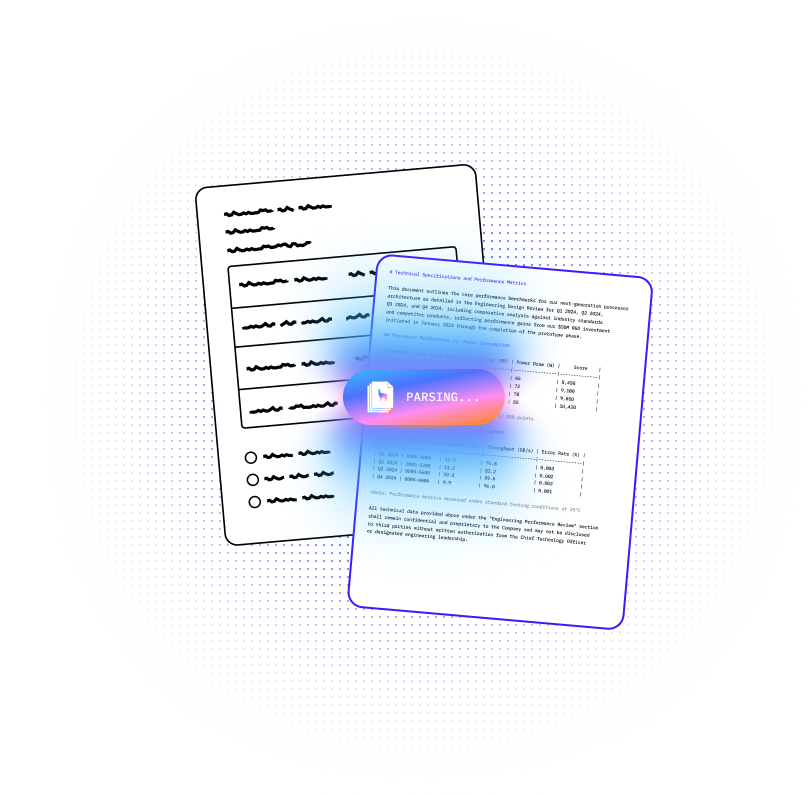
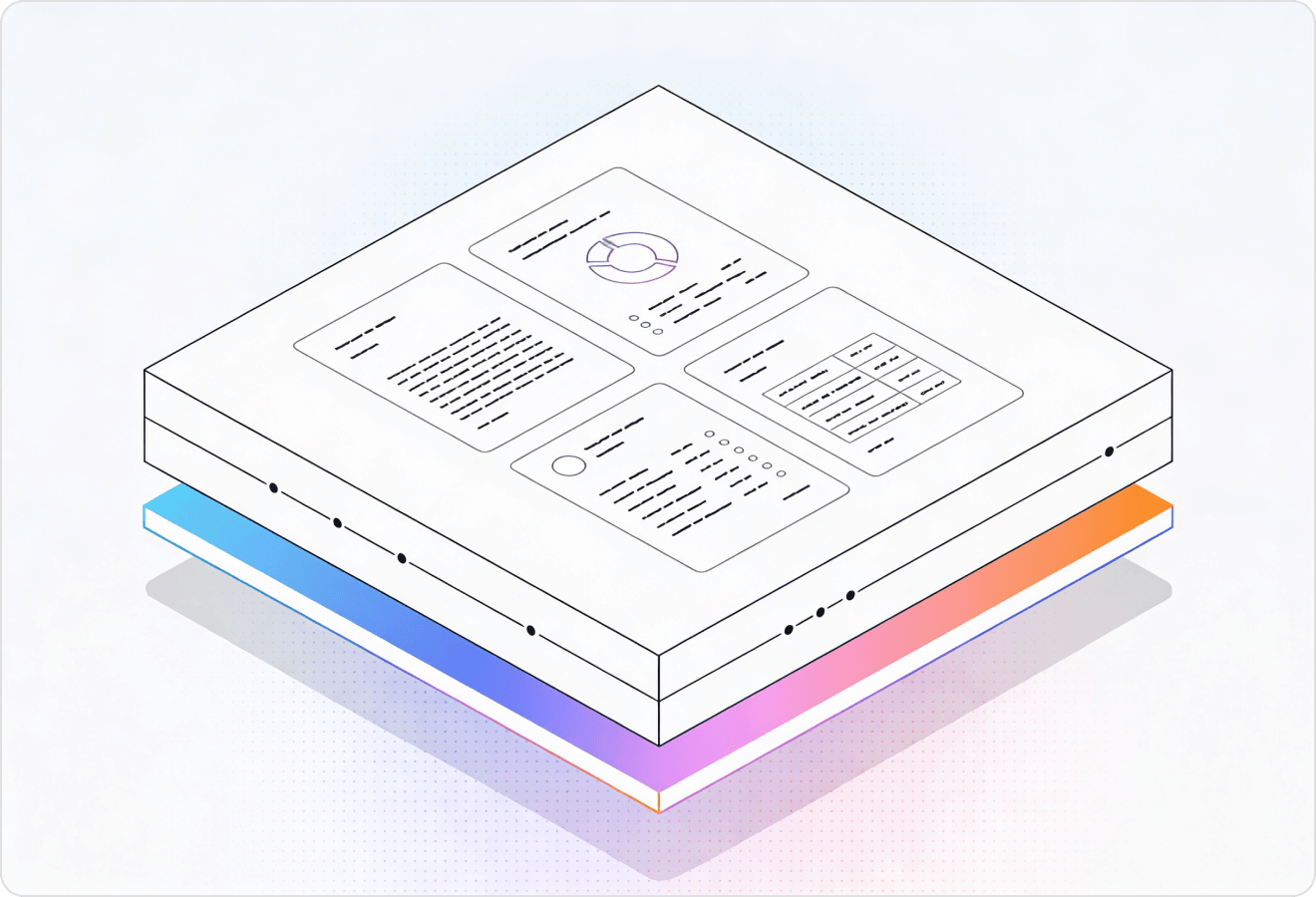
LlamaParse turns messy, multi-page patient consent forms into clean JSON or Markdown, capturing signatures, checkboxes, and key fields without brittle templates. Agentic parsing reads layout and embedded scans, then adds confidence metadata and citations so teams validate fast and reduce rework
Best-in-Class Accuracy

Use LlamaParse to turn scanned patient consent forms into structured JSON with page-level citations, so EHR teams can auto-populate procedure type, risks, and patient signatures without manual re-keying. Layout-aware parsing preserves checkboxes, initials, and multi-column disclosures, reducing compliance risk from missing or misfiled consent fields.

Parse consent-to-release and authorization forms to reliably extract named parties, coverage IDs, and time-bounded permissions, enabling straight-through processing for claims and third-party medical record requests. Agentic correction loops handle low-quality faxes and varied provider templates, cutting rework from unreadable signatures and misinterpreted form sections.

Convert ICF packets into audit-ready, queryable outputs that track version numbers, visit dates, and participant acknowledgements while preserving the original section structure in Markdown for review workflows. Multimodal parsing captures embedded diagrams and dosing tables so eConsent QA teams can validate completeness faster and reduce protocol deviation risk.

Ship consent-form automation in days by using LlamaParse with natural-language extraction instructions to map any clinic’s template into your app’s schema without brittle regex. Tier-based processing routes simple pages cheaply and upgrades only the messy scans, keeping unit economics predictable as uploads scale.
The Solution
01
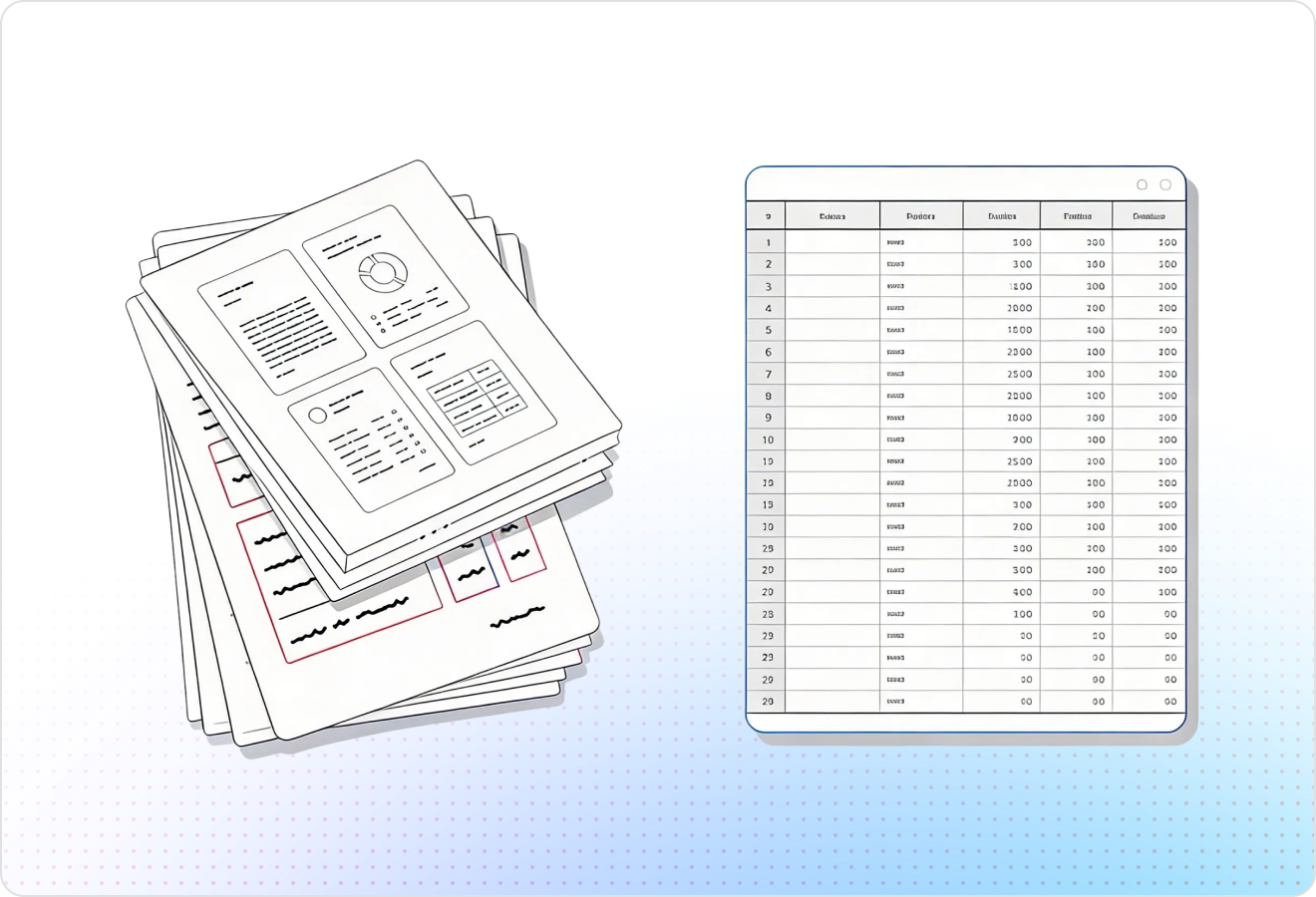
LlamaParse detects sections, checkboxes, signature blocks, and multi-column text so patient consent forms don’t get scrambled when converted to machine-readable output. This preserves the intent of each clause and keeps patient identifiers, procedure descriptions, and consent statements mapped to the right place.
02
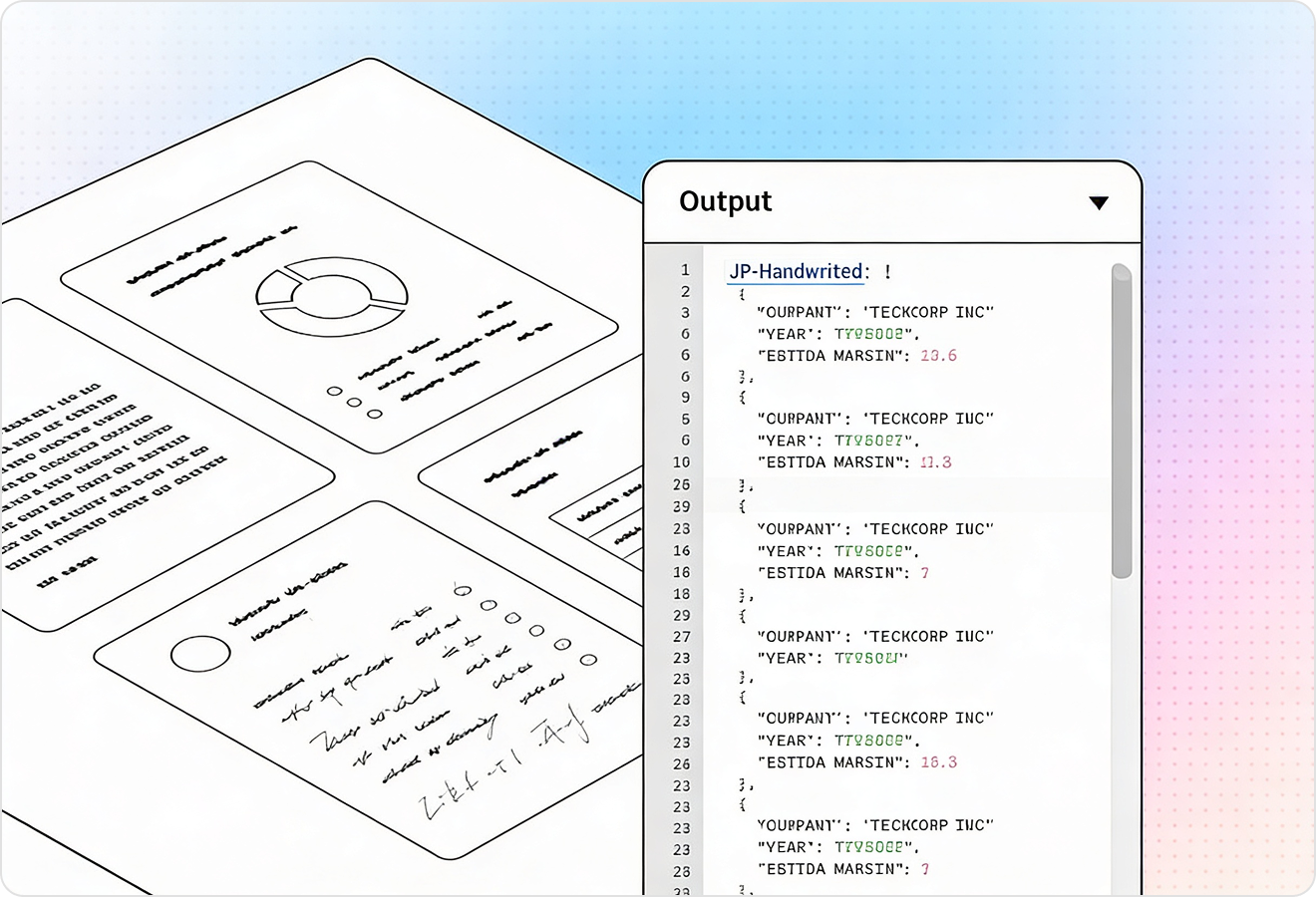
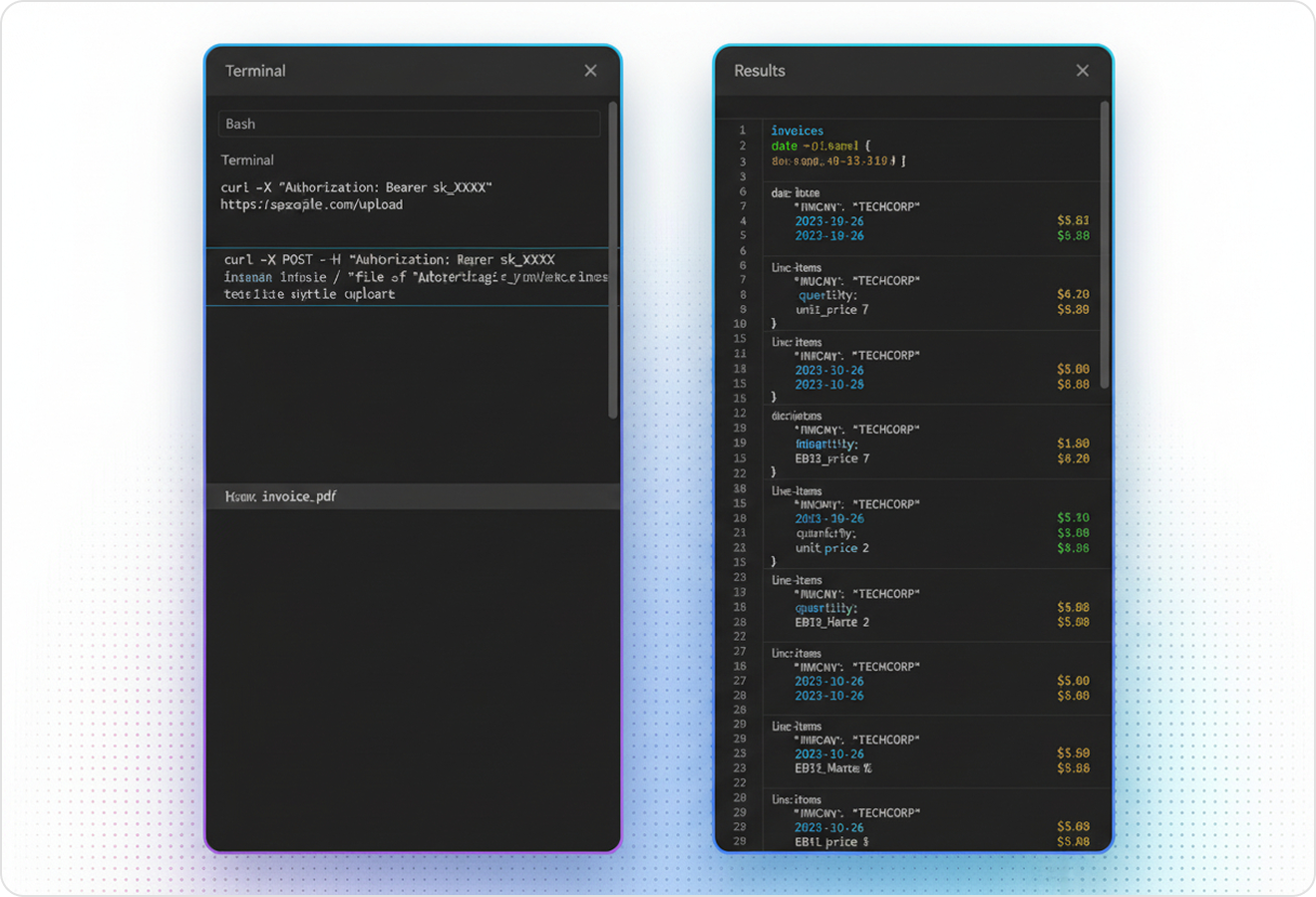
Return consent forms as clean, structured JSON that’s ready for downstream systems like EHR ingestion, compliance workflows, or analytics. This makes it straightforward to capture fields like patient name, DOB, consent type, witness details, and timestamps without brittle post-processing.
03
Every extracted element can include page references and granular metadata to support auditability and human review. For patient consent, that traceability helps you prove exactly where a specific authorization or signature was found and quickly flag missing or ambiguous fields.
04
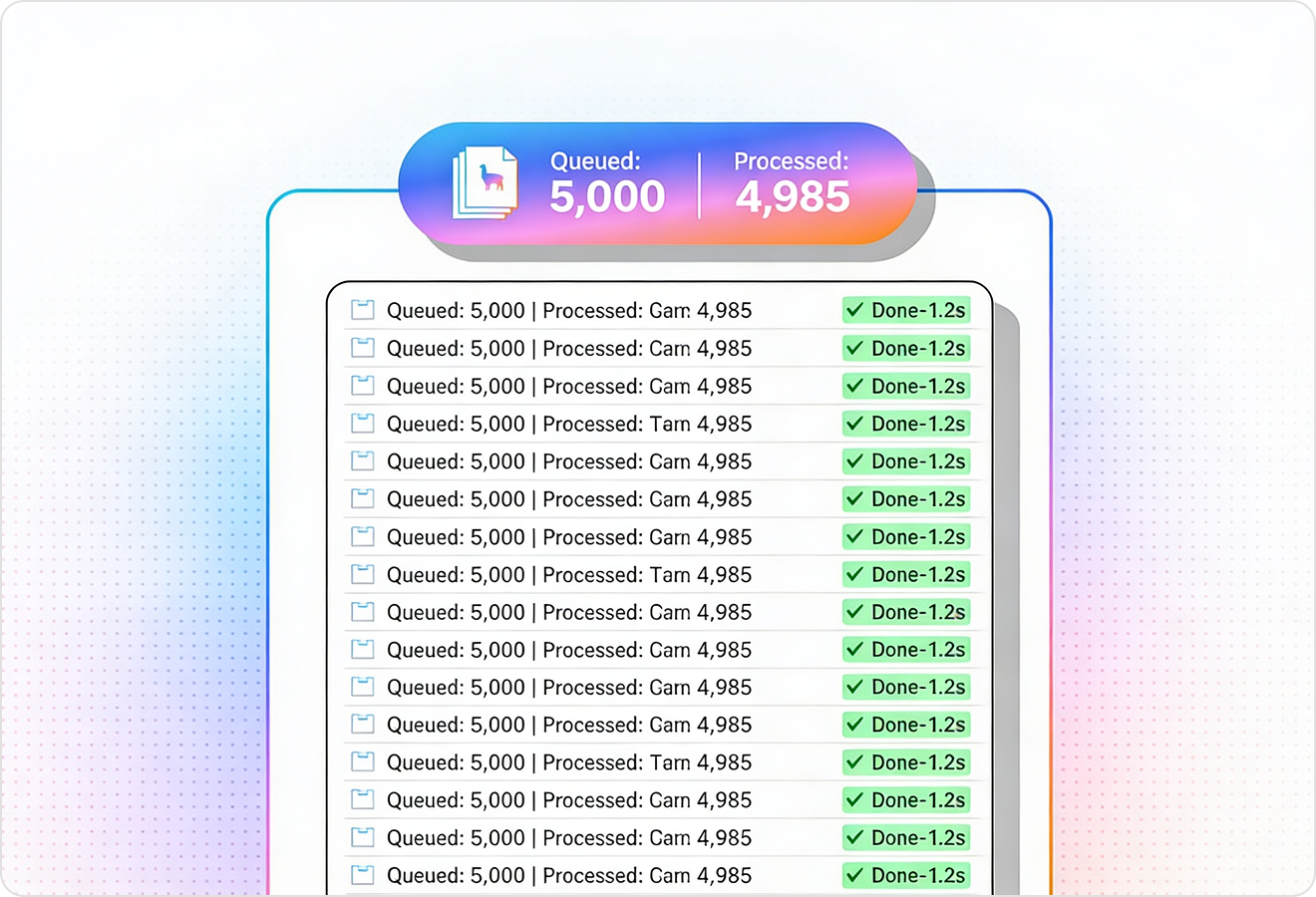
LlamaParse runs self-checking loops to catch common extraction failures like missed initials, misread dates, or inconsistent checkbox states before finalizing output. That reduces manual QA time on high-stakes consent packets and increases straight-through processing on messy scans or faxed copies.
Technical OCR documentation
Explore our developer guides to easily connect your document pipelines to LlamaParse.
Explore the documentation
Our AI catches the typos that tired eyes miss.

Export to Excel, JSON, XML, or directly via API.

SOC2 Type II compliant with end-to-end encryption.

Train the tool on your specific forms in minutes, not days.

Average processing time of <3 seconds per page.
LlamaParse’s support of a wide variety of filetypes and its accuracy of parsing made it the best tool we tested in our evaluations. The LlamaIndex team was very responsive and we were off to the races within a day.
Common FAQs
01
Yes—our layout-aware parsing detects sections, checkboxes, initials, signature blocks, and multi-column text so clauses and patient identifiers don’t get rearranged or mixed together. This helps keep each consent statement tied to the correct options, dates, and signatures for reliable downstream use.
02
Absolutely. You can return clean, structured JSON that maps fields like patient name, DOB, consent type, procedure details, witness information, and timestamps without brittle post-processing. That makes it easier to integrate with EHRs, document management systems, and audit workflows.
03
Every extracted element can include page references and granular metadata so reviewers can verify exactly where a value came from. This traceability supports audits, reduces back-and-forth during compliance reviews, and helps quickly spot missing or ambiguous authorizations.
04
What happens when scans are messy—faxes, skewed pages, faint handwriting, or missed initials?
Our auto-correction validation loops proactively catch common failures like misread dates, missed initials, and inconsistent checkbox states before finalizing output. That reduces manual QA and improves straight-through processing even on real-world, low-quality scans.
05
Can it reliably distinguish between checked and unchecked boxes, and detect missing signatures or required initials?
Yes—checkbox states and signature/initial blocks are parsed as explicit elements rather than guessed from surrounding text. With validation, you can flag missing signatures, incomplete sections, or contradictory selections before the consent packet moves forward.
06
How quickly can we integrate this into our existing consent intake pipeline?
You can start with structured JSON output and page-level citations, then map the fields your systems care about (EHR, RPA, compliance queues) with minimal transformation. Most teams are able to validate on a sample set, define required fields, and move to production without rewriting their workflow.