Nov 14, 2025
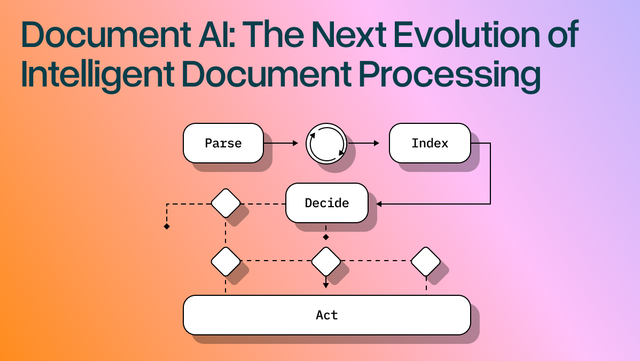
Document AI: The Next Evolution of Intelligent Document ProcessingPersona
Industry
Use cases
High Volume Document Processing
[ High Volume Document Processing ]

Use LlamaParse to turn messy scans into structured JSON or Markdown, with citations you can verify.
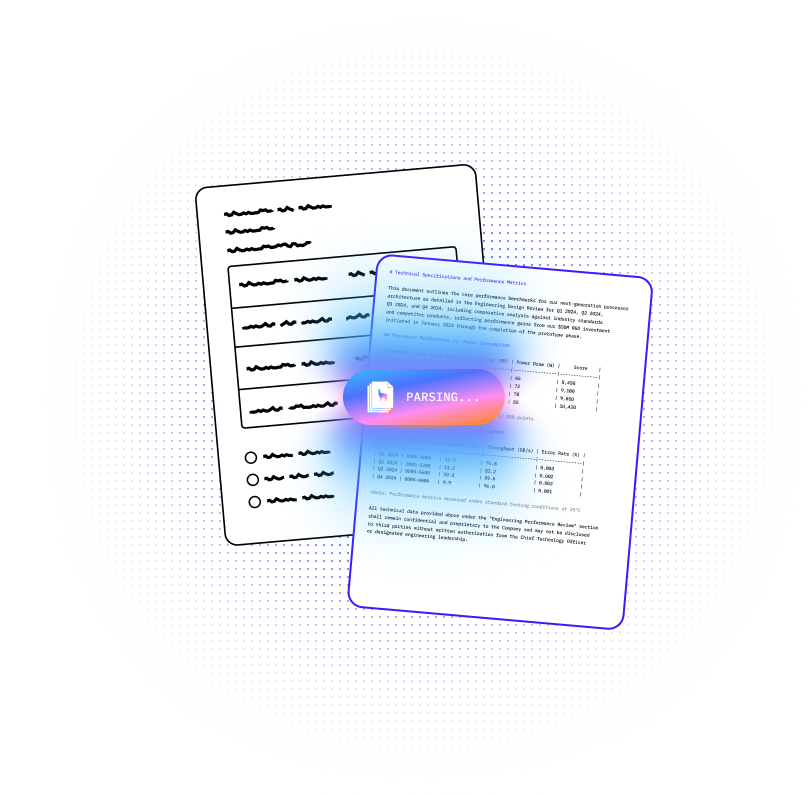


LlamaParse turns messy PDFs, scans, and form-heavy packets into clean, AI-ready Markdown or JSON, even when layouts change at high volume. It uses layout-aware vision, agentic orchestration, and validation loops to keep extraction accurate, auditable, and reliable for straight-through processing.
Best-in-Class Accuracy

Turn messy customer uploads like PDFs, scans, and spreadsheets into clean Markdown or JSON via LlamaParse, so your team can ship reliable onboarding, search, and workflow automation without weeks of brittle parsing code. Auto Mode and tier-based processing keep unit economics predictable while accuracy stays high on the edge cases that usually break MVPs.

Process high-volume KYC, loan packages, and monthly statements by extracting tables and multi-column layouts into structured JSON with traceable metadata for audit and exception handling. LlamaParse’s correction loops reduce manual review on inconsistent forms and scanned documents, improving straight-through processing without constantly retraining templates.

Normalize bills of lading, commercial invoices, packing lists, and customs forms into consistent records even when formats change by carrier, port, or country. Layout-aware table extraction preserves line-item accuracy so downstream ERP and TMS systems don’t get corrupted by scrambled quantities, SKUs, and HS codes.

Ingest large matter volumes—contracts, exhibits, and scanned filings—while preserving reading order across headers, footers, and multi-column pages for dependable clause review and summarization. JSON Mode with page coordinates and citations enables defensible workflows where every extracted term can be traced back to the exact source location.
The Solution
01
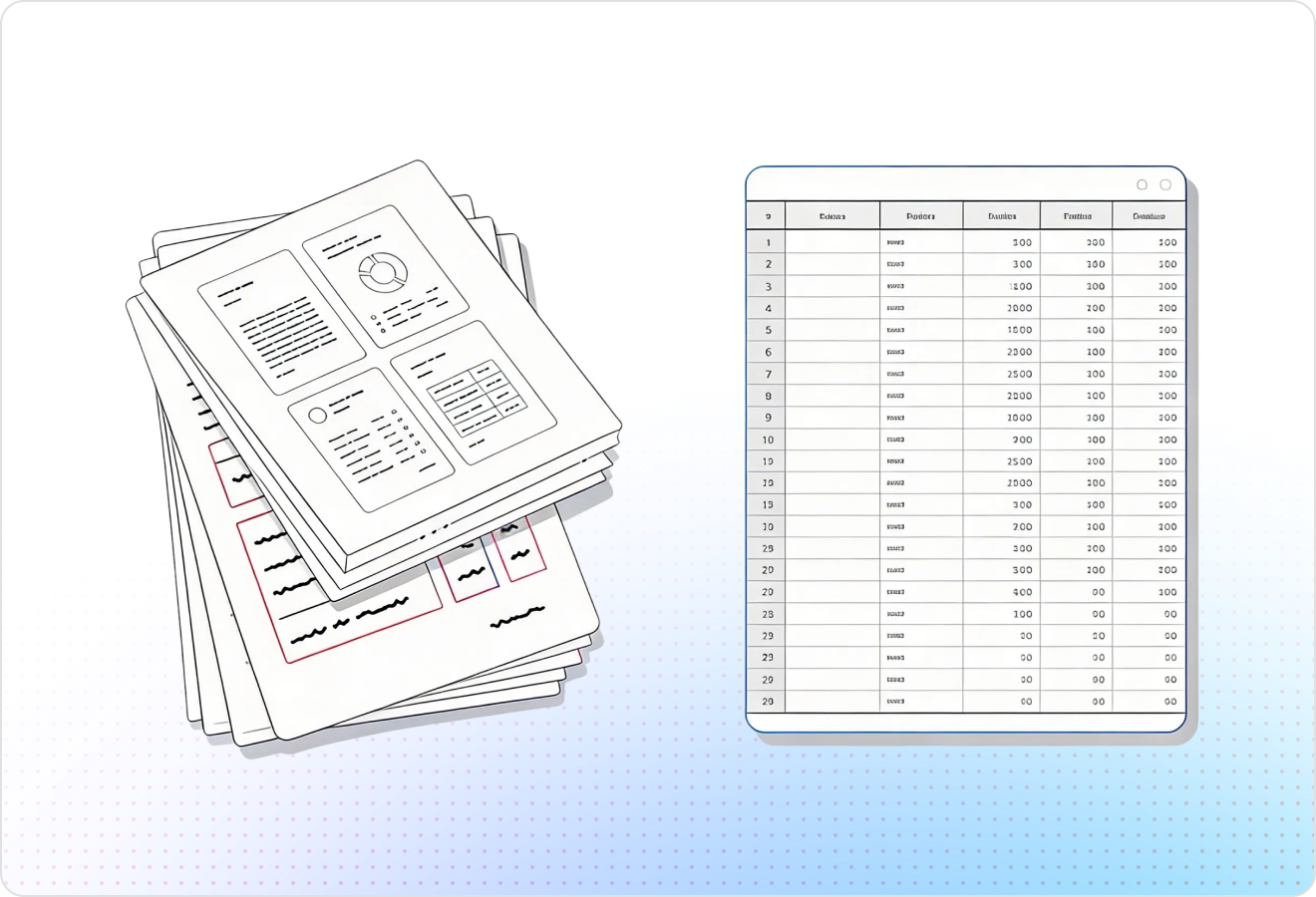
LlamaParse automatically routes pages to the right processing tier, using heavier vision models only when a page is actually complex. This keeps throughput high and per-document costs predictable when you’re processing massive, mixed-quality batches.
02
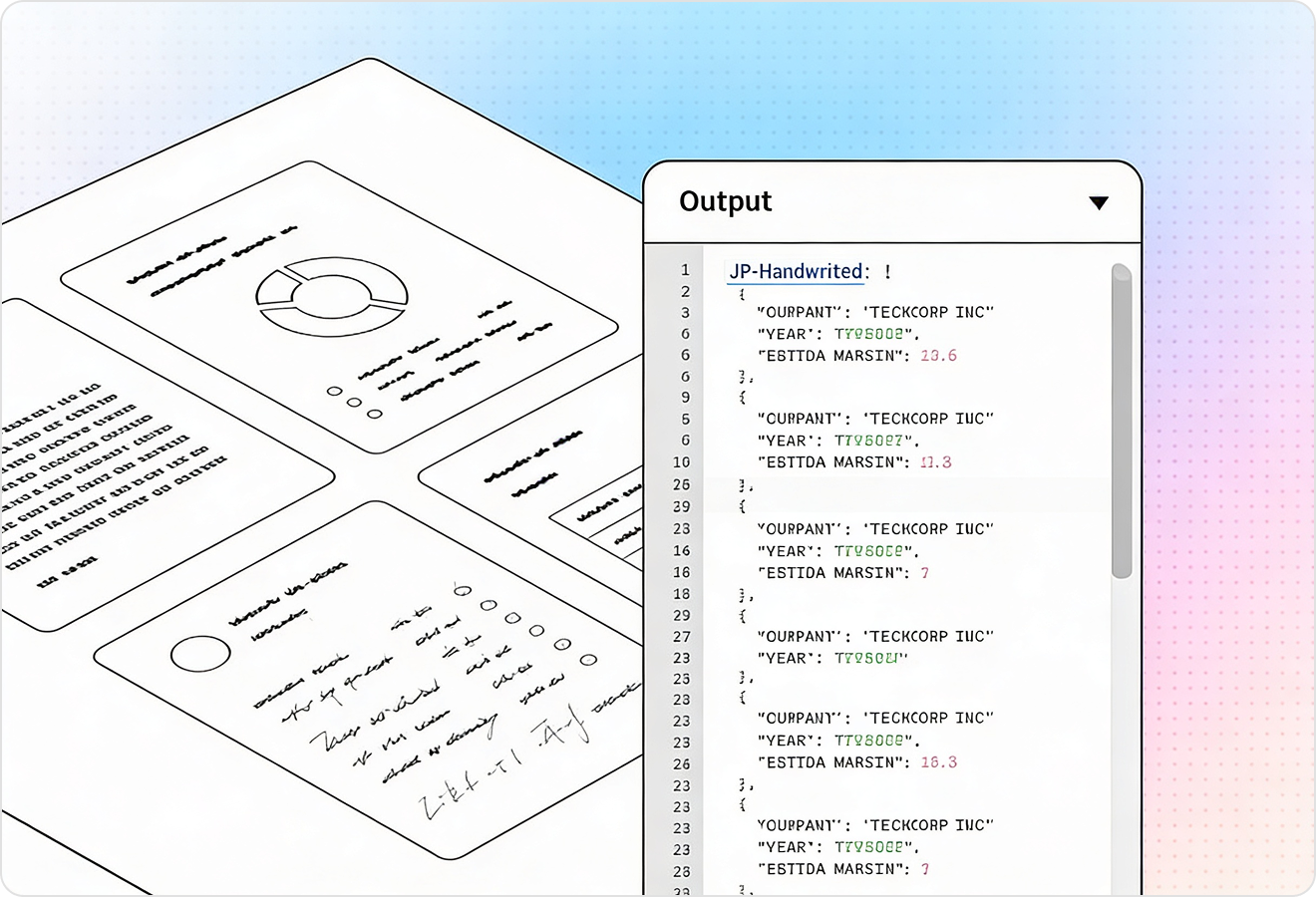
LlamaParse uses layout-aware computer vision to preserve reading order across multi-column pages, headers/footers, and nested tables. At high volume, that means fewer broken outputs and less downstream cleanup work clogging your pipeline.
03
LlamaParse runs self-checks and correction loops to catch common extraction errors and formatting inconsistencies before results are returned. This reduces exception handling and manual review, which is what usually makes “high volume” fall apart in production.
04
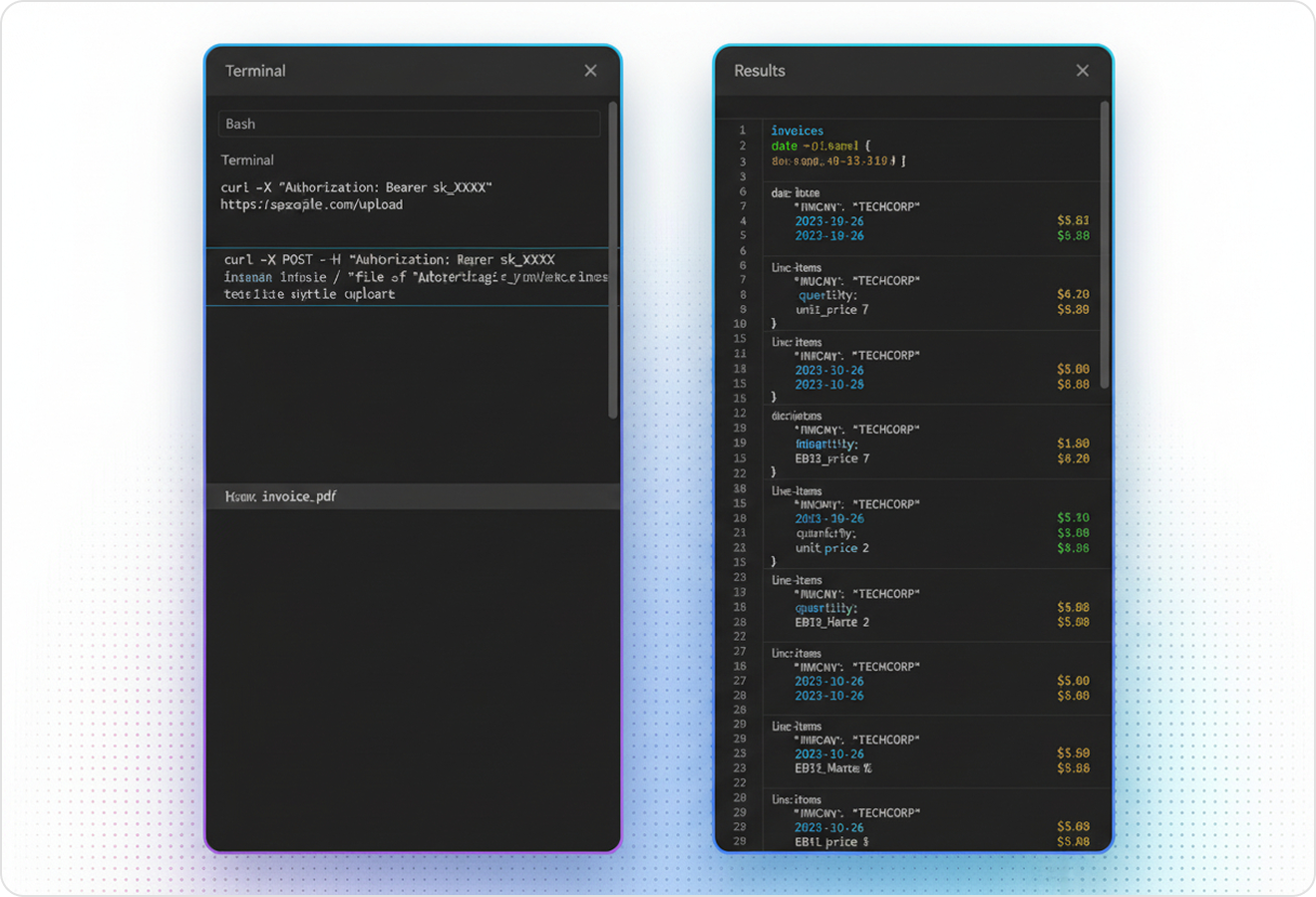
LlamaParse can emit clean JSON alongside granular metadata like page numbers, element types, and coordinates for traceability. When you’re processing at scale, this makes it easy to automate QA, route failures, and reliably load results into databases and downstream systems.
Technical OCR documentation
Explore our developer guides to easily connect your document pipelines to LlamaParse.
Explore the documentation
Our AI catches the typos that tired eyes miss.

Export to Excel, JSON, XML, or directly via API.

SOC2 Type II compliant with end-to-end encryption.

Train the tool on your specific forms in minutes, not days.

Average processing time of <3 seconds per page.
LlamaParse’s support of a wide variety of filetypes and its accuracy of parsing made it the best tool we tested in our evaluations. The LlamaIndex team was very responsive and we were off to the races within a day.
Common FAQs
01
Tier-Based Auto Routing analyzes each page and sends only the truly complex ones to heavier vision models. That means straightforward pages process fast and cheaply, while tough pages still get the accuracy they need. You get consistent throughput and more predictable spend as volume scales.
02
Layout-Aware Table Extraction preserves reading order across multi-column layouts and common page artifacts like headers and footers. It also handles nested and irregular tables more reliably, reducing broken outputs. Less cleanup downstream keeps your pipeline moving even during peak loads.
03
Validation Correction Loops run automated self-checks and correction passes before results are returned. This catches common formatting inconsistencies and extraction mistakes early, so fewer documents end up in exception handling. The result is a steadier, more reliable high-volume workflow.
04
Do you provide structured output we can load directly into our database and automation workflows?
Yes—LlamaParse can emit clean, structured JSON designed for programmatic consumption. You also get granular metadata (like page numbers, element types, and coordinates) to support traceability and robust automation. This makes it easier to integrate, monitor, and scale without brittle post-processing.
05
How can we audit results and quickly pinpoint where a specific field came from in the original document?
Each extracted element can include metadata such as page references and coordinates, so you can trace outputs back to the source with confidence. This enables fast QA, targeted reprocessing, and clearer compliance workflows. Teams can resolve disputes or anomalies without re-reading entire documents.
06
What happens when a document fails or a page is too ambiguous—can we route and recover automatically?
With structured JSON and metadata, you can automatically detect failures, route them to retries or human review, and keep the rest of the batch flowing. The combination of auto routing and validation loops reduces failure rates and makes exceptions easier to manage. You maintain throughput without losing visibility or control.