Nov 14, 2025
Document AI: The Next Evolution of Intelligent Document ProcessingPersona
Industry
Use cases
Licensing Agreement OCR
[ Licensing Agreement OCR ]

Use LlamaParse to turn messy contracts into structured fields you can review with confidence.
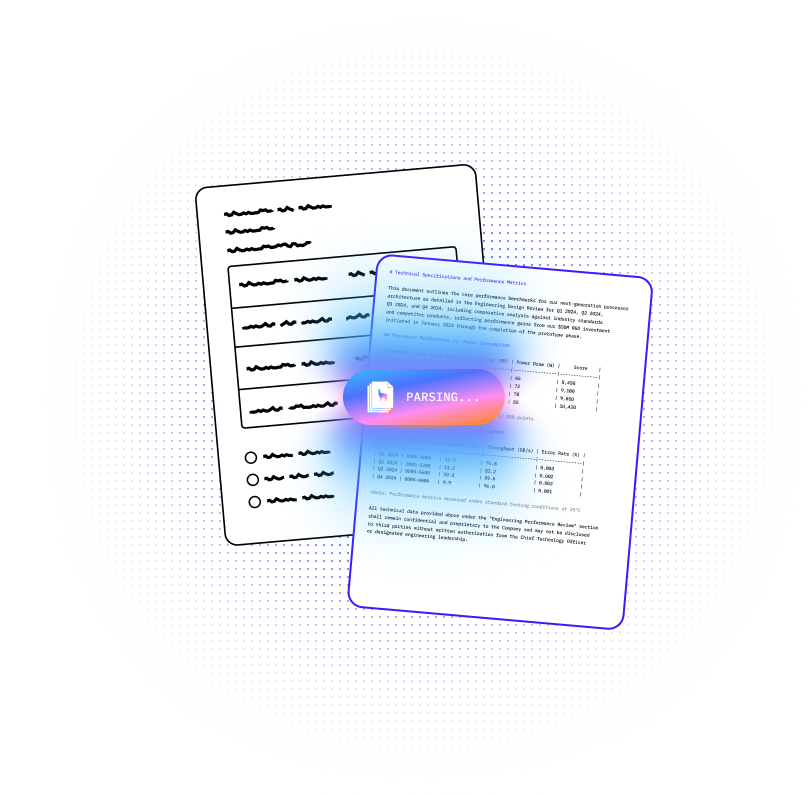
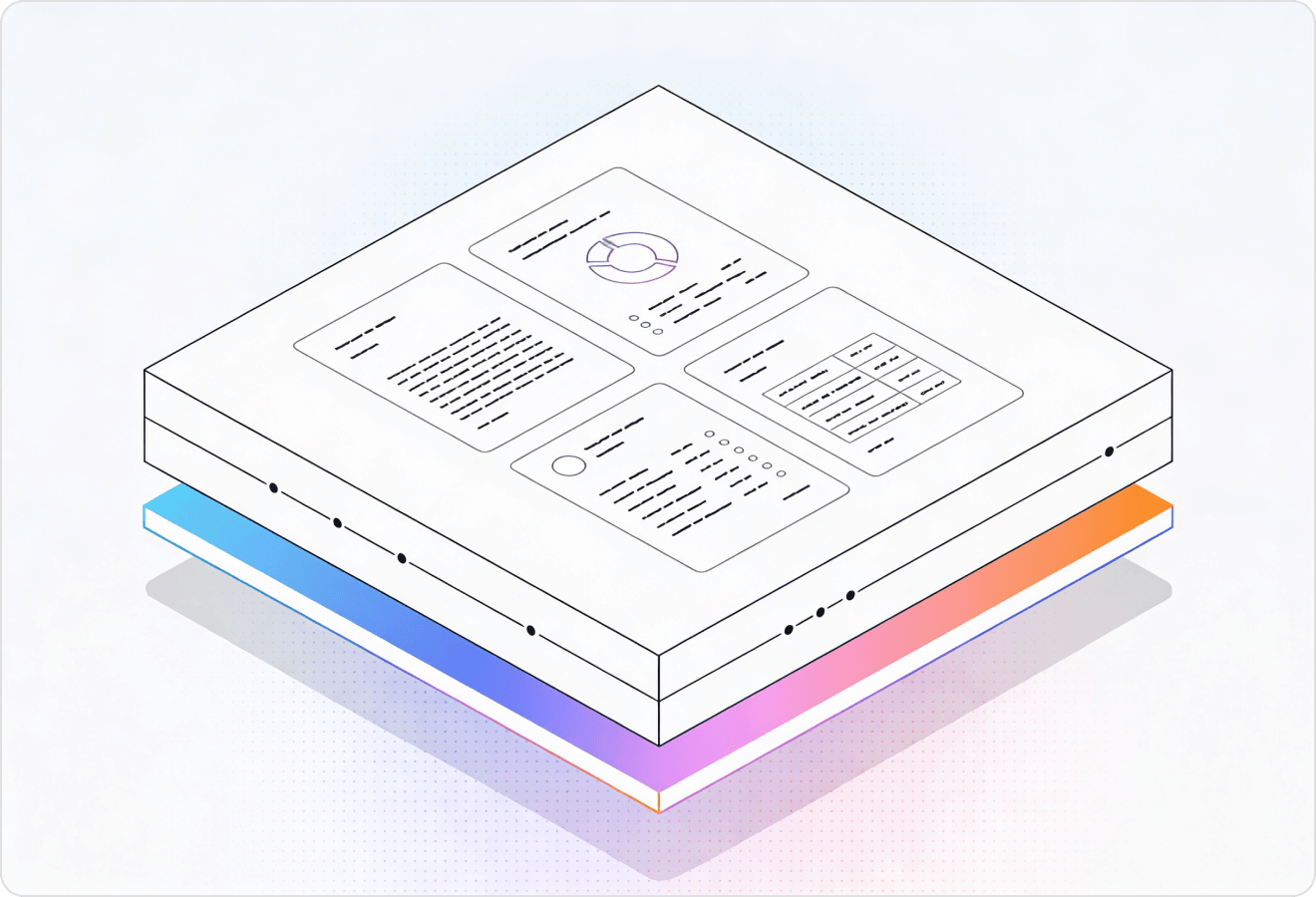
LlamaParse turns messy licensing agreements into clean, structured fields you can review fast, including parties, term, territory, grant, royalties, and exceptions. It uses layout-aware, agentic document parsing to validate extractions, attach citations and confidence, and cut manual cleanup when templates change.
Best-in-Class Accuracy

Convert inbound licensing agreements from PDFs and email attachments into clean JSON fields (term, territory, exclusivity, sublicensing, termination) so your team can search, compare, and route approvals without building a brittle extraction pipeline. LlamaParse handles messy scans and non-standard layouts with layout-aware parsing and auto-correction loops, so you can move faster without legal ops headcount.

Extract licensing terms from collaboration, IP, and regional distribution agreements into a structured repository for diligence, royalty reporting, and compliance reviews—down to table-heavy milestone schedules and complex exhibits. LlamaParse preserves reading order and tables, producing traceable outputs with page-level metadata so legal and BD teams can verify obligations quickly.

Automatically capture rights windows, platforms, territories, talent approvals, and holdbacks from licensing contracts—even when they’re buried in riders and multi-column schedules—so programming and sales teams can avoid rights conflicts. LlamaParse turns complex layouts into Markdown/JSON your systems can act on, enabling near-real-time rights availability checks from the source documents.

Parse licensing clauses embedded in supplier agreements (use restrictions, audit rights, IP ownership, indemnities) and normalize them into contract records that procurement and IT can enforce across plants and vendors. With natural-language parsing instructions and tier-based processing, LlamaParse reliably extracts the exact fields you care about at scale while keeping per-document costs predictable.
The Solution
01
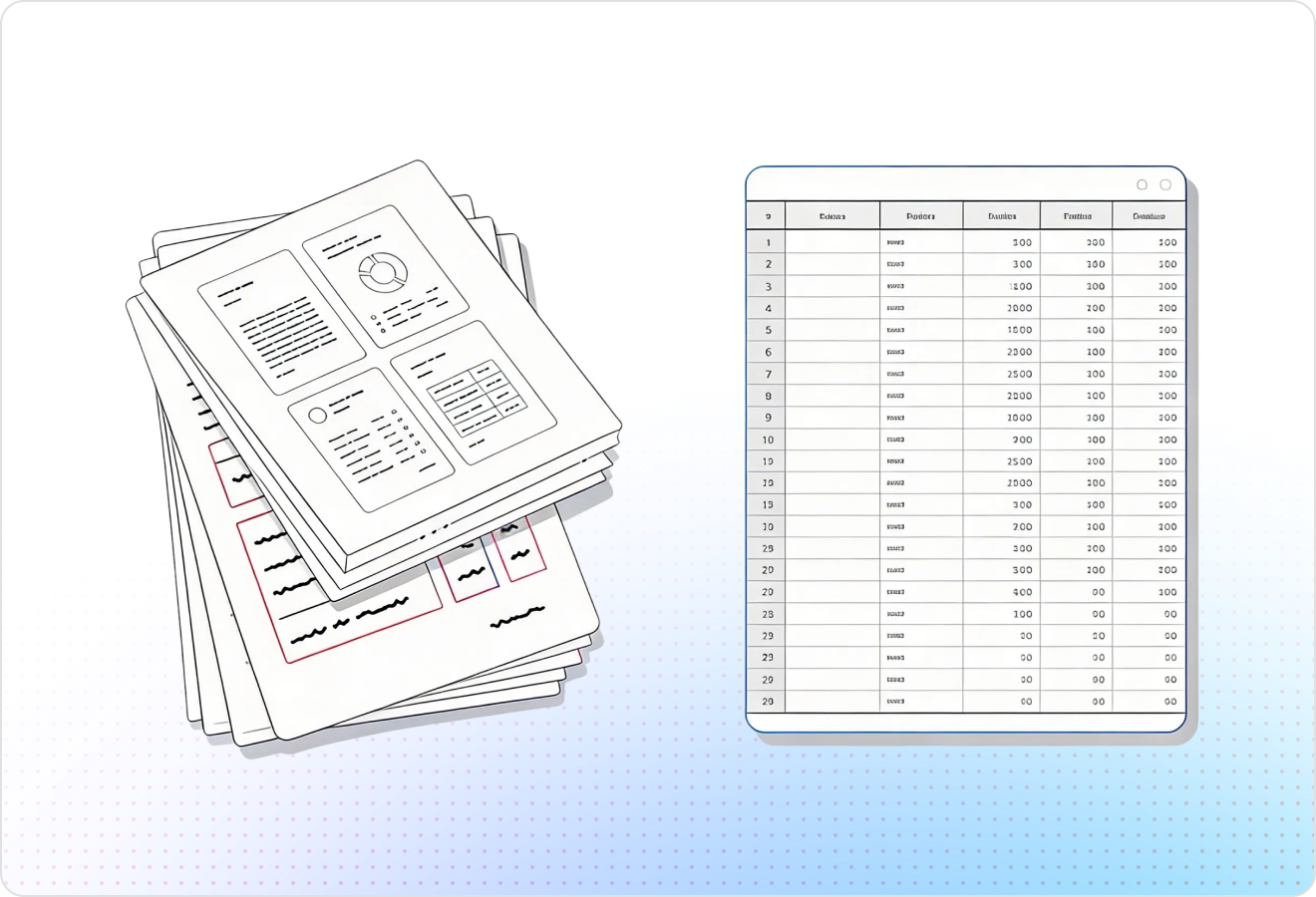
LlamaParse preserves reading order across multi-column pages, headers/footers, and dense legal formatting so licensing clauses don’t get scrambled. This makes it easier to reliably extract critical sections like grant of rights, restrictions, term, and termination from real-world agreements.
02
LlamaParse accurately reconstructs tables and nested structures into clean Markdown or structured outputs, including pricing schedules, product SKUs, and usage caps commonly found in licensing exhibits. You can then ingest these fields without brittle post-processing and keep obligations tied to the right rows and columns.
03
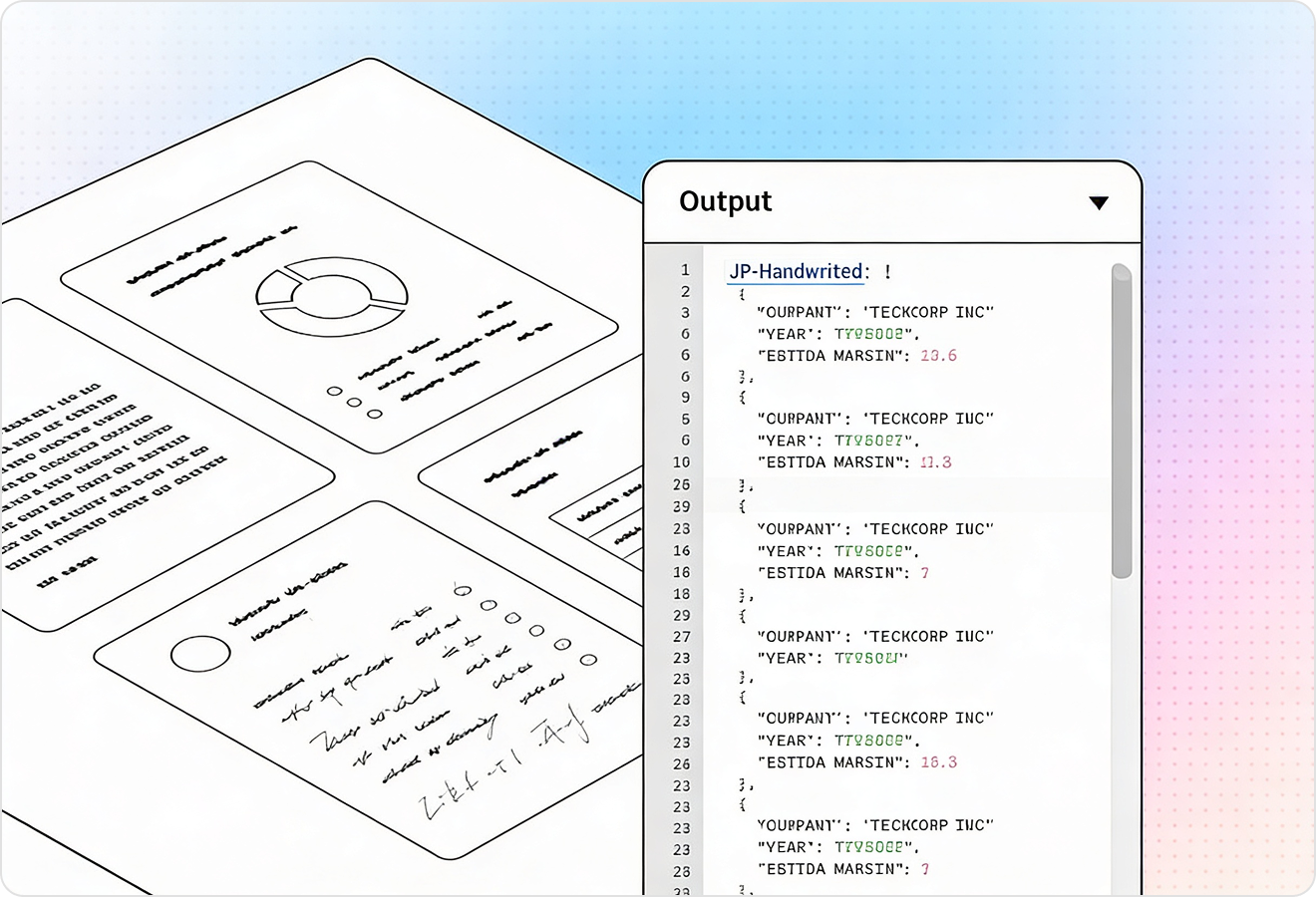
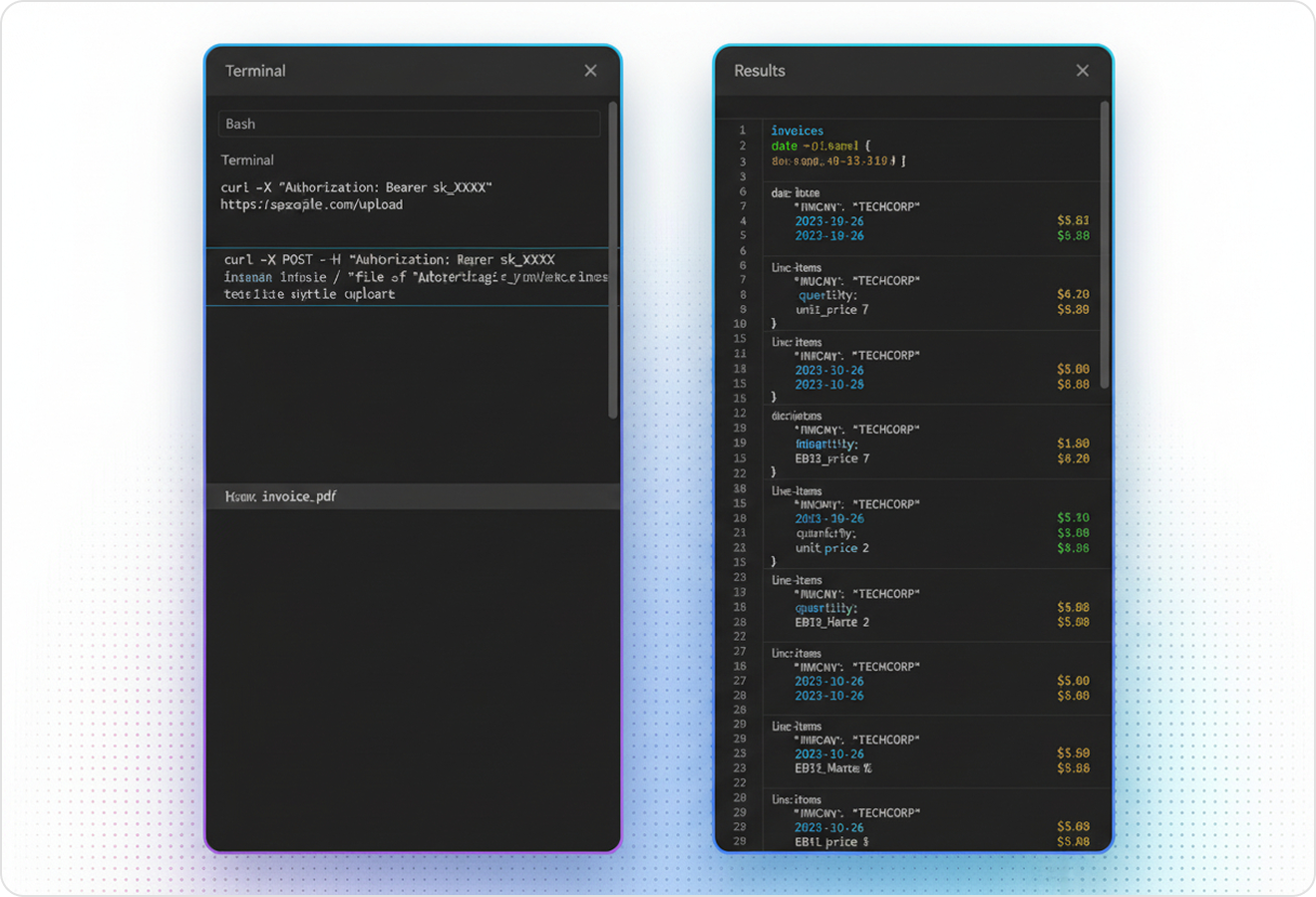
LlamaParse can return structured JSON enriched with page-level and element-level metadata, including coordinates and document structure. For licensing agreement reviews, that means you can attach extracted terms to citations and confidence signals for fast human verification and audit trails.
04
LlamaParse runs validation loops to catch common extraction errors and correct inconsistencies before results are returned. This reduces downstream risk when you’re populating systems of record with licensing terms like governing law, indemnity, or limitation of liability.
Technical OCR documentation
Explore our developer guides to easily connect your document pipelines to LlamaParse.
Explore the documentation
Our AI catches the typos that tired eyes miss.

Export to Excel, JSON, XML, or directly via API.

SOC2 Type II compliant with end-to-end encryption.

Train the tool on your specific forms in minutes, not days.

Average processing time of <3 seconds per page.
LlamaParse’s support of a wide variety of filetypes and its accuracy of parsing made it the best tool we tested in our evaluations. The LlamaIndex team was very responsive and we were off to the races within a day.
Common FAQs
01
Yes—Layout-Aware Clause Capture preserves reading order across multi-column layouts, headers/footers, and dense legal formatting so clauses don’t get mixed up. That means key sections like grant of rights, restrictions, term, and termination are extracted in the right sequence for reliable review and downstream use.
02
LlamaParse reconstructs tables and nested exhibit structures into clean Markdown or structured outputs, keeping rows and columns aligned. This helps you ingest pricing tiers, product lists, and caps without brittle post-processing and reduces the risk of mis-assigning obligations to the wrong line item.
03
Yes—JSON Mode returns structured fields along with page-level and element-level metadata. You can map extracted terms directly into your CLM, CRM, or data warehouse and keep the structure consistent across varied agreement templates.
04
How do I verify where a specific extracted term came from in the original document?
Each extracted field can include traceability metadata such as page references, coordinates, and document structure. This makes it easy to cite the source for a term like governing law or indemnity, accelerating human QA and strengthening audit trails.
05
What happens when the OCR output has mistakes or inconsistencies in critical legal terms?
Validation and Auto-Correction runs checks to catch common extraction errors and fix inconsistencies before results are returned. That reduces downstream risk when you’re populating systems of record with high-stakes fields like limitation of liability, indemnity, or termination conditions.
06
Is this suitable for high-volume licensing agreement intake without creating manual rework?
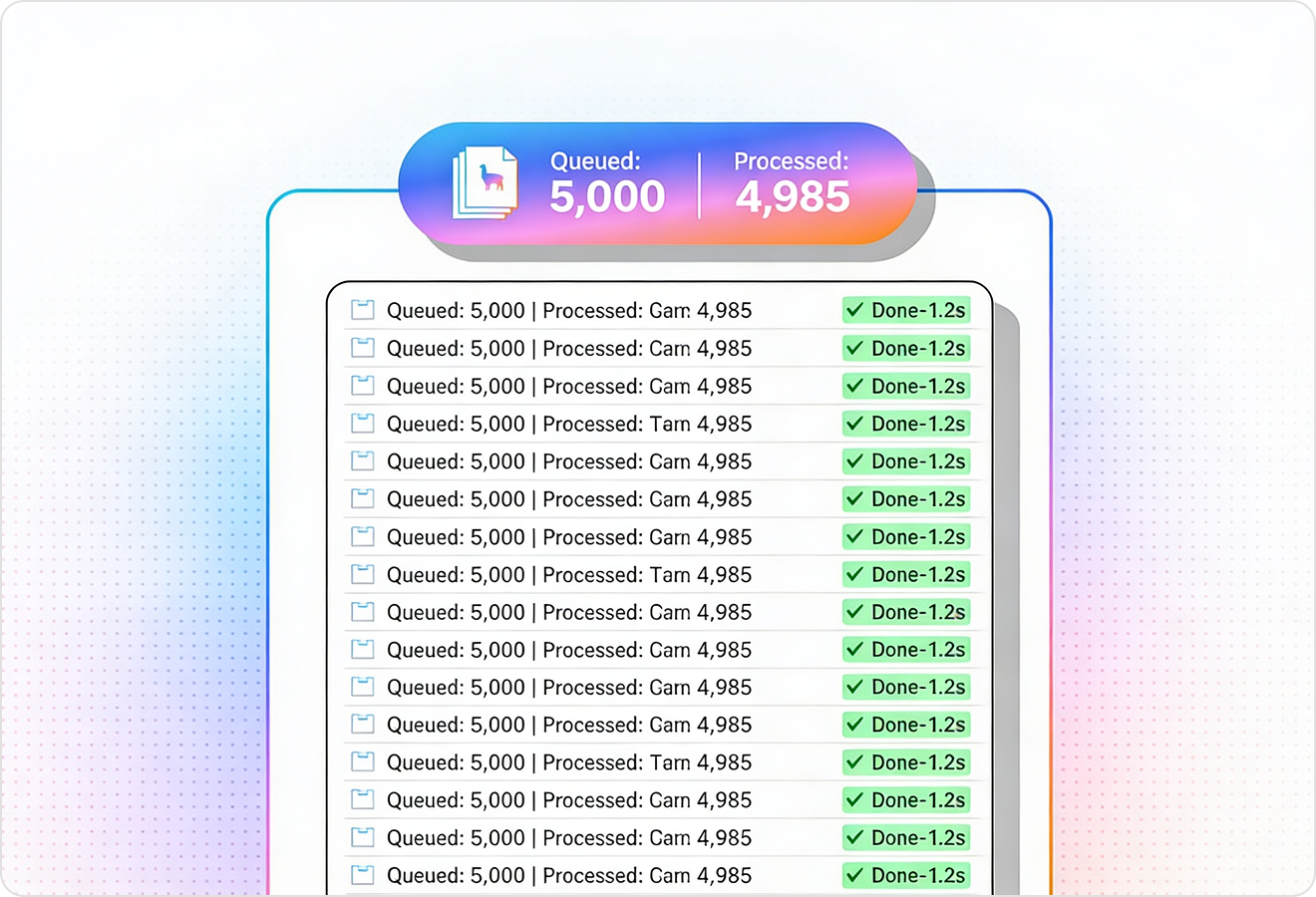
It’s designed to reduce manual cleanup by preserving layout, accurately capturing tables, and returning validated structured outputs. With traceable citations and cleaner extractions, reviewers spend less time hunting for source text and more time approving decisions—making it easier to scale ingestion confidently.