Nov 14, 2025
Document AI: The Next Evolution of Intelligent Document ProcessingPersona
Industry
Use cases
Document Splitting API
[ Document Splitting API ]

Use LlamaParse to automatically detect sections and export structured Markdown or JSON your agents can trust.
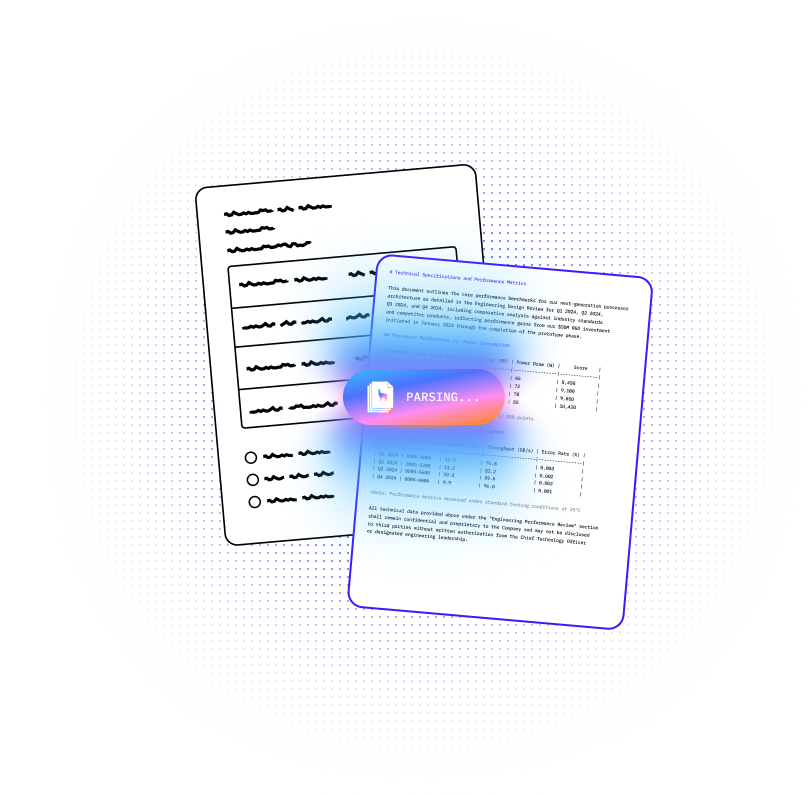
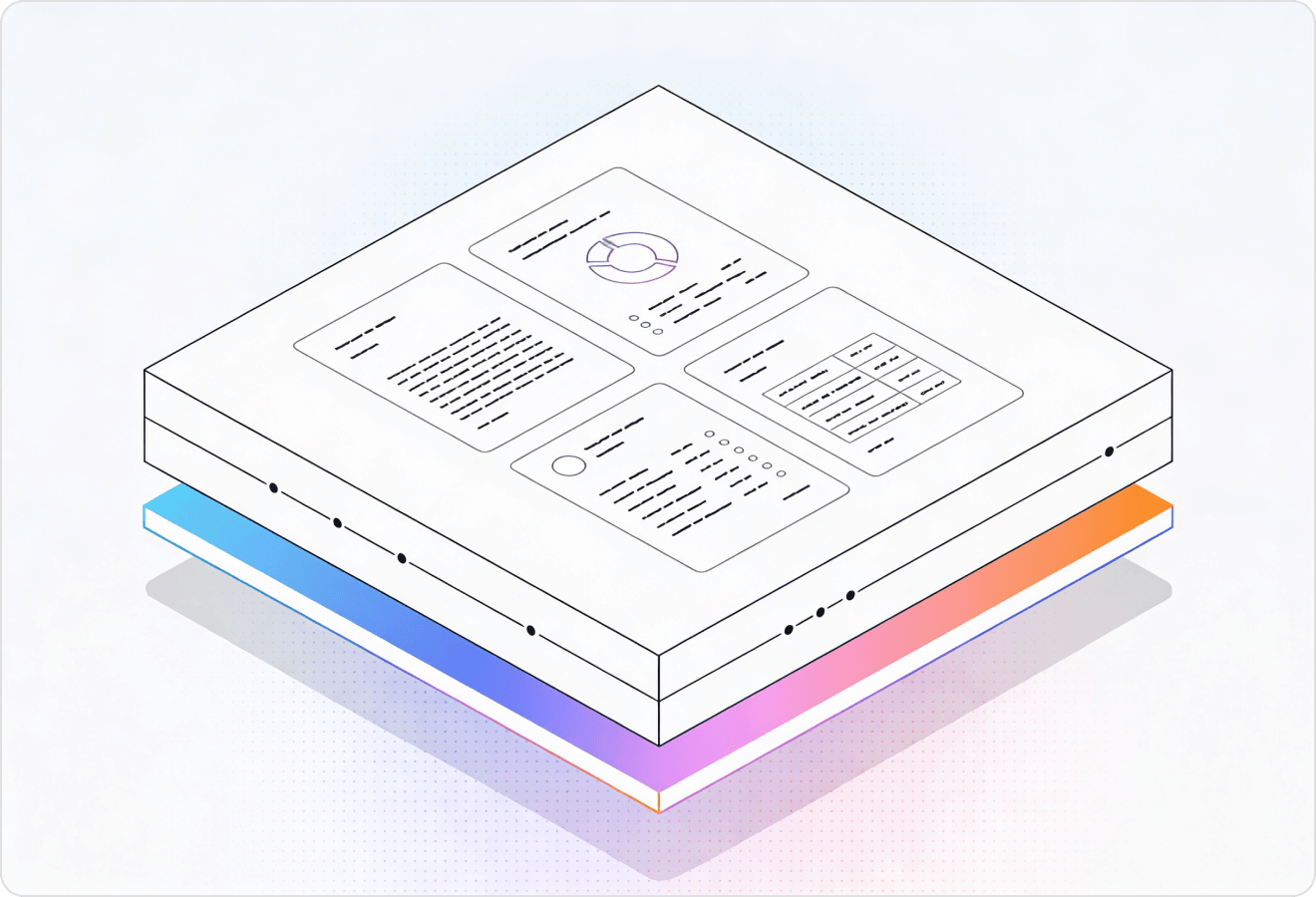

LlamaParse splits messy PDFs and scans into structured, AI-ready sections by understanding layout, headings, tables, and embedded visuals. You get clean Markdown or JSON with verifiable metadata, so downstream extraction and agents run reliably without brittle rules or retraining.
Best-in-Class Accuracy

Turn investor decks, customer contracts, and support PDFs into clean Markdown/JSON so your product can ship document search and workflows without a brittle parsing pipeline. LlamaParse preserves reading order and tables, so your AI features don’t break when your users upload weird scans or multi-column docs.

Split and structure loan packets, pay stubs, and bank statements into reliably separated sections and tables for faster underwriting and fewer manual exceptions. LlamaParse’s layout-aware extraction keeps line items and multi-page forms intact, enabling straight-through processing instead of rekeying and reconciliation.

Automatically segment pleadings, exhibits, and contract bundles into citation-ready chunks with page-level traceability for review and knowledge bases. LlamaParse outputs structured Markdown/JSON with granular metadata, so teams can verify what came from where and reduce missed clauses in high-volume matters.

Split SOPs, inspection reports, and supplier spec sheets into structured sections and extracted tables that downstream systems can validate and action. LlamaParse handles complex tables, diagrams, and mixed formatting so QC teams can standardize documentation and accelerate audits without manual cleanup.
The Solution
01
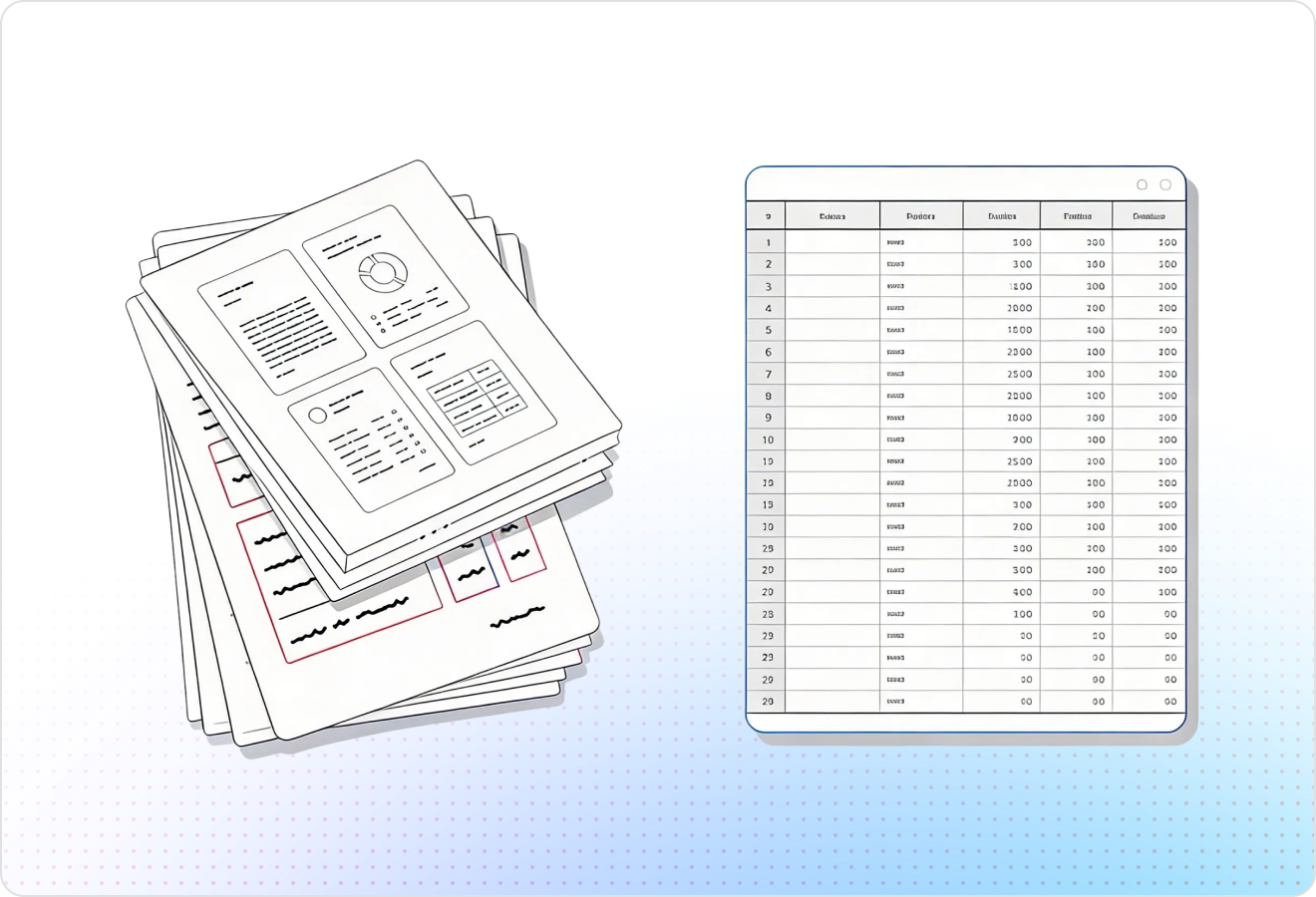
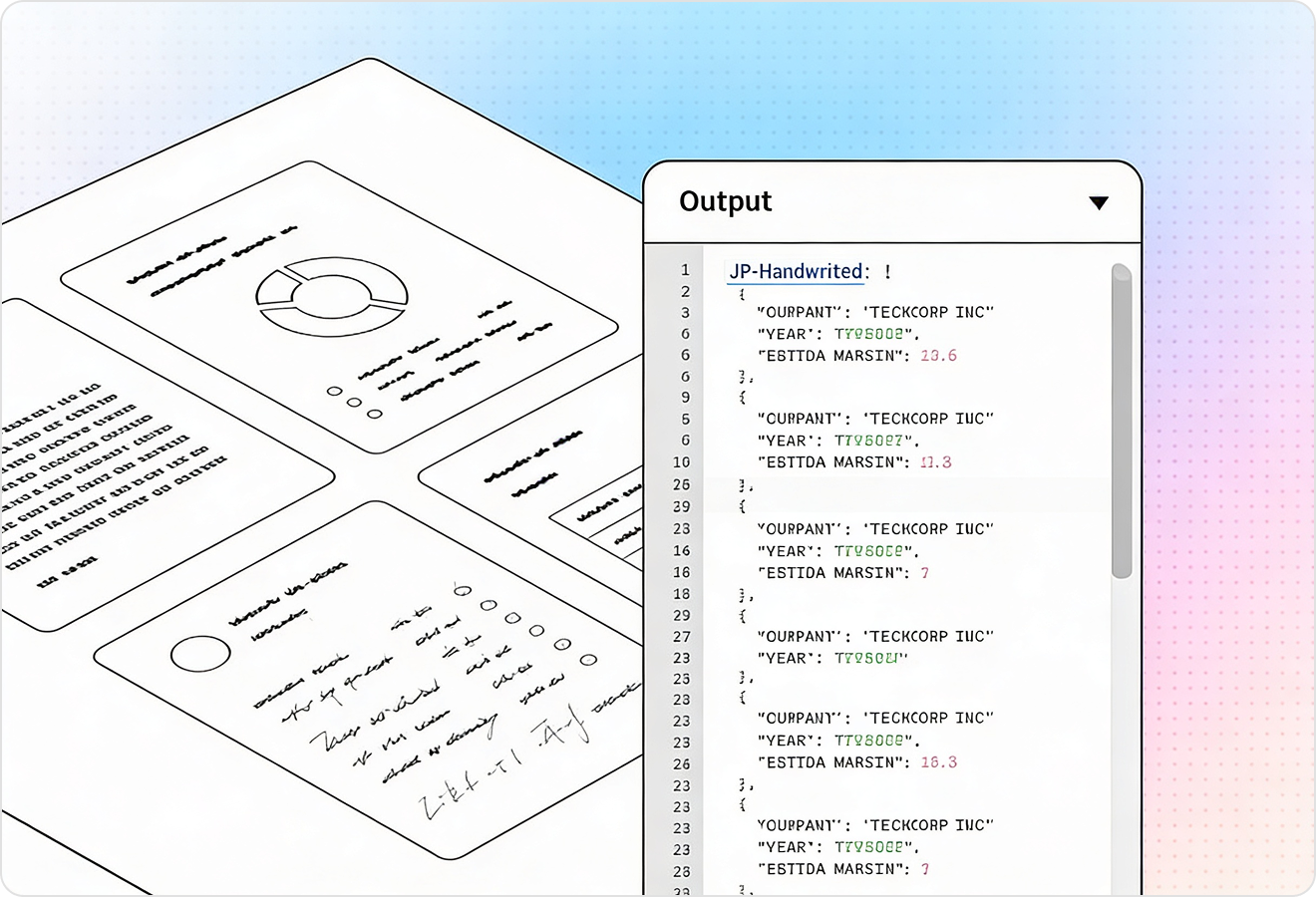
LlamaParse uses layout-aware vision to detect headings, paragraphs, columns, and page regions so content stays in the right reading order. That gives your Document Splitting API reliable, semantic breakpoints for splitting by section instead of arbitrary character counts.
02
Complex tables and multi-column blocks are extracted as coherent units rather than fragmented lines. Your splitting logic can keep tables intact as single chunks (or split by rows/headers) so downstream consumers don’t lose structure.
03
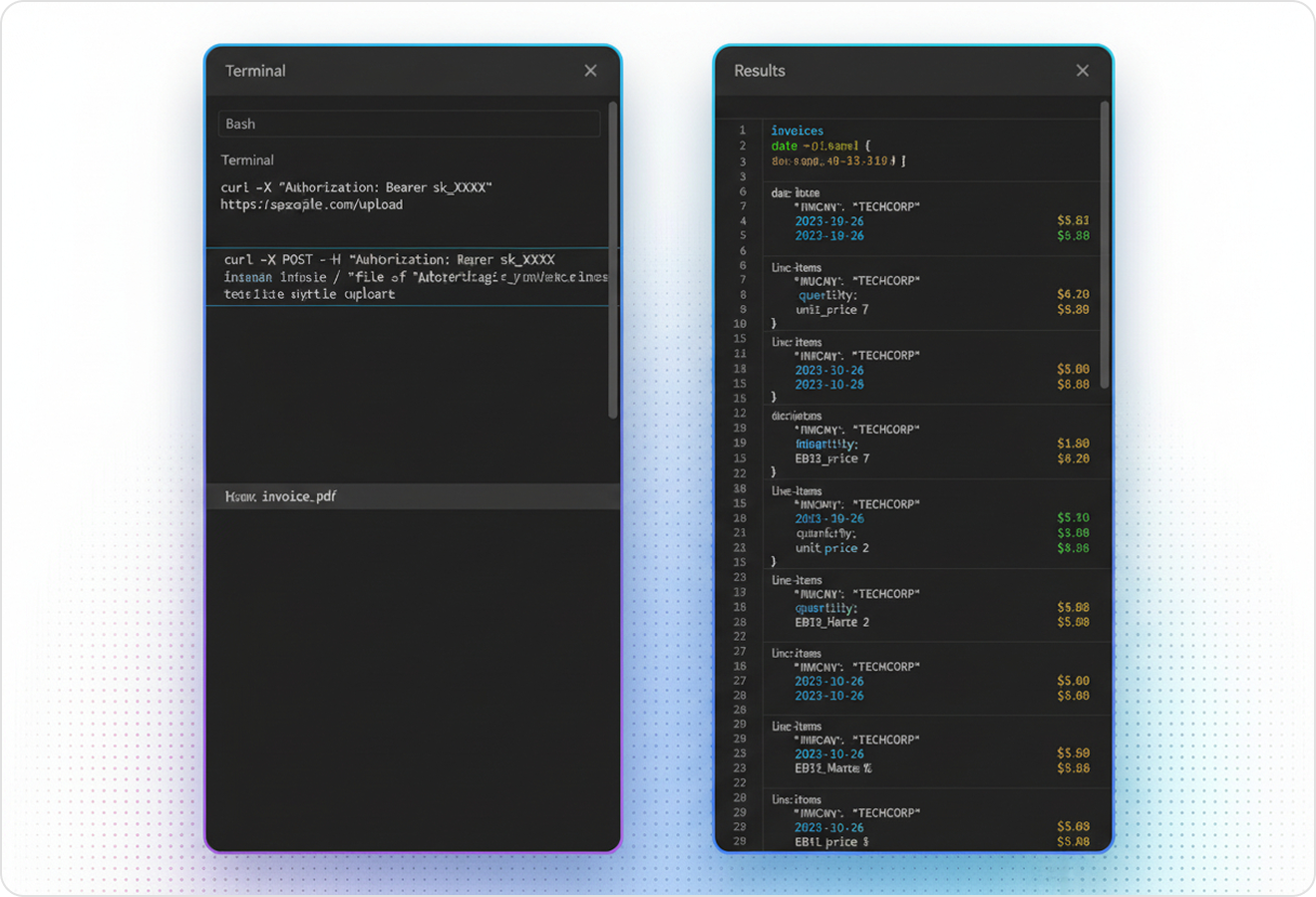
LlamaParse can return structured JSON with page numbers, element types, and spatial coordinates for each extracted node. A Document Splitting API can use this metadata to split precisely (by page region, header level, or node type) and still trace every chunk back to its source.
04
You can provide natural-language parsing instructions to control how content is segmented and emitted (e.g., “split by H2, keep footnotes with the preceding section”). This lets your API implement document-specific splitting policies without brittle regex or custom per-template code.
Technical OCR documentation
Explore our developer guides to easily connect your document pipelines to LlamaParse.
Explore the documentation
Our AI catches the typos that tired eyes miss.

Export to Excel, JSON, XML, or directly via API.

SOC2 Type II compliant with end-to-end encryption.

Train the tool on your specific forms in minutes, not days.

Average processing time of <3 seconds per page.
LlamaParse’s support of a wide variety of filetypes and its accuracy of parsing made it the best tool we tested in our evaluations. The LlamaIndex team was very responsive and we were off to the races within a day.
Common FAQs
01
It uses layout-aware detection to identify headings, paragraphs, columns, and page regions, then splits on reliable semantic boundaries (like sections) instead of arbitrary character counts. That keeps content in the correct reading order and produces chunks that make sense for search, RAG, and downstream processing.
02
No—table-safe chunking preserves complex tables and multi-column blocks as coherent units so you don’t lose structure. You can keep a table as a single chunk or split it by logical units like rows and headers, depending on your use case.
03
Yes—JSON mode includes page numbers, element types, and spatial coordinates for each extracted node. This makes it easy to audit results, highlight sources in your UI, and maintain clean citations for compliance or user trust.
04
Can we enforce document-specific rules like “split by H2” or “keep footnotes with the section”?
Yes—instruction-guided split rules let you define segmentation behavior in natural language without brittle regex or template-specific code. It’s a fast way to align chunking with your domain (legal, financial, technical docs) while keeping output consistent.
05
What happens when headings are inconsistent or the layout is noisy (scans, mixed formatting, odd spacing)?
Layout-aware vision helps infer structure from page geometry and visual hierarchy, not just text patterns. You can also add instructions to steer edge cases, making results more dependable across varied document styles.
06
How quickly can we integrate this into our pipeline, and what do we get back?
You call the API and receive structured chunks—optionally as JSON with coordinates and node metadata—ready for indexing, embeddings, or workflow automation. Because splits are semantic and traceable, most teams reduce custom post-processing and get to production faster.