Nov 14, 2025
Document AI: The Next Evolution of Intelligent Document ProcessingPersona
Industry
Use cases
Packing Slip OCR
[ Packing Slip OCR ]

Use LlamaParse to turn packing slips into clean, verified JSON fields your systems can trust.



LlamaParse turns messy packing slips into structured line-item JSON, capturing SKUs, quantities, descriptions, and UOM reliably across wildly different layouts. Agentic document parsing cross-checks tables and text with validation loops and confidence metadata, so your downstream matching and ERP updates stay clean.
Best-in-Class Accuracy

Use LlamaParse in LlamaCloud to turn inbound packing slips into structured JSON that auto-reconciles against POs, expected SKUs, and 3PL receipts without building brittle parsing scripts. Layout-aware table extraction prevents line-item scrambling, so inventory updates and customer shipment confirmations happen faster with fewer “where’s my order” tickets.

Parse packing slips from multiple suppliers and formats into normalized line items, lots, and quantities to speed receiving, backflush, and traceability workflows in ERP/MES systems. Agentic document parsing handles multi-page slips with dense tables and inconsistent layouts, reducing dock-to-stock time and minimizing shortages caused by mis-keyed counts.

Extract NDC/GTIN, batch/lot, and expiration details from packing slips and attach verifiable metadata (page citations and confidence) to support quality checks and downstream compliance reviews. Multimodal parsing preserves table structure and identifies exceptions early, reducing release holds and preventing errors that trigger recalls or chargebacks.

Convert vendor packing slips into clean, SKU-level receiving records that match ASNs and store allocations, even when documents include multi-column layouts, handwritten notations, or mixed packaging hierarchies. Natural-language parsing instructions let ops teams standardize extraction rules across vendors quickly, cutting invoice disputes and improving on-shelf availability.
The Solution
01
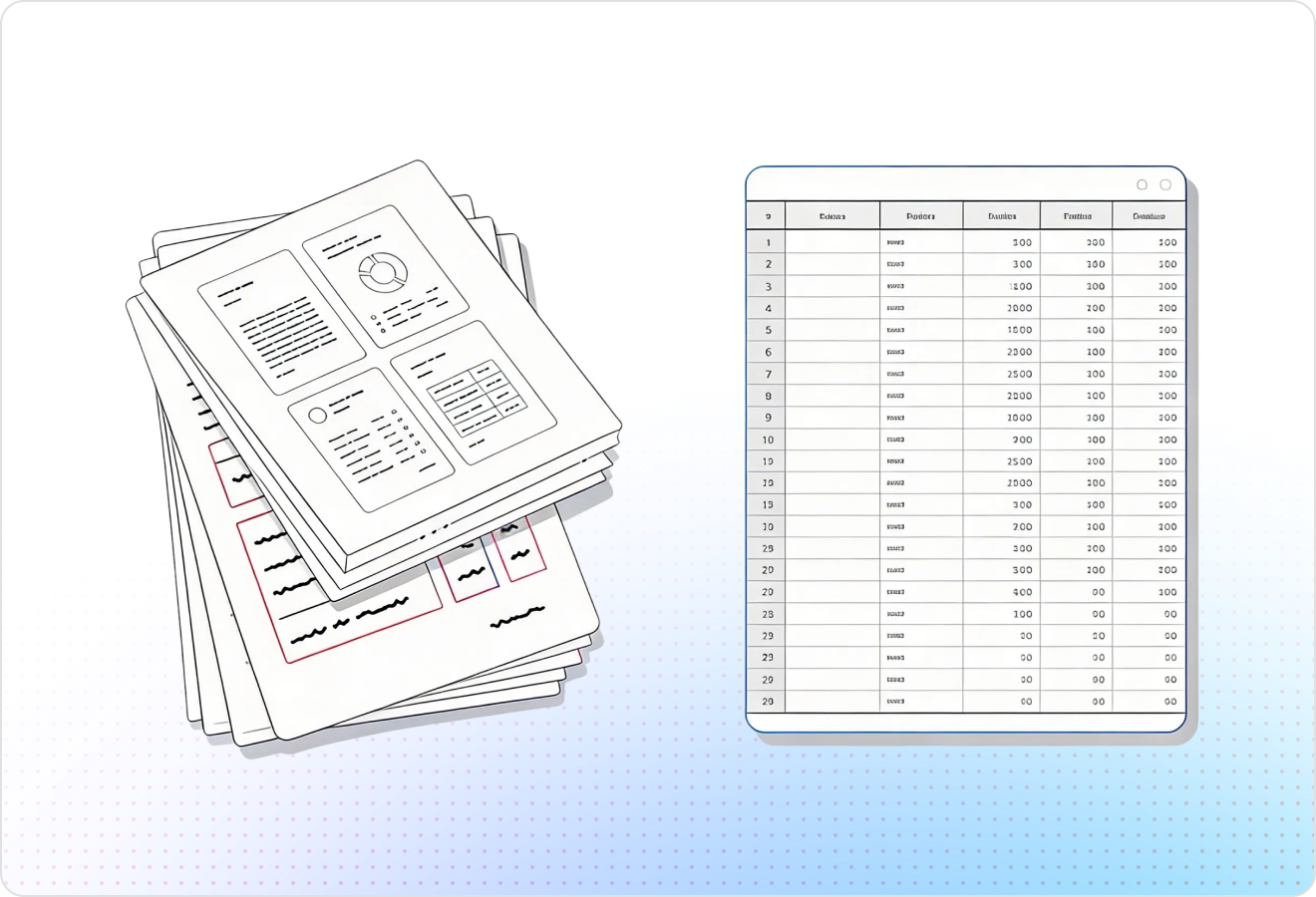
LlamaParse understands packing slip layouts so item descriptions, SKUs, quantities, and units stay aligned even in multi-column or tightly spaced tables. You get clean, consistent line-item extraction without writing brittle post-processing to “unscramble” rows.
02
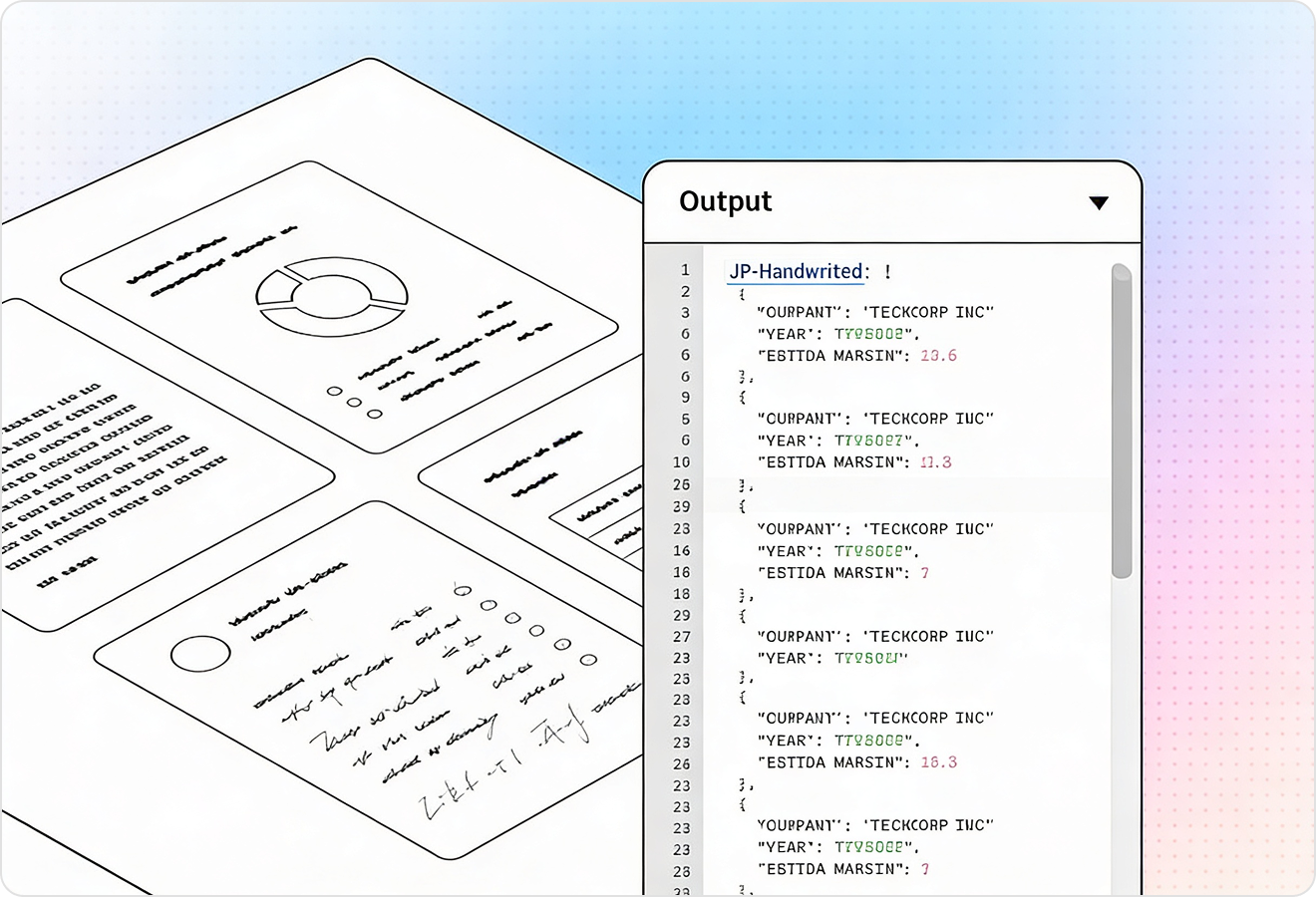
Export packing slip data as structured JSON that maps naturally to your receiving system: header fields, ship-to, carrier info, and nested line items. This makes it straightforward to validate required fields and push records into WMS/ERP APIs with minimal transformation.
03
Every extracted value can include metadata like page number and coordinates, so you can trace each PO number or quantity back to the exact spot on the slip. That audit trail is useful for exception handling, dispute resolution, and targeted human review when something looks off.
04
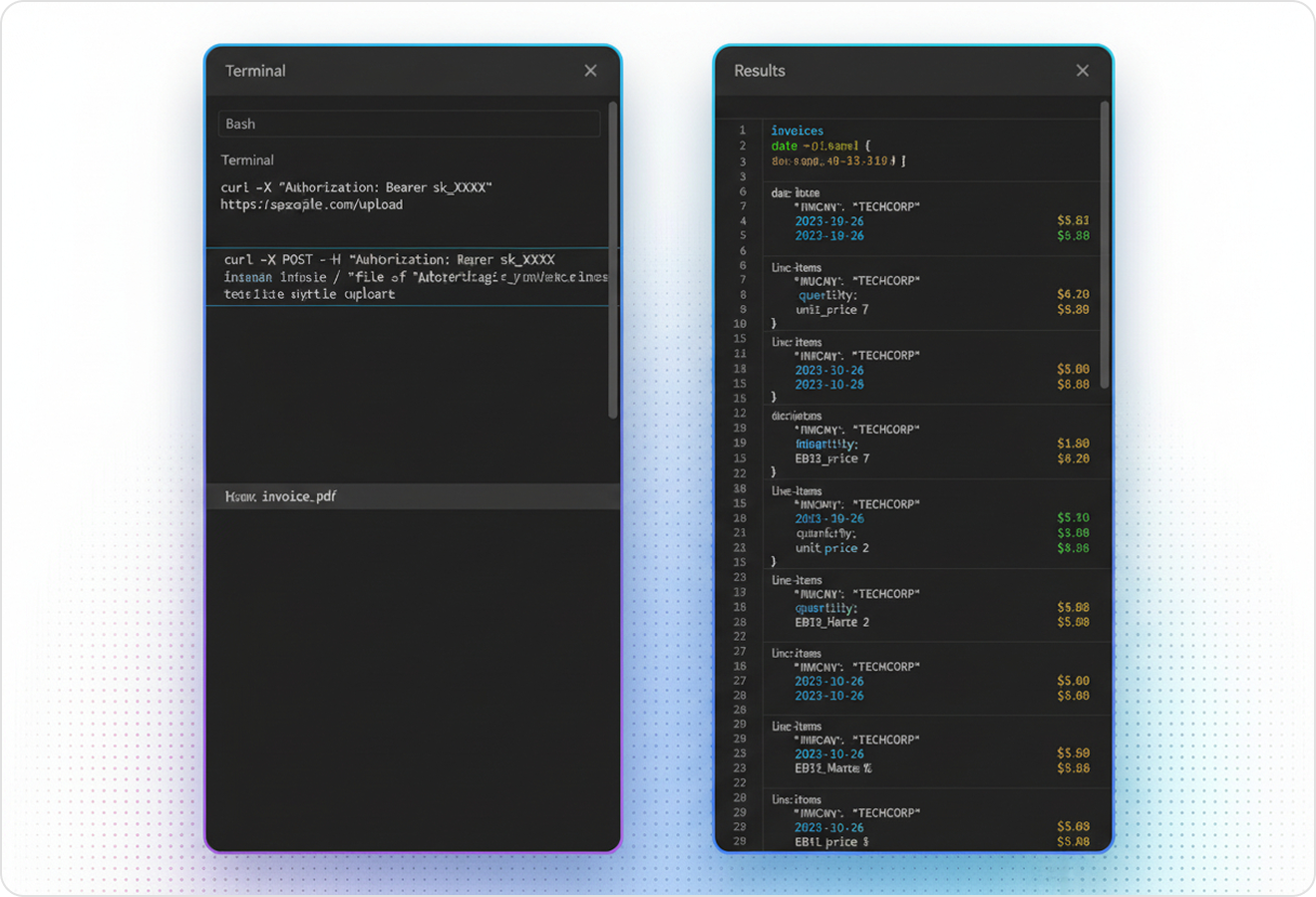
LlamaParse runs validation and self-correction steps to reduce common extraction errors from low-quality scans, stamps, or overlapping text. For packing slips, this improves straight-through processing by catching mismatched totals, missing quantities, and inconsistent identifiers before the data hits downstream systems.
Technical OCR documentation
Explore our developer guides to easily connect your document pipelines to LlamaParse.
Explore the documentation
Our AI catches the typos that tired eyes miss.

Export to Excel, JSON, XML, or directly via API.

SOC2 Type II compliant with end-to-end encryption.

Train the tool on your specific forms in minutes, not days.

Average processing time of <3 seconds per page.
LlamaParse’s support of a wide variety of filetypes and its accuracy of parsing made it the best tool we tested in our evaluations. The LlamaIndex team was very responsive and we were off to the races within a day.
Common FAQs
01
Our layout-aware extraction keeps descriptions, SKUs, quantities, and units aligned—even when tables are tightly spaced, multi-column, or slightly skewed. That means you get consistent line items without building fragile rules to reassemble rows. It’s designed to reduce manual cleanup and speed up receiving.
02
You receive structured JSON with header fields (like ship-to and carrier) plus nested line items that map cleanly to receiving workflows. This makes validation straightforward and minimizes transformation work before pushing data into WMS/ERP APIs. Most teams can integrate quickly because the structure is predictable and consistent.
03
Yes—each field can include traceability metadata such as page number and coordinates on the document. This lets your team verify a PO number, SKU, or quantity in seconds and speeds up exception handling. It also provides a clear audit trail for vendor disputes and internal controls.
04
How do you handle low-quality scans, stamps, or overlapping text that usually break OCR?
The system runs validation and auto-correction loops to catch common issues like missing quantities, inconsistent identifiers, or mismatched totals. This reduces extraction errors before data reaches downstream systems, improving straight-through processing. When something looks off, you can flag it early rather than fixing it after posting.
05
What happens when the packing slip format changes between suppliers or warehouses?
Because extraction is layout-aware, it adapts to different templates without you having to maintain vendor-specific parsing rules. It’s built to handle common variations in headers, tables, and line-item formatting across suppliers. That flexibility helps you scale OCR across new vendors with minimal setup.
06
How do we validate required fields before posting receipts to avoid bad data in our system?
Structured JSON makes it easy to enforce required fields (like PO number, ship-to, and line quantities) and run checks before creating receipts. Combined with validation loops, you can catch gaps and inconsistencies earlier in the workflow. This reduces rework and prevents downstream receiving and inventory errors.