Nov 14, 2025
Document AI: The Next Evolution of Intelligent Document ProcessingPersona
Industry
Use cases
CV OCR Resume Parsing
[ CV OCR Resume Parsing ]

Use LlamaParse to turn messy resumes into clean, verifiable JSON your ATS can trust.
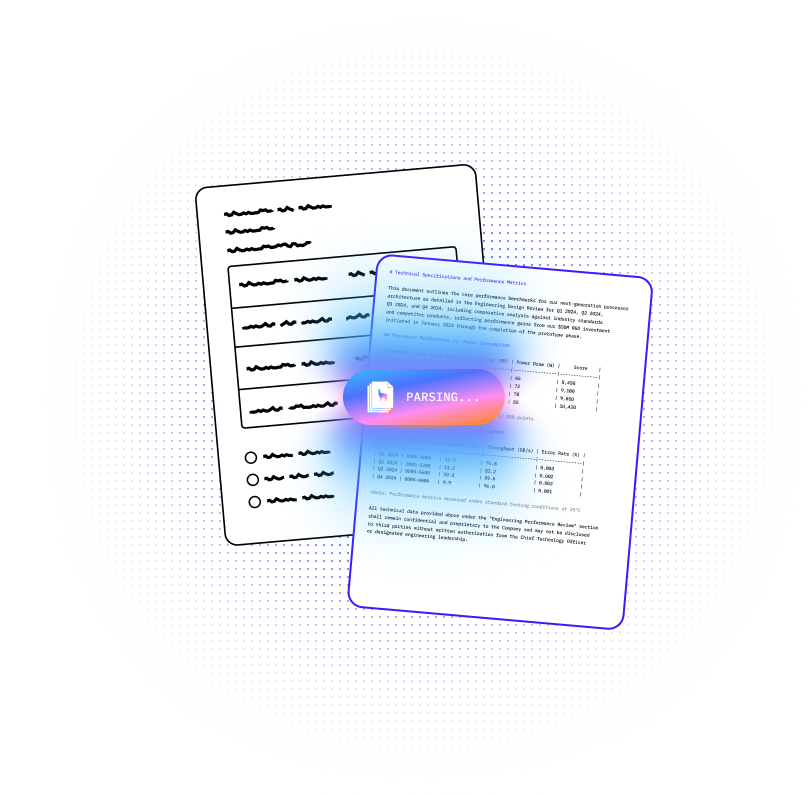
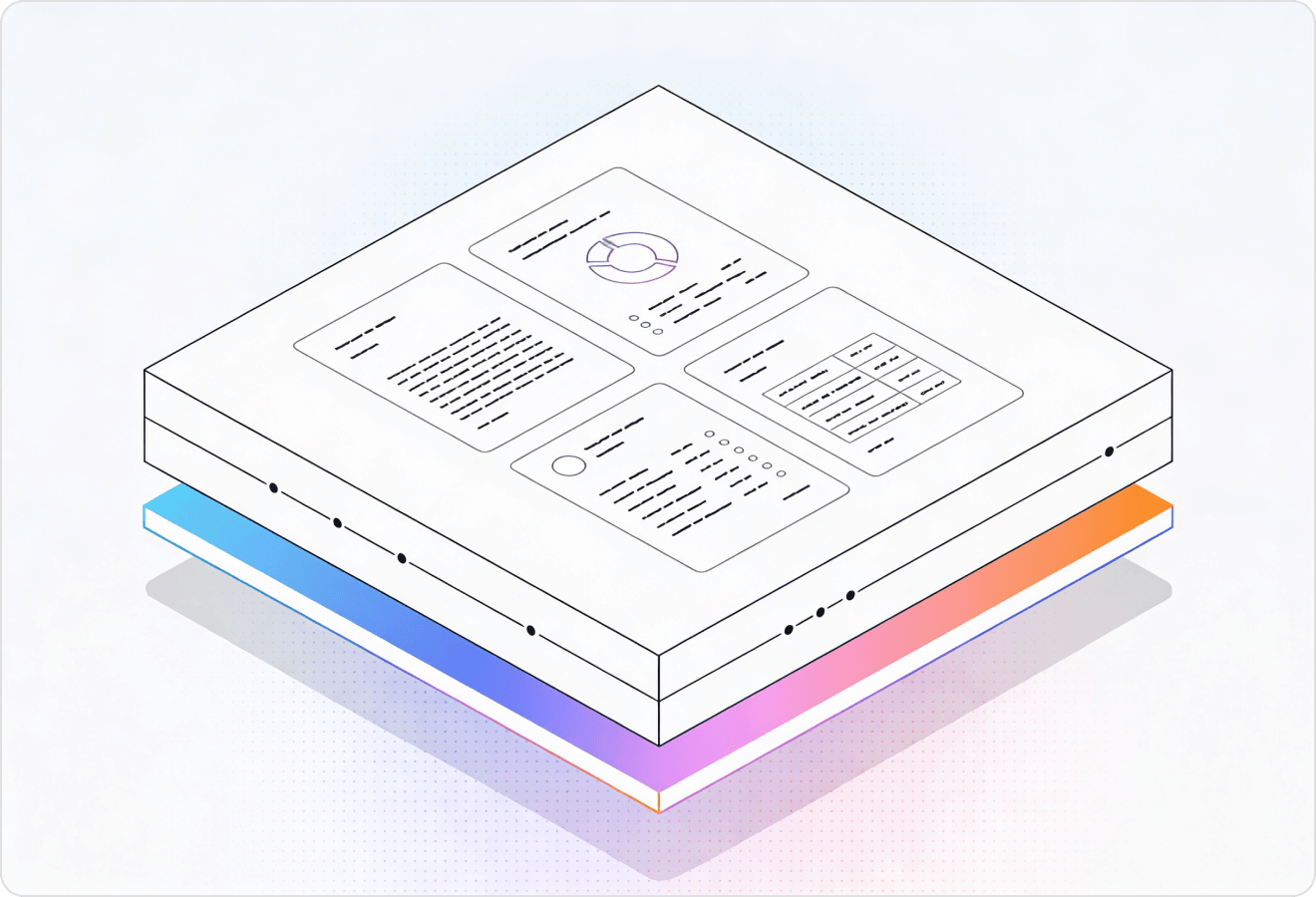

LlamaParse turns messy PDFs and scanned CVs into clean, structured fields by understanding layout, sections, and tables instead of guessing from raw text. Agentic parsing runs validation loops and returns JSON or Markdown with confidence metadata, so your ATS pipeline needs less cleanup and rework.
Best-in-Class Accuracy

Parse high-volume, messy resumes into clean JSON profiles with citations, so recruiters can search by skills, titles, certifications, and dates without manual re-keying. LlamaParse preserves layout and reading order across multi-column CVs, reducing screening errors and speeding up shortlist creation.

Launch resume ingestion fast without building brittle parsing rules: use natural-language parsing instructions to standardize fields like work history, projects, and tech stacks into your product schema. Auto mode routes simple resumes cheaply and upgrades only complex layouts, keeping unit economics predictable as usage spikes.

Automate intake from employee CVs and internal mobility profiles by extracting structured experience, skills, and role timelines for ATS/HRIS enrichment and workforce planning. Granular metadata and confidence signals support targeted human review on exceptions, improving data quality without slowing hiring cycles.

Normalize student resumes at scale into consistent, comparable profiles for career advising, job matching, and outcomes reporting across programs. Multimodal parsing captures certifications, portfolios, and structured project tables accurately, preventing lost details that weaken placement and reporting accuracy.
The Solution
01
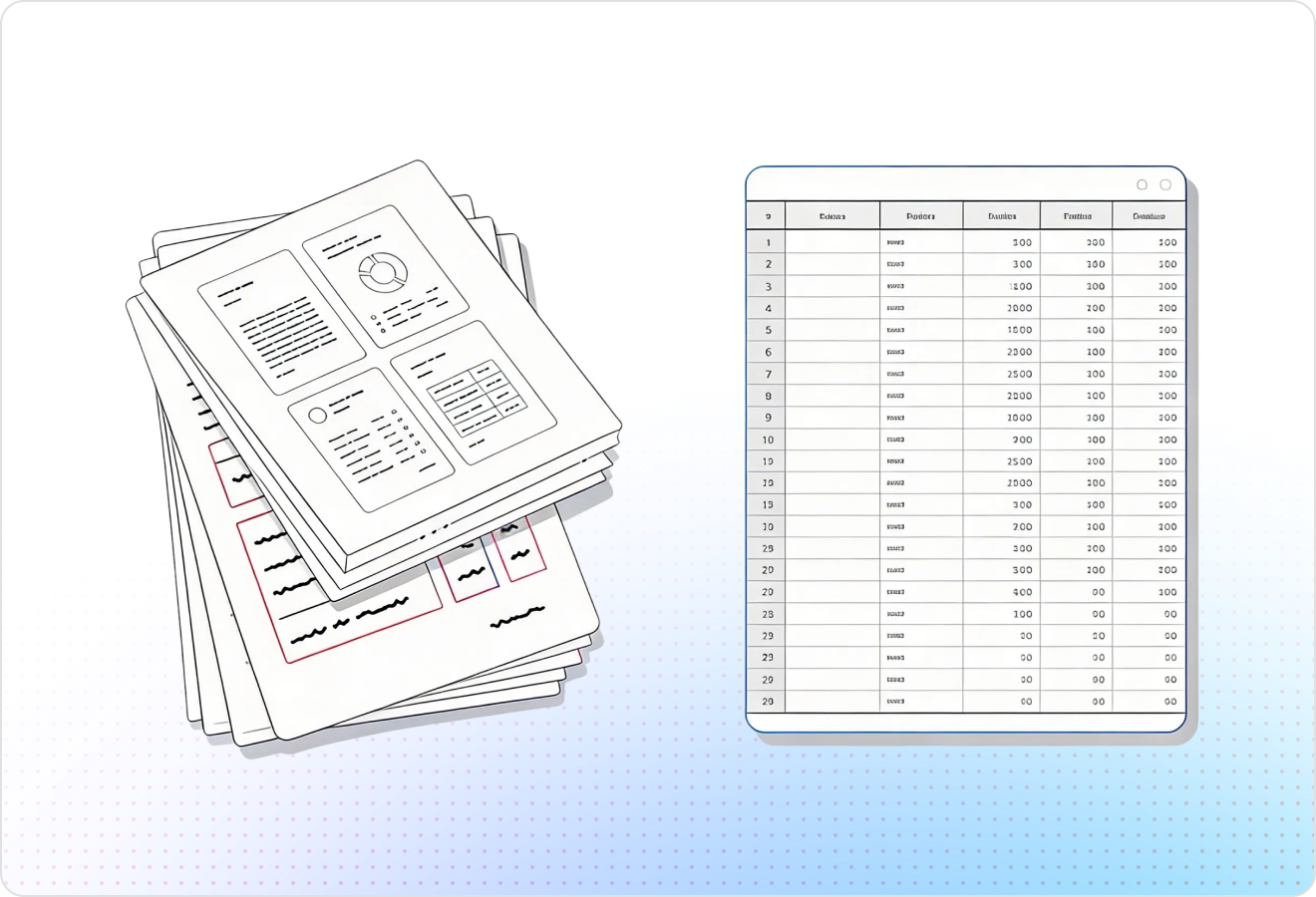
LlamaParse uses layout-aware computer vision to preserve reading order across multi-column resumes, sidebars, headers, and footers. That means your CV pipeline reliably separates sections like Experience, Education, and Skills instead of returning scrambled text.
02
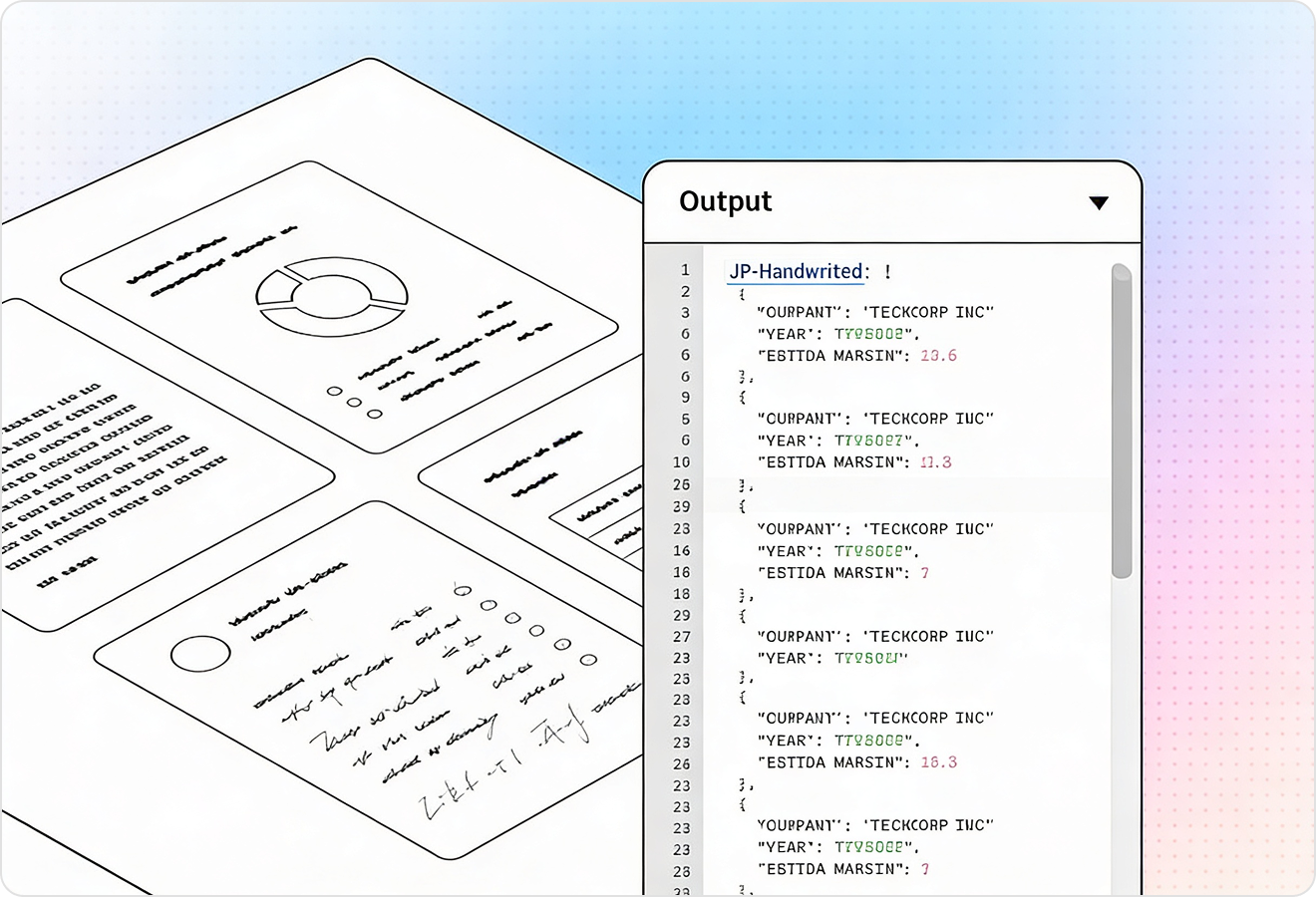
LlamaParse applies agentic document parsing to handle real-world CVs: scans, photos, and PDFs with inconsistent formatting. It reduces the common failure modes of traditional OCR by using specialized reasoning and vision models to extract the right fields with higher accuracy.
03
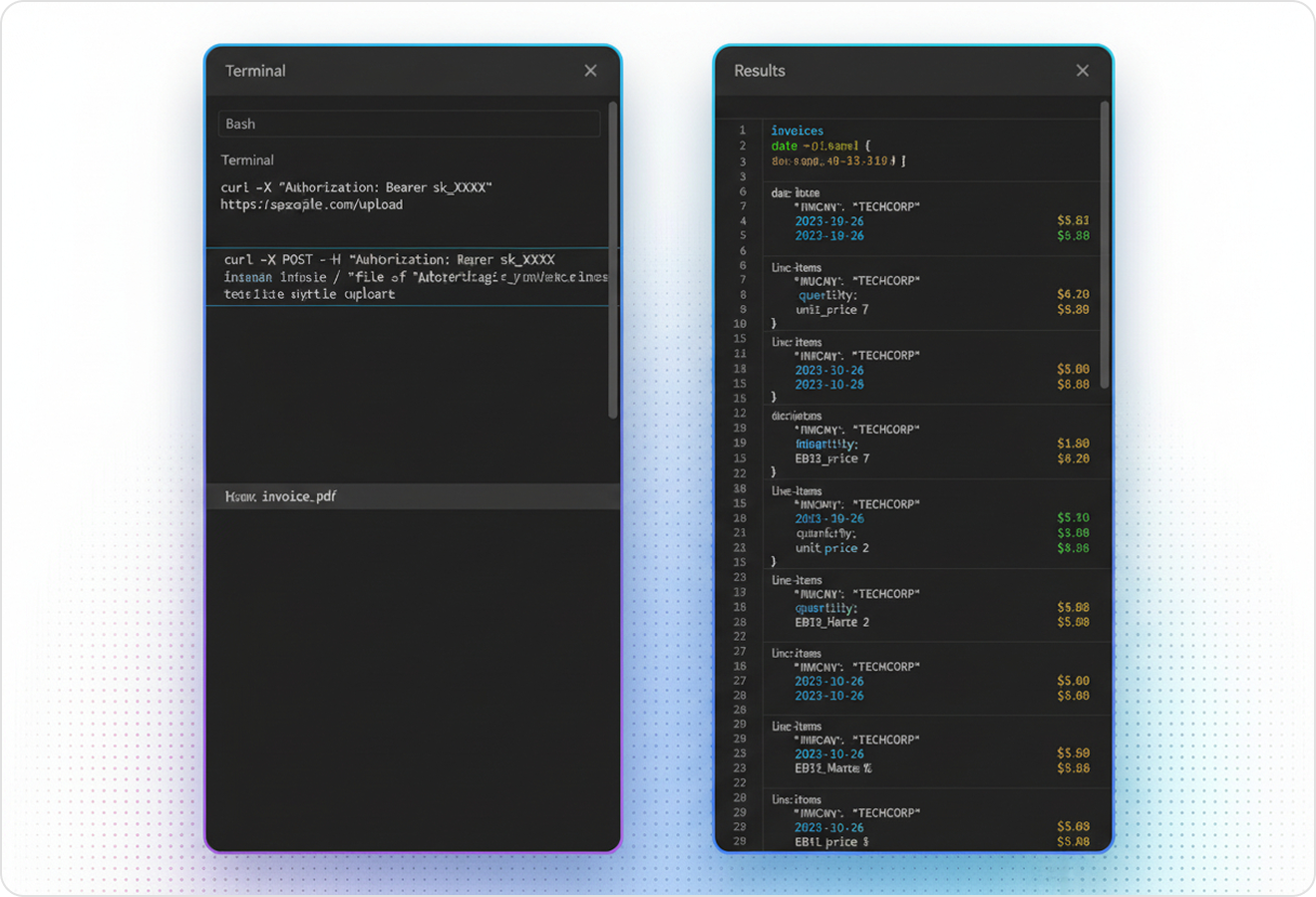
LlamaParse can return structured JSON designed for downstream resume parsing, so you can map fields into ATS or HRIS schemas without brittle post-processing. It also includes granular metadata like page references and element-level traceability to support auditing and human review when needed.
04
LlamaParse runs validation loops to catch and fix extraction errors before you ingest data into your resume database. This improves straight-through processing on tricky CV patterns like overlapping dates, mixed bullet styles, and densely formatted skill matrices.
Technical OCR documentation
Explore our developer guides to easily connect your document pipelines to LlamaParse.
Explore the documentation
Our AI catches the typos that tired eyes miss.

Export to Excel, JSON, XML, or directly via API.

SOC2 Type II compliant with end-to-end encryption.

Train the tool on your specific forms in minutes, not days.

Average processing time of <3 seconds per page.
LlamaParse’s support of a wide variety of filetypes and its accuracy of parsing made it the best tool we tested in our evaluations. The LlamaIndex team was very responsive and we were off to the races within a day.
Common FAQs
01
LlamaParse uses layout-aware computer vision to preserve the correct reading order, even in complex designs like two-column CVs and sidebar-heavy templates. That means sections like Experience, Education, and Skills stay separated and structured instead of merging into unusable text.
02
It’s built for real-world inputs—scans, photos, and inconsistent PDFs—using agentic parsing that reasons about what it sees instead of relying on brittle OCR alone. You get higher field accuracy and fewer manual fixes on the documents that typically break traditional pipelines.
03
LlamaParse returns structured JSON designed for downstream resume parsing, making it easy to map into common ATS or HRIS data models. This reduces the need for custom regex and post-processing that often becomes a maintenance burden.
04
Can I audit extractions or trace where a specific field came from in the original CV?
Yes—outputs include provenance like page references and element-level traceability, so reviewers can quickly verify fields against the source document. This supports compliance, quality checks, and faster human review when confidence is low.
05
How do you handle common resume edge cases like overlapping dates, mixed bullet styles, or dense skill matrices?
LlamaParse runs validation and auto-correction loops to catch inconsistencies before data is ingested. That improves straight-through processing on messy formatting patterns that usually require manual cleanup.
06
How much manual review should I expect, and how does this improve our pipeline ROI?
Most teams see fewer exceptions because the parser preserves structure, validates outputs, and provides traceability for quick spot-checks. The result is less time spent fixing broken parses and more reliable data flowing into matching, ranking, and analytics—without increasing headcount.