Nov 14, 2025
Document AI: The Next Evolution of Intelligent Document ProcessingPersona
Industry
Use cases
Document Parsing SDK
[ Document Parsing SDK ]

Use LlamaParse to turn messy PDFs into verified JSON with layout-aware accuracy and confidence metadata.
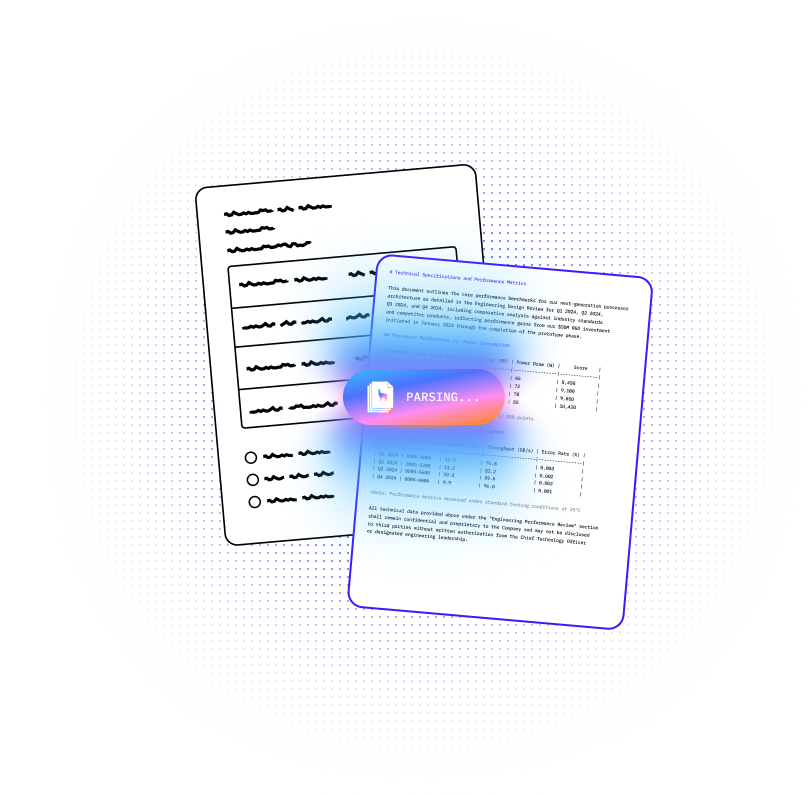
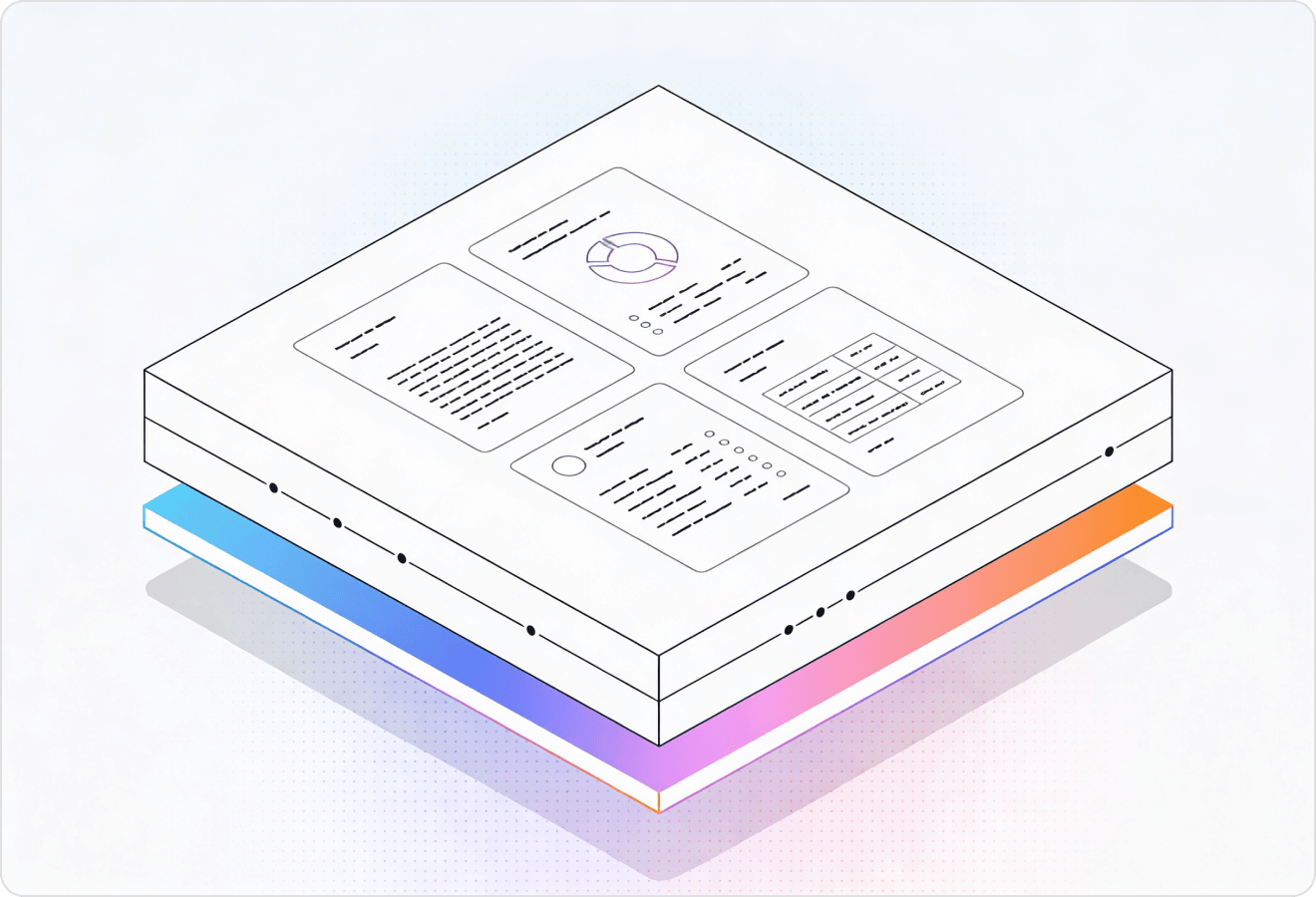

LlamaParse turns messy PDFs and scans into clean, AI-ready Markdown and JSON, preserving layout, tables, and critical fields you need downstream. Agentic document parsing uses vision and language models with validation loops and metadata, so your SDK ships reliable outputs without constant retraining.
Best-in-Class Accuracy

Ship document features fast without building a brittle parsing pipeline: use LlamaParse to turn user-uploaded PDFs and scans into clean Markdown/JSON that your product can search, summarize, and route. Auto Mode and tier-based processing keep costs predictable as volume spikes, while metadata and confidence scores make it safe to launch with reviewable outputs.

Extract structured fields from bank statements, pay stubs, tax forms, and KYC packs—even when tables are messy or layouts vary—so underwriting decisions aren’t blocked by manual data entry. JSON mode with page-level citations supports auditability, and natural-language parsing instructions let ops teams adjust what gets captured without rewriting extraction code.

Parse bills of lading, packing lists, commercial invoices, and delivery PODs into normalized line items, quantities, and references so exceptions can be flagged automatically. Layout-aware table extraction preserves SKUs and multi-column grids accurately, reducing chargebacks and preventing downstream ERP mismatches caused by scrambled documents.

Convert contracts, exhibits, and scanned filings into structured, citation-backed outputs that keep section order intact and make clause-level review reliable. Multimodal parsing captures tables, stamps, and embedded images so teams can search and validate evidence faster without losing context during ingestion.
The Solution
01
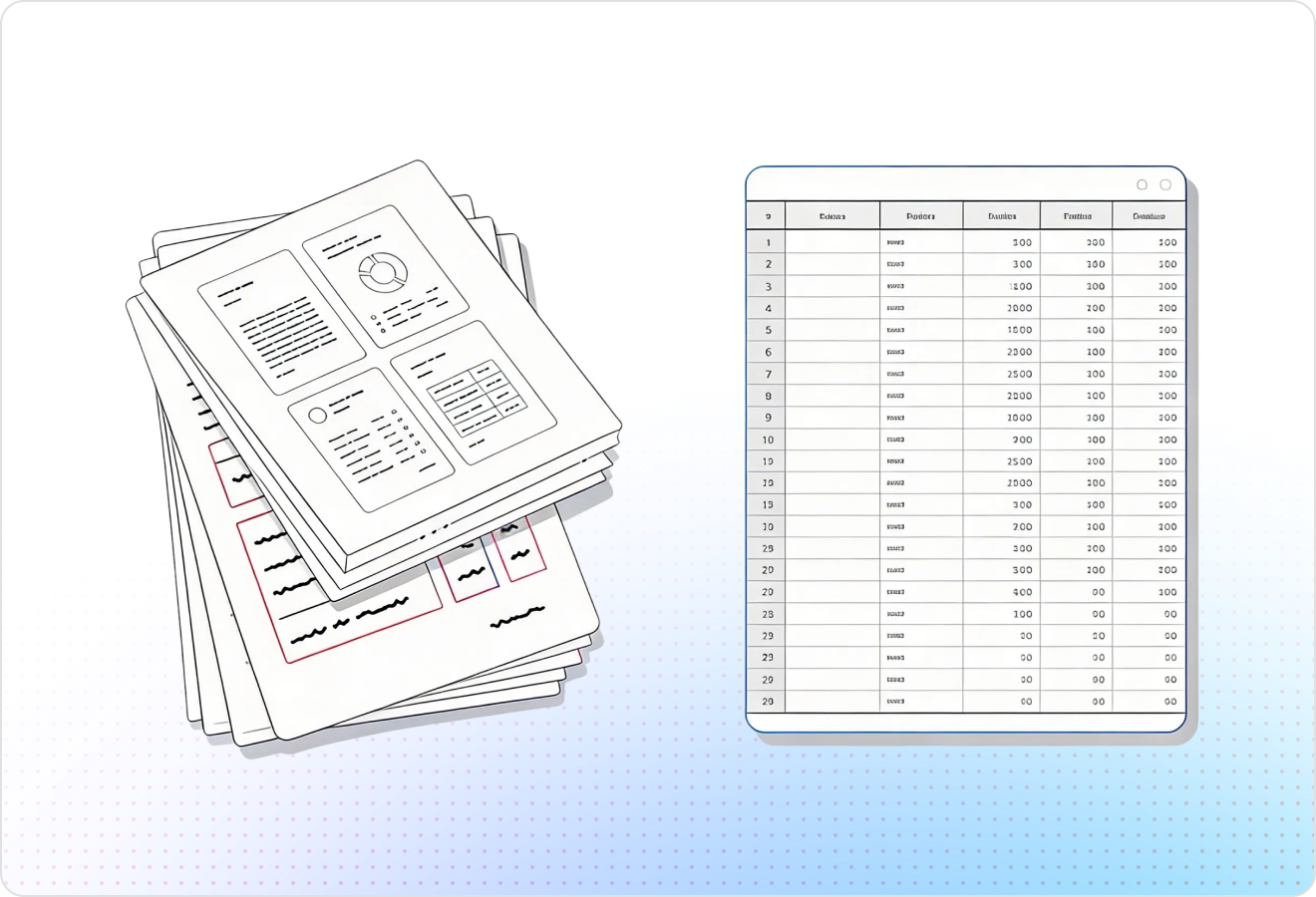
LlamaParse ships with developer-friendly APIs and native SDKs so you can turn user uploads into parsed outputs with a few lines of code. This makes it straightforward to embed document parsing into your app, background jobs, or ingestion pipeline without building and maintaining custom parsers.
02
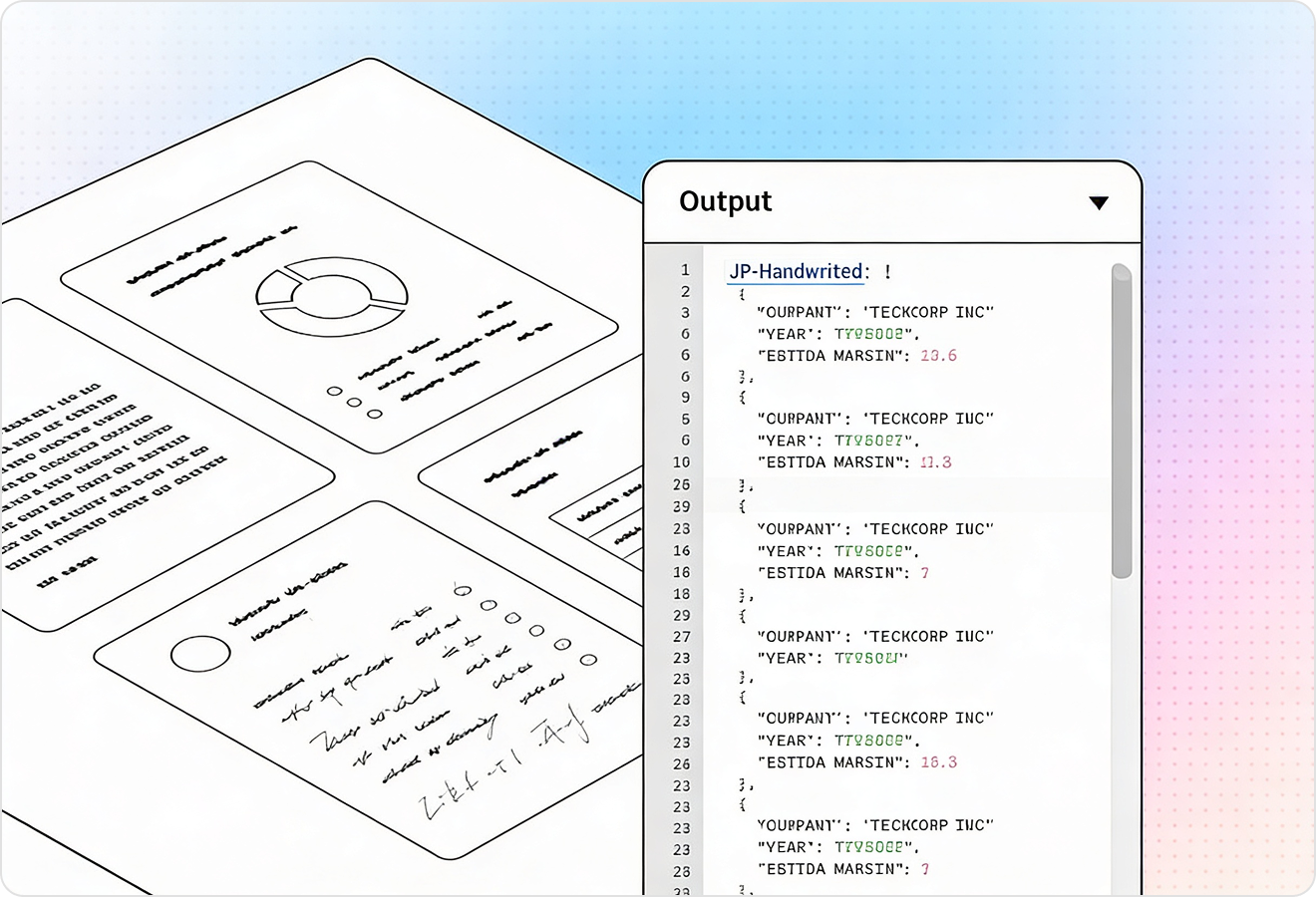
LlamaParse understands page layout to preserve reading order, sections, and multi-column flows instead of returning scrambled text. For a document parsing SDK, that means your downstream indexing and agents get cleaner, more predictable structure with less post-processing code.
03
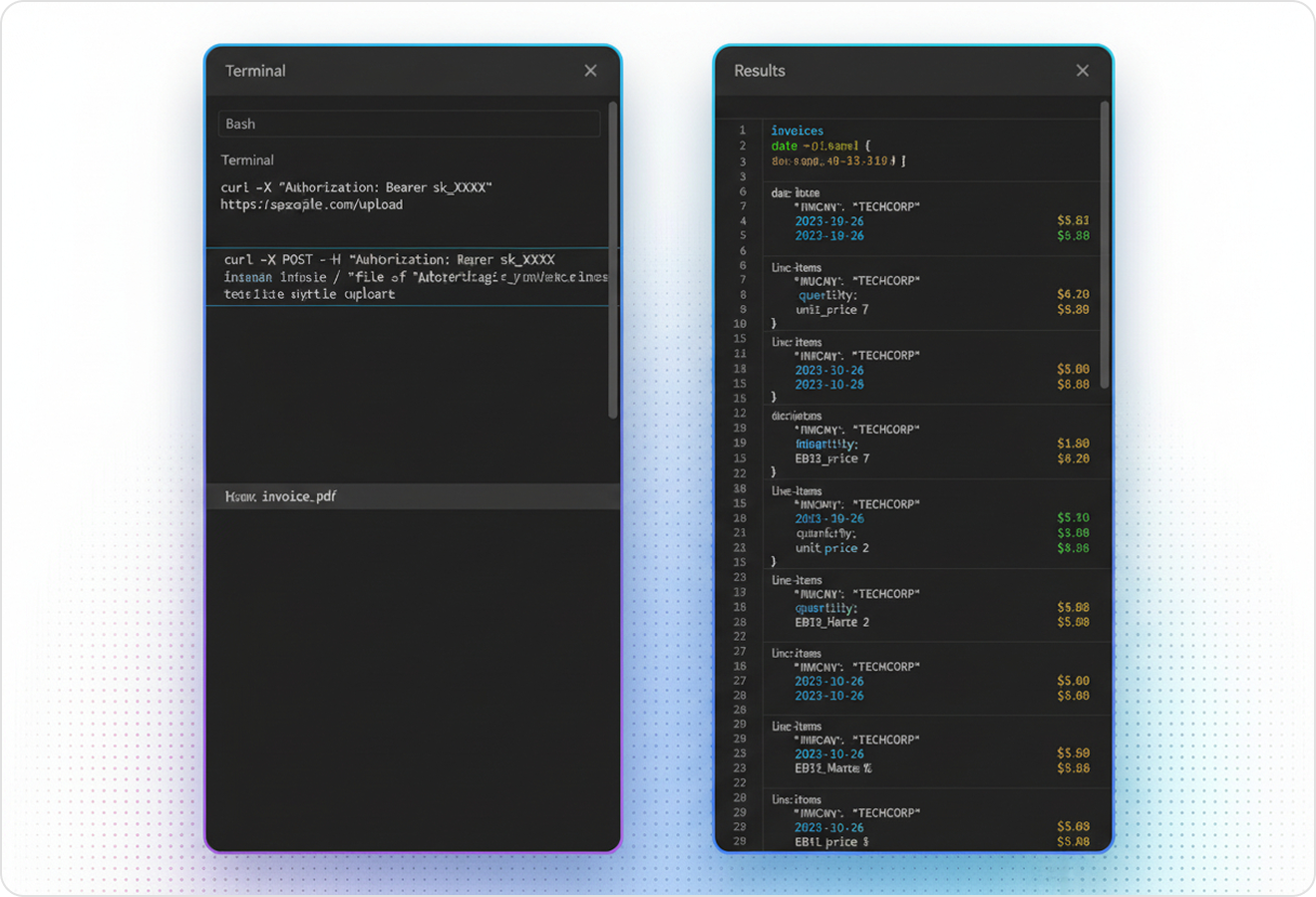
LlamaParse can emit structured JSON along with granular metadata like page numbers and element-level coordinates. This gives your SDK integration traceability and control for debugging, building UI highlights, and enabling human review when needed.
04
LlamaParse can interpret tables, charts, images, and math rather than only extracting plain text. That lets a document parsing SDK deliver full-document fidelity for real-world PDFs and scans, so your application doesn’t lose critical context trapped in visuals.
Technical OCR documentation
Explore our developer guides to easily connect your document pipelines to LlamaParse.
Explore the documentation
Our AI catches the typos that tired eyes miss.

Export to Excel, JSON, XML, or directly via API.

SOC2 Type II compliant with end-to-end encryption.

Train the tool on your specific forms in minutes, not days.

Average processing time of <3 seconds per page.
LlamaParse’s support of a wide variety of filetypes and its accuracy of parsing made it the best tool we tested in our evaluations. The LlamaIndex team was very responsive and we were off to the races within a day.
Common FAQs
01
You can go from file upload to parsed output in just a few lines using SDK-first APIs designed for production workflows. It’s easy to embed in your app, background jobs, or ingestion pipeline without maintaining custom parsers.
02
The parser is layout-aware, so it preserves sections, reading order, and multi-column flows instead of flattening everything into messy text. That means cleaner downstream indexing and more reliable results for search, RAG, and agent workflows with less post-processing.
03
Yes—outputs can be emitted as structured JSON, with granular metadata such as page numbers and element-level coordinates. This makes it easier to debug extractions, build UI highlights, and support human review when accuracy really matters.
04
Can it handle tables, charts, images, and math, or is it text-only?
It supports multimodal document understanding, interpreting tables, charts, images, and math rather than only extracting plain text. This helps you preserve critical information that’s often trapped in visuals, especially in real-world PDFs and scans.
05
How does this help my team reduce parsing maintenance and edge-case bugs?
Instead of writing brittle, document-specific rules, you get a consistent parsing layer that handles complex layouts and diverse content types out of the box. Your team spends less time chasing edge cases and more time shipping features that rely on dependable document structure.
06
Can I trace extracted content back to the original document for QA or compliance?
Yes—metadata like page numbers and coordinates gives you traceability from JSON elements back to the source. That enables audit-friendly workflows such as spot-checking, reviewer tools, and pinpointing exactly where a value came from.