Nov 14, 2025
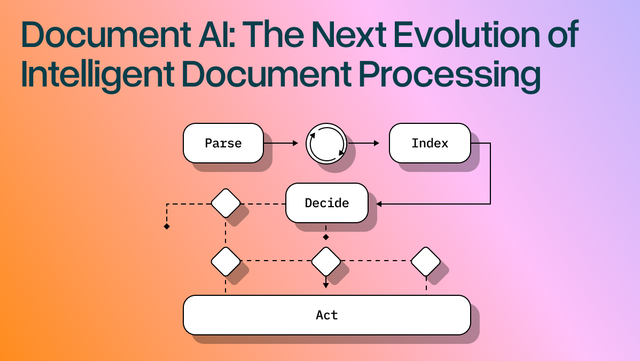
Document AI: The Next Evolution of Intelligent Document ProcessingPersona
Industry
Use cases
OCR API
[ OCR API ]

Use LlamaParse to turn messy PDFs into structured JSON or Markdown with fewer manual fixes.
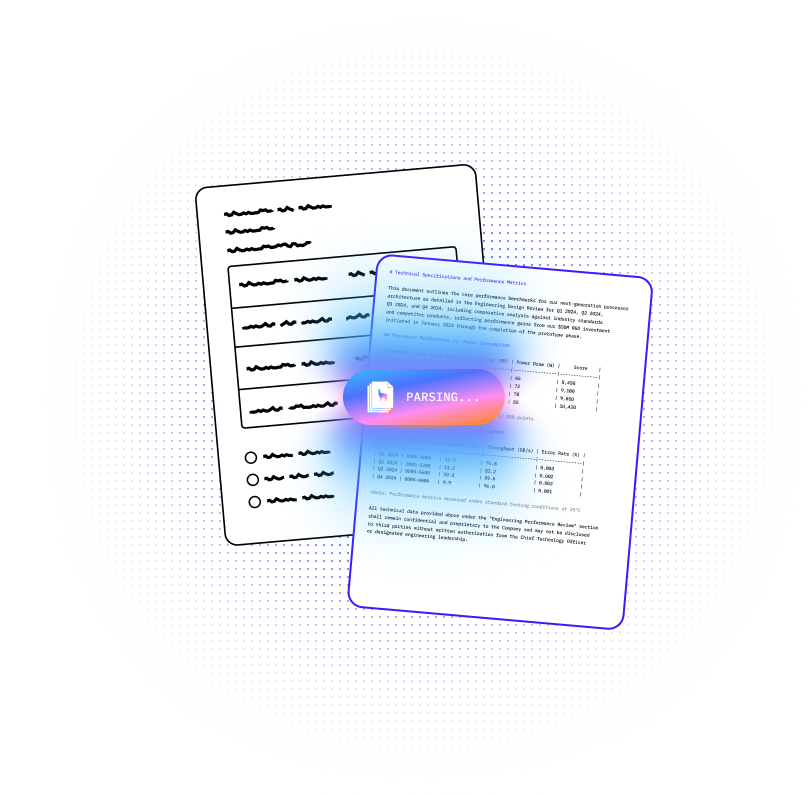
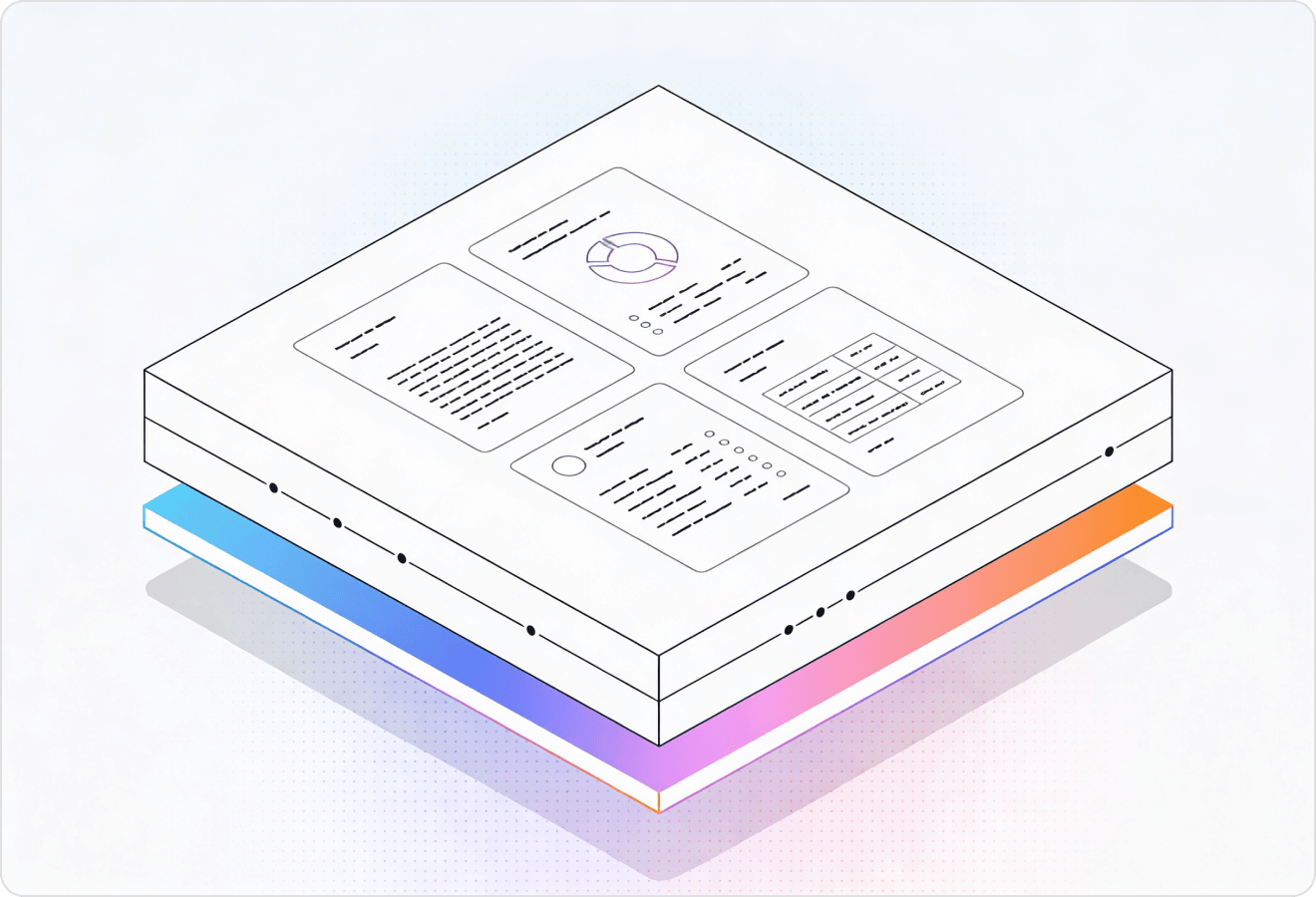
LlamaParse turns messy PDFs, scans, and forms into clean, structured JSON, Markdown, or HTML through a simple API built for production pipelines. It uses agentic document parsing that understands layout, tables, and charts, with validation loops and confidence metadata to reduce manual review.
Best-in-Class Accuracy

Turn investor decks, customer contracts, and inbound PDFs into clean Markdown/JSON so your product can ship AI features without building a brittle parsing pipeline. LlamaParse preserves reading order and table structure out of the box, so you spend less time debugging extraction edge cases and more time iterating on the workflow.

Automate intake for claims, loan packages, and bank statements by extracting tables, signatures, and key fields into structured JSON with traceable metadata for audit and review. Agentic parsing handles layout shifts and low-quality scans while reducing rework from misread line items and broken multi-column pages.

Convert referrals, lab reports, and scanned intake forms into AI-ready data while preserving sections, tables, and medical codes for downstream systems. With natural-language parsing instructions, teams can standardize what gets extracted per document type without writing regex-heavy post-processing.

Extract SKUs, quantities, Incoterms, and line-item tables from purchase orders, packing lists, and bills of lading—even when formats vary across suppliers. Multimodal parsing can interpret embedded diagrams or stamped annotations and return structured outputs that keep ERP and WMS updates accurate.
The Solution
01
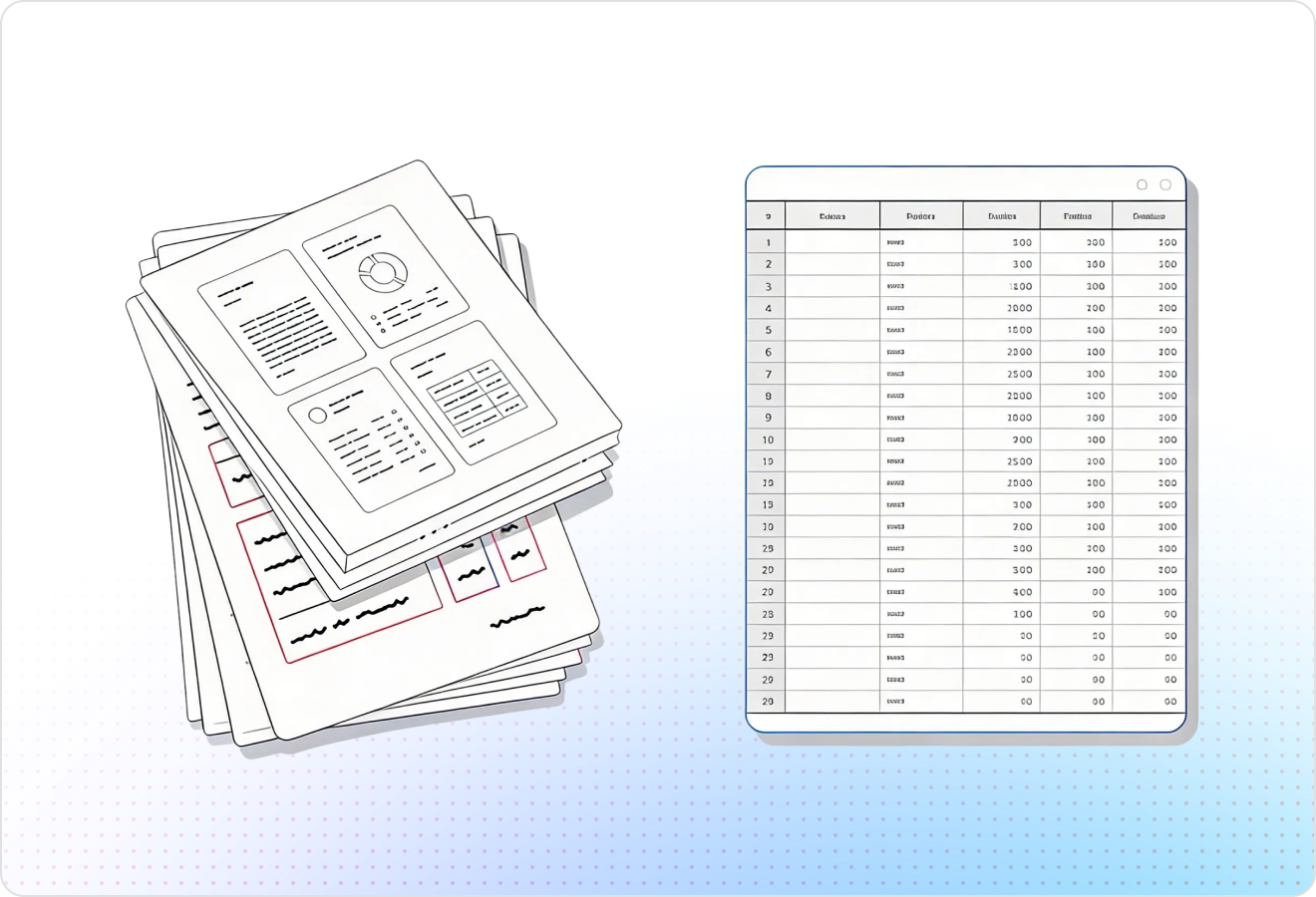
LlamaParse uses layout-aware vision to preserve reading order across multi-column pages, headers/footers, and mixed blocks of content. For an OCR API, this means callers get coherent text and structure instead of scrambled output that requires brittle downstream cleanup.
02
LlamaParse detects and reconstructs complex tables (including nested cells and merged headers) rather than flattening them into unusable text. That lets your OCR API return reliable, machine-ready tables in Markdown or structured formats that downstream apps can trust.
03
LlamaParse can interpret charts, diagrams, and formulas, converting them into usable representations like Markdown tables, Mermaid, or LaTeX. This expands an OCR API from “text only” to full document understanding, so important visual evidence doesn’t get dropped.
04
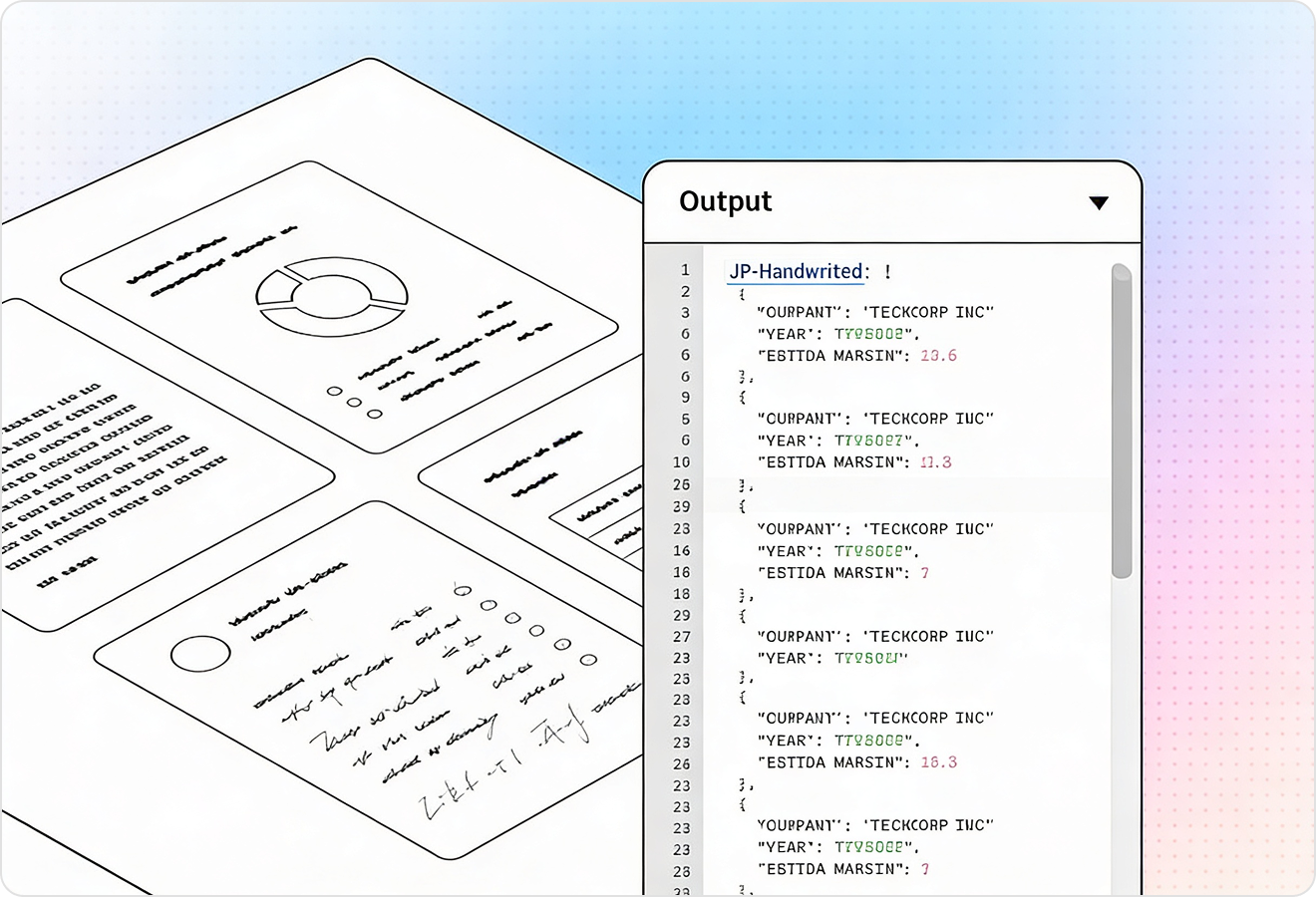
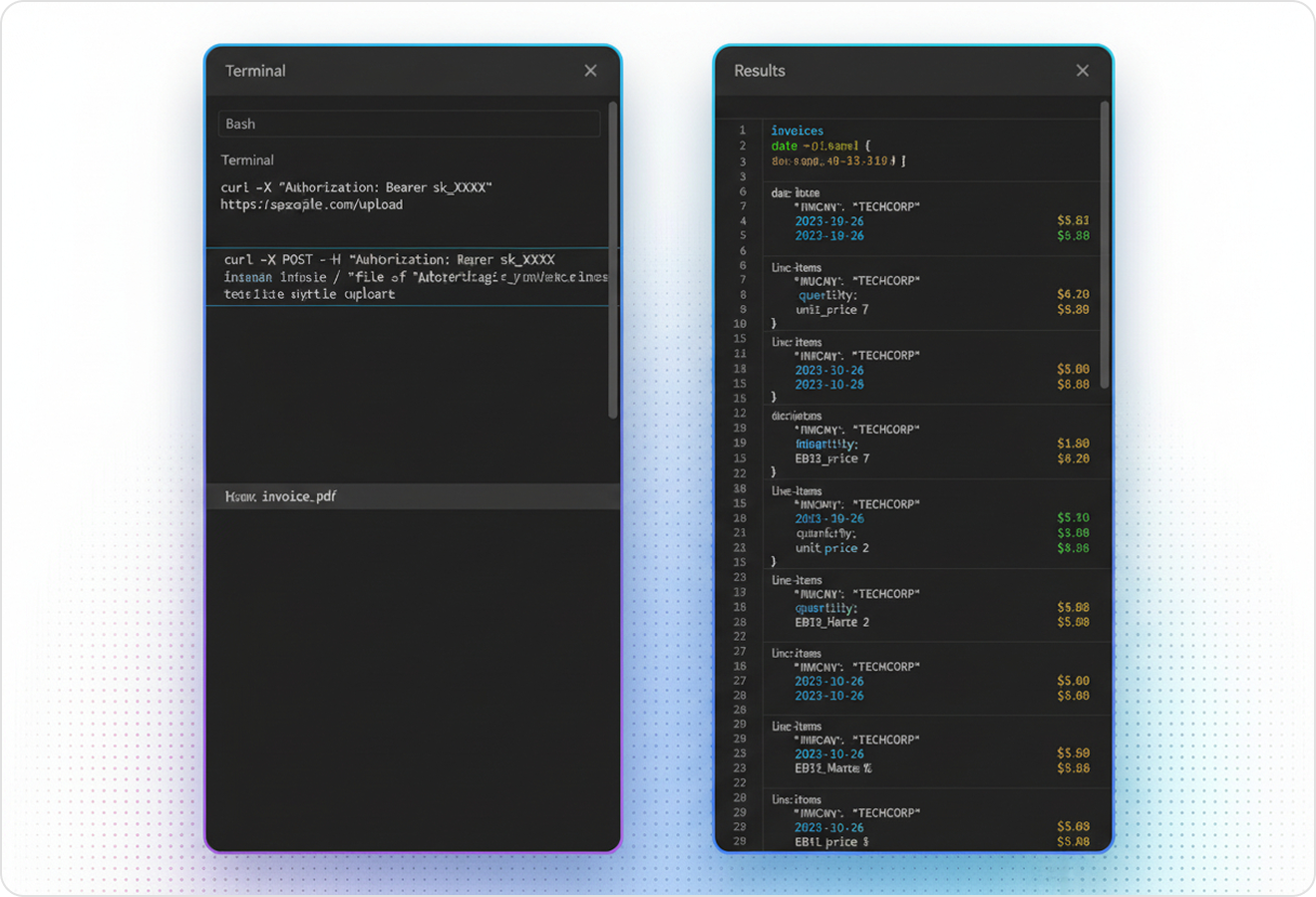
LlamaParse can emit structured JSON with element types, page numbers, and spatial coordinates for every extracted block. In an OCR API, that metadata enables citations, selective redaction, and precise UI overlays without building a separate document mapping layer.
Technical OCR documentation
Explore our developer guides to easily connect your document pipelines to LlamaParse.
Explore the documentation
Our AI catches the typos that tired eyes miss.

Export to Excel, JSON, XML, or directly via API.

SOC2 Type II compliant with end-to-end encryption.

Train the tool on your specific forms in minutes, not days.

Average processing time of <3 seconds per page.
LlamaParse’s support of a wide variety of filetypes and its accuracy of parsing made it the best tool we tested in our evaluations. The LlamaIndex team was very responsive and we were off to the races within a day.
Common FAQs
01
Our layout-aware page reconstruction preserves reading order across columns, headers/footers, and mixed content blocks. You get coherent text and structure without writing brittle post-processing rules. That means faster integration and fewer edge-case failures in production.
02
Yes—tables are detected and reconstructed as true table structures rather than flattened into a paragraph of text. We support complex layouts like merged headers and nested cells, and can return tables in machine-ready formats such as Markdown or structured data. This makes downstream analytics, RPA, and data pipelines far more reliable.
03
It’s more than text: we interpret common visual elements like charts and formulas and convert them into usable representations such as Markdown tables, Mermaid, or LaTeX. This helps you capture the evidence embedded in visuals instead of losing it during extraction. It’s ideal for reports, financial statements, and technical documents.
04
What does the JSON output look like, and can I get coordinates for highlights or citations?
You can request structured JSON that includes element types, page numbers, and spatial coordinates for each extracted block. This makes it easy to build UI overlays, citations, selective redaction, and “jump to source” experiences. You avoid building a separate document mapping layer from scratch.
05
How does this reduce engineering time compared to using a basic OCR engine?
Basic OCR often returns raw text that requires extensive cleanup for layouts, tables, and reading order. By returning structured, layout-aware output upfront, we minimize custom heuristics and reprocessing loops. Teams typically ship document workflows faster and spend less time debugging edge cases.
06
How do I integrate the OCR API into my workflow, and what do I get back?
Send a document and choose the output you need—clean text, reconstructed tables, or structured JSON with metadata. The response is designed to be immediately usable in search, extraction pipelines, and review tools without heavy transformation. If you’re evaluating, you can start small and expand to richer outputs as your use case grows.