Nov 14, 2025
Document AI: The Next Evolution of Intelligent Document ProcessingPersona
Industry
Use cases
JSON Schema Document Extraction
[ JSON Schema Document Extraction ]

Use LlamaParse to turn messy PDFs into schema-validated JSON with layout-aware accuracy and traceable metadata.
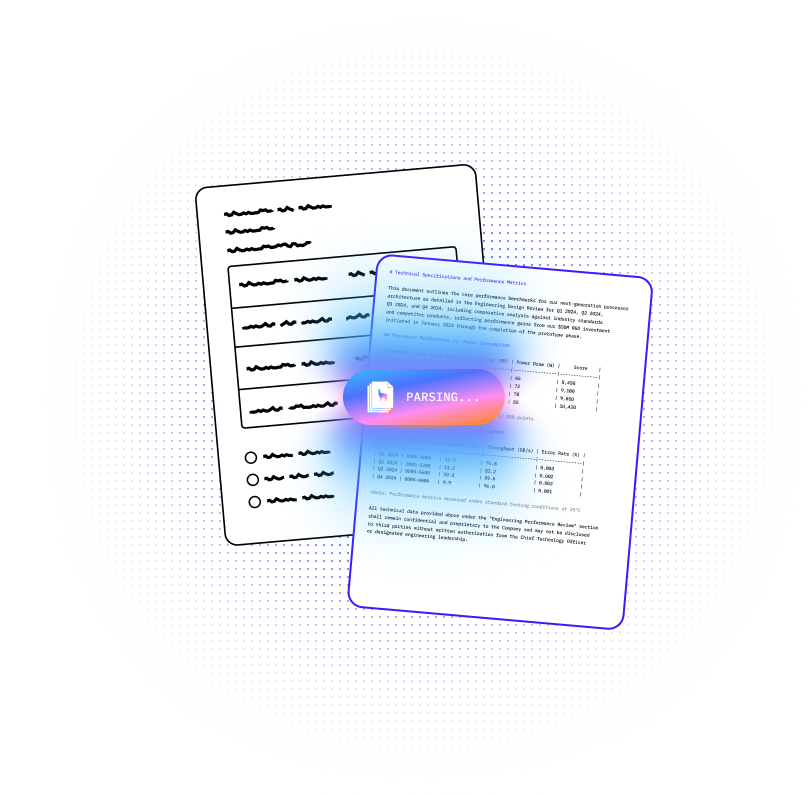
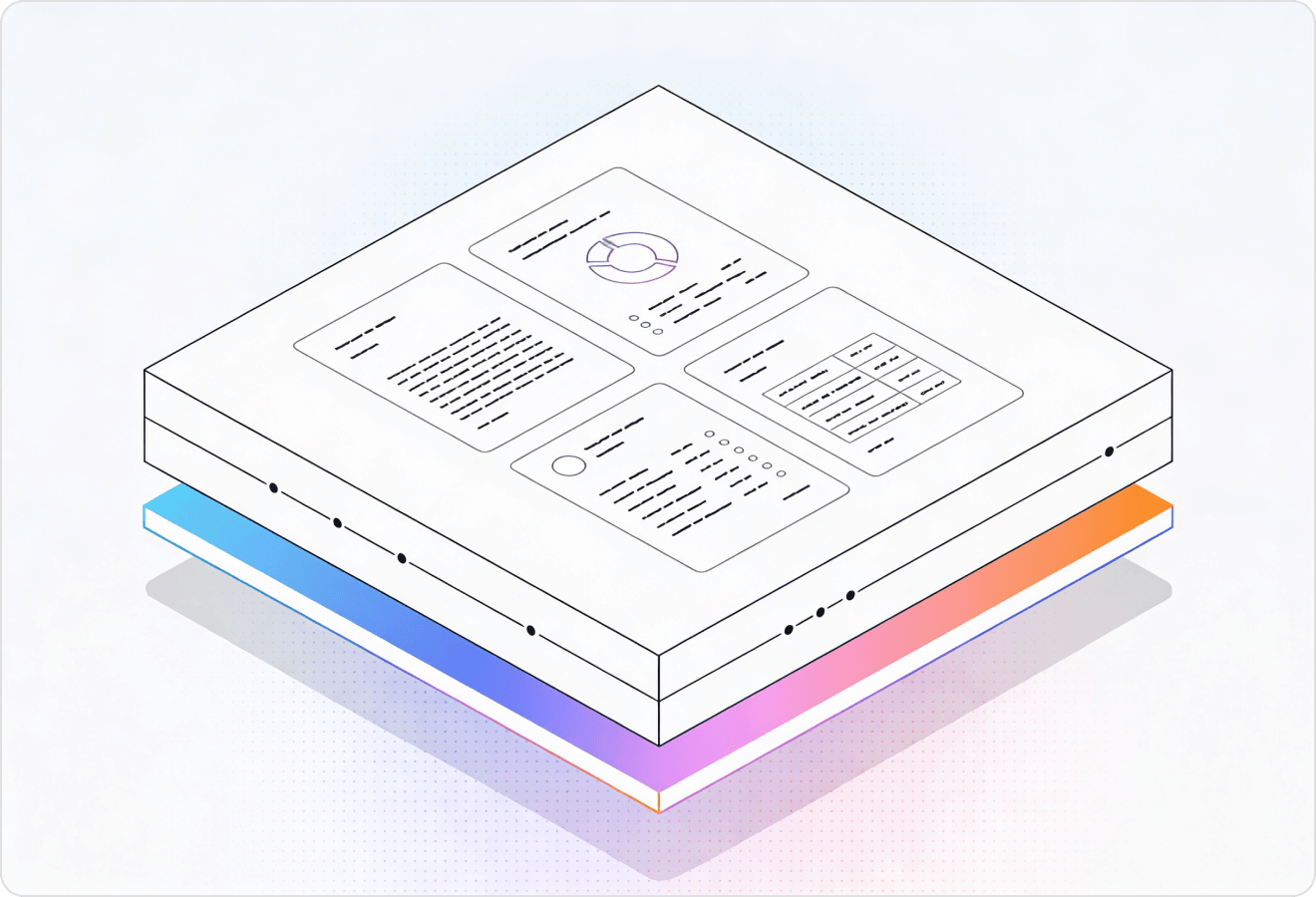
LlamaParse turns PDFs, scans, and funky layouts into schema-valid JSON you can trust, so downstream pipelines stop breaking on edge cases. Agentic document parsing reads tables, images, and forms with validation loops and confidence metadata, helping you scale extraction with fewer manual checks.
Best-in-Class Accuracy

Ship a production-grade ingestion layer in days by turning messy PDFs, scans, and customer uploads into clean Markdown or JSON without building brittle post-processing code. Use natural-language parsing instructions and JSON mode to enforce a stable schema, so your product doesn’t break when customers change templates.

Extract structured fields from ACORD forms, loss runs, repair estimates, and photo-heavy claim packets while preserving tables, reading order, and key attachments. LlamaParse’s agentic parsing handles layout shifts and low-quality scans with validation loops, increasing straight-through processing and reducing manual rekeying.

Convert contracts, exhibits, and court filings into citation-ready structured outputs with page-level metadata so teams can trace every extracted clause back to its source. Preserve multi-column formatting and tables in Markdown to prevent scrambled text that slows review and introduces risk in downstream analysis.

Turn supplier CoAs, spec sheets, and inspection reports with dense tables and scanned stamps into normalized JSON that flows directly into ERP/QMS workflows. Multimodal parsing captures charts and measurement tables accurately, reducing line stoppages caused by missing or misread compliance data.
The Solution
01
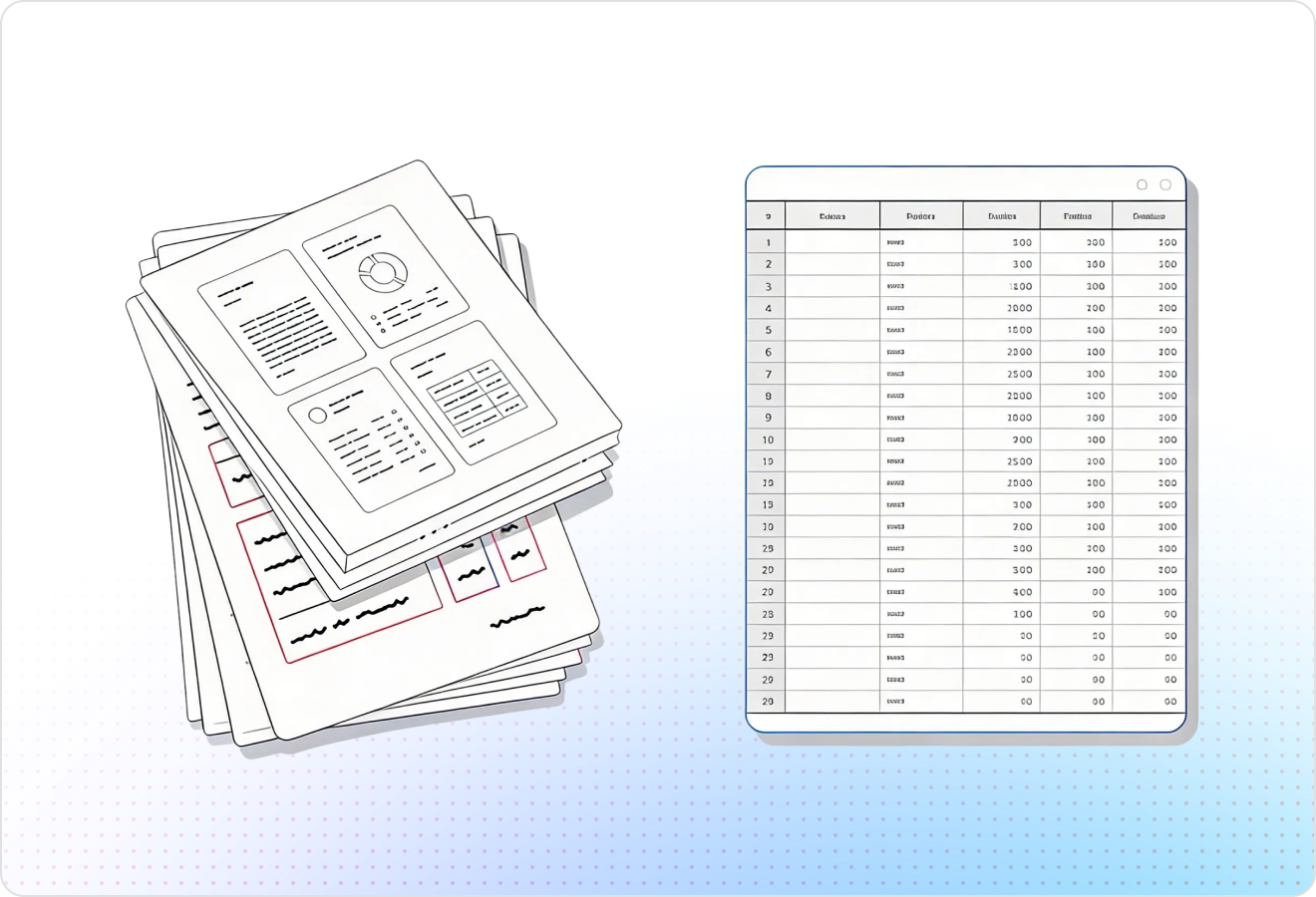
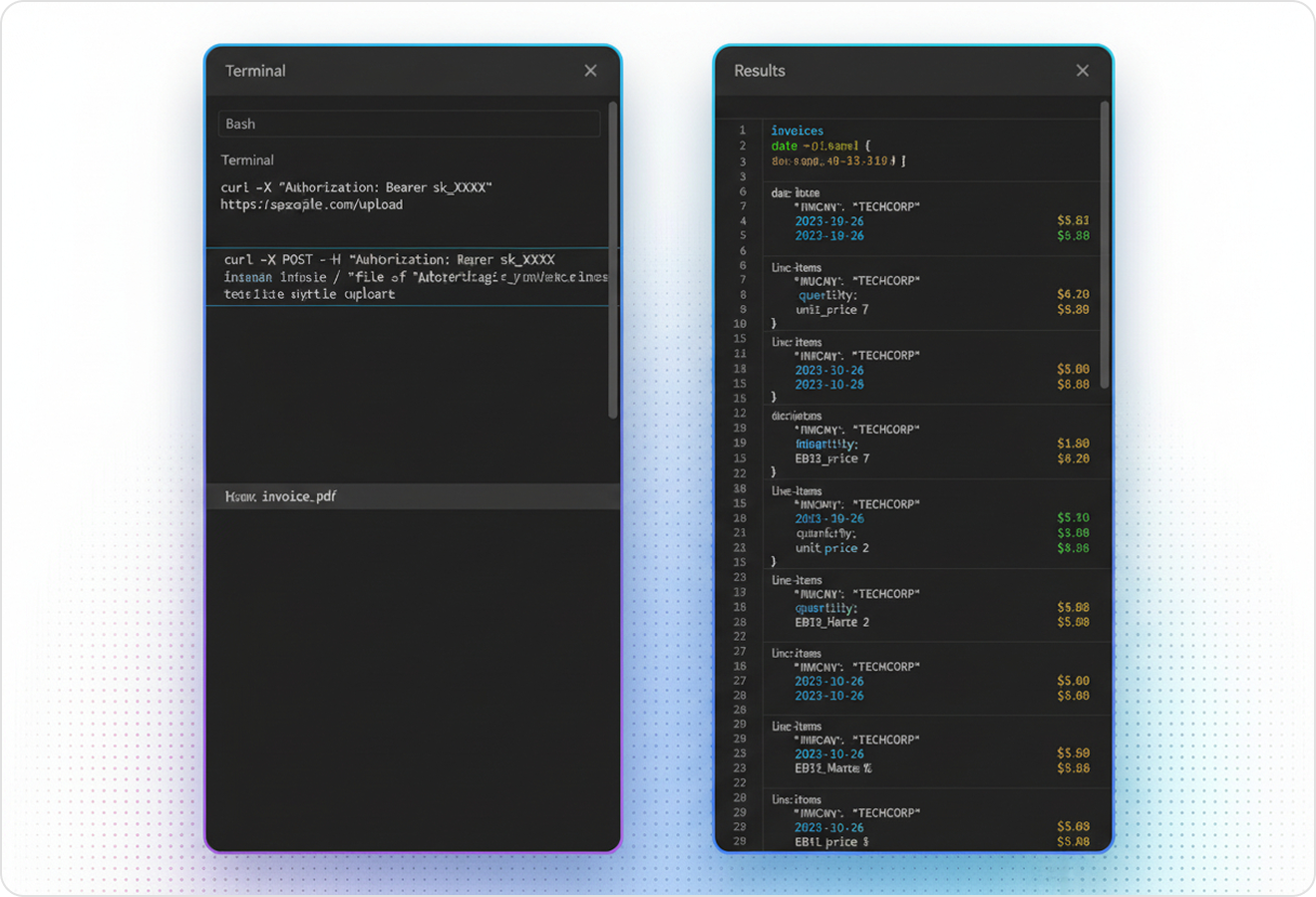
LlamaParse can emit structured JSON that maps cleanly into your target schema, instead of forcing you to regex your way out of messy text. This makes it straightforward to load parsed documents into validation layers, data warehouses, or downstream APIs with minimal transformation.
02
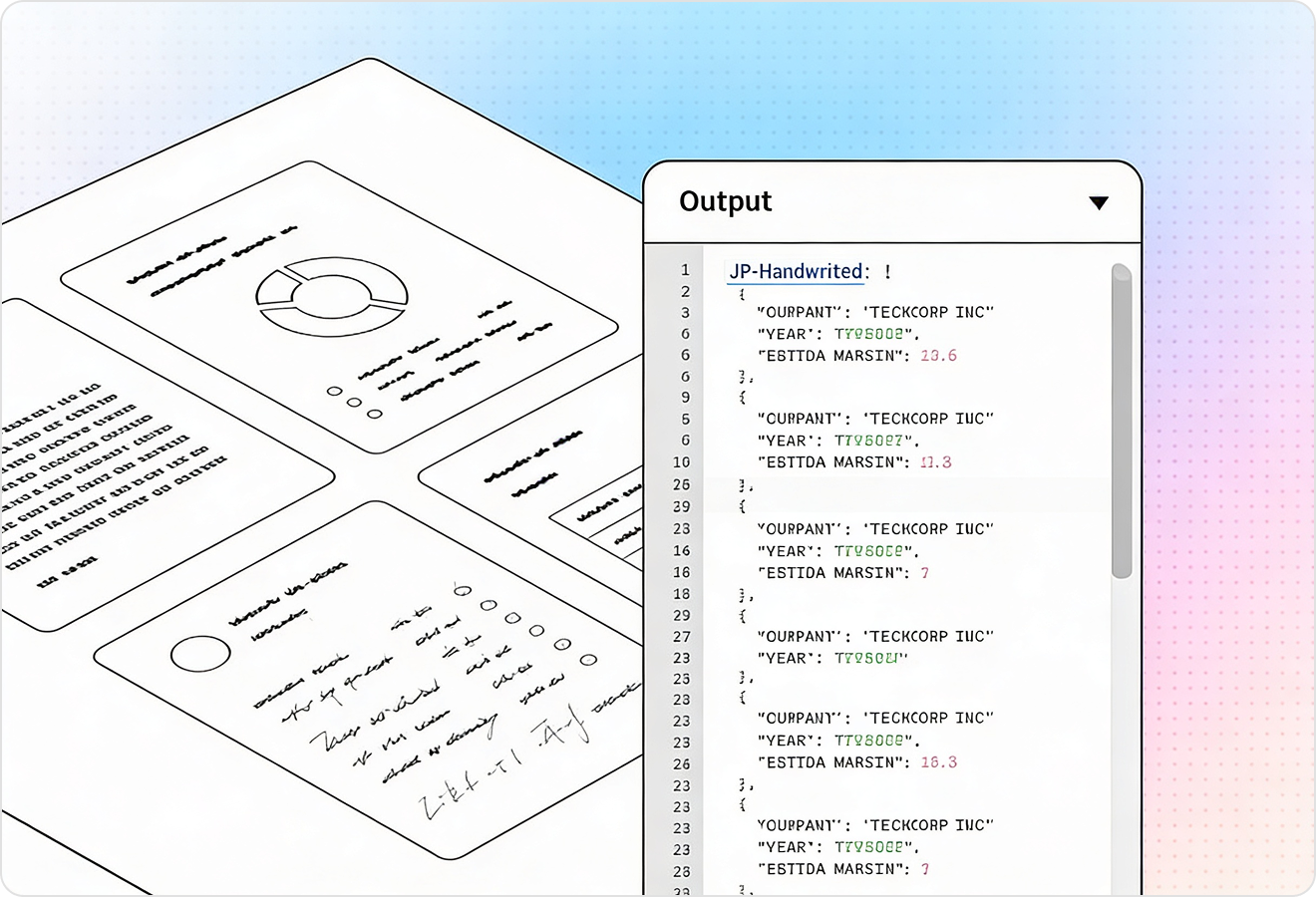
LlamaParse understands page structure—headings, key-value blocks, multi-column sections, and nested tables—so fields land in the right place in your JSON. That layout awareness reduces brittle, template-specific extraction logic when documents change formatting.
03
You can guide extraction with plain-English instructions to select the exact fields, normalize formats, and shape outputs to match your JSON Schema. This cuts down on custom post-processing code and keeps schema changes fast and audit-friendly.
04
Every extracted value can carry metadata like page references and element context, giving you a direct path back to the source when validating against a JSON Schema. That traceability makes debugging failed validations and handling edge cases far less painful.
Technical OCR documentation
Explore our developer guides to easily connect your document pipelines to LlamaParse.
Explore the documentation
Our AI catches the typos that tired eyes miss.

Export to Excel, JSON, XML, or directly via API.

SOC2 Type II compliant with end-to-end encryption.

Train the tool on your specific forms in minutes, not days.

Average processing time of <3 seconds per page.
LlamaParse’s support of a wide variety of filetypes and its accuracy of parsing made it the best tool we tested in our evaluations. The LlamaIndex team was very responsive and we were off to the races within a day.
Common FAQs
01
LlamaParse emits structured JSON that maps cleanly into your target JSON Schema, so you don’t have to rely on brittle regex or manual cleanup. That means fewer transformation steps before loading into validation layers, warehouses, or downstream APIs.
02
Yes—layout-aware field detection understands headings, key-value blocks, multi-column sections, and nested tables so values land in the correct JSON paths. This reduces template-specific extraction logic that tends to break when formatting shifts.
03
You can define natural-language extraction rules to select specific fields, normalize formats (dates, currencies, IDs), and shape the output to match your JSON Schema. It’s faster to iterate and easier to audit than maintaining custom parsing code.
04
How do I troubleshoot failed schema validations or questionable values?
Each extracted value can include traceable metadata and citations like page references and element context. That gives your team a direct path back to the source for quick verification, debugging, and exception handling.
05
Does it support complex structures like nested tables and repeated sections?
Yes—LlamaParse recognizes nested tables and repeating blocks and preserves that structure in JSON rather than flattening everything into unreliable text. This makes it much easier to validate against schemas that require arrays, nested objects, and consistent field placement.
06
How quickly can we adapt when our JSON Schema changes?
Because extraction is guided by plain-English rules and schema-aligned output, updating for new fields or renamed paths is typically a rule change—not a rewrite. That keeps iteration fast, reduces risk, and helps you ship schema updates with confidence.