Nov 14, 2025
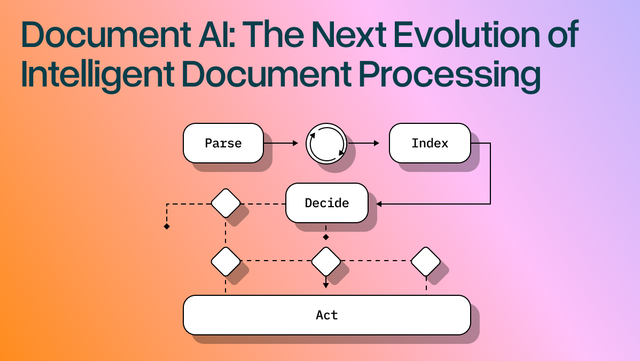
Document AI: The Next Evolution of Intelligent Document ProcessingPersona
Industry
Use cases
Marriage Certificate OCR
[ Marriage Certificate OCR ]

Use LlamaParse to capture names, dates, and fields reliably, with citations and confidence you can verify.
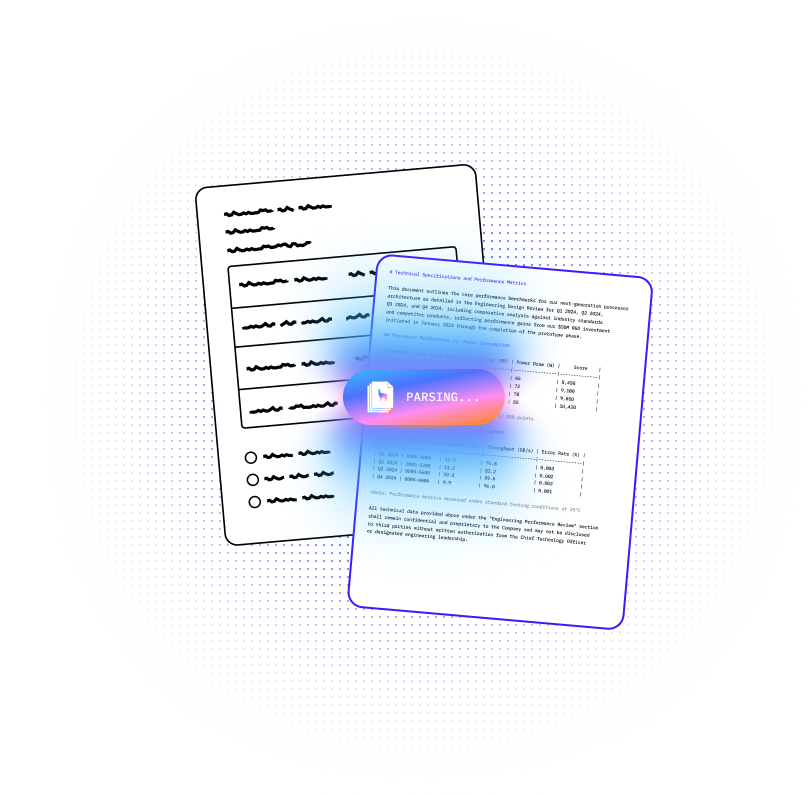
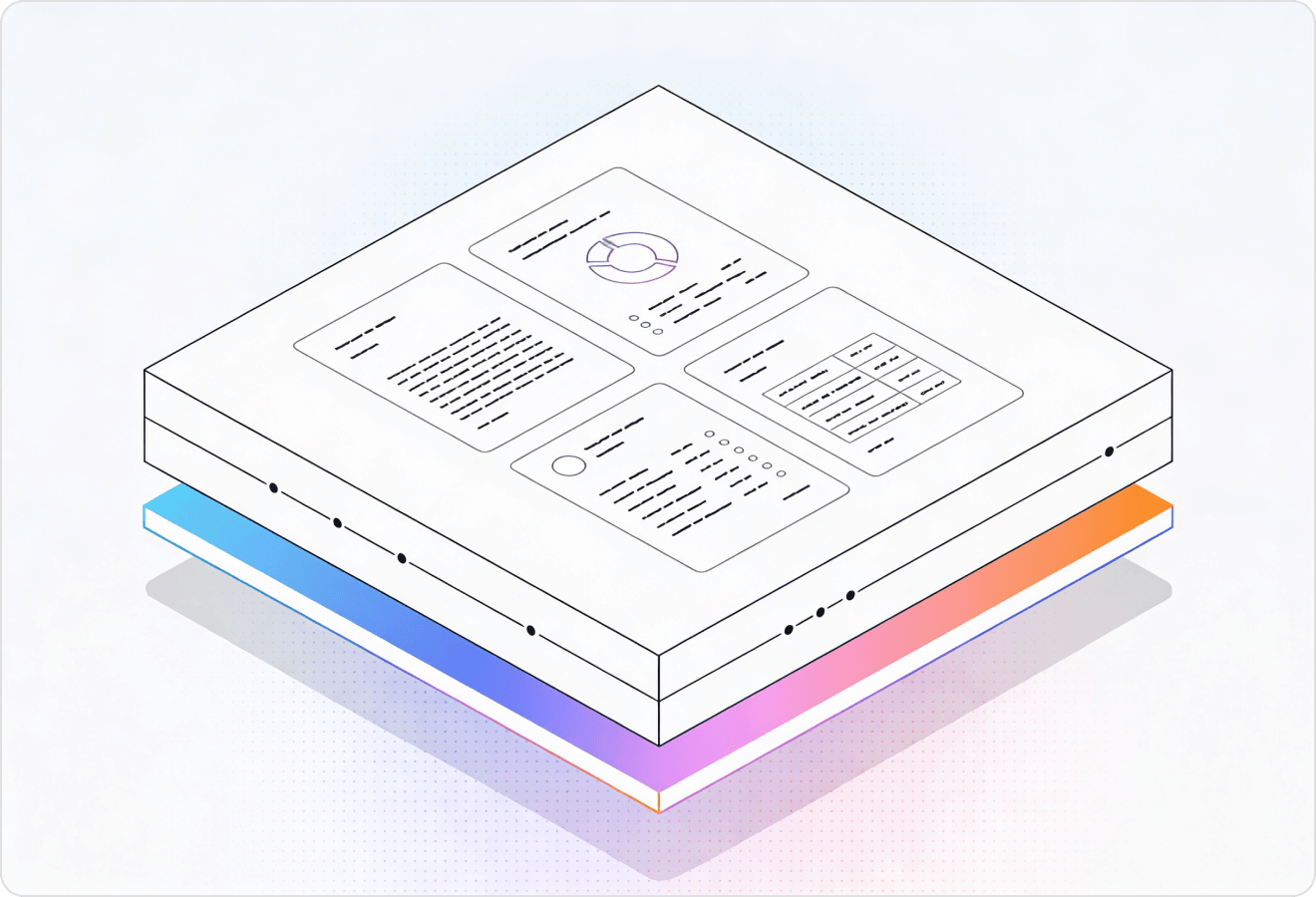

LlamaParse turns scanned marriage certificates into clean, structured JSON by understanding messy layouts, stamps, and handwritten fields instead of just grabbing text. Agentic parsing adds validation loops and citations, so your downstream workflows can trust names, dates, and registration details at scale.
Best-in-Class Accuracy

Launch marriage-certificate verification in days by using LlamaParse to turn messy scans into clean JSON for name changes, spouse matching, and eligibility checks. Natural-language parsing instructions and auto-correction loops reduce edge-case engineering and keep straight-through processing high as document formats vary by state and country.

Automate spousal beneficiary updates and dependent validation by extracting spouse names, dates, and issuing jurisdictions with layout-aware parsing that doesn’t scramble multi-block certificates. Granular metadata with citations and confidence scores enables fast audit-ready reviews, cutting manual back-and-forth and compliance risk.

Convert multilingual marriage certificates into structured records for case packets, surfacing the exact fields attorneys and case managers need without rekeying. Multimodal parsing handles stamps, seals, and scanned artifacts while preserving page coordinates for traceability during RFEs and internal quality checks.

Streamline KYC and household-income workflows by extracting marital status indicators, spouse identity details, and document issuance data into your onboarding system. Tier-based agentic processing routes clean uploads cheaply while escalating only hard scans, keeping verification costs predictable at scale.
The Solution
01
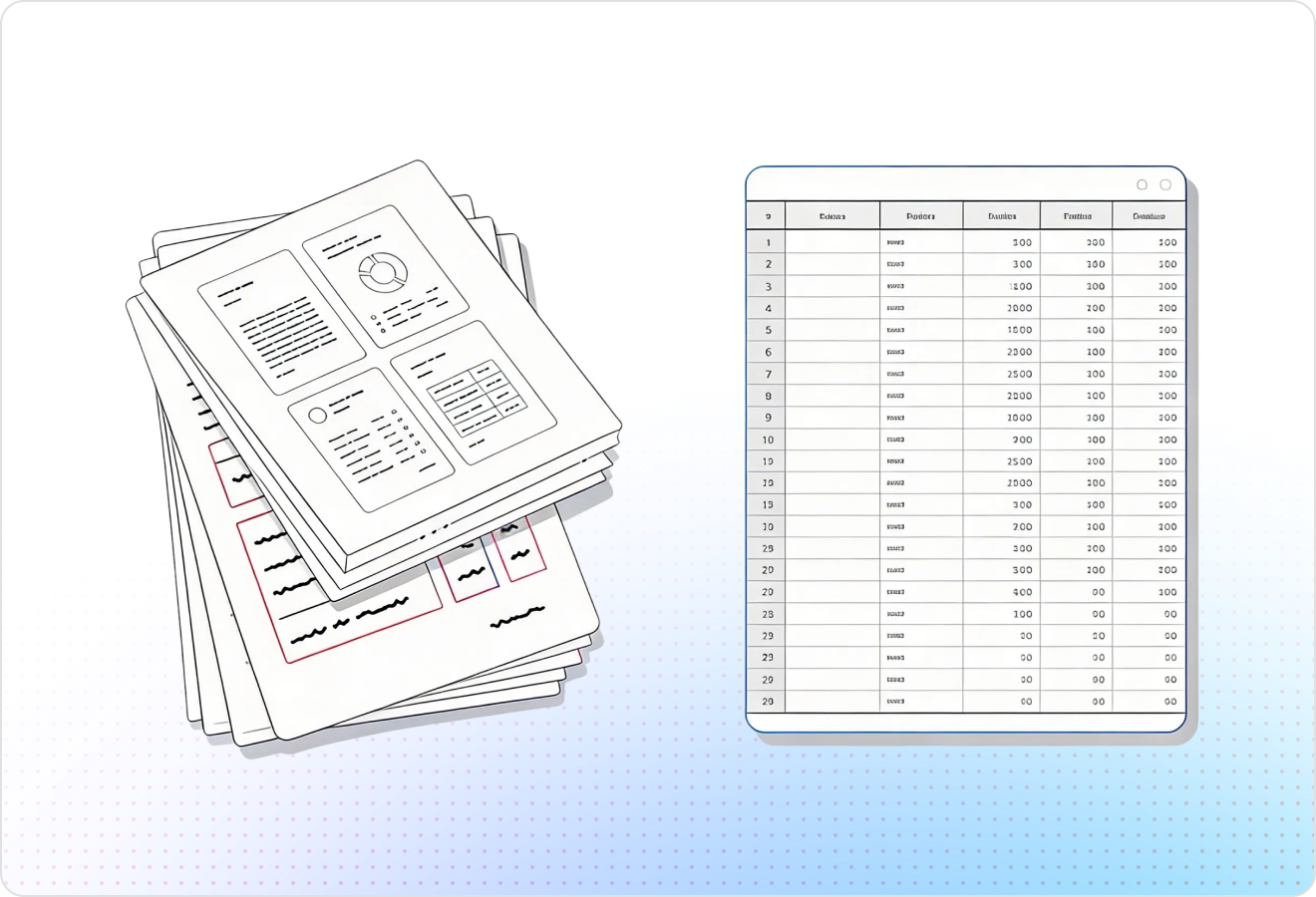
LlamaParse understands document layout, so it preserves reading order and correctly associates labels with values across multi-column certificate templates. This helps you reliably extract spouse names, dates, locations, and registrar details even when the scan format varies by jurisdiction.
02
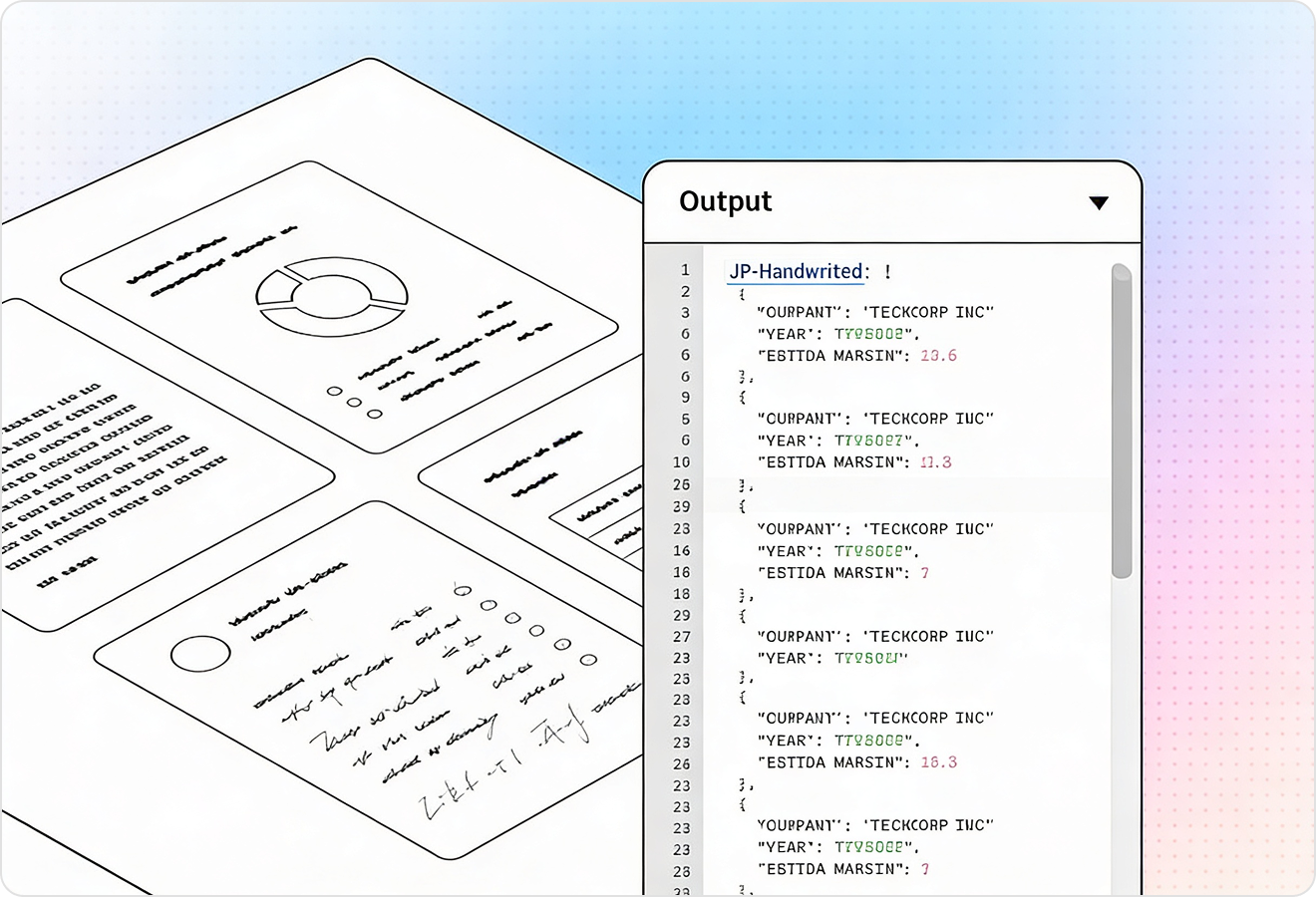
LlamaParse uses agentic document parsing with state-of-the-art text recognition and correction to reduce common extraction errors from low-quality scans. For marriage certificates, that means fewer misspelled names, swapped fields, or missing seal/annotation text that can break downstream verification.
03
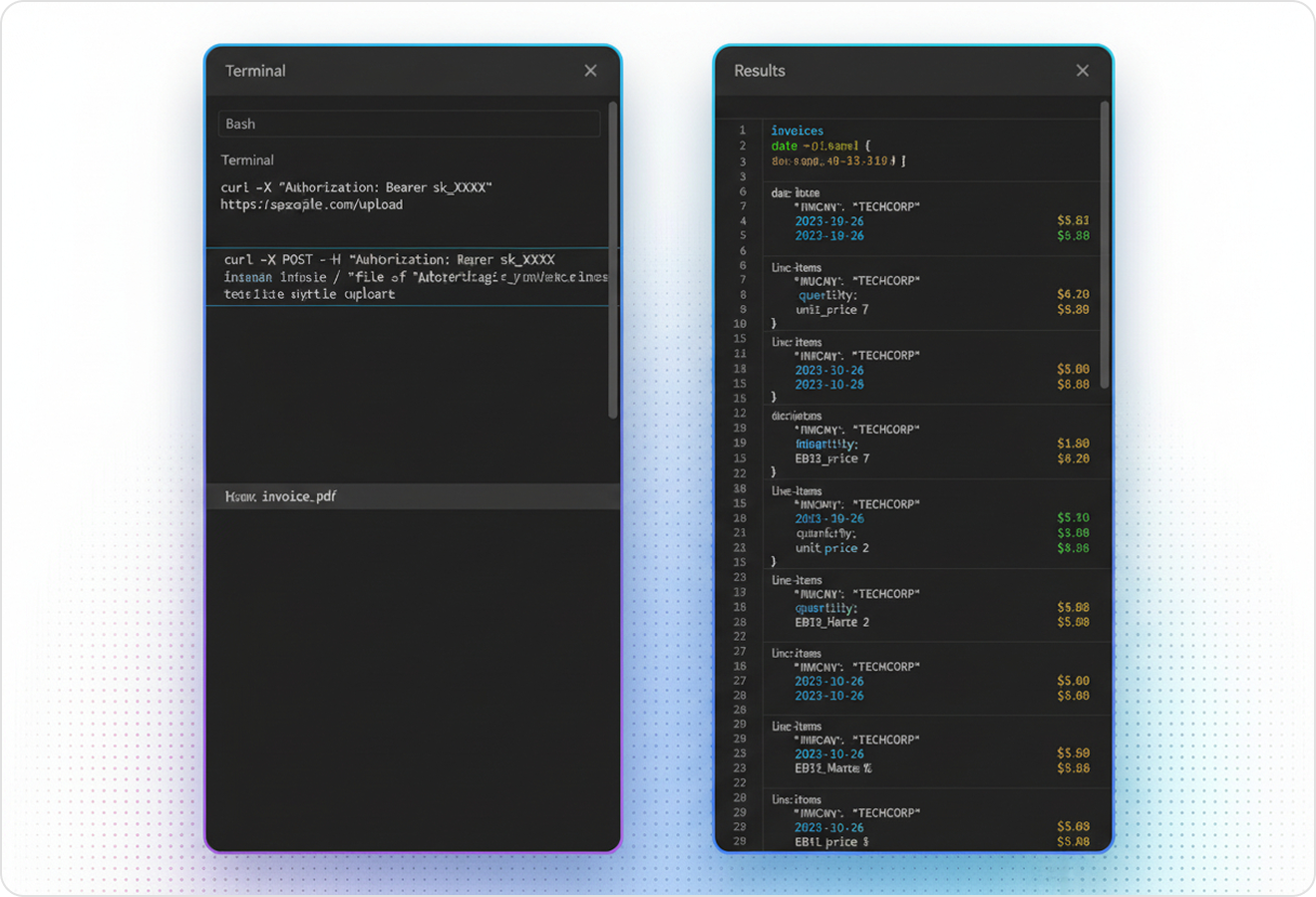
LlamaParse can return a clean JSON representation of the document content instead of a flat text dump. That makes it straightforward to map certificate data into your schema (e.g., spouse_1, spouse_2, marriage_date, certificate_id) for onboarding, compliance, or records systems.
04
LlamaParse attaches granular metadata like page references and element-level traceability so you can see where each extracted value came from. This is critical for marriage certificate workflows, where reviewers often need to validate specific fields against the original scan before approving or filing.
Technical OCR documentation
Explore our developer guides to easily connect your document pipelines to LlamaParse.
Explore the documentation
Our AI catches the typos that tired eyes miss.

Export to Excel, JSON, XML, or directly via API.

SOC2 Type II compliant with end-to-end encryption.

Train the tool on your specific forms in minutes, not days.

Average processing time of <3 seconds per page.
LlamaParse’s support of a wide variety of filetypes and its accuracy of parsing made it the best tool we tested in our evaluations. The LlamaIndex team was very responsive and we were off to the races within a day.
Common FAQs
01
Yes. Layout-aware field capture preserves reading order and correctly links labels to values across single- and multi-column templates, even when formats vary by county or country. This helps you reliably extract spouse names, dates, locations, and registrar details without creating a separate template for every jurisdiction.
02
Agentic parsing is designed to reduce common OCR failures like misspelled names, swapped fields, and missed seal/annotation text. It applies recognition plus correction steps to produce cleaner, more consistent outputs from imperfect scans. You’ll spend less time on manual cleanup and rework.
03
Yes—structured JSON output mode returns a clean, machine-ready representation instead of a flat text dump. It’s easy to map fields like spouse_1, spouse_2, marriage_date, certificate_id, and registrar_name into your existing schema. This speeds up integration and reduces downstream parsing logic.
04
How can my team verify where each extracted value came from in the original document?
Every extracted field can include verifiable metadata such as page references and element-level citations. Reviewers can quickly confirm critical values against the source scan before approving, filing, or triggering workflows. This creates a clear audit trail for compliance-sensitive processes.
05
What happens when a field is missing, unclear, or duplicated on the certificate?
The parser uses layout context to choose the most likely value and can surface ambiguous or partial extractions rather than silently guessing. With citations attached, your reviewers can resolve edge cases quickly by checking the exact region of the scan. This helps you maintain data quality without slowing throughput.
06
How quickly can we integrate marriage certificate OCR into our existing workflow?
You can start by sending your certificate scans and receiving structured JSON that maps directly to your data model. Because the output is consistent and traceable, most teams minimize custom post-processing and focus only on business rules. This shortens time-to-value and makes it easier to scale volume over time.