Nov 14, 2025
Document AI: The Next Evolution of Intelligent Document ProcessingPersona
Industry
Use cases
Form 990 OCR
[ Form 990 OCR ]

Use LlamaParse to turn 990 PDFs into structured JSON with citations and confidence scores you can trust.
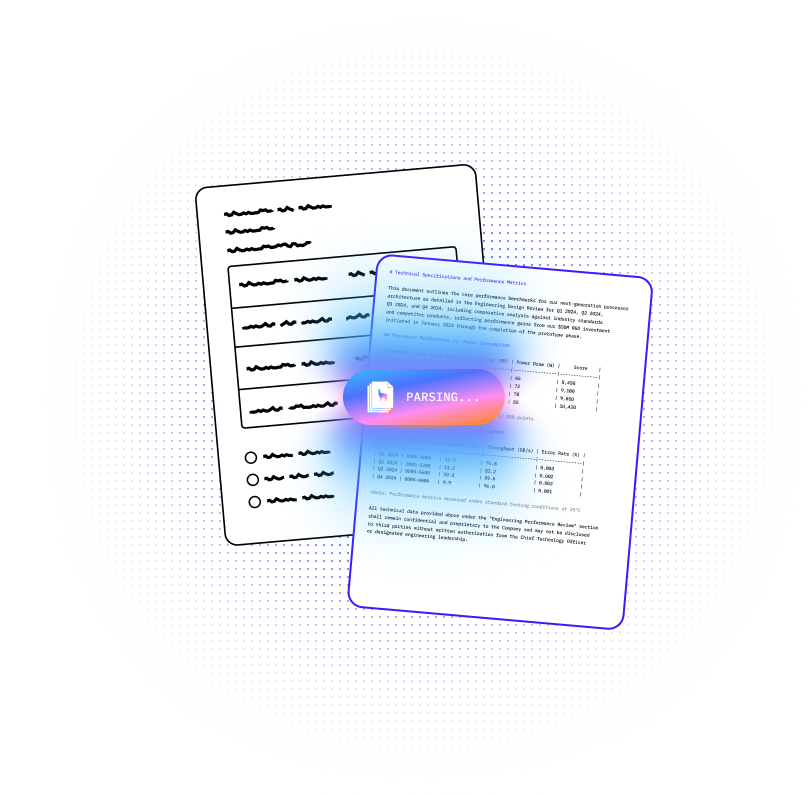
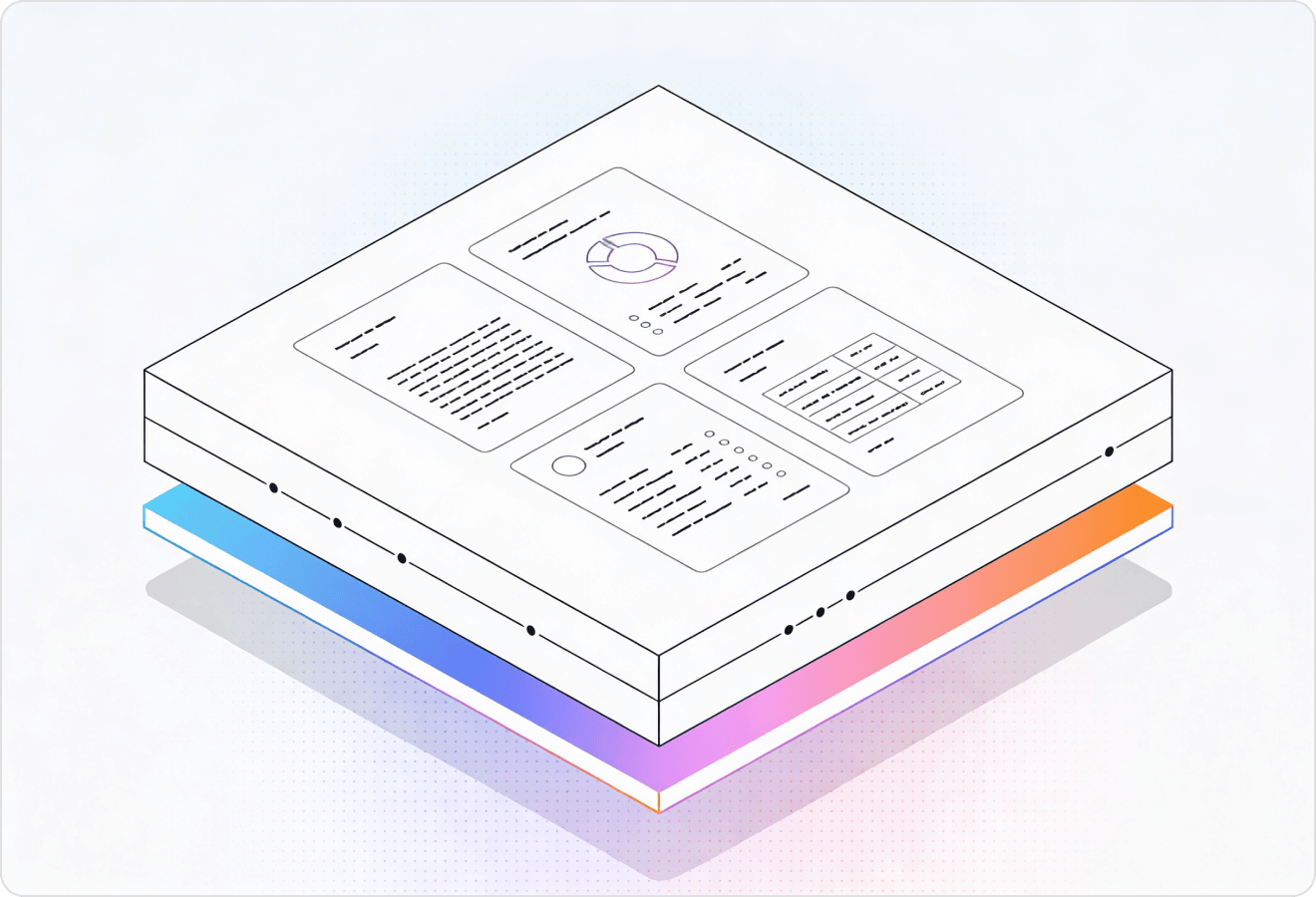

LlamaParse turns messy Form 990 PDFs into clean, schema-ready JSON by understanding layout, tables, and line items instead of guessing at text. Agentic validation and confidence metadata reduce rework, so you can ship reliable nonprofit data into analytics, compliance, and downstream workflows faster.
Best-in-Class Accuracy

Use LlamaParse in LlamaCloud to parse Form 990 PDFs into clean JSON or Markdown with layout-aware table extraction, so revenue, grants, and functional expenses aren’t scrambled across columns. Teams can auto-fill internal workpapers and reconcile line items with verifiable citations and confidence metadata, reducing audit-season rework.

Convert thousands of 990 filings into a searchable dataset that captures schedules, key officer compensation, and program spend—even when data lives in dense tables and multi-page attachments. Fundraising teams can automatically flag capacity signals and alignment cues from filings to prioritize outreach and tailor proposals.

Ingest Form 990s at scale and extract standardized fields like governance policies, related-party transactions, and program outcomes using natural-language parsing instructions that match your review rubric. Build faster pre-award risk screening and post-award monitoring with traceable outputs tied back to exact pages and coordinates.

Ship a Form 990 ingestion pipeline quickly with LlamaParse APIs that return structured JSON for downstream scoring, dashboards, and entity profiles without brittle, custom PDF parsing code. Control burn with tier-based agentic processing and Auto Mode so only the messiest scans use heavier vision models while clean filings stay cheap.
The Solution
01
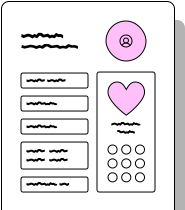
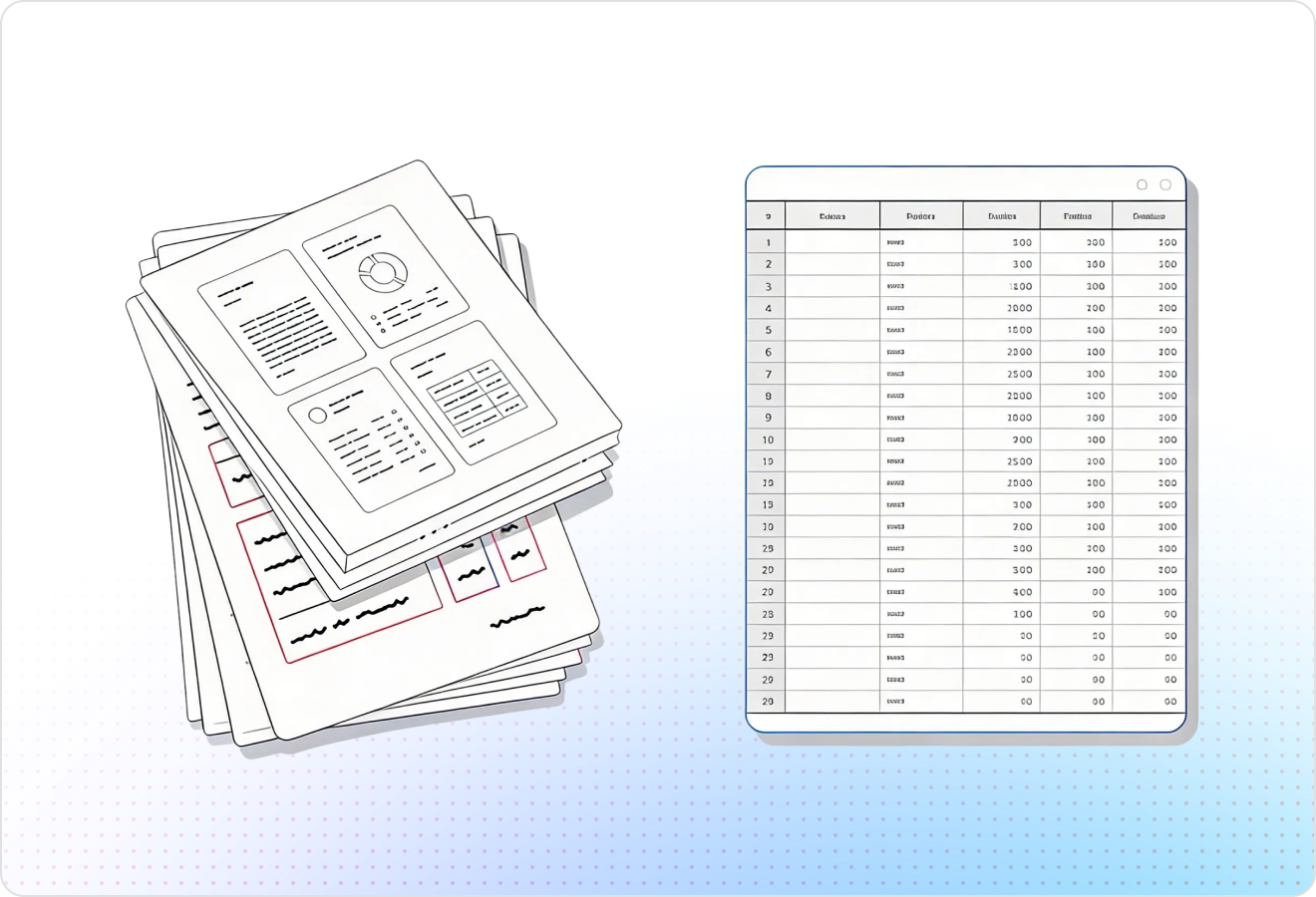
LlamaParse detects reading order, sections, and line-item boundaries so multi-column Form 990 pages don’t get scrambled into unusable text. This keeps part/line context intact, which is critical when you need reliable extraction of totals, headings, and narrative responses.
02
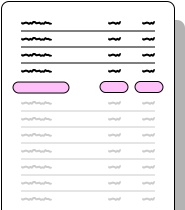
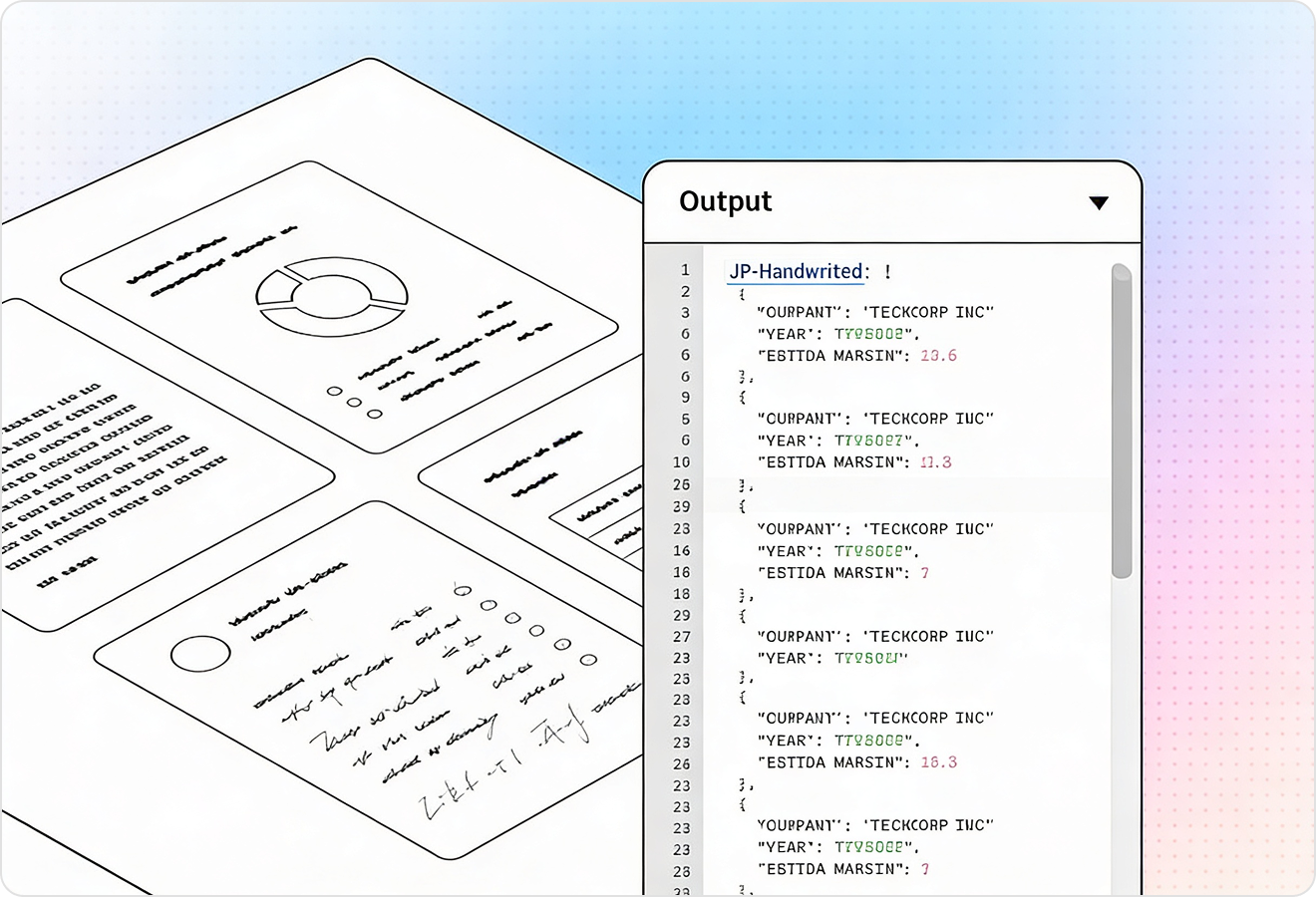
LlamaParse pulls complex tables into clean, structured outputs without breaking row/column alignment. That means schedules and statement tables in Form 990 stay analyzable for downstream validation, analytics, and database loading.
03
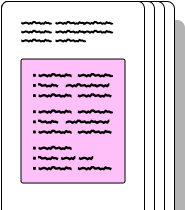
LlamaParse runs self-correction and validation steps to catch common scan errors, missing fields, and inconsistent numbers before results are returned. For Form 990 workflows, this reduces manual review on high-impact fields like revenue, expenses, and officer compensation.
04
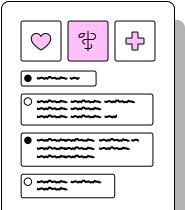
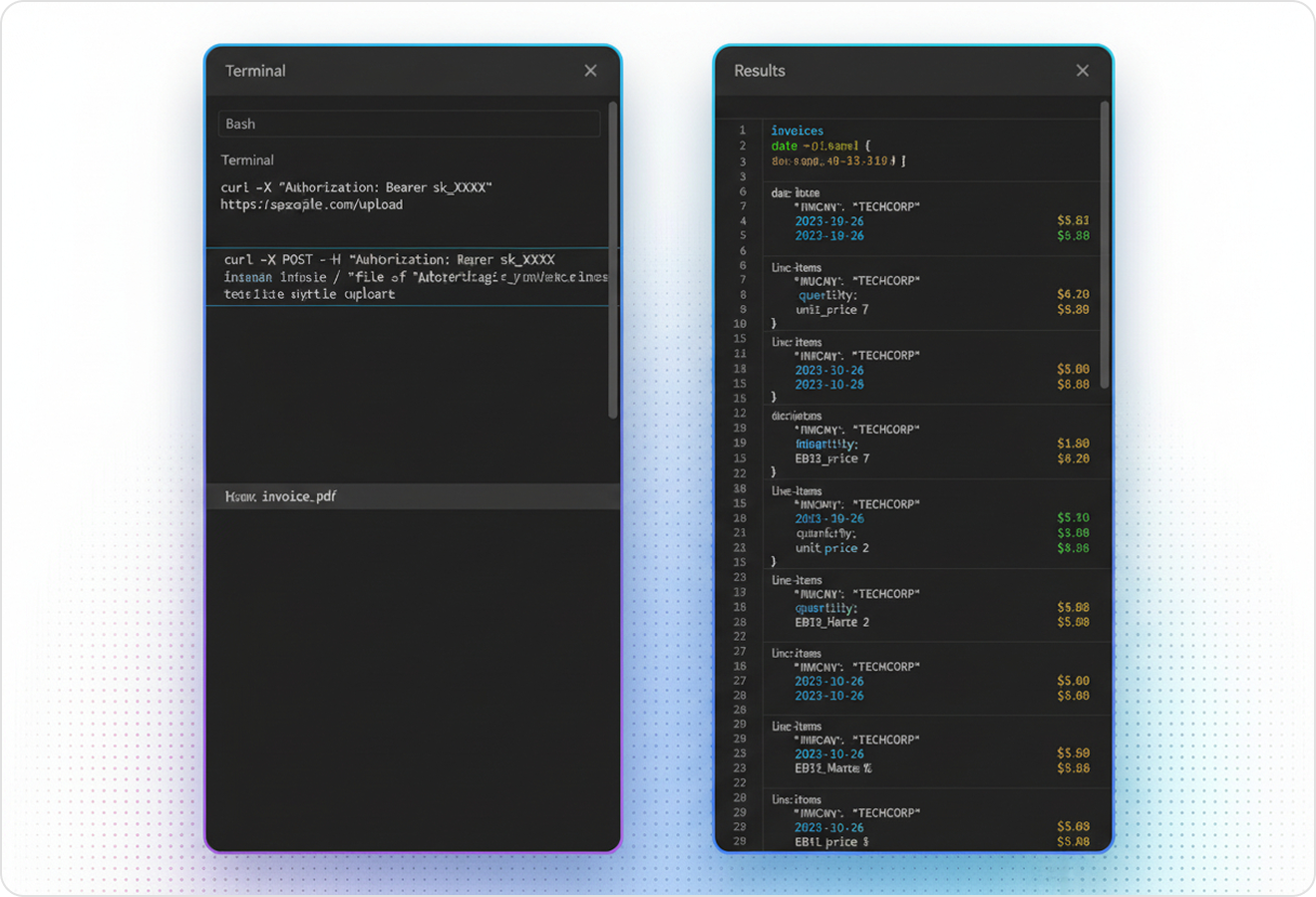
LlamaParse can emit structured JSON with granular metadata like page references and element coordinates for each extracted field. For Form 990 OCR-style pipelines, this gives you traceability to audit any value back to its source region and confidently support human-in-the-loop checks.
Technical OCR documentation
Explore our developer guides to easily connect your document pipelines to LlamaParse.
Explore the documentation
Our AI catches the typos that tired eyes miss.

Export to Excel, JSON, XML, or directly via API.

SOC2 Type II compliant with end-to-end encryption.

Train the tool on your specific forms in minutes, not days.

Average processing time of <3 seconds per page.
LlamaParse’s support of a wide variety of filetypes and its accuracy of parsing made it the best tool we tested in our evaluations. The LlamaIndex team was very responsive and we were off to the races within a day.
Common FAQs
01
Our layout-aware parsing detects columns, sections, and line-item boundaries so text doesn’t get merged or reordered. This preserves Part and line context, which is essential for reliable totals, headings, and narrative responses.
02
Yes—tables are extracted into clean, structured outputs that keep row/column alignment intact. That makes schedules and statement tables ready for analysis, validation, and database loading without manual reformatting.
03
Agentic validation loops automatically check for common scan errors, missing values, and inconsistent numbers, then self-correct where possible. You get cleaner results upfront and spend less time on manual review for high-impact fields.
04
How do you ensure key financial fields like revenue, expenses, and officer compensation are trustworthy?
We run consistency checks across related lines and totals to flag anomalies before results are returned. This reduces risk in downstream reporting and helps reviewers focus only on exceptions instead of rechecking every page.
05
Do you provide JSON output that’s audit-friendly for compliance and QA workflows?
Yes—outputs can include structured JSON plus citations like page references and element coordinates for each extracted value. That traceability lets you quickly verify any number against its exact source location for confident audits and human-in-the-loop reviews.
06
How quickly can we integrate this into an existing Form 990 OCR pipeline?
You can plug the structured JSON output directly into your validation, analytics, or ETL steps with minimal mapping. Because fields include source citations, it’s also easy to build reviewer tooling and exception workflows from day one.