Nov 14, 2025
Document AI: The Next Evolution of Intelligent Document ProcessingPersona
Industry
Use cases
Agentic Document Processing
[ Agentic Document Processing ]

Turn messy PDFs into verified JSON or Markdown with layout-aware parsing and self-checking accuracy.
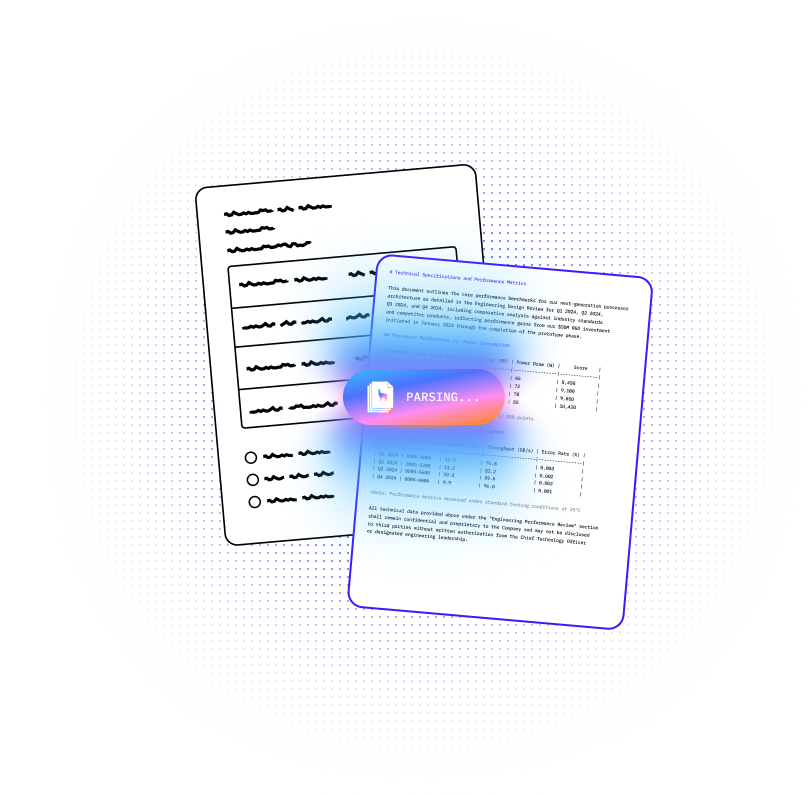
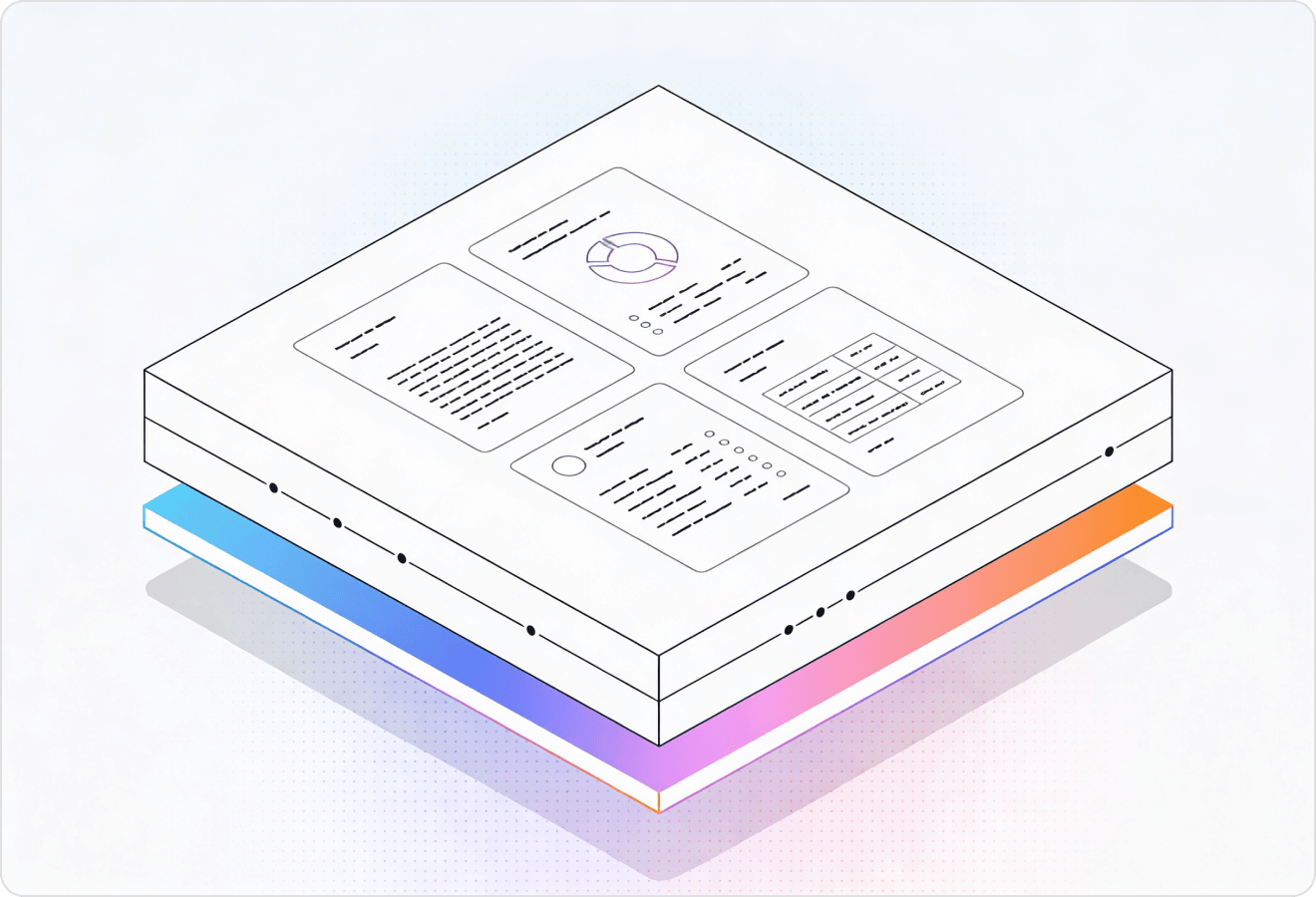

LlamaParse turns messy PDFs, scans, and forms into structured, AI-ready Markdown or JSON by understanding layout, tables, and embedded visuals. Agentic parsing uses validation loops and citations so your workflows ship with higher accuracy, less manual review, and predictable scale.
Best-in-Class Accuracy

Turn bank statements, pay stubs, tax forms, and credit packets into reliable JSON with layout-aware table extraction, so underwriting rules don’t break when templates change. Use citations, confidence scores, and auto-correction loops to cut manual review while keeping audits defensible.

Parse POs, invoices, packing slips, and spec sheets into clean line-item data even when tables are nested, multi-page, or scanned at low quality. Convert diagrams, charts, and tolerances into AI-ready Markdown/JSON so procurement and QA systems can reconcile shipments and flag exceptions automatically.

Extract clause libraries, defined terms, and obligation schedules from messy PDFs and scanned exhibits while preserving reading order across multi-column contracts. Use natural-language parsing instructions to output matter-specific schemas for intake, eDiscovery triage, and renewal tracking without brittle regex pipelines.

Ship an ingestion layer fast: LlamaParse turns whatever customers upload—PDFs, slides, spreadsheets—into structured Markdown/JSON that your product can reliably reason over. Control burn with tier-based agentic processing and cost optimizer mode, reserving heavyweight parsing only for the pages that actually need it.
The Solution
01
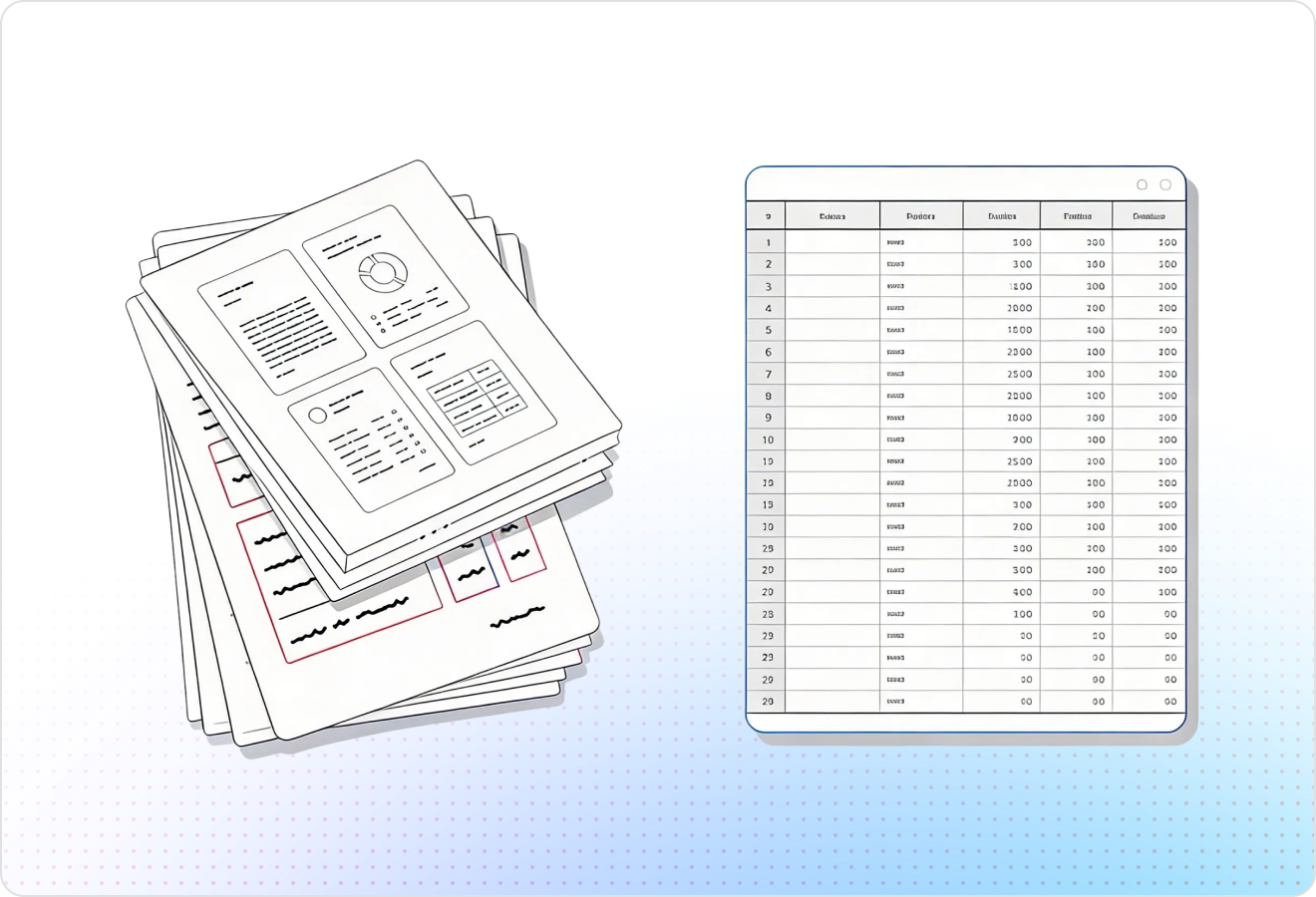
LlamaParse analyzes page layout to preserve reading order across headers, footers, multi-column text, and nested sections. That structure is the foundation of an agentic document processing platform because downstream agents can reliably reason over “what’s a section vs. a caption vs. a table,” not just raw text.
02
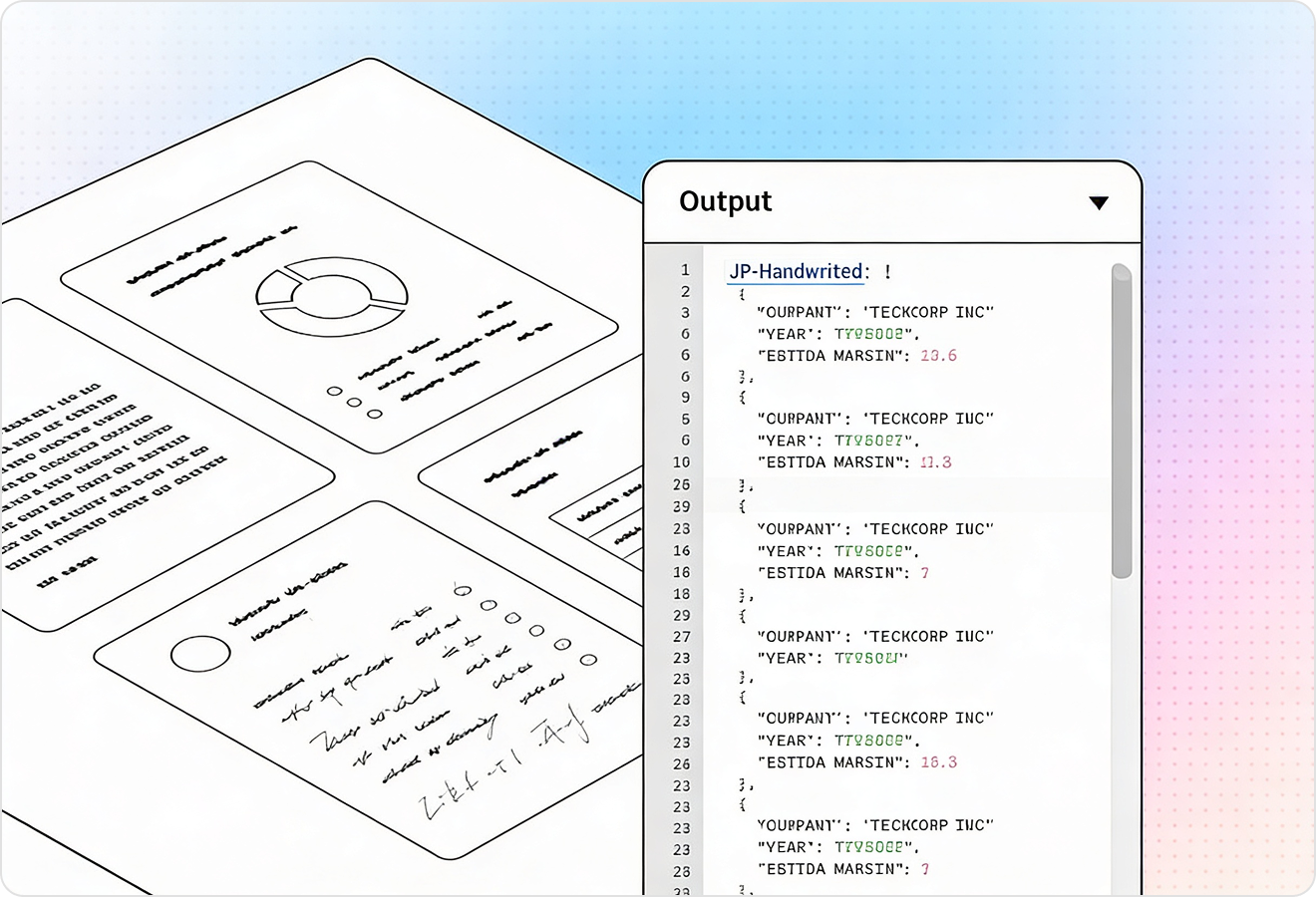
LlamaParse interprets tables, charts, images, and math—turning visual elements into AI-readable representations like Markdown tables or LaTeX. This lets document agents act on the full document context (including visuals), which is critical when automations depend on what’s shown, not only what’s typed.
03
LlamaParse routes each page or element to the right combination of LLM/VLM and extraction strategy, upgrading only when the document is genuinely complex. You get platform-grade accuracy without overpaying on easy pages, which is exactly how scalable agentic document processing stays both reliable and cost-controlled.
04
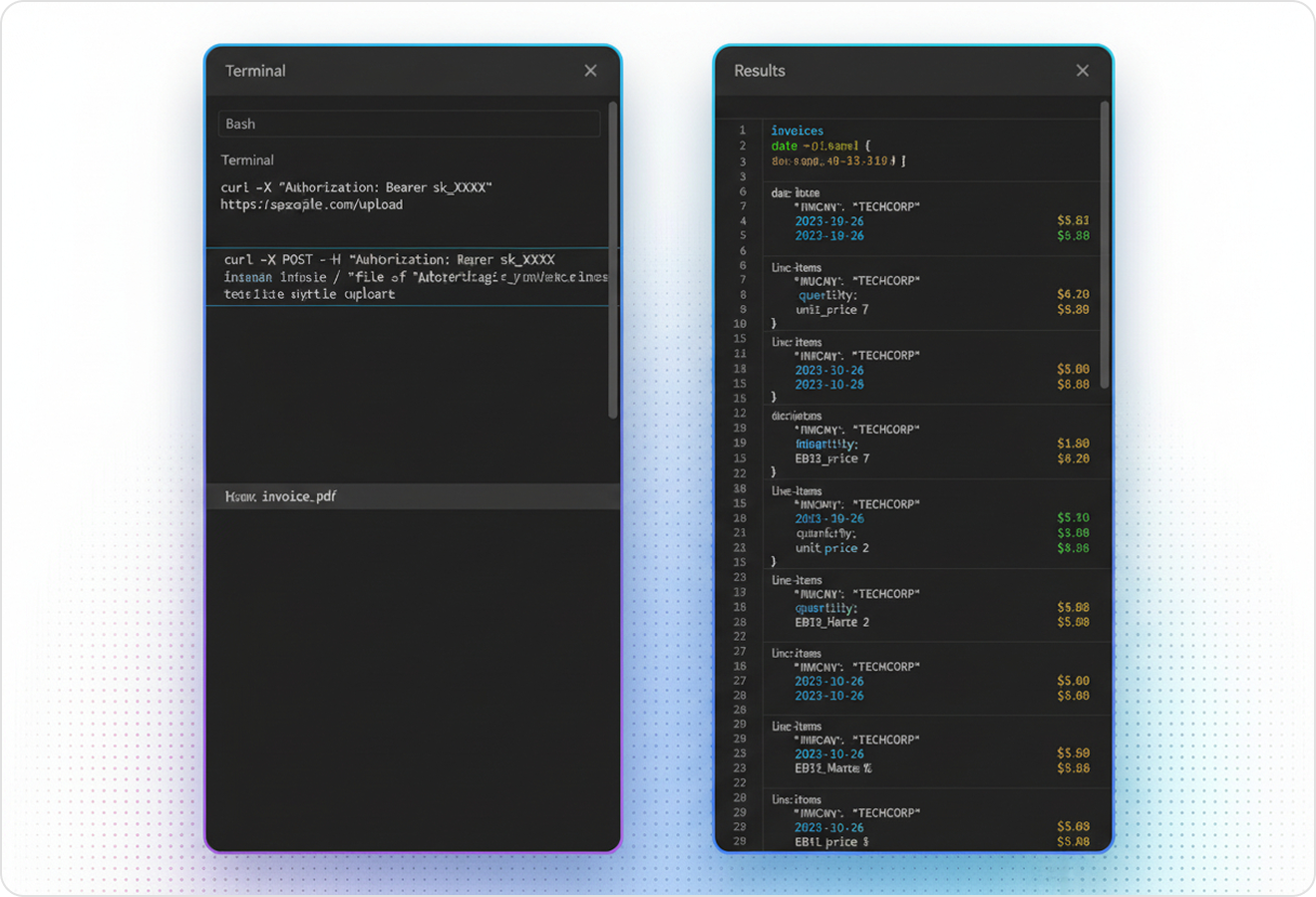
LlamaParse can emit clean Markdown/HTML or strict JSON with granular metadata like page numbers, element types, and spatial coordinates. That traceability makes agent workflows auditable and debuggable, so you can add validation, human review, or downstream automations with confidence.
Technical OCR documentation
Explore our developer guides to easily connect your document pipelines to LlamaParse.
Explore the documentation
Our AI catches the typos that tired eyes miss.

Export to Excel, JSON, XML, or directly via API.

SOC2 Type II compliant with end-to-end encryption.

Train the tool on your specific forms in minutes, not days.

Average processing time of <3 seconds per page.
LlamaParse’s support of a wide variety of filetypes and its accuracy of parsing made it the best tool we tested in our evaluations. The LlamaIndex team was very responsive and we were off to the races within a day.
Common FAQs
01
The platform preserves reading order across headers, footers, multi-column text, and nested sections—so the output reflects the document’s true structure, not just extracted text. That makes downstream agents far more reliable when they need to distinguish sections, captions, tables, and footnotes.
02
Yes—multimodal understanding converts visual elements into AI-readable forms like Markdown tables and LaTeX, so agents can reason over what’s shown as well as what’s written. This is especially useful for financial statements, technical docs, and reports where key information lives in visuals.
03
Agentic orchestration routes each page or element to the most appropriate model and extraction strategy, and only “upgrades” when the content genuinely requires it. You get platform-grade accuracy on tough documents without paying premium compute for every simple page.
04
Do you provide structured outputs that are safe to use in automation pipelines?
You can export clean Markdown/HTML or strict JSON, along with granular metadata like page numbers, element types, and spatial coordinates. That traceability enables validation, human review, and reliable downstream automations with fewer silent failures.
05
How do we audit results and debug when something looks off?
Every extracted element can be traced back to its source location, making it easy to verify what was captured and where it came from. This auditability helps teams quickly diagnose edge cases, improve prompts or rules, and maintain compliance standards.
06
How quickly can we integrate this into our agent workflows?
The platform is designed to drop into existing pipelines with standardized outputs (Markdown/HTML/JSON) and metadata that agents can immediately act on. Most teams start with a single document type and expand iteratively once they see consistent, verifiable results in production.