Nov 14, 2025
Document AI: The Next Evolution of Intelligent Document ProcessingPersona
Industry
Use cases
Green Card OCR
[ Green Card OCR ]

Use LlamaParse to turn green card scans into clean JSON with citations and confidence scores.
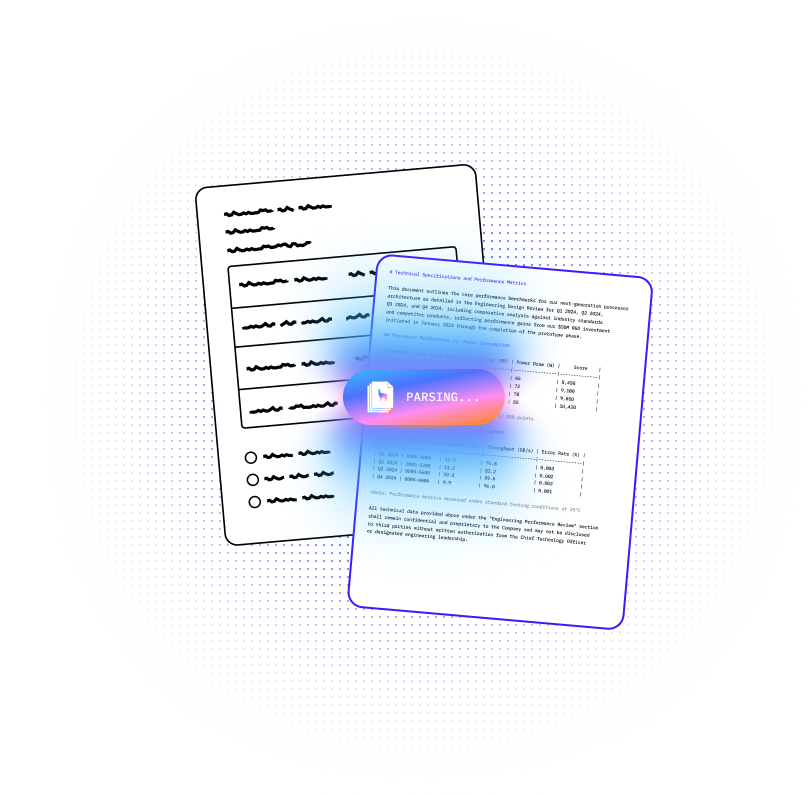

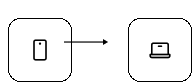
LlamaParse turns green card scans and photos into structured, field-level JSON by understanding layout, labels, and the card’s visual elements. Agentic parsing adds validation loops and confidence metadata so you can automate intake, reduce manual review, and trace every value back to source.
Best-in-Class Accuracy

Use LlamaParse to convert green card scans and supporting ID packets into clean JSON and Markdown, preserving reading order across multi-page, multi-column forms so staff stop retyping fields by hand. Metadata with page coordinates and confidence scores makes it easy to audit extracted numbers and names during case prep, reducing RFEs caused by transcription errors.

Automate KYC by parsing green cards alongside proofs of address, capturing IDs, dates, and document evidence even when documents are skewed, low-resolution, or embedded in mixed PDF uploads. Tier-based agentic processing routes simple pages cheaply while escalating only the messy ones, keeping verification costs predictable without sacrificing approval accuracy.

Streamline I-9 and E-Verify workflows by extracting green card details from employee uploads and returning structured outputs that map directly into HRIS fields, eliminating back-and-forth over unreadable scans. Layout-aware parsing handles photos, stamps, and inconsistent formatting so onboarding doesn’t stall when documents don’t look “perfect.”

Ship faster by using LlamaParse as the ingestion layer for green card document capture, turning raw uploads into schema-ready JSON without building brittle OCR post-processing or regex pipelines. Natural-language parsing instructions let you iterate on the exact fields you need for your API in minutes, while auto-correction loops reduce edge-case failures that break early customer demos.
The Solution
01
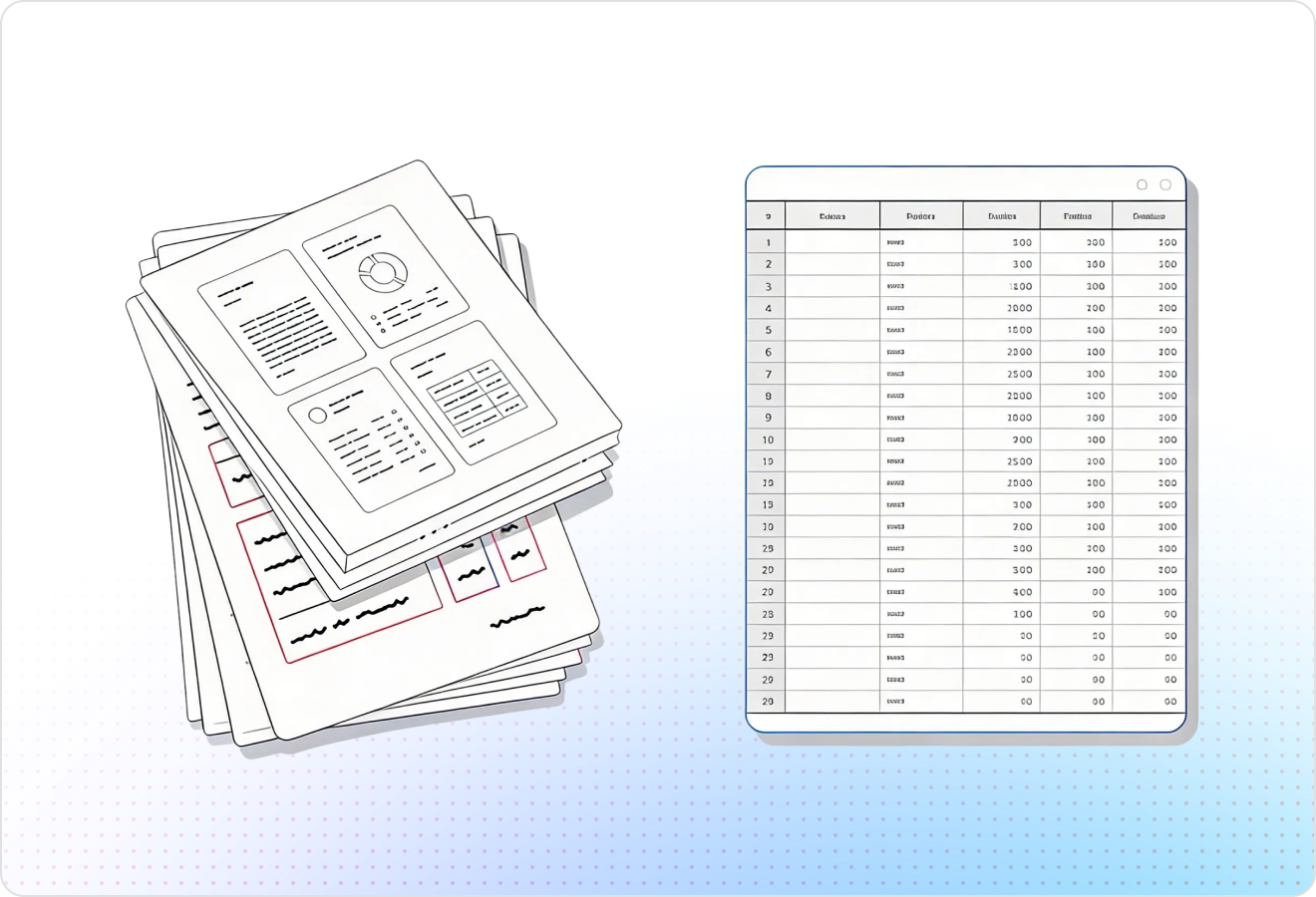
LlamaParse uses layout-aware computer vision to understand where each element lives on the card, not just the raw characters. That means key Green Card fields like name, USCIS number, category, and dates are extracted in the right order even from skewed photos or cropped scans.
02
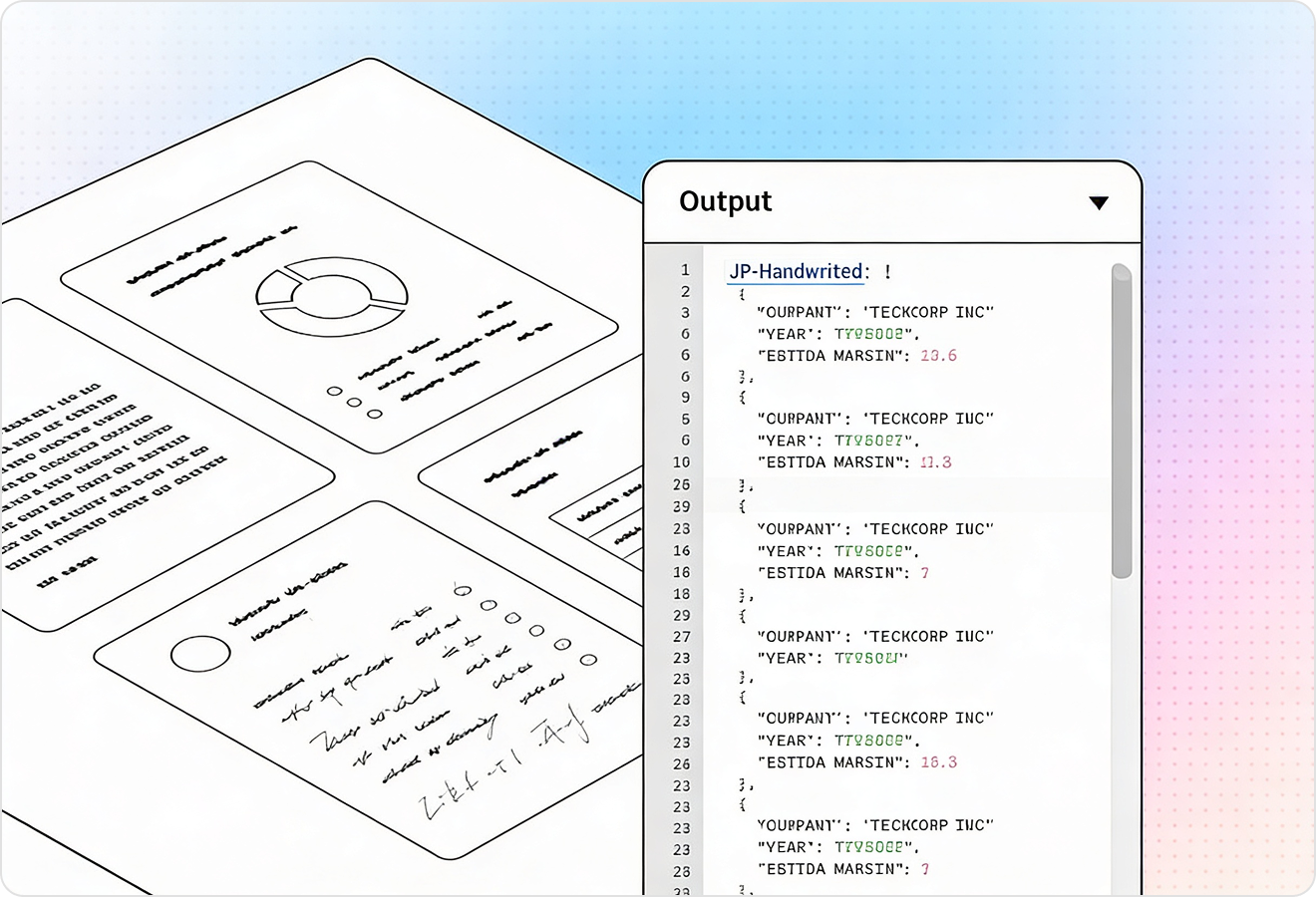
Return a clean JSON payload with consistent keys so Green Card data drops straight into your KYC, onboarding, or case management system. This avoids brittle post-processing and makes it easy to validate required fields like expiration date and document number.
03
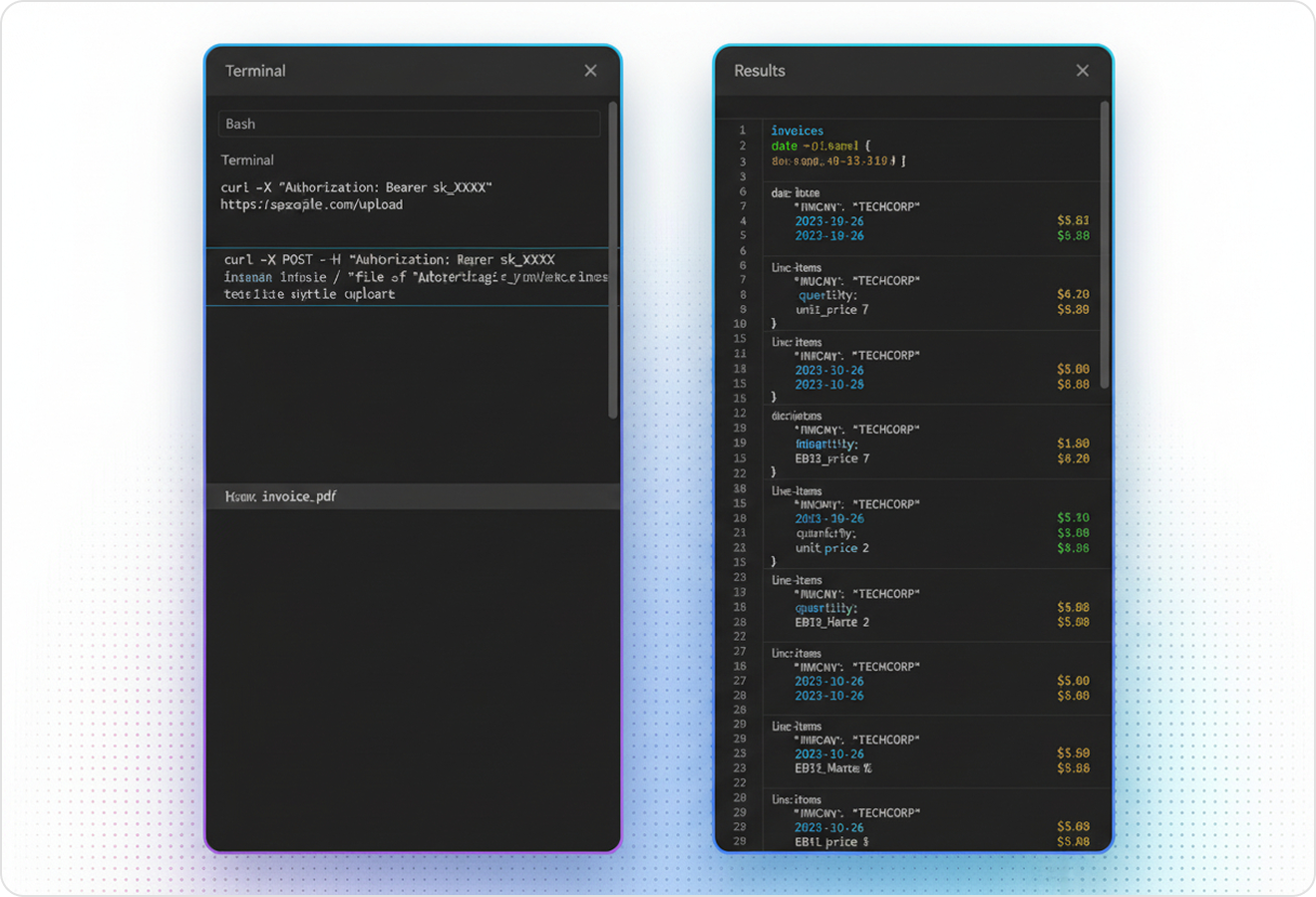
Every extracted value can include page/location metadata so you can trace exactly where it came from in the image. For Green Card workflows, that traceability supports human review, dispute resolution, and auditability without re-checking the whole document.
04
LlamaParse runs validation and self-correction steps to catch common extraction failures like swapped characters, missing digits, or broken line segments. This improves straight-through processing for Green Card scans that are low-resolution, shadowed, or captured on mobile.
Technical OCR documentation
Explore our developer guides to easily connect your document pipelines to LlamaParse.
Explore the documentation
Our AI catches the typos that tired eyes miss.

Export to Excel, JSON, XML, or directly via API.

SOC2 Type II compliant with end-to-end encryption.

Train the tool on your specific forms in minutes, not days.

Average processing time of <3 seconds per page.
LlamaParse’s support of a wide variety of filetypes and its accuracy of parsing made it the best tool we tested in our evaluations. The LlamaIndex team was very responsive and we were off to the races within a day.
Common FAQs
01
Our layout-aware field capture reads the card as a document, not just a string of characters, so it keeps fields like name, USCIS number, category, and dates in the correct order. It’s designed to handle common real-world issues like tilted mobile photos, partial crops, and uneven lighting with fewer mis-assignments.
02
You receive a clean, structured JSON payload with consistent keys so the results drop directly into KYC, onboarding, or case management workflows. This reduces brittle post-processing and makes it straightforward to validate required fields such as document number and expiration date.
03
Yes—each extracted field can include verifiable metadata and citations (location details) so reviewers can trace values back to the exact spot on the image. That speeds up QA, supports dispute resolution, and improves auditability without re-checking the entire document.
04
How do you handle common OCR errors like swapped characters or missing digits?
We run automatic correction loops that validate and self-correct frequent failure modes, such as O/0 or I/1 swaps, dropped characters, and broken line segments. The result is higher straight-through processing rates, especially on low-resolution or shadowed captures.
05
Will it reliably extract specific Green Card fields like USCIS number, category, and dates?
Yes—the parser is built to capture key Green Card fields as discrete, structured values rather than leaving you to infer them from raw text. Layout-awareness helps ensure each field is mapped to the right label even when the scan is imperfect.
06
How quickly can we integrate this into our onboarding or KYC flow?
Because the output is standardized JSON, most teams can connect it to existing forms, validators, and case tools with minimal transformation. Start with the fields you need today and expand coverage as your workflow evolves, without rewriting fragile parsing rules.