Nov 14, 2025
Document AI: The Next Evolution of Intelligent Document ProcessingPersona
Industry
Use cases
OCR Resume Parsing
[ OCR Resume Parsing ]

Use LlamaParse to capture every field, table, and section into clean JSON you can trust.
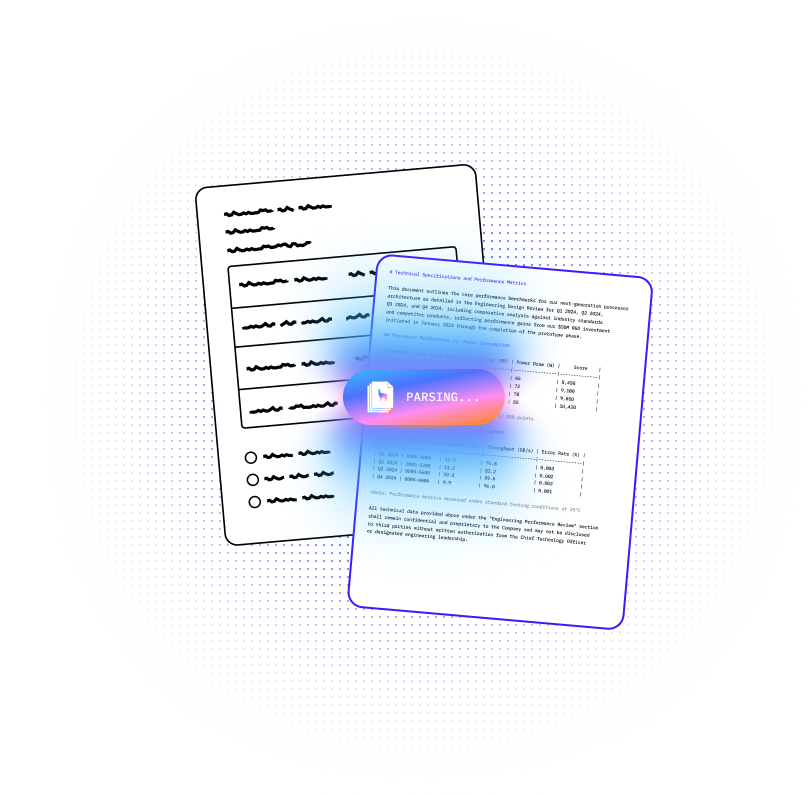
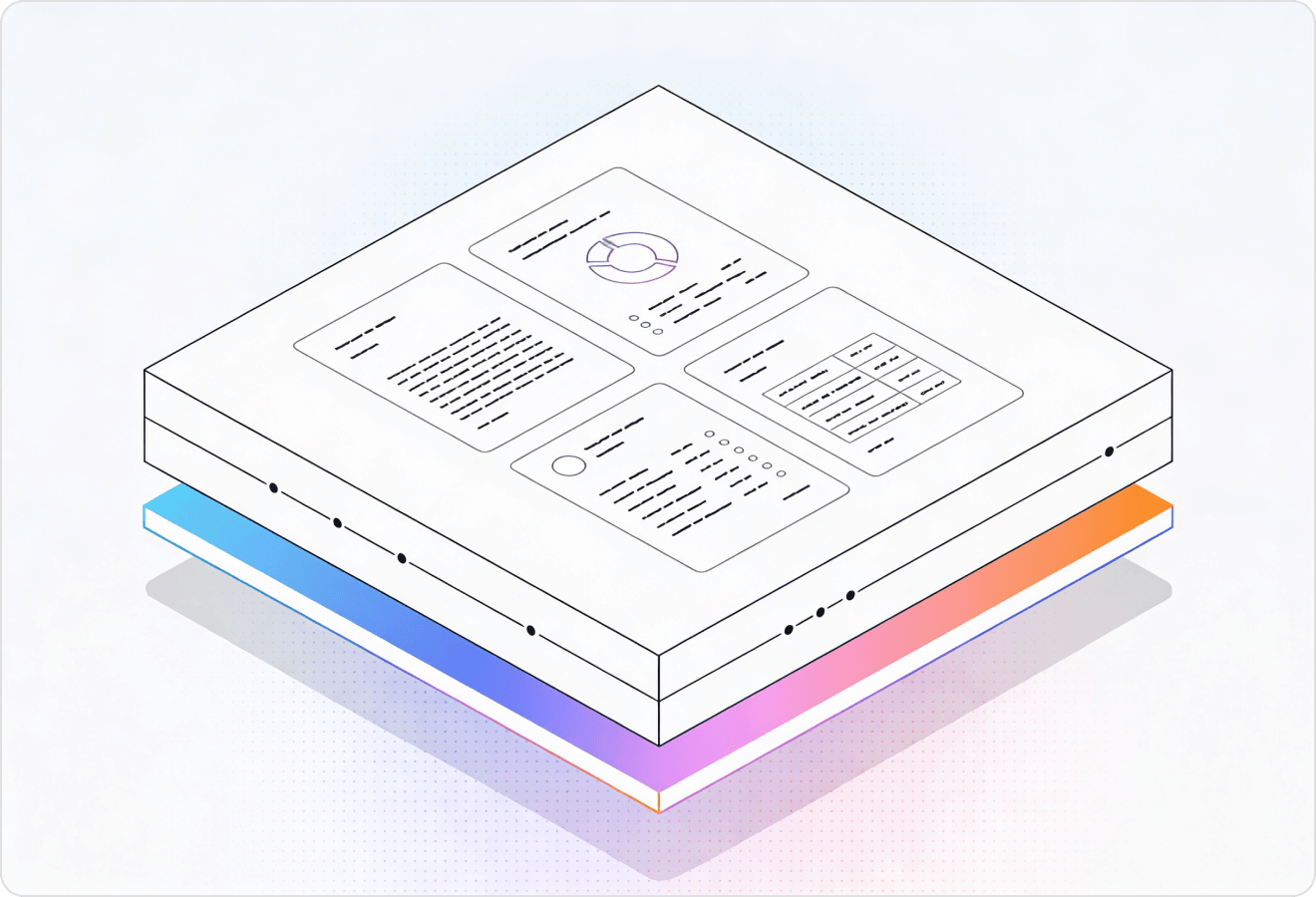

LlamaParse turns messy PDFs and scanned resumes into consistent, schema-ready JSON in minutes, so your pipeline stops breaking on layout changes. Agentic document parsing validates fields like skills, dates, and employers with confidence metadata, cutting manual review and speeding shortlist decisions.
Best-in-Class Accuracy

Use LlamaParse to turn inbound resumes from email, LinkedIn exports, and scanned PDFs into clean JSON, so your ATS and CRM stay consistent without weeks of parsing glue code. Natural-language parsing instructions let you iterate on fields like skills, seniority, and work authorization in hours—not sprints—while auto correction loops reduce false positives that waste recruiter time.

LlamaParse extracts structured candidate profiles from wildly inconsistent resume formats, preserving multi-column layouts and tables so work history and project timelines don’t get scrambled. JSON mode with granular metadata gives you traceability back to the exact page and section, making compliance audits and client submissions faster and less error-prone.

Parse resumes and CV attachments in onboarding and third-party risk workflows to verify employment history, certifications, and gaps without manual data entry. Tier-based agentic processing routes only the messy scans and image-heavy resumes to higher-accuracy parsing, keeping processing costs predictable at high volume.

Convert large batches of applicant resumes—including scanned forms and legacy templates—into standardized records that plug into civil service HR systems and scoring rubrics. Layout-aware structure and table extraction preserves sections like eligibility, veteran status, and credential lists so reviewers don’t miss required fields during high-stakes hiring cycles.
The Solution
01
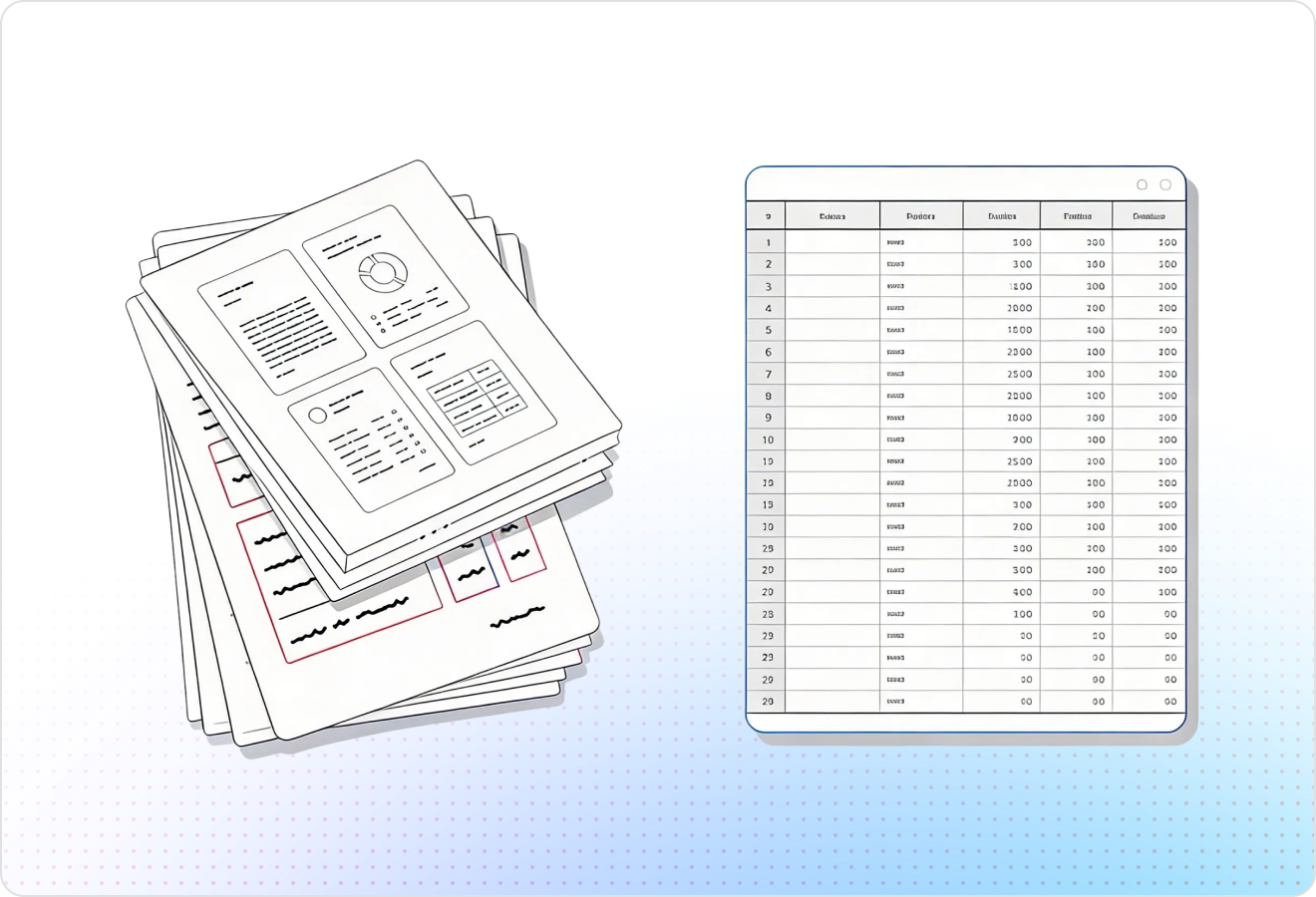
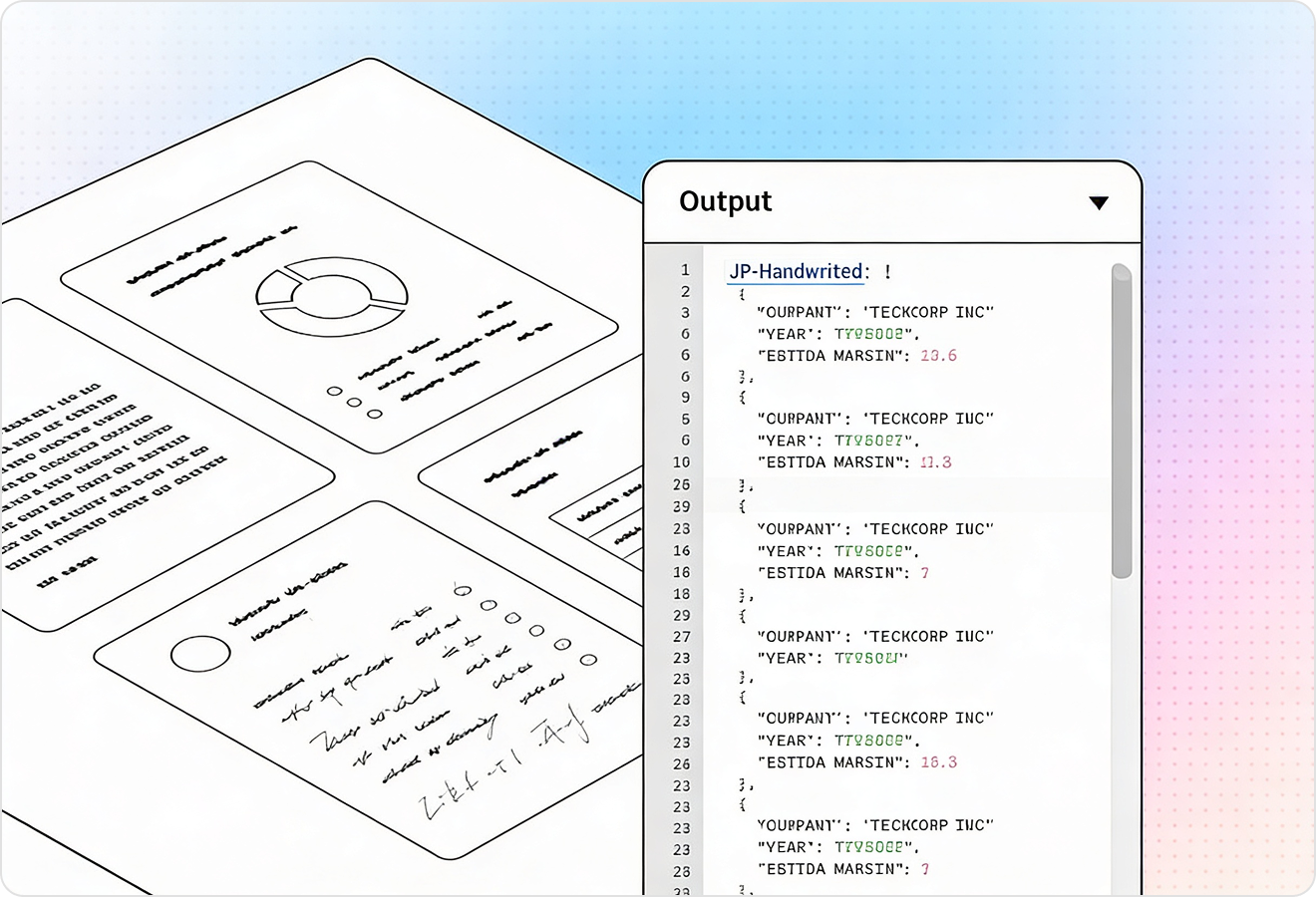
LlamaParse understands real resume layouts—multi-column templates, sidebars, headers/footers, and section breaks—so the reading order stays intact. That means you can reliably separate Experience, Education, Skills, and Projects without brittle template rules.
02
It accurately extracts tables, grids, and dense bullet lists into clean, structured text instead of scrambled OCR output. This is ideal for resumes where skills matrices, project summaries, and technology lists often appear as compact tables or nested bullets.
03
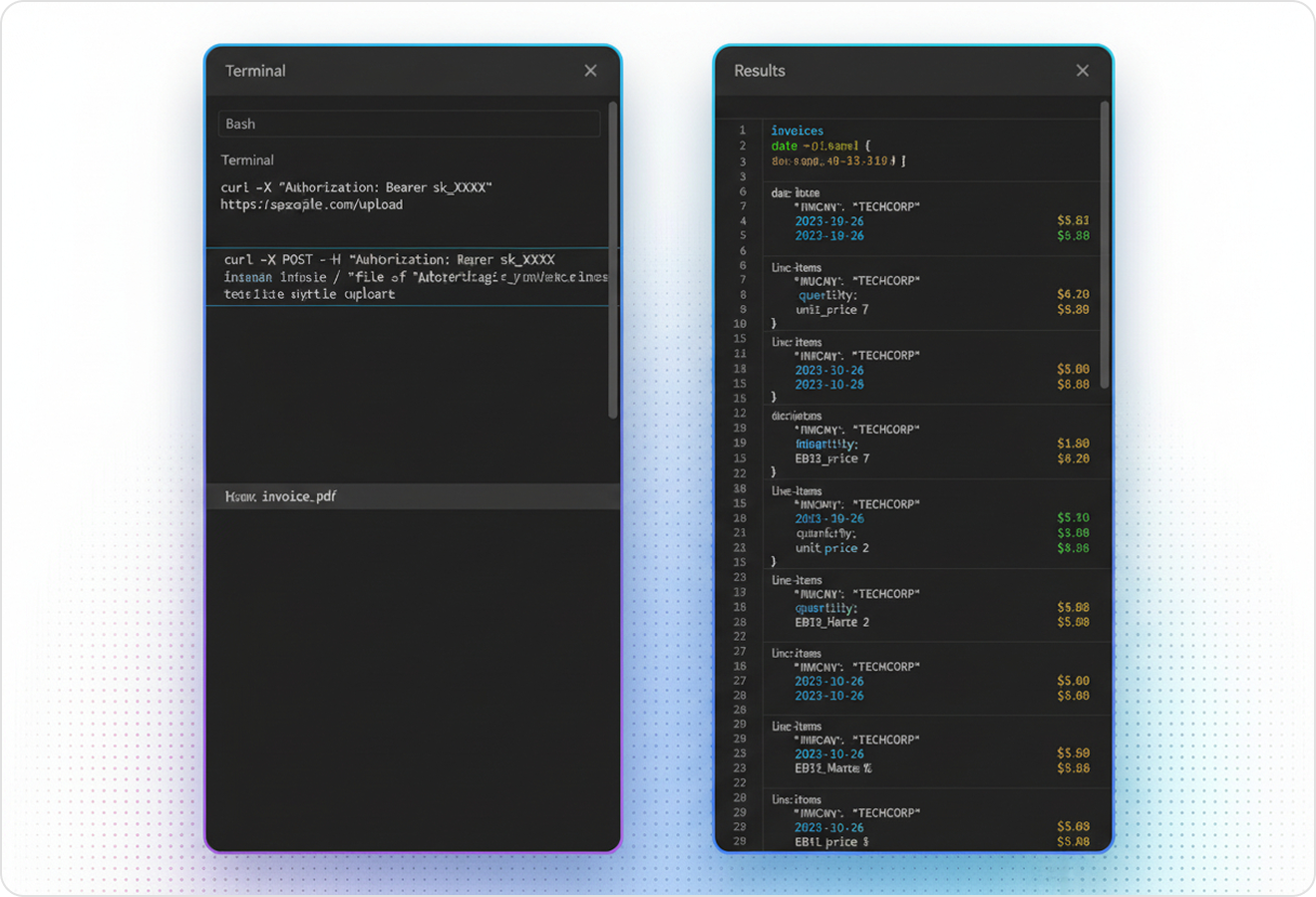
LlamaParse can return structured JSON and attach granular metadata like page references and element locations for each extracted field. For resume parsing, this makes it easy to populate ATS schemas while keeping traceability for audits and human review.
04
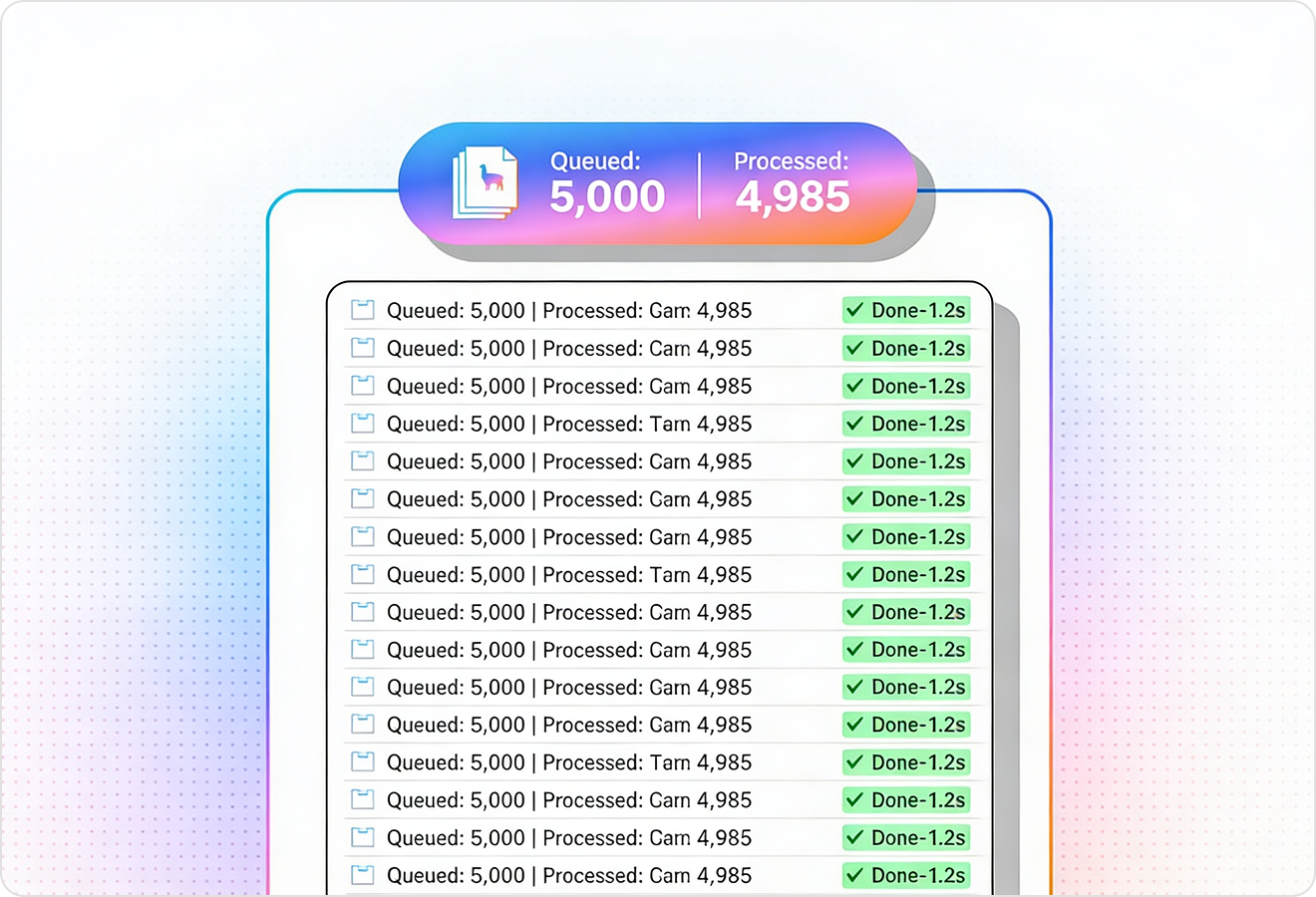
Built-in correction and validation loops reduce common extraction failures like missing dates, merged lines, or inconsistent formatting across pages. You get higher straight-through processing on messy scans and diverse resume templates, with fewer manual fixes downstream.
Technical OCR documentation
Explore our developer guides to easily connect your document pipelines to LlamaParse.
Explore the documentation
Our AI catches the typos that tired eyes miss.

Export to Excel, JSON, XML, or directly via API.

SOC2 Type II compliant with end-to-end encryption.

Train the tool on your specific forms in minutes, not days.

Average processing time of <3 seconds per page.
LlamaParse’s support of a wide variety of filetypes and its accuracy of parsing made it the best tool we tested in our evaluations. The LlamaIndex team was very responsive and we were off to the races within a day.
Common FAQs
01
Yes—it's layout-aware, so it understands multi-column templates, sidebars, and section breaks instead of guessing line-by-line. That means Experience, Education, Skills, and Projects are separated cleanly with the correct reading order, even on modern resume designs.
02
It extracts tables, grids, and nested bullets into structured text rather than a jumbled OCR stream. This is especially useful for skills matrices and project summaries where key details often live inside compact tables or tightly formatted lists.
03
Yes—output can be returned as structured JSON to make it easy to populate ATS fields like roles, companies, dates, and skills. You can also keep your downstream logic simpler by avoiding brittle template rules and post-processing.
04
Do you provide citations or traceability back to the original resume for audits and review?
Yes—each extracted field can include granular metadata such as page references and element locations. This makes it easy to verify results during human review and maintain traceability for compliance and audit requirements.
05
What happens when the scan is messy—missing dates, merged lines, or inconsistent formatting?
Built-in validation and self-correction loops are designed to catch common extraction failures and fix them automatically. You get higher straight-through processing on noisy scans and varied templates, with fewer manual corrections.
06
How much manual cleanup should we expect before parsed resumes are usable?
Most teams see a significant reduction in manual cleanup because the parser is optimized for real-world resume layouts and formatting quirks. You can still review flagged fields using citations, but the default output is structured to be actionable in your pipeline.