Nov 14, 2025
Document AI: The Next Evolution of Intelligent Document ProcessingPersona
Industry
Use cases
DD-214 OCR
[ DD-214 OCR ]

Use LlamaParse to capture every field accurately, with citations and confidence for quick review.
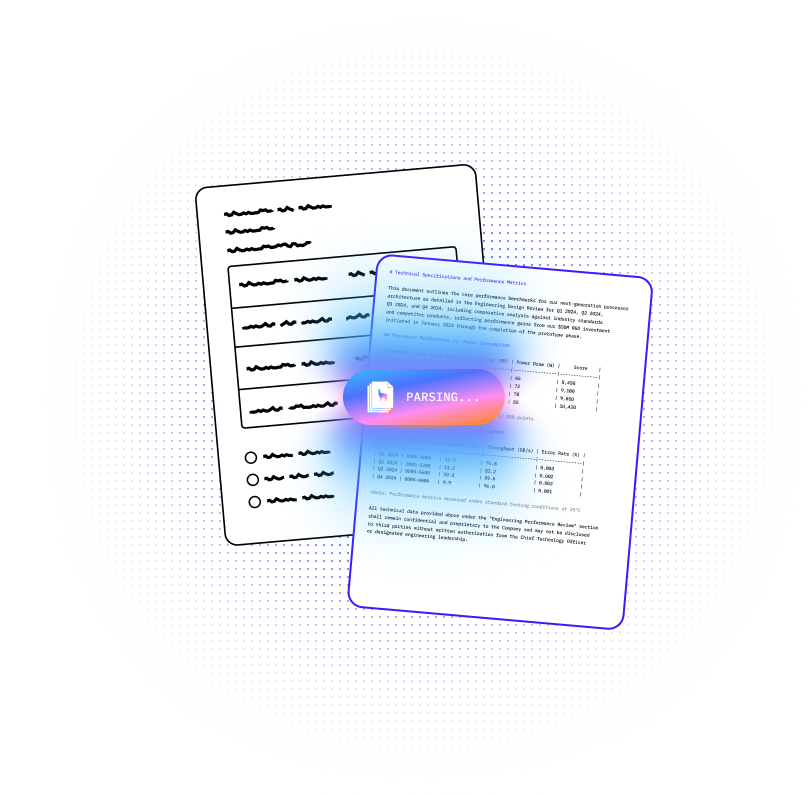
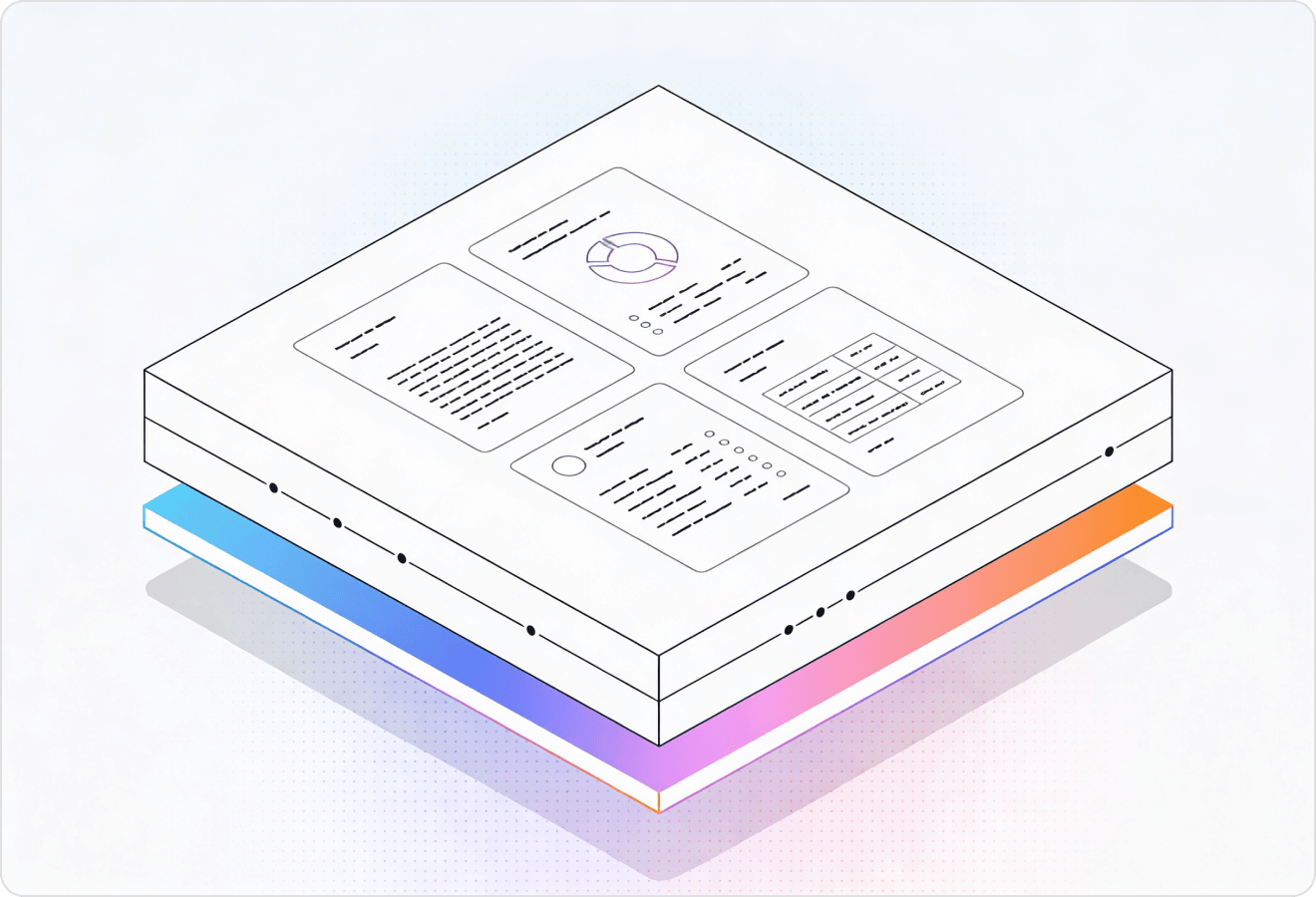

LlamaParse turns messy scanned DD-214s into clean, fielded JSON you can trust for downstream eligibility checks, intake, and audits. It uses layout-aware vision and validation loops to reduce missed boxes and table errors, with confidence metadata for human review.
Best-in-Class Accuracy

Use LlamaParse to turn DD-214s (including scanned copies) into structured JSON with citations for service dates, discharge status, MOS, and awards—so eligibility decisions don’t stall on manual re-keying. Layout-aware parsing preserves boxes and multi-section blocks, reducing errors that lead to rework, appeals, and delayed benefits.

Automatically extract DD-214 details to verify military service, income continuity, and entitlement signals (e.g., VA loan eligibility) directly into underwriting systems without brittle template rules. Natural-language parsing instructions let you standardize how edge-case forms are handled across branches, improving SLA compliance and reducing conditions requested from borrowers.

Parse DD-214s into clean Markdown and structured fields to accelerate clearance-adjacent hiring workflows, capturing discharge characterization, specialty codes, and training history for accurate candidate matching. Granular metadata enables fast audits by tying each extracted value back to its exact page location, minimizing compliance risk during contract reviews.

Ship DD-214 ingestion in days by using LlamaParse APIs to convert user uploads into app-ready JSON for eligibility checks, onboarding, and personalized recommendations—without building custom OCR pipelines. Tier-based agentic processing keeps costs predictable by upgrading only the messy scans, while auto-correction loops reduce support tickets from misread forms.
The Solution
01
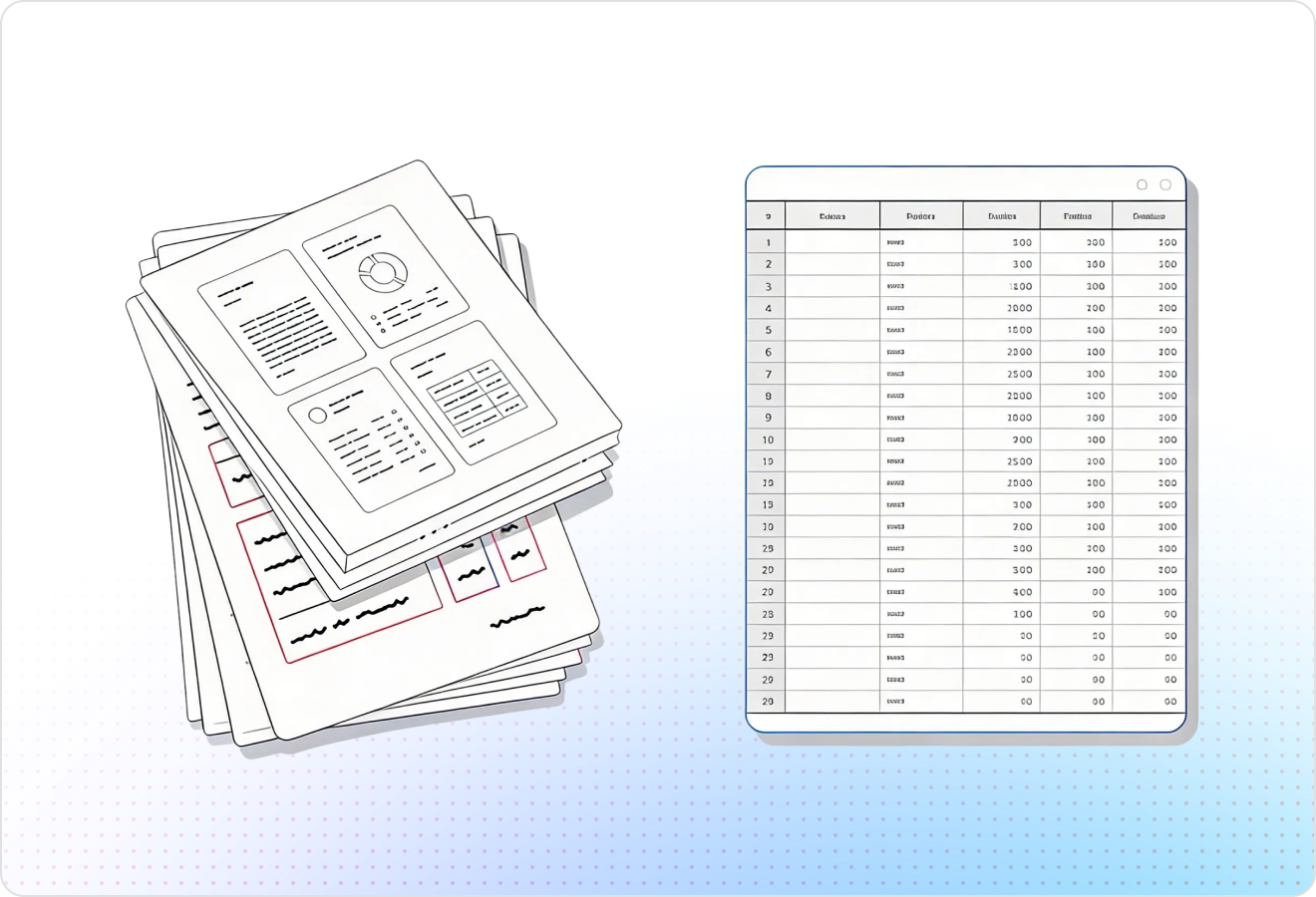
LlamaParse detects document structure and preserves reading order across boxes, sections, and multi-column layouts. For DD-214s, that means fields like character of service, separation authority, and reenlistment codes don’t get scrambled or merged when the scan quality or layout varies.
02
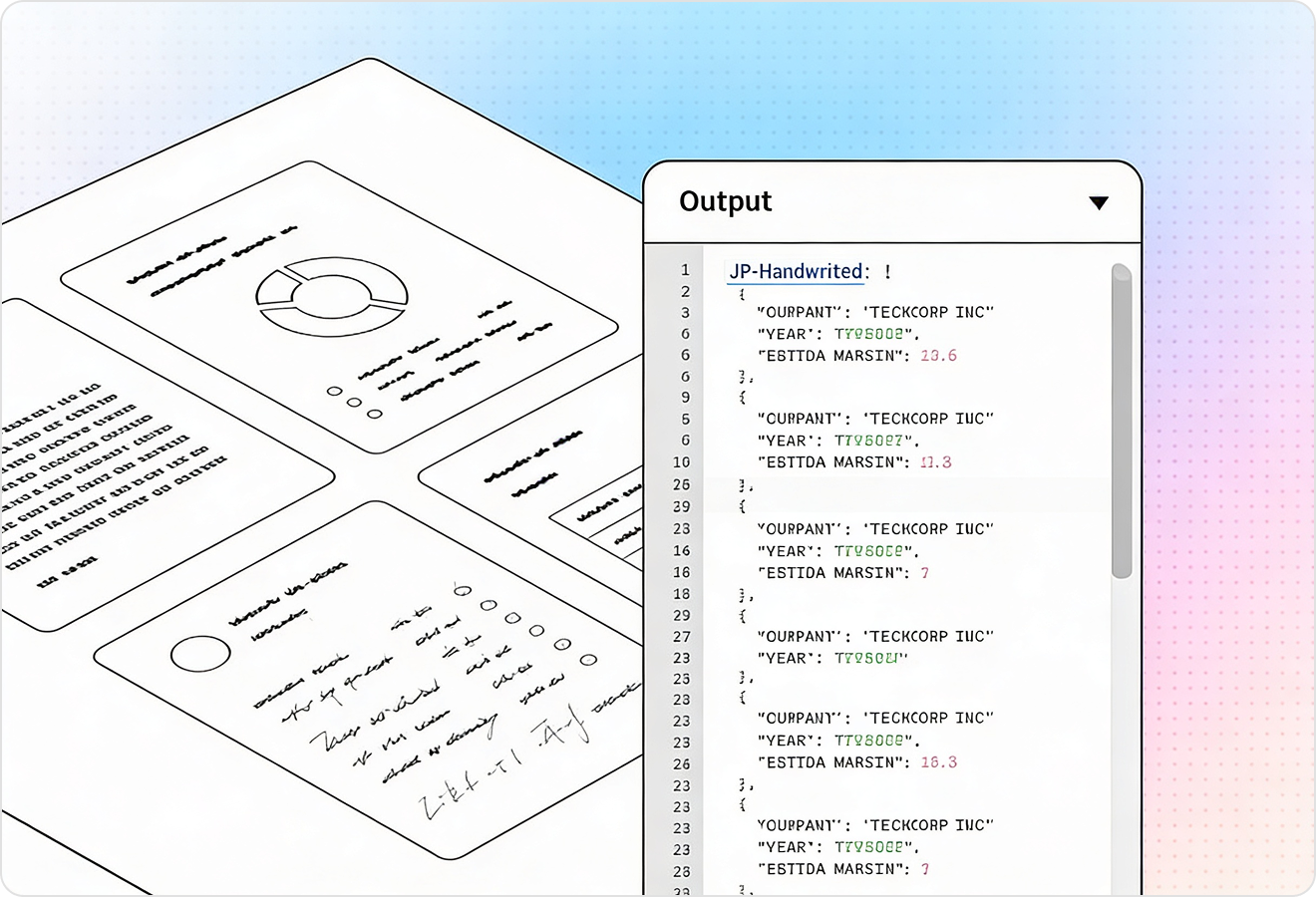
LlamaParse reliably extracts tabular and grid-like content into clean, machine-usable structures instead of flattened text. This is critical for DD-214 blocks where dates, specialties, awards, and service periods often live in tightly formatted rows that traditional OCR-style pipelines misread.
03
LlamaParse can return JSON with granular metadata like page references and element locations to make outputs auditable. For DD-214 processing, this lets you map extracted values to specific blocks and quickly review only the high-risk fields when you need human verification.
04
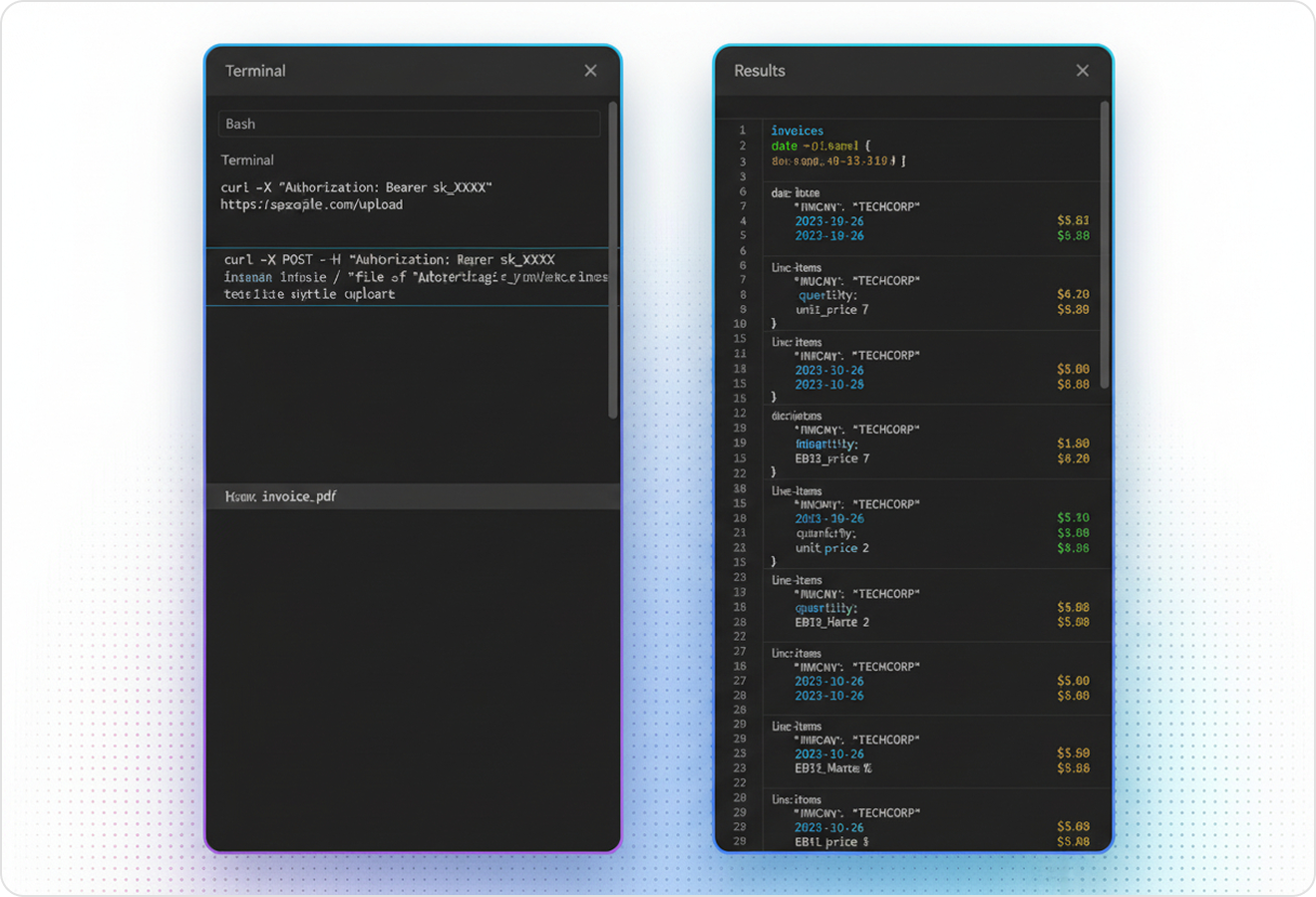
LlamaParse uses validation and self-correction steps to catch common extraction errors before returning final results. On DD-214s, this reduces costly mistakes on IDs, dates, and code fields that drive downstream eligibility decisions and case workflows.
Technical OCR documentation
Explore our developer guides to easily connect your document pipelines to LlamaParse.
Explore the documentation
Our AI catches the typos that tired eyes miss.

Export to Excel, JSON, XML, or directly via API.

SOC2 Type II compliant with end-to-end encryption.

Train the tool on your specific forms in minutes, not days.

Average processing time of <3 seconds per page.
LlamaParse’s support of a wide variety of filetypes and its accuracy of parsing made it the best tool we tested in our evaluations. The LlamaIndex team was very responsive and we were off to the races within a day.
Common FAQs
01
Our layout-aware parsing reads the document structure and preserves the original reading order across boxes, sections, and columns. That means key fields like Character of Service, Separation Authority, and Reentry (RE) Code stay correctly separated even when scans are skewed, faint, or inconsistently formatted.
02
Yes—table and box extraction pulls grid-style content into clean, machine-usable structures instead of flattened text. This is especially helpful for DD-214 blocks containing dates, specialties, awards, and service periods that traditional OCR often misreads or merges.
03
You can receive structured JSON tailored for automation, so your systems can ingest each extracted field reliably. We also include metadata that makes it easier to trace values back to where they came from on the form, reducing downstream cleanup and rework.
04
How can we audit results and verify only the fields that matter most?
Each extracted value can include page references and element locations so reviewers can quickly check the exact block on the DD-214. This supports fast, targeted QA—ideal when you only want human verification on high-risk items like IDs, dates, and codes.
05
What do you do to reduce common OCR mistakes on names, dates, and code fields?
Auto-correction and validation loops catch frequent extraction errors before results are finalized. This helps prevent costly mistakes on identifiers, service dates, and coded fields that can impact eligibility decisions and case outcomes.
06
What happens when a DD-214 is partially cut off, stamped over, or varies from the “standard” layout?
The parser is designed to adapt to layout variation by using structure signals rather than relying on one fixed template. When content is ambiguous, the output metadata helps you quickly spot and review exceptions, keeping throughput high without sacrificing accuracy.