Nov 14, 2025
Document AI: The Next Evolution of Intelligent Document ProcessingPersona
Industry
Use cases
Multi-Page Document Processing Software
[ Multi-Page Document Processing Software ]

Turn long, messy PDFs into structured JSON with LlamaParse’s layout-aware parsing and built-in accuracy checks.
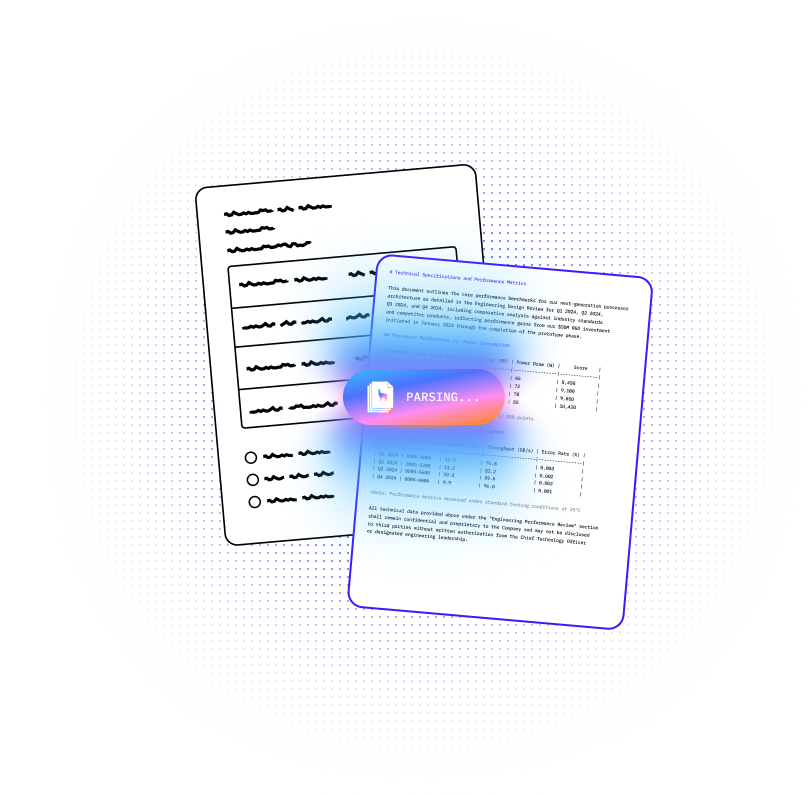
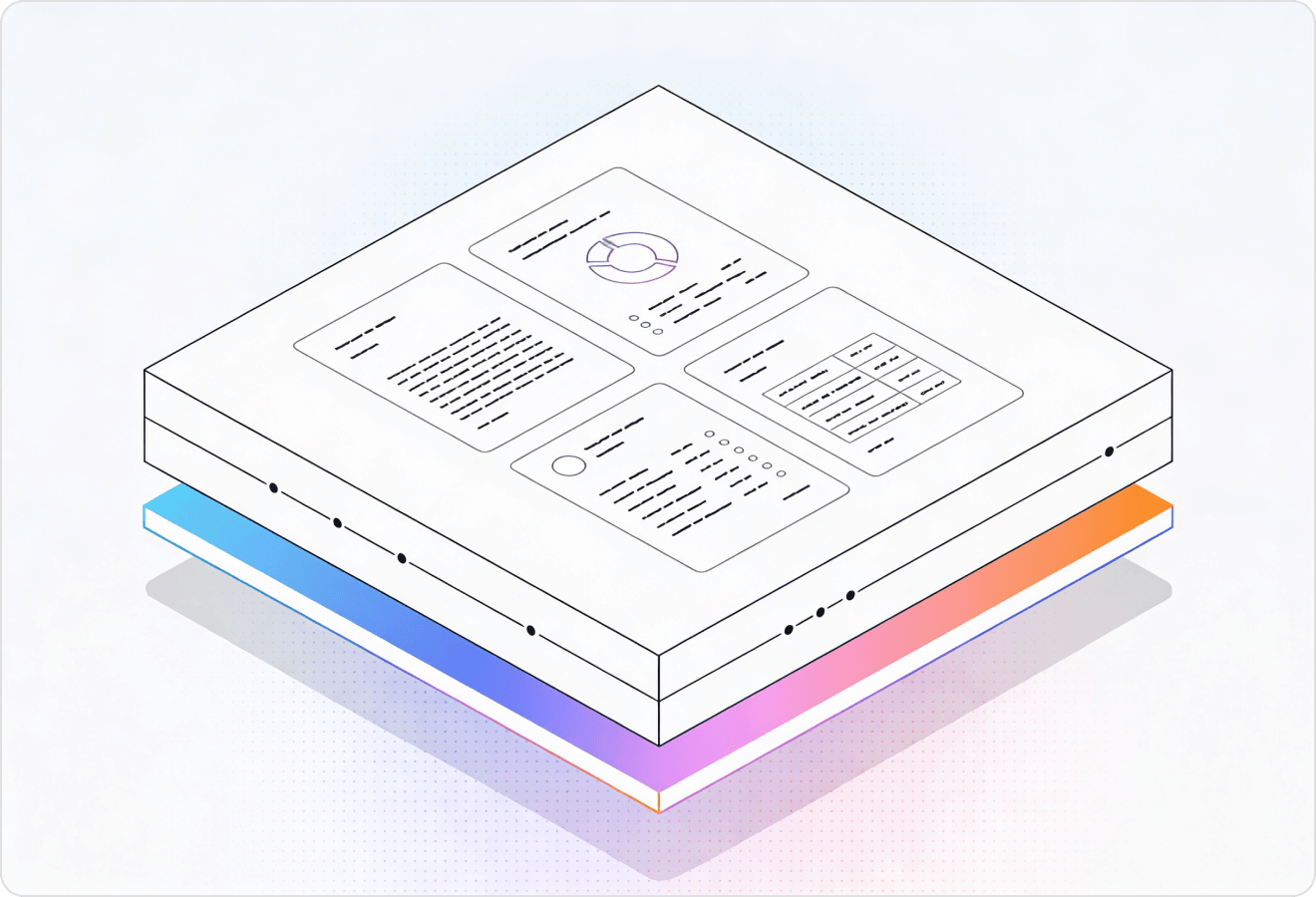

LlamaParse turns long, messy PDFs and scans into consistent, AI-ready JSON, Markdown, or HTML across every page, section, and table. Layout-aware vision plus validation loops keep extracts grounded with citations and confidence, so your multi-page workflows run reliably at scale.
Best-in-Class Accuracy

Turn messy customer PDFs (bank statements, contracts, invoices, pitch decks) into clean Markdown/JSON via LlamaParse so your product can ship reliable document features without a brittle post-processing pipeline. Use natural-language parsing instructions and structured outputs to standardize ingestion across changing templates, then iterate fast without retraining every time a layout shifts.

Parse multi-page clinical packets—referrals, lab results, discharge summaries, and insurance forms—while preserving reading order and extracting tables so intake and prior-auth workflows don’t stall on scanned PDFs. LlamaParse returns verifiable, page-cited structured data so teams can quickly confirm key fields and reduce manual chart review.

Automate underwriting intake by extracting income tables, transaction summaries, and exceptions from multi-page statements and tax forms without scrambled columns or missing footnotes. Tier-based processing routes simple pages cheaply and upgrades only complex scans, keeping per-application processing costs predictable at scale.

Convert long submittals, RFIs, spec books, and inspection reports into structured sections and tables, so project teams can search by requirement, material, or compliance item instead of hunting across PDFs. Multimodal parsing captures diagrams, schedules, and embedded charts into machine-readable formats that power faster QA/QC and handover documentation.
The Solution
01
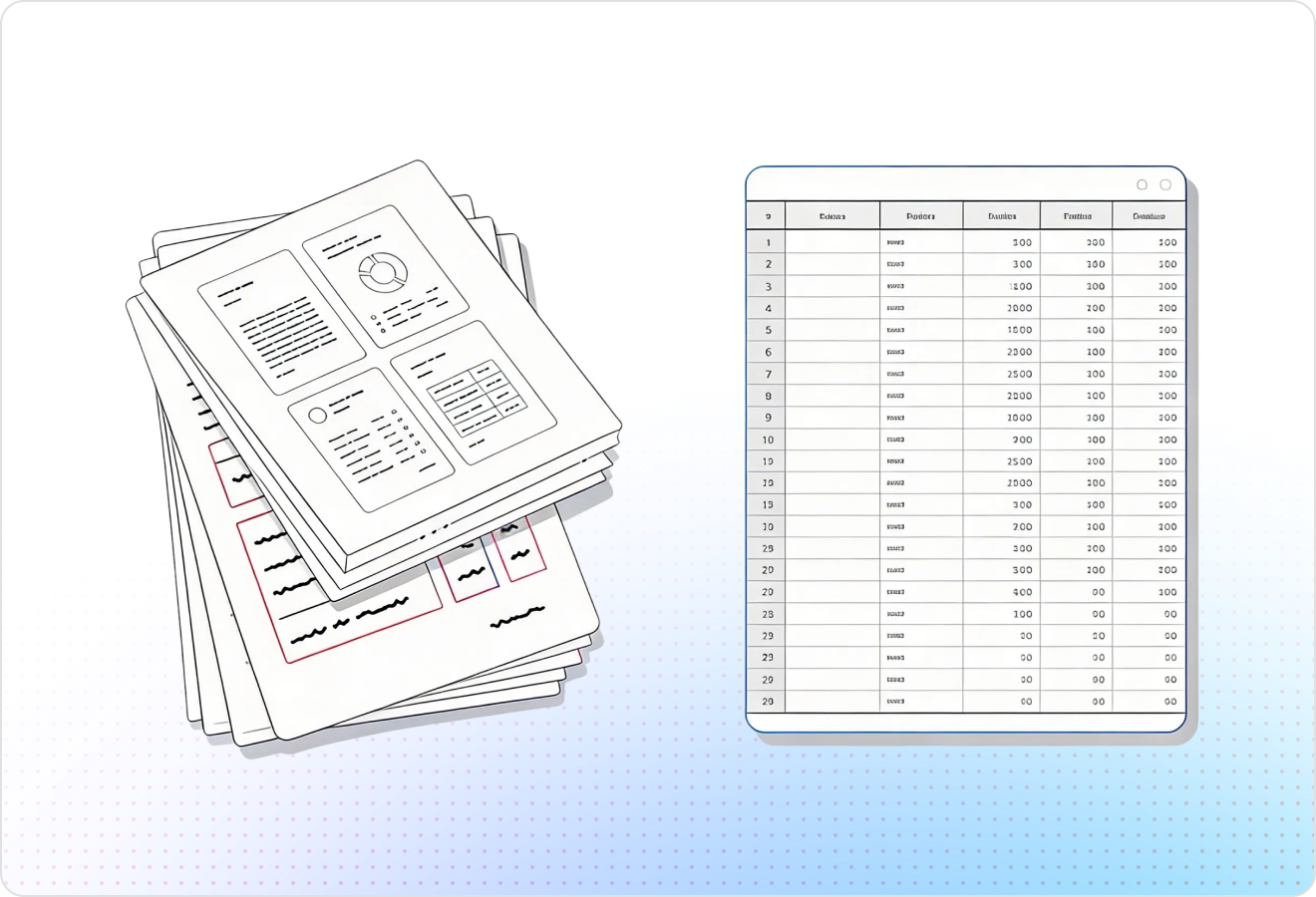
LlamaParse understands headers, footers, columns, and section breaks so multi-page files keep a consistent reading order from page 1 to page N. That means your downstream workflow doesn’t mis-associate lines, drop continuation text, or scramble sections when documents span dozens of pages.
02
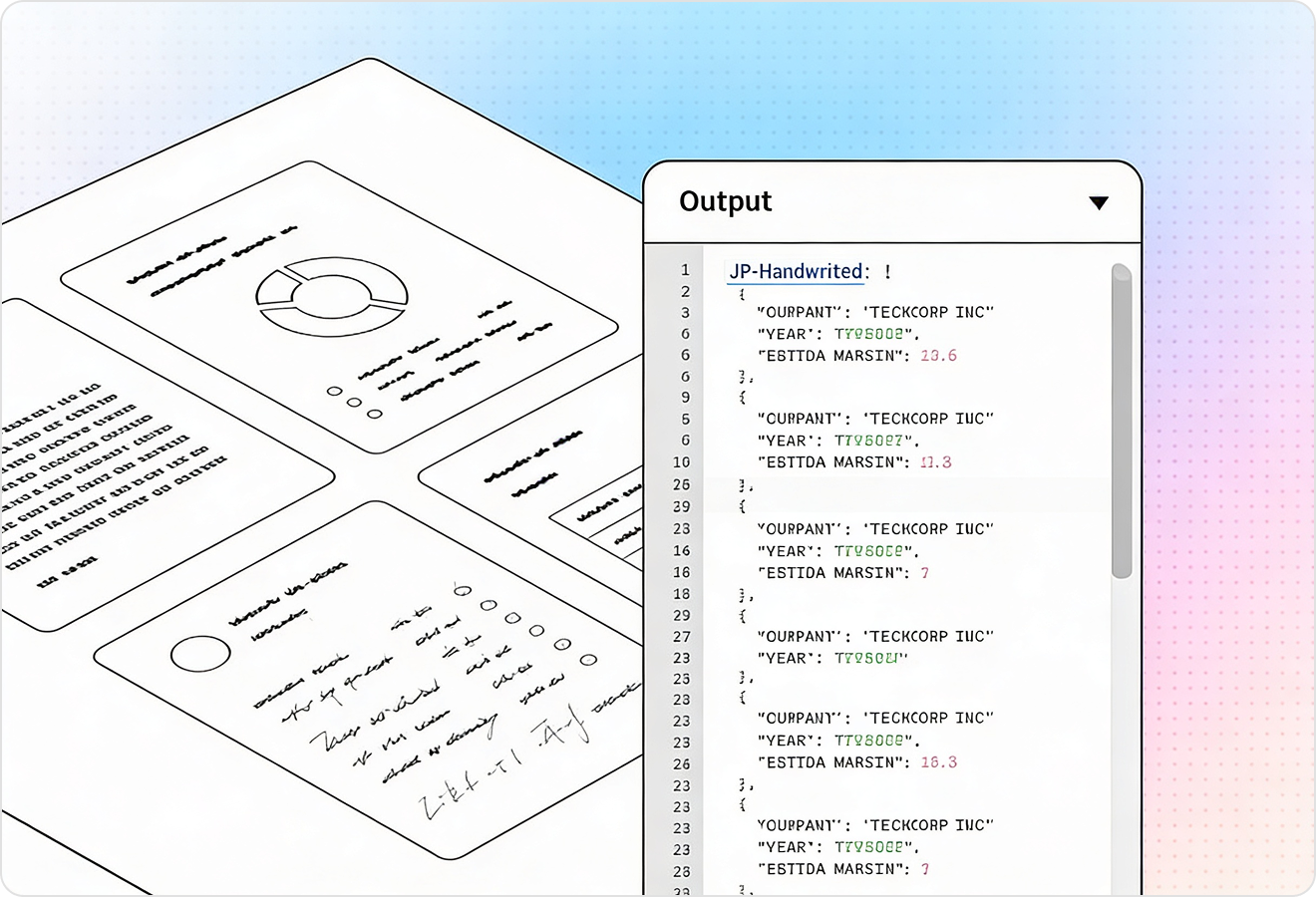
LlamaParse extracts complex tables with structure intact, even when they continue across page breaks or appear in mixed column layouts. This prevents “split-row” errors and makes it straightforward to reconstruct long financial statements, invoices, and reports into usable datasets.
03
LlamaParse runs validation and self-correction loops to catch common multi-page failure modes like repeated headers being treated as content, missing totals, or inconsistent formatting. You get higher straight-through processing on large document batches with less manual cleanup.
04
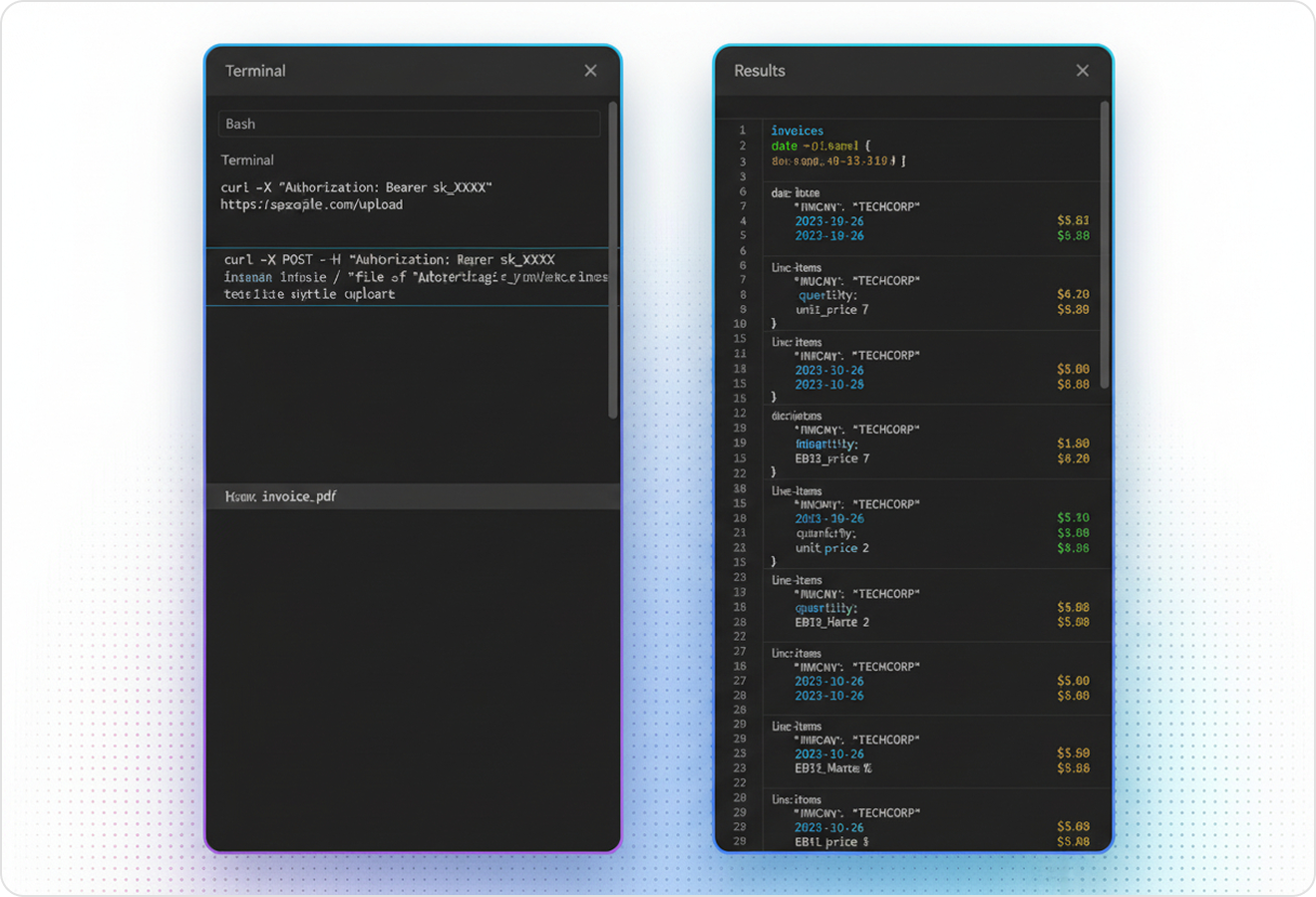
LlamaParse can return structured JSON with page-level metadata and coordinates so every extracted field is tied back to its source location. For multi-page document processing software, this enables precise review, exception handling, and deterministic merging of extracted data across pages.
Technical OCR documentation
Explore our developer guides to easily connect your document pipelines to LlamaParse.
Explore the documentation
Our AI catches the typos that tired eyes miss.

Export to Excel, JSON, XML, or directly via API.

SOC2 Type II compliant with end-to-end encryption.

Train the tool on your specific forms in minutes, not days.

Average processing time of <3 seconds per page.
LlamaParse’s support of a wide variety of filetypes and its accuracy of parsing made it the best tool we tested in our evaluations. The LlamaIndex team was very responsive and we were off to the races within a day.
Common FAQs
01
Layout-aware page stitching preserves the intended flow by understanding columns, section breaks, and repeated page elements. That means continuation text stays connected and sections don’t get scrambled as files grow. You get consistent outputs you can trust for downstream automation.
02
Yes—tables are extracted with structure intact even when they span multiple pages or appear inside mixed column layouts. This prevents broken rows and misaligned headers that often derail financial statements, invoices, and reports. The result is clean, analysis-ready data with minimal post-processing.
03
Agentic auto-correction loops validate outputs and automatically filter common multi-page failure modes like repeated headers being captured as body text. This reduces noisy extractions and cuts down manual cleanup. You’ll see higher straight-through processing, especially in large batches.
04
Do you provide structured JSON output that’s easy to merge and audit across pages?
You can receive structured JSON with page-level metadata and coordinates for each extracted field. That traceability makes reviews faster and supports deterministic merging across pages without guesswork. It’s ideal when you need reliable automation plus an audit trail.
05
How do you help catch missing totals or inconsistencies in multi-page documents?
Validation checks look for common issues like missing totals, inconsistent formatting, or incomplete table continuations. When something looks off, the system can self-correct to improve accuracy before results reach your workflow. This reduces exceptions and increases confidence in the final dataset.
06
If a field looks wrong, can my team quickly verify where it came from in the original file?
Yes—each extracted value can be tied back to its source page and location via coordinates and metadata. That makes exception handling straightforward and speeds up QA because reviewers can jump directly to the evidence. It’s a practical way to keep humans in the loop without slowing everything down.