Nov 14, 2025
Document AI: The Next Evolution of Intelligent Document ProcessingPersona
Industry
Use cases
HOA Documents OCR
[ HOA Documents OCR ]

Use LlamaParse to turn messy HOA PDFs into clean, structured fields with confidence scores you can trust.
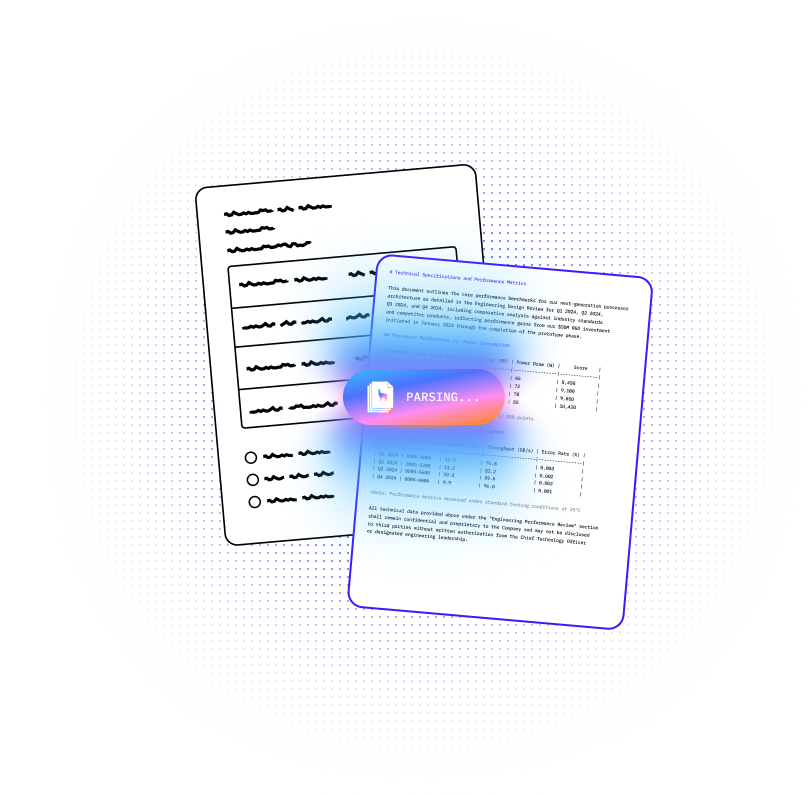
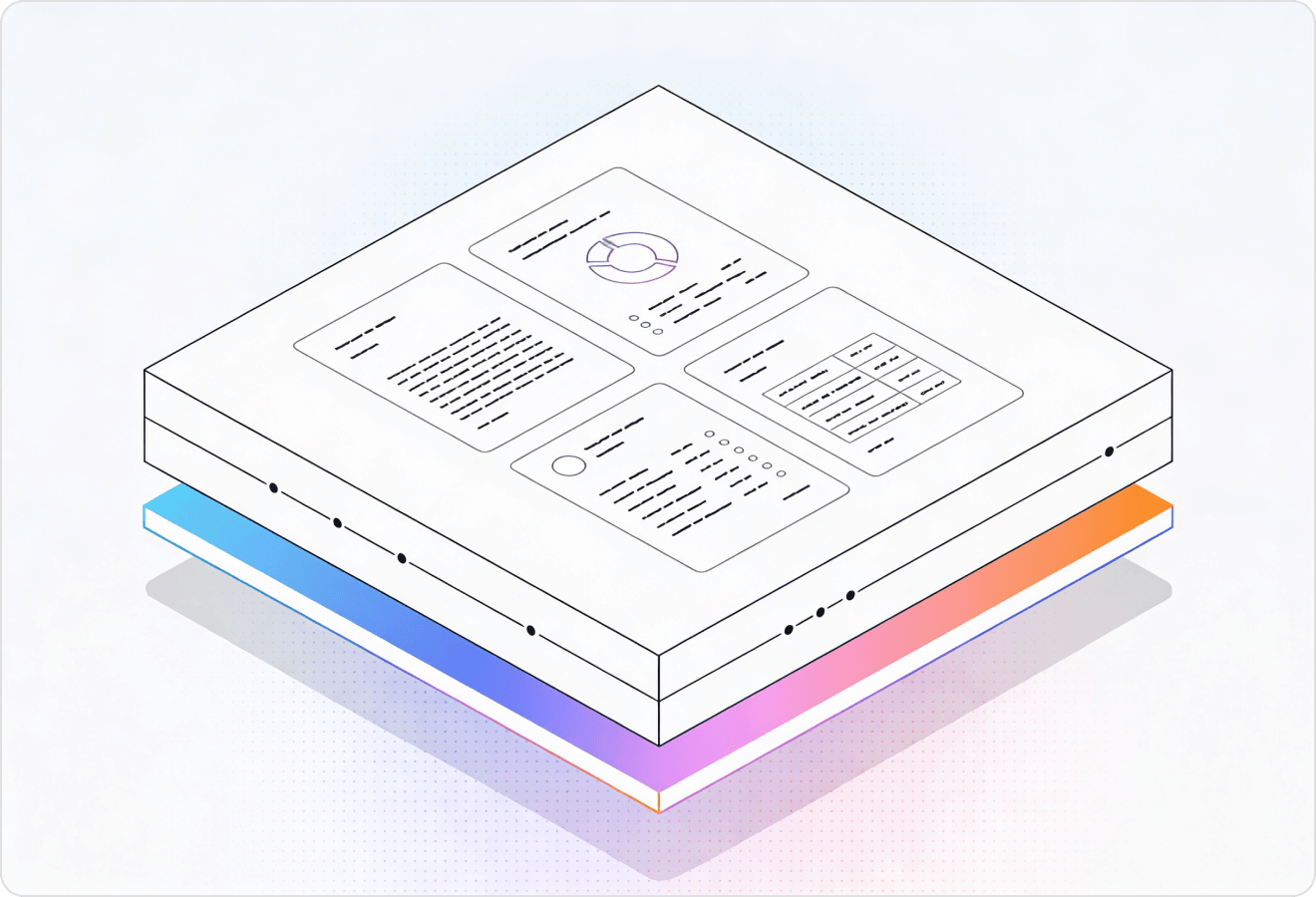

LlamaParse turns messy HOA packets, financials, and meeting minutes into clean structured outputs your apps can trust, without brittle template rules. It reads layout, tables, and scanned pages with validation loops and citations, so teams automate reviews faster and with fewer exceptions.
Best-in-Class Accuracy

Use LlamaParse to turn messy HOA packets—CC&Rs, bylaws, rules, budgets, reserve studies, and meeting minutes—into clean Markdown/JSON that preserves tables, headings, and reading order for fast search and retrieval. This eliminates manual rekeying and reduces disputes by returning verifiable outputs with page-level traceability for fees, violations, architectural approvals, and voting records.

Parse HOA documents to automatically extract coverage-relevant details like roof age, maintenance responsibilities, loss-history notes, and reserve funding from scanned PDFs that traditional OCR scrambles or misses in tables. Feed structured outputs directly into underwriting and claims workflows to speed decisions and reduce rework with confidence-scored, citation-backed fields.

Convert disclosure packages and governing documents into structured data to pinpoint restrictions, easements, rental caps, special assessments, and amendment history without associates manually combing through long PDFs. LlamaParse preserves multi-column clauses and embedded exhibits, enabling faster issue spotting and cleaner client deliverables with sources tied to exact pages.

Ship an HOA document ingestion layer in days by using LlamaParse APIs to transform uploads into AI-ready JSON schemas for compliance checks, pricing models, and resident self-serve Q&A. Tier-based agentic processing keeps costs predictable by routing simple pages cheaply while escalating only complex scans and tables to higher-accuracy modes.
The Solution
01
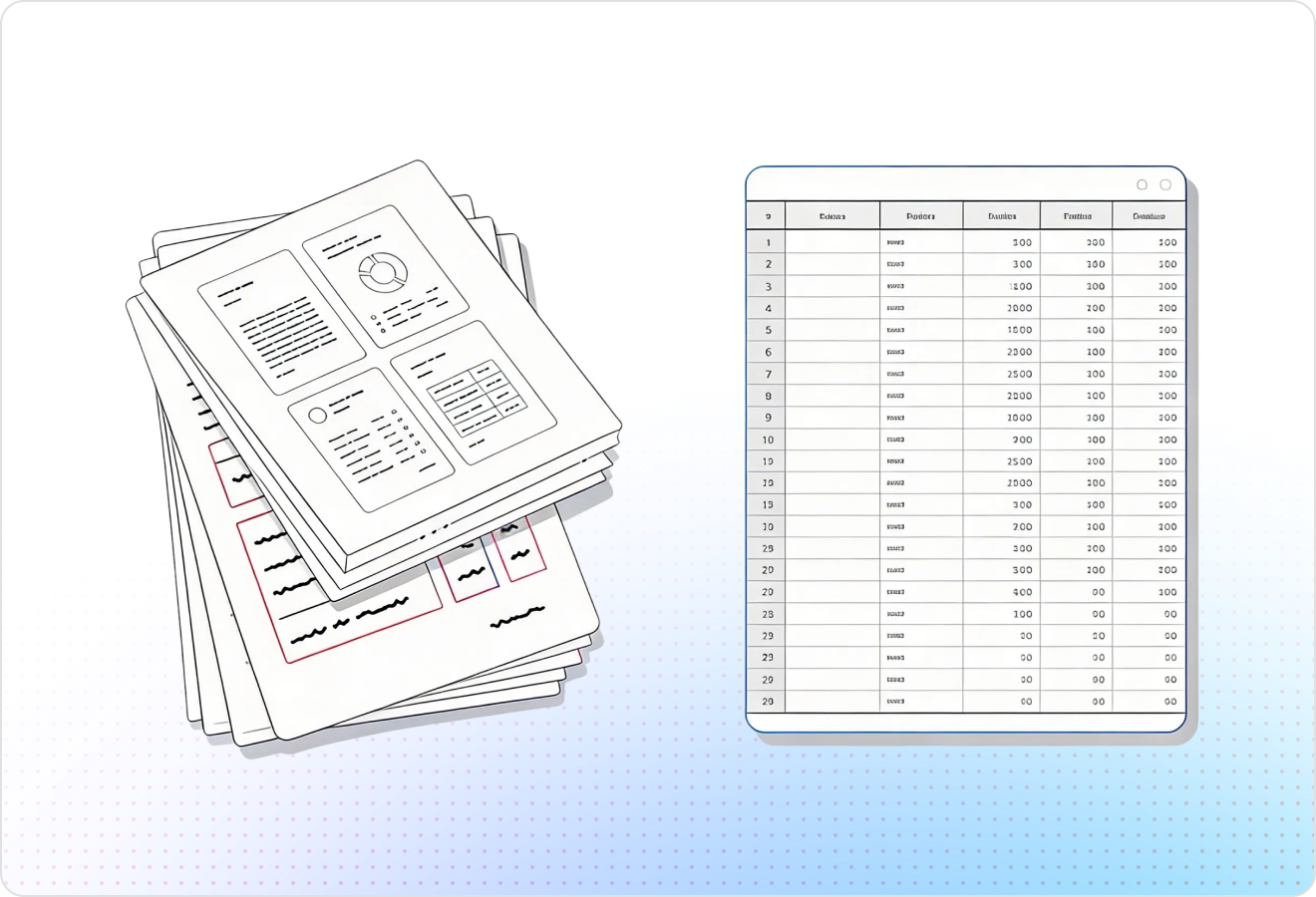
LlamaParse understands page structure so it can pull clean text and tables from HOA packets without scrambling columns, headers, or footnotes. This is critical for financial statements, violation logs, and meeting minutes where reading order and row/column fidelity drives downstream accuracy.
02
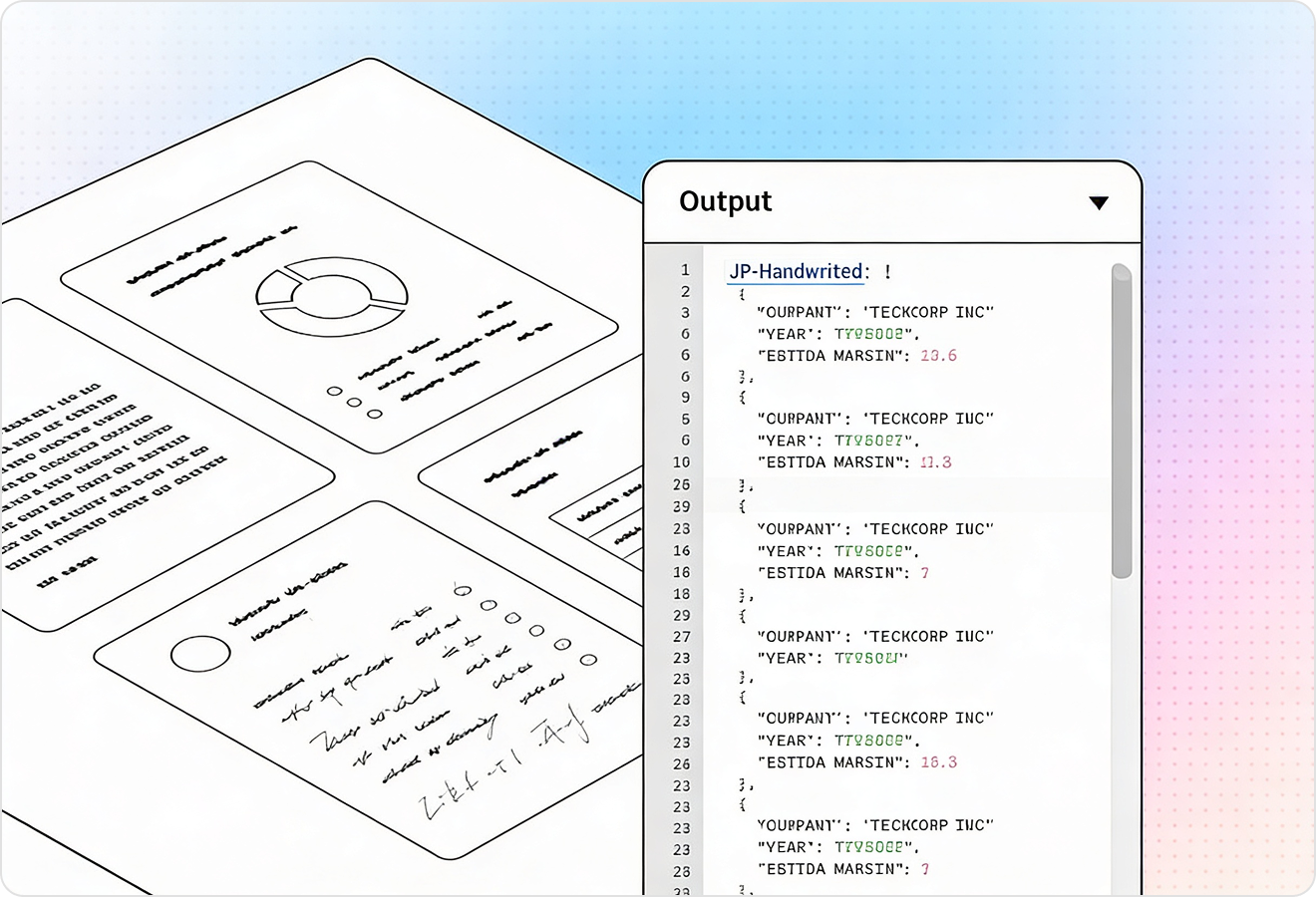
LlamaParse can interpret embedded charts, scanned images, and table-heavy pages instead of treating them as opaque blobs. For HOA documents, that means you can reliably capture budget graphs, reserve study visuals, and form checkboxes into usable, searchable data.
03
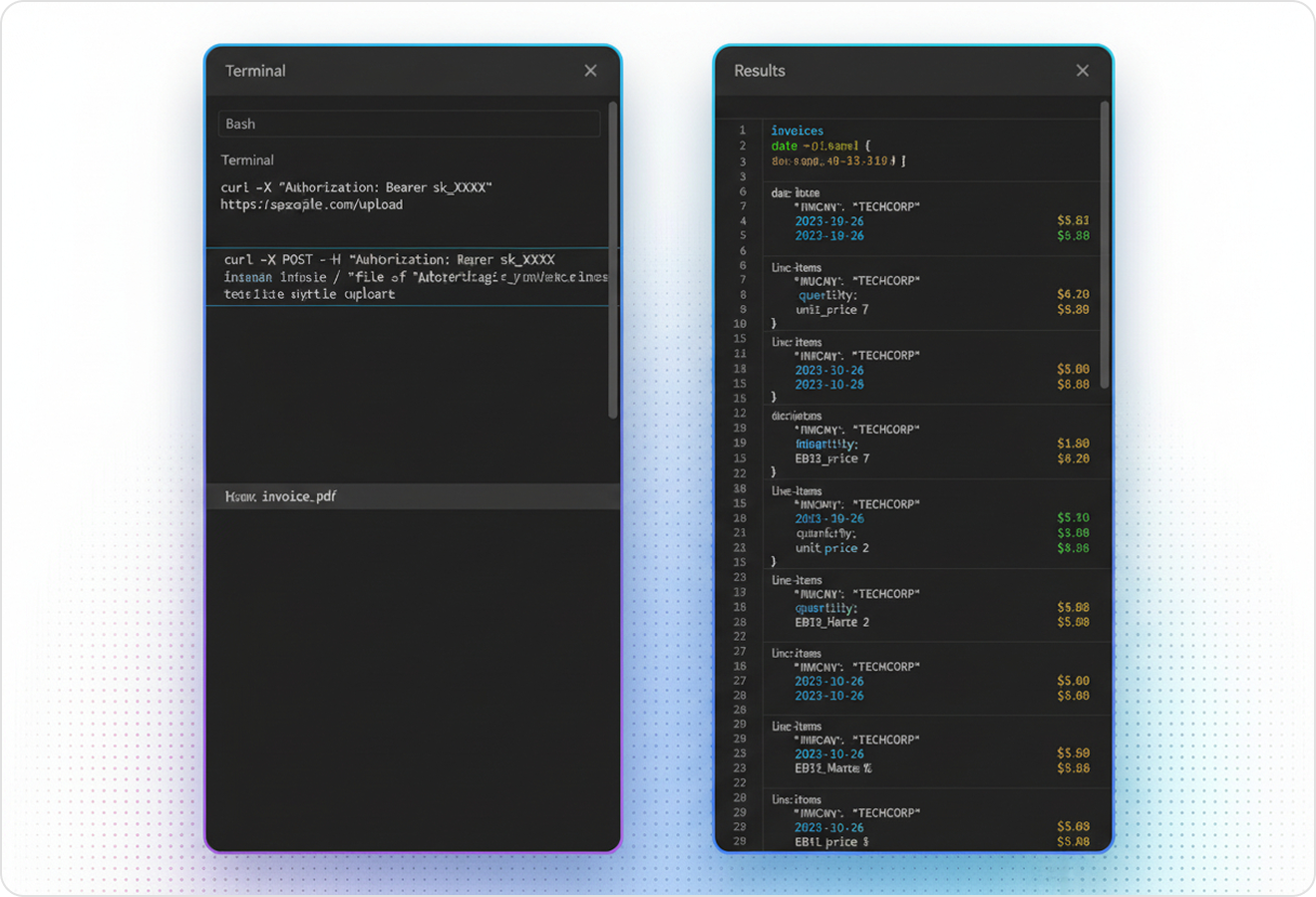
LlamaParse can emit JSON that’s ready for your database, including element types and page-level traceability for each extracted field. This makes it easier to build HOA-specific pipelines that map dues, late fees, policy sections, and addresses into deterministic fields rather than loose text.
04
LlamaParse applies self-checking steps during parsing to catch common scan issues like broken lines, merged cells, and inconsistent totals before returning results. In HOA OCR workflows, this reduces manual review on high-stakes outputs like ledger totals, assessment schedules, and compliance notices.
Technical OCR documentation
Explore our developer guides to easily connect your document pipelines to LlamaParse.
Explore the documentation
Our AI catches the typos that tired eyes miss.

Export to Excel, JSON, XML, or directly via API.

SOC2 Type II compliant with end-to-end encryption.

Train the tool on your specific forms in minutes, not days.

Average processing time of <3 seconds per page.
LlamaParse’s support of a wide variety of filetypes and its accuracy of parsing made it the best tool we tested in our evaluations. The LlamaIndex team was very responsive and we were off to the races within a day.
Common FAQs
01
It’s layout-aware, so it preserves row/column structure, headers, and footnotes when extracting tables from statements, ledgers, and violation logs. That means cleaner exports and fewer reconciliation headaches when you rely on accurate totals and line items.
02
Yes—multimodal parsing lets it interpret scanned images, embedded charts, and checkbox-style forms instead of ignoring them as “just an image.” You can capture budget graphs, reserve study visuals, and form selections into searchable, usable data.
03
You can output structured JSON with clear element types and field-level details that are easy to map into your HOA workflows. This helps you move from messy text to reliable fields for dues, assessments, owner info, and policy references.
04
How does it handle messy scans—broken lines, merged cells, or inconsistent totals?
Validation and auto-correction steps catch common OCR issues before results are returned, improving table fidelity and numeric accuracy. This reduces manual review time on high-stakes documents like assessment schedules and account ledgers.
05
Can I trace extracted values back to the exact page for auditing and dispute resolution?
Yes—outputs include page-level traceability so you can quickly confirm where each field came from in the original packet. It’s especially useful when responding to owner disputes, lender questions, or internal compliance checks.
06
How quickly can we integrate this into an existing HOA document pipeline?
If you already ingest PDFs or images, integration is typically straightforward: parse the document and receive clean text, tables, and optional JSON output ready for downstream systems. You can start with one document type (like financials or minutes) and expand as you validate accuracy and business rules.