Nov 14, 2025
Document AI: The Next Evolution of Intelligent Document ProcessingPersona
Industry
Use cases
Death Certificate OCR
[ Death Certificate OCR ]

Use LlamaParse to capture names, dates, and causes reliably, even from messy scans.
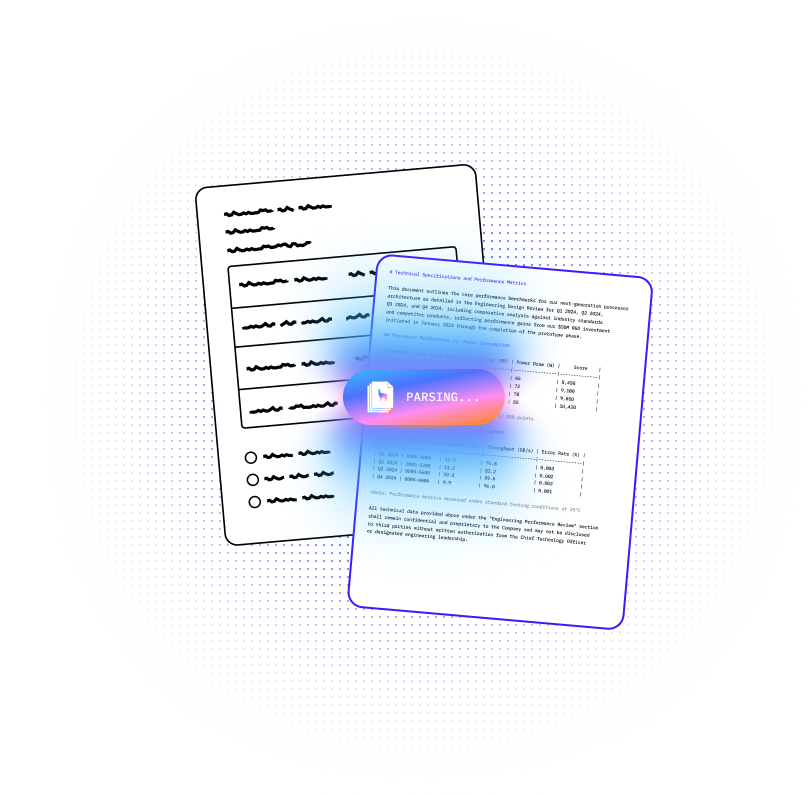


LlamaParse turns scanned and messy death certificates into consistent, structured records you can trust, ready for review, search, and downstream processing. It understands forms and layout, validates key fields like names and dates, and exports clean JSON or Markdown with traceable source links.
Best-in-Class Accuracy

Use LlamaParse to extract cause of death, policy identifiers, claimant details, and filing dates from scanned death certificates into strict JSON with citations for audit-ready decisions. Layout-aware parsing and auto-correction loops reduce rework from stamps, multi-column forms, and county-specific templates that break legacy OCR and slow straight-through processing.

Automatically ingest death certificates to close patient accounts, stop inappropriate billing, and route estate-related balances by extracting decedent identity fields and death dates into downstream EHR and billing workflows. Natural-language parsing instructions let teams standardize what gets captured across hospitals while preserving traceability for compliance and dispute resolution.

Parse death certificates into structured case data to accelerate probate intake, estate administration, and court filing prep without paralegals manually retyping names, jurisdictions, and certificate numbers. JSON mode with granular metadata provides page-level evidence and confidence scores so attorneys can verify key facts quickly when documents are low-quality scans or contain handwritten amendments.

Ship faster by using LlamaParse as the ingestion layer for death-certificate verification, converting user uploads into consistent Markdown/JSON that plugs directly into your product logic and reviewer tooling. Tier-based agentic processing and cost optimizer mode keep unit economics predictable by applying heavier multimodal parsing only to the messy scans that actually need it.
The Solution
01
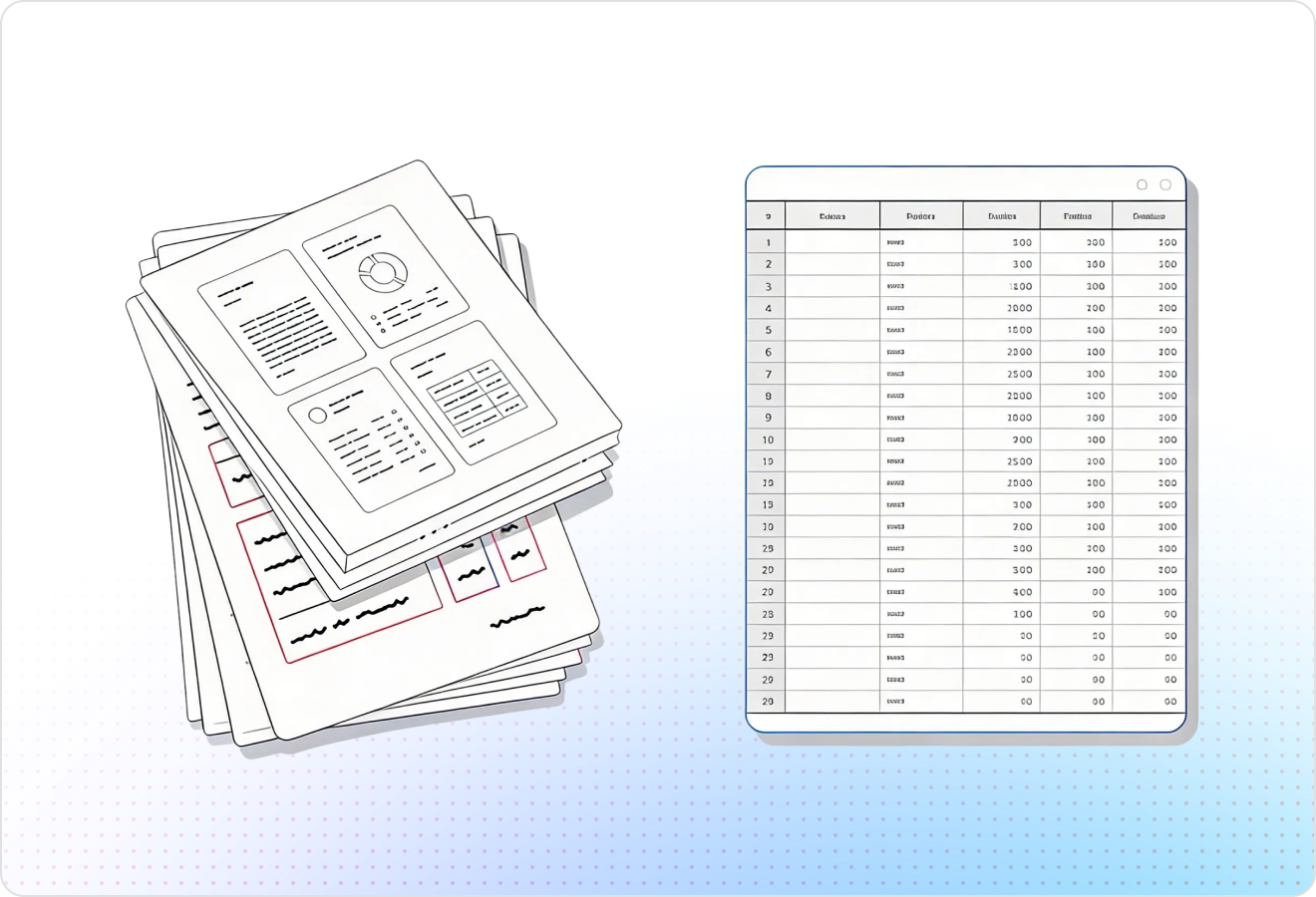
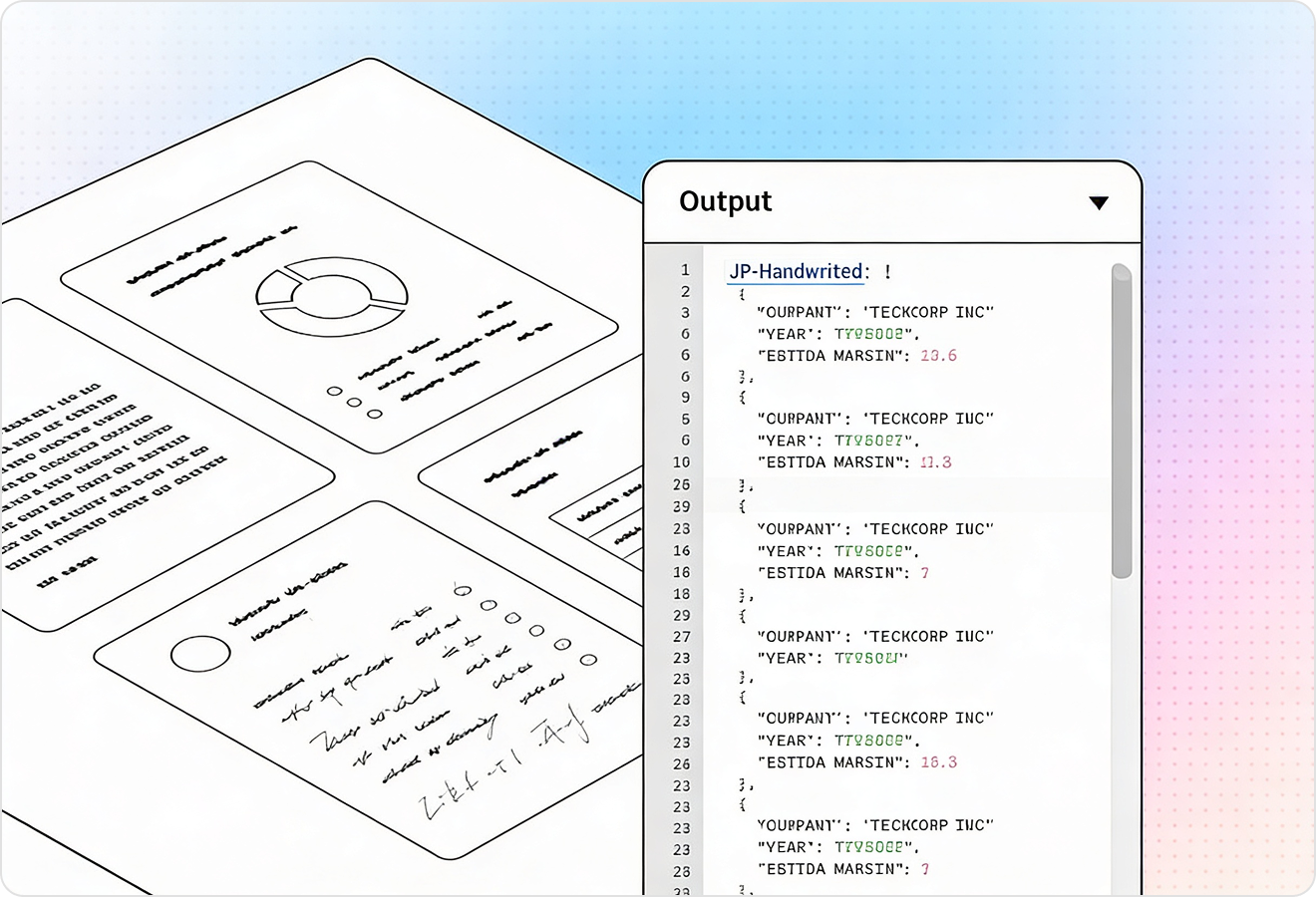
LlamaParse understands the visual structure of death certificates—boxes, labels, stamps, and multi-column sections—so names, dates, and places don’t get scrambled. This preserves the correct reading order and makes it far easier to map “Cause of death,” “Date of death,” and “Certifier” into the right fields.
02
LlamaParse uses agentic document parsing with self-correction and validation loops to reduce common scan errors like swapped digits, missed characters, or hallucinated text. For death certificate workflows, that means higher straight-through processing on critical identifiers like certificate numbers, dates, and registrar information.
03
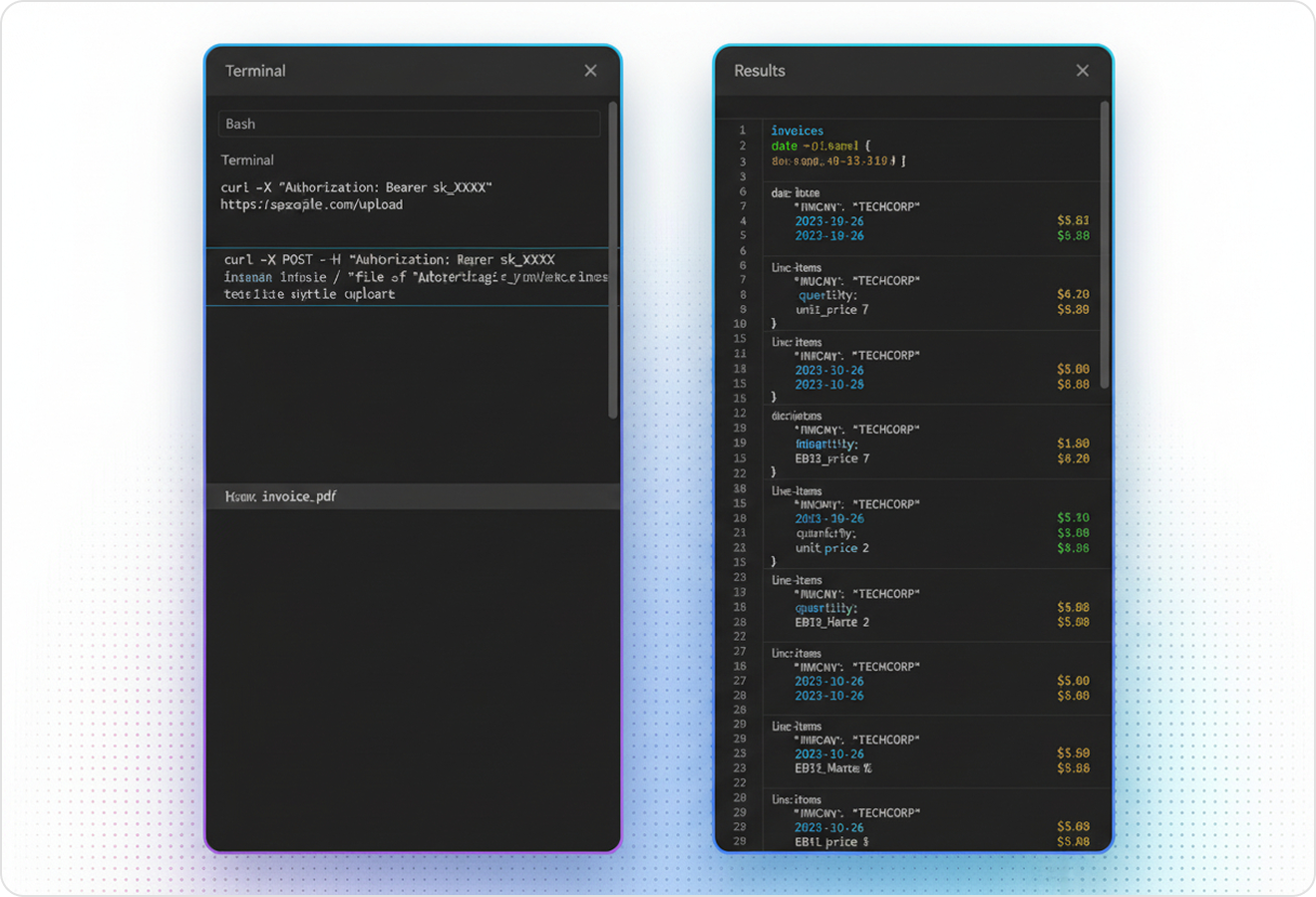
LlamaParse can return structured JSON alongside granular metadata like page location and element types, giving you clean, API-ready outputs for downstream systems. When a death certificate record needs review, you can trace each extracted value back to its source region for fast human verification and auditability.
04
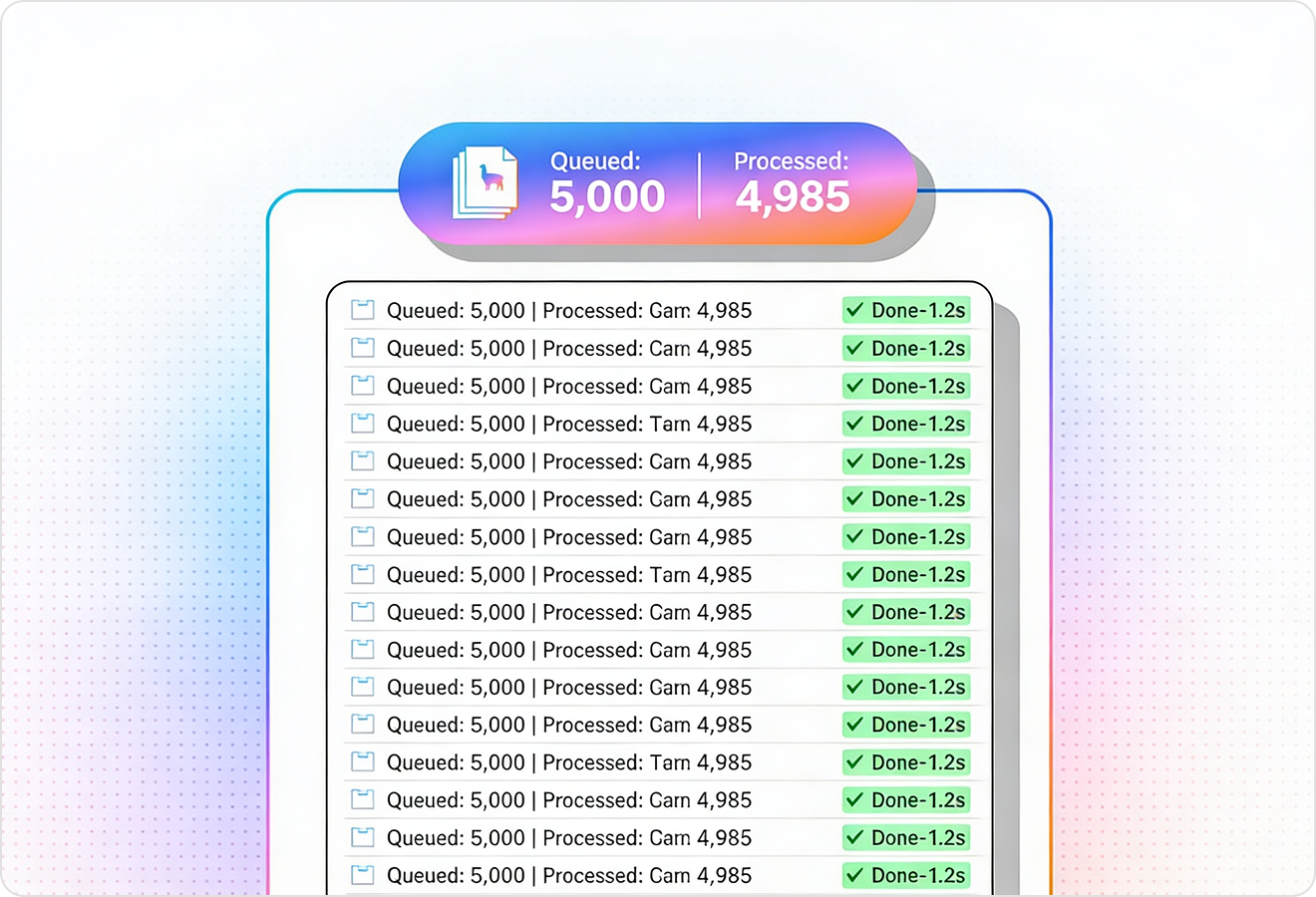
LlamaParse automatically routes simple pages through faster, lower-cost processing while escalating hard cases (faint scans, seals, handwriting, unusual templates) to more capable vision and language models. This keeps death certificate parsing accurate without blowing up spend when you’re processing large backlogs.
Technical OCR documentation
Explore our developer guides to easily connect your document pipelines to LlamaParse.
Explore the documentation
Our AI catches the typos that tired eyes miss.

Export to Excel, JSON, XML, or directly via API.

SOC2 Type II compliant with end-to-end encryption.

Train the tool on your specific forms in minutes, not days.

Average processing time of <3 seconds per page.
LlamaParse’s support of a wide variety of filetypes and its accuracy of parsing made it the best tool we tested in our evaluations. The LlamaIndex team was very responsive and we were off to the races within a day.
Common FAQs
01
Our layout-aware extraction reads the document the way a human would—following boxes, labels, stamps, and multi-column sections in the correct order. That prevents common OCR mistakes like shifting values into the wrong field, so you get cleaner mappings to your schema with fewer manual fixes.
02
We use agentic parsing with self-correction and validation loops to reduce swapped digits, missed characters, and other scan-related errors. When a page is especially challenging, the system can escalate it to more capable models to maintain accuracy on critical identifiers.
03
Yes—results can be returned as structured JSON designed for API-based ingestion and downstream automation. You’ll receive consistent field keys for items like certificate number, decedent details, dates, and registrar information to speed up integration and reduce rework.
04
How can my team verify or audit extracted values without re-reading the entire document?
Each extracted field can include traceability metadata such as page location and element type, so reviewers can jump straight to the source region. This makes spot-checking faster, supports audit requirements, and helps resolve exceptions with confidence.
05
We process large backlogs—how do you control costs while keeping accuracy high?
The system uses cost-aware orchestration to route straightforward pages through faster, lower-cost processing and reserve heavier models for hard cases. This approach helps you maintain quality on sensitive fields without paying premium rates on every document.
06
What happens when the certificate template varies by state or county, or when fields appear in different positions?
Because extraction is guided by visual structure and labels—not fixed coordinates—it adapts well to template variation across jurisdictions. You can still standardize outputs into your preferred schema, while the parser handles differences in layout behind the scenes.