Nov 14, 2025
Document AI: The Next Evolution of Intelligent Document ProcessingPersona
Industry
Use cases
Delivery Docket OCR
[ Delivery Docket OCR ]

Use LlamaParse to turn delivery dockets into clean, validated fields your systems can trust.
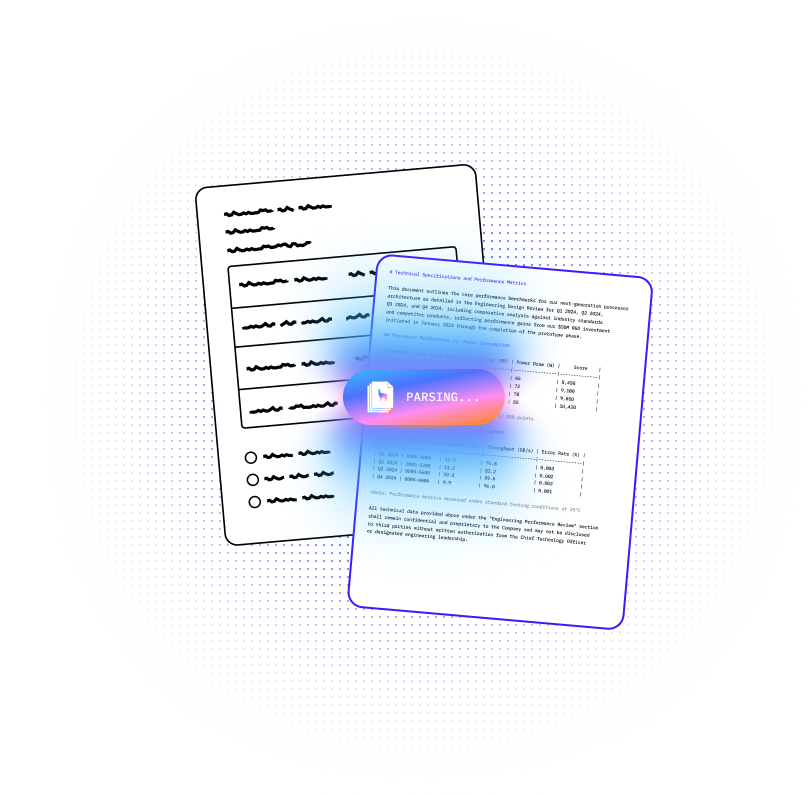
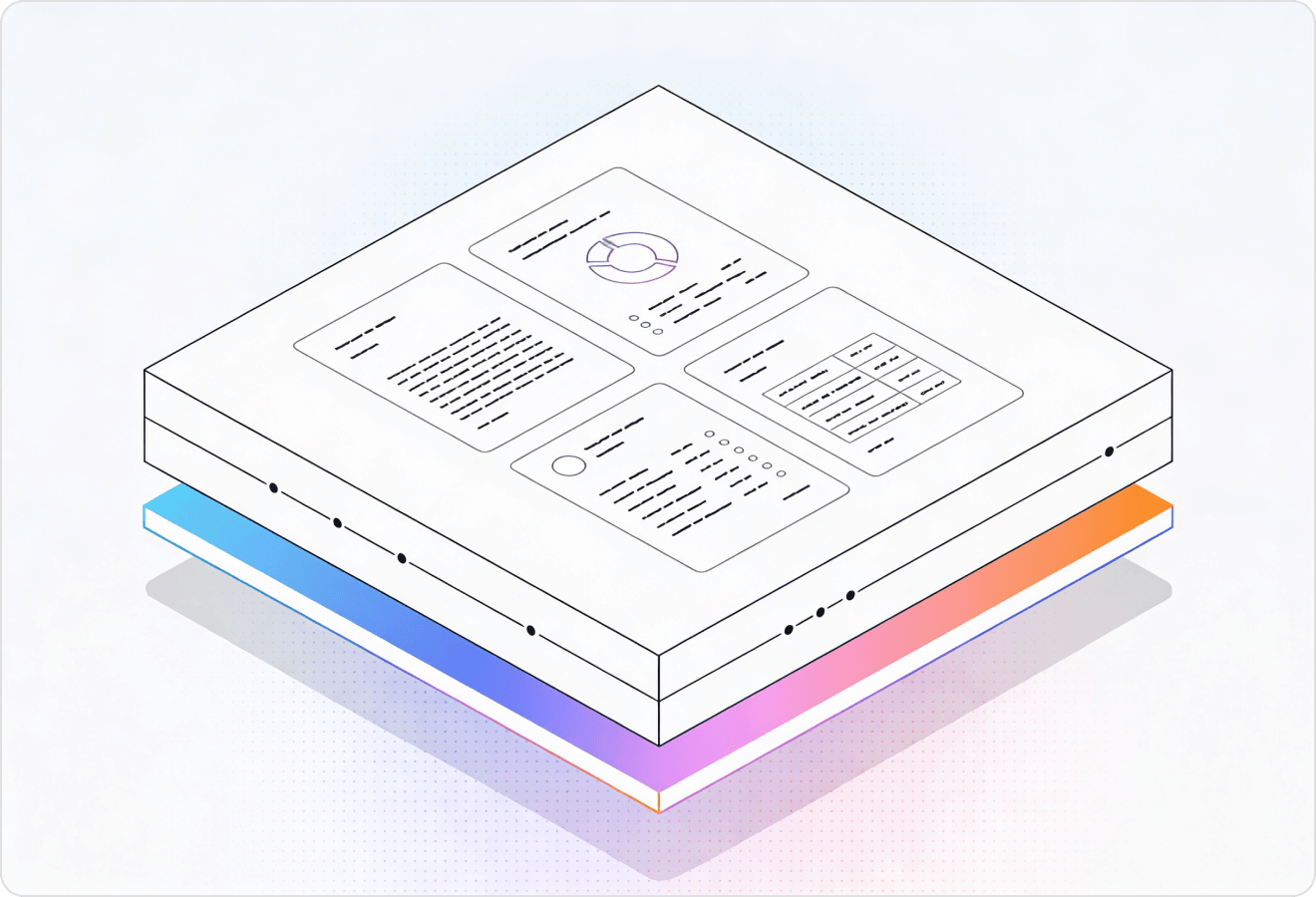

LlamaParse turns messy delivery dockets into clean, structured fields like job number, supplier, items, quantities, and dates, ready for your systems. Agentic document parsing understands layout, tables, and handwritten notes, then validates outputs with traceable metadata to reduce rework and exceptions.
Best-in-Class Accuracy

Turn PODs and delivery dockets into clean, structured records by extracting line items, quantities, timestamps, and driver notes from messy multi-section layouts. LlamaParse preserves table structure and reading order so teams can reconcile deliveries against loads and invoices without manual re-keying or spreadsheet cleanup.

Automatically convert supplier delivery dockets into job-coded materials receipts by pulling SKU, quantity, site, and delivery address into your ERP in JSON mode with traceable metadata. This removes the common bottleneck of lost paper dockets and speeds up cost-to-complete and progress claim substantiation.

Extract batch/lot numbers, temperature notes, and itemized deliveries from docket tables that traditional OCR scrambles, even when formats vary by supplier. Use natural-language parsing instructions to output exactly the fields needed for recalls, inventory updates, and chargeback resolution.

Ship a delivery-docket ingestion feature fast by using LlamaParse as the parsing layer that outputs AI-ready Markdown/JSON without writing brittle layout-specific parsing code. Agentic routing and cost-optimizer modes keep unit economics predictable while accuracy stays high across customer-uploaded scans and photos.
The Solution
01
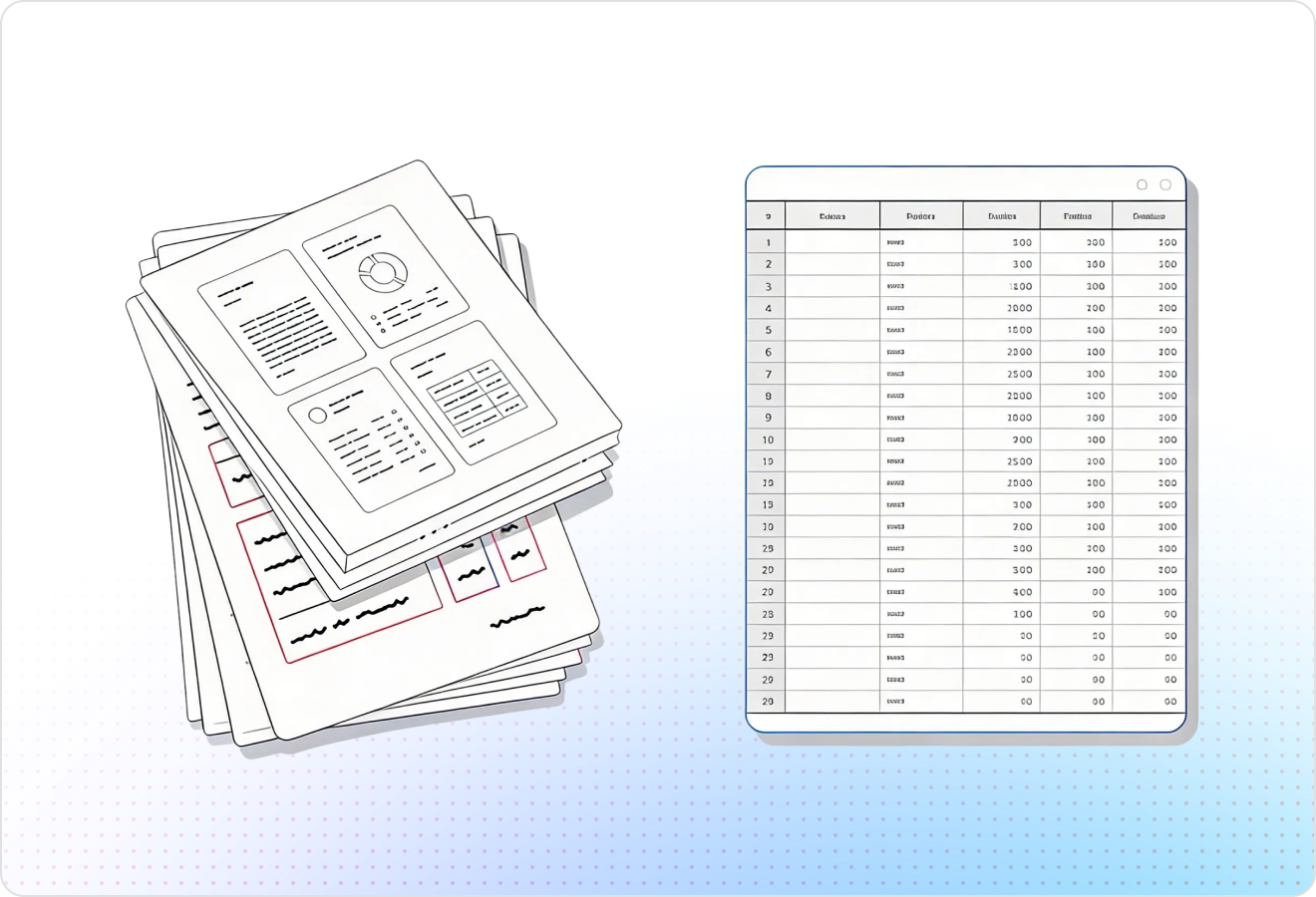
LlamaParse uses layout-aware vision to keep reading order intact across headers, line items, stamps, and signature blocks. That means delivery docket basics like docket number, customer, site address, date, and carrier details don’t get scrambled when the template changes.
02
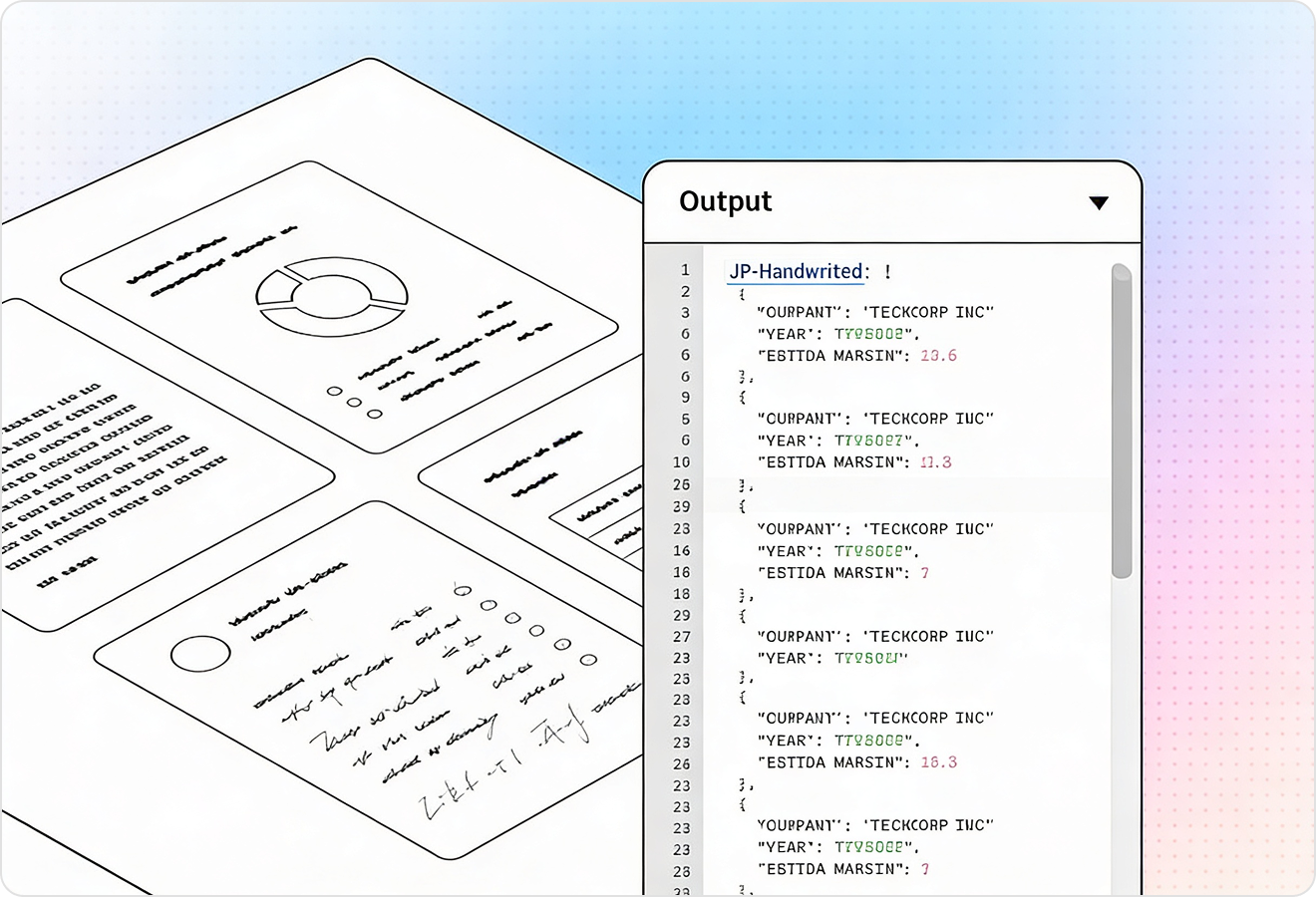
It accurately extracts structured tables, even when rows are misaligned, columns are merged, or the scan is skewed. You can pull product codes, quantities, units, and descriptions into clean tables for downstream matching against POs and invoices.
03
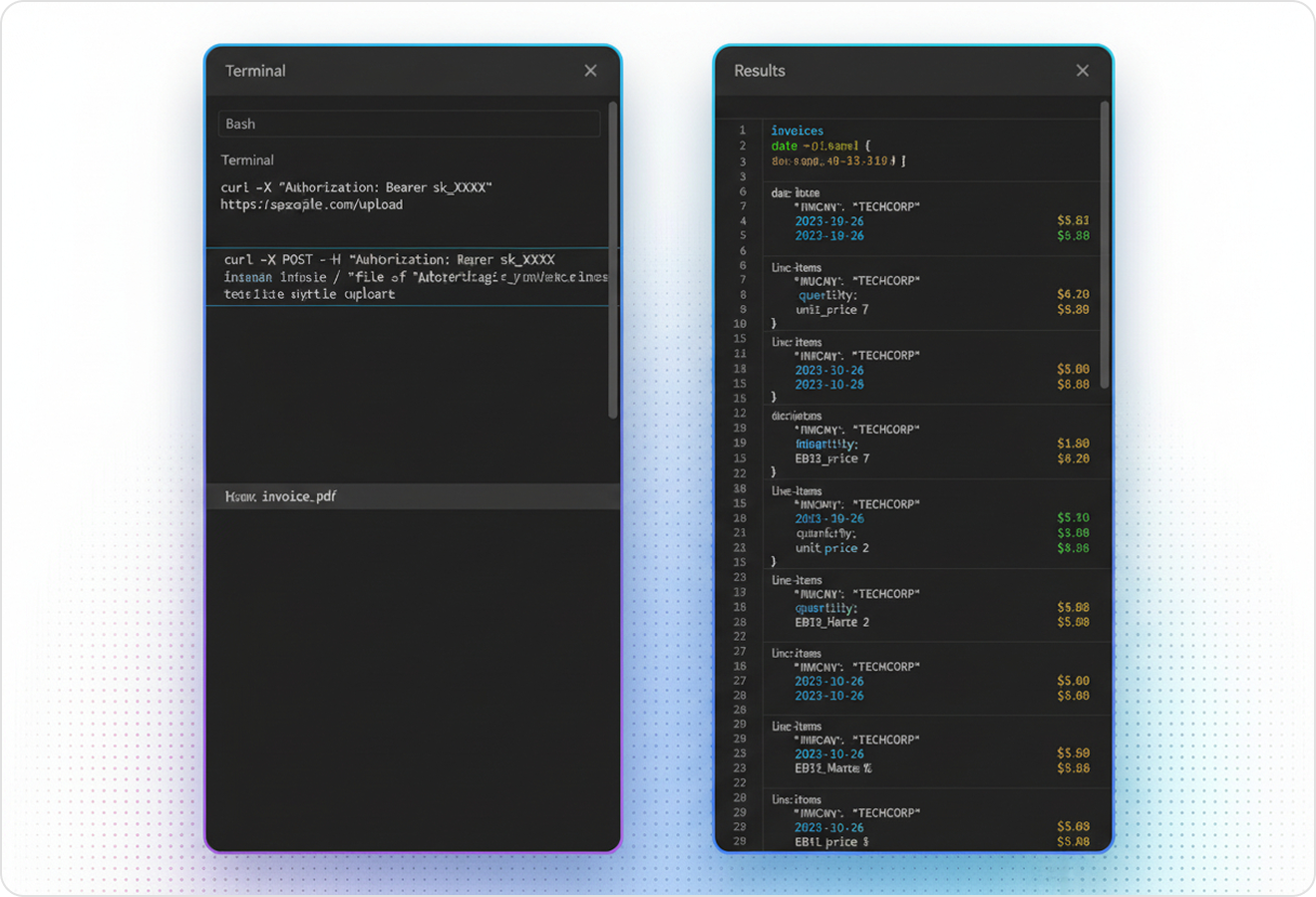
LlamaParse can return AI-ready JSON with granular metadata like page number and element coordinates. For delivery dockets, this makes every extracted value auditable and easy to route to human review when confidence is low or a signature is missing.
04
Multiple validation and auto-correction passes reduce common extraction failures from noisy scans, fax artifacts, and handwritten annotations. This improves straight-through processing for delivery docket ingestion, so exceptions are the edge case rather than the default.
Technical OCR documentation
Explore our developer guides to easily connect your document pipelines to LlamaParse.
Explore the documentation
Our AI catches the typos that tired eyes miss.

Export to Excel, JSON, XML, or directly via API.

SOC2 Type II compliant with end-to-end encryption.

Train the tool on your specific forms in minutes, not days.

Average processing time of <3 seconds per page.
LlamaParse’s support of a wide variety of filetypes and its accuracy of parsing made it the best tool we tested in our evaluations. The LlamaIndex team was very responsive and we were off to the races within a day.
Common FAQs
01
Yes. Layout-aware field capture preserves reading order across headers, stamps, signatures, and line items, so key fields like docket number, customer, site address, date, and carrier details don’t get scrambled. That means fewer template rules to maintain and more consistent downstream data.
02
It’s built to handle real-world tables—misaligned rows, merged columns, and even skewed or low-quality scans. You can reliably pull product codes, quantities, units, and descriptions into clean structured tables ready for matching to POs and invoices.
03
Yes—output can include AI-ready JSON plus traceability metadata like page numbers and element coordinates. This makes it easy to audit where every value came from and route uncertain fields to review without slowing down the whole workflow.
04
What happens when scans are noisy, faxed, or have handwritten notes?
Agentic validation loops run multiple validation and auto-correction passes to reduce common errors from noisy scans, fax artifacts, and handwritten annotations. The result is higher straight-through processing and fewer exceptions for your team to chase.
05
Can we automatically flag missing signatures or low-confidence fields?
Yes. Traceable extraction makes it straightforward to detect missing signatures and identify low-confidence values, then route only those specific items to a human review queue. You keep automation high while still preventing costly downstream mistakes.
06
How quickly can we integrate this into our current docket-to-invoice workflow?
Most teams integrate quickly by consuming the structured JSON and mapping extracted fields to their ERP, TMS, or document workflow tools. Because the output includes clean line-item tables and auditable metadata, it’s easier to build reliable matching and exception handling from day one.