Nov 14, 2025
Document AI: The Next Evolution of Intelligent Document ProcessingPersona
Industry
Use cases
Credit Report OCR
[ Credit Report OCR ]

Use LlamaParse to turn messy credit reports into structured fields with confidence scores you can trust.
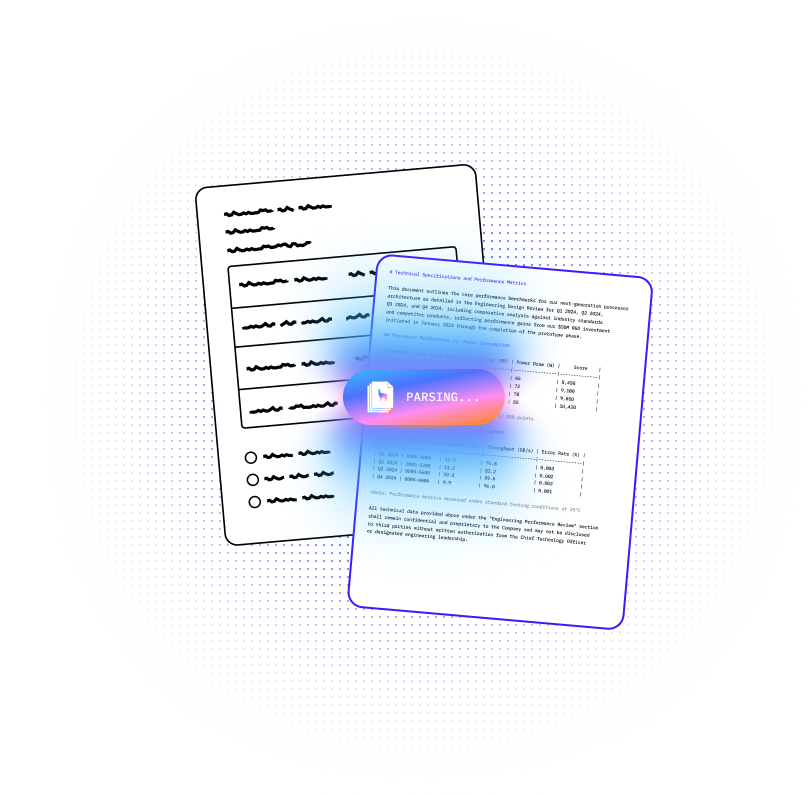
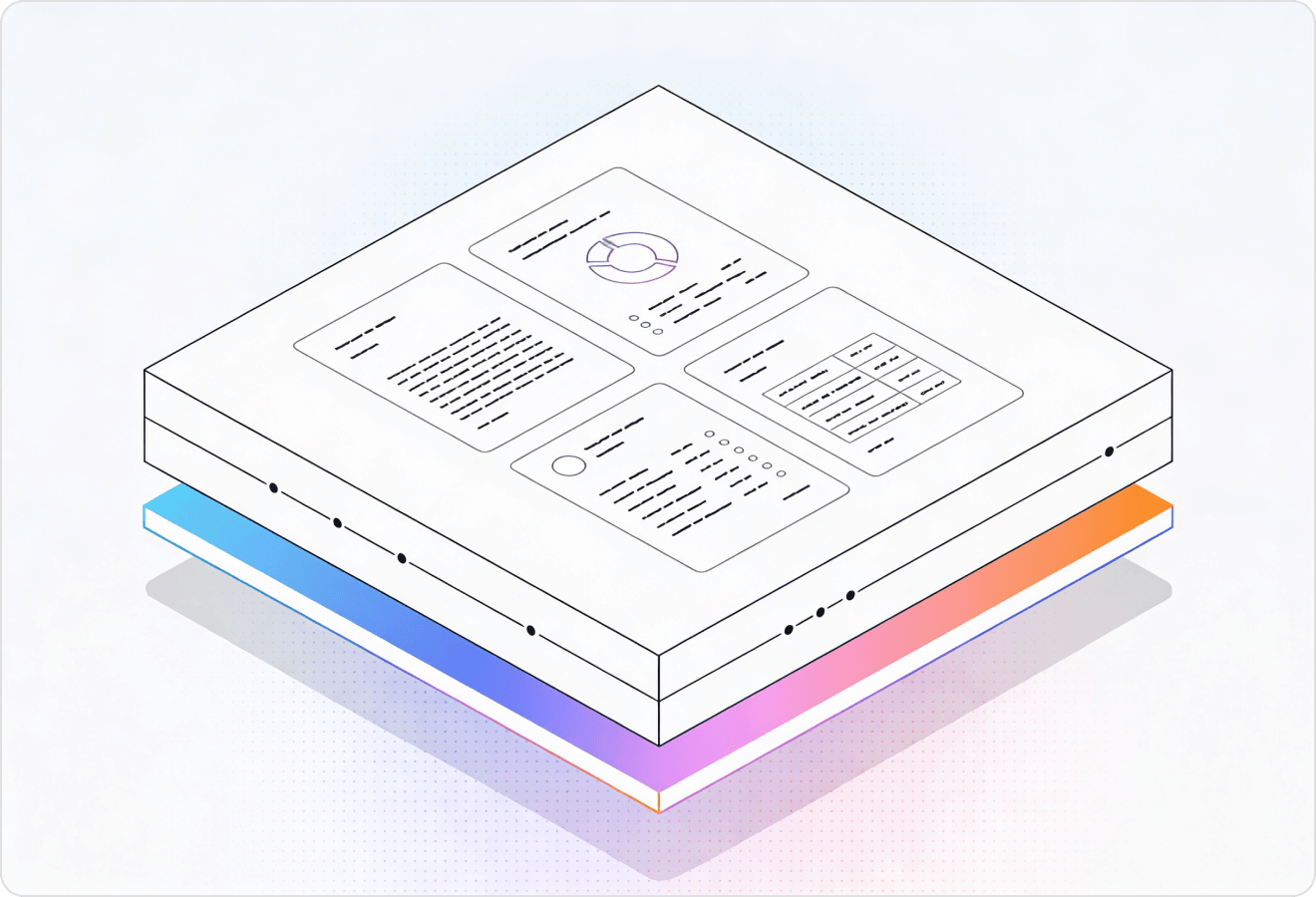

LlamaParse turns messy credit report PDFs and scans into reliable, schema-ready JSON you can feed directly into underwriting, disputes, or analytics pipelines. Its agentic parsing understands layouts, tables, and footnotes, then validates extractions with confidence signals so reviewers only touch true edge cases.
Best-in-Class Accuracy

Use LlamaParse to turn borrower credit reports into structured JSON—tradelines, utilization, inquiries, public records, and identity fields—without brittle rules that break on bureau layout changes. Layout-aware table extraction and validation loops reduce manual review and speed up underwriting decisions while keeping every extracted value traceable back to its page location.

Parse applicant credit reports into clean, comparable screening data (collections, late payments, debt load, and address history) even when reports include multi-column sections and dense tables. Natural-language parsing instructions let teams standardize outputs across bureaus and formats so approvals and adverse-action workflows run consistently at scale.

Ingest credit reports as supporting documentation to quickly surface identity mismatches, suspicious address changes, and financial stress signals that correlate with fraud patterns. Multimodal parsing and granular metadata preserve document structure and evidence trails, making it easier to triage cases and document decisions for audit.

Ship credit-report ingestion in days by using LlamaParse APIs to normalize bureau PDFs into an AI-ready schema for scoring models, dashboards, and decision engines. Tier-based agentic processing keeps costs predictable by routing simple pages through fast modes and reserving heavier reasoning only for messy scans and complex layouts.
The Solution
01
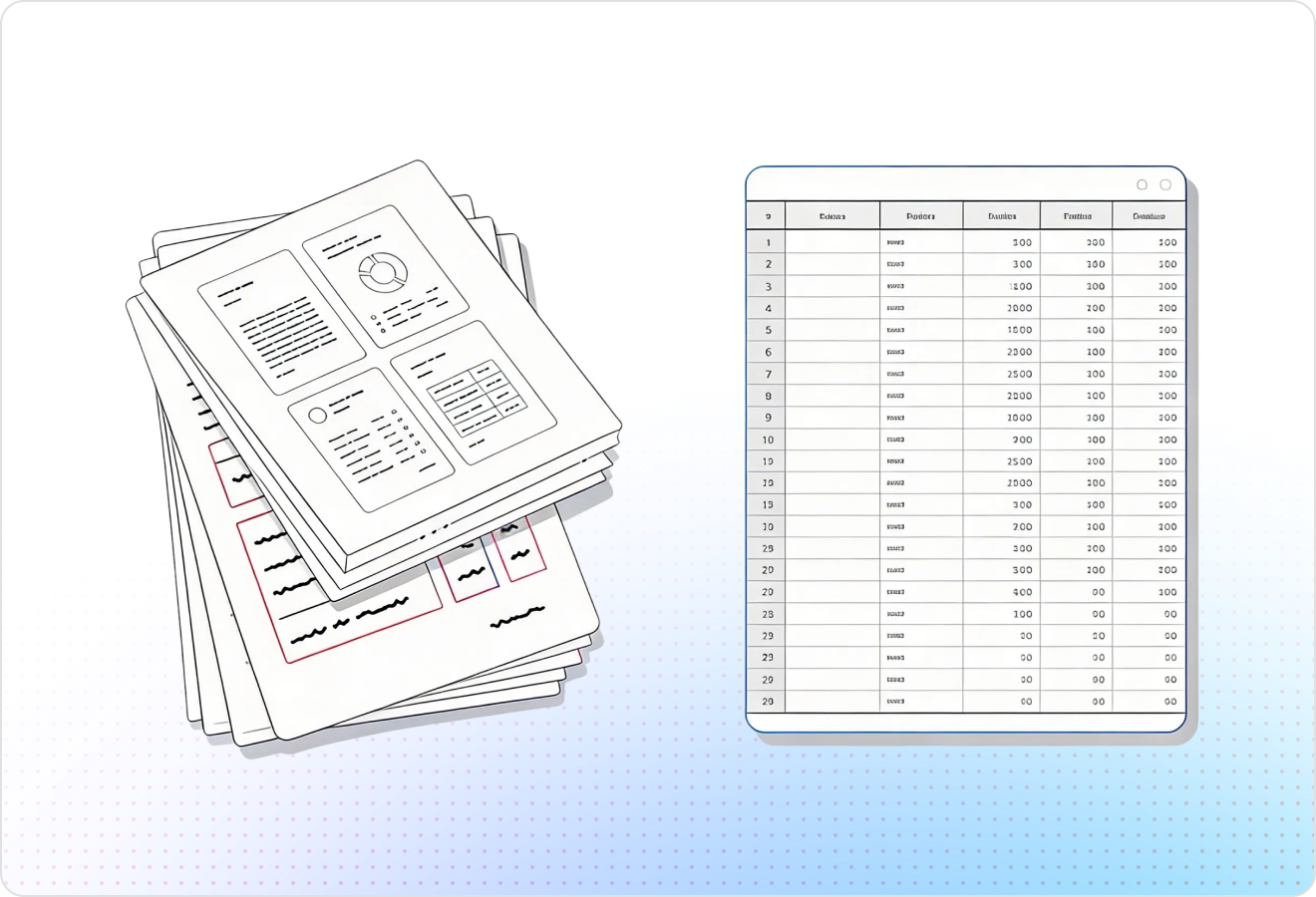
LlamaParse understands multi-column layouts, section headers, and footers so credit report narratives don’t get scrambled across bureaus and pages. This preserves reading order and section boundaries (e.g., “Accounts,” “Inquiries,” “Public Records”) so downstream extraction is consistent.
02
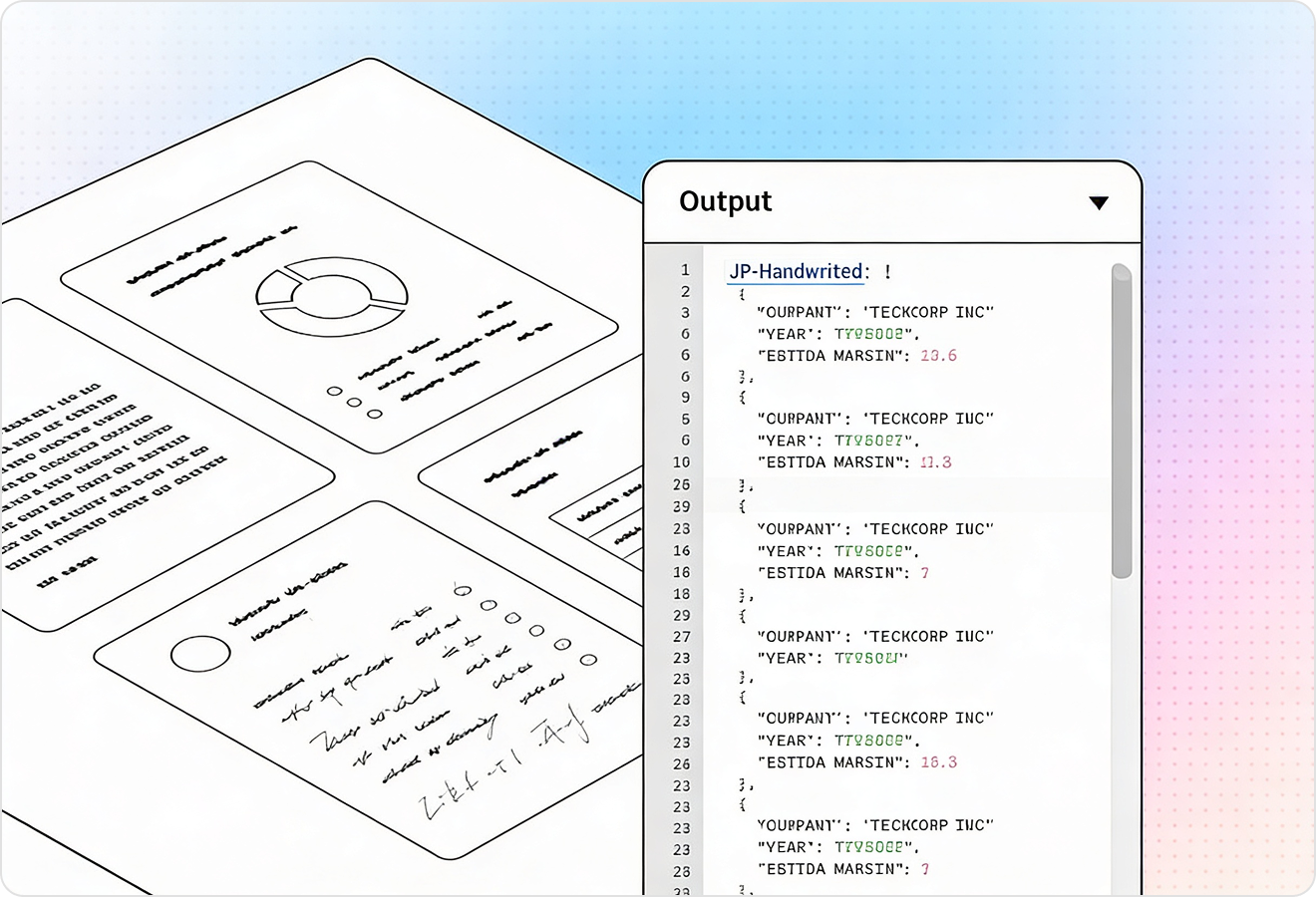
LlamaParse accurately captures dense tradeline tables—balances, limits, payment status, dates—without collapsing rows or misaligning columns. That means you can reliably map each account to structured fields for underwriting, dispute workflows, or monitoring.
03
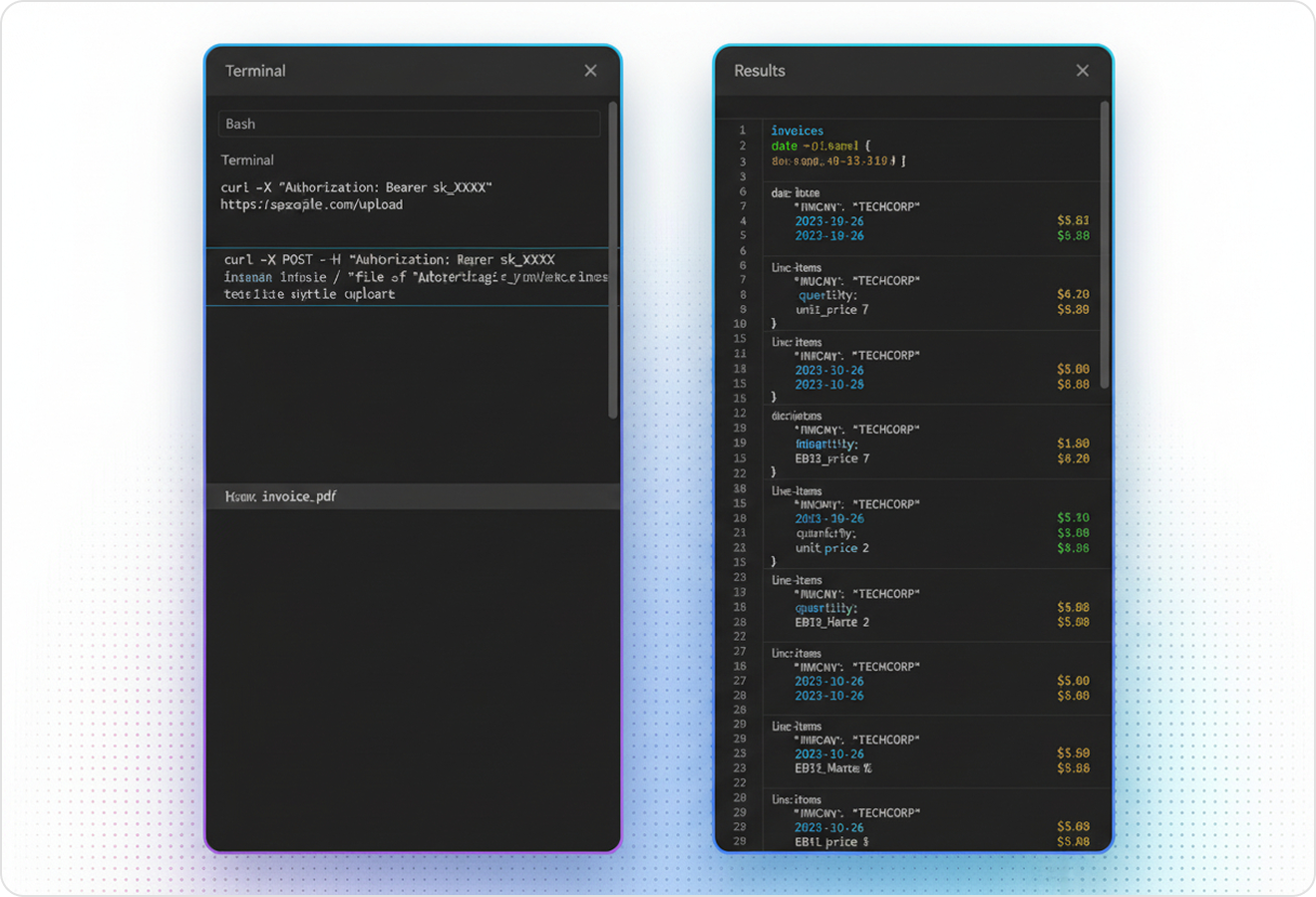
LlamaParse can return JSON output with granular metadata like page numbers and coordinates for each extracted element. For credit report OCR workflows, this gives you auditable provenance and makes it easy to highlight exact source regions during human review or compliance checks.
04
LlamaParse uses validation steps to catch common extraction errors like swapped dates, missing negatives, or inconsistent totals before returning results. This reduces manual QA on messy scans and improves straight-through processing for high-volume credit report ingestion.
Technical OCR documentation
Explore our developer guides to easily connect your document pipelines to LlamaParse.
Explore the documentation
Our AI catches the typos that tired eyes miss.

Export to Excel, JSON, XML, or directly via API.

SOC2 Type II compliant with end-to-end encryption.

Train the tool on your specific forms in minutes, not days.

Average processing time of <3 seconds per page.
LlamaParse’s support of a wide variety of filetypes and its accuracy of parsing made it the best tool we tested in our evaluations. The LlamaIndex team was very responsive and we were off to the races within a day.
Common FAQs
01
Yes—our layout-aware parsing understands multi-column pages, headers, and footers so narratives don’t get scrambled between bureaus or sections. It preserves section boundaries like “Accounts,” “Inquiries,” and “Public Records,” which keeps downstream extraction consistent and predictable.
02
We extract high-density tradeline tables without collapsing rows or shifting columns, so each account stays aligned to the right fields. This makes it easy to map results into underwriting, dispute workflows, or monitoring systems with far less manual cleanup.
03
Yes—results can be returned as structured JSON with traceability metadata such as page numbers and coordinates for each extracted element. That gives you auditable provenance and makes human review faster by highlighting the exact source region when needed.
04
What happens when the scan is messy—blurry text, missing negatives, or swapped dates?
We run validation and self-correction loops to catch common OCR/extraction issues like swapped dates, missing minus signs, and inconsistent totals before returning results. This reduces downstream exceptions and helps you maintain higher straight-through processing on large volumes.
05
Will it reliably separate similar sections across bureaus, like inquiries vs. accounts vs. public records?
Yes—section-aware parsing uses layout cues and headings to keep content grouped under the correct bureau and section. That means fewer false matches (e.g., an inquiry treated as an account) and cleaner structured data for decisioning and reporting.
06
How much manual QA can we realistically eliminate in a credit report OCR pipeline?
Most teams see a meaningful drop in manual QA because tables stay aligned, sections stay intact, and validation catches many common errors automatically. You can still review edge cases with the built-in traceability, but day-to-day processing becomes faster and more consistent.