Nov 14, 2025
Document AI: The Next Evolution of Intelligent Document ProcessingPersona
Industry
Use cases
Shipping Label OCR
[ Shipping Label OCR ]

Use LlamaParse to turn labels into clean JSON with confidence scores, so your systems auto-fill faster.
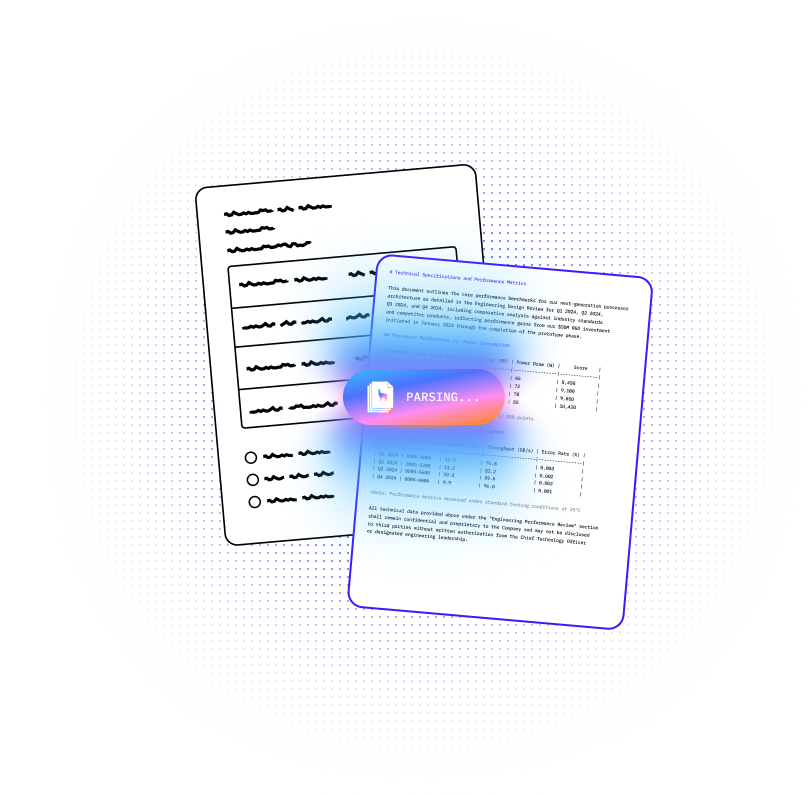


LlamaParse turns messy shipping label scans into clean, structured fields like recipient, tracking number, service, and weight without brittle templates. Layout-aware parsing plus validation loops catch smudged prints and rotated photos, so you ship faster with fewer exceptions and reliable downstream automation.
Best-in-Class Accuracy

Use LlamaParse to convert shipping labels into structured JSON (carrier, service level, tracking ID, ship-to, package weight) even when layouts vary across marketplaces and 3PLs. This prevents mis-shipments and “lost package” tickets by validating label data against order records before it ever hits the dock.

LlamaParse extracts label fields and location cues from real-world scans and photos, then returns traceable metadata with coordinates to reconcile pallets, cartons, and cross-dock transfers. Ops teams can auto-route exceptions when labels are damaged or partially occluded, reducing manual re-keying during peak volume.

Parse inbound/outbound shipping labels to reliably capture lot numbers, serials, destinations, and ship dates to support recalls, chain-of-custody, and audit trails. Layout-aware parsing avoids failures on multi-label cartons and overprinted stickers, so compliance reporting doesn’t depend on manual checks.

Ship label ingestion as a product feature fast by using LlamaParse natural-language parsing instructions to produce a clean schema for tracking, addresses, and carrier metadata without brittle regex pipelines. Cost controls like Auto Mode and validation loops keep accuracy high while staying within tight startup API budgets.
The Solution
01
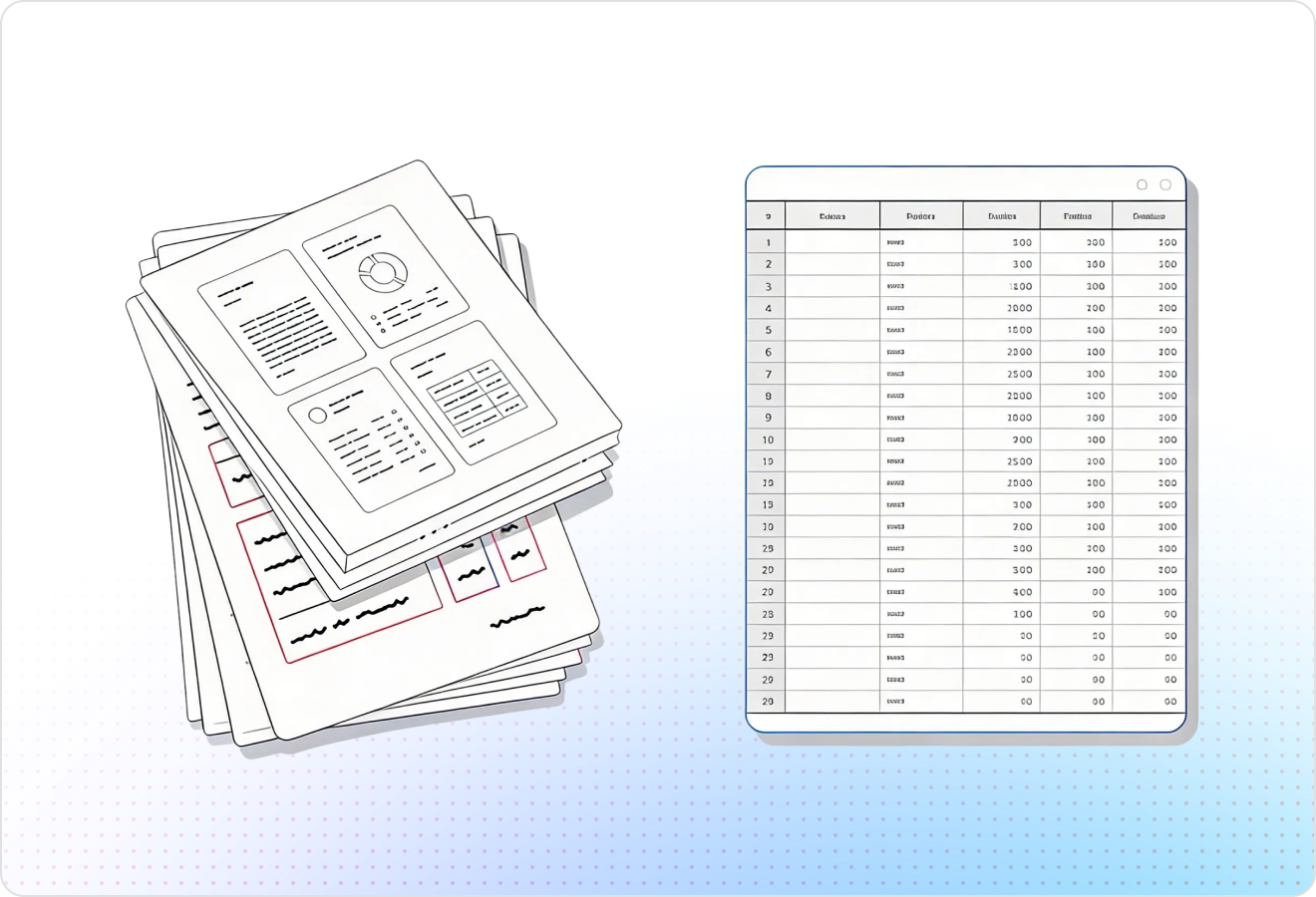
LlamaParse understands label structure (sender/recipient blocks, service level, routing info) instead of treating the page as a flat text blob. That keeps names, addresses, and reference numbers in the right order even when the label layout changes across carriers.
02
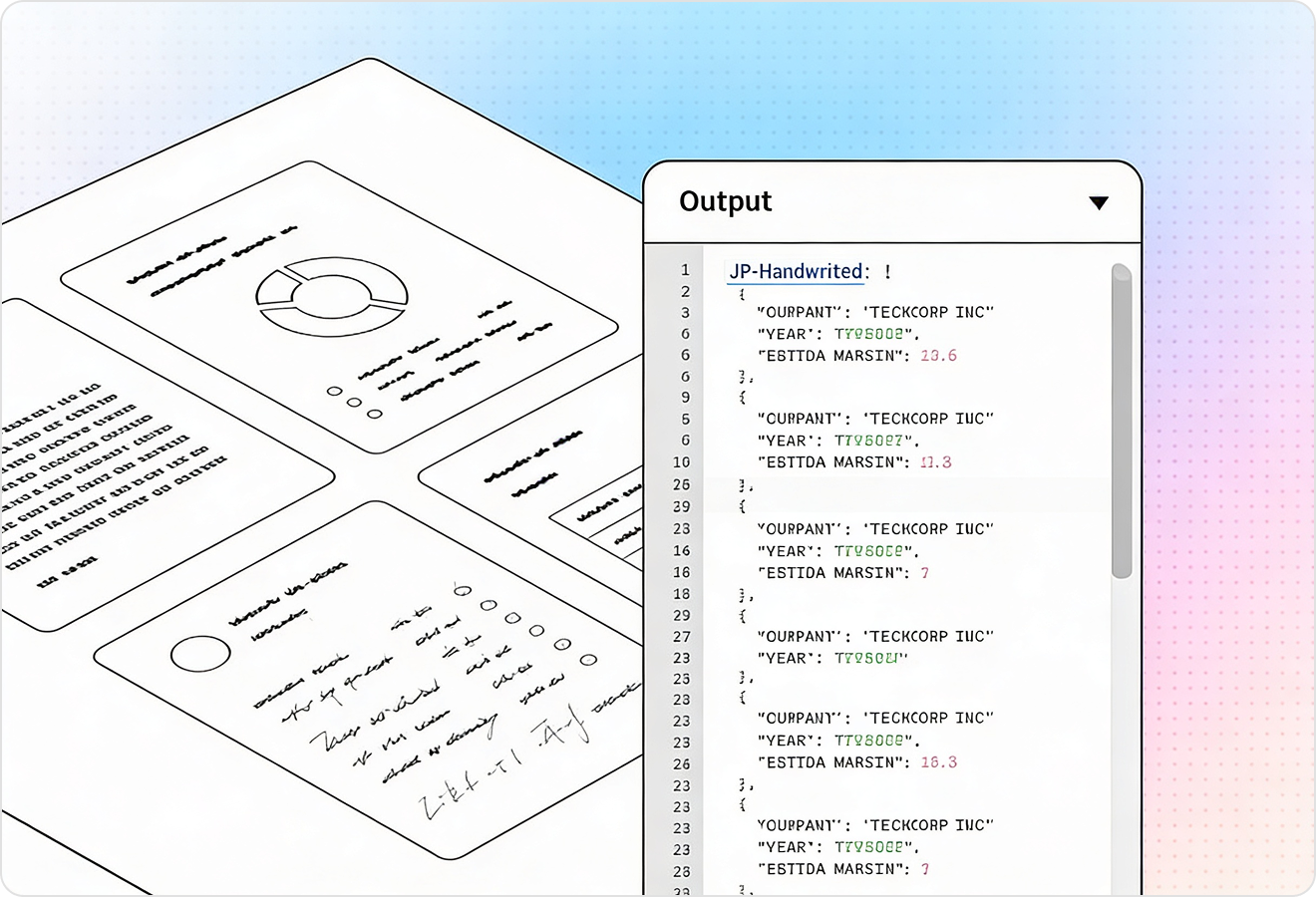
Shipping labels often mix barcodes/QR codes with printed text, and LlamaParse can extract both with their surrounding context. You get the tracking ID and its associated metadata (carrier, ship date, package info) without brittle heuristics to “guess” which number is the right one.
03
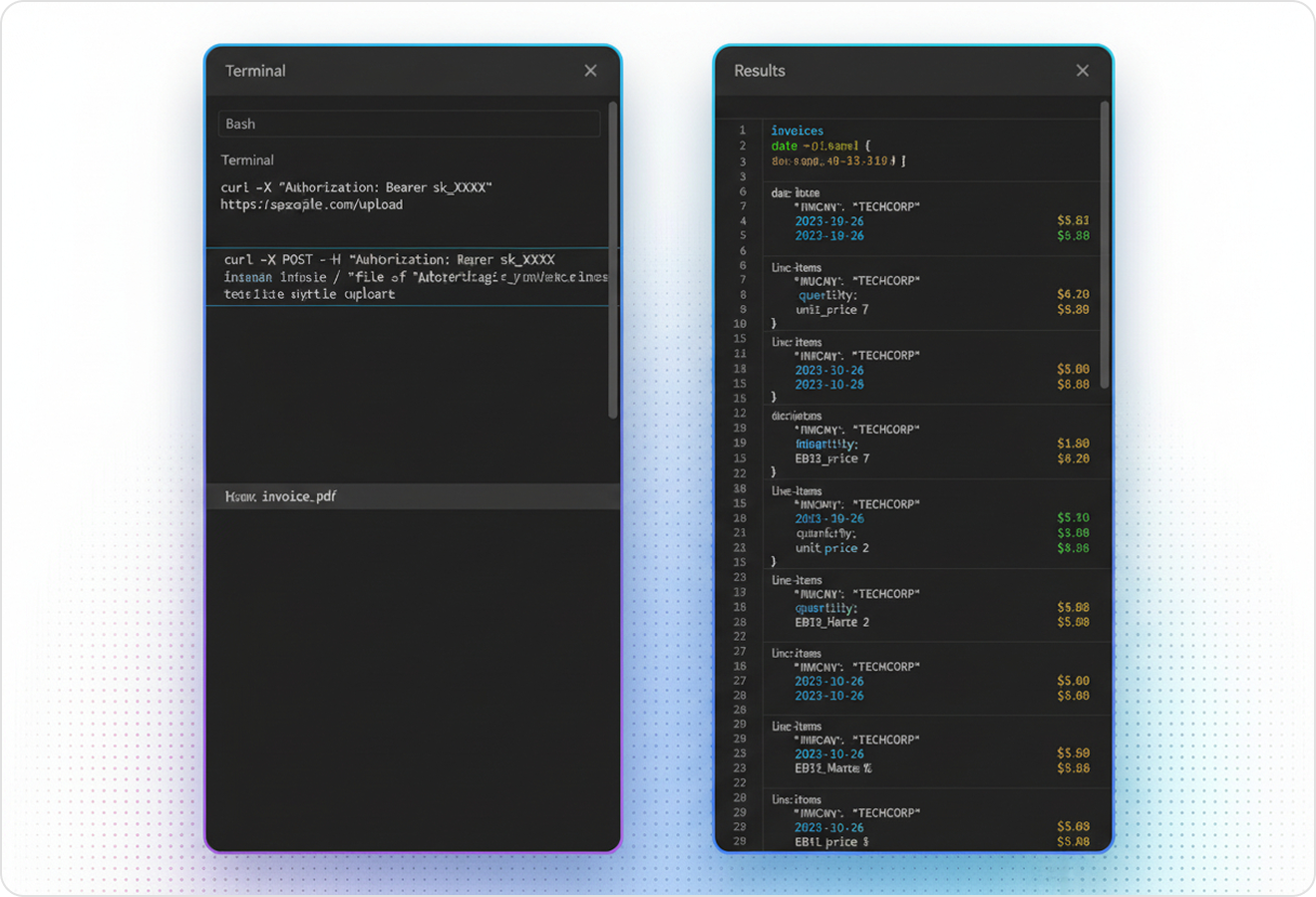
Agentic validation steps catch common label errors like swapped digits in tracking numbers or misread apartment/unit lines from low-quality scans. This reduces downstream exceptions in WMS/OMS ingestion and improves straight-through processing for inbound label photos.
04
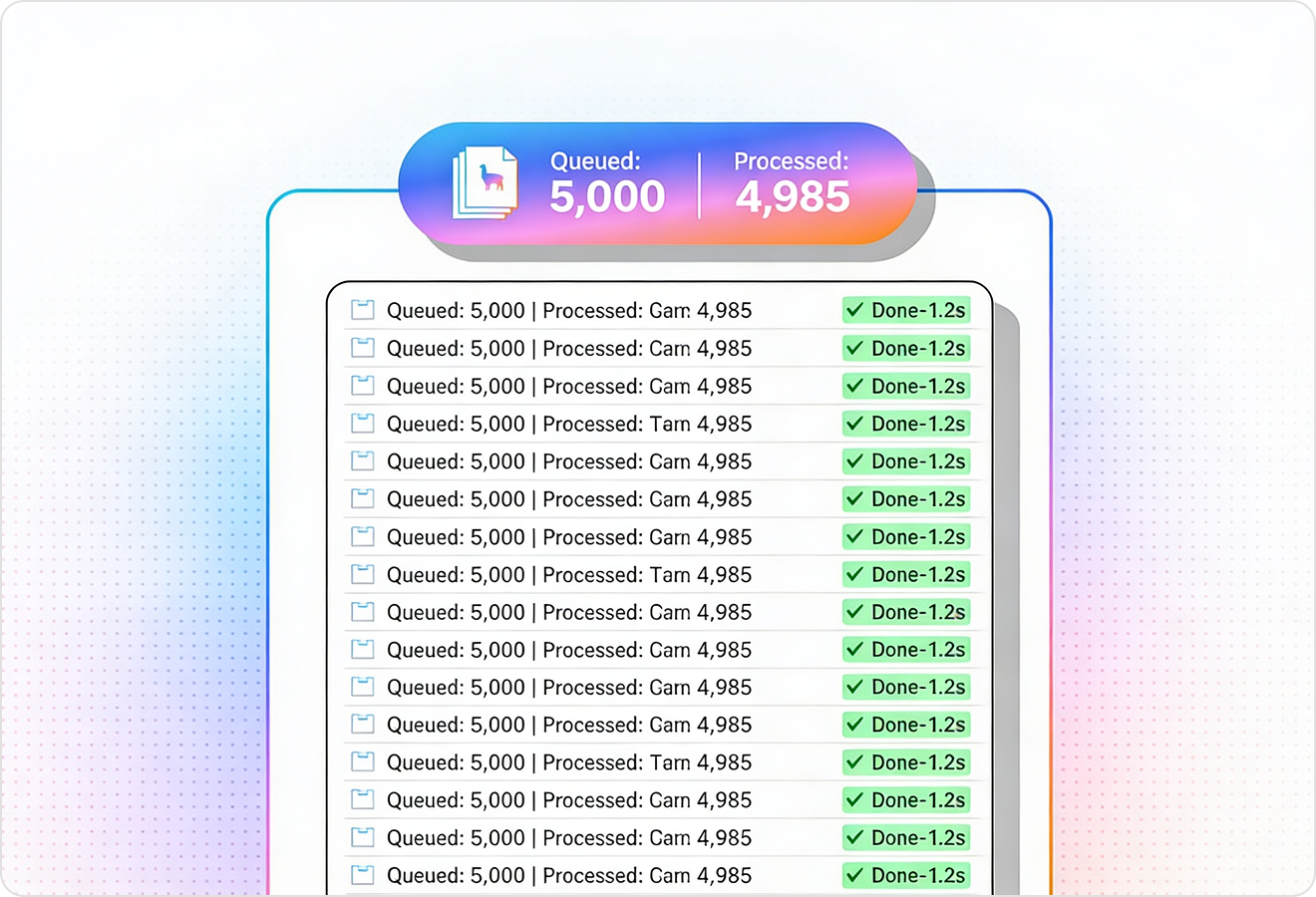
LlamaParse can return structured JSON for shipping-label fields along with page coordinates and element metadata for traceability. That makes it easy to map extracted values into your shipment schema and support audit-friendly review by highlighting exactly where each field came from.
Technical OCR documentation
Explore our developer guides to easily connect your document pipelines to LlamaParse.
Explore the documentation
Our AI catches the typos that tired eyes miss.

Export to Excel, JSON, XML, or directly via API.

SOC2 Type II compliant with end-to-end encryption.

Train the tool on your specific forms in minutes, not days.

Average processing time of <3 seconds per page.
LlamaParse’s support of a wide variety of filetypes and its accuracy of parsing made it the best tool we tested in our evaluations. The LlamaIndex team was very responsive and we were off to the races within a day.
Common FAQs
01
Yes—Layout-Aware Field Capture reads the structure of a label (sender/recipient blocks, service level, routing info) rather than relying on fixed templates. That keeps names, addresses, and references in the correct order even when formatting differs across carriers or label versions.
02
Absolutely. We parse barcode/QR content and the nearby human-readable text together, so you get the tracking ID with the context that matters—carrier, ship date, and package details. This reduces “which number is the tracking number?” guesswork and prevents brittle rules.
03
Auto Correction Loops add validation steps that catch common OCR mistakes like swapped digits in tracking numbers or misread apartment/unit lines. That means fewer exceptions during WMS/OMS ingestion and higher straight-through processing from real-world label images.
04
What does the output look like, and how easy is it to integrate?
You receive structured JSON for key label fields, designed to map cleanly into your shipment schema. We also include coordinates and element metadata so you can trace every value back to its exact location on the label for faster debugging and reviews.
05
Can we audit results and quickly verify what the OCR extracted?
Yes—coordinates and metadata make the extraction audit-friendly by enabling field highlighting on the original label image. This helps reviewers confirm critical fields (like tracking ID or destination address) in seconds and builds confidence before downstream actions.
06
How does this reduce downstream errors in our WMS/OMS workflows?
By combining layout awareness, barcode + text parsing, and automated correction, the system produces cleaner, better-contextualized data from the start. The result is fewer ingestion failures, fewer manual fixes, and more reliable automation for receiving, returns, and shipment creation.