Nov 14, 2025
Document AI: The Next Evolution of Intelligent Document ProcessingPersona
Industry
Use cases
Document Agent Platform
[ Document Agent Platform ]

Use LlamaParse to turn messy PDFs into verified JSON your agents can trust.
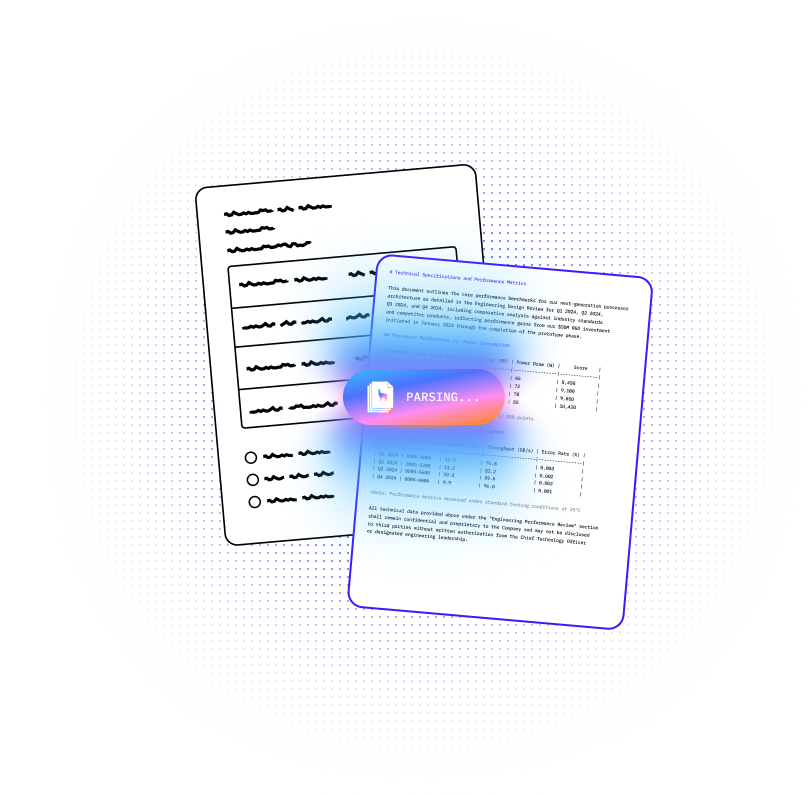
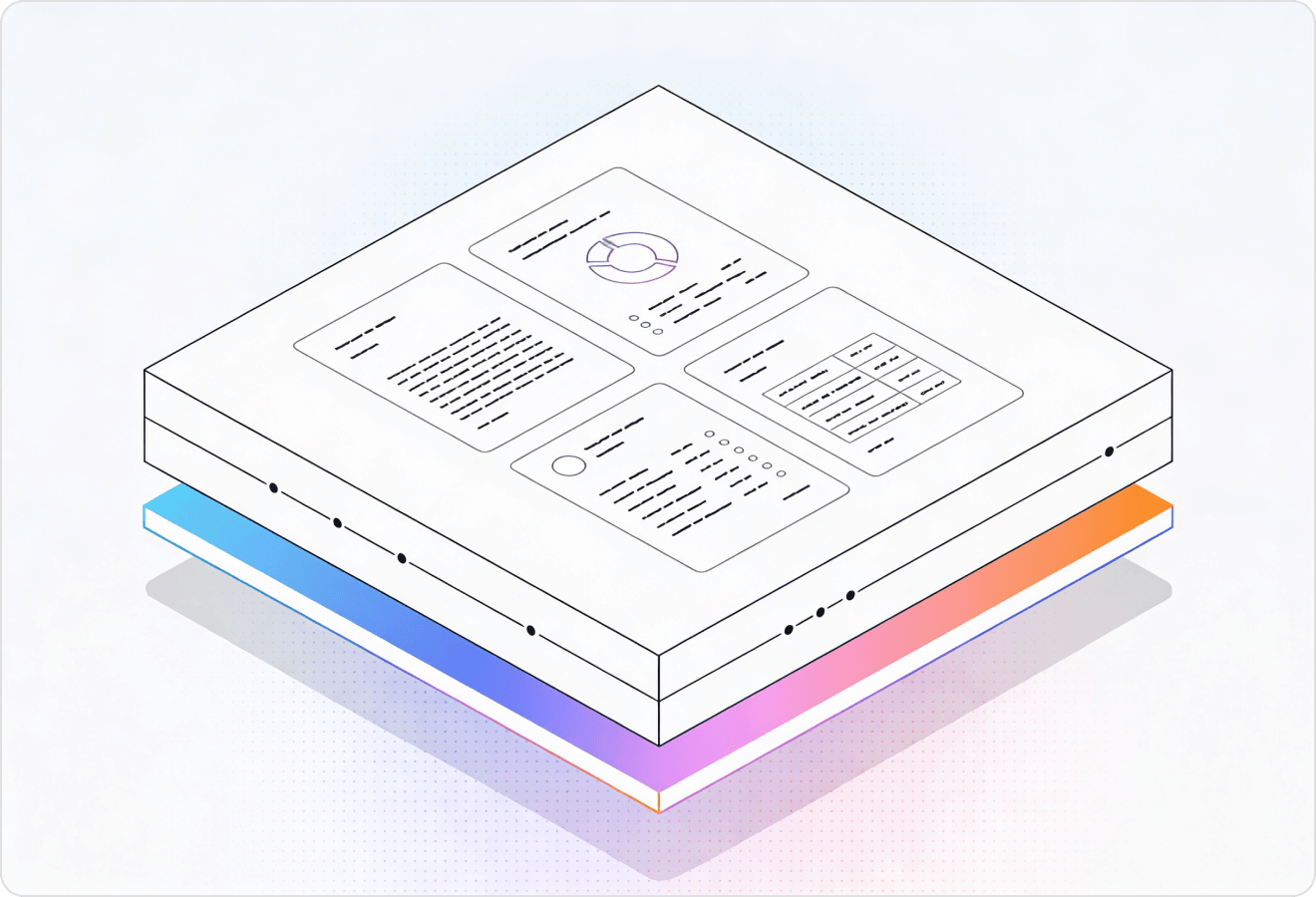

LlamaParse turns PDFs, scans, and messy forms into structured Markdown or JSON your document agents can reliably reason over and act on. Layout-aware vision and validation loops reduce extraction errors on tables, charts, and embedded images, so workflows ship with fewer manual fixes.
Best-in-Class Accuracy

Turn customer-uploaded PDFs (invoices, contracts, onboarding forms) into clean Markdown/JSON without writing brittle post-processing, so your product can ship reliable document features in weeks, not quarters. Use tier-based agentic processing to keep unit economics predictable while still handling the ugly edge cases that break traditional OCR.

Parse FNOL packets, repair estimates, medical bills, and loss runs with layout-aware table extraction so adjusters get structured line items instead of scrambled text. Return verifiable outputs with page citations and confidence scores to speed audits, reduce leakage, and push more claims through straight-through processing.

Extract quantities, schedules, and change-order tables from multi-column PDFs and scanned drawings, preserving reading order so downstream systems don’t inherit errors. Convert charts and diagrams into structured representations to automate cost tracking and highlight scope drift before it hits the budget.

Ingest contracts, exhibits, and court filings into consistent, citation-backed structured data, even when documents contain mixed layouts, signatures, and embedded tables. Apply natural-language parsing instructions to pull only the clauses and obligations you care about, reducing manual review time and improving draft-to-negotiation cycle speed.
The Solution
01
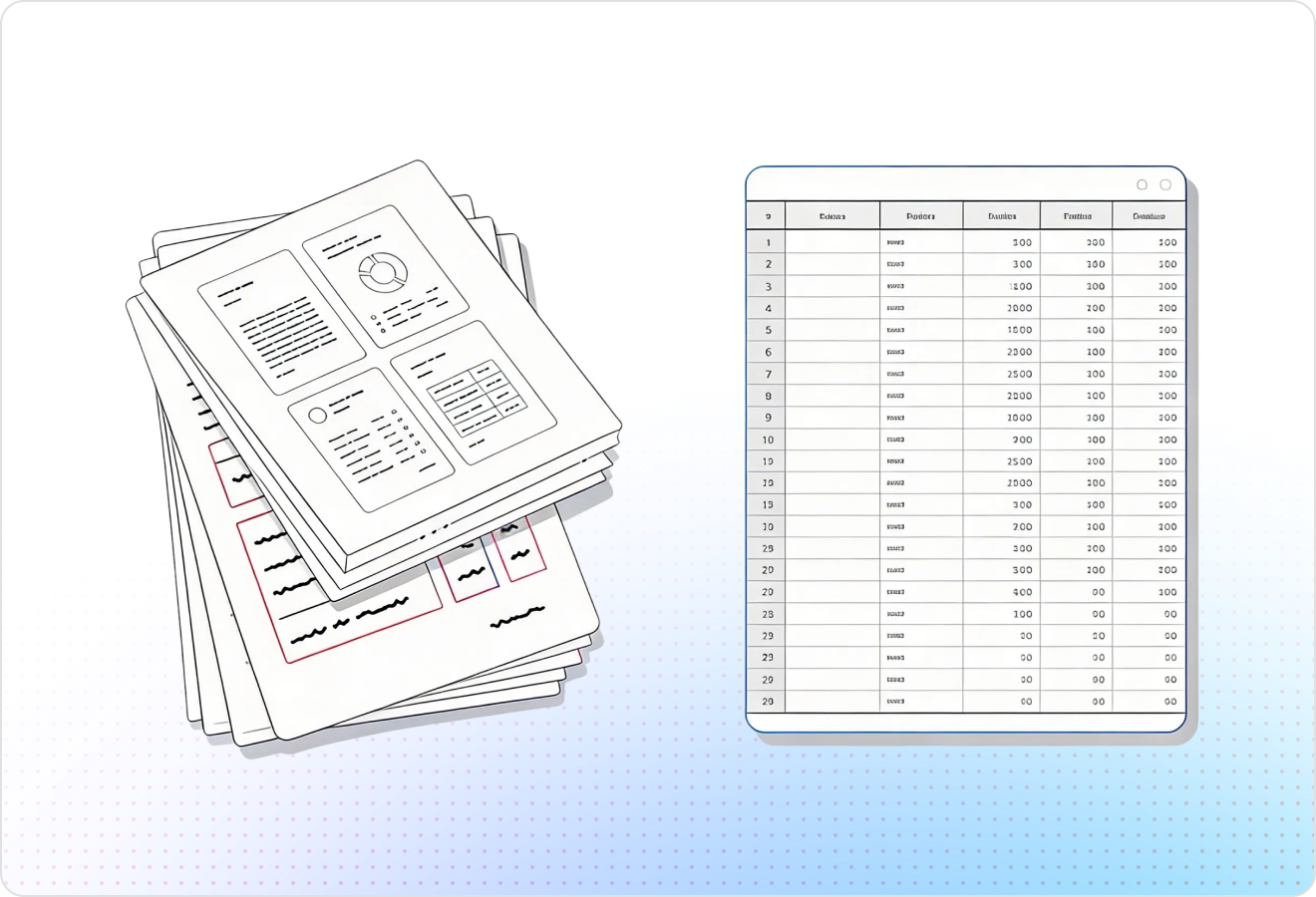
LlamaParse detects document structure—sections, headers/footers, columns, and nested blocks—so your agent gets the right reading order instead of scrambled text. That means your document agent can reliably navigate and reason over long PDFs without brittle, layout-specific cleanup code.
02
LlamaParse pulls complex tables (including multi-row headers and merged cells) into clean Markdown with structure preserved. Document agents can then answer questions, compute totals, and cross-check line items directly from consistent tabular data.
03
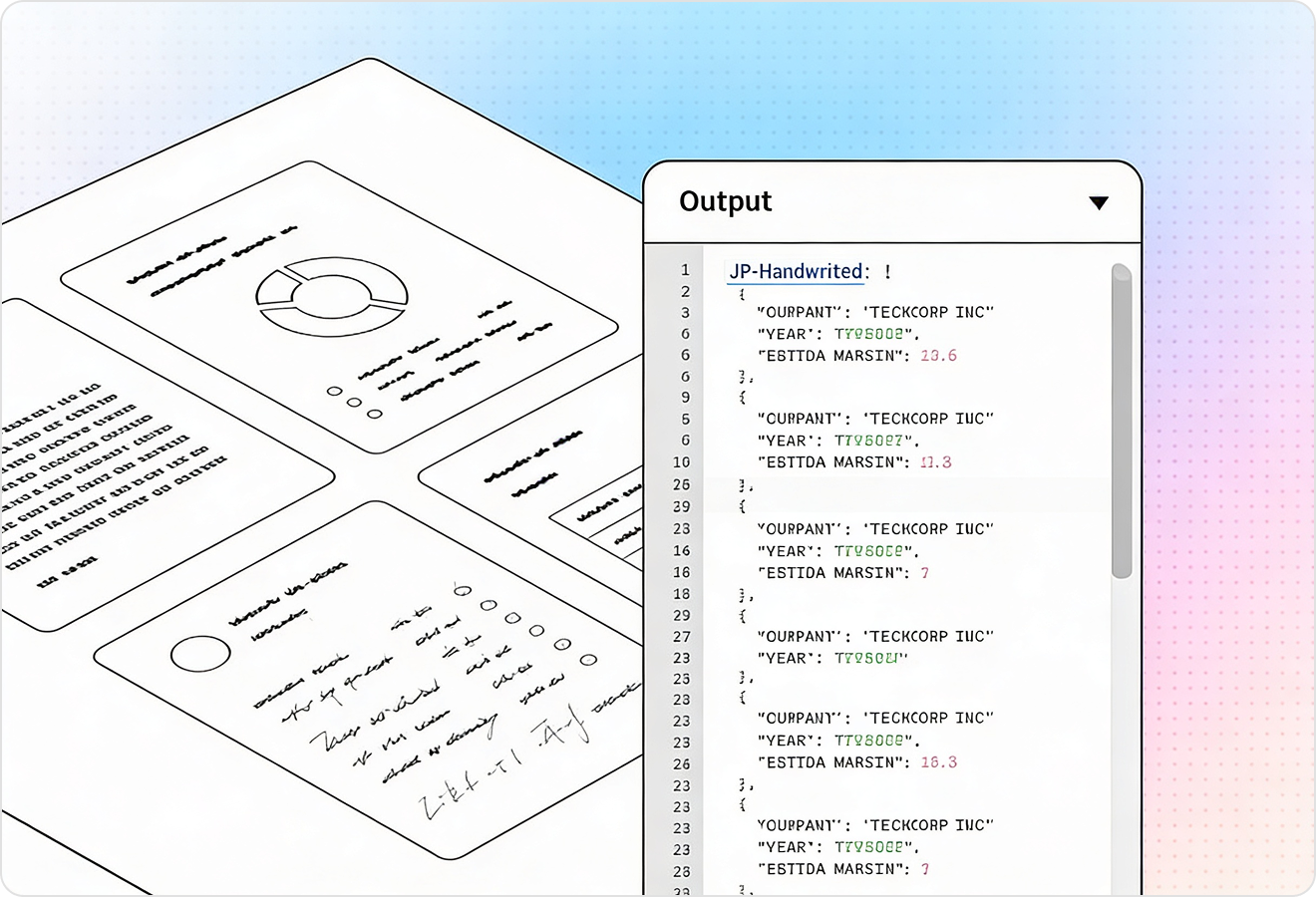
LlamaParse interprets charts, images, and diagrams as first-class document content rather than dead pixels, returning machine-usable representations and associated metadata. This lets document agents explain what a chart implies, not just quote nearby captions, which is critical for analytics-heavy reports and slide decks.
04
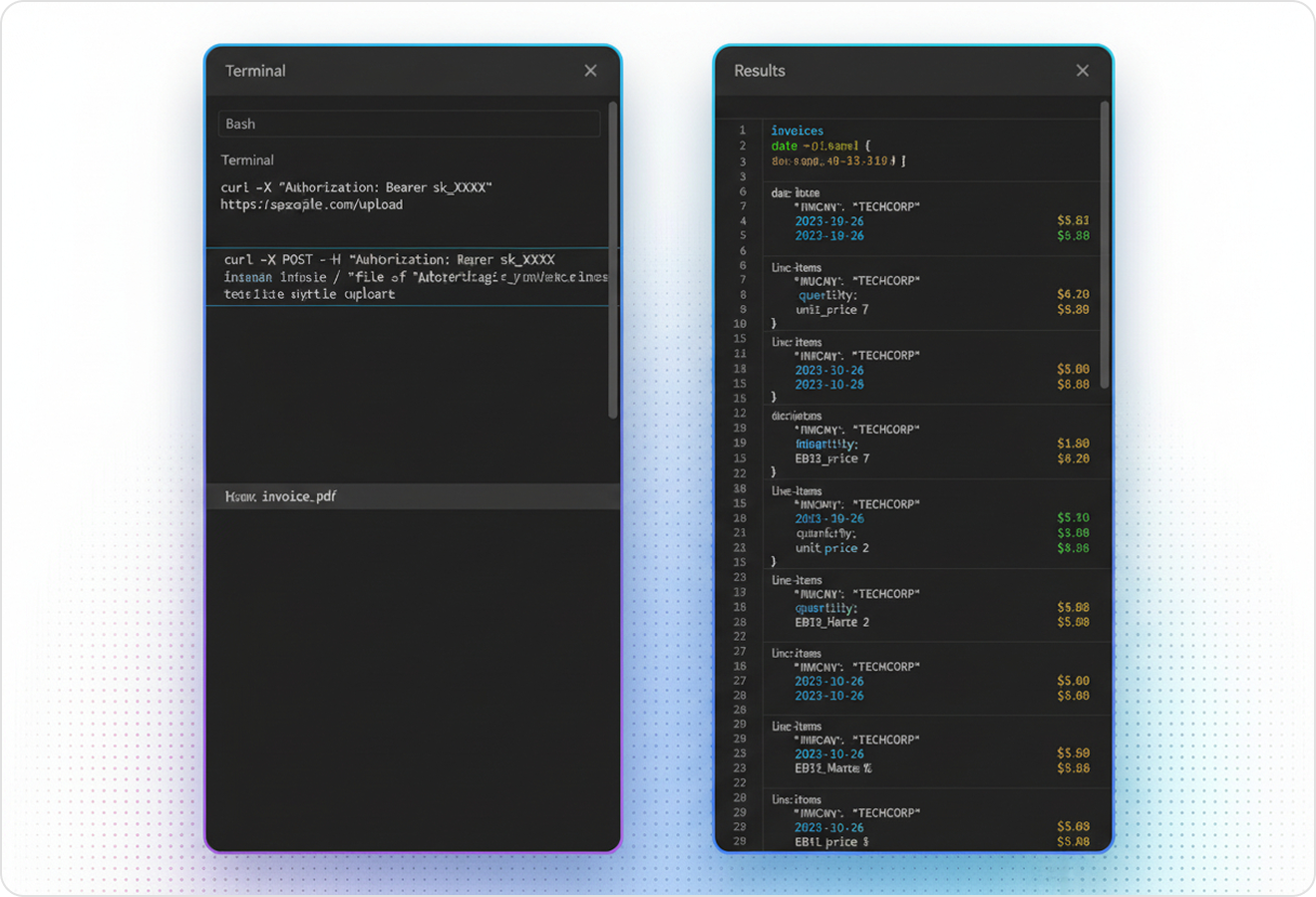
LlamaParse can output structured JSON with granular metadata like page numbers, element types, and coordinates for each extracted chunk. Your document agent platform can use that traceability for citations, confidence-driven review, and precise tool actions (e.g., “show me the source table on page 12”).
Technical OCR documentation
Explore our developer guides to easily connect your document pipelines to LlamaParse.
Explore the documentation
Our AI catches the typos that tired eyes miss.

Export to Excel, JSON, XML, or directly via API.

SOC2 Type II compliant with end-to-end encryption.

Train the tool on your specific forms in minutes, not days.

Average processing time of <3 seconds per page.
LlamaParse’s support of a wide variety of filetypes and its accuracy of parsing made it the best tool we tested in our evaluations. The LlamaIndex team was very responsive and we were off to the races within a day.
Common FAQs
01
Our layout-aware parsing detects sections, headers/footers, columns, and nested blocks to preserve the true reading order. That means your agent can navigate long, messy PDFs reliably without you building brittle, document-specific cleanup rules.
02
Yes—tables are converted into clean, structured Markdown that preserves merged cells and header hierarchies. This makes it easy for agents to compute totals, validate line items, and answer questions consistently from tabular data.
03
We treat charts and images as first-class content, returning machine-usable representations plus relevant metadata. Your agents can explain what a chart implies (not just quote captions), which is essential for analytics reports and slide-heavy documents.
04
How do citations and traceability work for agent answers?
We output verifiable JSON with granular metadata such as page numbers, element types, and coordinates for each extracted chunk. This enables precise citations, confidence-based review, and “show me the source on page 12” workflows your users can trust.
05
Will this reduce hallucinations in document Q&A and extraction workflows?
Structured outputs with source metadata help your agent ground every claim in a specific document element. When the agent can point to the exact table cell, chart, or paragraph it used, reviewers can verify results quickly and catch issues early.
06
How quickly can we integrate this into our existing document agent stack?
You can start with Markdown or JSON outputs, depending on whether you’re optimizing for readability or downstream automation. Most teams integrate in days—not weeks—because the platform delivers consistent structure across documents, reducing custom parsing and maintenance.