Nov 14, 2025
Document AI: The Next Evolution of Intelligent Document ProcessingPersona
Industry
Use cases
AI Agent Platform For Documents
[ AI Agent Platform For Documents ]

Use LlamaParse to extract structured JSON from complex files, with confidence scores you can trust.
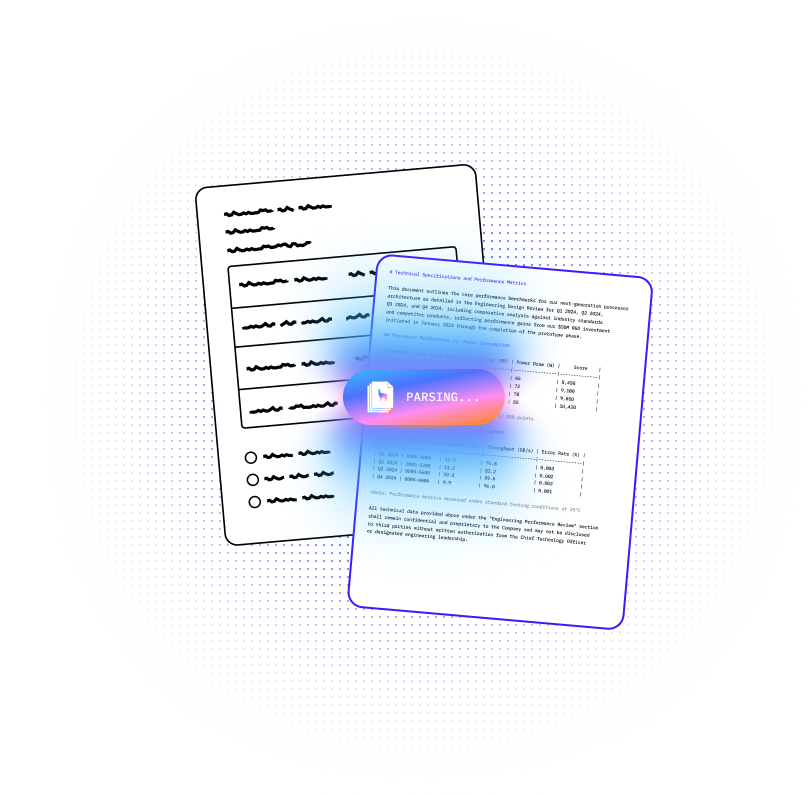
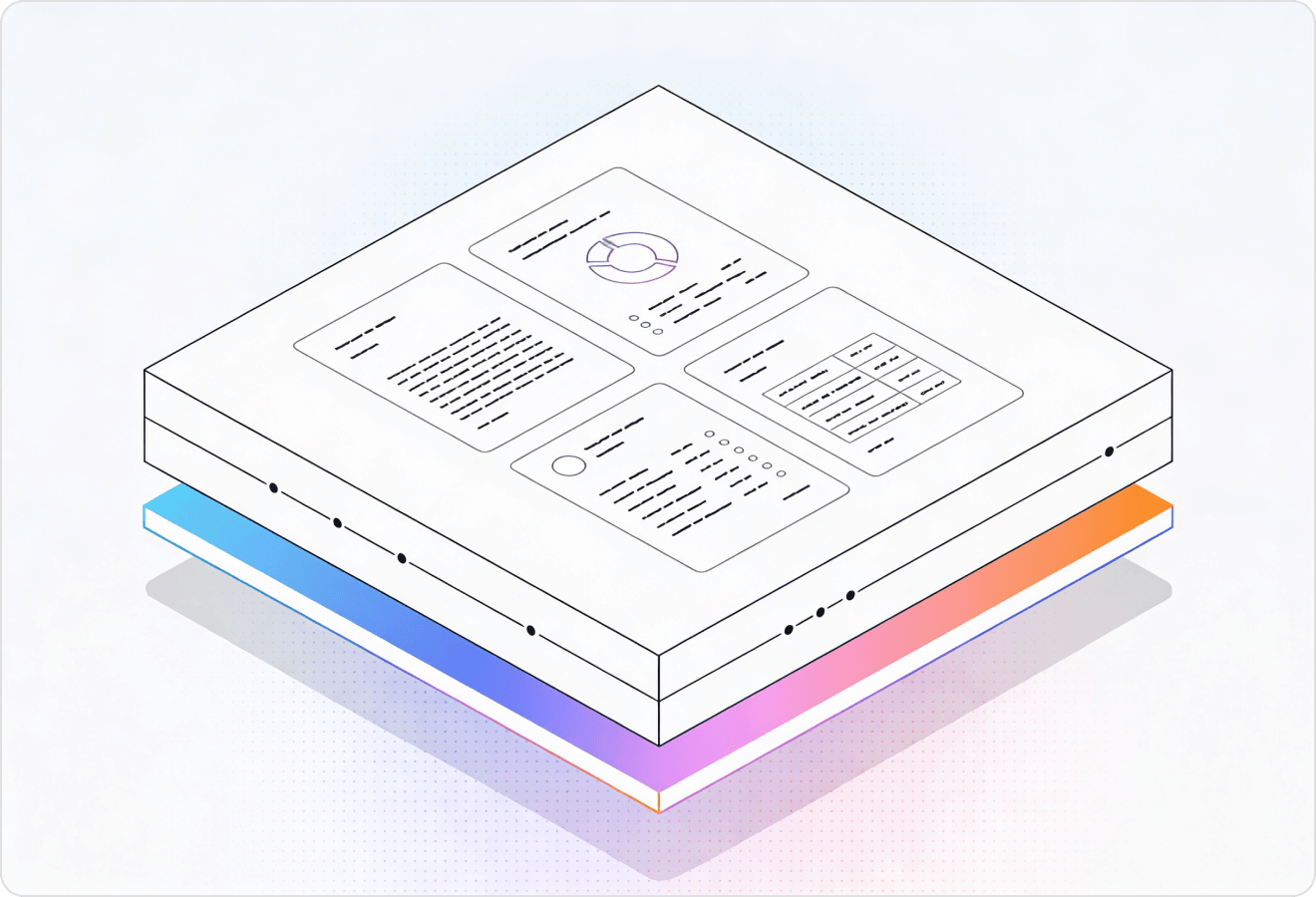

LlamaParse turns messy PDFs, scans, and slide decks into structured, AI-ready Markdown or JSON so your document agents can reliably act. It uses layout-aware vision, agentic orchestration, and validation loops to reduce extraction errors and ship verifiable outputs at scale.
Best-in-Class Accuracy

Turn messy customer PDFs, invoices, and onboarding forms into clean JSON and Markdown in hours, not weeks, so your product ships without a brittle parsing pipeline. Use tier-based agentic processing to keep unit economics predictable while still handling the ugly edge cases that would otherwise force manual ops.

Parse loan packets and financial statements with layout-aware table extraction so covenant calculations, DSCR fields, and borrower summaries don’t get scrambled by multi-column PDFs. Produce verifiable outputs with citations and confidence scores so underwriters can audit decisions quickly instead of re-keying data.

Extract structured data from adjuster reports, loss runs, and scanned forms, and use autocorrection loops to reduce downstream exceptions caused by missing fields and inconsistent formatting. Convert charts and photos into usable text plus metadata so claim triage and underwriting models can operate on the full document context.

Ingest plans, SOWs, change orders, and pay apps and preserve reading order across headers, footers, and multi-page sections so project teams stop chasing the “right version” of the truth. Use natural language parsing instructions to pull only the clauses, schedules, and line items your ERP needs without writing custom regex-heavy extractors.
The Solution
01
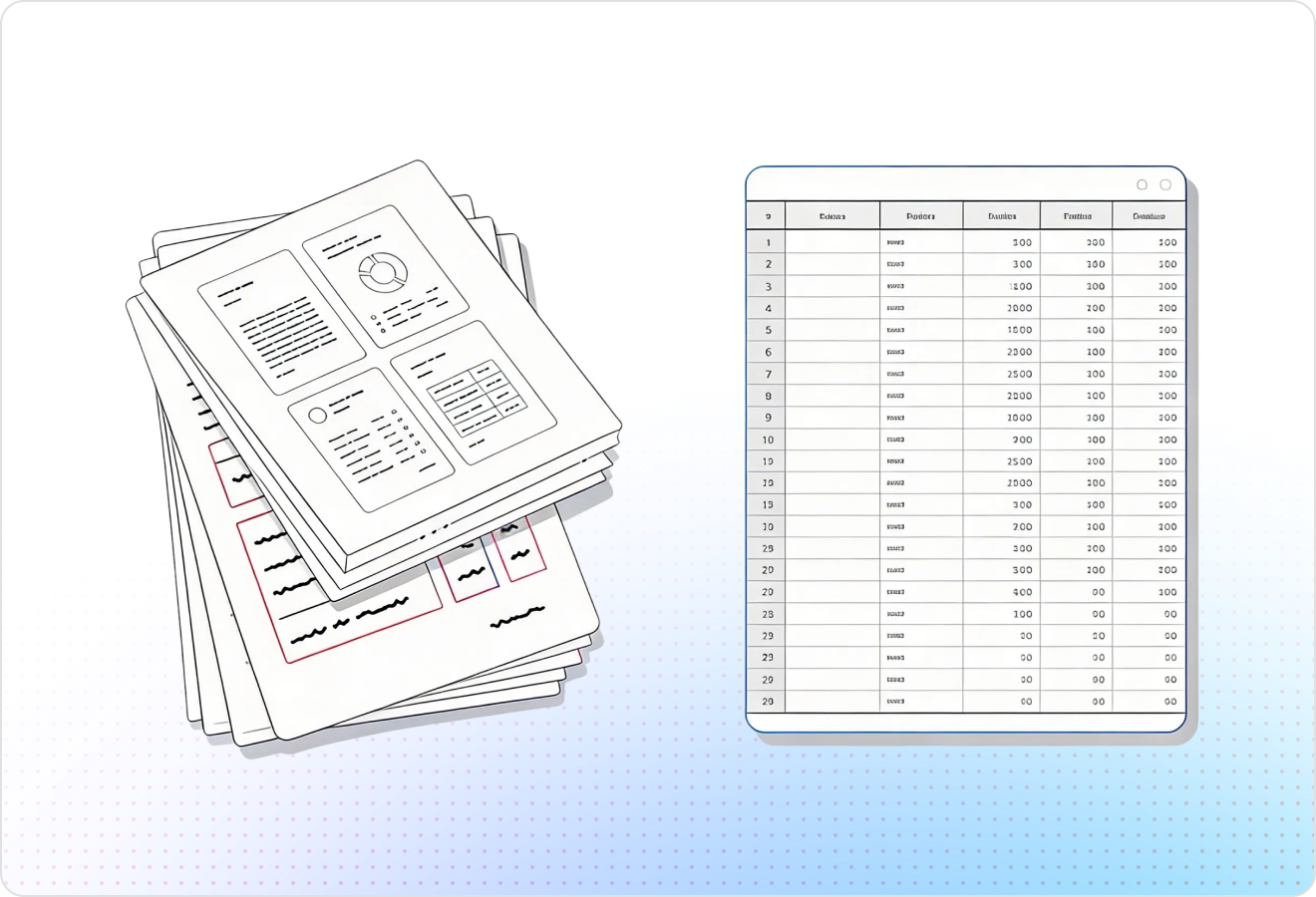
LlamaParse understands page layout (sections, headers, footers, multi-column flow) and preserves the correct reading order instead of dumping scrambled text. That gives your document agents clean, reliable context to reason over when answering questions or triggering downstream actions.
02
It extracts complex tables—including nested cells and irregular grids—into structured outputs that keep row/column meaning intact. Your agents can then compute, compare, and validate values (invoices, statements, reports) without brittle post-processing code.
03
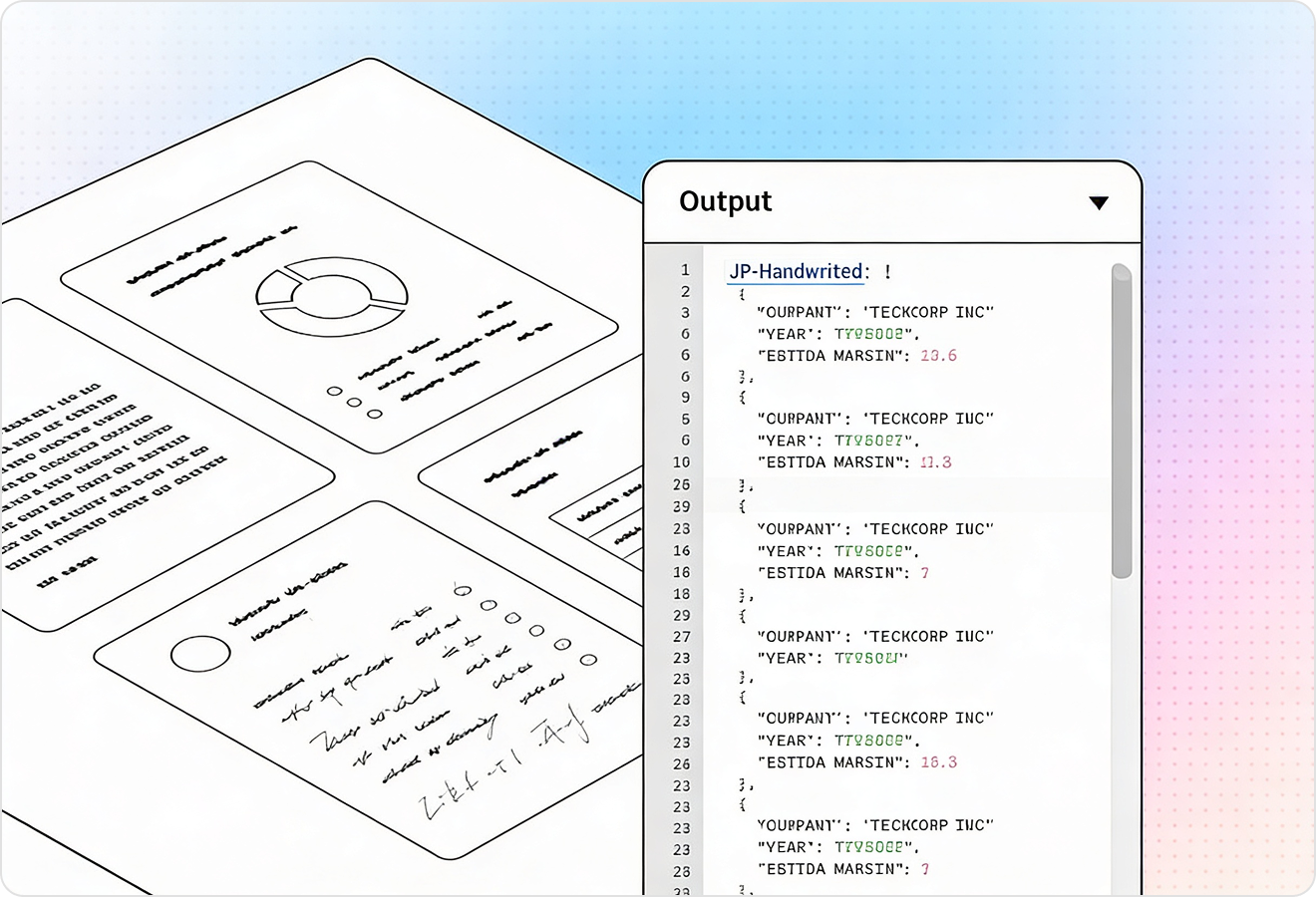
LlamaParse can interpret charts, images, and equations and convert them into AI-readable representations like Markdown tables or LaTeX. That lets document agents use the full visual evidence in a file, not just the plain text, when making decisions.
04
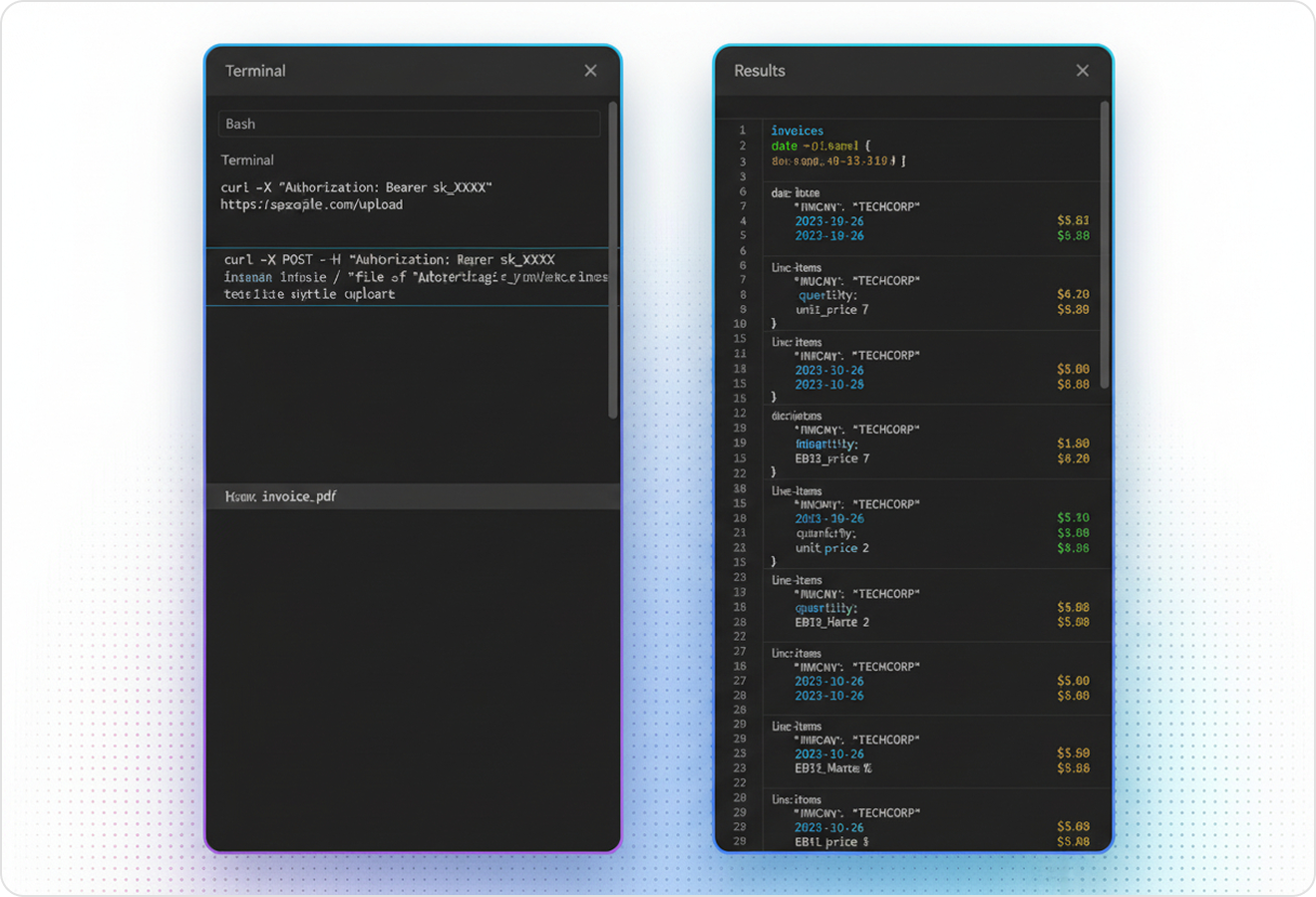
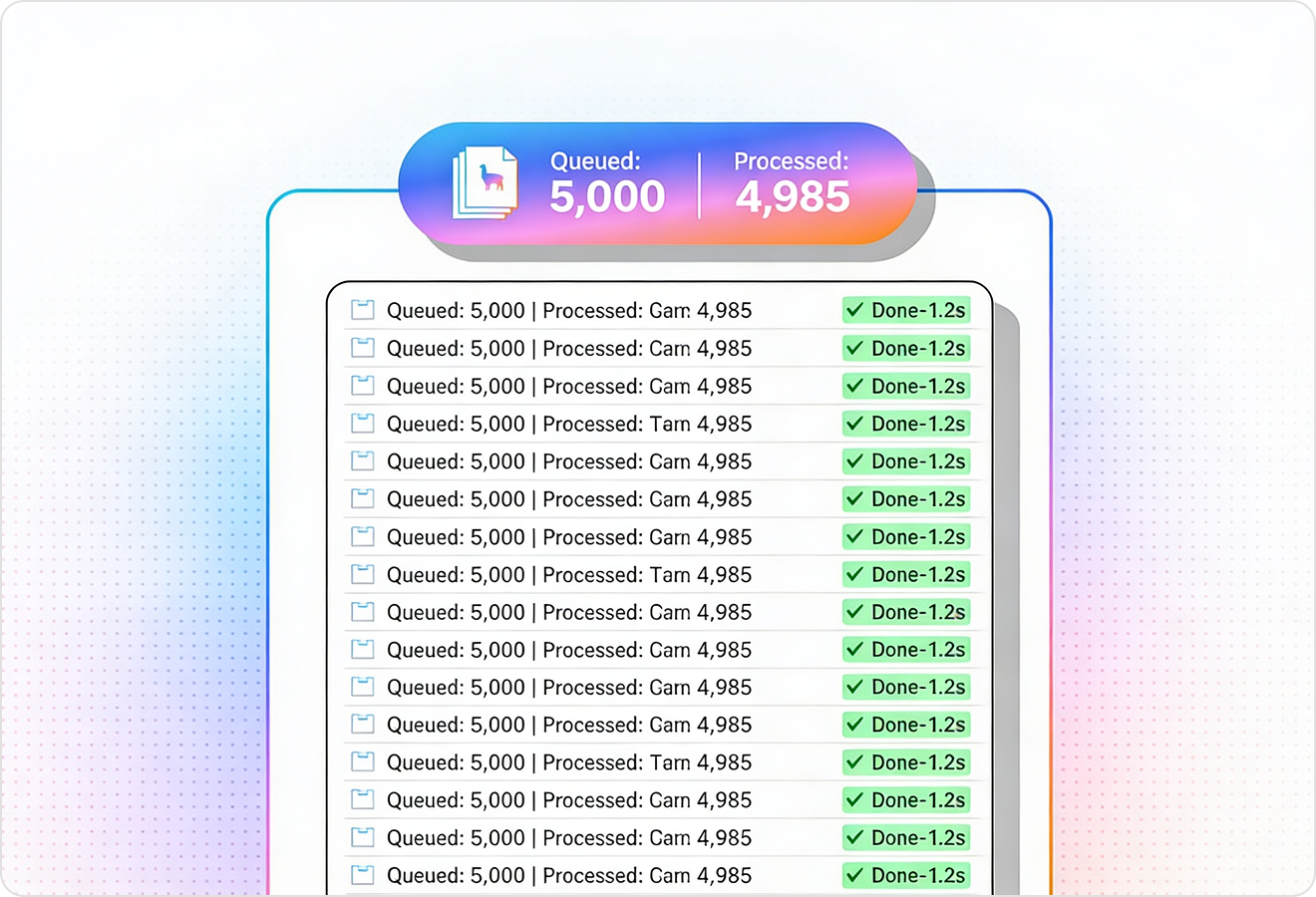
The parsing pipeline runs automated self-checks to catch common extraction errors and reconcile inconsistencies before returning results. For an AI agent platform, this improves straight-through automation by reducing silent failures and minimizing human review on edge cases.
Technical OCR documentation
Explore our developer guides to easily connect your document pipelines to LlamaParse.
Explore the documentation
Our AI catches the typos that tired eyes miss.

Export to Excel, JSON, XML, or directly via API.

SOC2 Type II compliant with end-to-end encryption.

Train the tool on your specific forms in minutes, not days.

Average processing time of <3 seconds per page.
LlamaParse’s support of a wide variety of filetypes and its accuracy of parsing made it the best tool we tested in our evaluations. The LlamaIndex team was very responsive and we were off to the races within a day.
Common FAQs
01
Our layout-aware parsing preserves the true reading order by understanding sections, multi-column flow, and repeated elements like headers and footers. That means your agents receive clean, reliable context instead of jumbled text—so answers and actions are grounded in what the document actually says.
02
Yes—tables are extracted into structured outputs that retain row/column meaning, even with merged cells, nested structures, or uneven layouts. This lets agents compute totals, compare line items, and validate values without fragile custom post-processing.
03
They can use the full visual evidence in a file, including charts, figures, and math. We convert these elements into AI-readable formats like Markdown tables or LaTeX so agents can reason over them and cite the underlying data.
04
How do you reduce extraction errors and avoid silent failures in automation workflows?
The pipeline includes agentic validation loops—automated self-checks that flag likely mistakes and reconcile inconsistencies before results are returned. This improves straight-through processing and reduces the amount of human review needed on edge cases.
05
What outputs do you provide, and how easy is it to integrate into my agent stack?
You receive structured, model-friendly outputs that keep document structure intact, making them easy to feed into RAG, tool-calling agents, or downstream workflows. Most teams integrate in hours, not weeks, because the output is consistent and requires minimal cleanup.
06
Will this work reliably across different document types and messy real-world PDFs?
The platform is designed for varied layouts and imperfect inputs, using layout awareness plus validation to handle common formatting issues. If your use case includes especially noisy scans or unusual templates, we’ll help you test quickly so you can ship with confidence.