Nov 14, 2025
Document AI: The Next Evolution of Intelligent Document ProcessingPersona
Industry
Use cases
Patient Eligibility OCR
[ Patient Eligibility OCR ]

Use LlamaParse to extract and validate eligibility details from messy forms with citations and confidence scores.
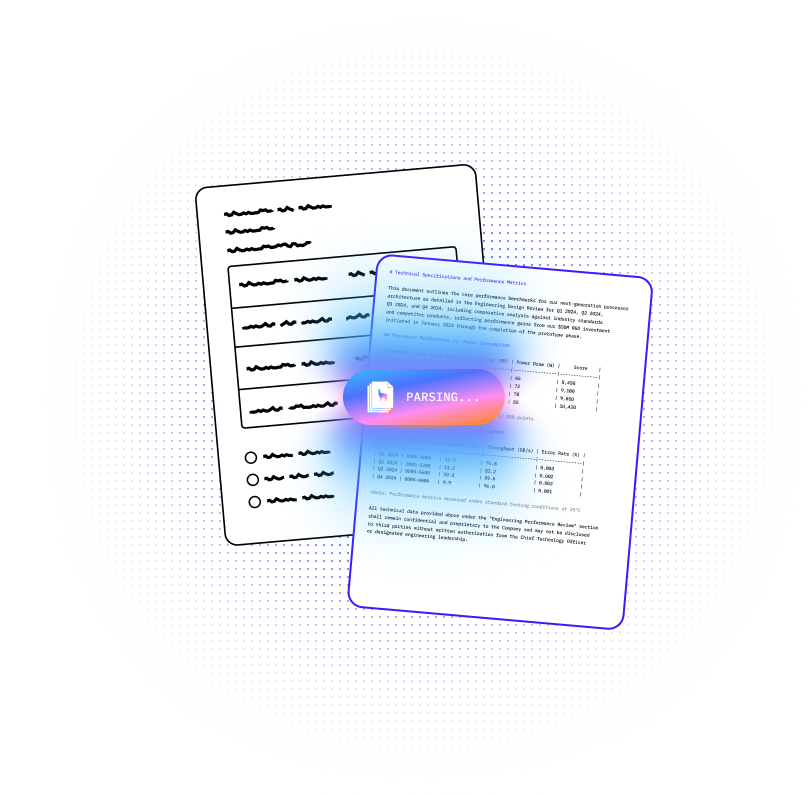
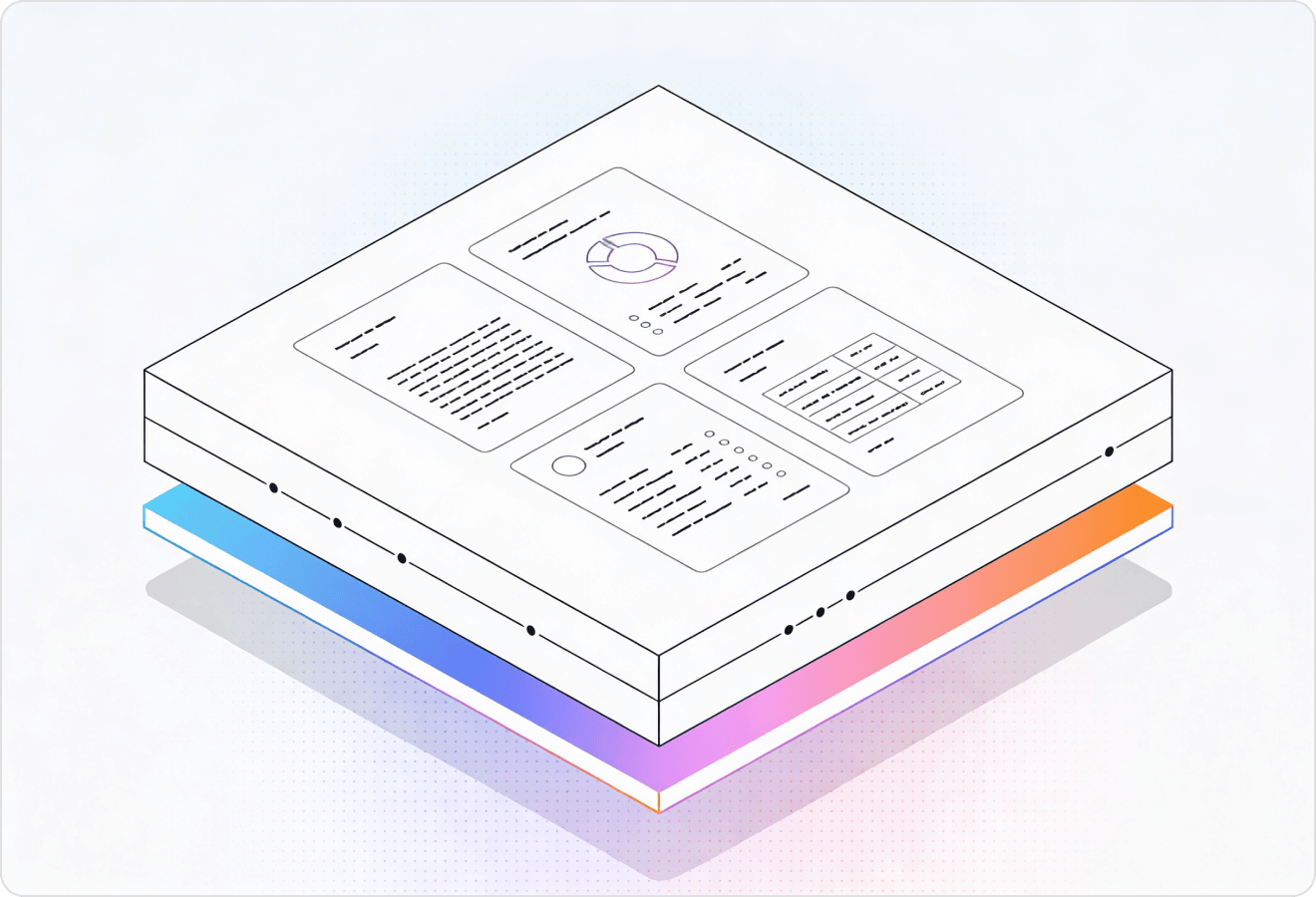
LlamaParse turns messy patient eligibility forms and payer letters into clean, structured outputs you can trust, not just raw text. It understands layout and tables, then adds citations and confidence so teams can verify fields fast and reduce rework.
Best-in-Class Accuracy

Use LlamaParse in LlamaCloud to parse payer eligibility letters, benefit grids, and multi-column EOB-style PDFs into clean JSON with citations, so coverage, copays, and effective dates can be verified instead of re-keyed. Layout-aware table extraction and auto-correction loops reduce eligibility errors that drive denials, rework, and delayed scheduling.

Standardize eligibility and coverage documentation from brokers and carriers by converting messy scans, endorsements, and attachment-heavy PDFs into structured fields and evidence-backed snippets your team can audit. Tier-based agentic processing routes only the hardest pages to higher-accuracy parsing, cutting manual indexing time without blowing up per-file processing costs.

Automate intake for prior authorization and benefit verification by extracting plan rules, step therapy requirements, and quantity limits from densely formatted payer documents and formularies into consistent Markdown/JSON. Multimodal parsing preserves the intent of charts and tables that frequently break traditional OCR, reducing turnaround time for therapy starts.

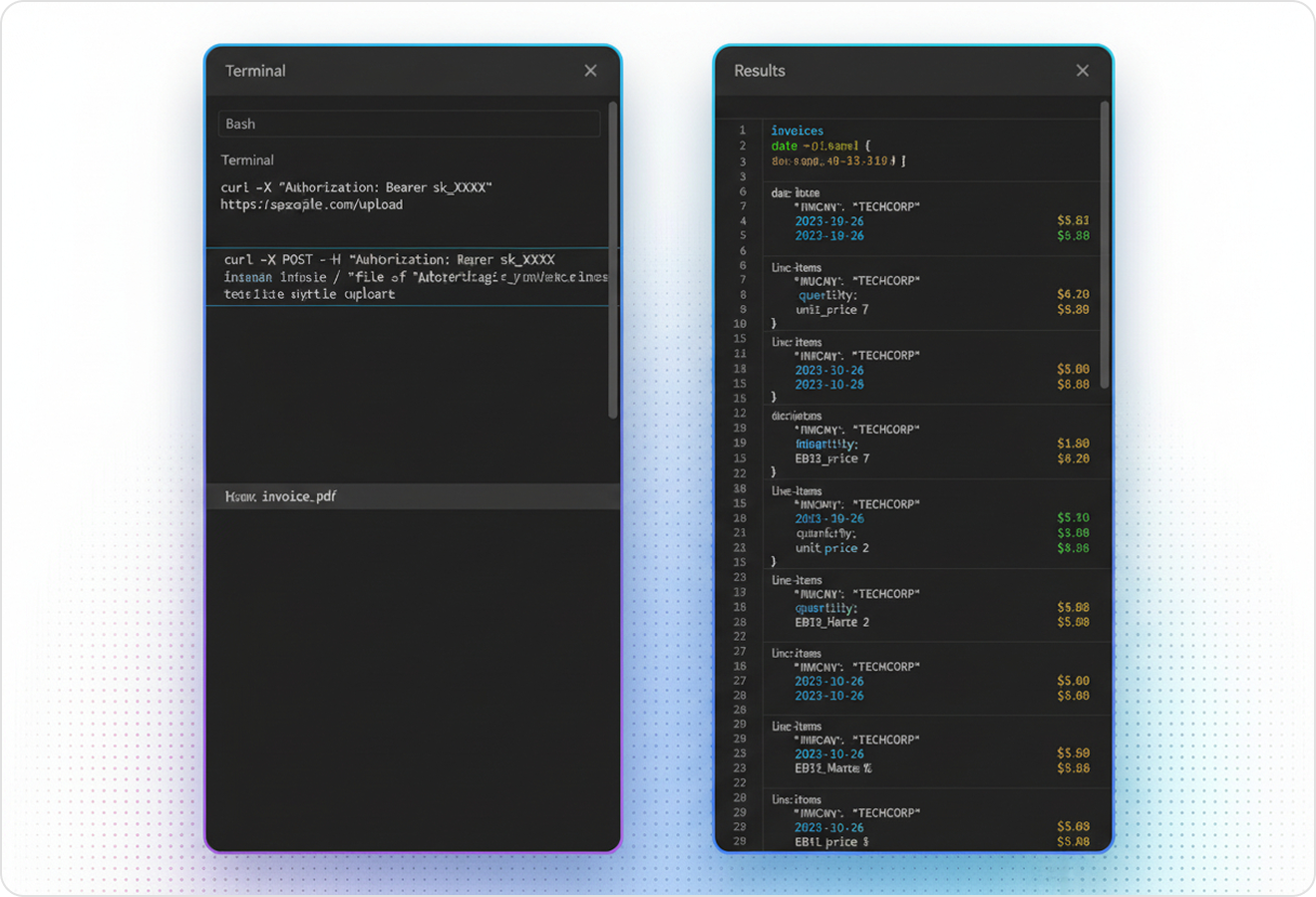
Ship eligibility verification faster by using LlamaParse APIs to turn user-uploaded PDFs and faxes into schema-ready JSON for your database, with confidence scores and page-level traceability for quick QA. Natural-language parsing instructions let you change what you extract (e.g., “capture deductible remaining and network status”) without rewriting brittle rules every time a payer template shifts.
The Solution
01
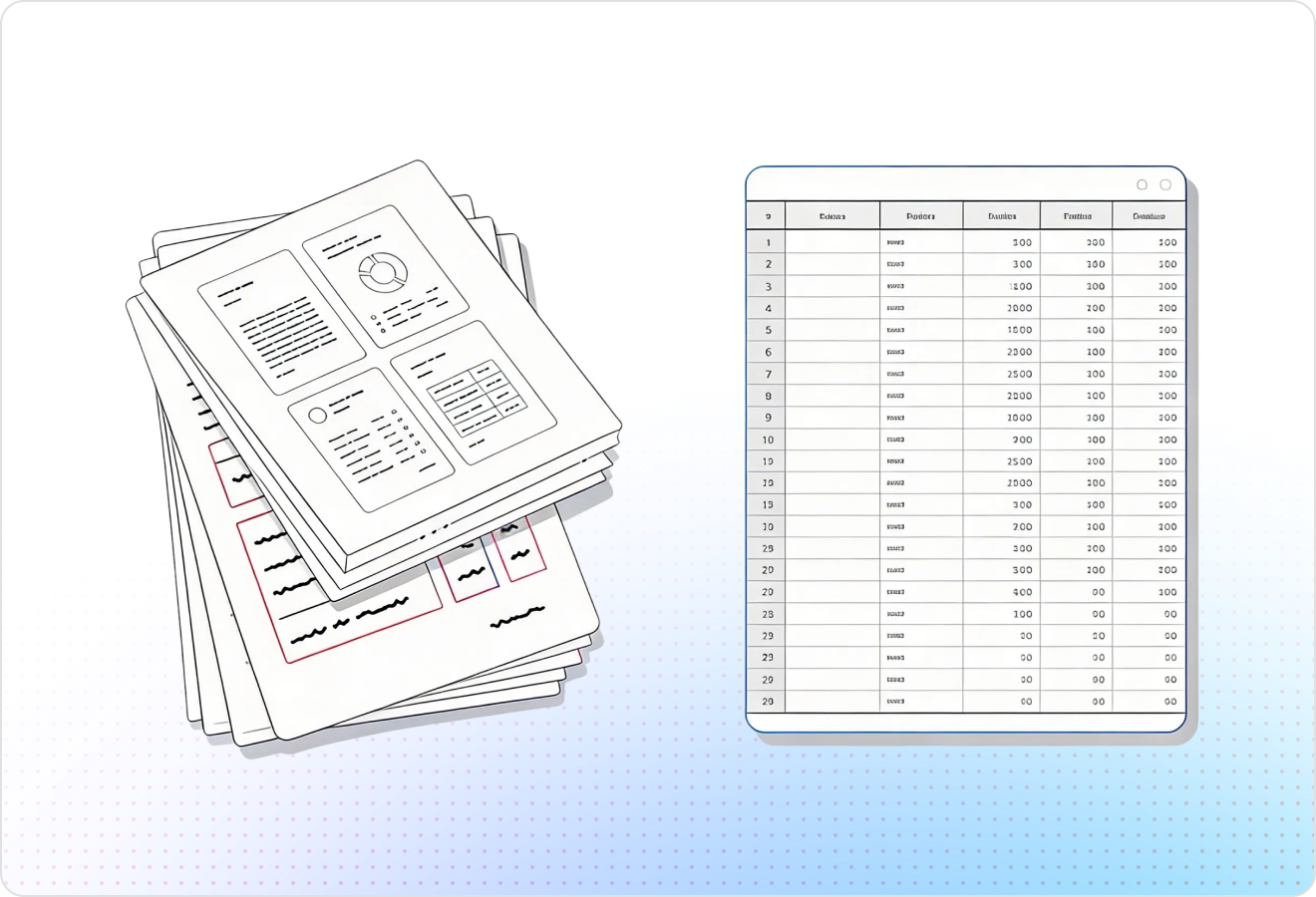
LlamaParse reads eligibility packets the way a reviewer does—handling multi-column pages, headers/footers, and dense form layouts without scrambling the narrative. That means patient demographics, insurer details, and coverage sections land in the right place for downstream eligibility checks.
02
It reliably captures tables and grid-style benefit summaries, including row/column relationships and nested headers. This is critical for eligibility workflows where copays, deductibles, coverage limits, and effective dates often live in structured tables that traditional extraction mangles.
03
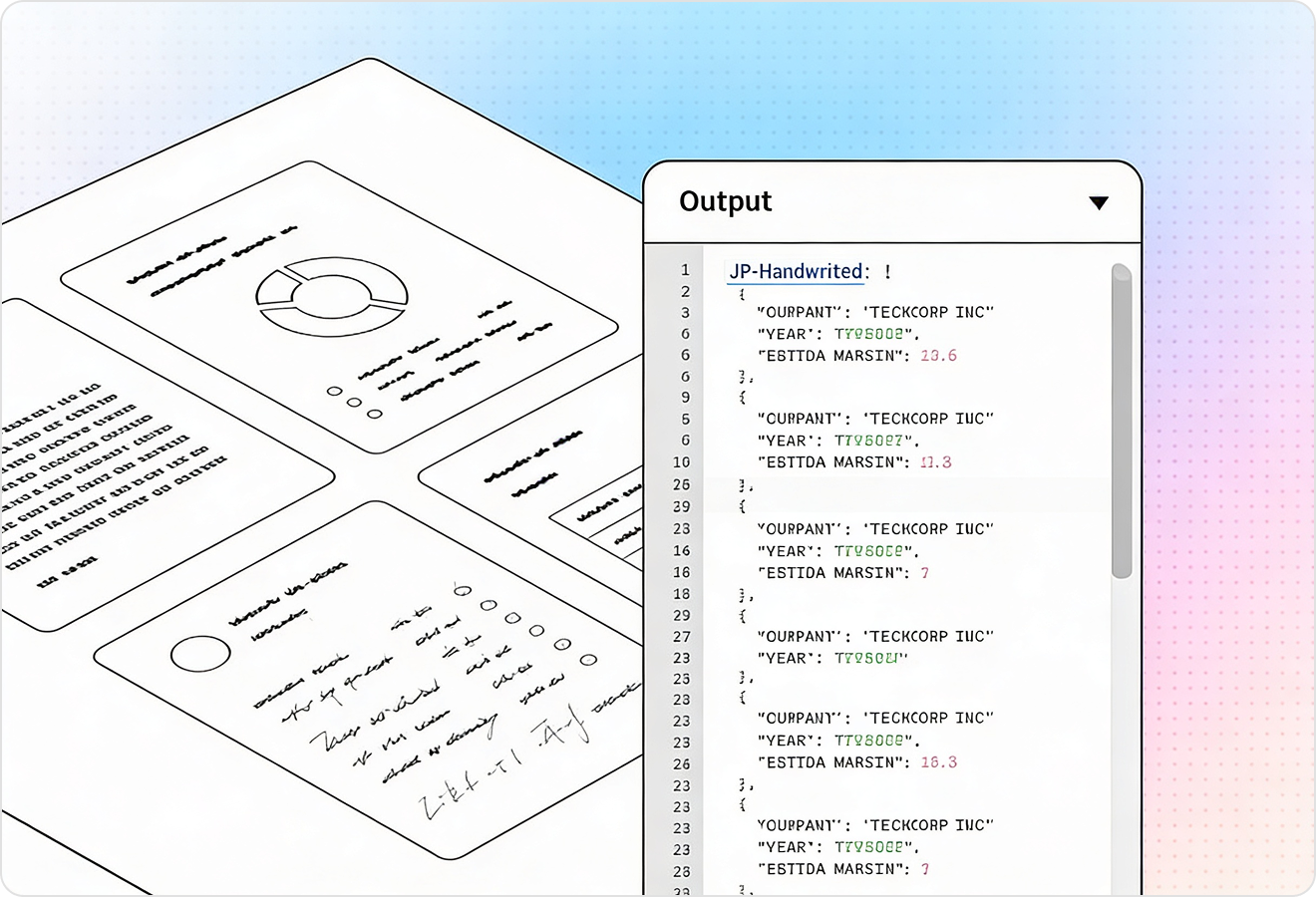
Use natural-language instructions to shape output into a consistent eligibility schema (e.g., member_id, payer, plan, group_number, effective_date, auth_required). You get clean JSON that drops straight into EHR/billing systems and reduces brittle post-processing code.
04
Every extracted field can include page-level and region-level metadata, making it easy to trace “why” a decision was made. For patient eligibility, that audit trail supports quick human review, exception handling, and compliance when documents disagree or are partially illegible.
Technical OCR documentation
Explore our developer guides to easily connect your document pipelines to LlamaParse.
Explore the documentation
Our AI catches the typos that tired eyes miss.

Export to Excel, JSON, XML, or directly via API.

SOC2 Type II compliant with end-to-end encryption.

Train the tool on your specific forms in minutes, not days.

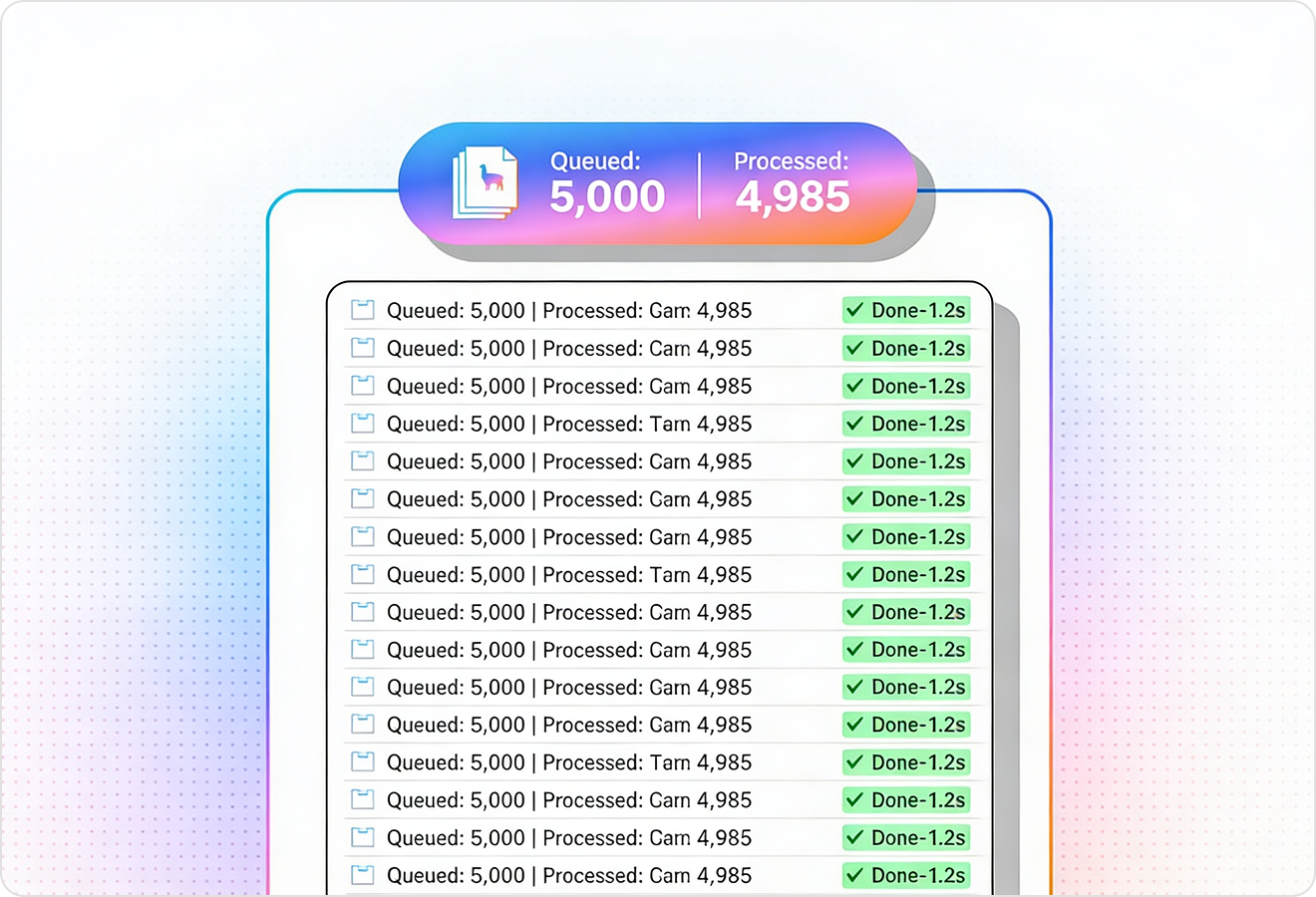
Average processing time of <3 seconds per page.
LlamaParse’s support of a wide variety of filetypes and its accuracy of parsing made it the best tool we tested in our evaluations. The LlamaIndex team was very responsive and we were off to the races within a day.
Common FAQs
01
Yes. The extraction is layout-aware, so it reads packets the way a reviewer would—preserving the narrative across multi-column pages and dense form sections. That means demographics, payer details, and coverage sections land in the right place for reliable downstream eligibility checks.
02
It maintains table and grid fidelity by keeping row/column relationships and nested headers intact. This reduces common errors like misaligned copays or swapped effective dates that can cause incorrect eligibility decisions and rework.
03
Yes—use simple natural-language instructions to guide output into your preferred eligibility schema (e.g., member_id, payer, plan, group_number, effective_date, auth_required). You get clean, consistent JSON that integrates quickly and minimizes brittle post-processing rules.
04
How can my team verify where each extracted field came from for audits and exception handling?
Each field can include page-level and region-level citations, so reviewers can quickly trace the source in the original document. This speeds up QA, supports compliance needs, and makes it easier to resolve conflicting or partially illegible packets.
05
What happens when documents are incomplete, inconsistent, or hard to read?
The system still returns structured output and flags uncertainty through verifiable metadata and citations for fast human review. That means you can route exceptions confidently without stalling the entire eligibility workflow.
06
How quickly can we get this into production without a long integration project?
You can start with schema-guided JSON output that maps directly to your existing eligibility fields and workflows. Most teams go live in phases—validate against a sample set first, then expand coverage—so you see value quickly without disrupting operations.