Nov 14, 2025
Document AI: The Next Evolution of Intelligent Document ProcessingPersona
Industry
Use cases
AI Extract Insurance Claims Data
[ AI Extract Insurance Claims Data ]

Turn messy claim forms into clean, verifiable JSON with LlamaParse, including tables and handwritten notes.
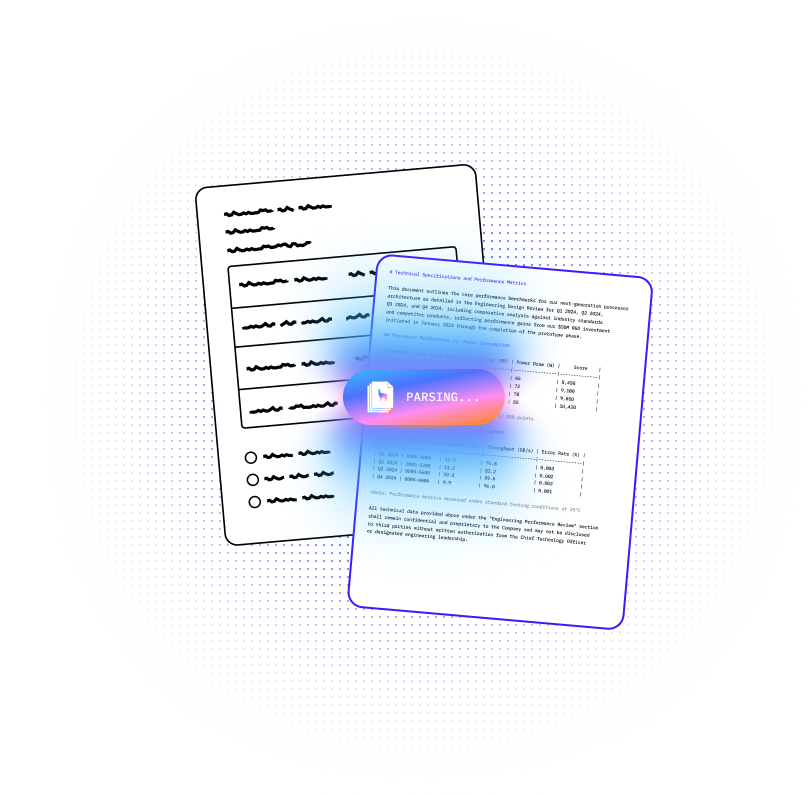


LlamaParse turns messy claim PDFs, scans, and emails into clean, structured fields like claimant, policy, loss details, line items, and totals. Its agentic document parsing understands layout, tables, and embedded images, then validates outputs with metadata so adjusters can trust straight-through processing.
Best-in-Class Accuracy

Use LlamaParse to turn adjuster notes, ACORD forms, police reports, invoices, and loss runs into clean JSON with citations so claim triage and coverage checks aren’t blocked by messy scans and multi-column layouts. Auto Mode routes only the tough pages to higher-accuracy parsing, boosting straight-through processing while keeping per-claim costs predictable.

Normalize intake packets from dozens of insurer templates into a single schema using natural-language parsing instructions, so your ops team stops re-keying data and fighting brittle template rules. Granular metadata (page/coords/confidence) enables fast exception routing and audit-ready traceability when clients dispute a field.

Extract line-item parts, labor categories, supplements, and photo-based damage context from estimates and work orders, even when tables are nested or split across pages. Feed structured outputs directly into estimating, procurement, and billing systems to reduce payment delays caused by mismatched codes and unreadable PDFs.

Ship a production-grade claims data pipeline without building a brittle parsing stack: LlamaParse converts real-world claim PDFs into Markdown/JSON that’s immediately usable for downstream agents and workflows. Flexible tiers plus a free-to-try credit model let you iterate quickly on new document types and scale spend only as volumes grow.
The Solution
01
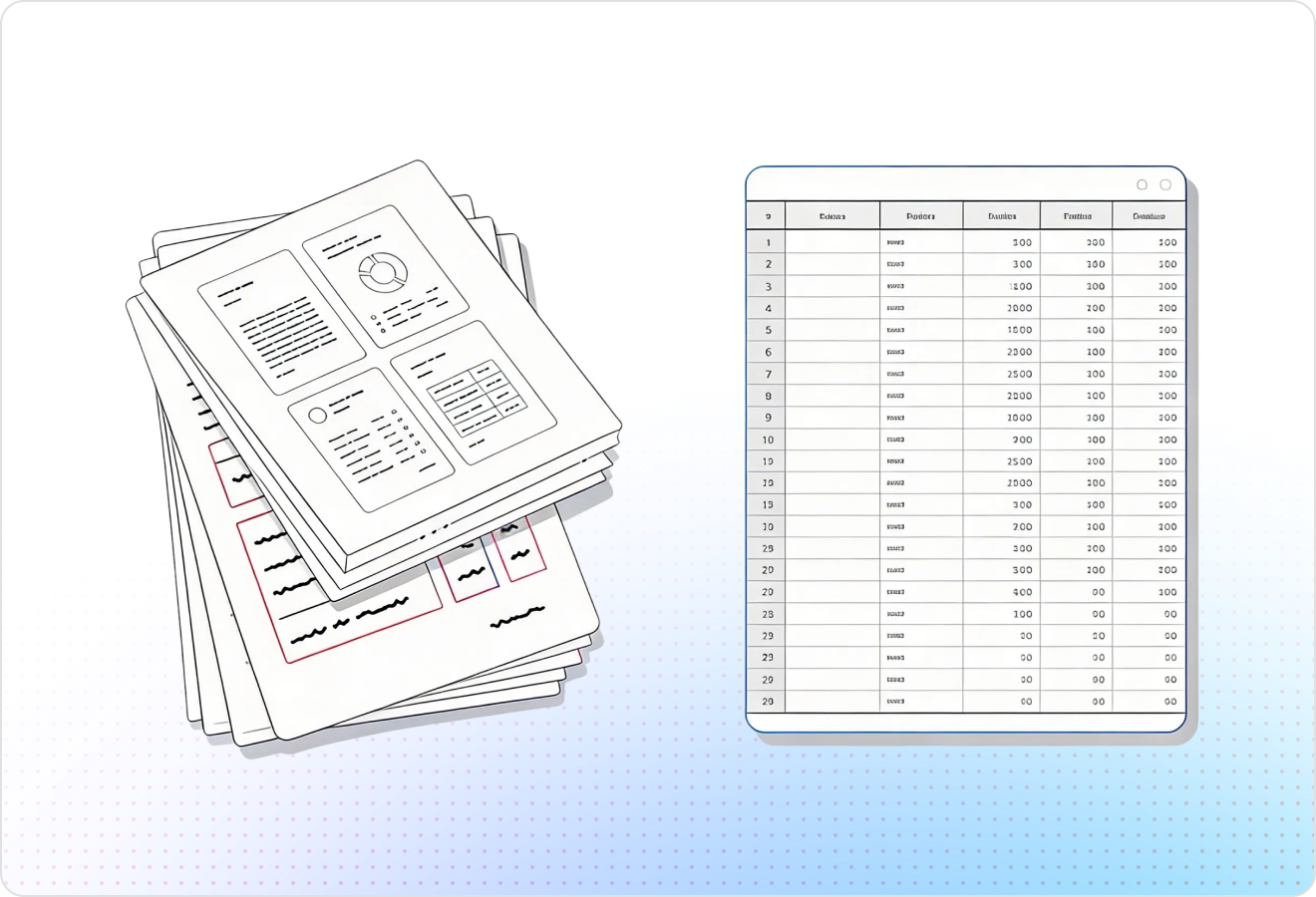
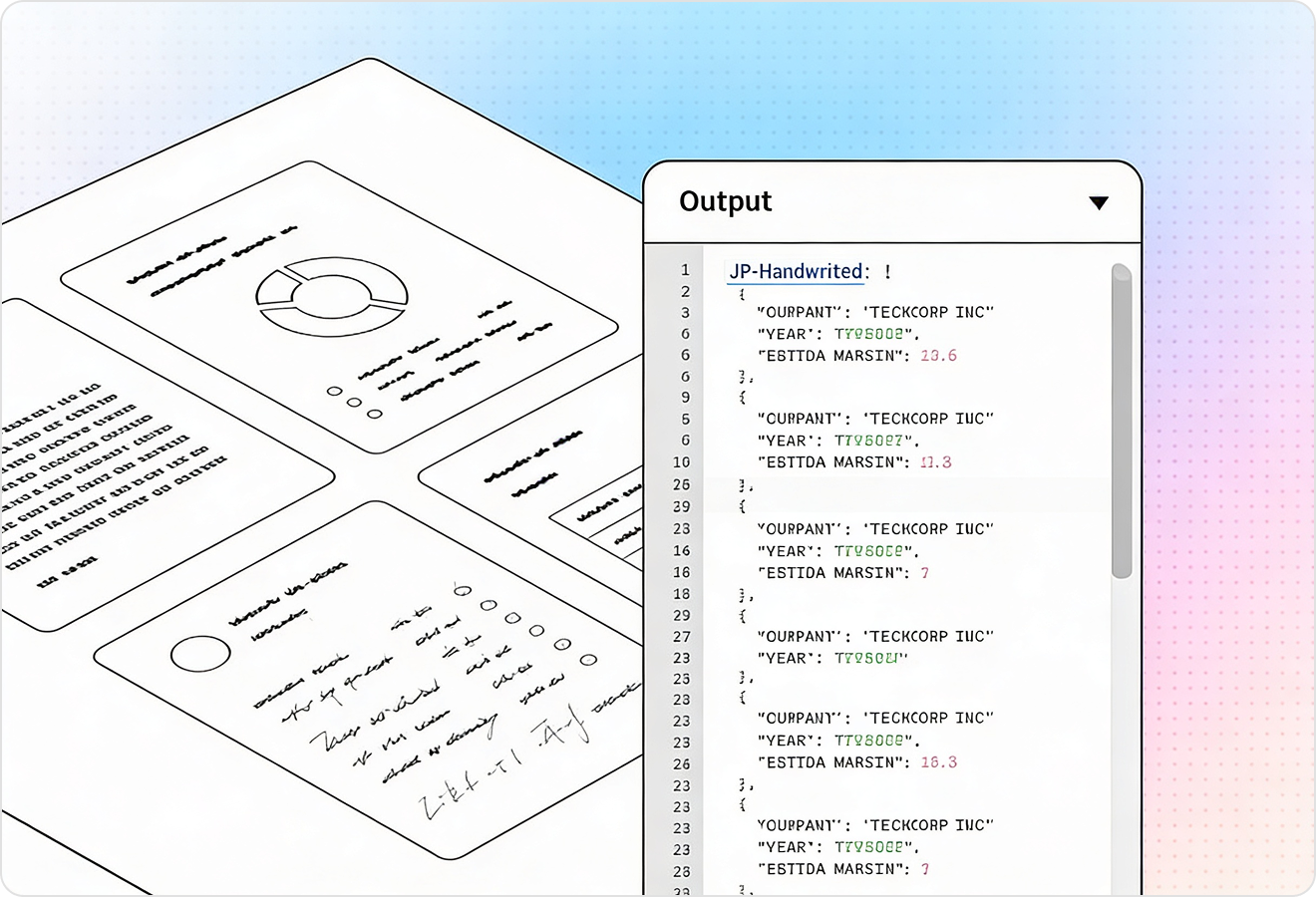
LlamaParse understands real insurance claim layouts—multi-column forms, headers/footers, and dense tables—so fields don’t get scrambled when you parse PDFs or scans. That means cleaner capture of claim IDs, policy numbers, dates of loss, claimant info, and adjuster notes without brittle post-processing.
02
Extracts complex tables and repeating line items (repairs, parts, medical codes, charges, deductibles) while preserving row/column structure. This makes it easy to turn claim packets into reliable, itemized data you can reconcile against reserves, payouts, and invoices.
03
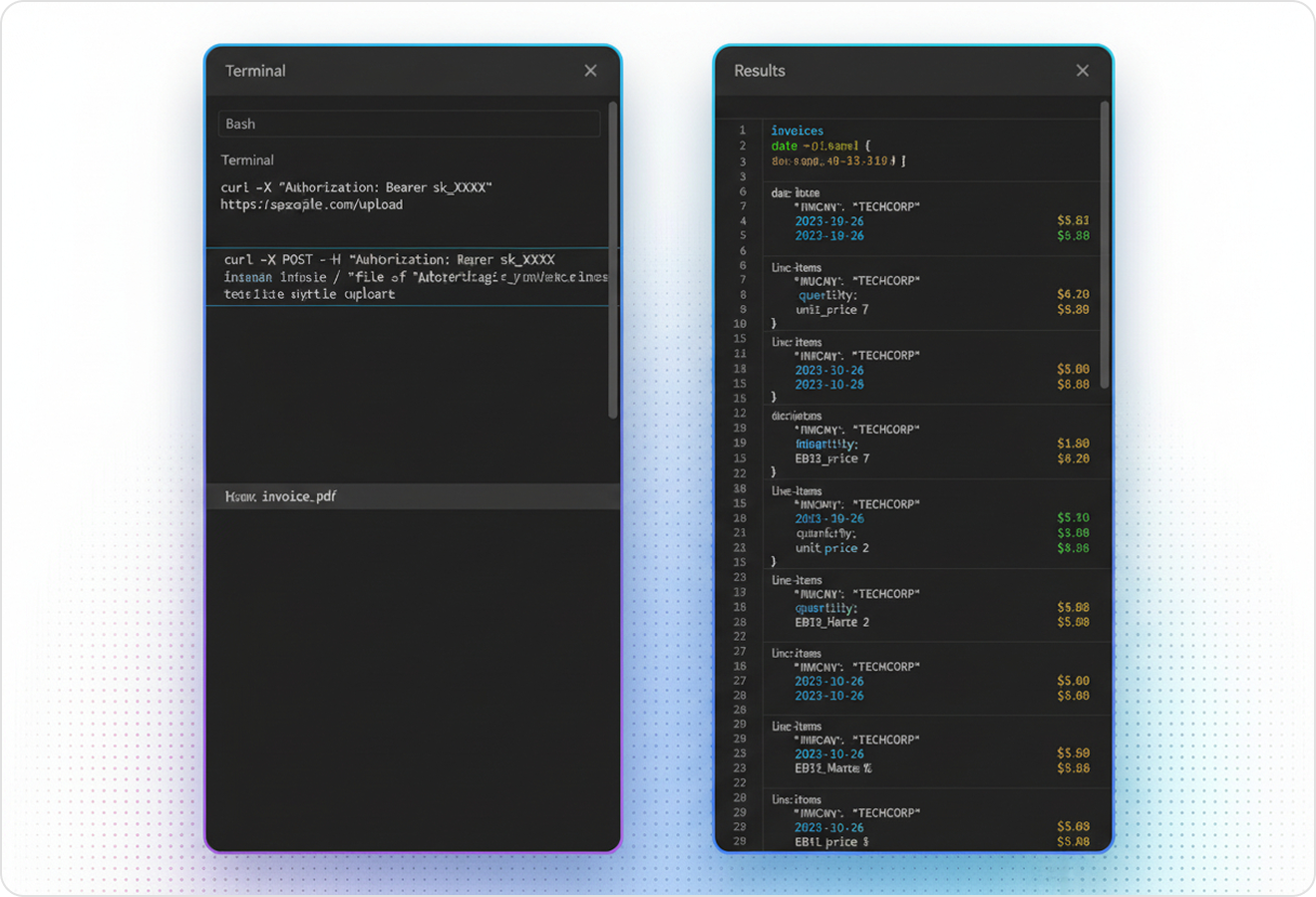
Outputs structured JSON and attaches granular metadata like page numbers and coordinates for each extracted value. For insurance claims, you can validate high-impact fields with citations, route low-confidence items to review, and keep an audit trail for compliance and disputes.
04
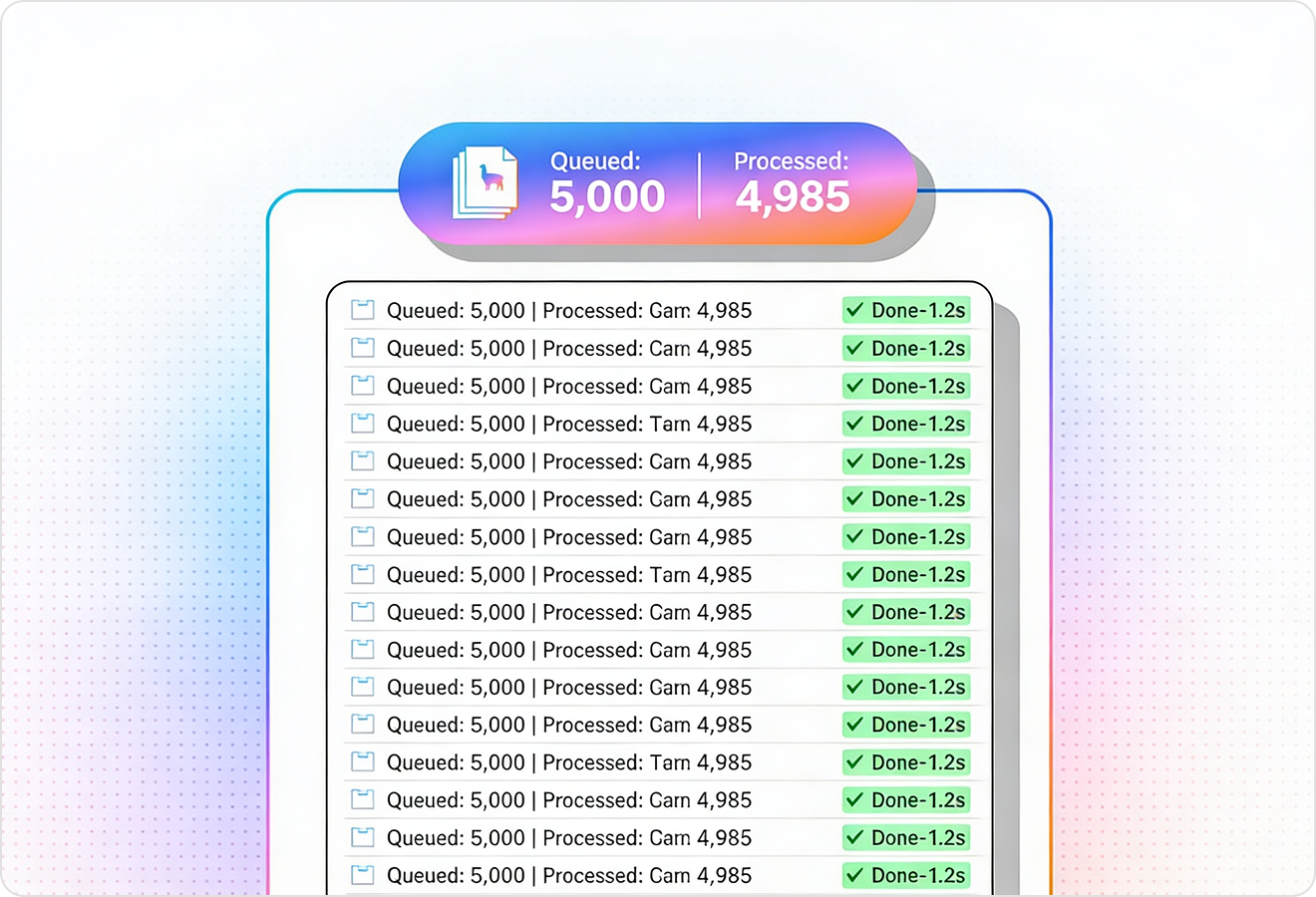
LlamaParse runs multiple validation passes to catch common extraction errors and inconsistencies that show up in messy claim scans. This increases straight-through processing for intake by reducing missing fields, misread amounts, and swapped identifiers before the data hits your downstream systems.
Technical OCR documentation
Explore our developer guides to easily connect your document pipelines to LlamaParse.
Explore the documentation
Our AI catches the typos that tired eyes miss.

Export to Excel, JSON, XML, or directly via API.

SOC2 Type II compliant with end-to-end encryption.

Train the tool on your specific forms in minutes, not days.

Average processing time of <3 seconds per page.
LlamaParse’s support of a wide variety of filetypes and its accuracy of parsing made it the best tool we tested in our evaluations. The LlamaIndex team was very responsive and we were off to the races within a day.
Common FAQs
01
Yes—our layout-aware extraction is built for insurance claim packets, including multi-column forms, dense tables, and common scan artifacts. It keeps fields from getting scrambled so claim IDs, policy numbers, dates of loss, and claimant details land in the right place. That means less manual cleanup and fewer downstream exceptions.
02
Absolutely. The parser preserves row/column structure and captures repeating line items such as parts, labor, CPT/ICD codes, deductibles, and totals. You get itemized data that’s ready for reconciliation against reserves, payouts, and invoices.
03
Yes—results are returned in structured JSON with granular traceability, including page numbers and coordinates for each extracted value. This makes it easy to add citations in your UI, validate high-impact fields, and maintain an audit trail for compliance and disputes. When questions come up, you can show exactly where a number came from.
04
How do you reduce common extraction errors like misread amounts or swapped identifiers?
We run validation and auto-correction loops designed for the inconsistencies typical in claim scans. These passes catch missing fields, suspicious totals, and common OCR mix-ups before the data reaches your claim system. The result is higher straight-through processing and fewer items sent to manual review.
05
What happens when the model isn’t confident about a field—do we have to manually check everything?
You don’t. Low-confidence or high-impact fields can be routed to a review workflow, while the rest of the claim proceeds automatically. With traceable citations, reviewers can verify values quickly without hunting through the entire packet.
06
How fast can we go from claim packets to production-ready structured data in our workflows?
Most teams start by extracting a small set of priority fields and line items, then expand coverage once validation rules are tuned. Because output is clean JSON with consistent structure and references back to the document, it plugs into intake, triage, and reconciliation steps with minimal rework. You get measurable time savings early, without a long integration cycle.