Nov 14, 2025
Document AI: The Next Evolution of Intelligent Document ProcessingPersona
Industry
Use cases
Purchase Order OCR Automation
[ Purchase Order OCR Automation ]

Use LlamaParse to turn messy POs into verified JSON with fewer exceptions and faster approvals.
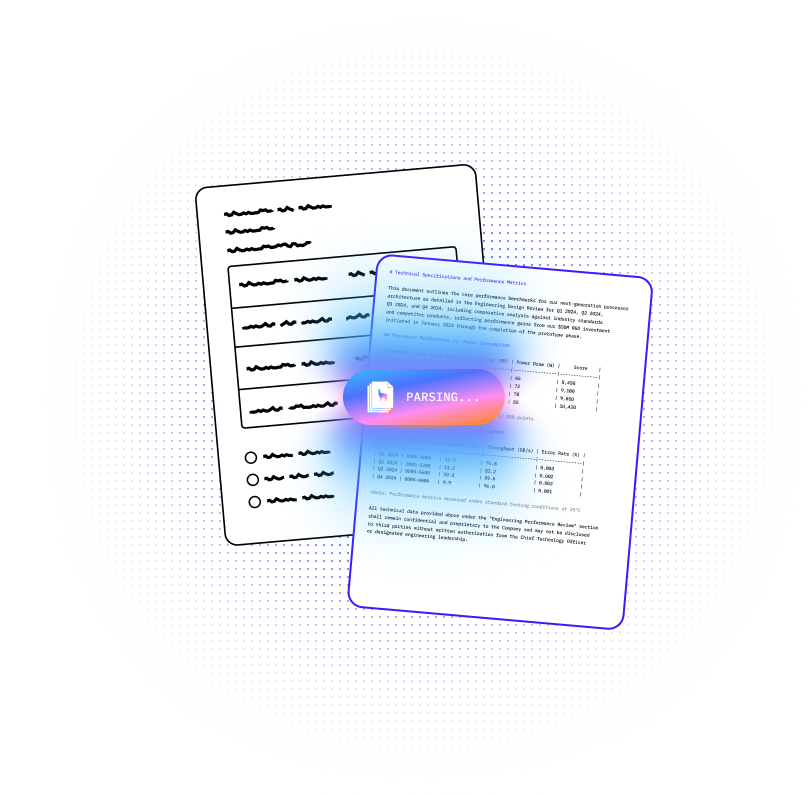


LlamaParse turns messy PDFs and scanned purchase orders into clean, schema-ready JSON so your ERP can ingest line items automatically. It understands tables and layouts, runs validation loops, and returns verifiable fields with confidence metadata for faster approvals and fewer exceptions.
Best-in-Class Accuracy

Automatically parse supplier POs with complex line-item tables, pack sizes, and multi-ship-to addresses into clean JSON your ERP can ingest without brittle template rules. LlamaParse preserves table structure and reading order so receiving, invoicing, and exception handling stop breaking when vendors change layouts.

Convert high-volume retail POs into structured data for allocation, ASN matching, and drop-ship routing—even when orders come as scanned PDFs with split columns and inconsistent SKU formats. Use natural-language parsing instructions to normalize fields like style/color/size and enforce a consistent schema before the data hits OMS and WMS systems.

Extract job-coded POs that include alternates, allowances, and multi-phase delivery schedules so purchasing can reconcile against budgets and change orders without manual rekeying. Granular metadata and confidence scores make it easy to route only the ambiguous lines for review while pushing clean POs straight through to accounting.

Stand up PO intake automation in days by sending PDFs and email attachments to LlamaParse and getting predictable Markdown/JSON outputs for QuickBooks, NetSuite, or custom databases. Tier-based agentic processing keeps costs under control by using heavier vision reasoning only on the messy scans that would otherwise create support tickets and missed spend visibility.
The Solution
01
LlamaParse detects page structure so headers, ship-to blocks, totals, and multi-column sections stay in the correct reading order. That means PO number, vendor details, and payment terms land in the right fields even when suppliers change templates.
02
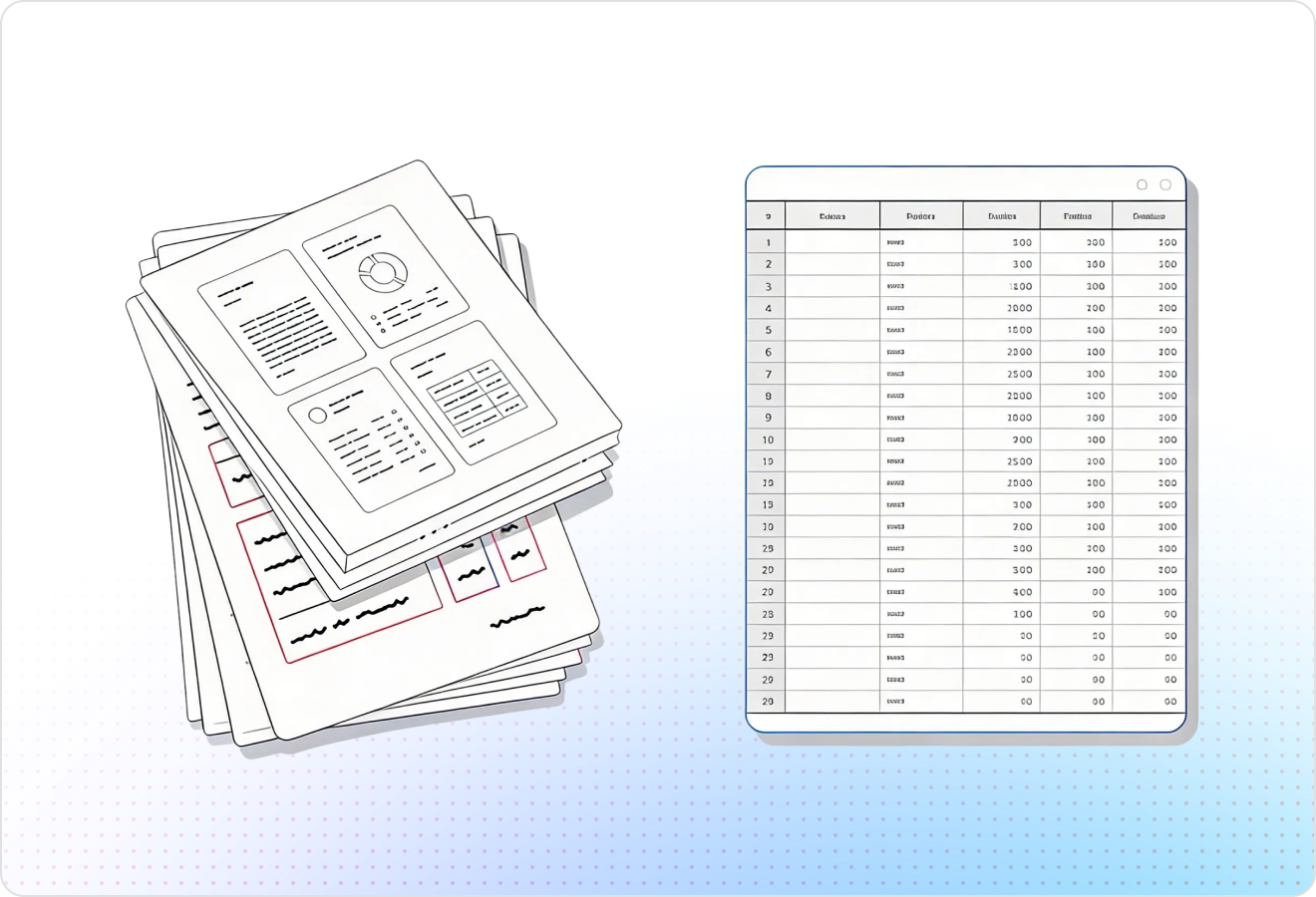
It reliably pulls nested line-item tables (SKU, description, qty, unit price, tax, and extended totals) without scrambled rows or merged columns. This gives you clean, consistent item-level data for automated matching against catalogs and invoices.
03
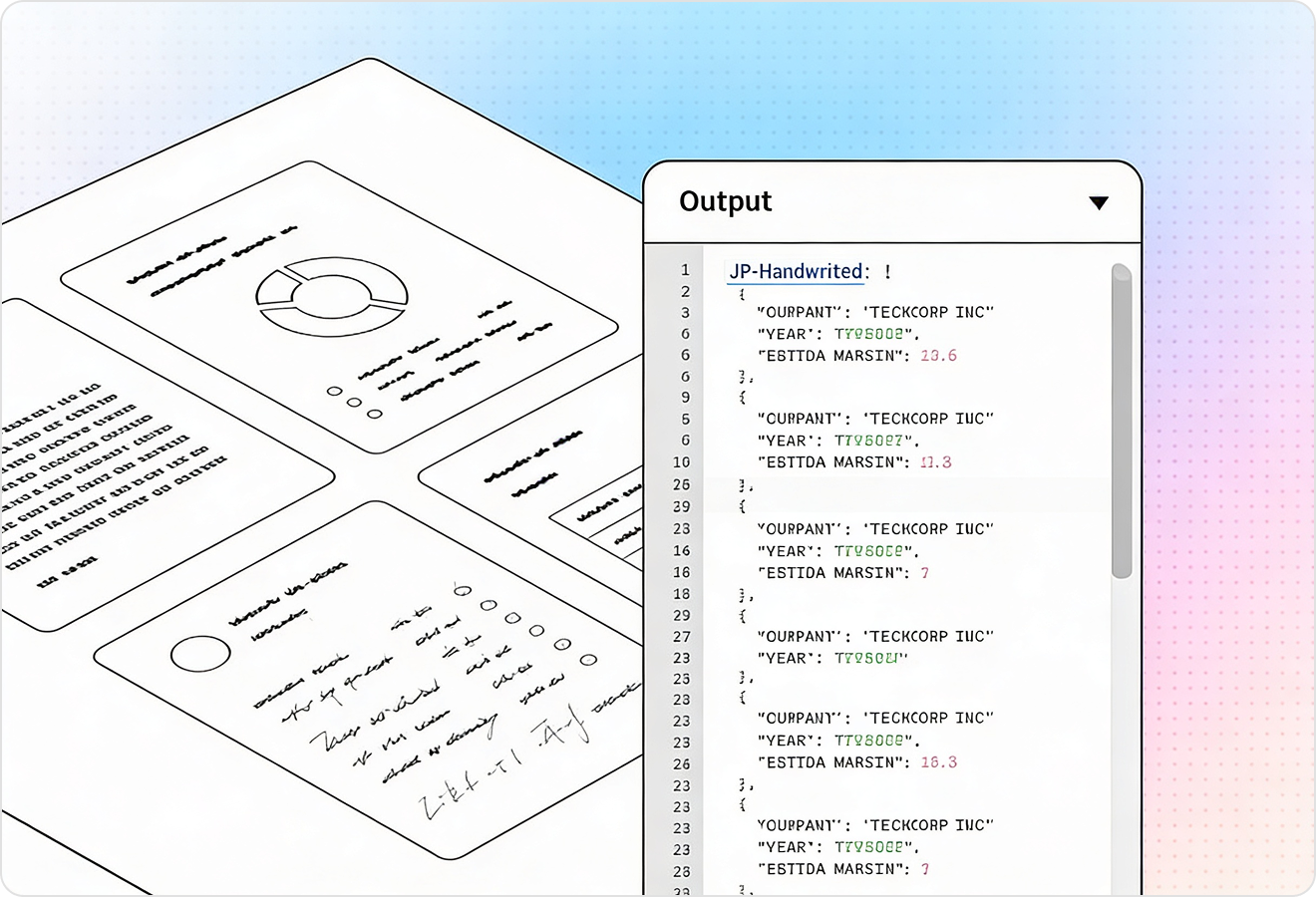
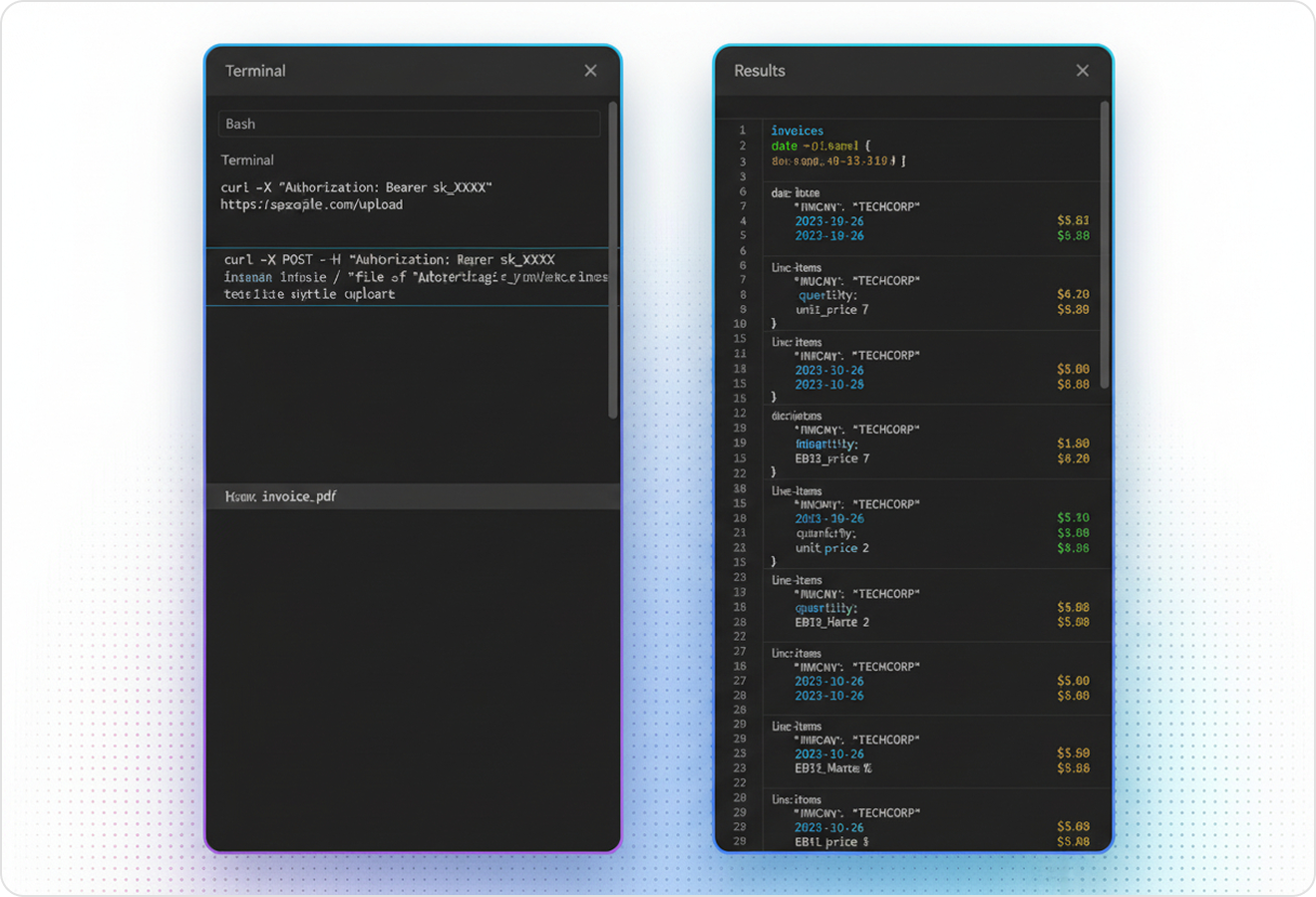
LlamaParse can return structured JSON plus granular metadata like page numbers and coordinates for each extracted field. For purchase order automation, this makes exceptions easy to audit and route to human review with exact source citations.
04
During parsing, LlamaParse runs validation steps to catch common extraction failures and correct them before the result is returned. In PO workflows, this reduces downstream breakage by flagging inconsistent totals, missing quantities, or ambiguous part numbers early.
Technical OCR documentation
Explore our developer guides to easily connect your document pipelines to LlamaParse.
Explore the documentation
Our AI catches the typos that tired eyes miss.

Export to Excel, JSON, XML, or directly via API.

SOC2 Type II compliant with end-to-end encryption.

Train the tool on your specific forms in minutes, not days.

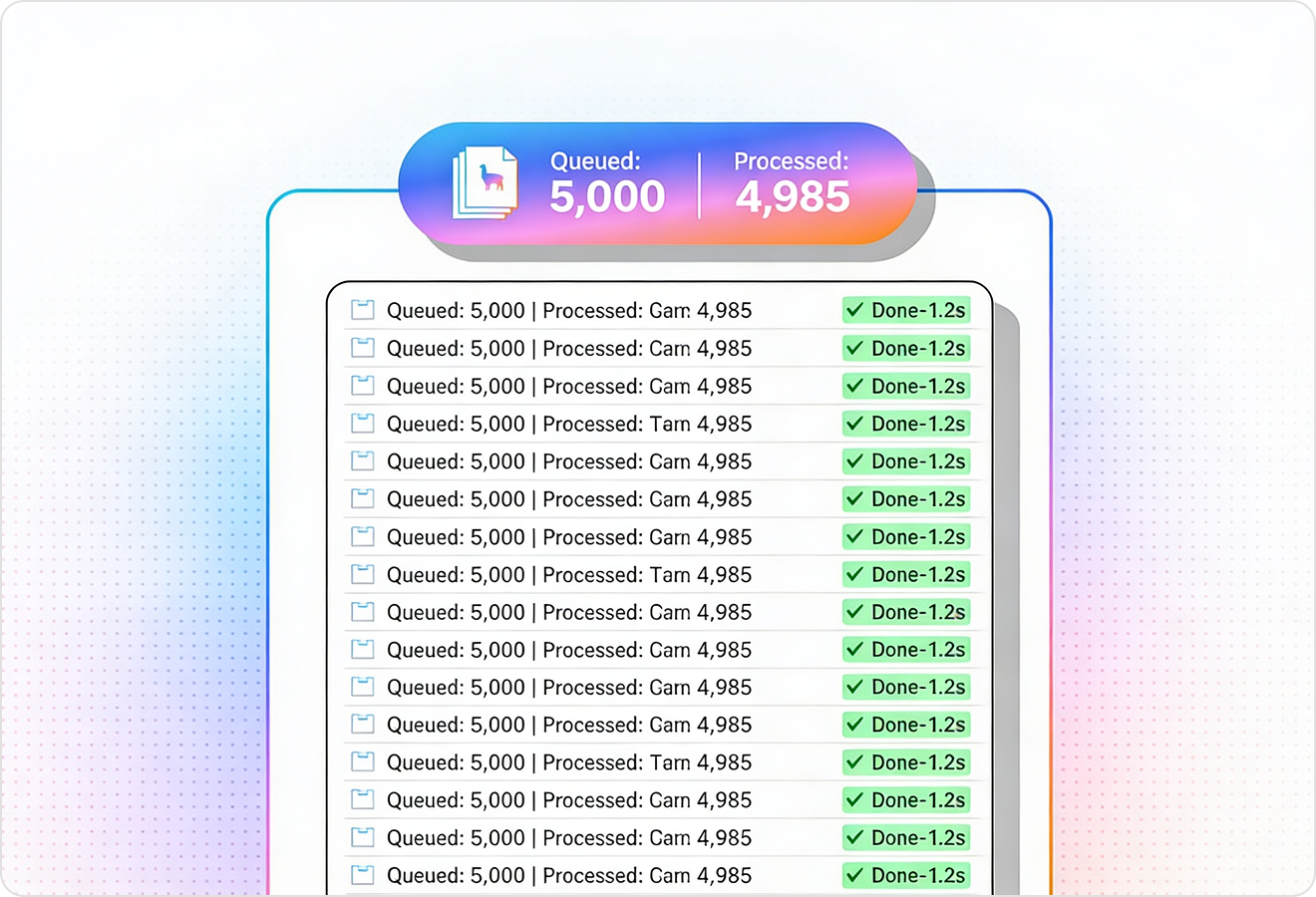
Average processing time of <3 seconds per page.
LlamaParse’s support of a wide variety of filetypes and its accuracy of parsing made it the best tool we tested in our evaluations. The LlamaIndex team was very responsive and we were off to the races within a day.
Common FAQs
01
Yes—layout-aware parsing detects page structure so key sections like headers, ship-to blocks, totals, and multi-column areas stay in the correct reading order. That means PO number, vendor details, and payment terms map to the right fields even when formats vary from supplier to supplier.
02
It reliably captures nested line-item tables without scrambled rows or merged columns, including SKU, description, qty, unit price, tax, and extended totals. You get consistent item-level data that’s ready for automated matching against catalogs and invoices.
03
You can return clean, structured JSON designed for automation, so you can map fields directly into your ERP, RPA, or procurement workflow. This reduces manual re-keying and speeds up downstream approvals and matching.
04
How do we audit results and handle exceptions without guessing what the OCR saw?
Each extracted field can include traceability metadata like page numbers and coordinates, so reviewers can jump straight to the exact source on the document. This makes exception handling faster, more defensible, and easier to standardize across the team.
05
What happens when the PO has missing quantities, inconsistent totals, or ambiguous part numbers?
Validation and auto-correction loops catch common extraction failures during parsing and flag issues early, before they break downstream systems. You can route only the problematic cases to human review while keeping clean POs fully automated.
06
Will it work with multi-page POs and complex layouts like multi-column sections?
Yes—layout detection preserves reading order across multi-column sections and multi-page documents, keeping related fields and totals aligned. This helps prevent mis-mapped data and ensures consistent results even on longer, more complex POs.